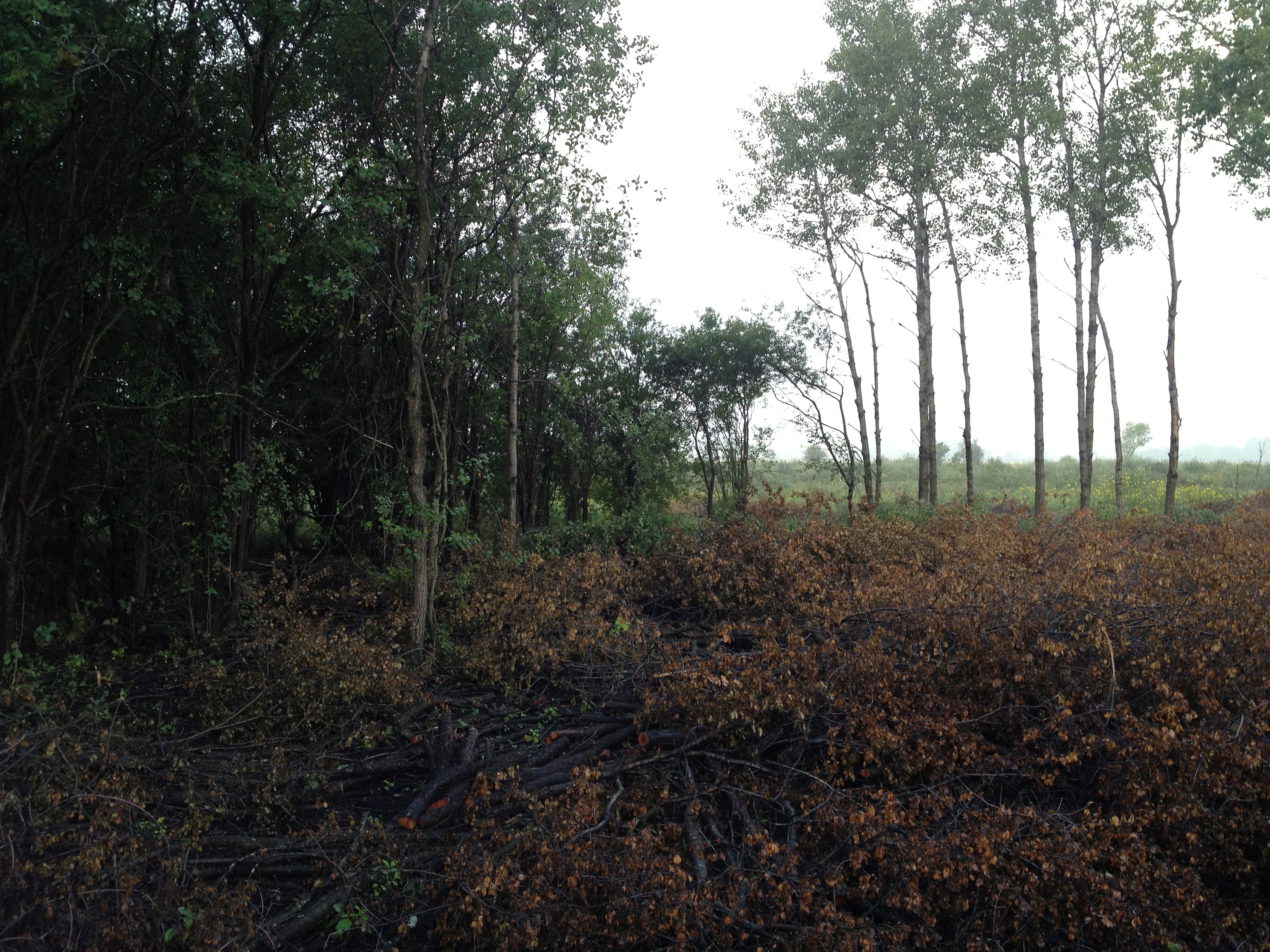
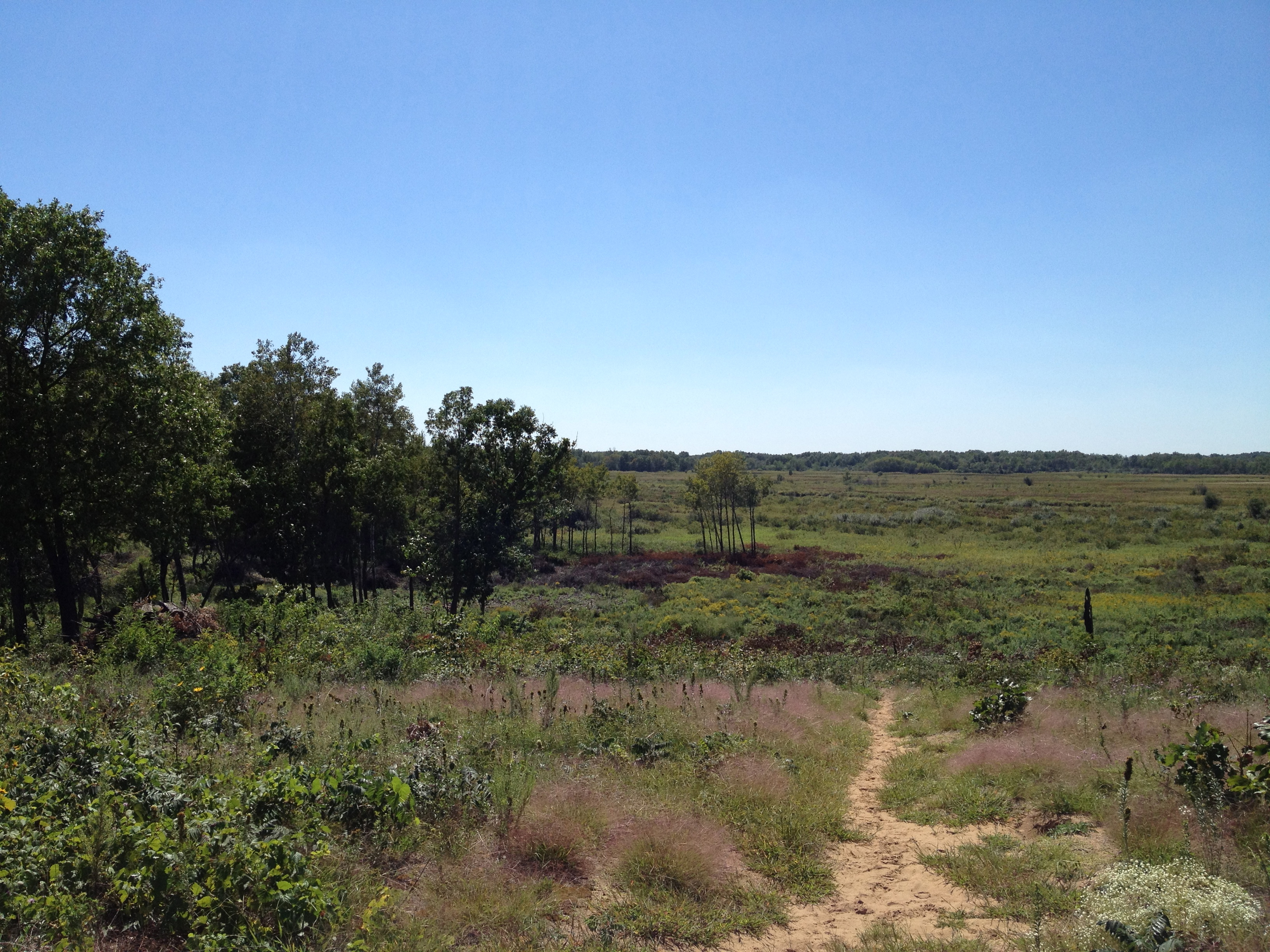
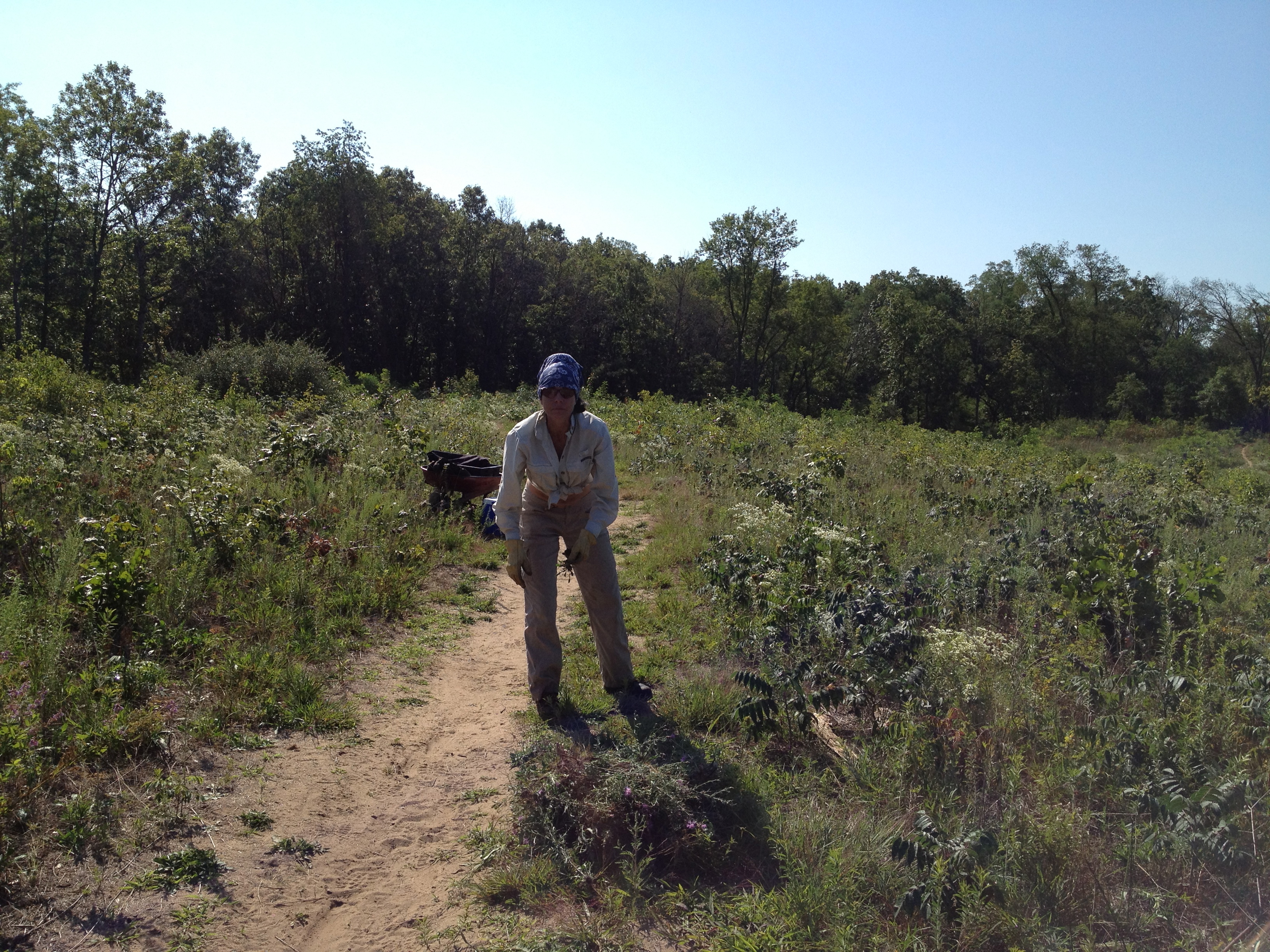
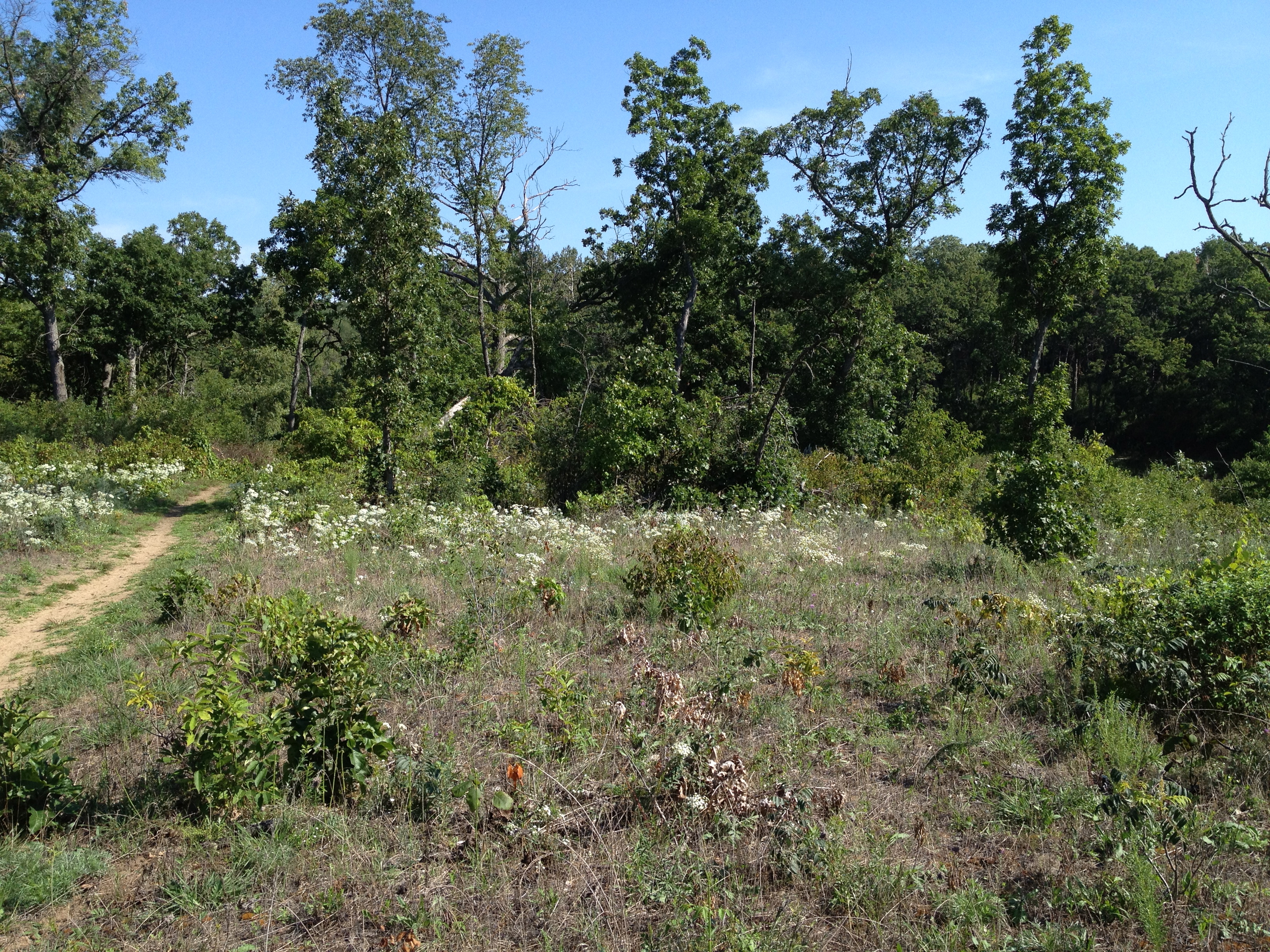
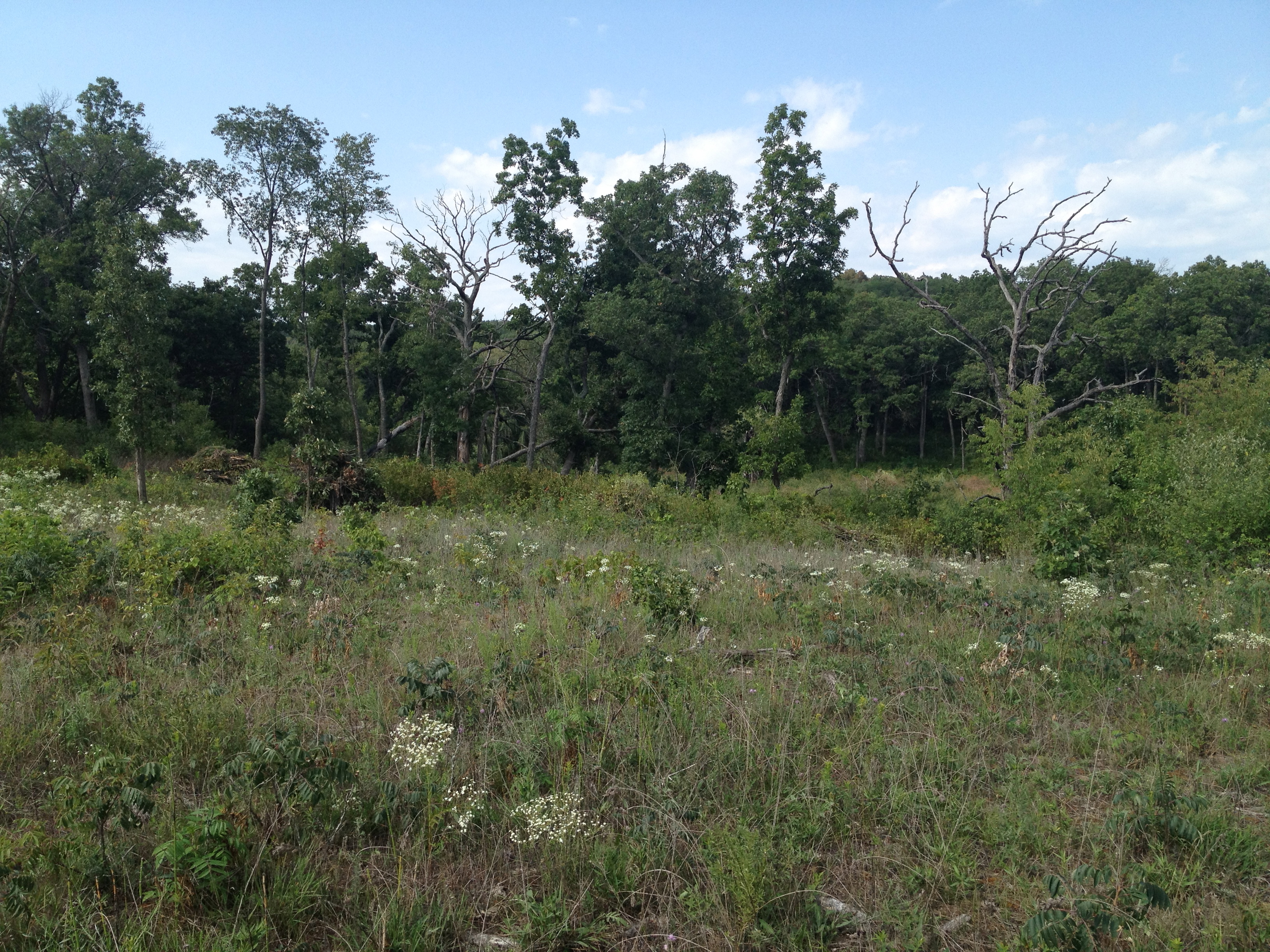
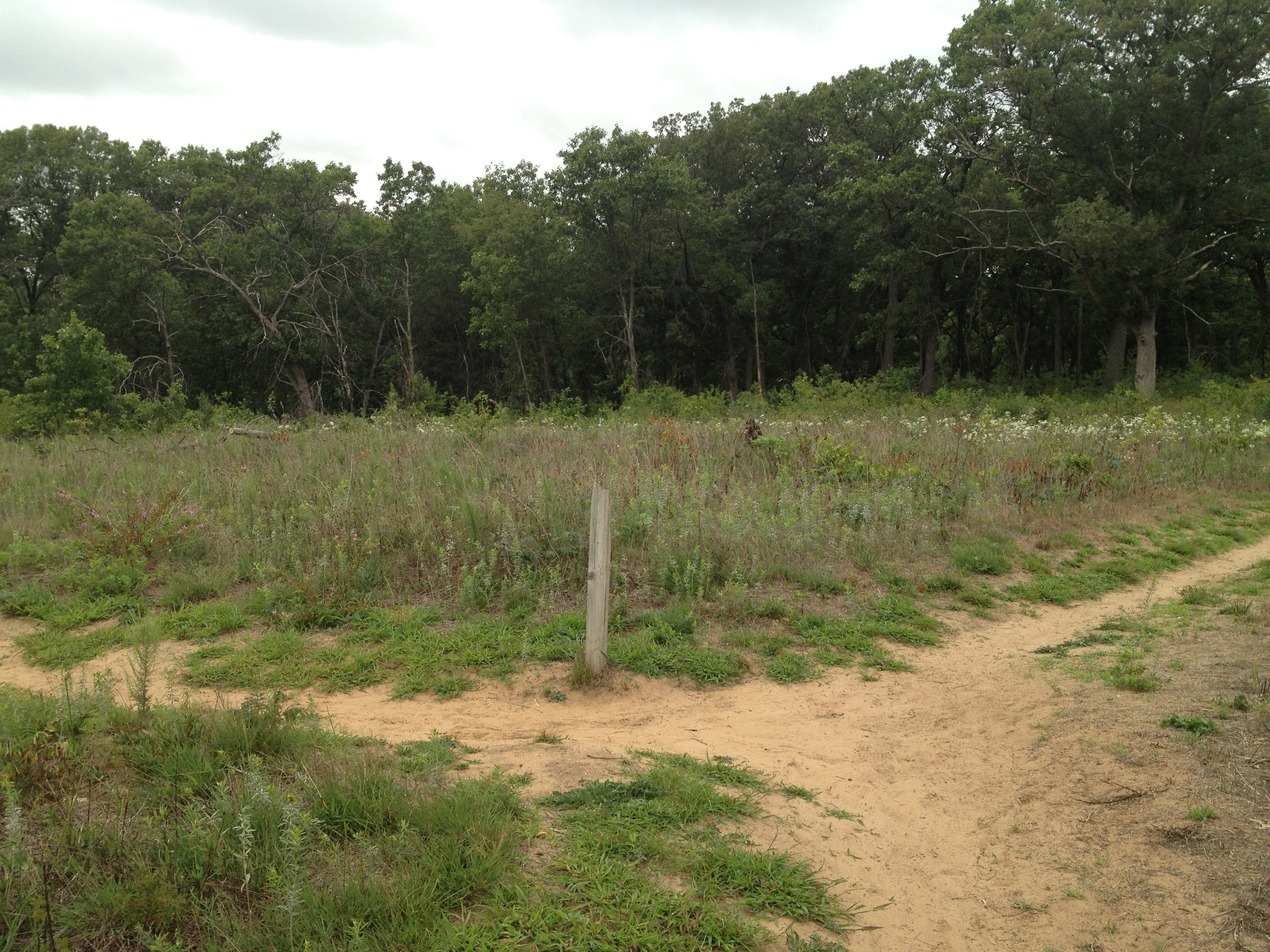
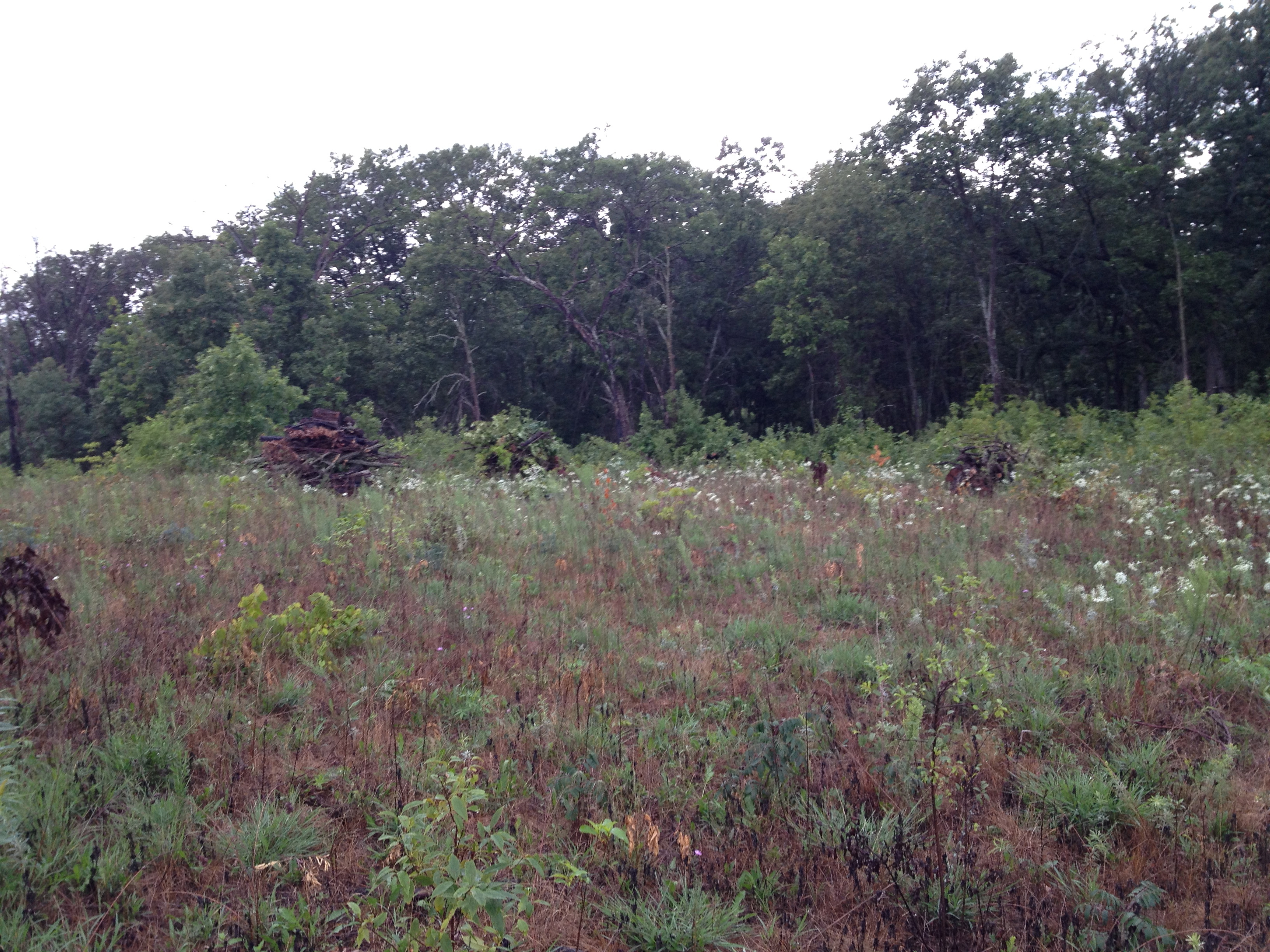
It’s been a while since we cut Buckthorn at the Indian Springs. Lindsay took a bite out of it on Saturday 8/25 and I did some cutting yesterday 8/27. Here are some before shots.
At the work site as the fog was lifting.
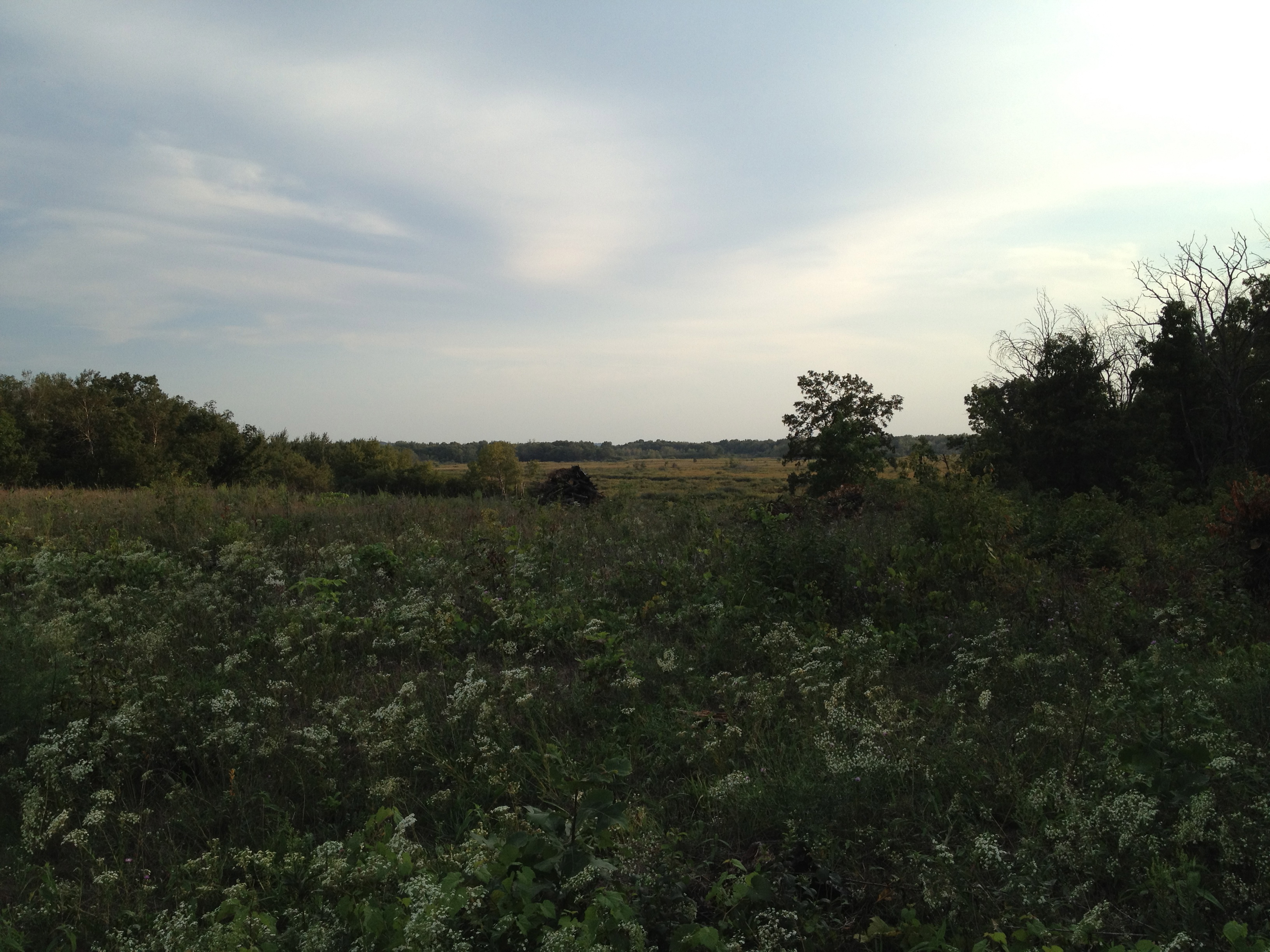
And the view from the scenic overlook.
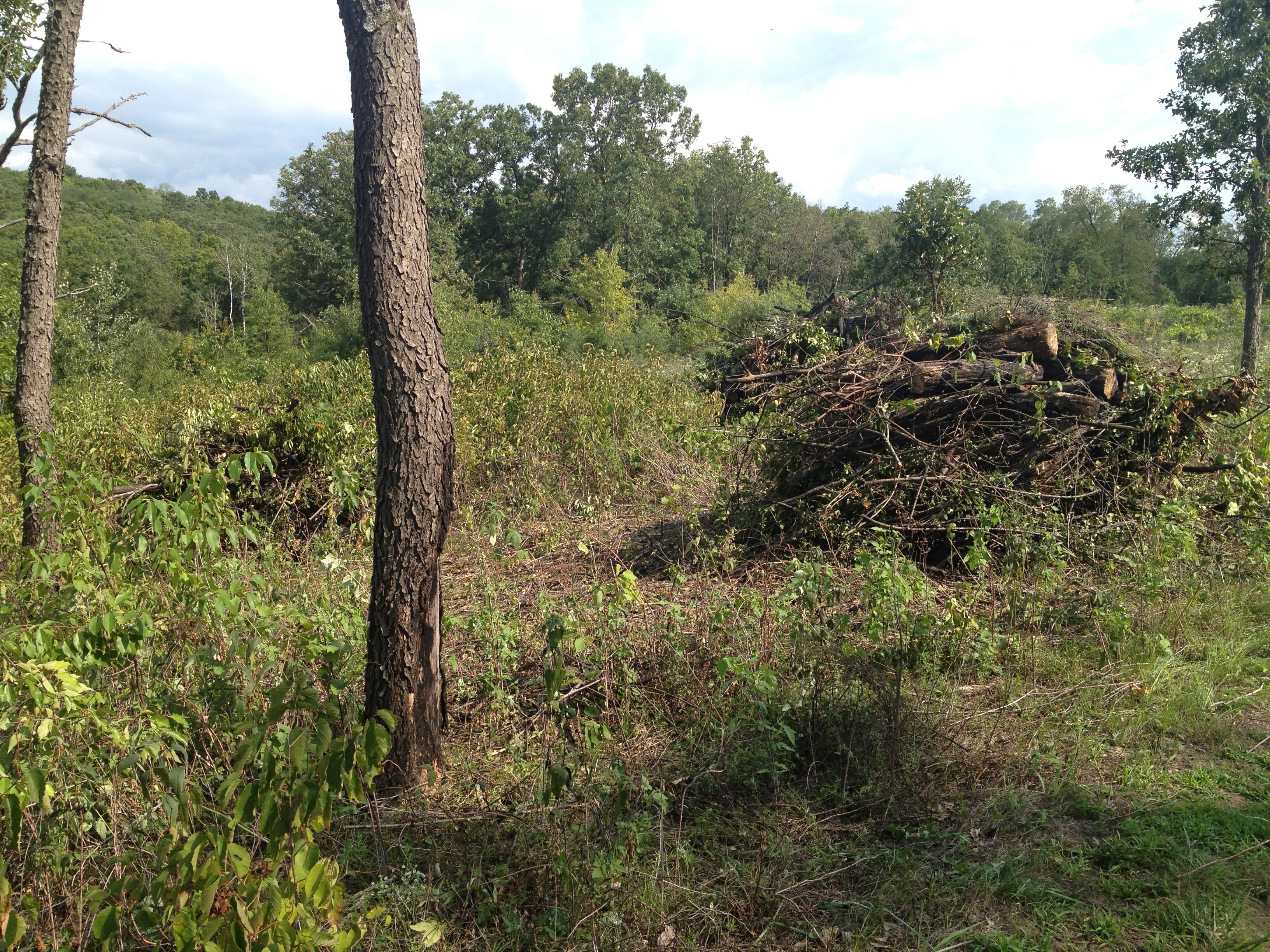
6 tanks of gas and bar oil later the view from the work site.
And the scenic overlook.
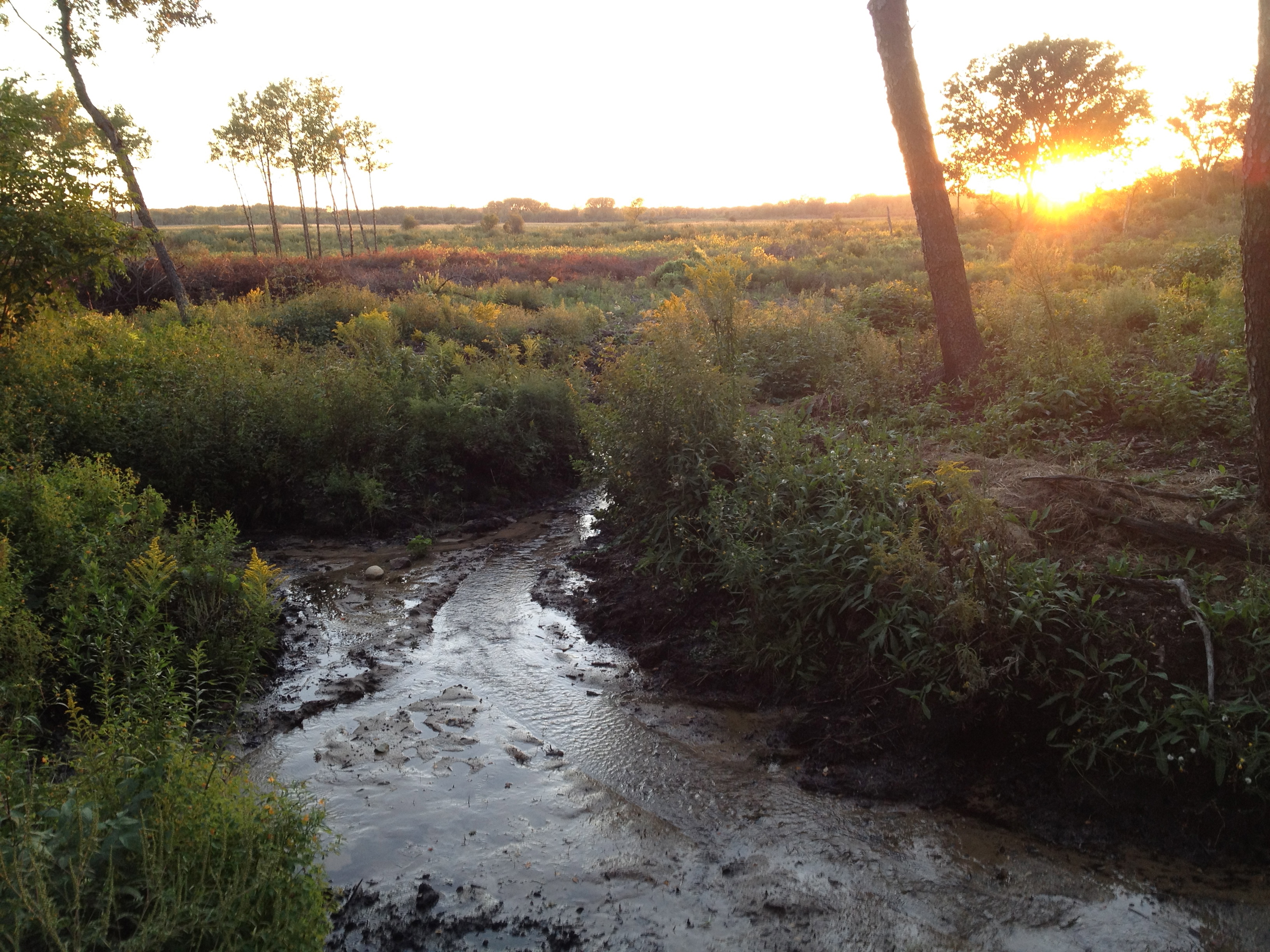
And from the Indian Spring.
We are focusing on cutting now to allow the Buckthorn to dry out as much as possible. We’ll pile it later to finish preparing it for burning this Winter, when we get some snow cover.
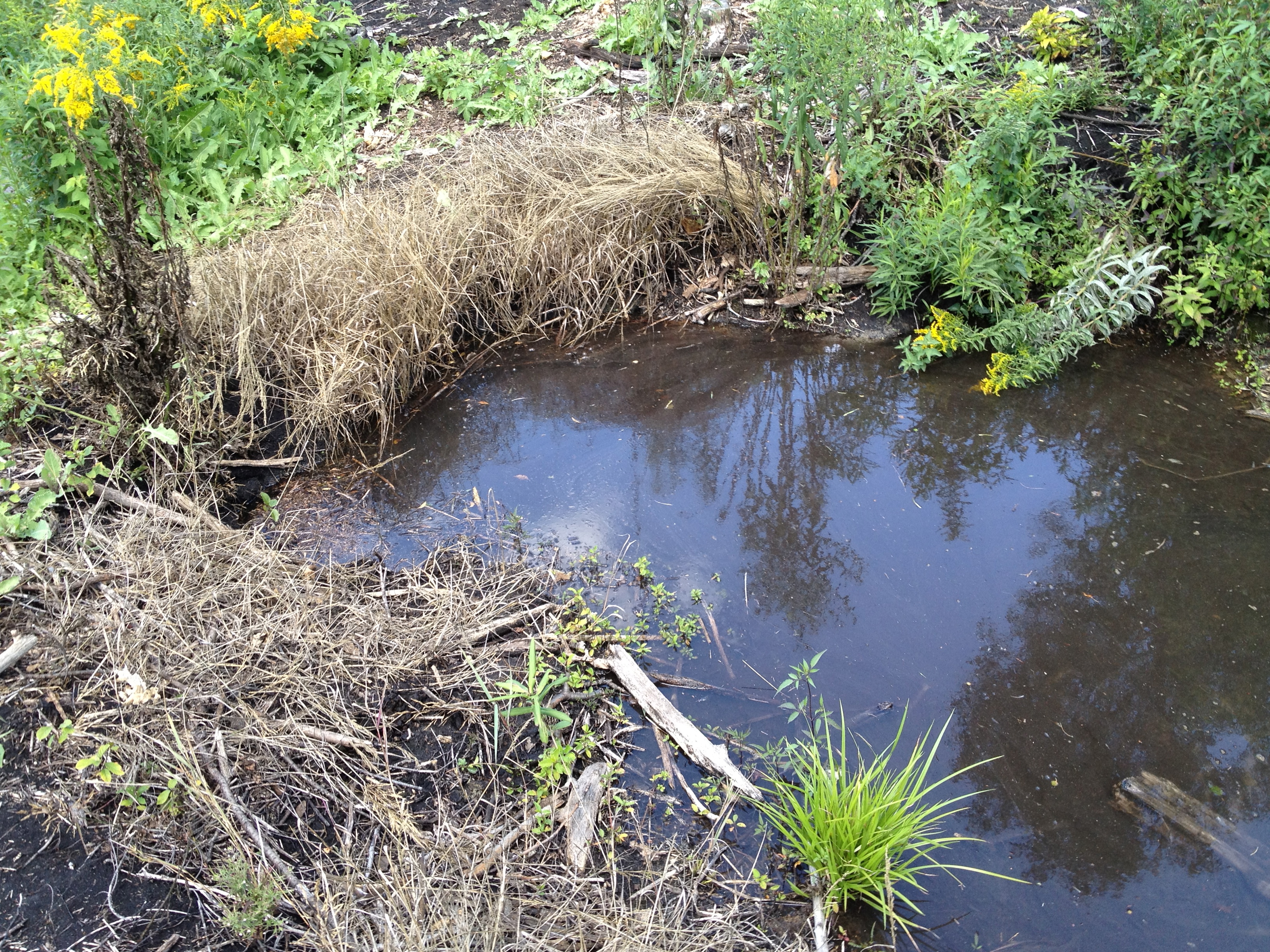
On his last visit, Ron Kurowski showed me where a spring was hidden by the old hotel site. I have marked it with a white line on this map.
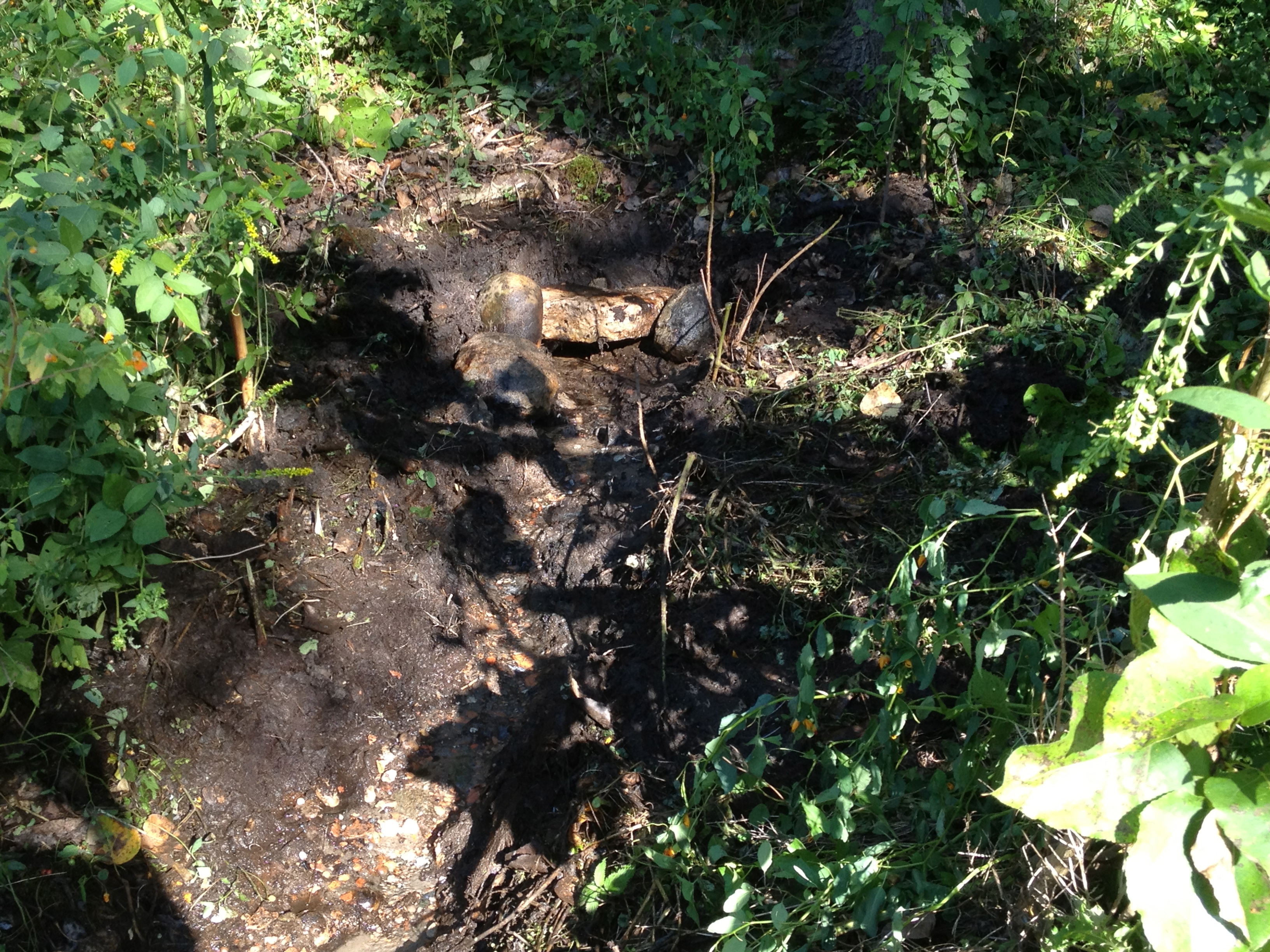
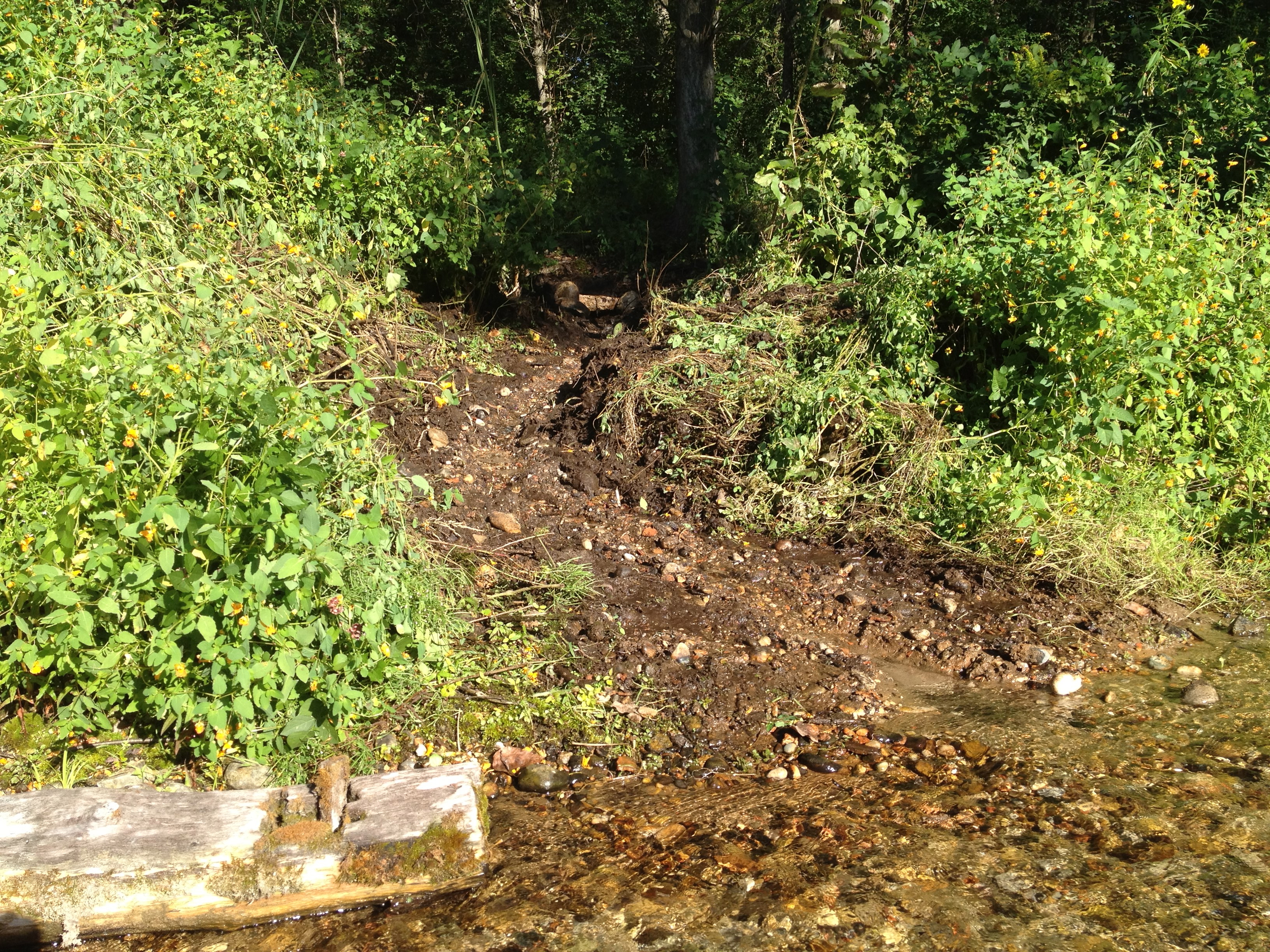
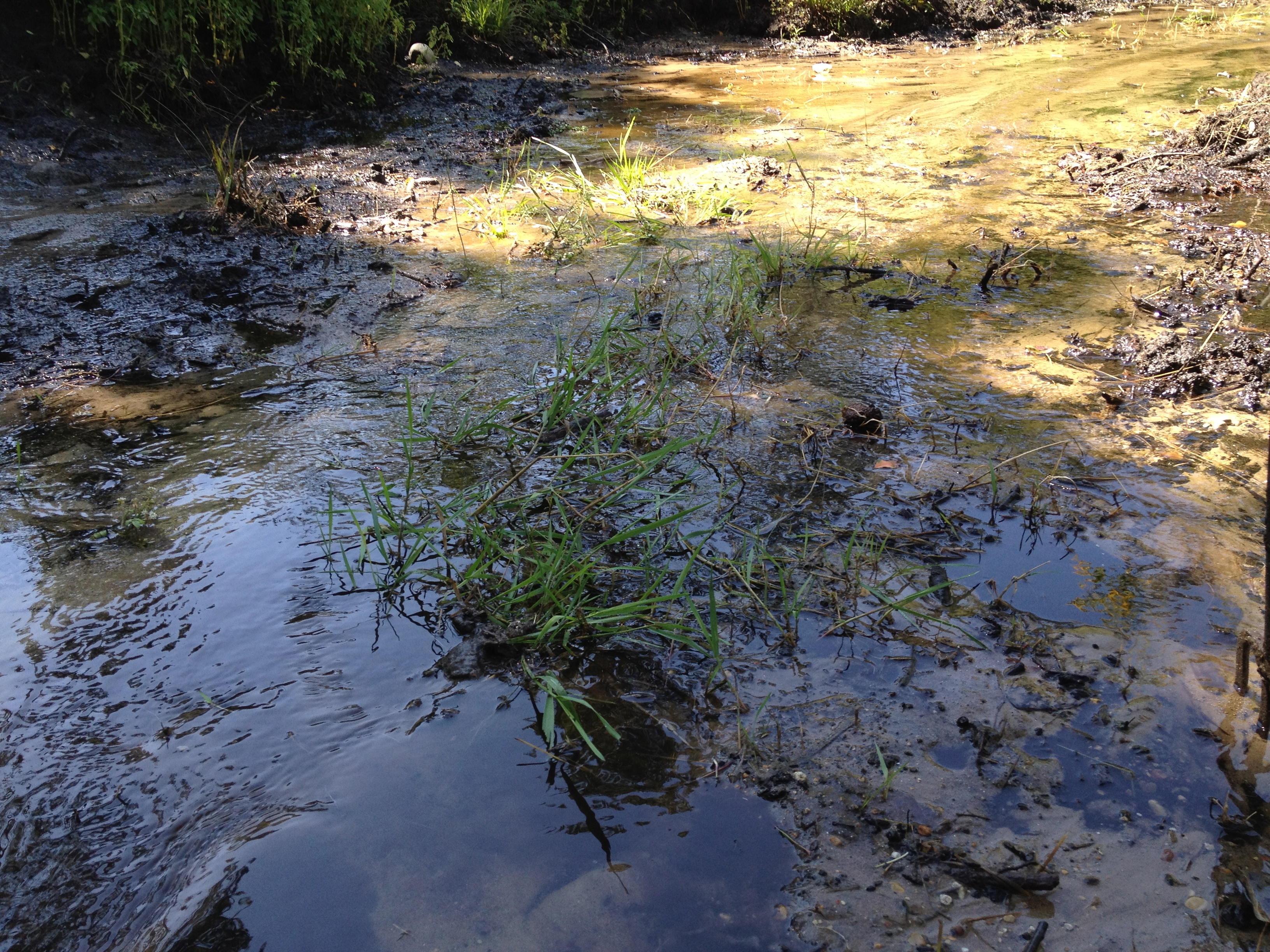
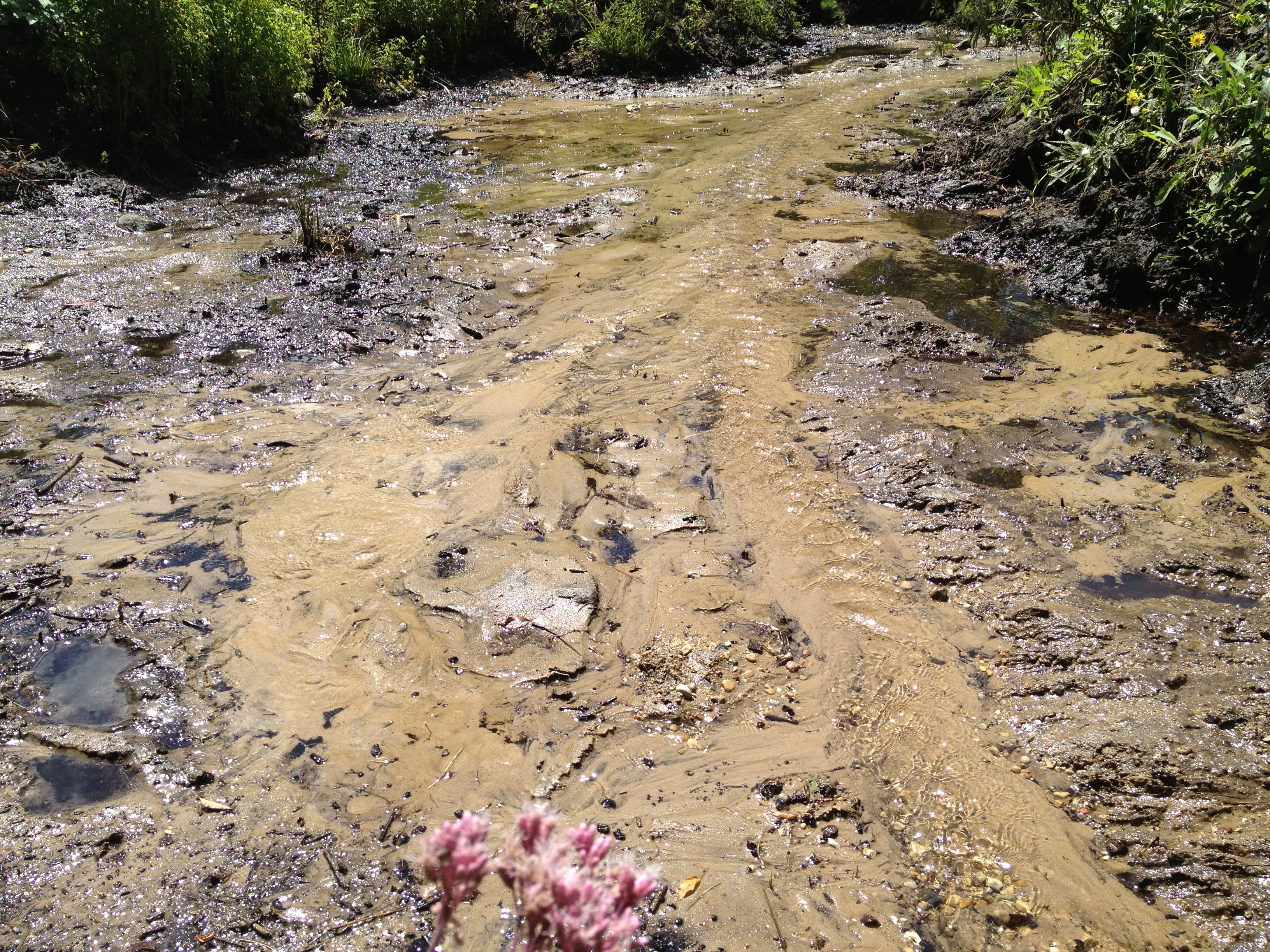
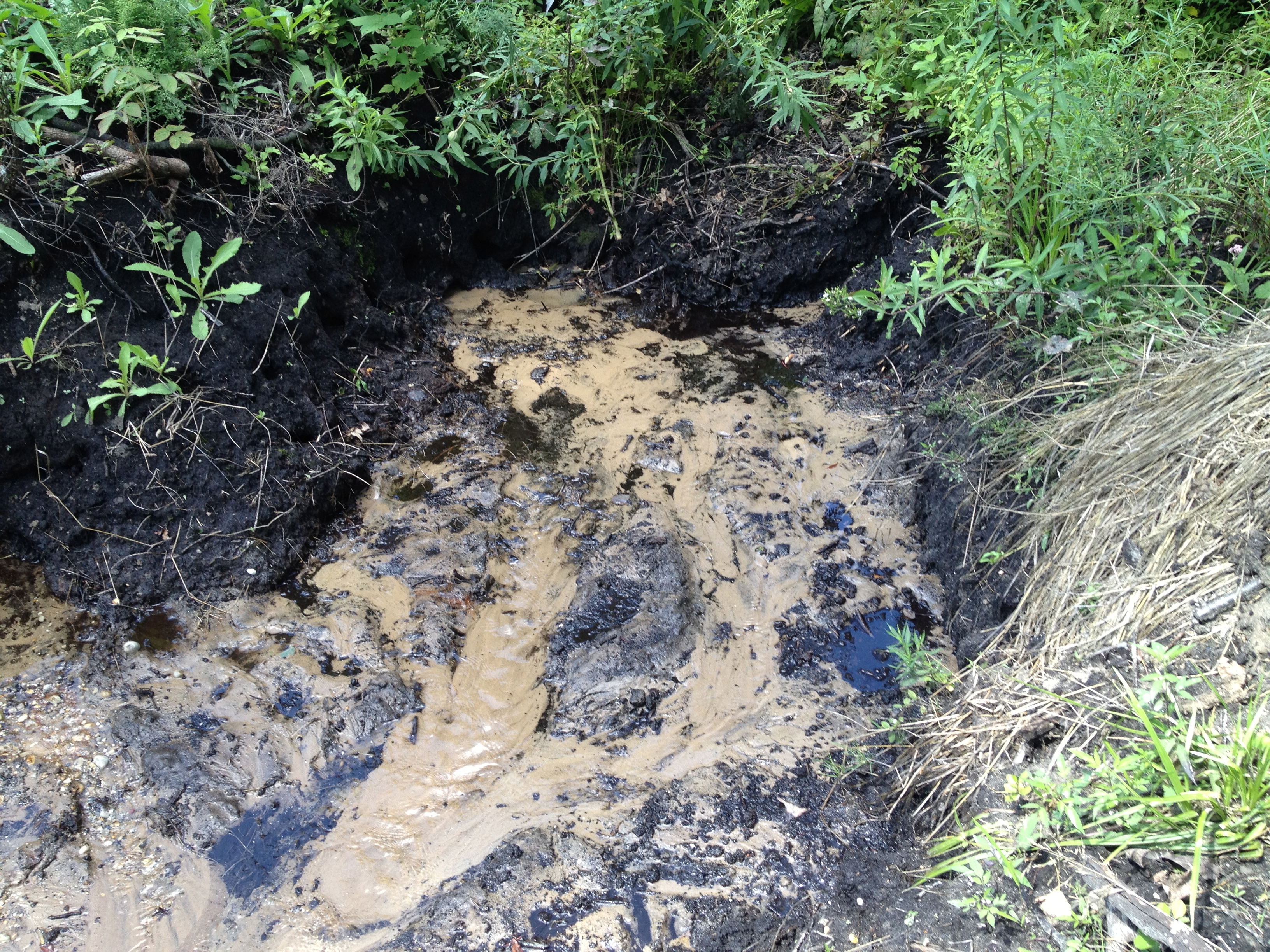
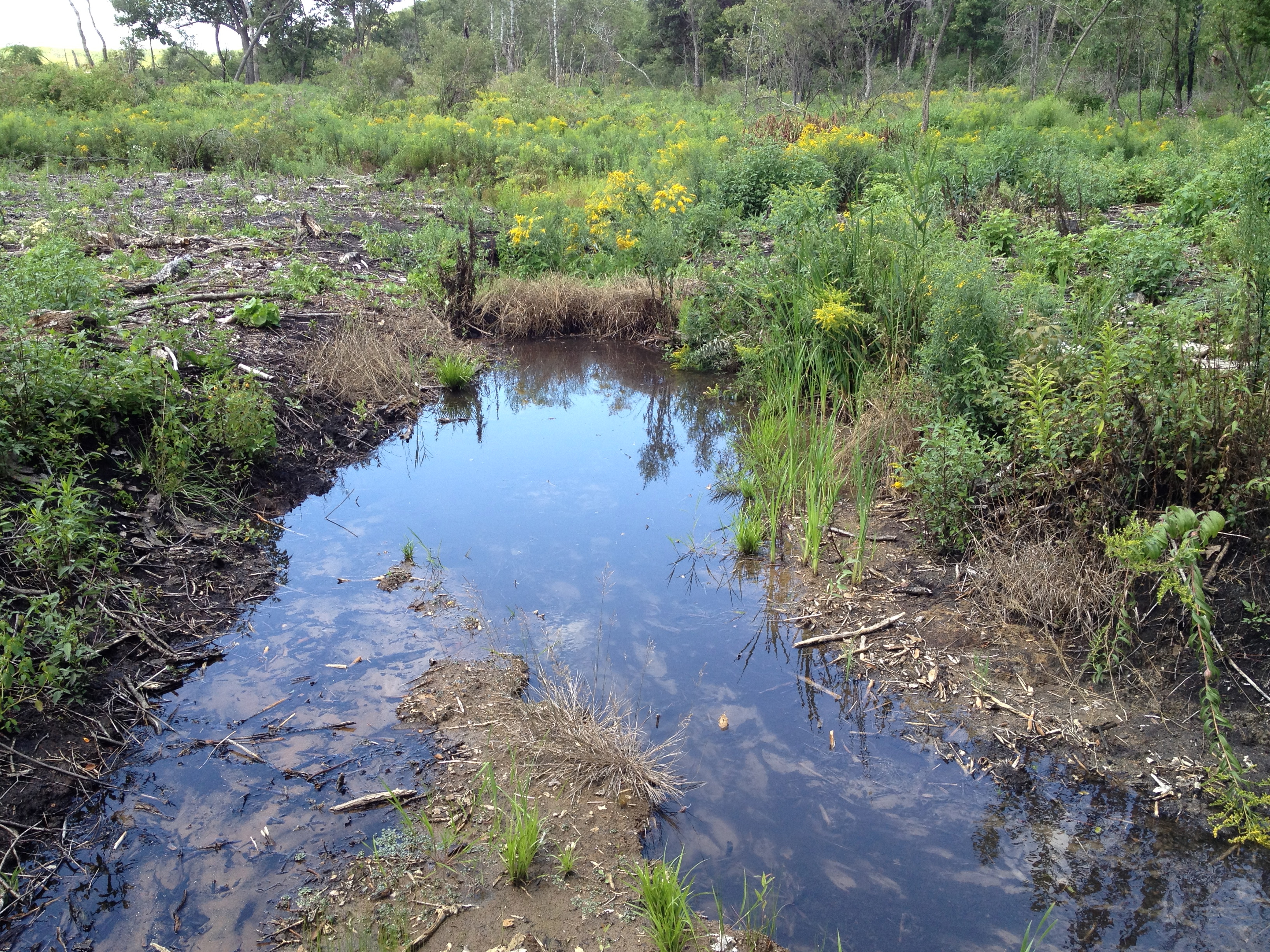
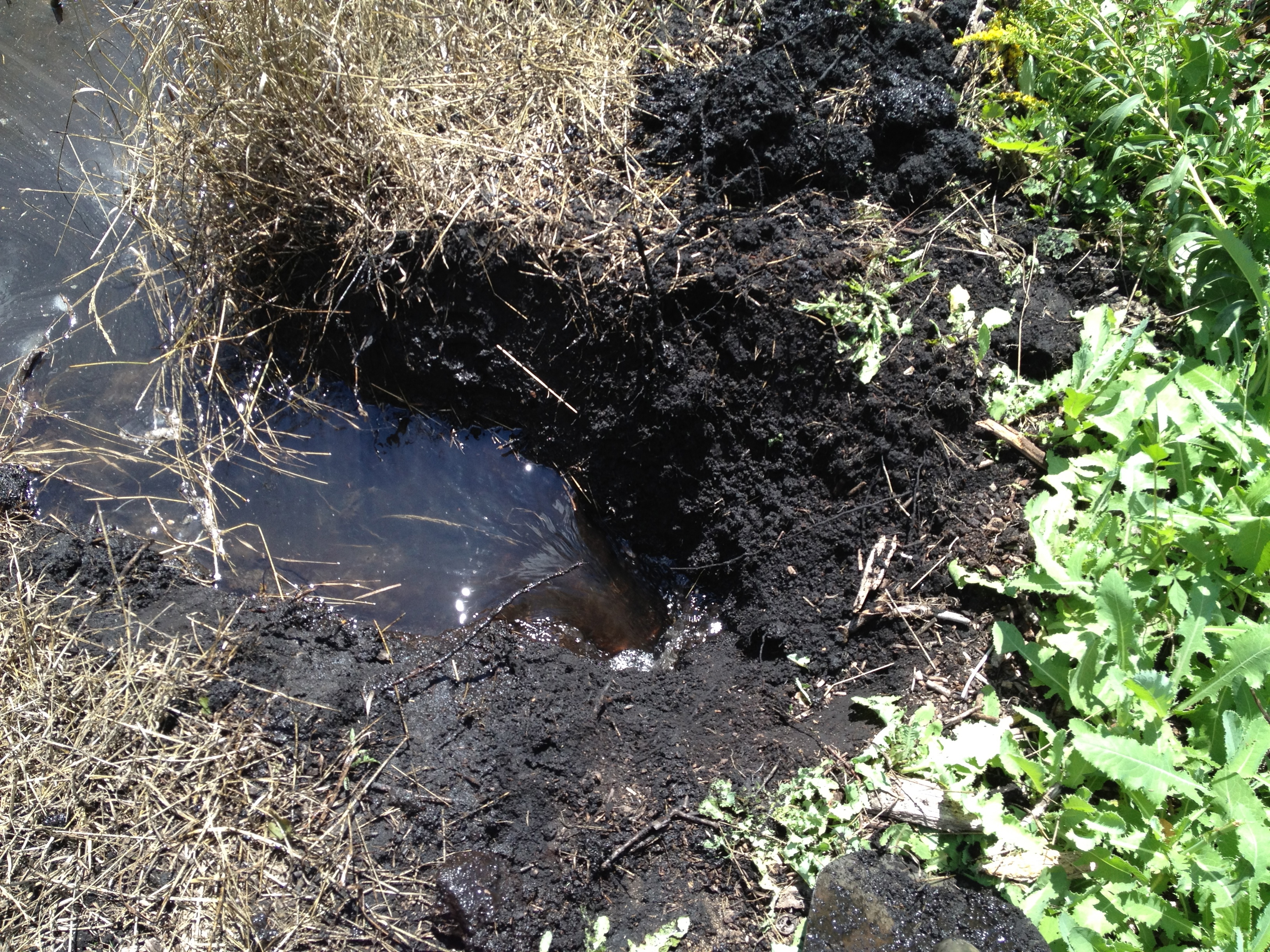
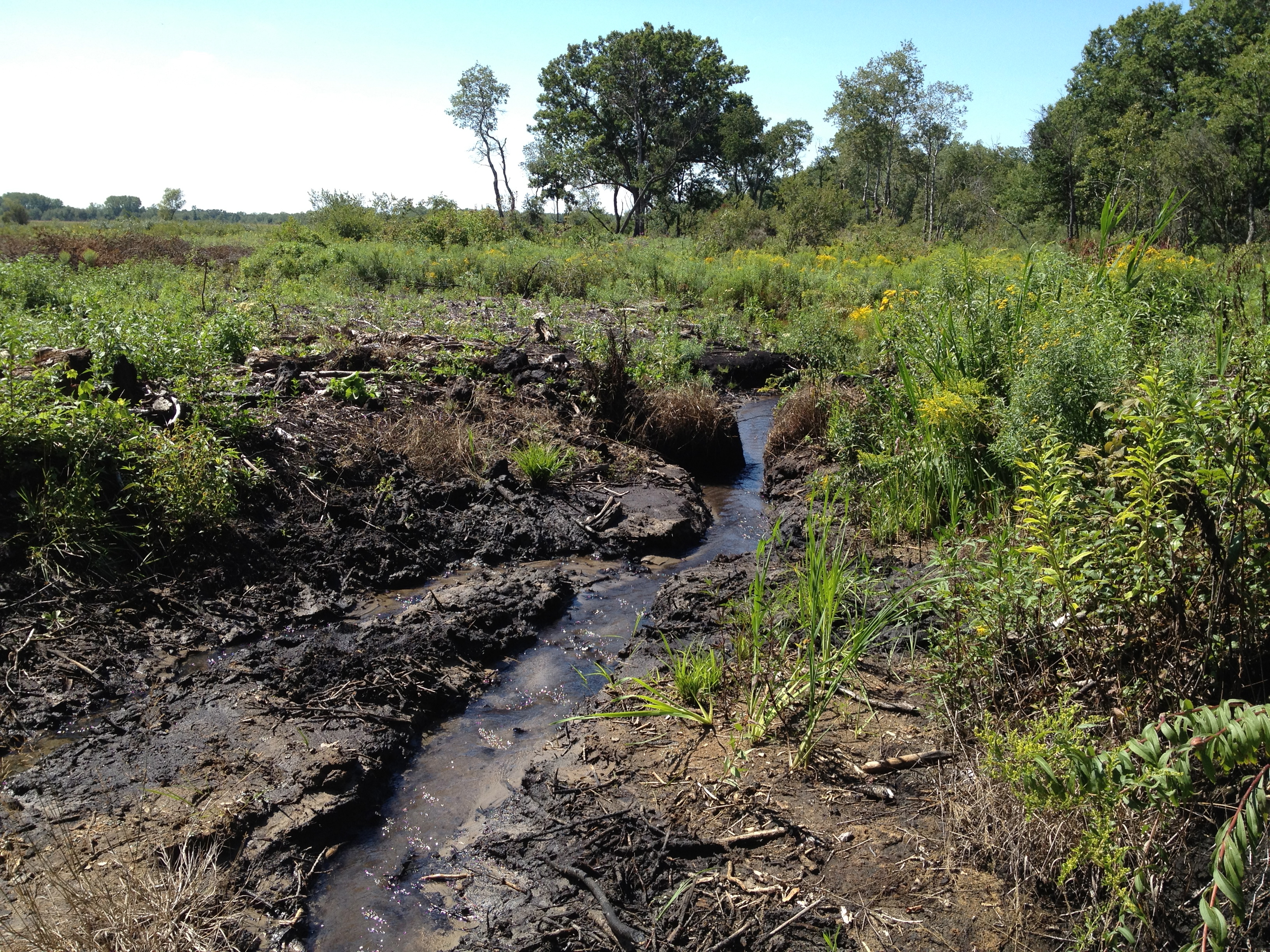
I forgot to take some before pictures, but all you could see was a bit of water cress. Below are pictures of the “new” Spring after I cleaned it up. When I found the 4″ pipe that was originally installed to collect and channel the outflow of the Spring and unplugged it, the water began flowing at a much higher volume. Thanks Ron for pointing out the location of this Spring!
The view from the trail. The outflow pipe is hidden under the big flat stone.
And the view from the river.
It was another beautiful day at the Springs. Here are a few closing shots.
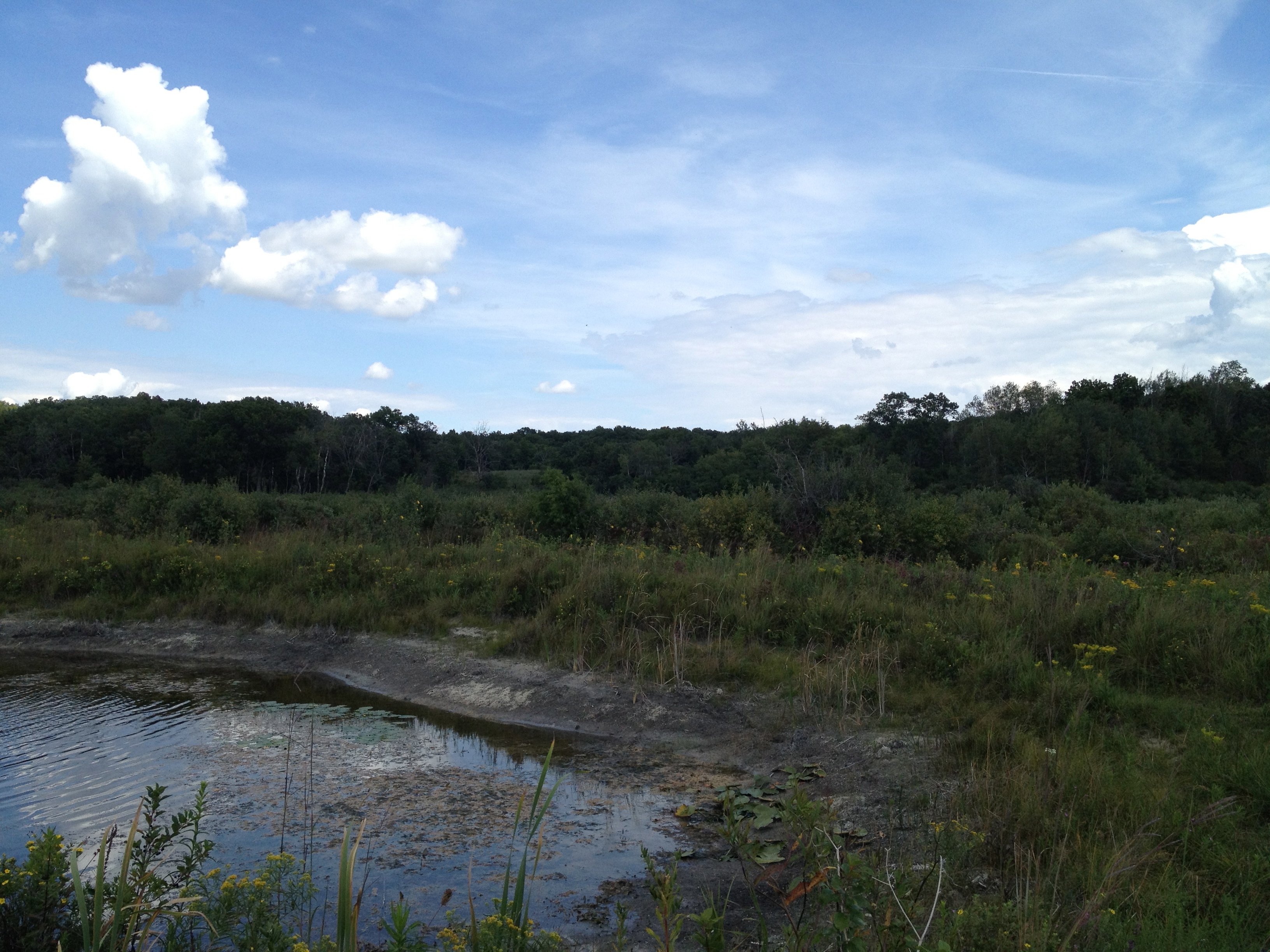
The scenic overlook and Indian Campground after the recent clearings as seen from the Marl pits.
Here is a guest blog from Ron Kurowski, retired DNR naturalist.
This is a photo of forked aster (state threatened plant),
which is found in only one location at the Scuppernong Springs at present. It is found on the east side of the sand dune in the more open woods, towards the bottom of the slope (left of the boardwalk).
It appeared suddenly after several controlled burns. At times I have seen over 100 plants blooming in this general location. There is also a colony blooming at Paradise Springs, so I would suspect that it likes wet soils.
You will also find the larger gentian growing here too, probably reaching its peak, sometime around the middle of September. (ed. note, the picture was taken along the Marl Pit)
This picture shows the large marl pit at its south end.
I have never seen the water level in the marl pits so low. The plant community to the left of the marl pit is part fen and sedge meadow. The fen is just starting to show its beautiful flowers, so people who walk along the marl pit in the next
couple of weeks will see several fen flowers including grass-of-Parnassus, nodding lady’s tresses orchid, small fringed gentian (state threatened) Ohio goldenrod, marsh thistle, and gerardia. Fens are springy wet grass lands
that very alkaline and the rich marl (calcium carbonate) soils make this a
very special site.
(ed. note Thanks Ron! Regarding Purple Loosestrife and Tracy Hame’s recommendation that we introduce the Loosestrife Beetle, Ron explained that the DNR has been doing this for many years in this area. I am following up with him on this to see if we should step up this effort. The Purple Loosestrife appears to be getting the upper hand.)
My last 4 visits to the Springs were spent prepping the Indian Campground for mowing and burning. I made good progress on 8/21 on the Northeast section.
Cutting stumps and charred logs in the sand is tough on the chain, bar and sprocket. The grit gets in between the swiftly rotating parts and wears them down fast. I had to constantly stop and tighten the chain because of the wear on the links. I wore out 4 chains, a bar and 2 sprockets.
To preserve my sanity, I needed to work on something a little easier and more fun so yesterday I focused on continuing the effort to open up the views to the West from the Indian Campground Scenic Overlook.
I am a landscape artist in my dreams and when I resumed working at the Springs in April 2011 my first goal was to open up the views West from the Scenic Overlook. To that end, I began clearing Buckthorn on both sides of the Indian Springs and yesterday was the day to “take the curtain down” and see what we could see. Here is a before picture and video panorama.
The trees in the foreground of the picture above on the left included Cherry, Red Oak and Hickory. Normally I focus on Buckthorn but in this case, recognizing the land was previously an open wetland/meadow, the DNR recommended these trees be cut. I purposely preserved the longest, straightest pieces of wood that I could. I know a couple people who turn wood on lathes and they may be able to make something from these pieces. If you would like to harvest some 10-14″ diameter 20-30′ foot long pieces, of Cherry, Red Oak or Hickory, please help yourself. In the interest of making a dramatic change, I focused on cutting and saved the piling for another day. I must admit, as I contemplated the days work and the huge difference I was about to effect, my heart was racing. As we used to say, it was a rush.
Here is an after picture and video panorama.
The row of Buckthorn on the left in the picture above is the target for the next workday. Later that evening I was joined by my wife Pati, who road her bike out from our home in Milwaukee, and I took a few more pictures.
I hope you like it!
Later that afternoon Ron Kurowski, retired DNR naturalist and the force behind the Scuppernong River Habitat Area project, stopped by and we took a walk around. I can best describe his mood as ebullient. He showed me pictures and described the many flowers, some rare, that he had seen already on his walk. I asked him to document his findings and send me the descriptions and pictures so I can post them as a guest blog here. Thanks Ron!
Ron filled in more of the history of the most recent beaver activity in the area and explained the relationship between the dam they made at the Marl Pit bridge and the defunct short cut trail that used to bisect the loop trail. The dam caused so much water to back up that it flooded the area to the North where the cutoff trail went. Check out the map above, this is a huge area! Although beavers have always been an important contributor to the natural landscape, the powers that be dictated that they had to go. Ron hired a trapper to remove the beaver and he said one of them was over 100 lbs, the biggest beaver he had ever caught. Ron said the beaver at the Marl Pit dam used to be quite an attraction. My efforts to redirect the river back onto its main channel,from where it had gotten diverted by the beavers, is holding up around 90% effective. This will have to be redone.
As we toured the Springs, especially the area around the Emerald Springs, Ron suggested that we contact Ben Heussner, DNR Fish Biologist, and get some of the left over “geo logs” that were originally used to help constrain the river into a narrower channel. We need to install more of these logs and do some dredging to continue the efforts to put the river back into its natural bed. There is still too much water spreading out into the surrounding land around the Emerald Springs and it is feeding the Phragmites and Cattail. We’re not done “fixing the water” yet.
We had a wonderful visit with Tracy Hames, the executive director of the Wisconsin Wetlands Association, on Sunday August 19th. It is easy to see why they hated to see Tracy leave his position as head of the Yakama Nation’s Waterfowl Program. Tracy is very passionate and enthusiastic about protecting and restoring our wetland resources and we are lucky to have him back home in Wisconsin.
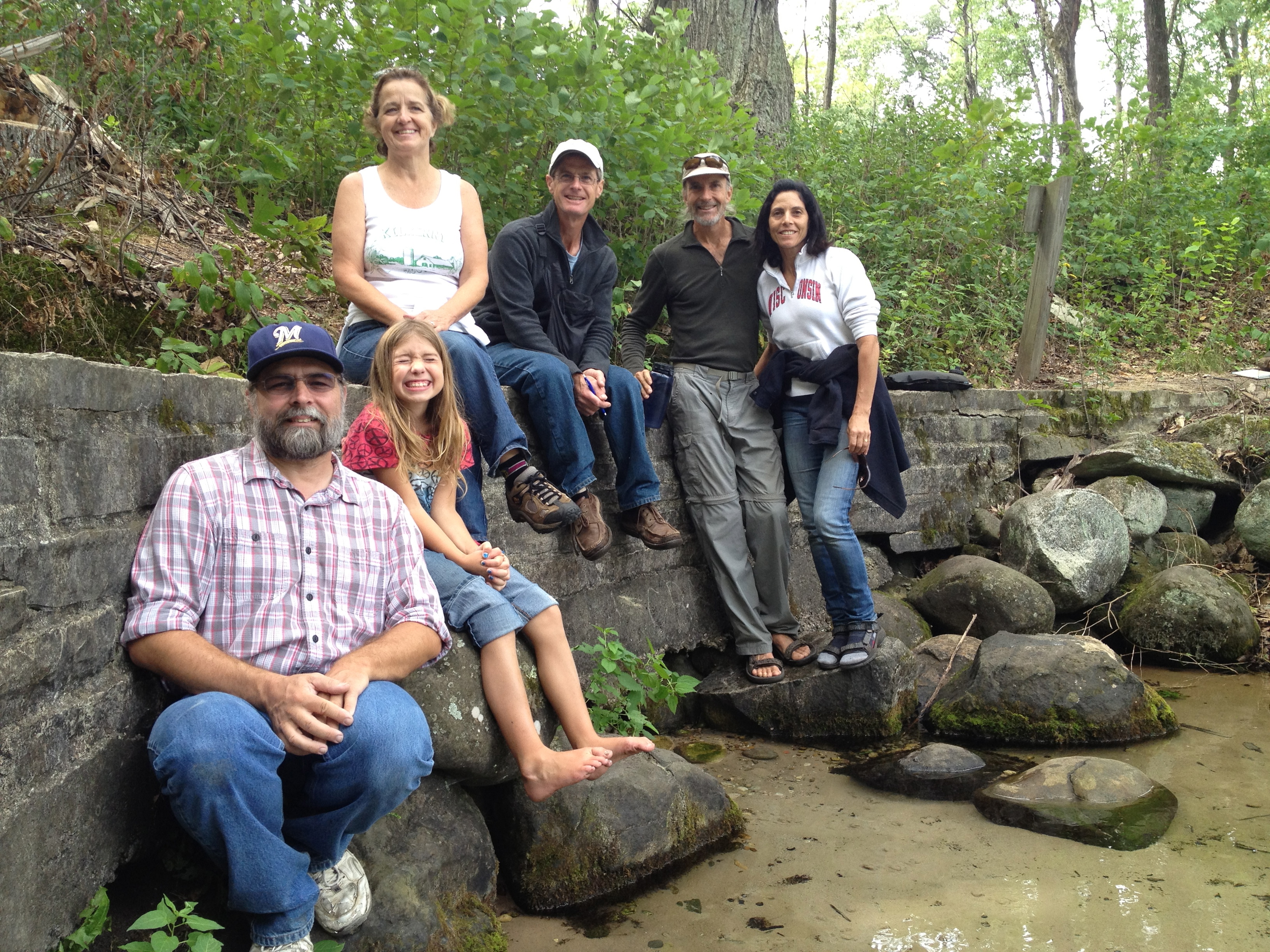
Tracy, Sophia, Connie, Lindsay, Paul and Pati at the Scuppernong Springs. Thanks Anne for the photo!
Connie captured some great moments on video and pictures as we toured the Springs and we will add some of that content to this blog soon. Listen to the interview I captured with Tracy at the Indian Springs.
Tracy had many suggestions for things we could do including: introducing beetles to attack the Purple Loosestrife, working with a DNR Hydrologist to install one or more water flow gauges, studying the historic (before European settlement) use of the land and water and the flora and fauna present at that time, and in general, carefully monitoring the results of all remedial actions we taken to determine their efficacy.
Later that day, our friends Jim and Cathy Brown visited us and we took another tour of the Springs. We walked out along the Marl Pit channel, which is very easy to do now because of the dry weather, and I captured a couple shots along the way.
The opening in the distance on the hillside below is the Indian Campground.
“Fixing the water” has been one of the top priorities of the DNR and the Kettle Moraine Natural History Association in regards to the Scuppernong River Habitat Area Restoration. Our efforts to clean up the Springs, the headwaters of the Scuppernong River, compliment the DNR’s efforts to put the river back on its original stream bed (Ben Heussner interview) and all of the other things they are doing to improve the watershed.
“we’re trying to restore the hydrology
– to get the water working the way it used
to. That’s what we’re talking about when
we talk about hydrologic restoration. The
first thing we want to do on a project like
this is ‘fix the water.’ Then you can start
working on all of the other components.”
The last time DNR trail boss Don Dane took a tour with us, Lindsay pointed out that the river had taken an unwanted diversion immediately West of the Marl Pit bridge. Don recommended that we block the side channel and get the river running back on its main course. Ron Kurowski also recommended the same when he toured the site back in the Spring. So, in honor of Tracy’s visit, I took a break from brush clearing and tried to “fix the water”.
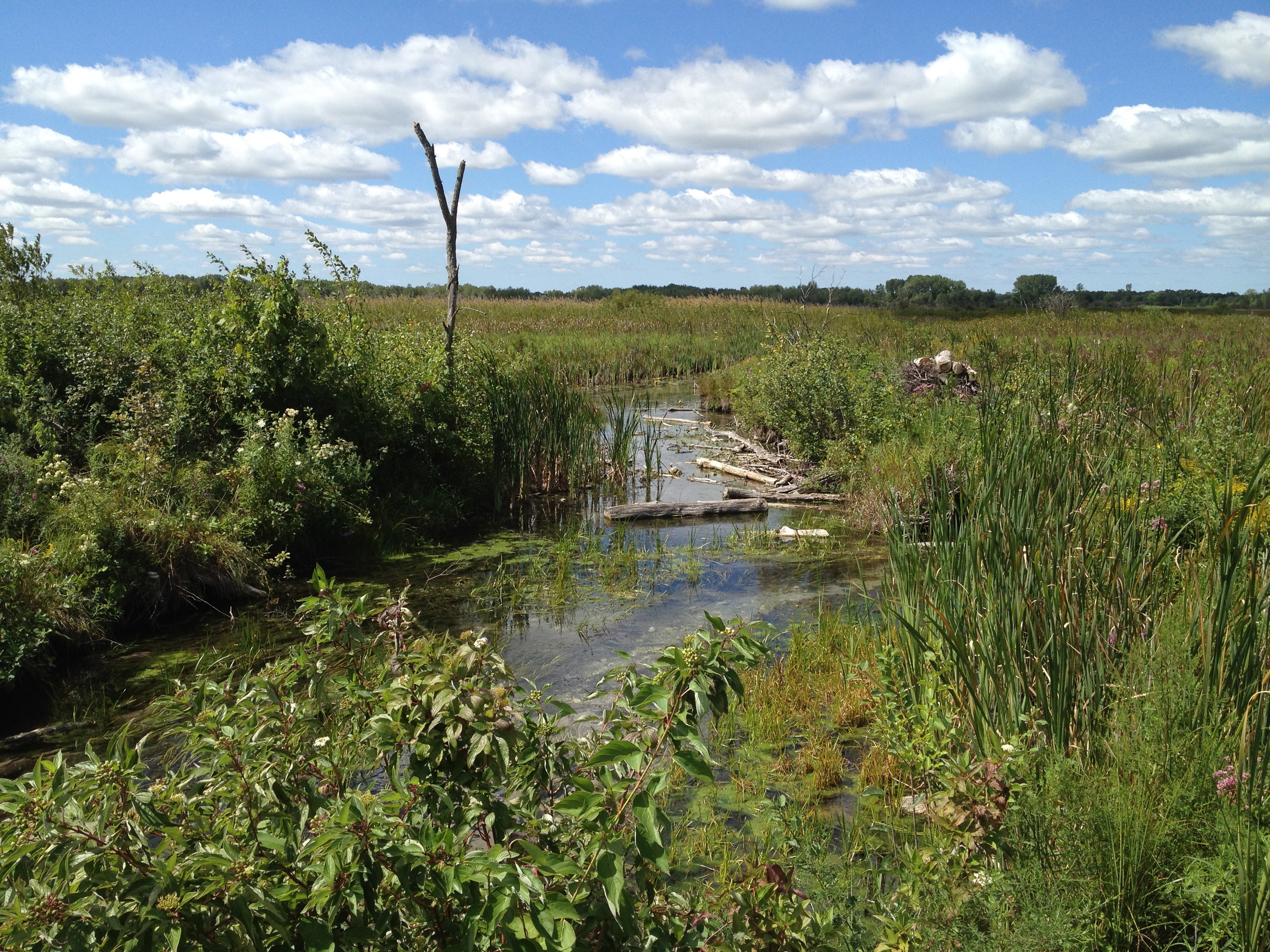
These pictures are taken from the Marl Pit bridge area and show the before views downstream. The river got off course sometime after the channels connecting the Marl Pits to the River were filled in with gravel. There used to be large buckthorn trees laying across the main channel and they trapped logs and other debris until finally the river found a way around by making a turn to the right/North. The river returned to the main channel approximately 20 yards downstream.
A better view of the main channel full of debris.
The side channel diversion is show below.
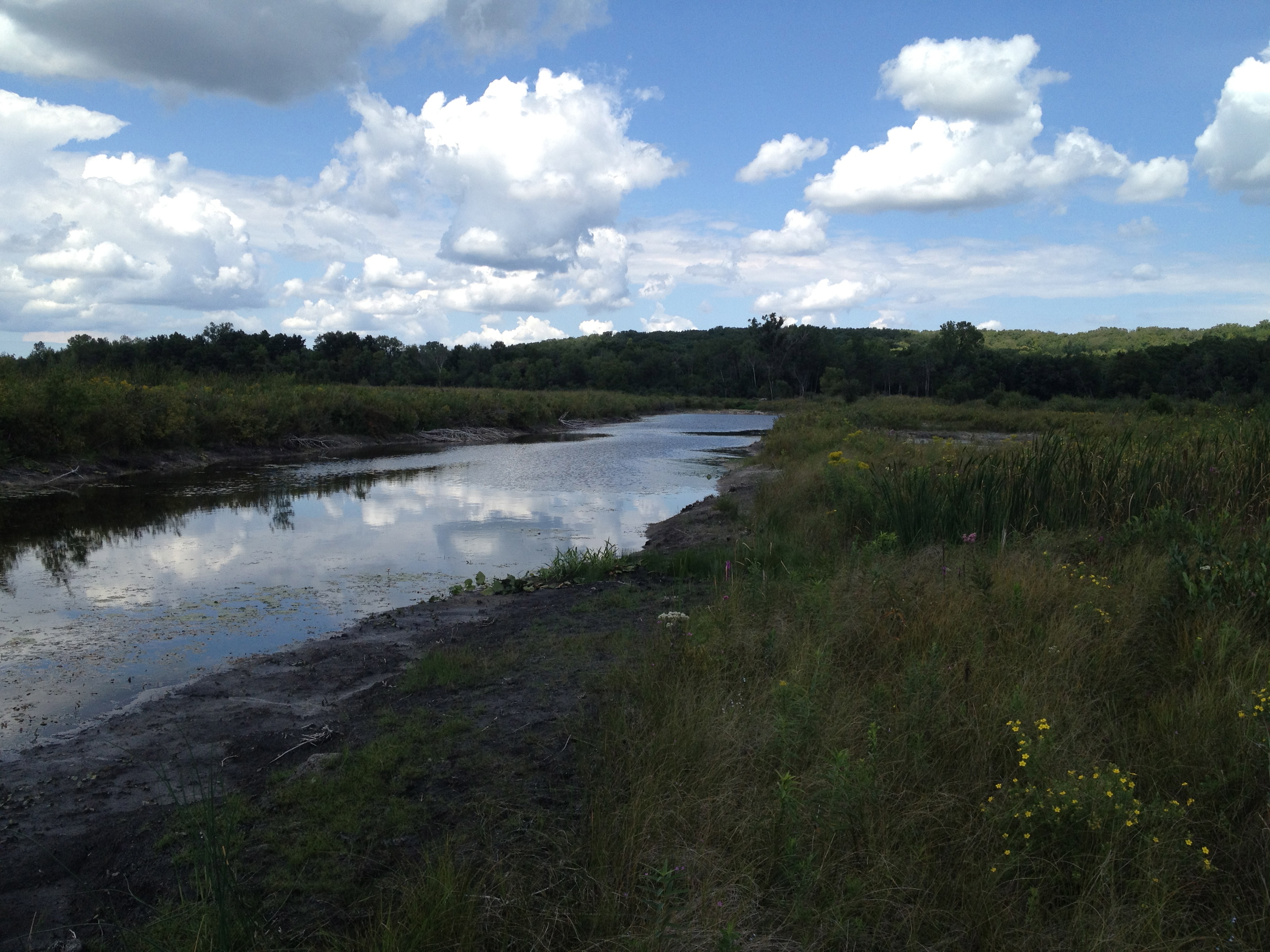
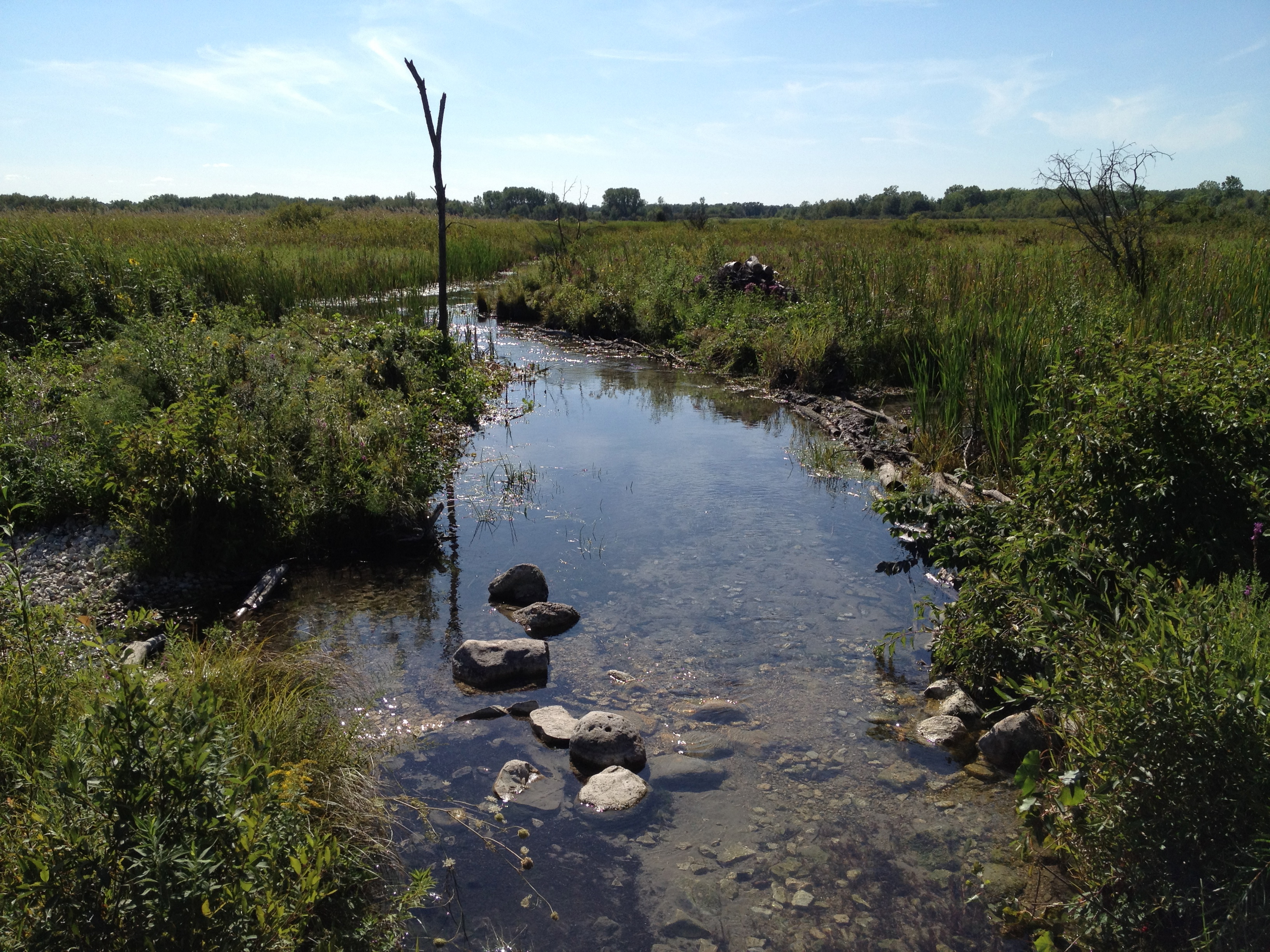
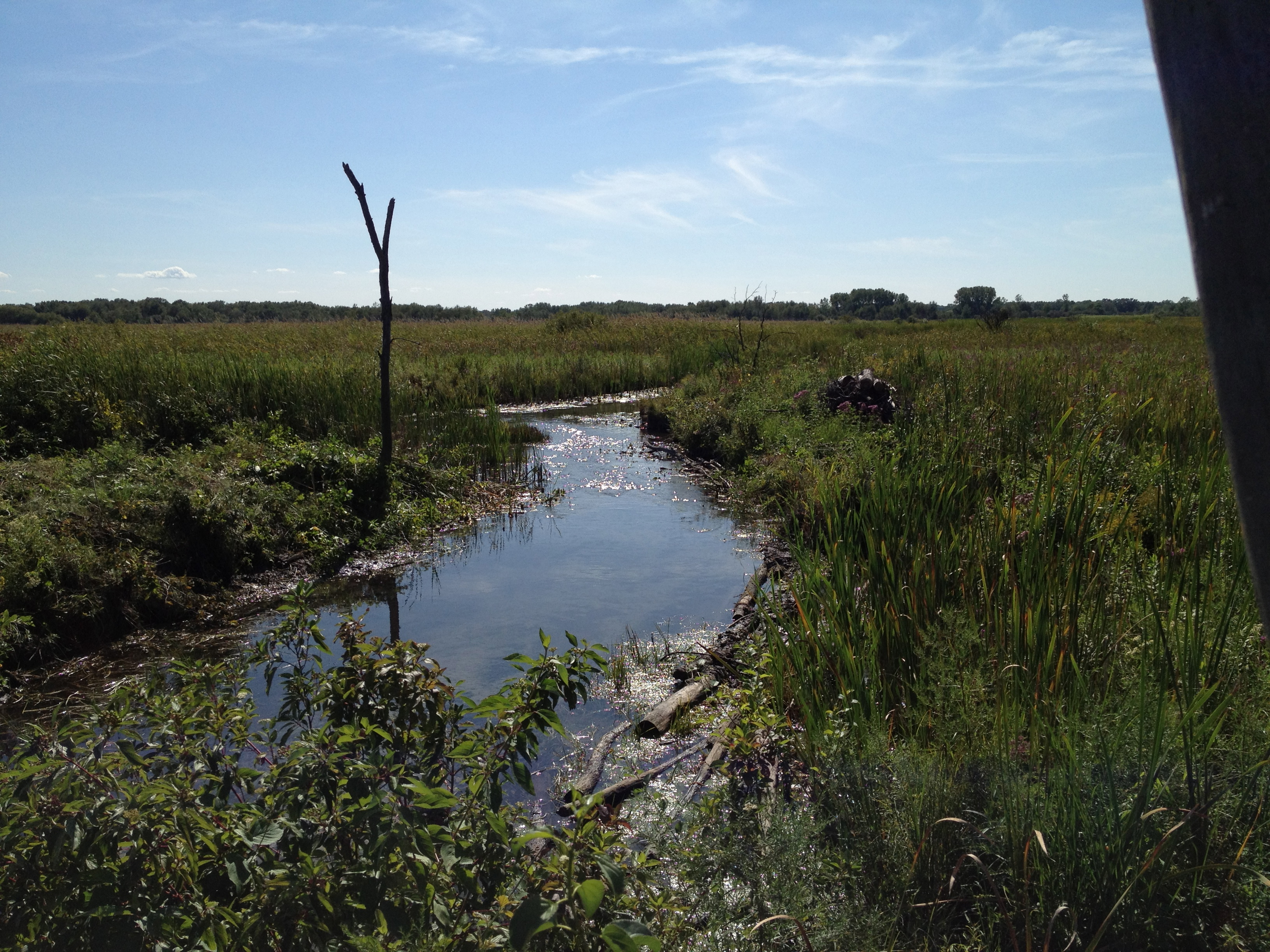
Here are some after shots. I noticed a classic pool, riffle, run pattern after the river resumed its normal course. There is a pool right where the side channel formed and now, after the clean up, you can see this followed by a riffle, a run and another pool where the old side channel returns to the river (Ben Heussner explains this pattern in his interview).
My repair job is probably not up to DNR standards, but its a start.
Today we are featuring a guest blog by John and Sue Hrobar
Sue and I have been fortunate this past year to have the time to hike the Scuppernong Springs trail every few days usually a couple of times a week. We have been impressed by all the invasive clearing that you, Pati, Lindsay and your occasional other volunteers (ed. note Saturn Tre Volte, Mark Mamerow, John Mesching, Mike Fort) have accomplished. Sue and I try to hike a number of the other trails in Waukesha County and have hiked a number of sections of the Ice Age Trail. We both feel the Scuppernong Springs trail is one of the most important for a number of reasons. At Scuppernong Springs, you have a number of habitats and soil types and conditions all coming together. There is some gradient associated with moraine topography which contributes to the springs and you have lowlands, wetlands , fens and what almost seems to be an old vegetated dune in the area above and to the east of the Indian Springs. This juxtaposition of these variables allow a visitor to view habitats and their gradation into each other, sometimes abruptly, and how the plants and critters that make up that biota interact and use the habitats.
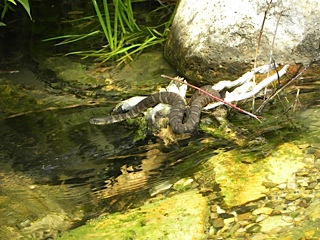
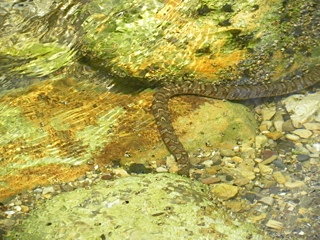
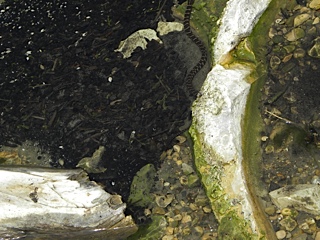
The photos below are from several dates. As we all recall it has been a brutally hot and abnormally dry summer. Many plants bloomed quite early . Once the hot weather set in Sue caught these images. On July 1st, these three snakes were observed in the creek, near the marl pit bridge. The two lighter colored snakes are Northern Water snakes, the one with his head under a rock is underwater in the middle of the creek, after a minute or two he came to the surface with what appeared to be a Slimy Sculpin in his mouth. He was pretty quick so Sue couldn’t quite get that shot. We had only a fleeting glimpse of the small Darker snake underwater so we didn’t positively ID it. Then she has a nice photo from July 9th which is a nice photo of a Hog Nosed snake. We have observed several of these in various locations. On one occasion we observed Mr Hog-nose with toad legs still hanging out of his mouth but we didn’t want to get closer or attempt a photo and disturb his well earned meal.
Northern Water Snake.
Darter Snake?
Hog Nosed Snake.
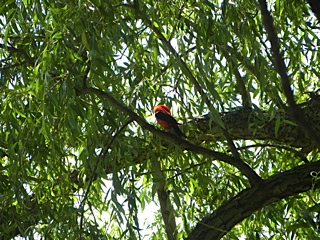
Sue and I wanted to send you these photos taken near what we call the Hotel Spring, from the trail guide, which is downstream from one of the wooden bridge crossings. The springs have a nice dolomite wall in an arc which is handy to sit on and cool your feet on these very hot summer days. Sitting on the dolomite wall arc and cooling our feet on June 26th, we were able to observe this beautiful scarlet tanager using the shade of the large willow that cools the rocky riffle area that has spring water flowing out over it. Numerous other species were flitting in and out of the willow and the shaded riffle area. We speculated that the combination of shade, firm rocky riffle with cool water and some over head protection from a possible predation from Copper’s hawks made this a special area for a number of bird species.
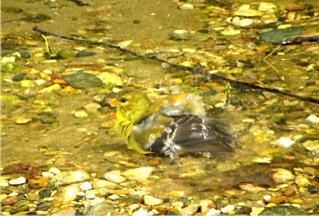
On July 1st ( still beastly hot) this female goldfinch and waxwing were again enjoying the shaded, cooled riffle area. We have seen many bird species flying in and out and perching on many different plants and areas all along the trails. The variety of birds and numbers taking advantage of this spot surprised us and after documenting this use we thought it important to mention to you.
(ed. note Thanks John and Sue! We appreciate your observation that the huge Willow Tree by the Hotel Springs creates a unique setting for birds. We had planned to cut this Willow down to open up the views up and down the river but, per your advice, we will not cut it.)
My ever loving and trustworthy soul mate Pati Holman came out with me yesterday to work at the Springs. She took a day off from her work as a Feldenkrais Practitioner to play in the Sand Prairie with me. Pati has been very supportive over the last 15 years helping me out when she could at the Brady’s Rocks and Hartland Marsh projects.
It’s slow going as the area is a tangle of large dead trees interspersed with “witches broom” regrowth from the previous mowing all tied together with wild grape vines.
I cherish every day I get to spend at the Scuppernong Springs. Saturday, August 11th was an absolutely gorgeous day indeed.
Since I resumed working at the Springs in late April 2011, I’ve thought about giving the individual springs names. Well, they already have names that I just recently noticed on the Scuppernong Springs Nature Trail Map, included in the guide.
The namesake spring is the Scuppernong Spring, which I’ve been referring to as the first or main spring. Then there are the Hillside Springs (actually in two locations), the Hidden Spring, the Emerald Spring, the Hotel Spring and the Indian Spring. Trail boss Don Dane says there are 13 springs and one of these days, I’ll get him to document where they all are. The trail brochure explains — The name Scuppernong comes from a Ho Chunk word meaning “sweet-scented land.” I wonder what names the Ho Chunk people gave to the individual springs. From now on, I will be using the current names when referring to the individual springs.
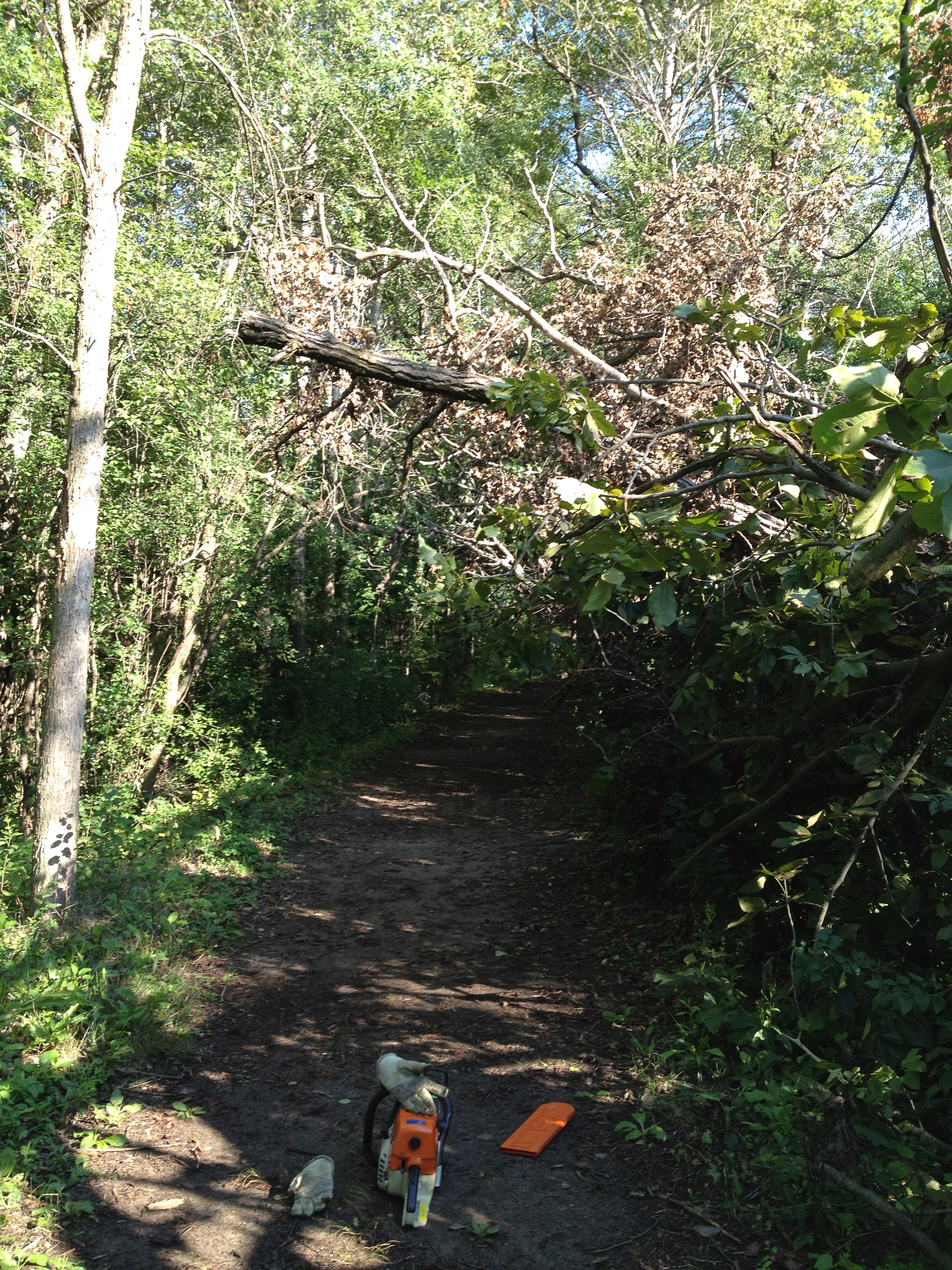
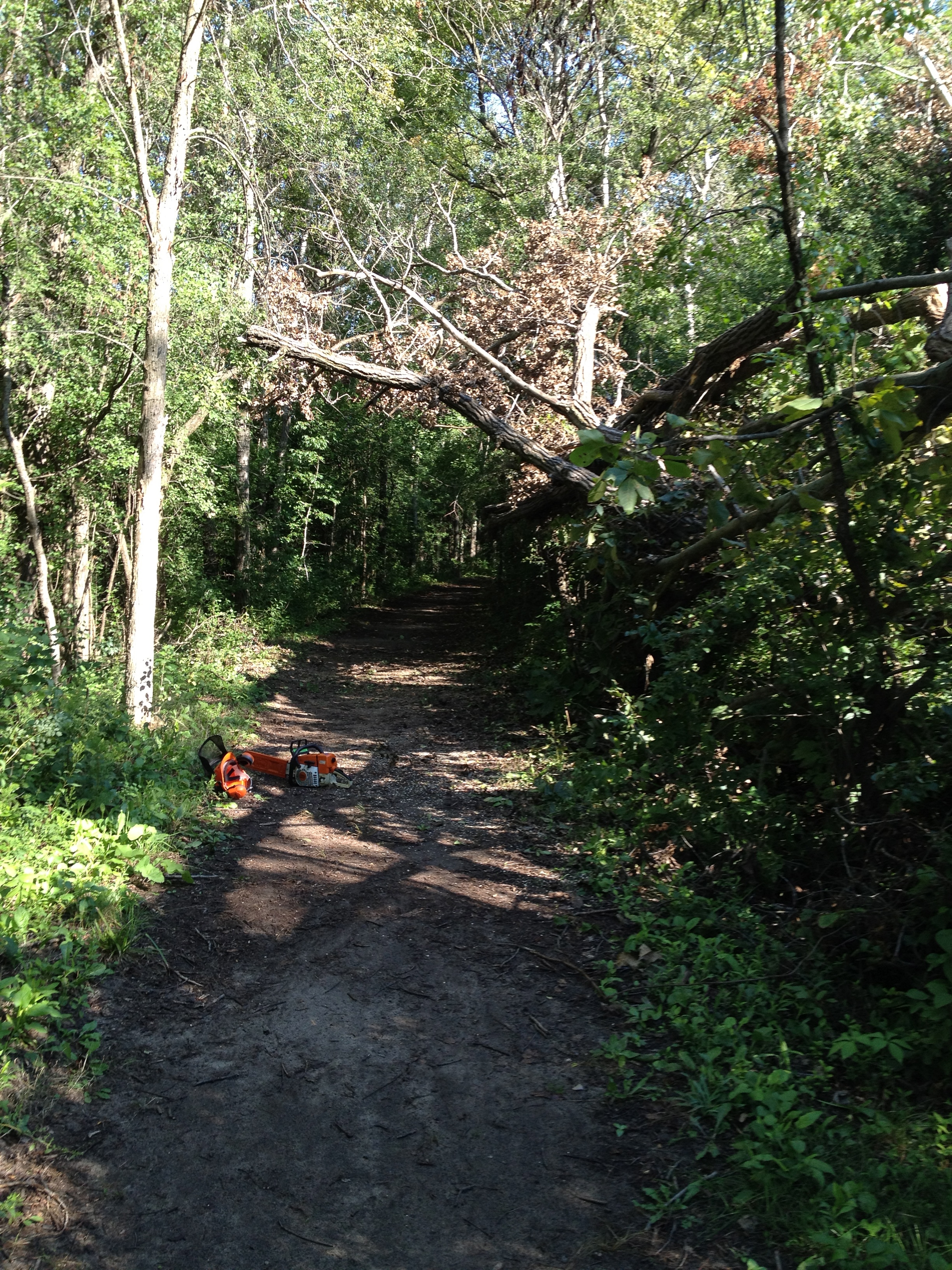
I started the day with a couple of clean-up tasks. A huge Cottonwood tree had fallen parallel to the trail and a few branches needed to be cleared.
And a Hickory came down across the trail.
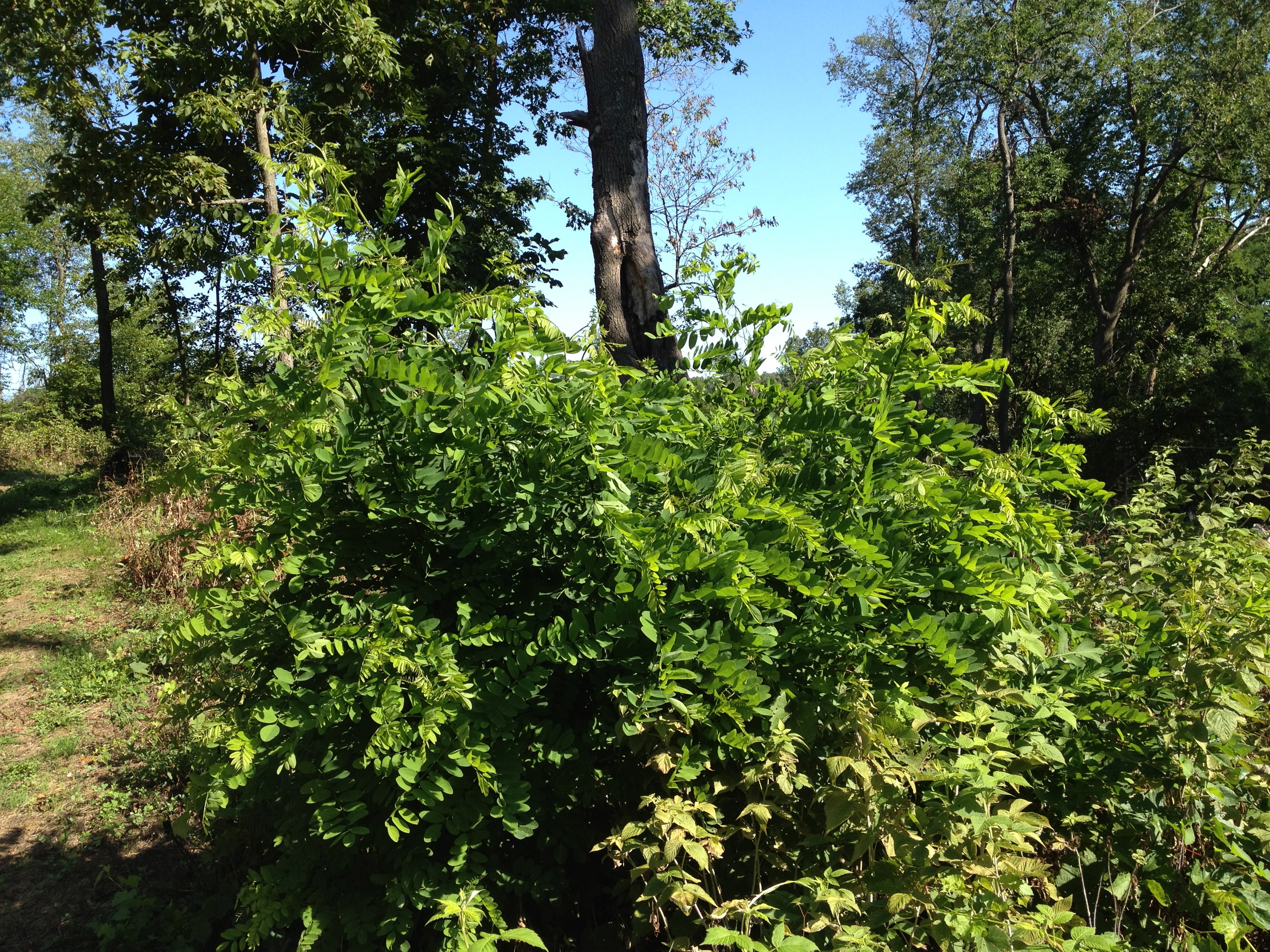
Since we have opened up the area at the South end of the trail, there has been an explosion of Black Locust. They grow very fast and have the nastiest barbs you will find on any woody plant. The DNR began girdling the huge Black Locusts many years ago and we are continuing that effort and cleaning up the trees as the die and fall. They can be harvested for firewood as well (contact Mike, the forester at the Southern Unit of the Kettle Moraine State Forest, for a permit). I sprayed 5 gallons of Roundup on the bushy black locust. Don Dane recommends we use TransLine and we will do so as soon as we get some.
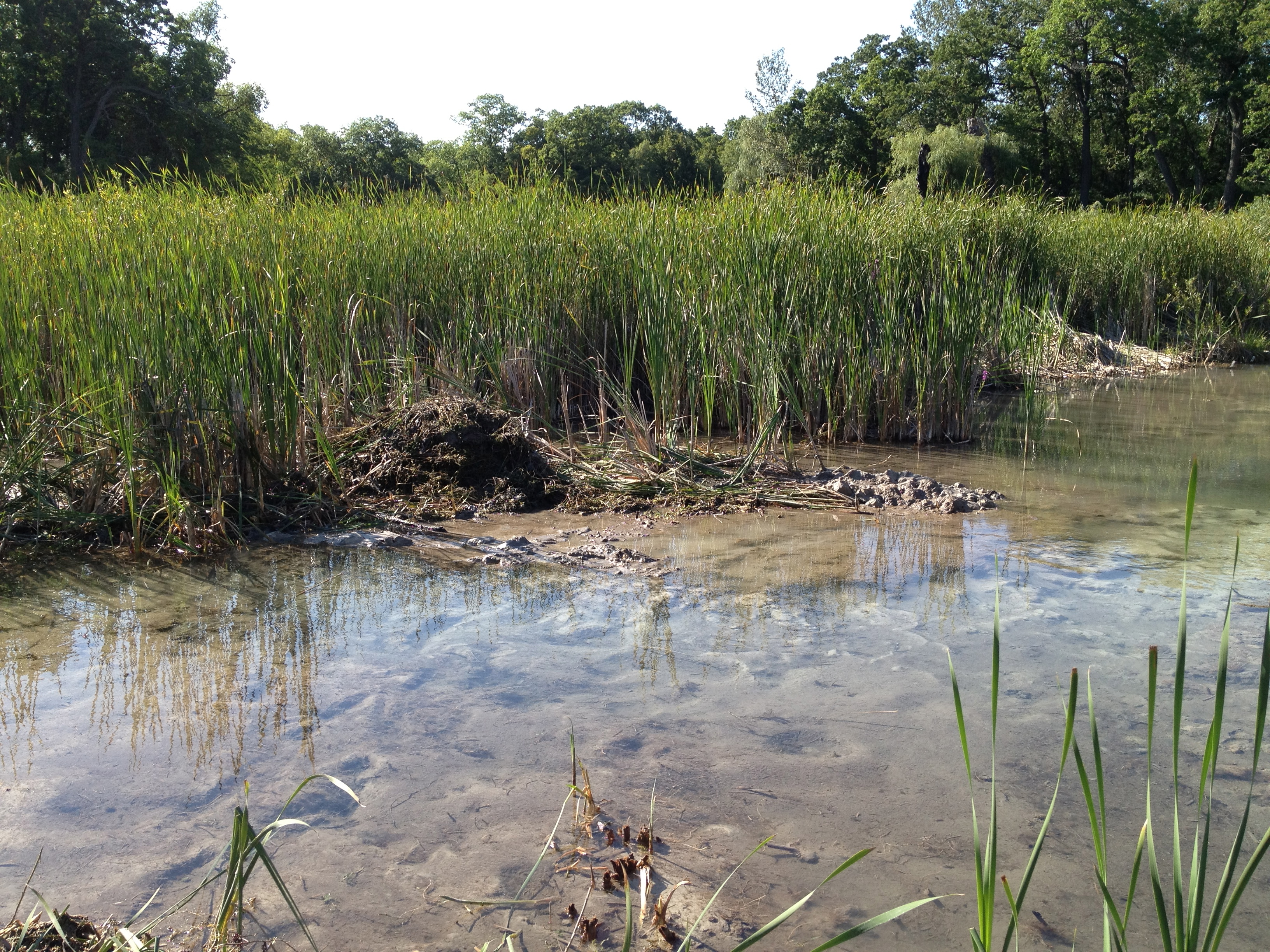
This effort stirred up at lot of mud, which collected at an earthen bridge that crosses the Indian Springs outflow channel. The water finds a way under it somehow but the bridge restricts the flow. When Don and Dave visited the site on August 9th, they recommended that we open it up and so I did.
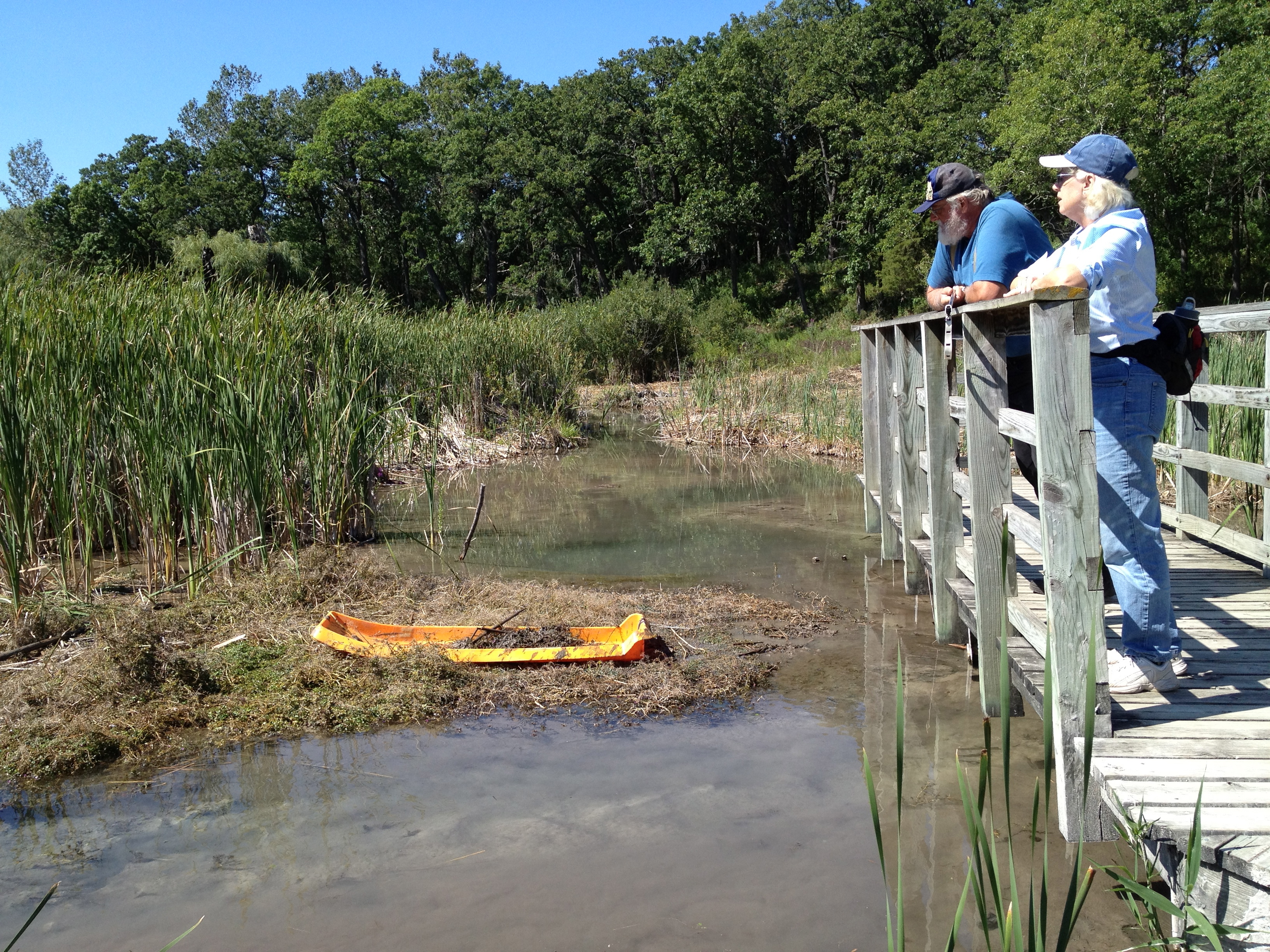
Then it was on to the Observation Deck at the Emerald Springs (see map above) where I wanted to pull a patch of water cress that had formed a dam that actually forced the river out of its natural path. Don pointed this out and showed me where the river used to flow. John and Sue Hrobar, stopped over to say hello. We will soon be posting some of their stories and pictures describing the various flora and fauna they have observed.
Finally, on the way back to car going up a DNR access road by the Hotel Springs, I had to capture these views of the river valley that are now visible since we cleared some of the Willows that were filling in.
There is a wonderful Sand Prairie at the Indian Campground location along a crest on the Scuppernong Springs Nature Trail (see #6 Scenic Overlook on the map below).
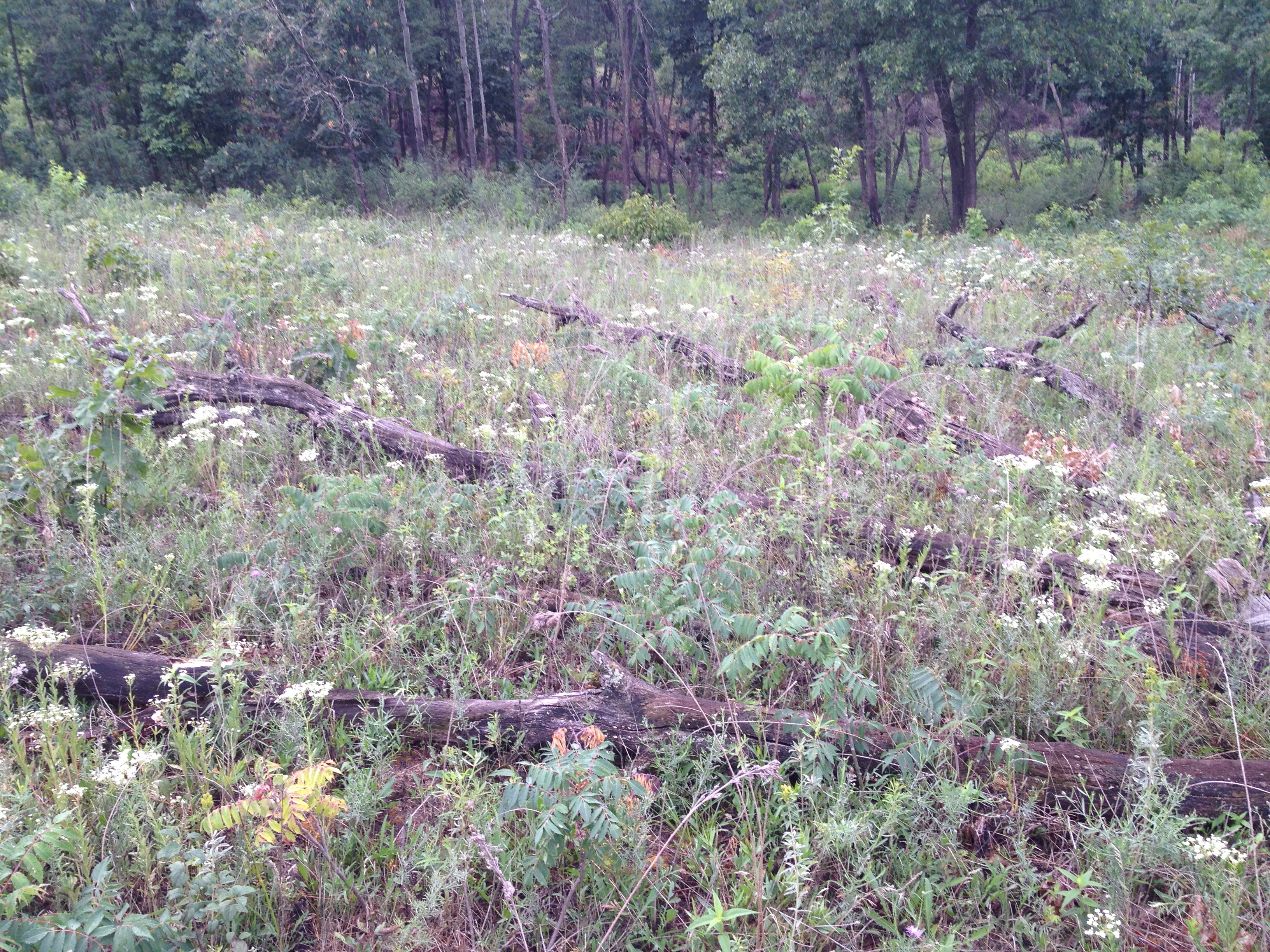
Some years ago the DNR burned and mowed this area in an attempt to beat back the encroachment of Red Oak, Cherry, Black Locust, Sumac, Hickory, Buckthorn and other woody plants that had begun to fill it in. During the burn many large Red Oak and other trees came down. Their unburnt remains littered the Sand Prairie and would make it difficult to mow or burn the area again. Many thousands of saplings from the parent trees had sprung back as well. Ron Kurowski suggested we cut, pile and burn the downed wood to pave the way for Trail Boss Don Dane and his crew to mow the prairie again this Fall. We hope to burn it next Spring if the conditions are right.
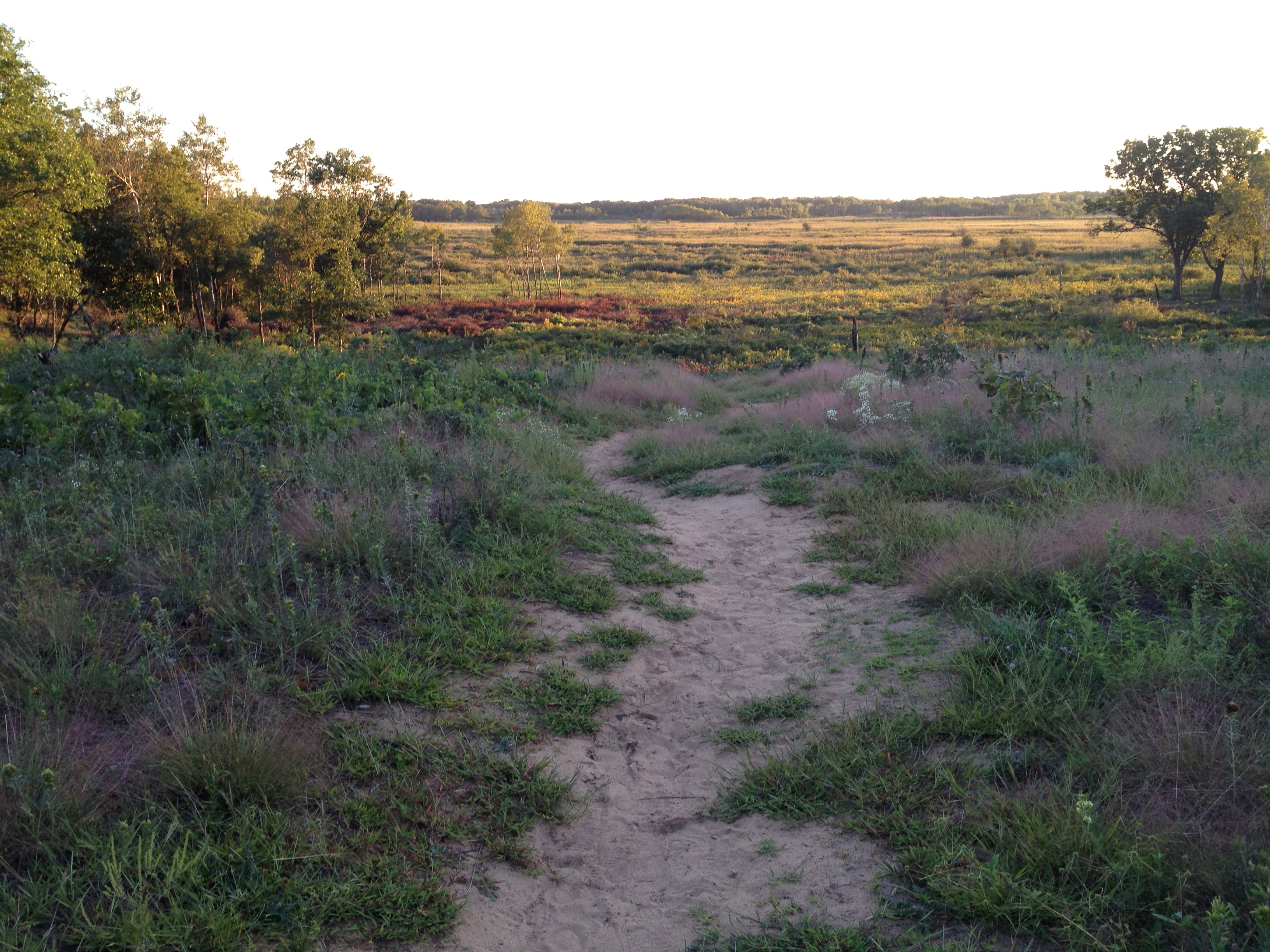
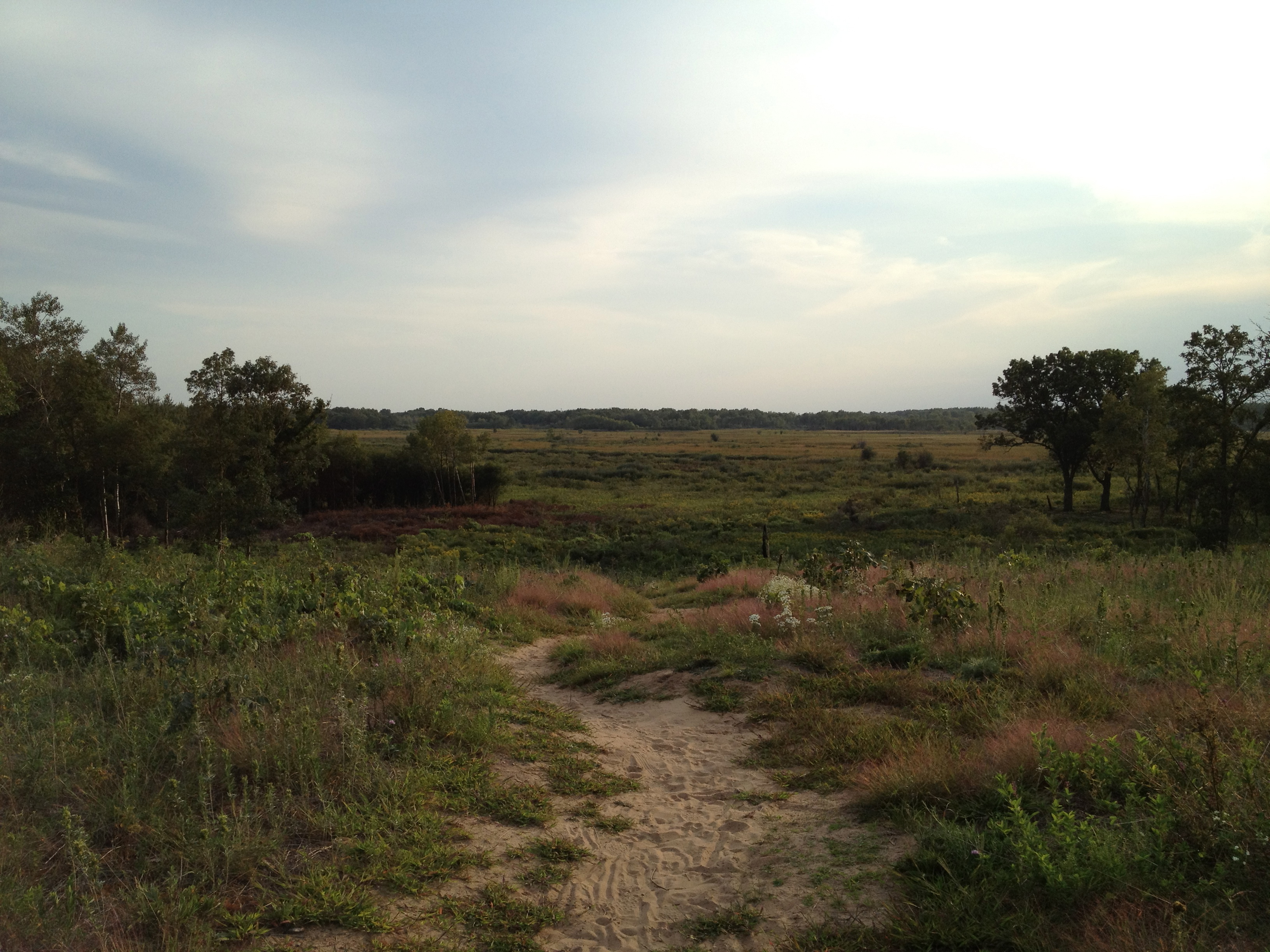
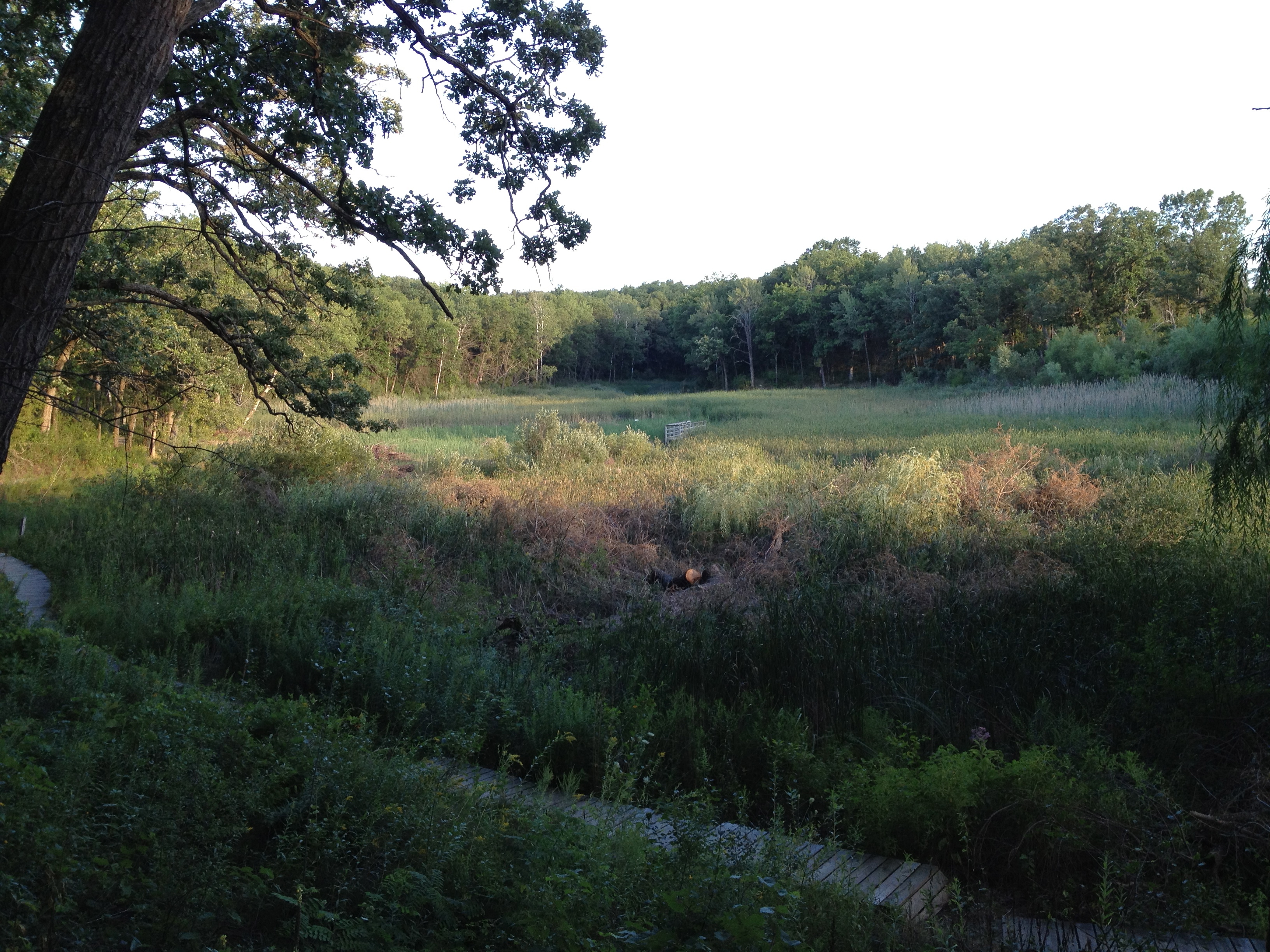
Here is a view from the scenic overlook looking West.
I cut the downed wood until the afternoon when Lindsay, Don Dane, and Dave, who also works with the DNR came out to join me. I had a close encounter with a hornet’s nest at the base of a dead Cherry tree and had to take a break to nurse multiple stings. Good thing Pati keeps our First Aid kit well stocked! A closer look at the work at hand…
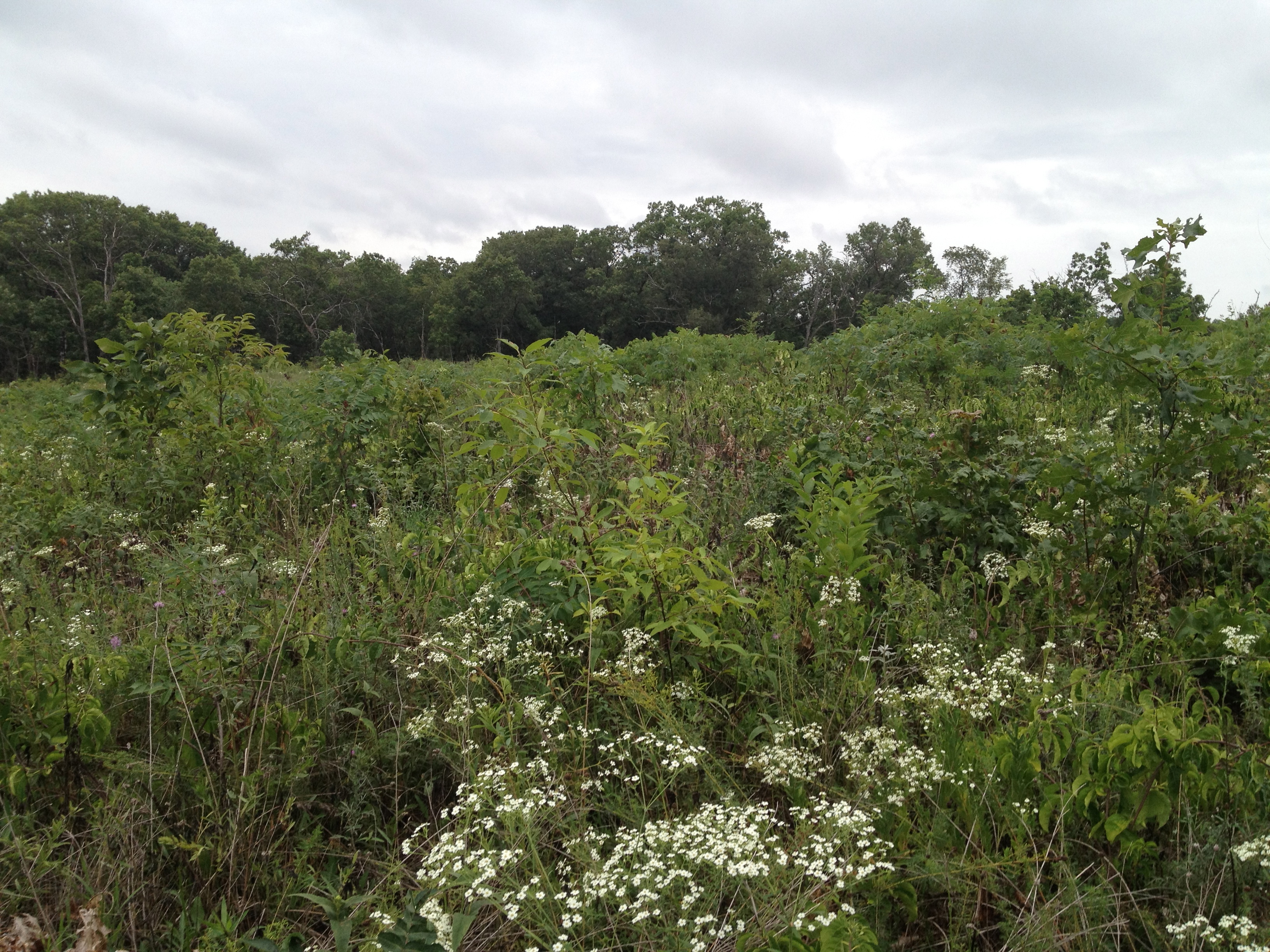
Examples of the woody plants making a comeback on the Sand Prairie.
The short boardwalk below is at the Indian Springs. We discussed the best way to shore this up with Don and Dave and came up with a plan. Hopefully, we’ll get to this some time in October or November.
Take another peek at the map shown above. There is a trail shown that bisects the loop trail heading Northeast from #3 Marl Pit Ruins to join the main loop just to the right of the #13. This trail has gotten so overgrown it is literally gone. When Ron took a tour with Lindsay and I a couple months ago, he pointed out the general area where this trail intersected the main trail in the vicinity of #13 on the map. We asked Don and Dave to help us relocate the path for this trail so we could open it up again and it didn’t take them long to find it. Don is planning to come back soon and flag the trail precisely and we hope to reopen this route sometime this Winter. It passes by some magnificent White Oaks, the biggest trees on the property. Needless to say, we are chomping at the bit to reveal these beauties.
After Don and Dave left, Lindsay and I piled the wood I had cut in the morning at the Indian Campground. We enjoyed working in the rain for a change! There is still a lot of prep work to do there before it will be ready for mowing and burning.
We got a nice mention in the latest issue of the Scuppernong Journal. It is published by the Kettle Moraine Natural History Association, S91 W39091 Hwy 59, Eagle, WI 53119 Ron Kurowski editor. Address questions and comments to the editor at (262) 363-9892. Please consider supporting the KMNHA and you will receive your very own copy of the Scuppernong Journal in the mail.
On August 7th I spent the day clearing brush and Willows by the 3rd bridge over the Scuppernong River (counting from the first Spring). This is where the dam used to be that Ben Heussner mentioned that was removed in 1993. There were a lot of fairly large Willows that were beginning to fill in the area along with some smaller buckthorn and other brush.




























 Scuppernong Springs Nature Trail