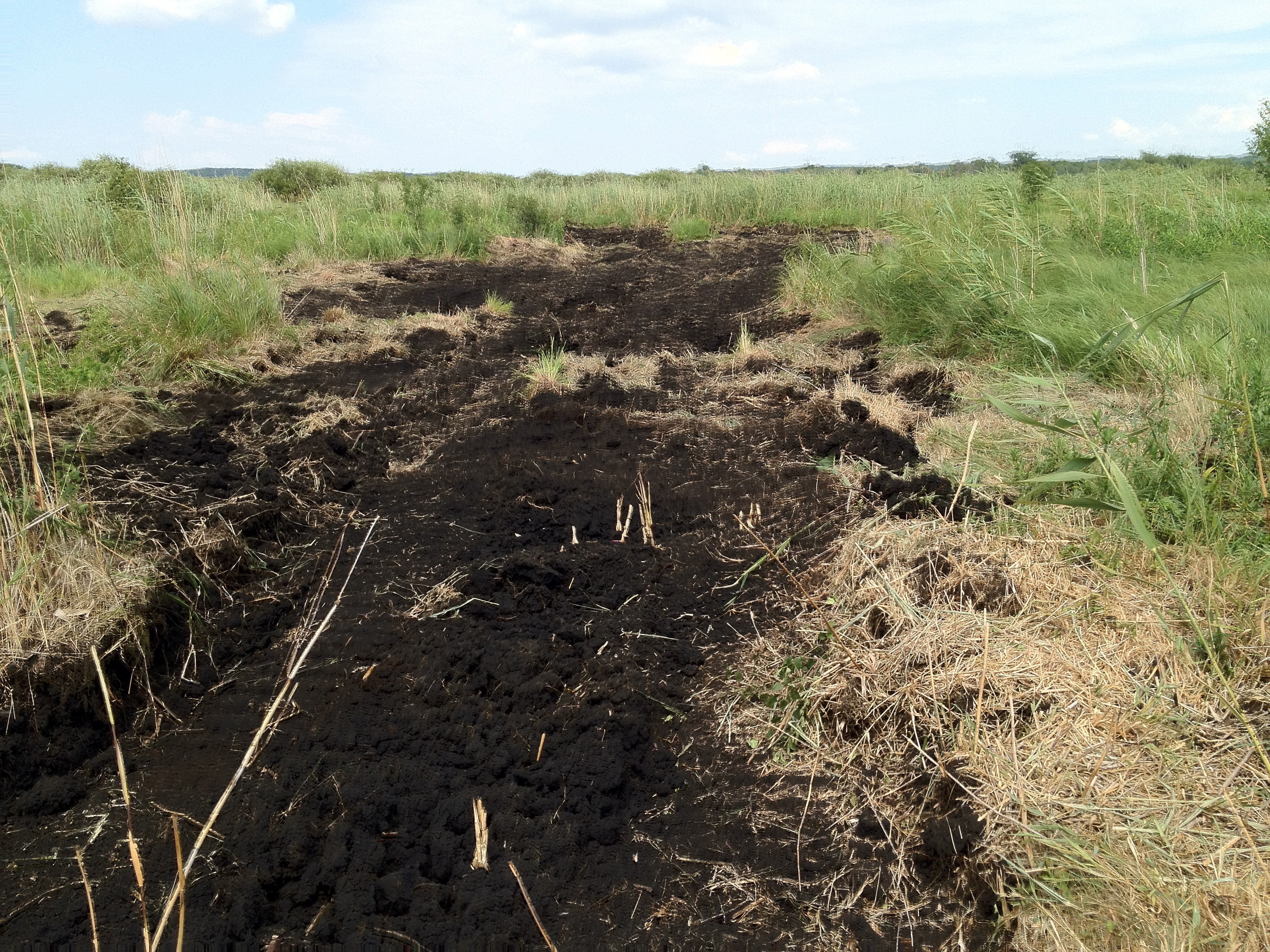
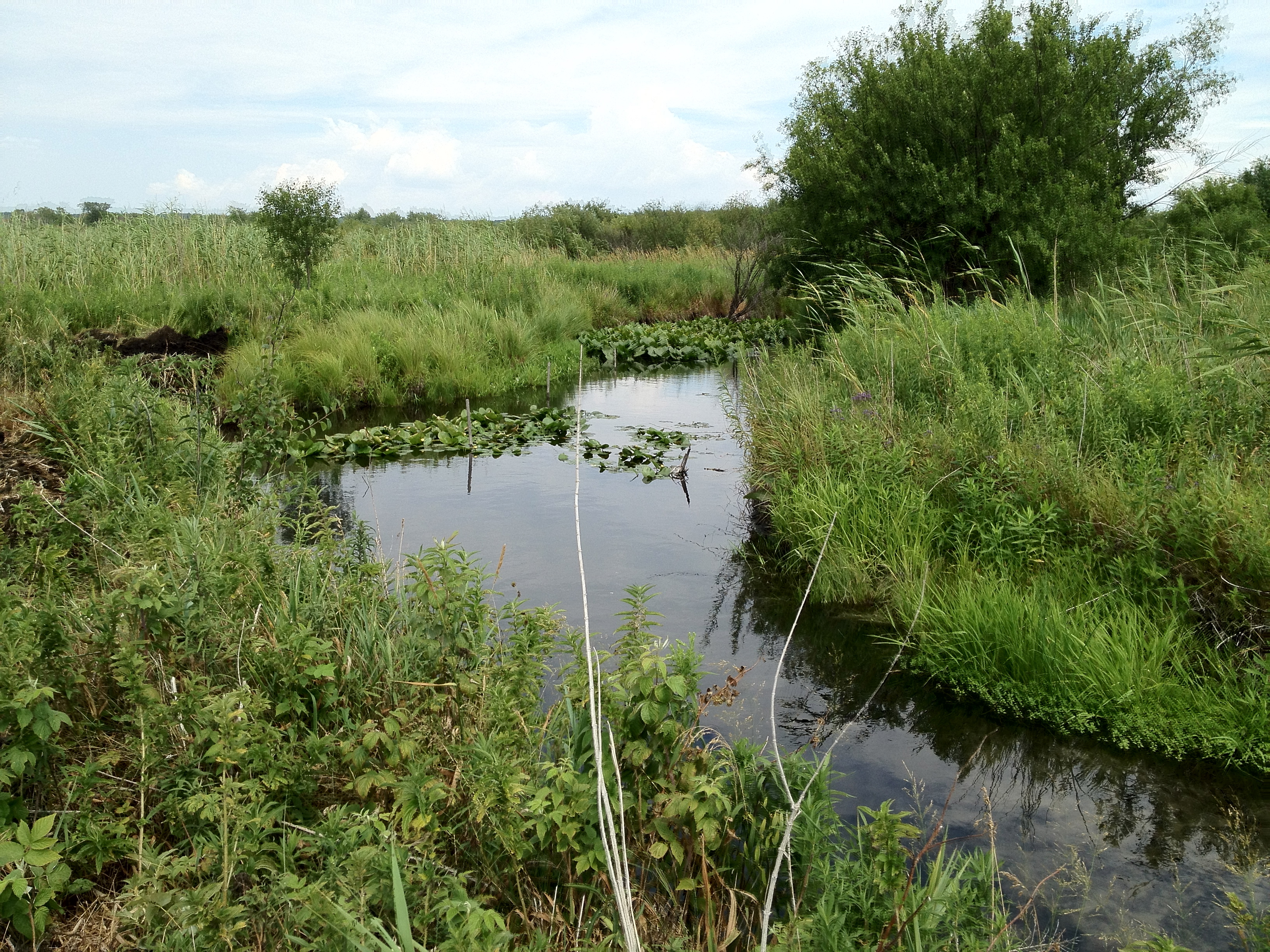
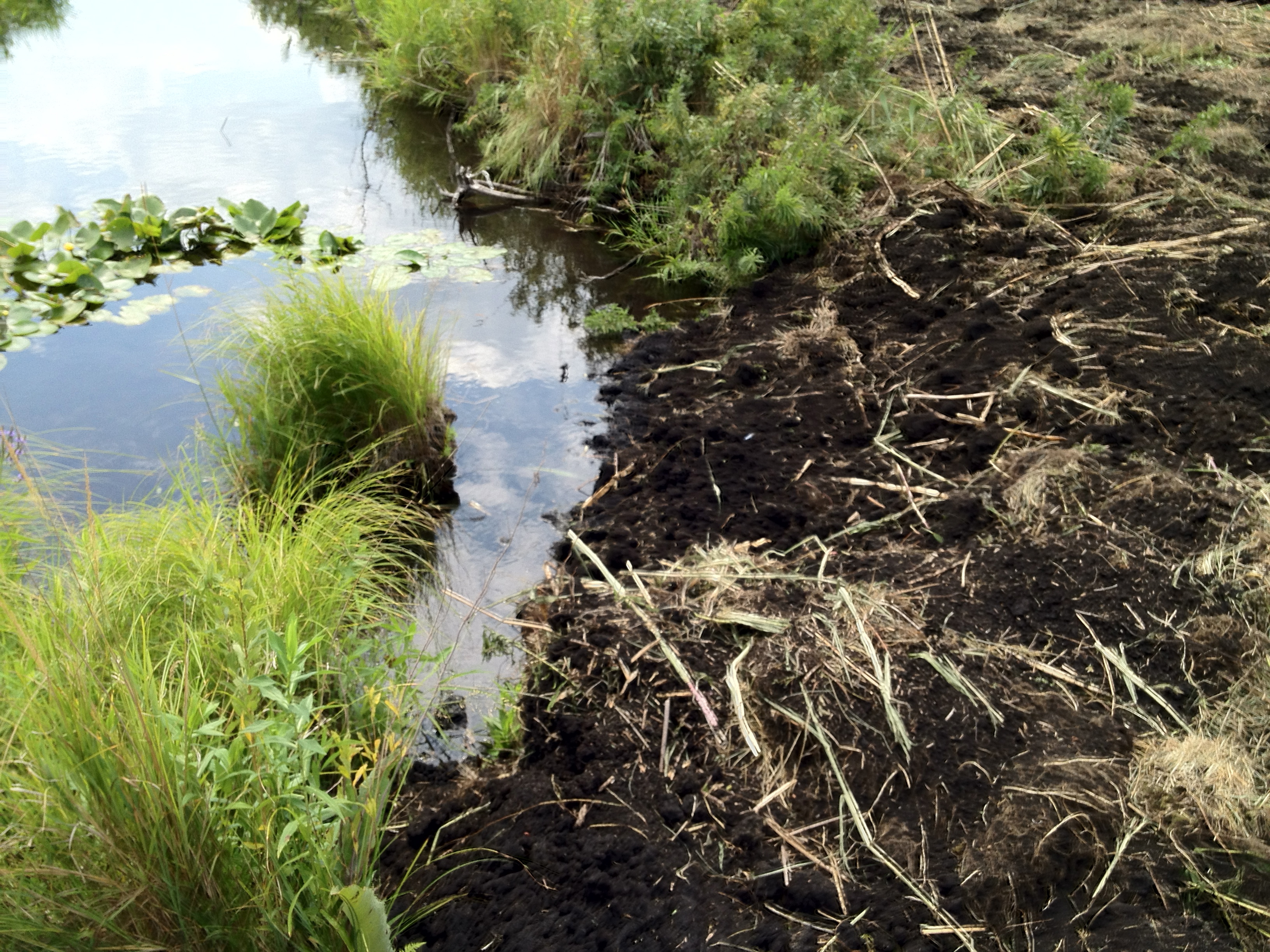
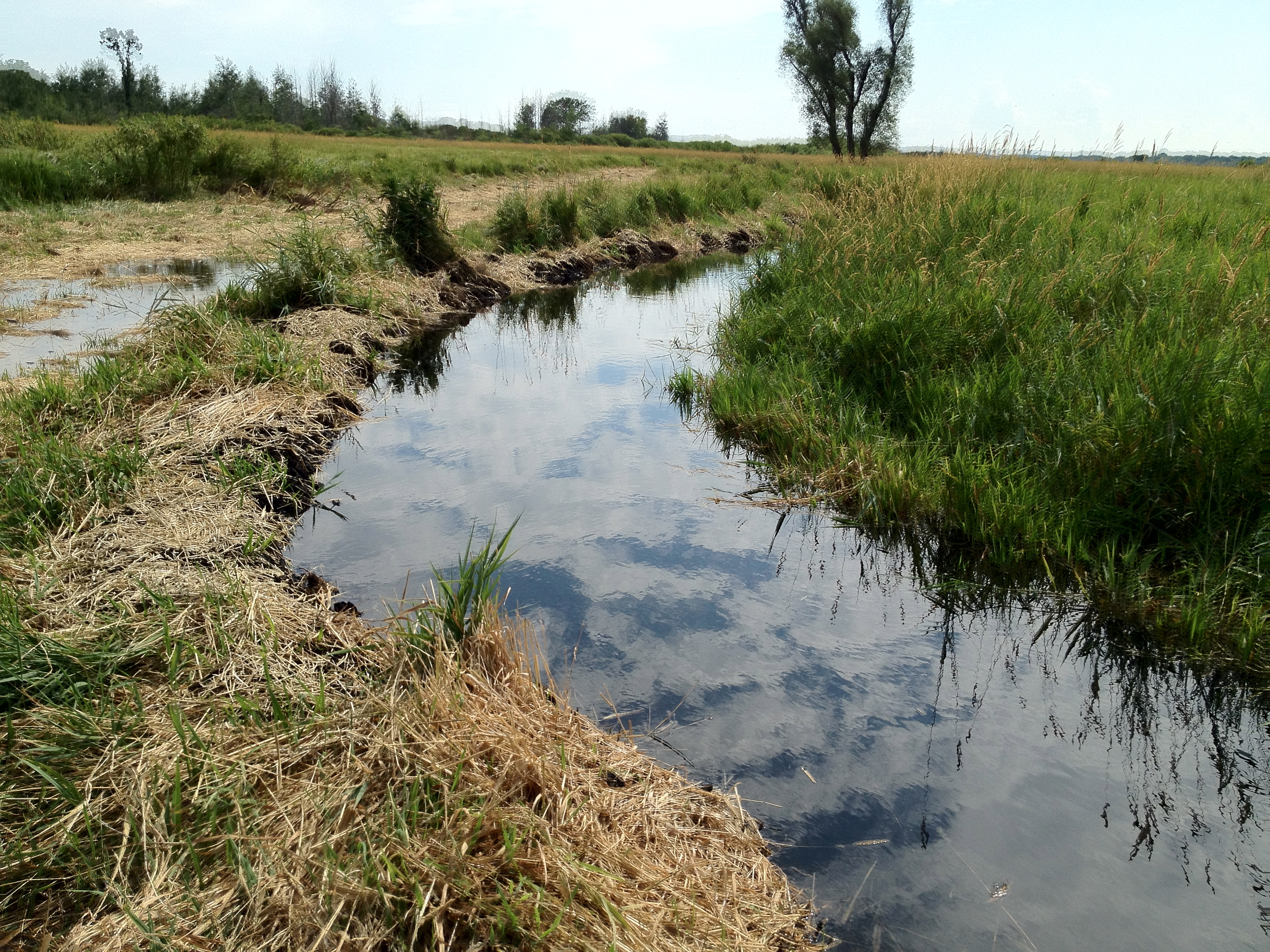
Indian Campground Cleanup Continues

My ever loving and trustworthy soul mate Pati Holman came out with me yesterday to work at the Springs.  She took a day off from her work as a Feldenkrais Practitioner to play in the Sand Prairie with me.  Pati has been very supportive over the last 15 years helping me out when she could at the Brady’s Rocks and Hartland Marsh projects.

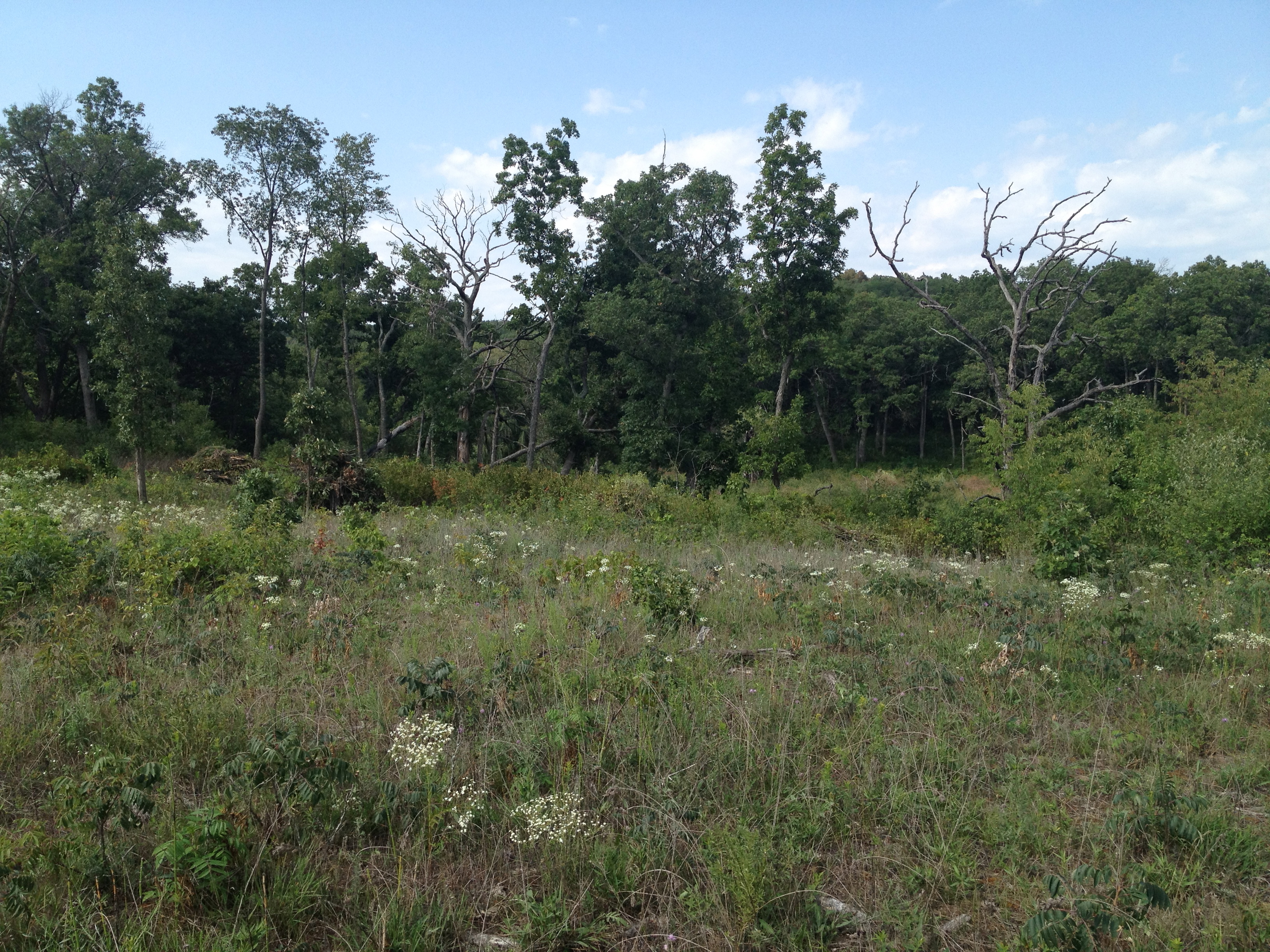
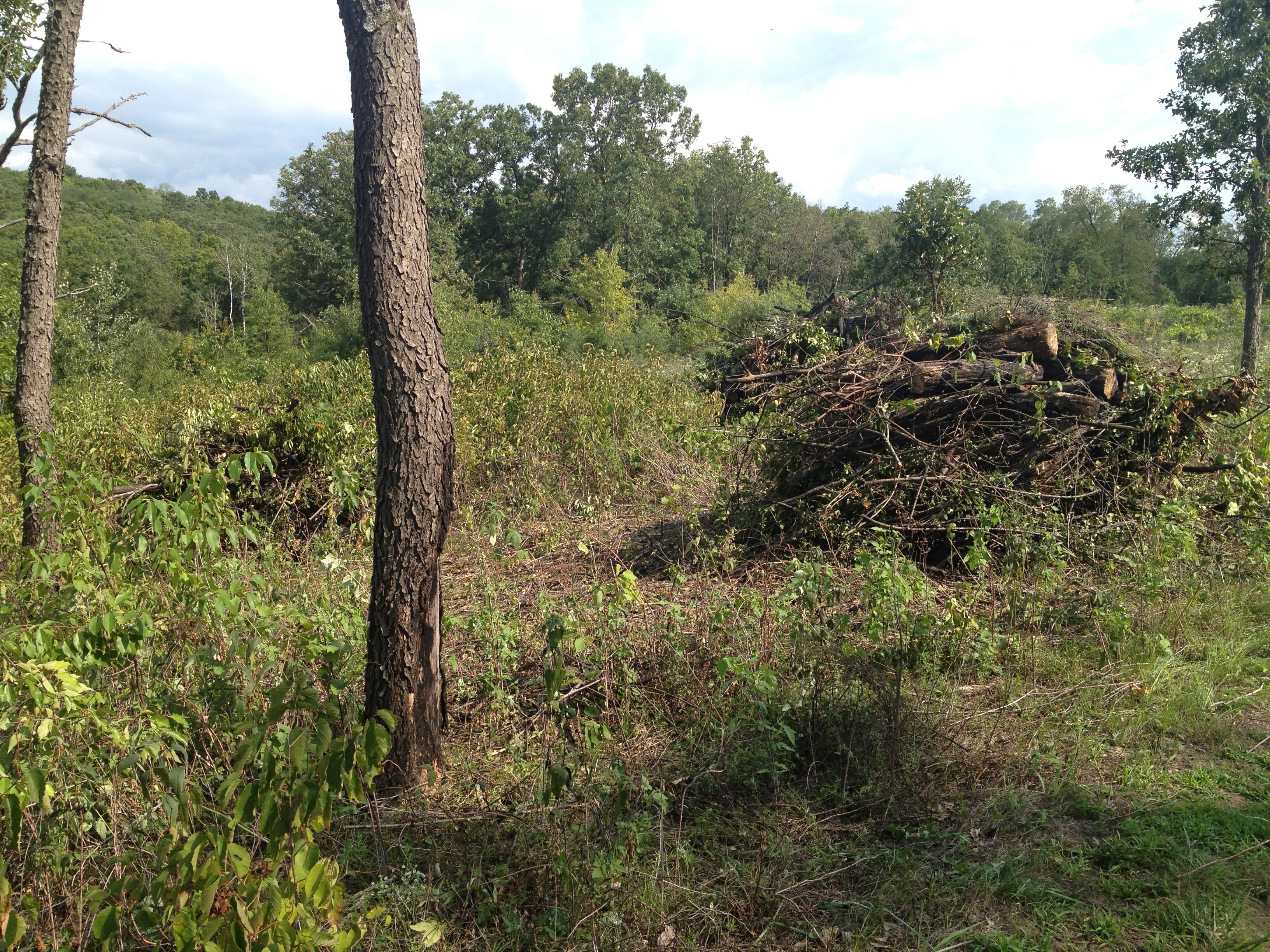
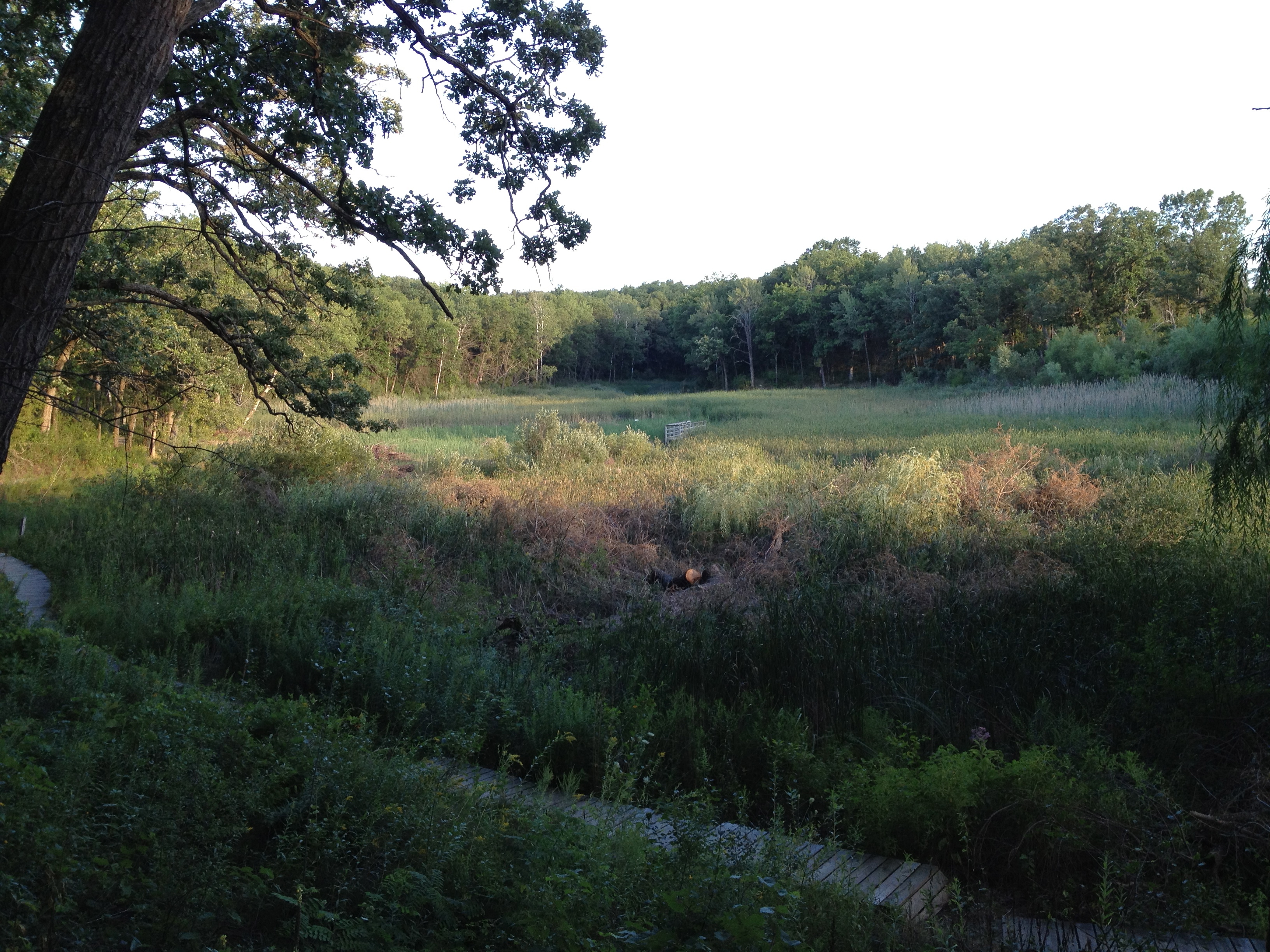
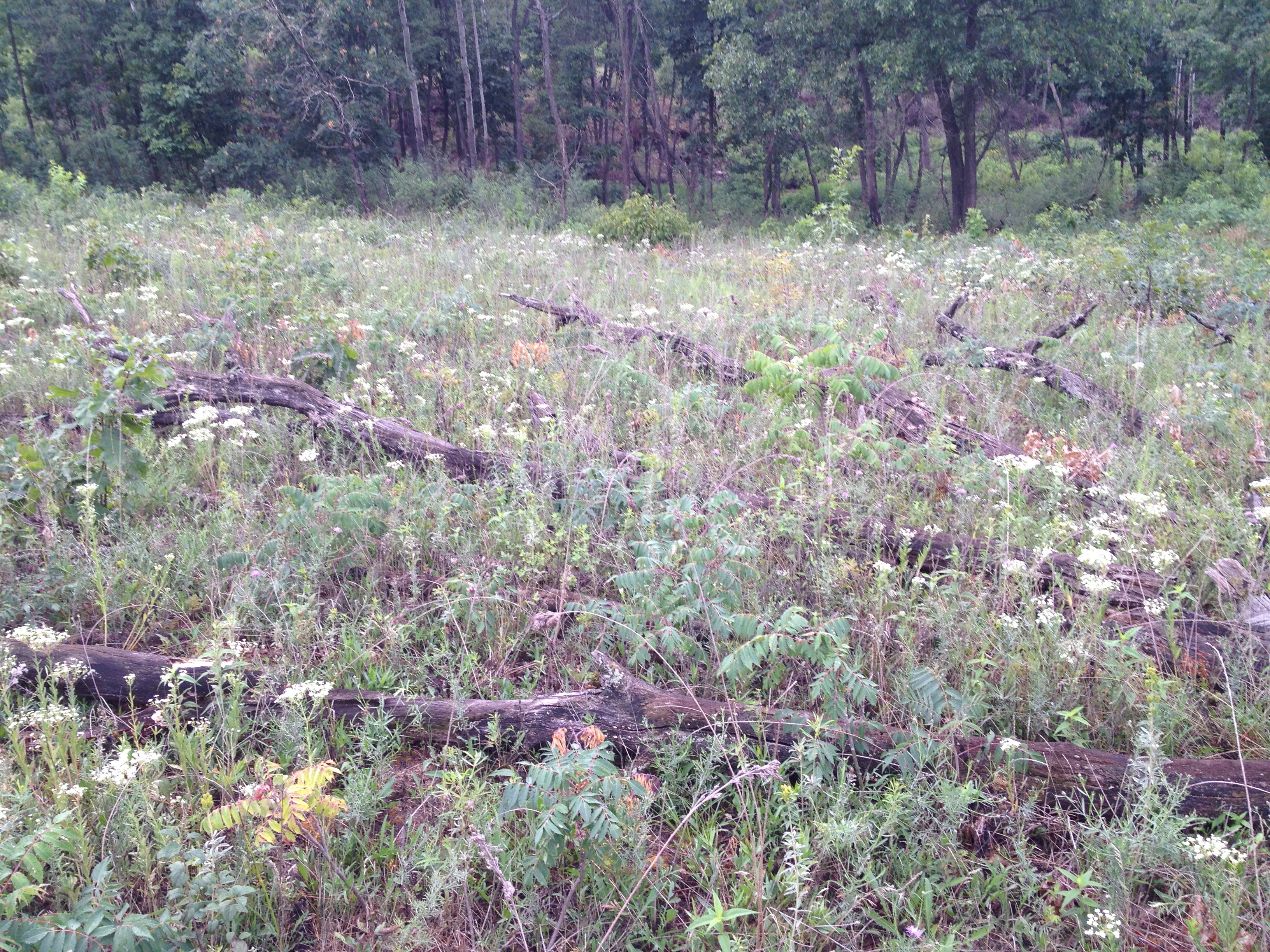
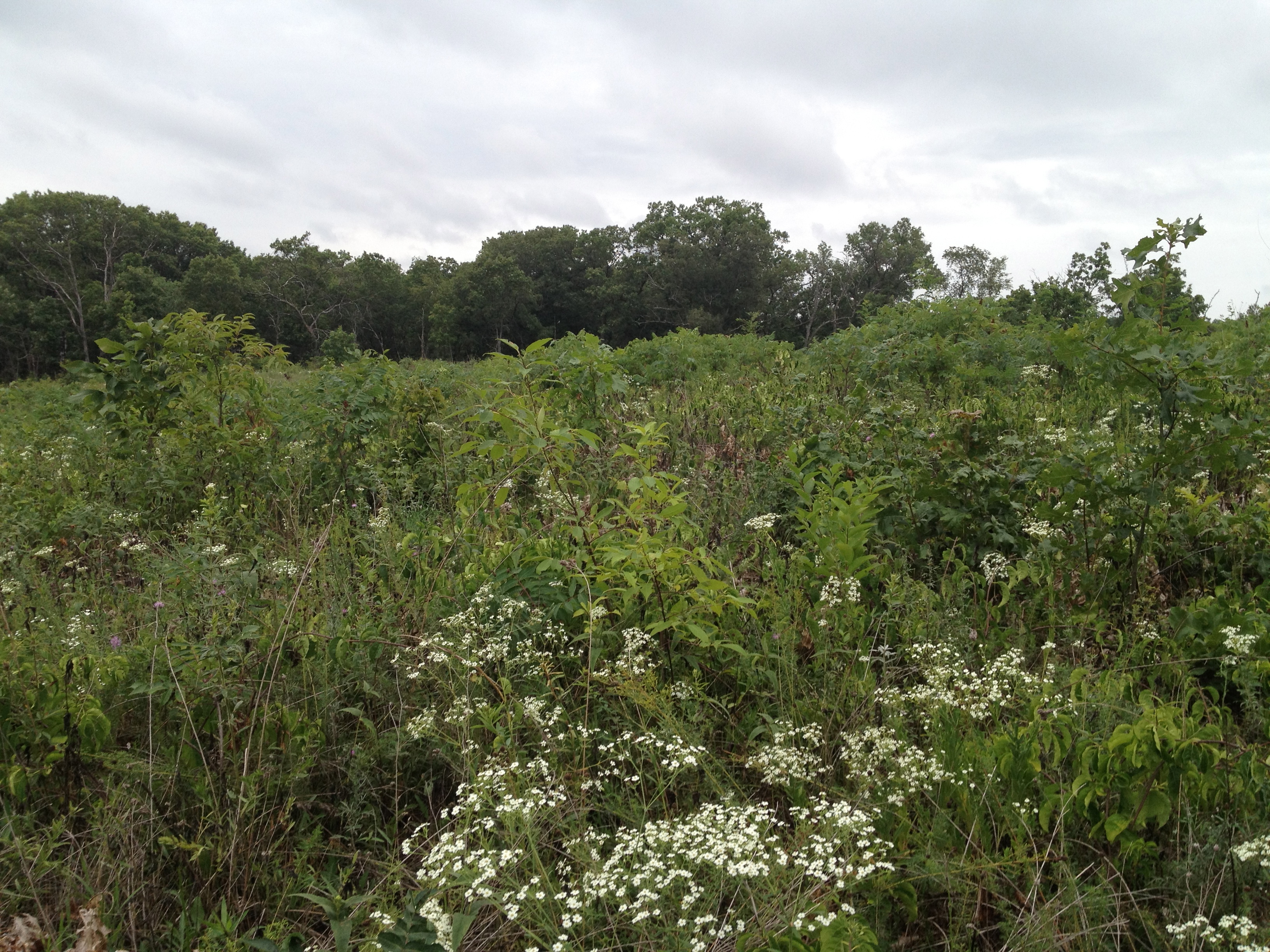
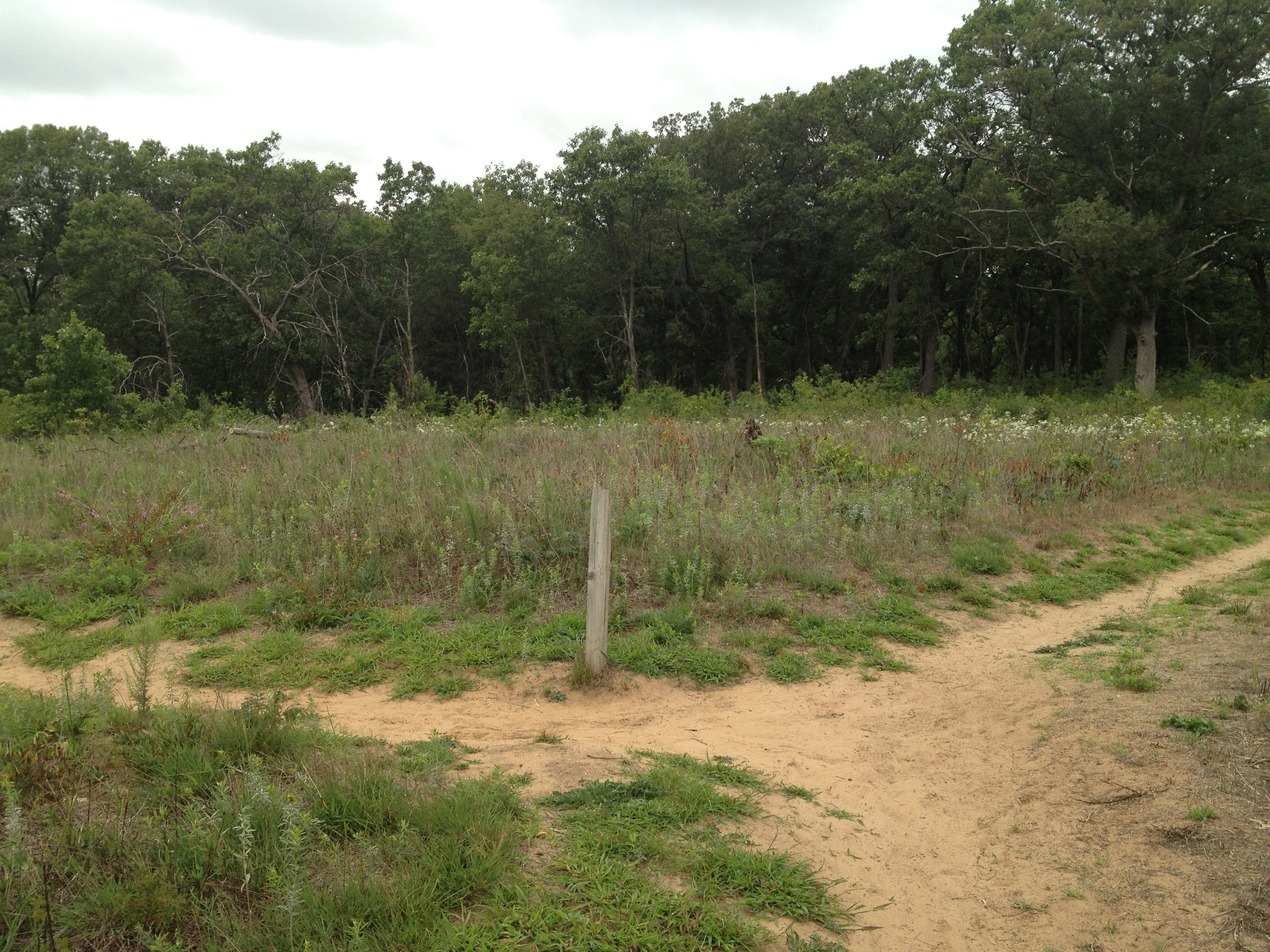
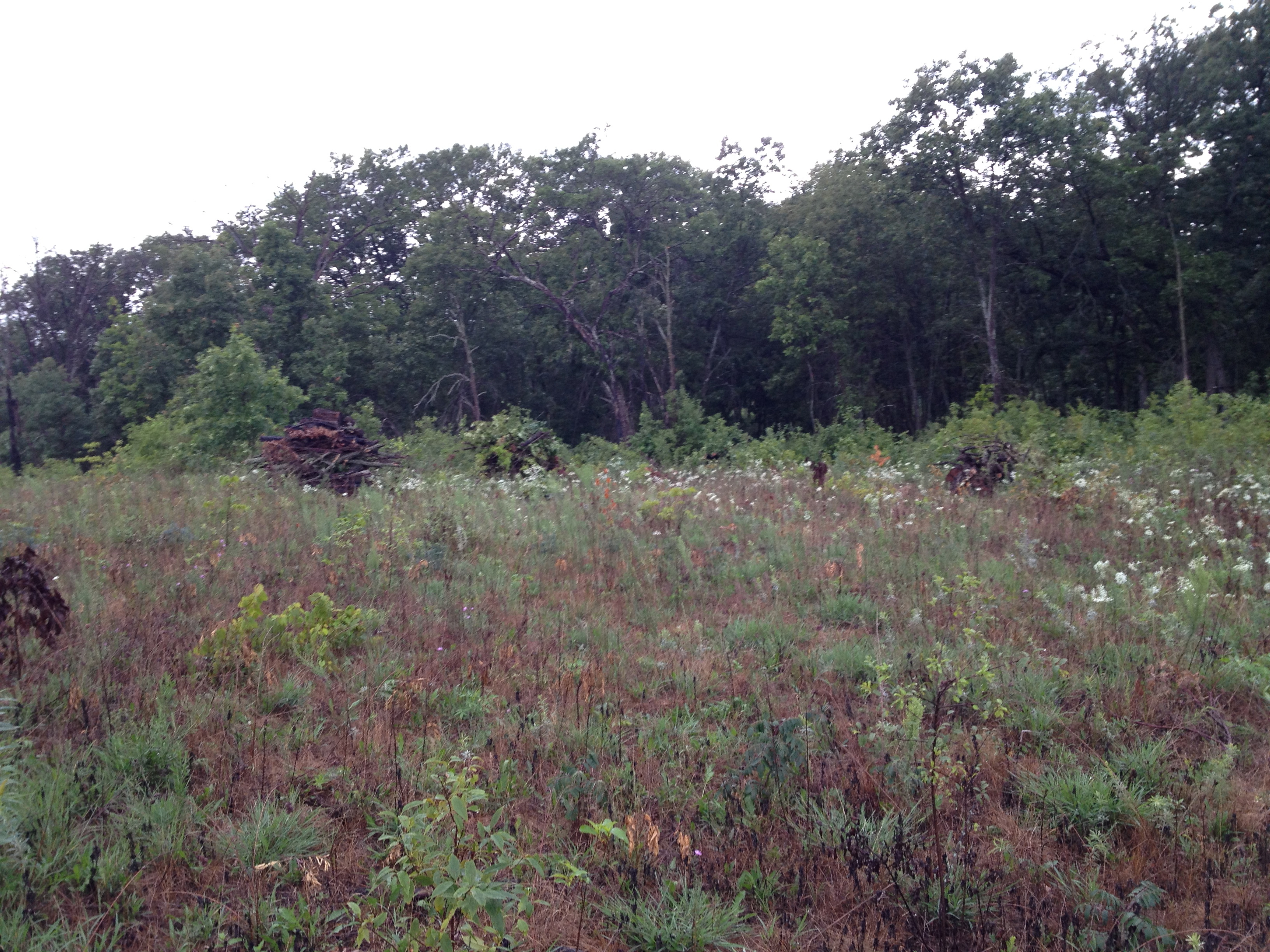
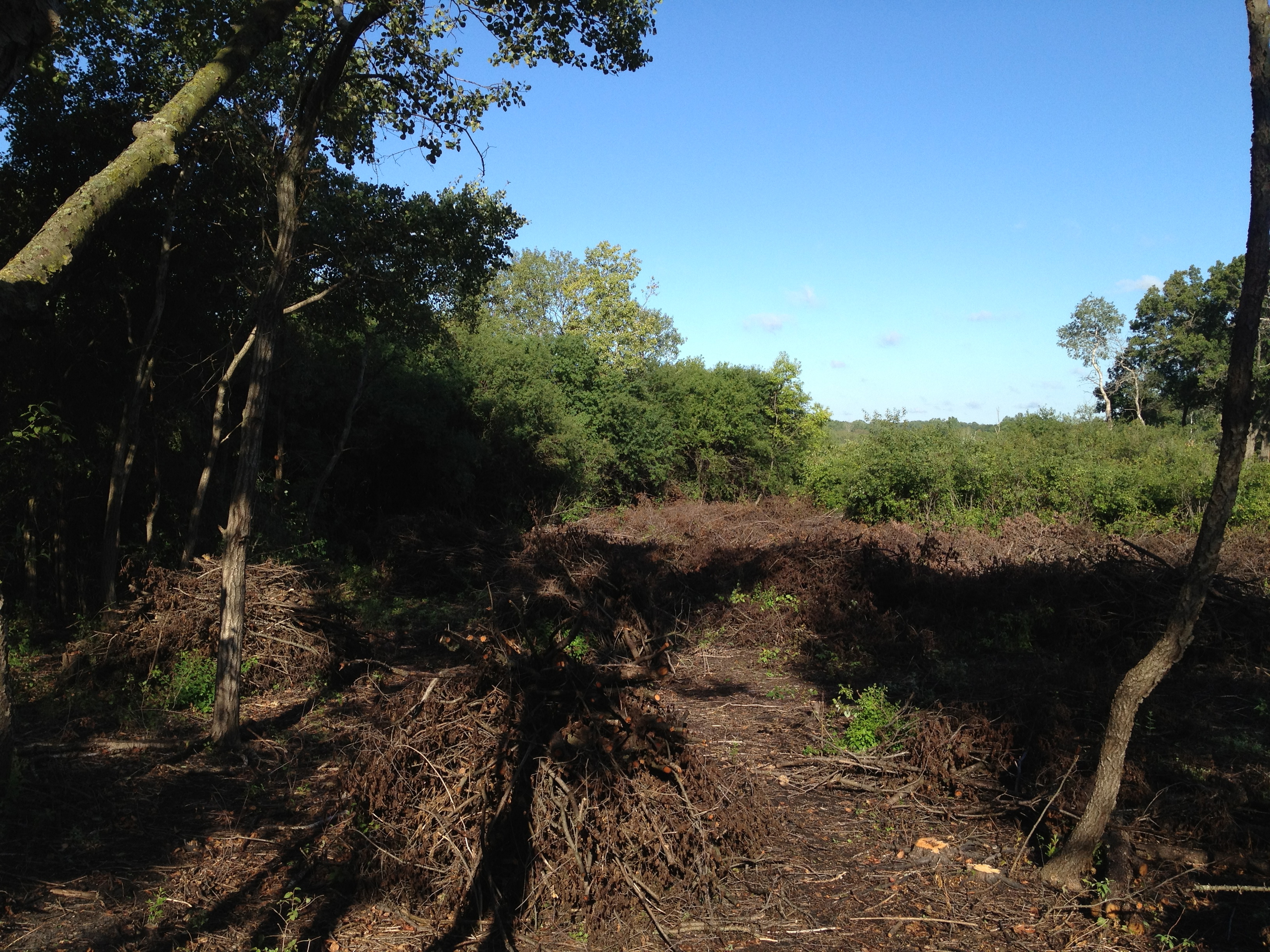
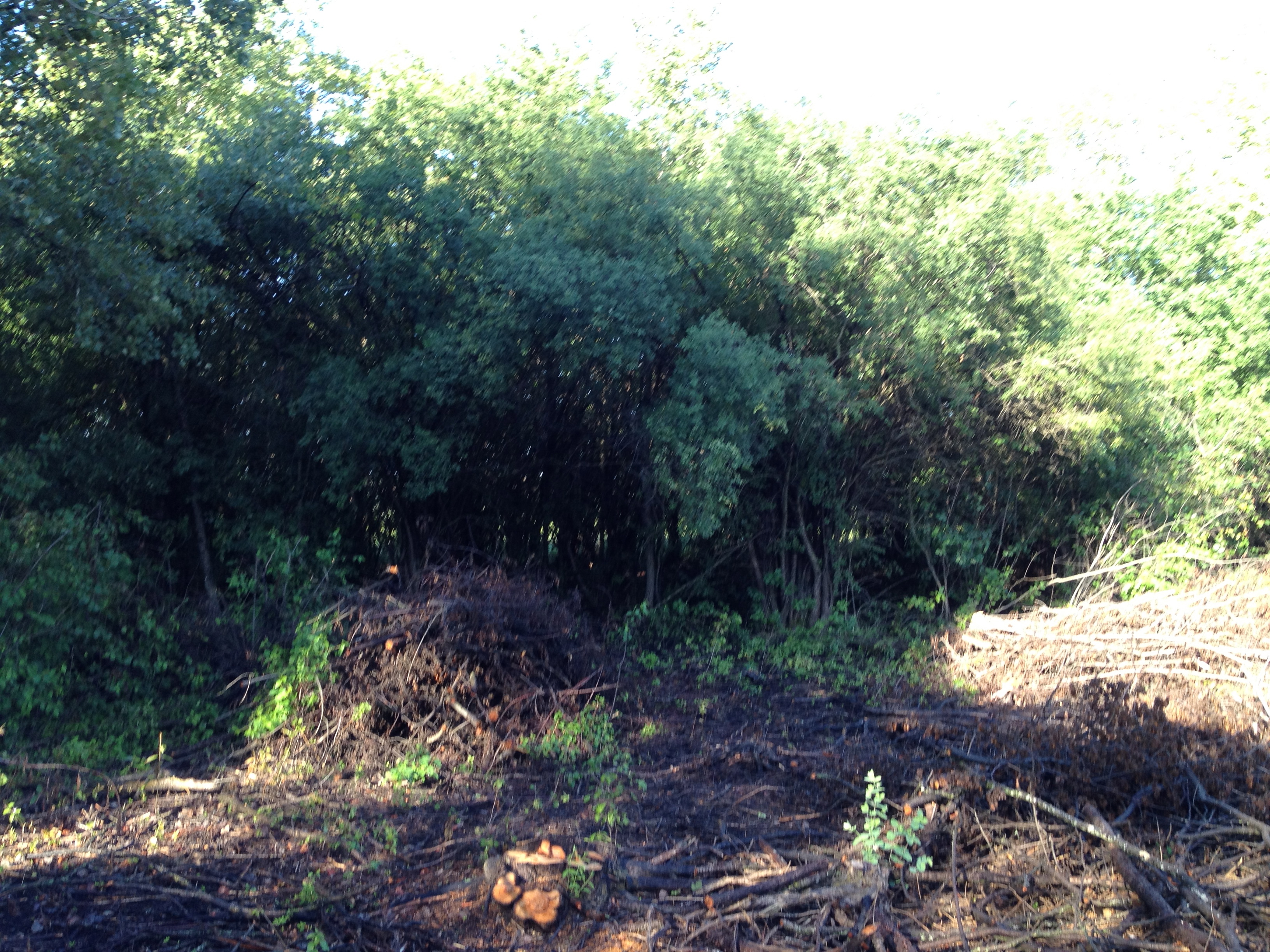
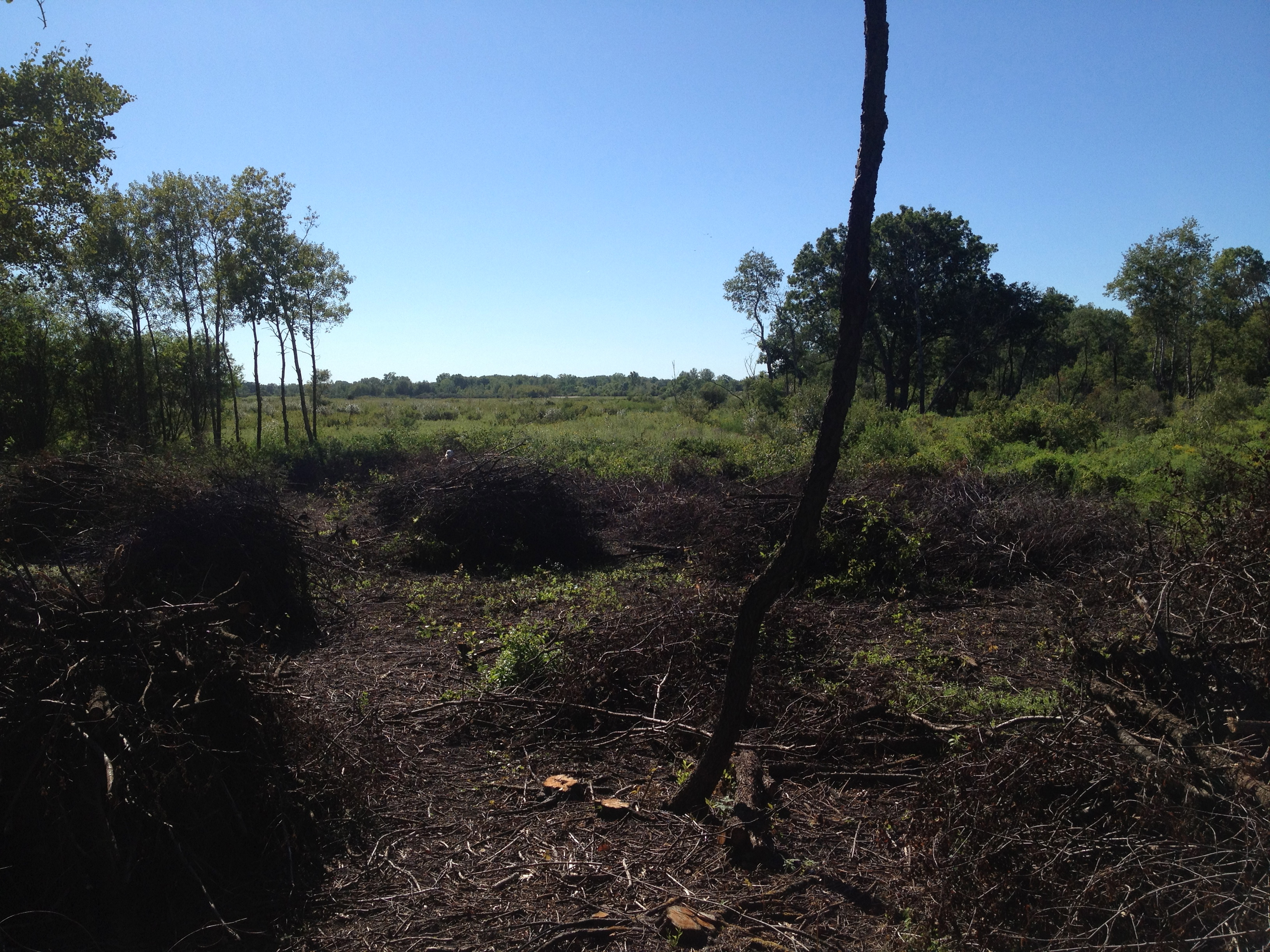
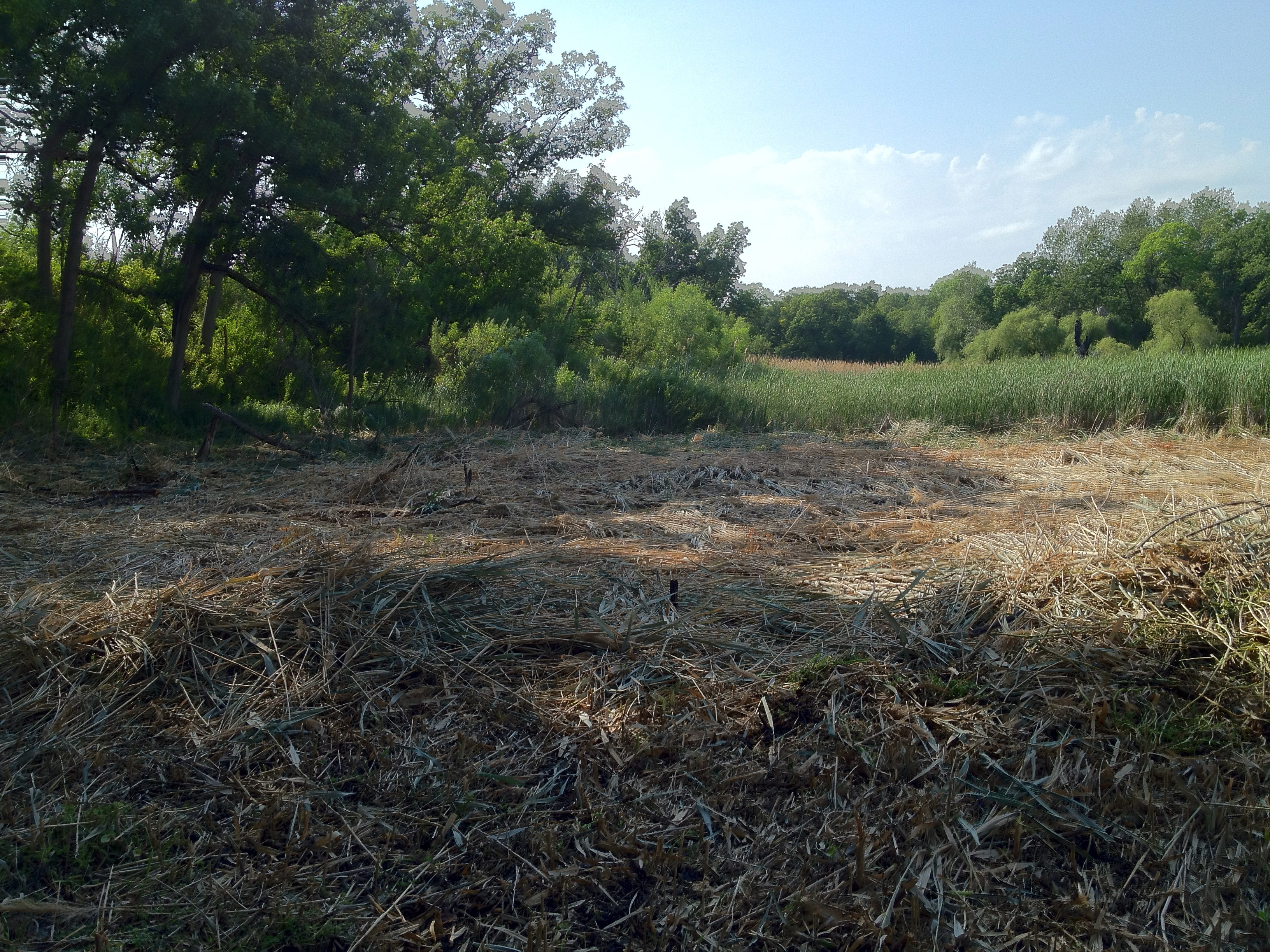
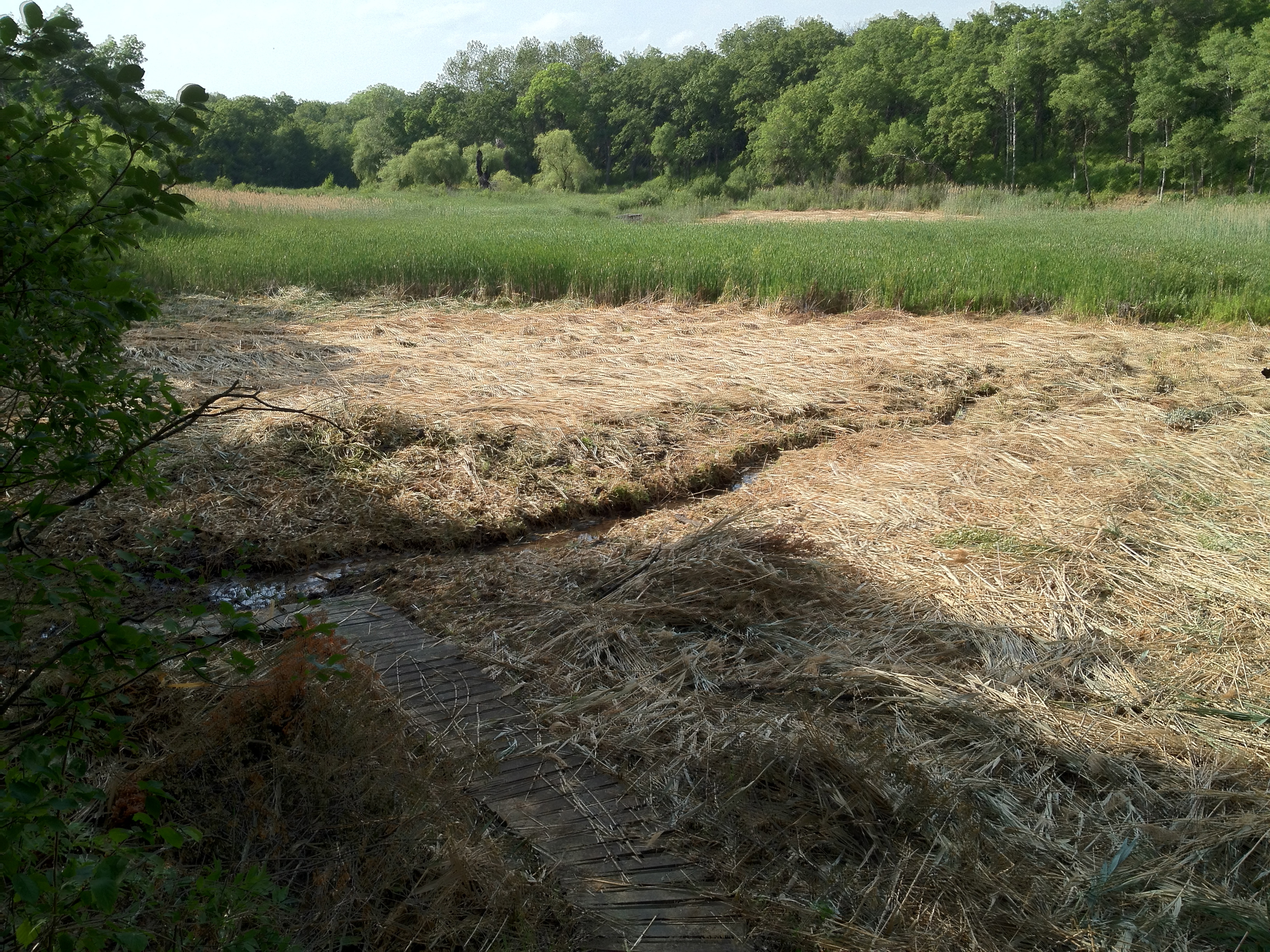
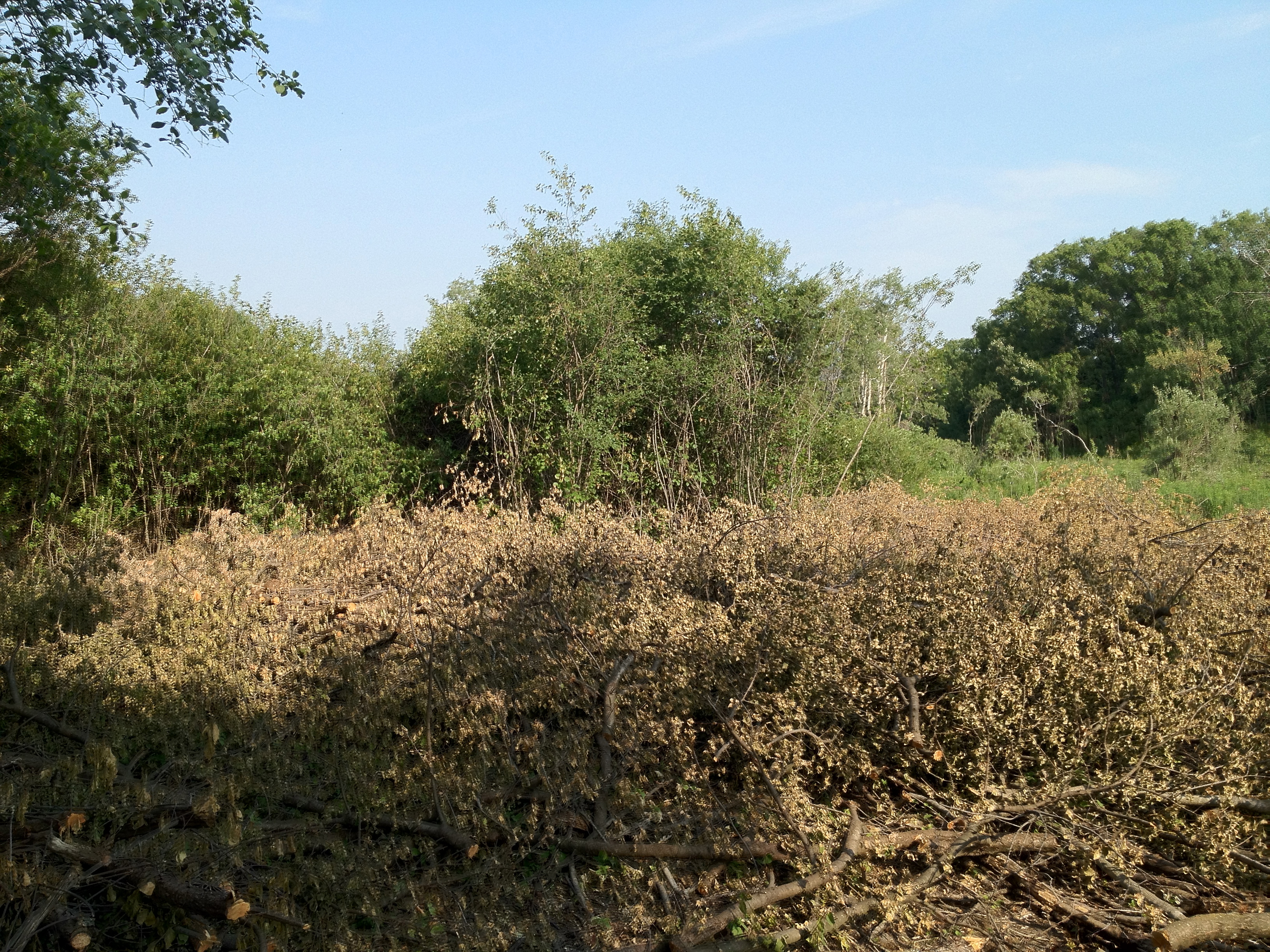
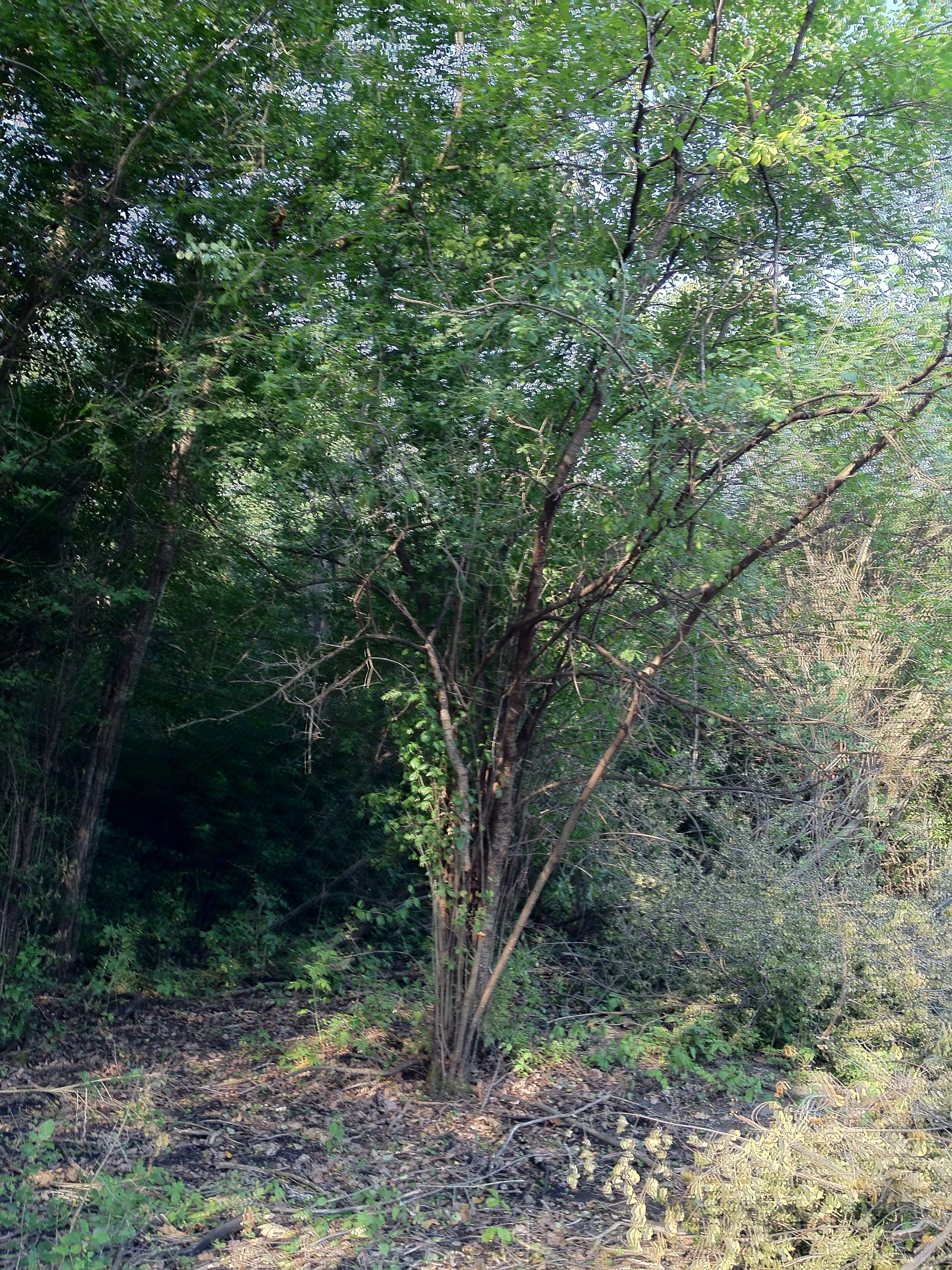
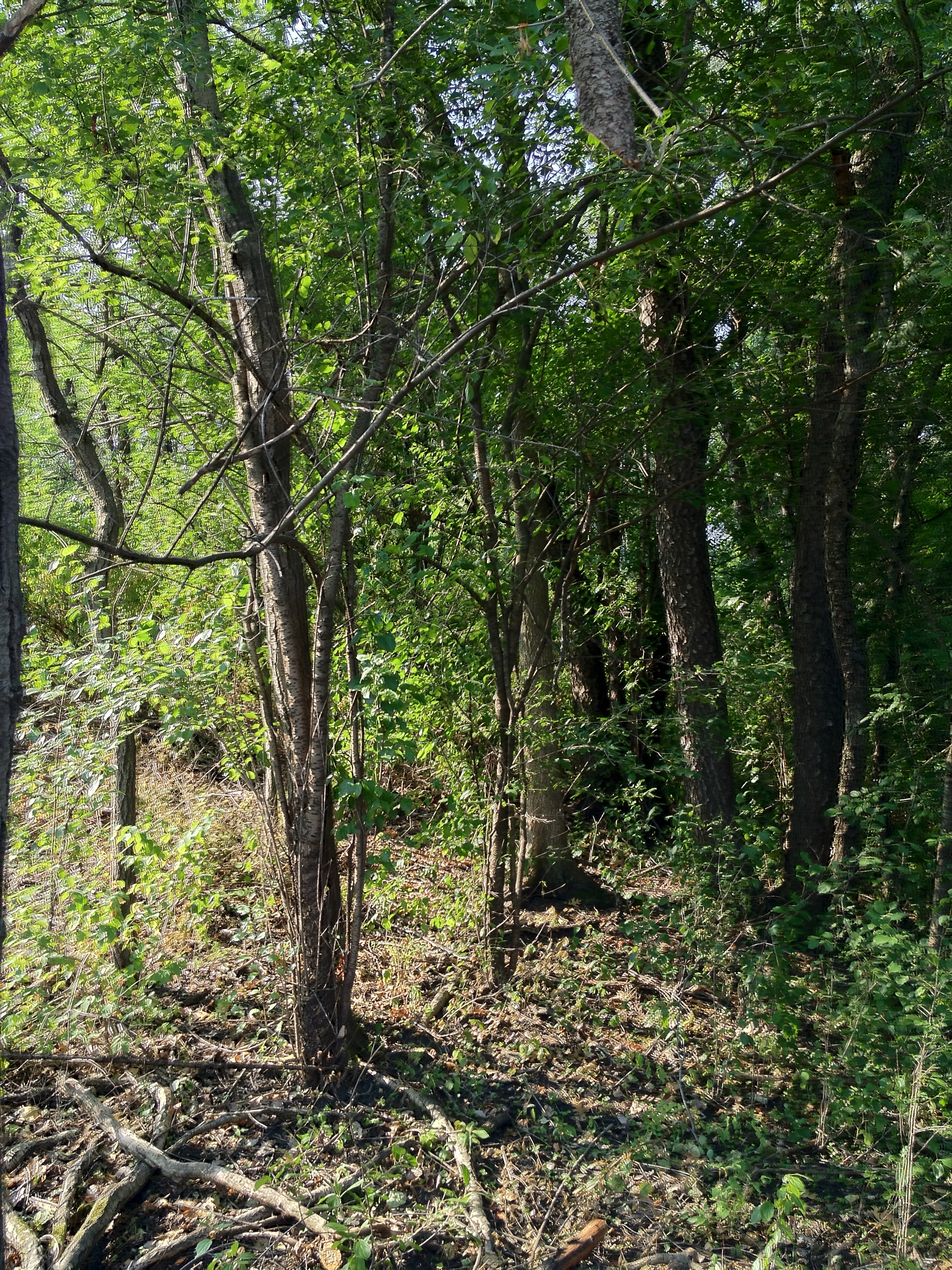
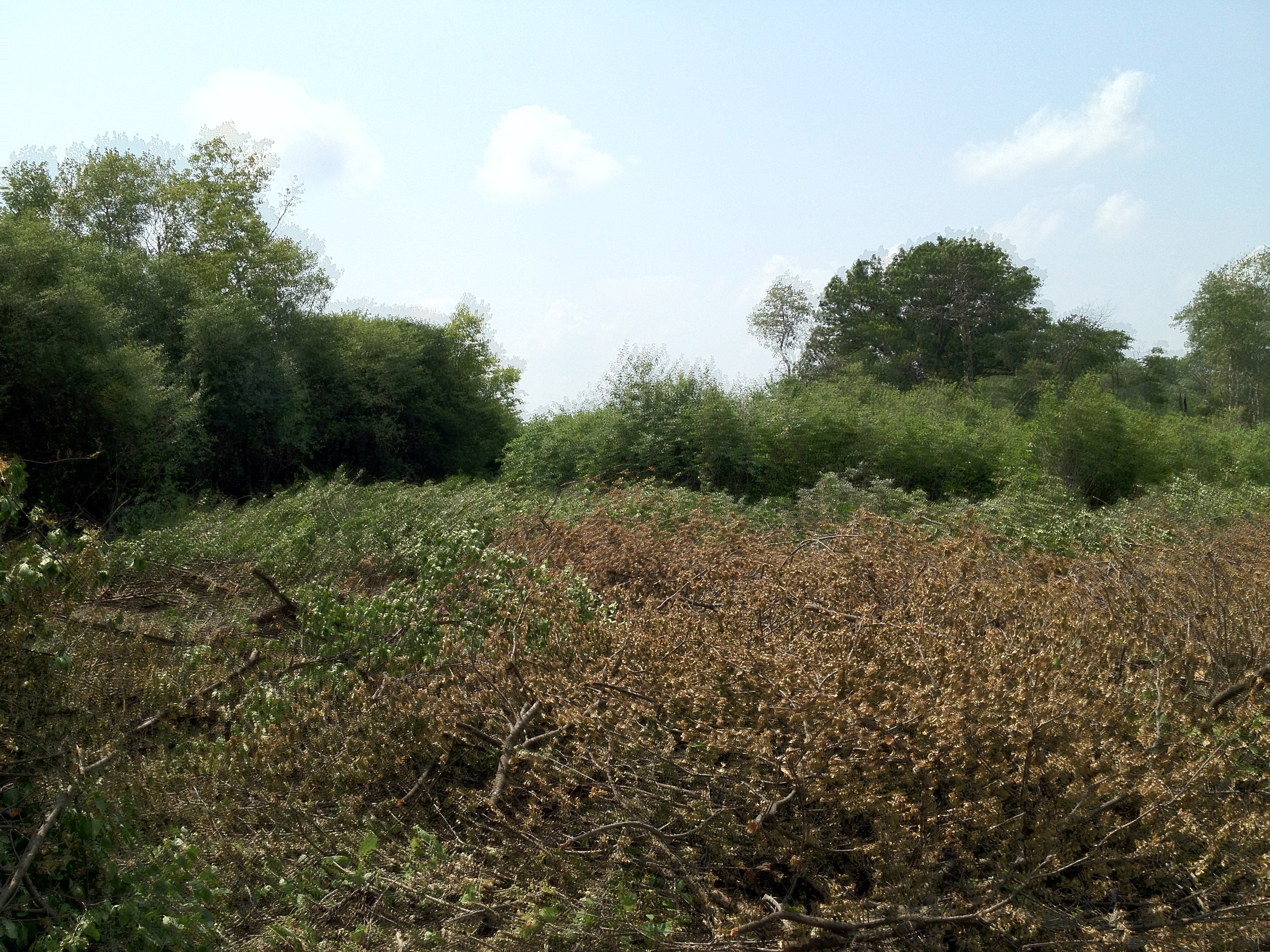
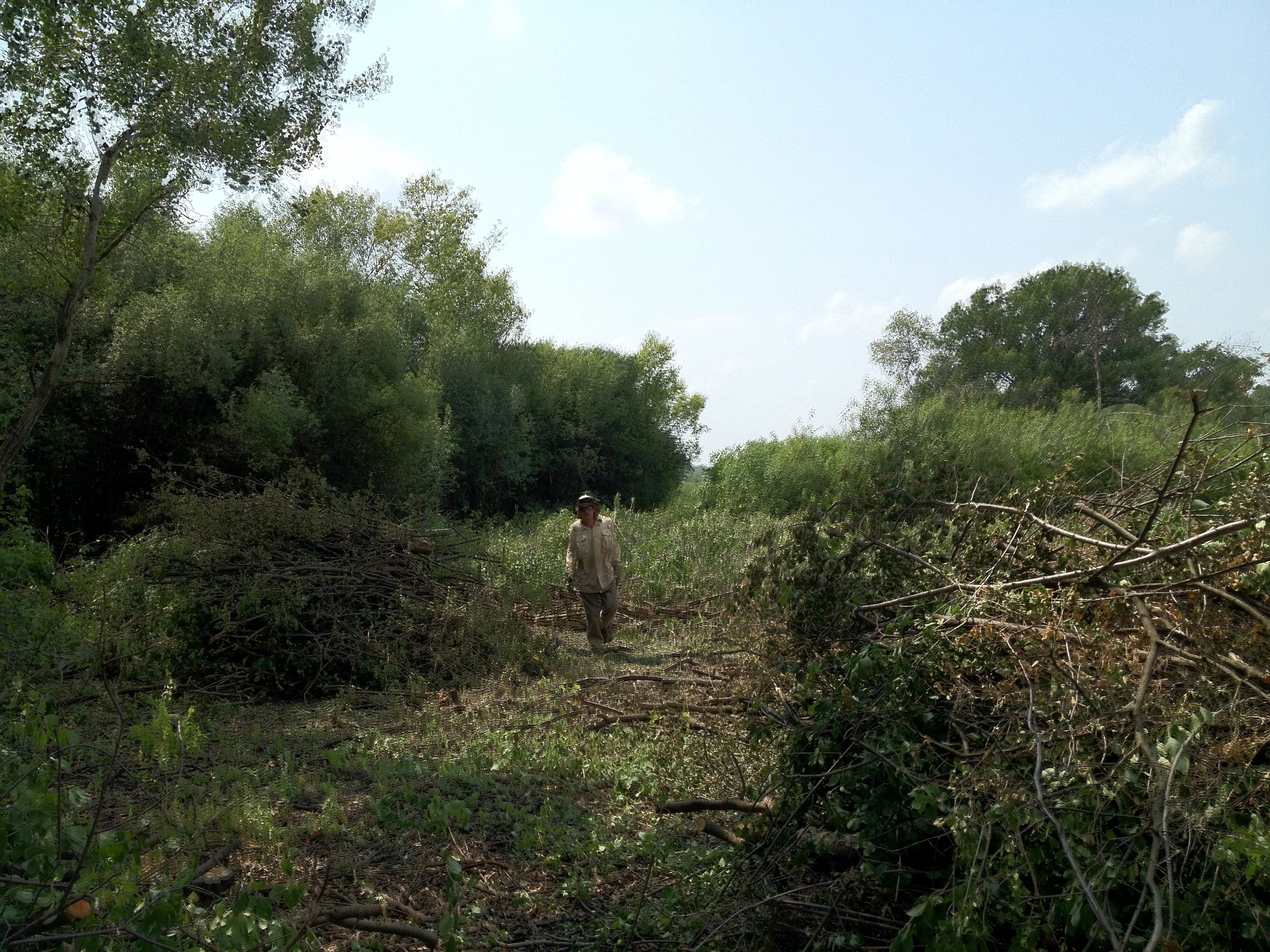
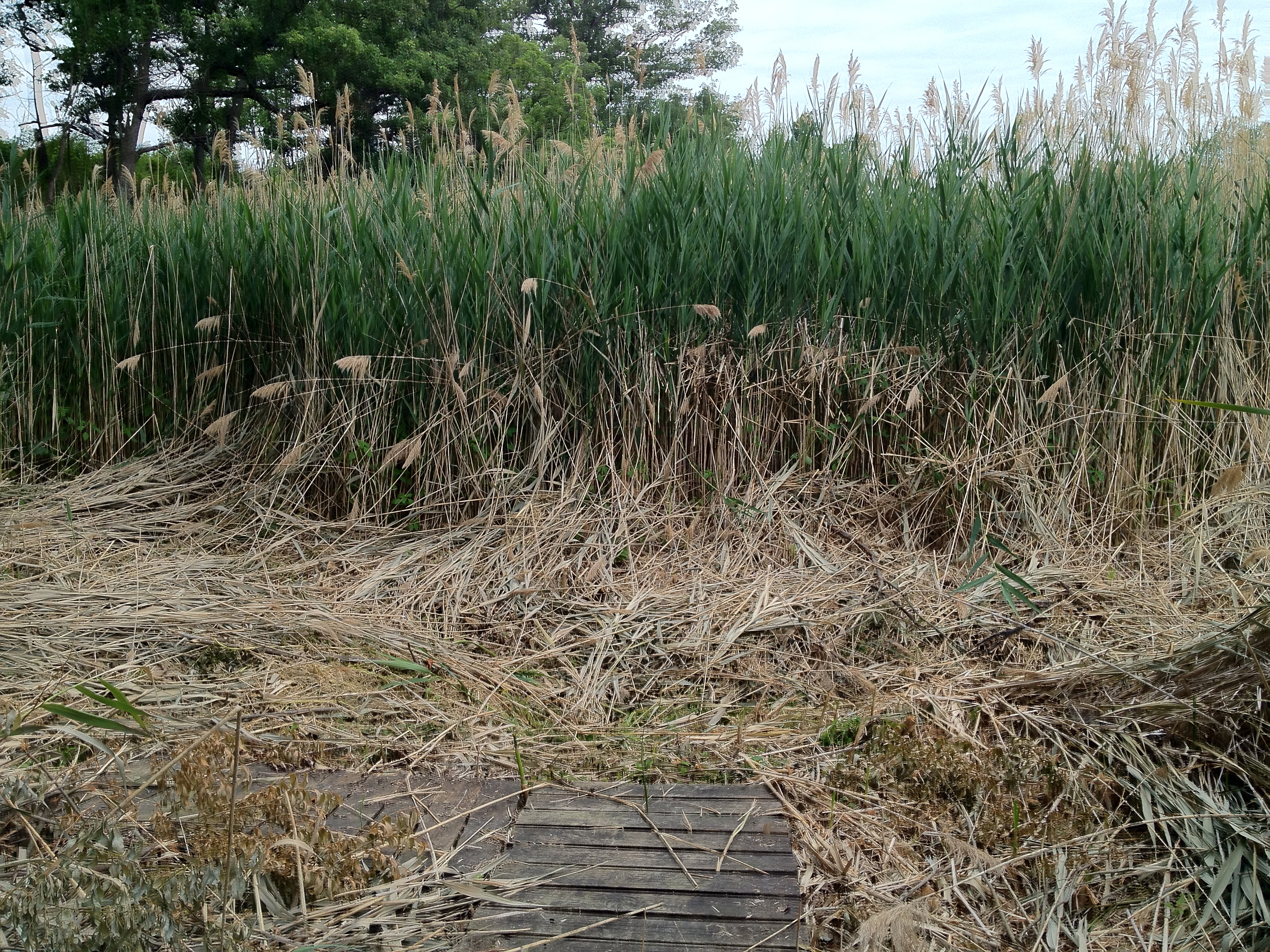
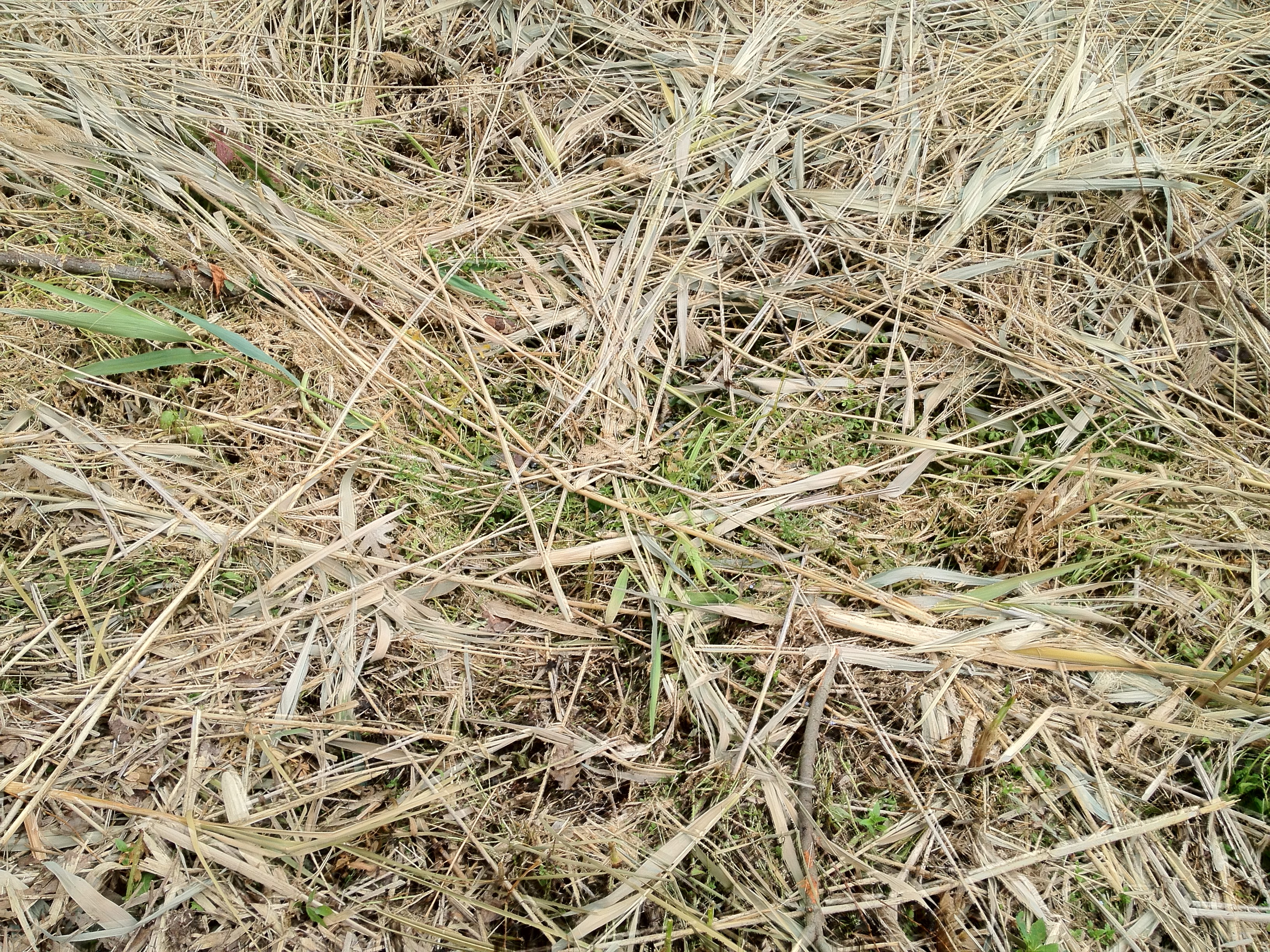
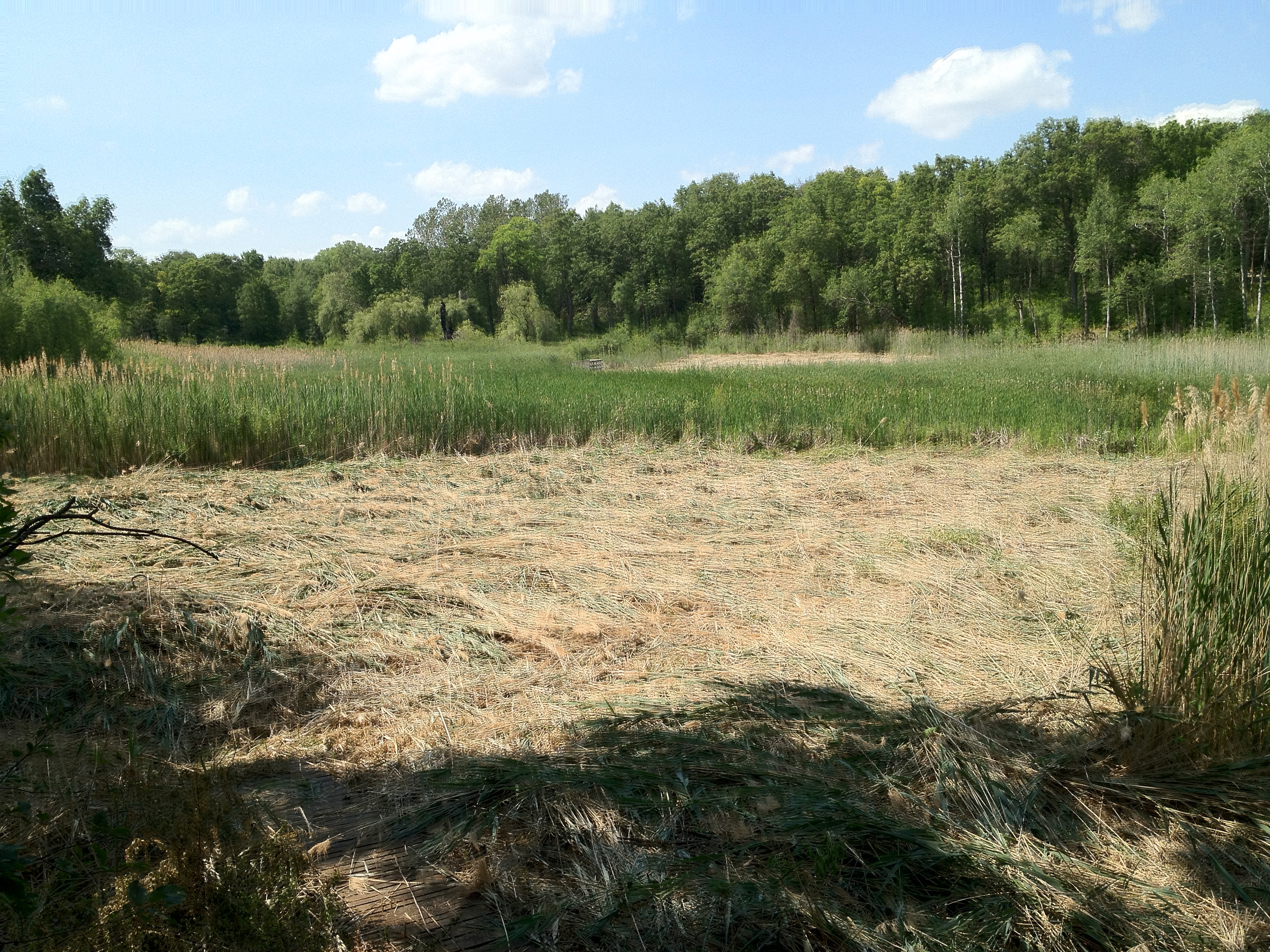
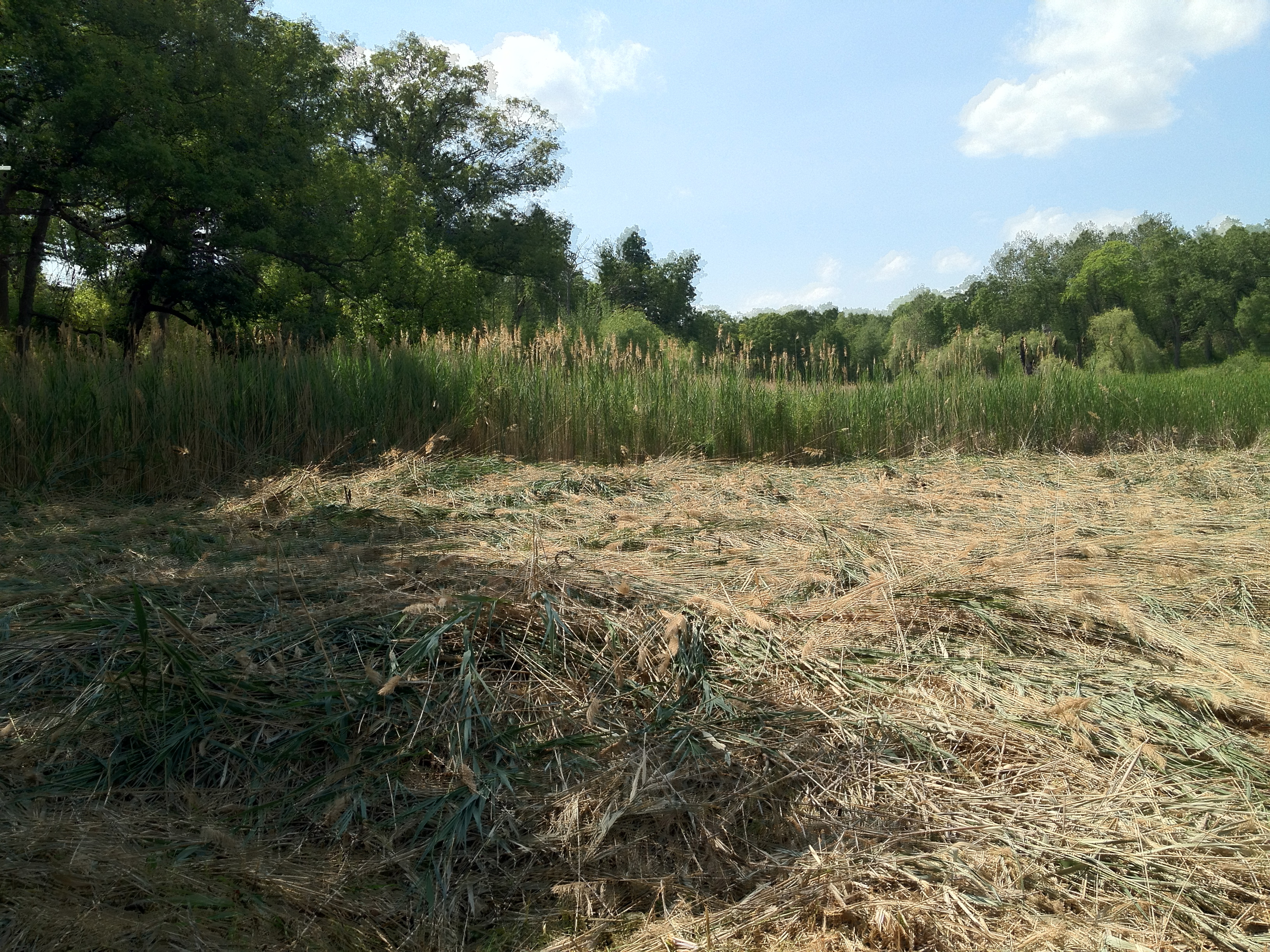
We continued the effort to prepare the Indian Campground Sand Prairie for mowing and burning doing some clearing and piling in the Northeast corner.  It was a hot day!  Here are a couple of before shots.

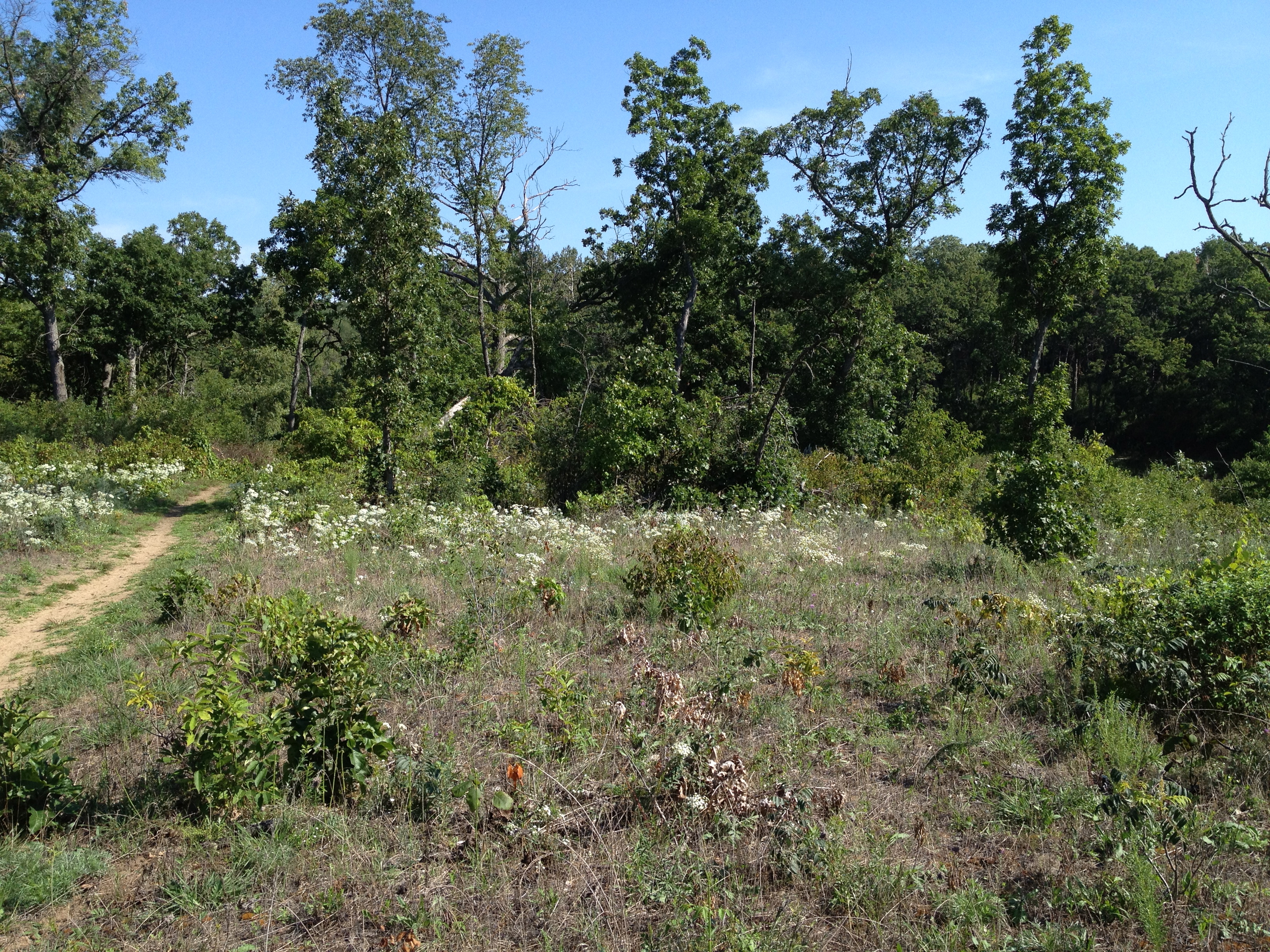
The view from the Indian Campground looking West.

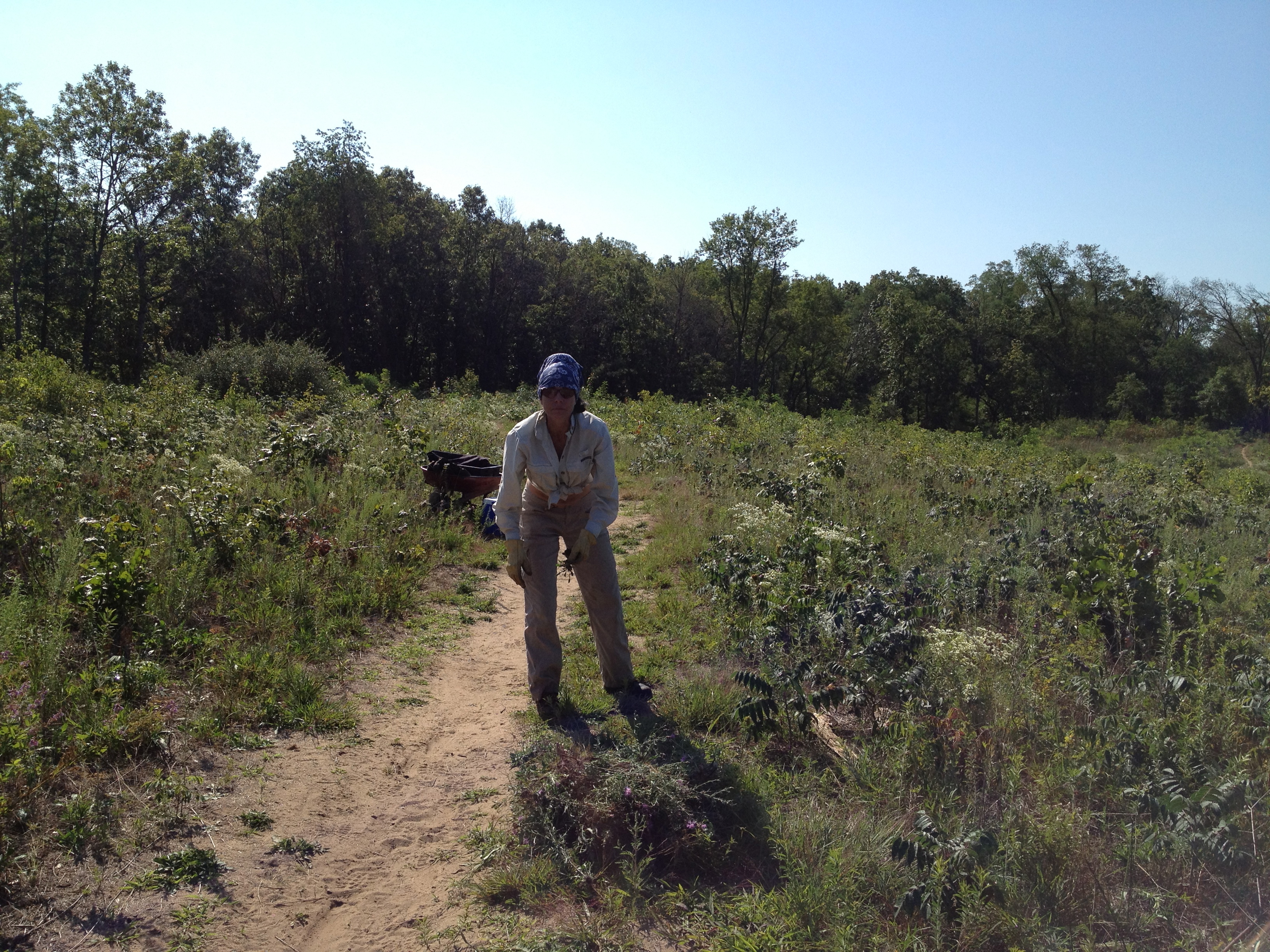
Pati pulling spotted knapweed.

The target work area.

After cutting and piling.

It’s slow going as the area is a tangle of large dead trees interspersed with “witches broom” regrowth from the previous mowing all tied together with wild grape vines.

Water Works and Odds and Ends

I cherish every day I get to spend at the Scuppernong Springs.  Saturday, August 11th was an absolutely gorgeous day indeed.

Since I resumed working at the Springs in late April 2011, I’ve thought about giving the individual springs names.  Well, they already have names that I just recently noticed on the Scuppernong Springs Nature Trail Map, included in the guide.

The namesake spring is the Scuppernong Spring, which I’ve been referring to as the first or main spring.  Then there are the Hillside Springs (actually in two locations), the Hidden Spring, the Emerald Spring, the Hotel Spring and the Indian Spring.  Trail boss Don Dane says there are 13 springs and one of these days, I’ll get him to document where they all are.  The trail brochure explains — The name Scuppernong comes from a Ho Chunk word meaning “sweet-scented land.”  I wonder what names the Ho Chunk people gave to the individual springs.  From now on, I will be using the current names when referring to the individual springs.

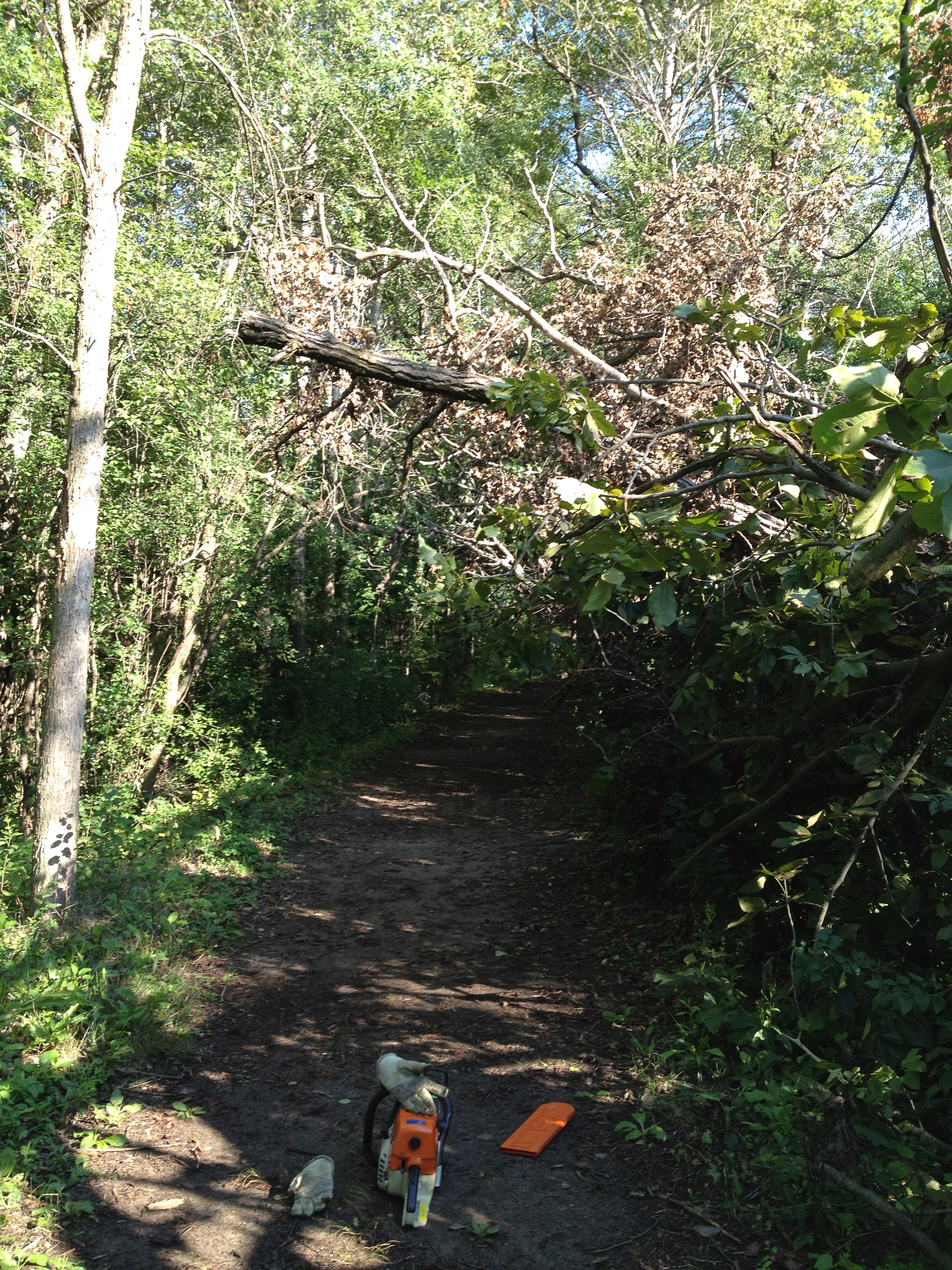
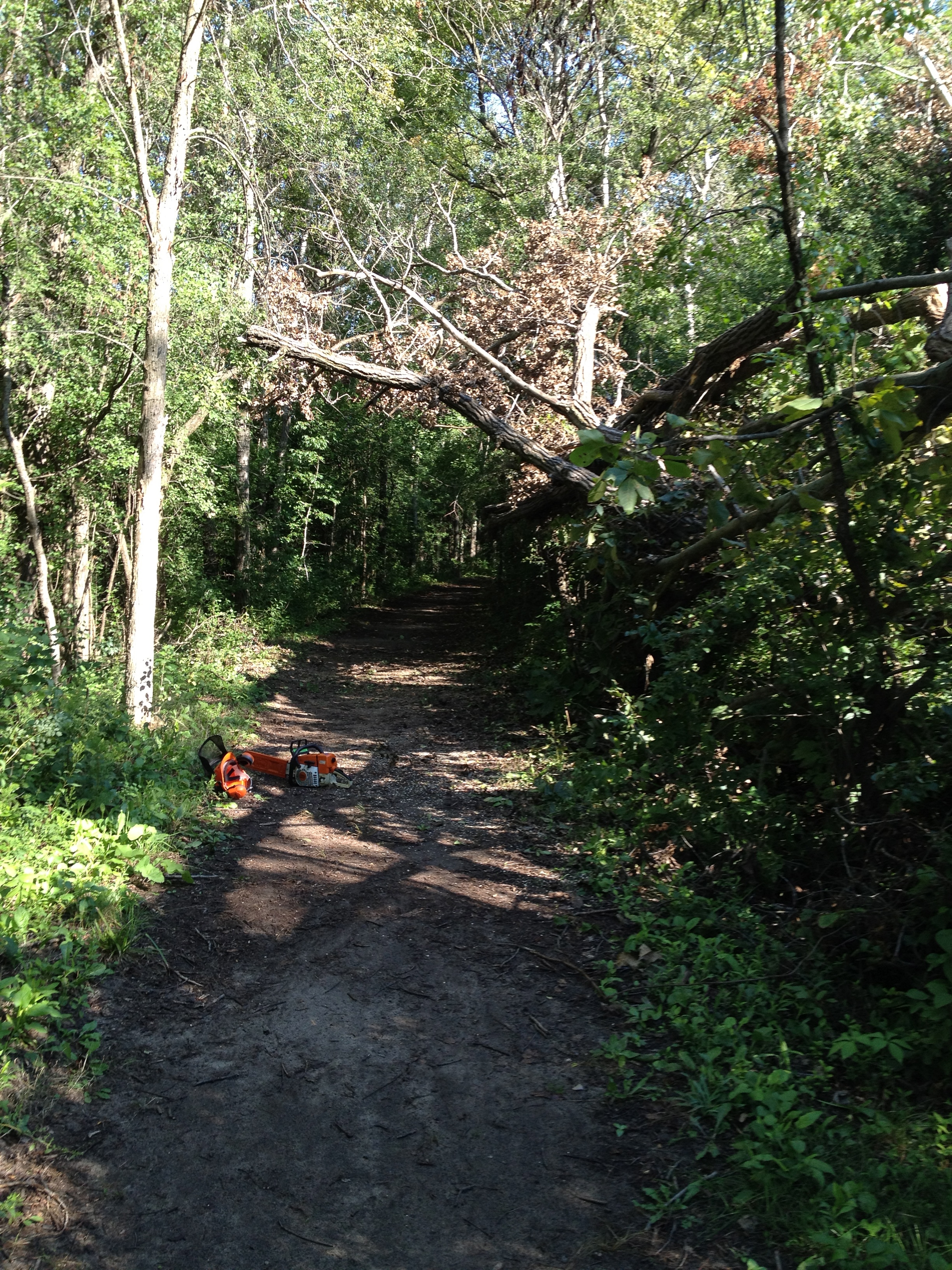
I started the day with a couple of clean-up tasks.  A huge Cottonwood tree had fallen parallel to the trail and a few branches needed to be cleared.

And a Hickory came down across the trail.

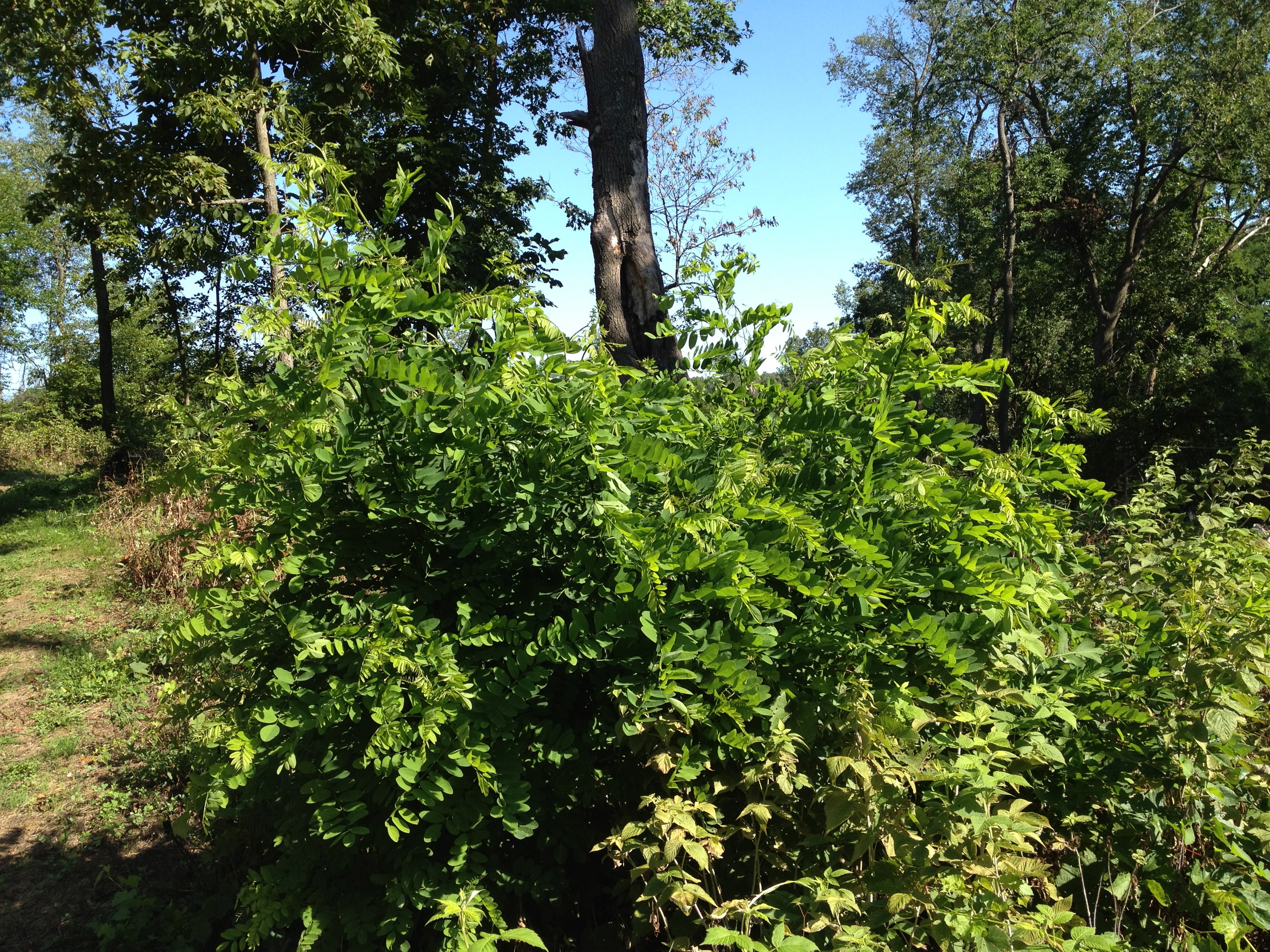
Since we have opened up the area at the South end of the trail, there has been an explosion of Black Locust.  They grow very fast and have the nastiest barbs you will find on any woody plant.  The DNR began girdling the huge Black Locusts many years ago and we are continuing that effort and cleaning up the trees as the die and fall.  They can be harvested for firewood as well (contact Mike, the forester at the Southern Unit of the Kettle Moraine State Forest, for a permit).  I sprayed 5 gallons of Roundup on the bushy black locust.  Don Dane recommends we use TransLine and we will do so as soon as we get some.

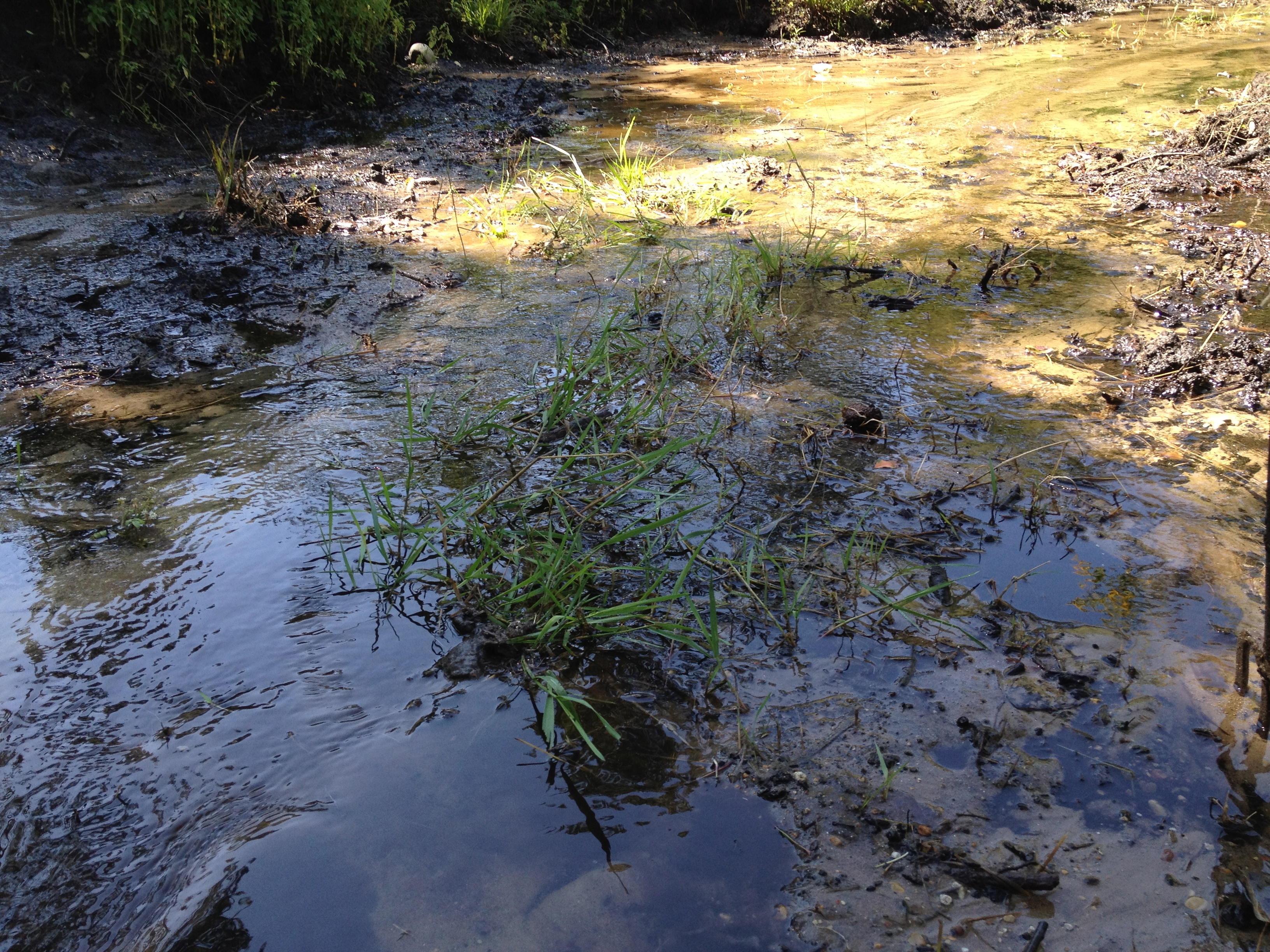
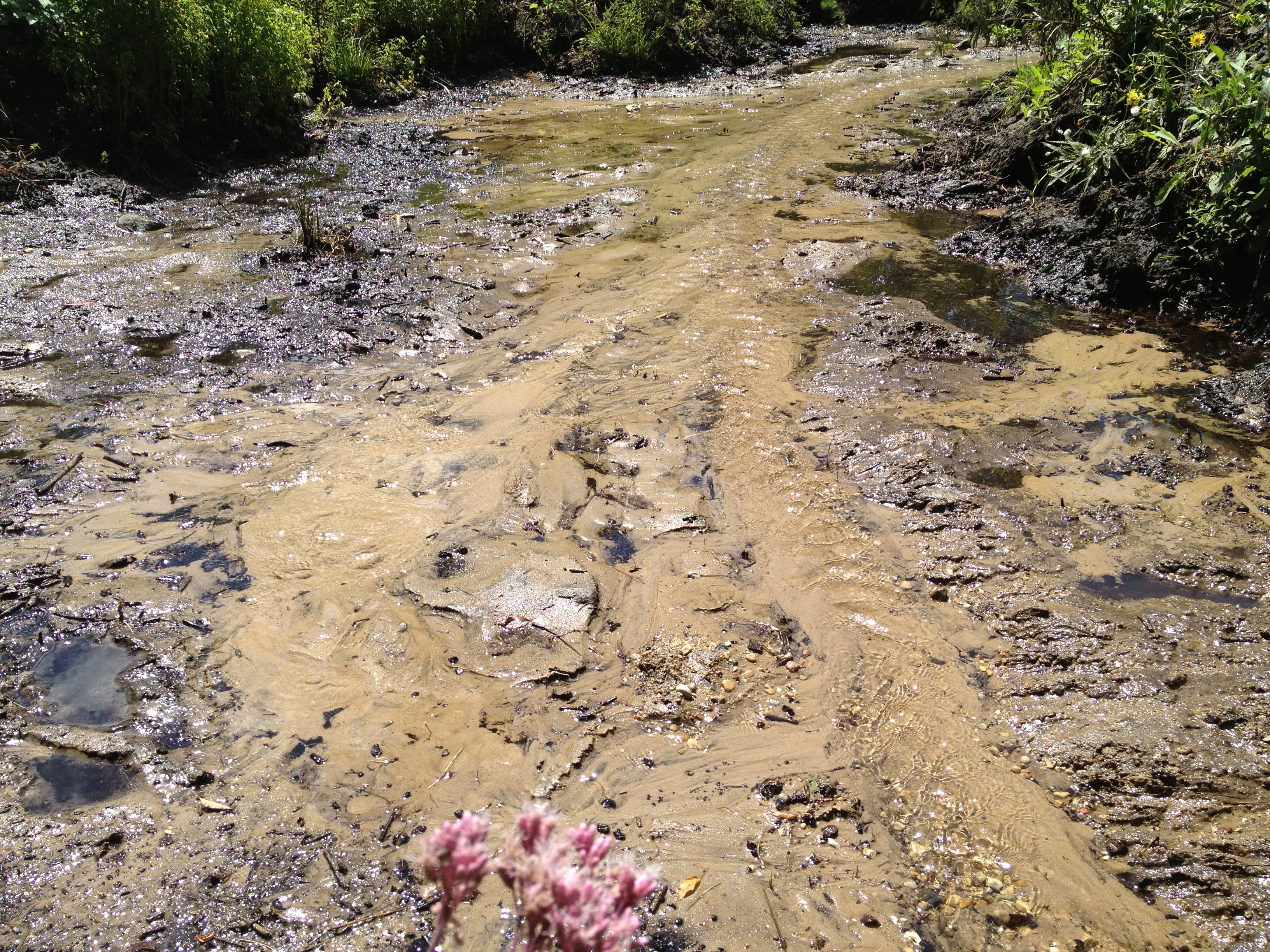
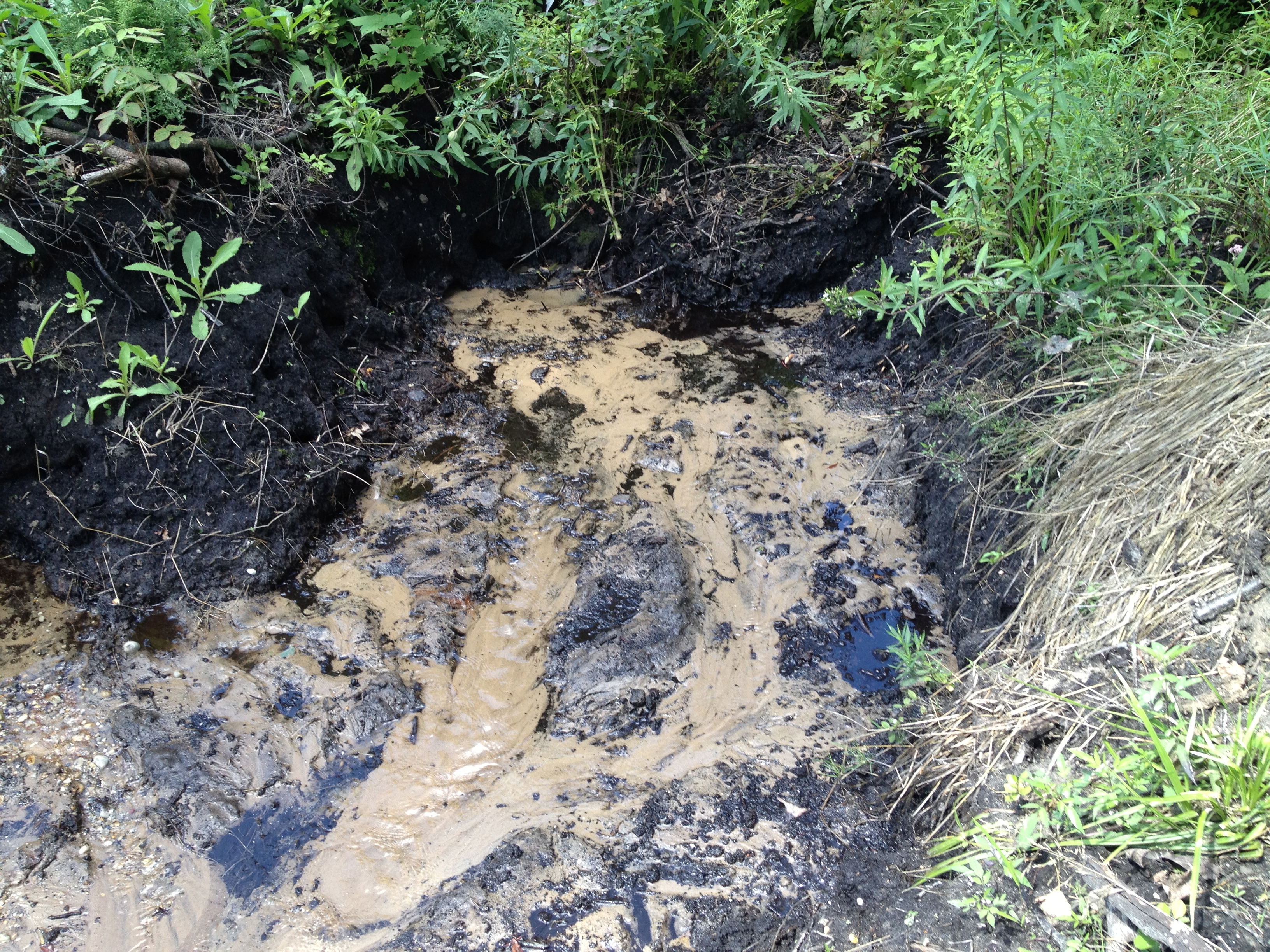
Then I continued our efforts clearing the quack grass from the Indian Spring.  Lindsay got most of it already and I cleaned up the last remnants.

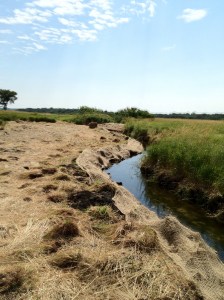
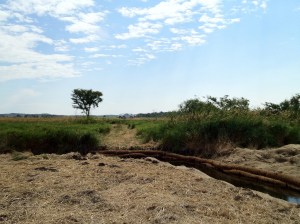
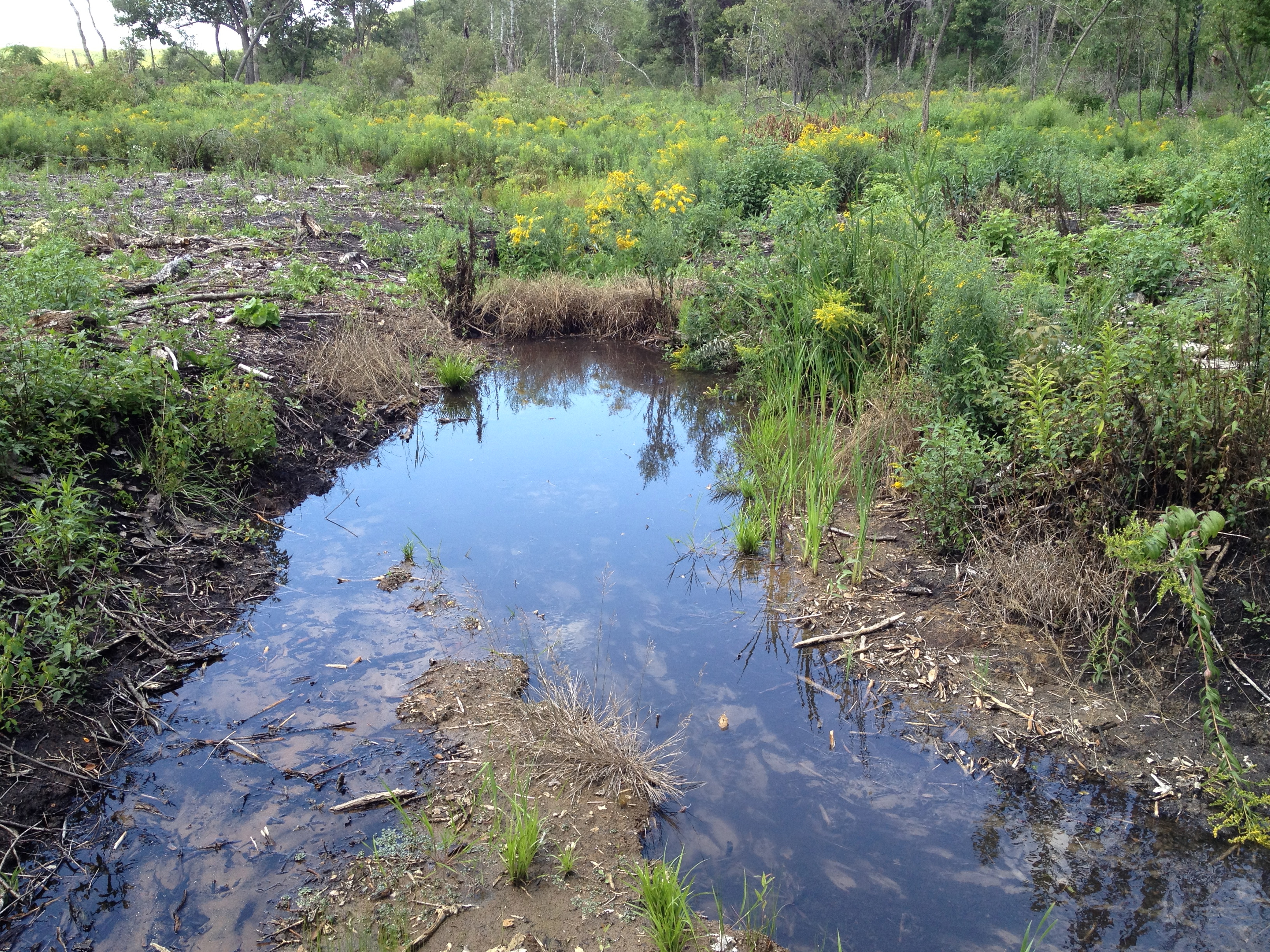
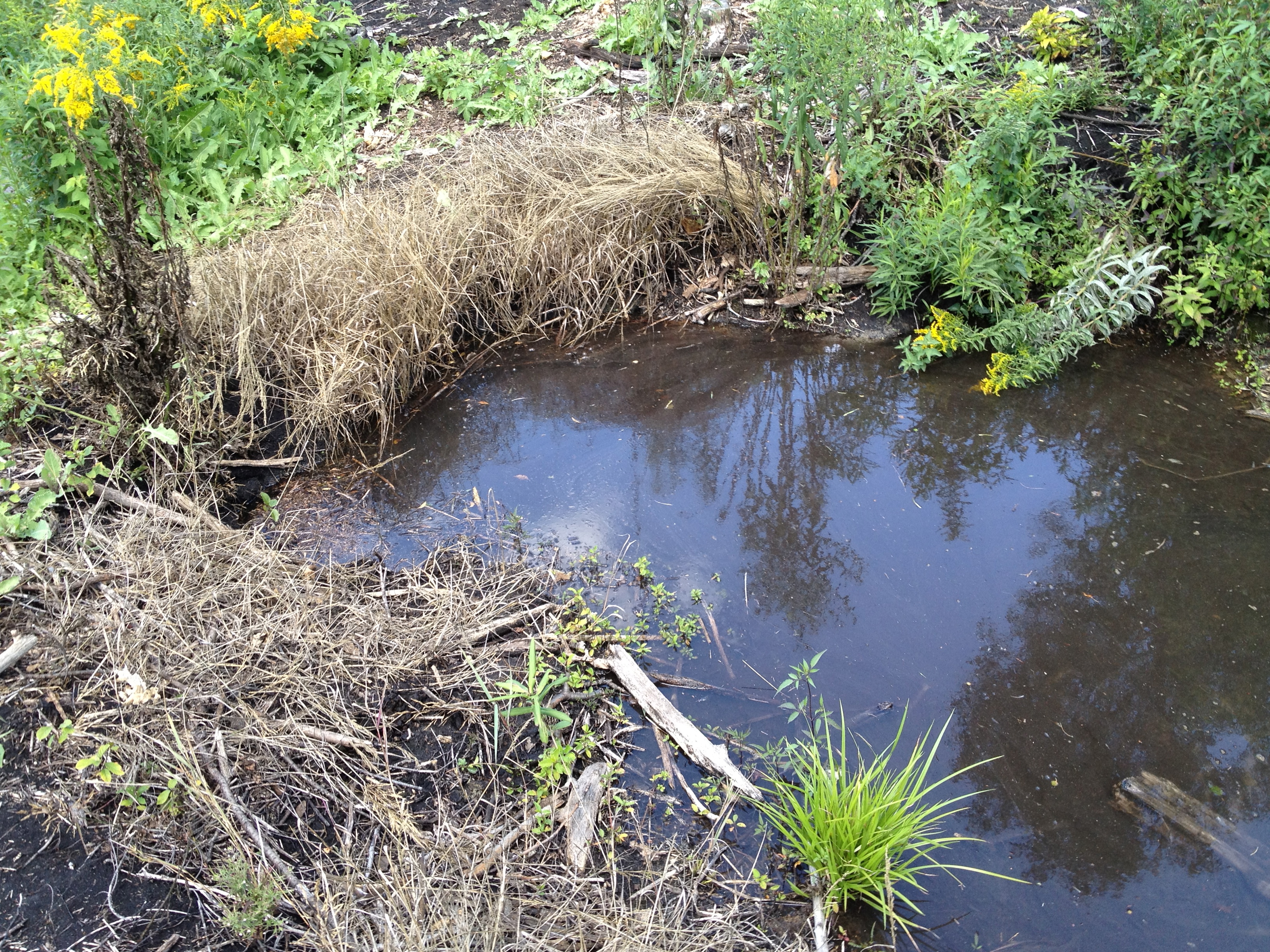
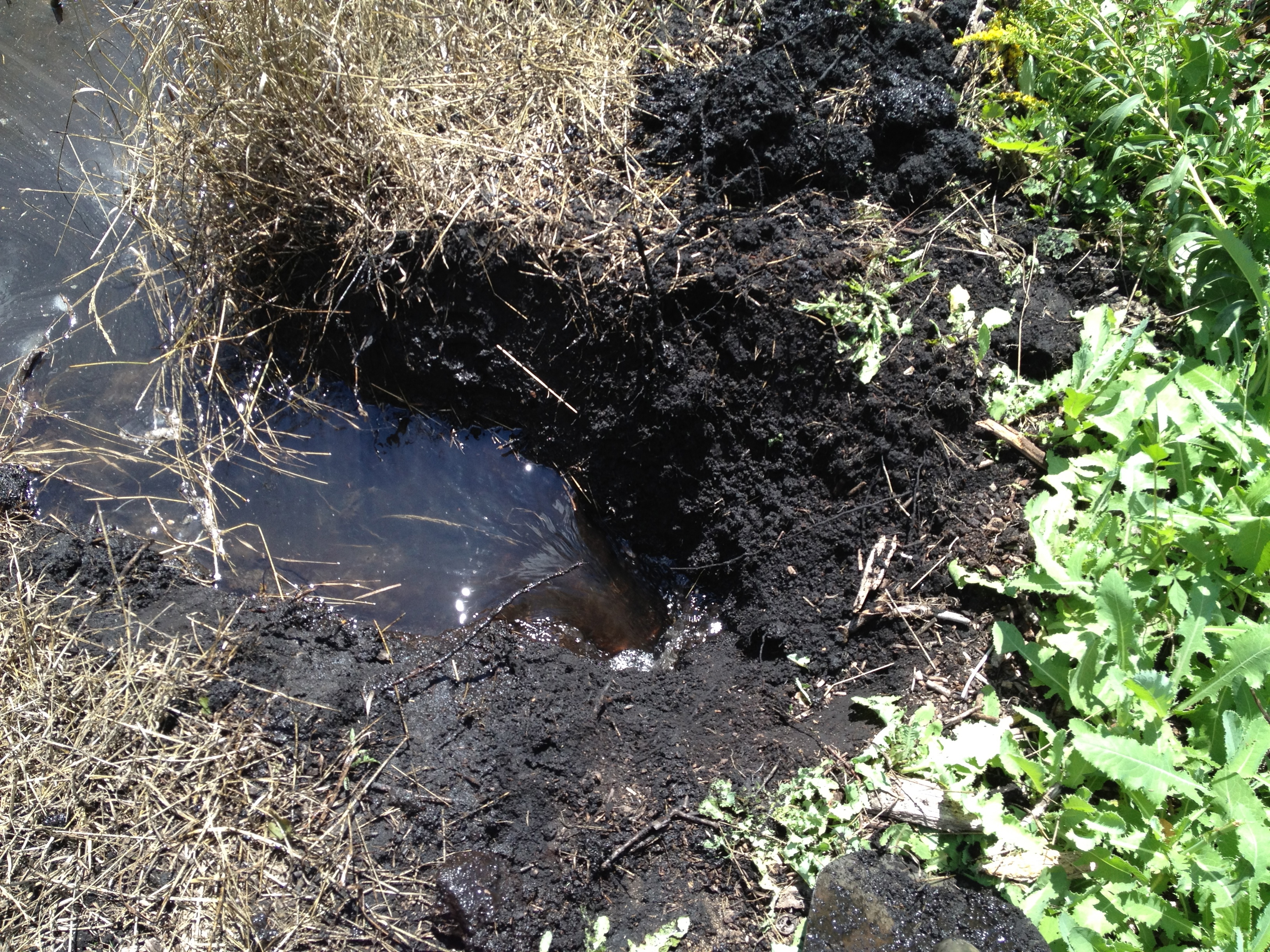
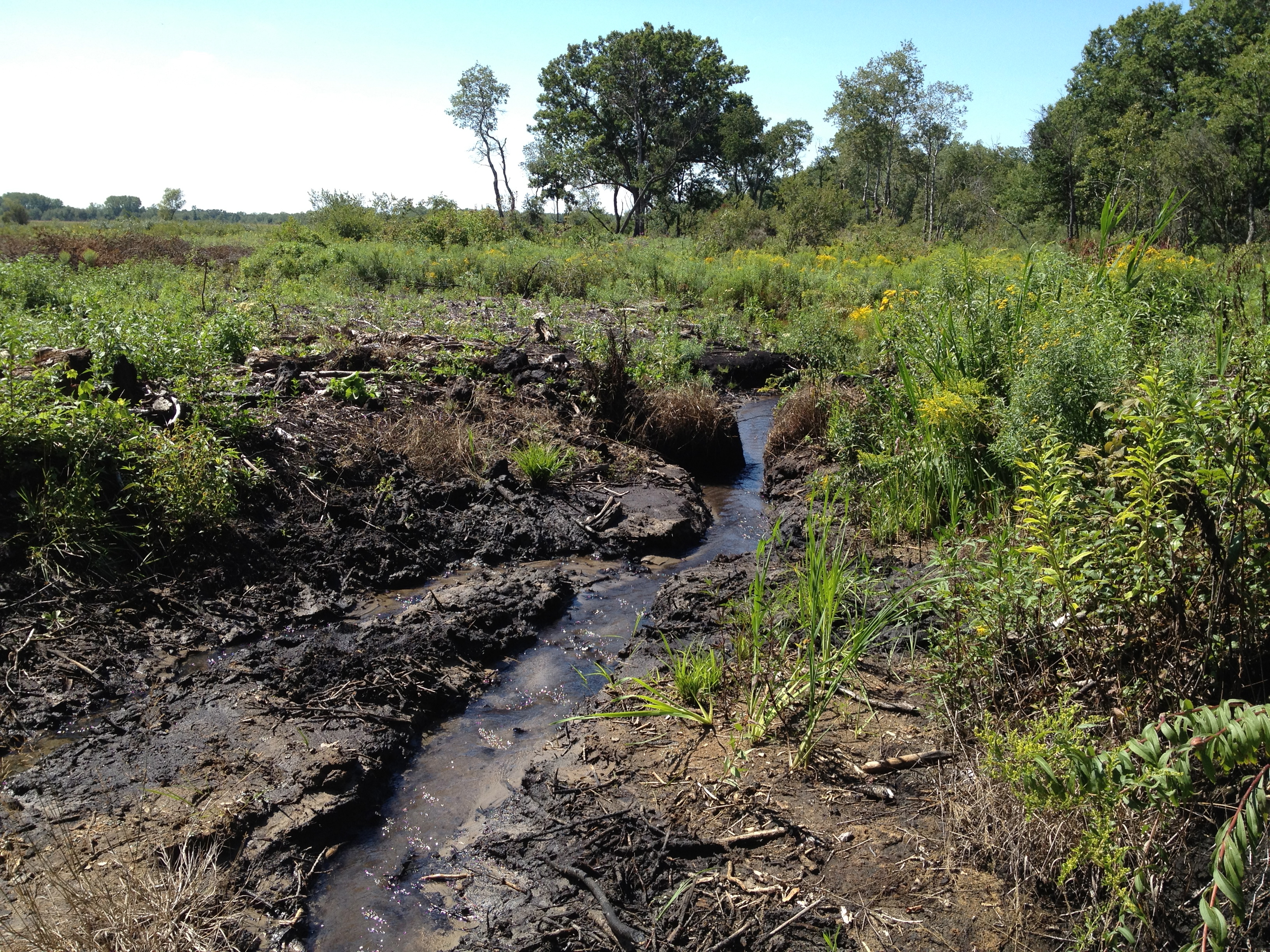
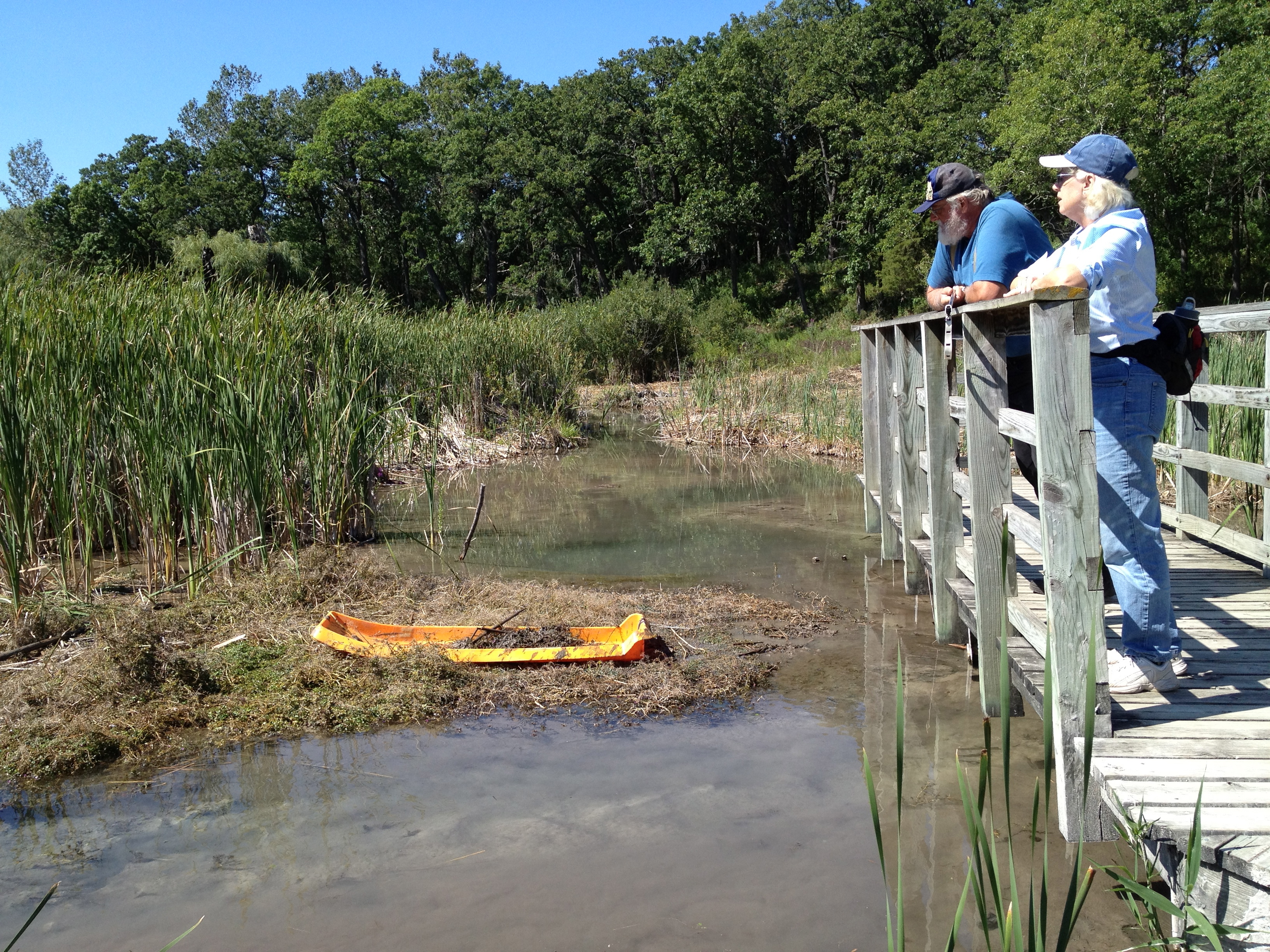
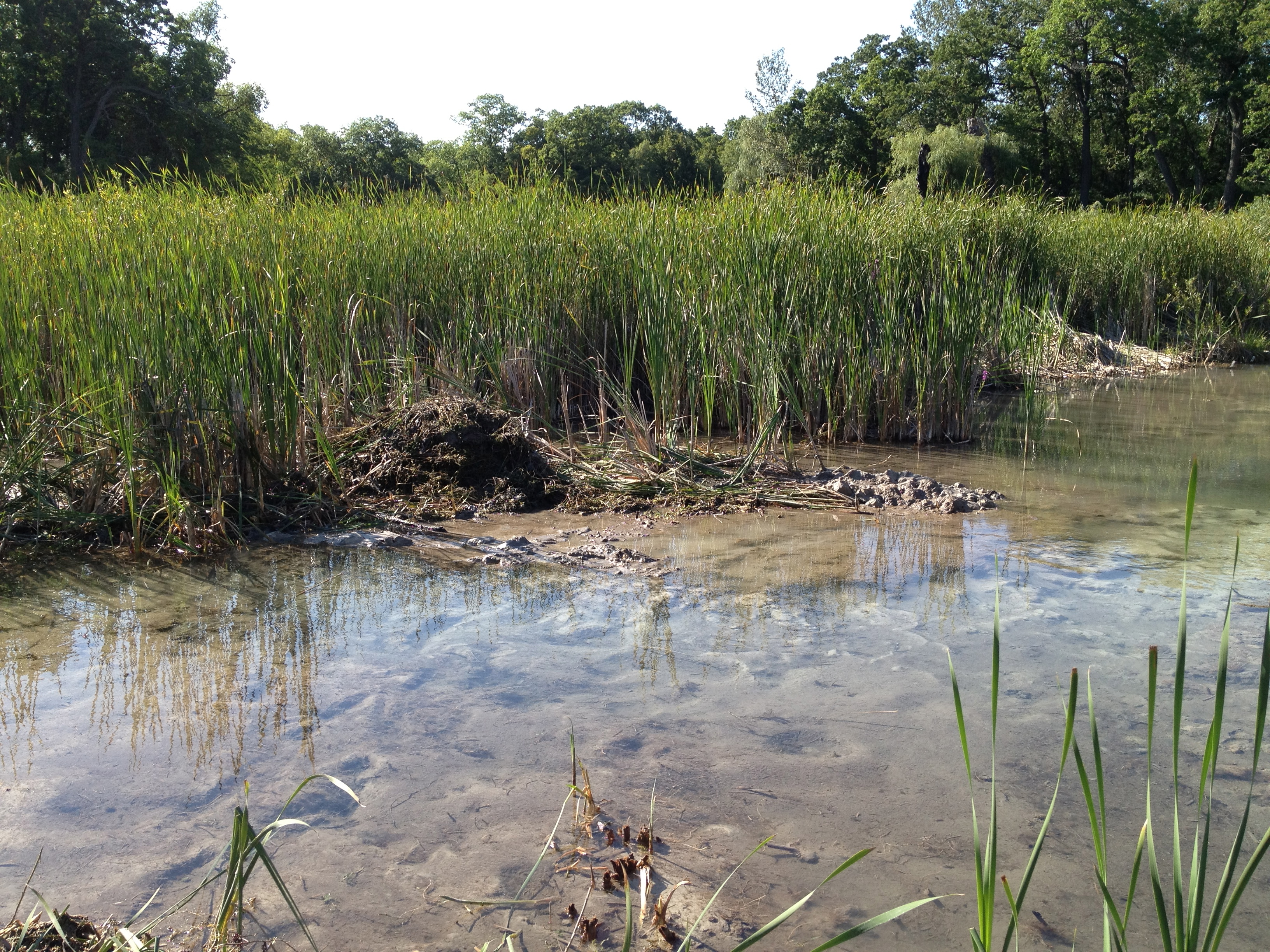
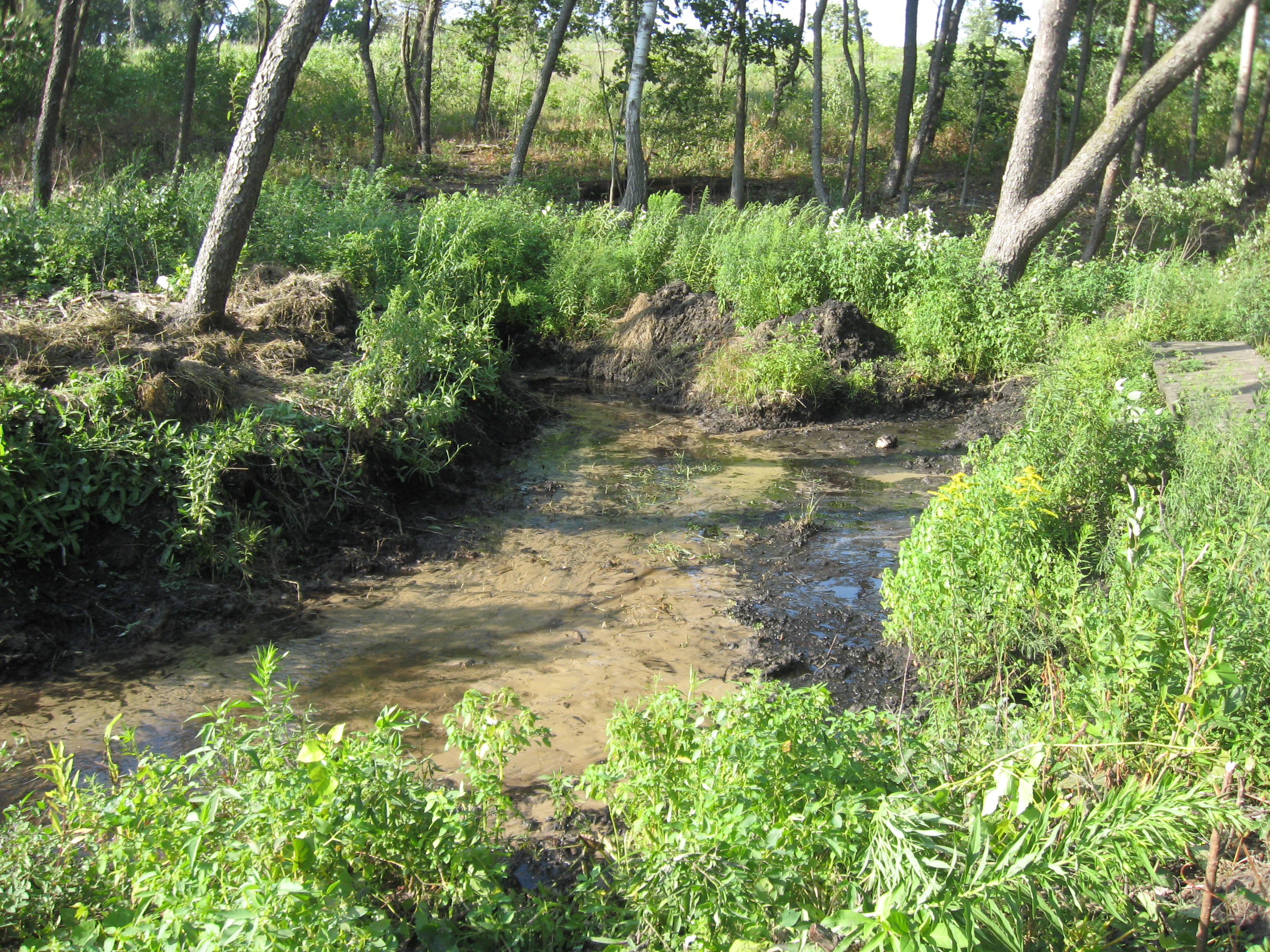
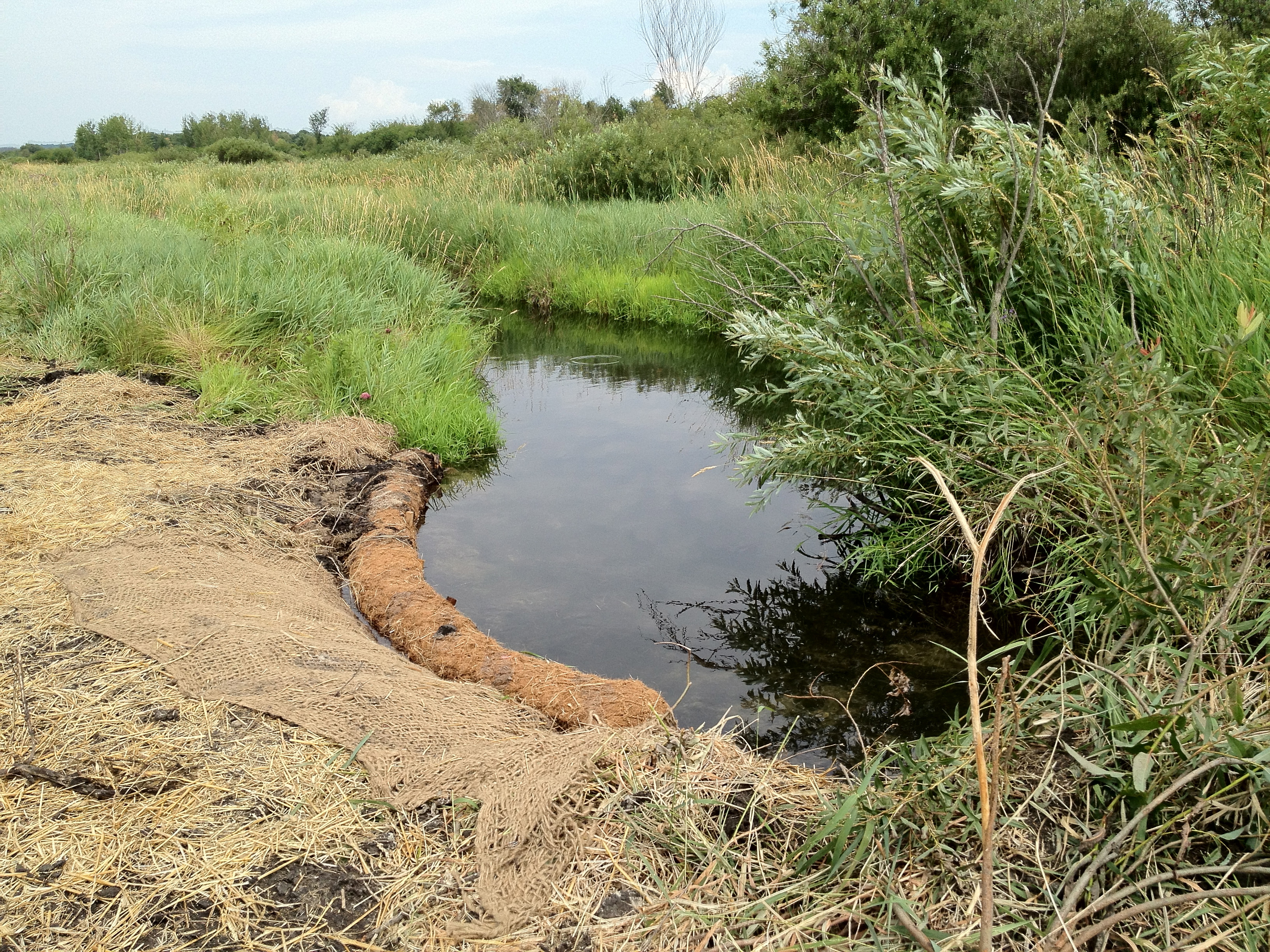
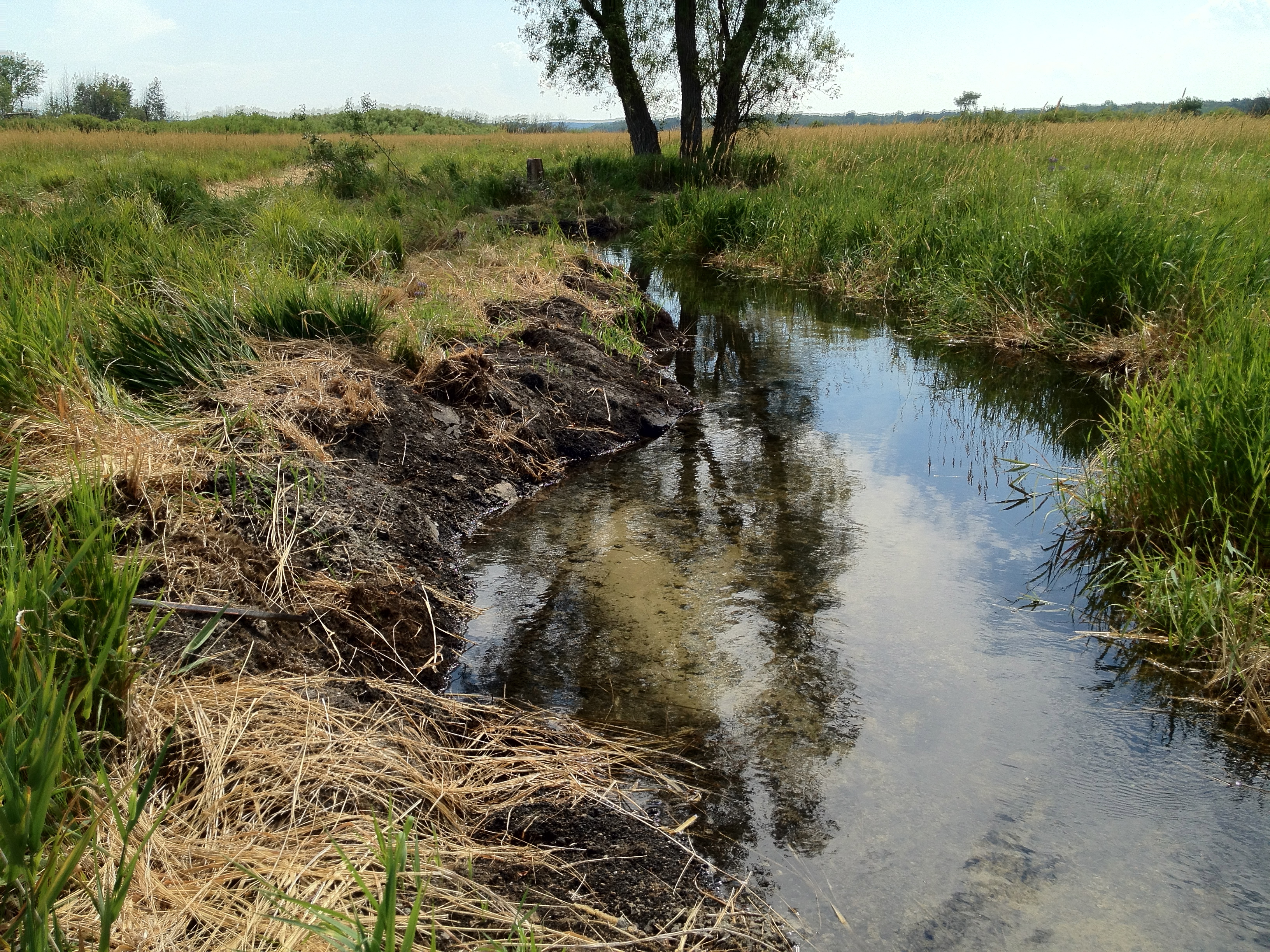
This effort stirred up at lot of mud, which collected at an earthen bridge that crosses the Indian Springs outflow channel.  The water finds a way under it somehow but the bridge restricts the flow.  When Don and Dave visited the site on August 9th, they recommended that we open it up and so I did.

Then it was on to the Observation Deck at the Emerald Springs (see map above) where I wanted to pull a patch of water cress that had formed a dam that actually forced the river out of its natural path.  Don pointed this out and showed me where the river used to flow.  John and Sue Hrobar, stopped over to say hello.  We will soon be posting some of their stories and pictures describing the various flora and fauna they have observed.

Finally, on the way back to car going up a DNR access road by the Hotel Springs, I had to capture these views of the river valley that are now visible since we cleared some of the Willows that were filling in.

It was a great day at the Springs!

Indian Campground

There is a wonderful Sand Prairie at the Indian Campground location along a crest on the Scuppernong Springs Nature Trail (see #6 Scenic Overlook on the map below).

Some years ago the DNR burned and mowed this area in an attempt to beat back the encroachment of Red Oak, Cherry, Black Locust, Sumac, Hickory, Buckthorn and other woody plants that had begun to fill it in.  During the burn many large Red Oak and other trees came down.  Their unburnt remains littered the Sand Prairie and would make it difficult to mow or burn the area again.  Many thousands of saplings from the parent trees had sprung back as well.  Ron Kurowski suggested we cut, pile and burn the downed wood to pave the way for Trail Boss Don Dane and his crew to mow the prairie again this Fall.  We hope to burn it next Spring if the conditions are right.

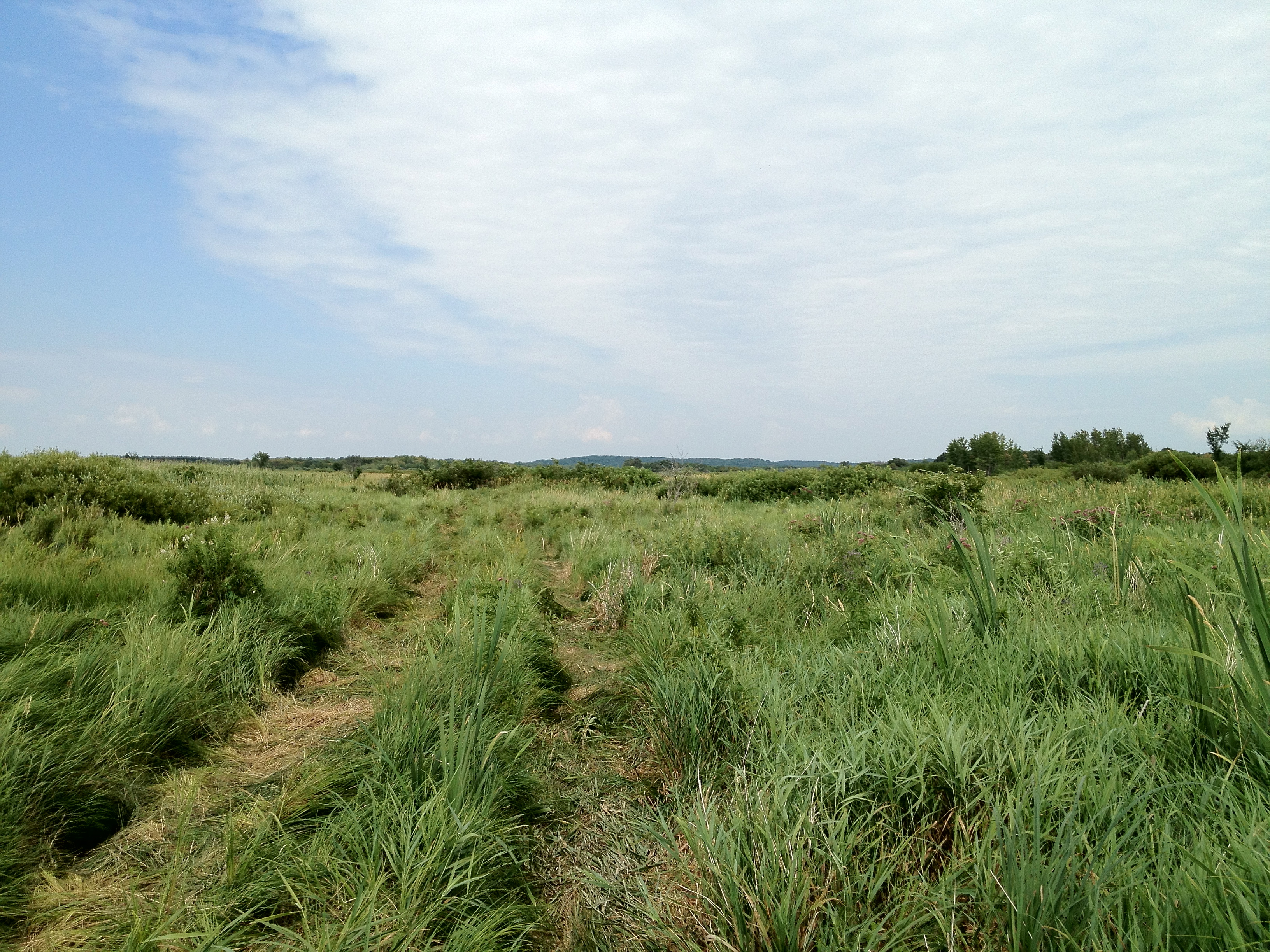
Here is a view from the scenic overlook looking West.

I cut the downed wood until the afternoon when Lindsay, Don Dane, and Dave, who also works with the DNR came out to join me.  I had a close encounter with a hornet’s nest at the base of a dead Cherry tree and had to take a break to nurse multiple stings.  Good thing Pati keeps our First Aid kit well stocked!  A closer look at the work at hand…

Examples of the woody plants making a comeback on the Sand Prairie.

The short boardwalk below is at the Indian Springs.  We discussed the best way to shore this up with Don and Dave and came up with a plan.  Hopefully, we’ll get to this some time in October or November.

Take another peek at the map shown above.  There is a trail shown that bisects the loop trail heading Northeast from #3 Marl Pit Ruins to join the main loop just to the right of the #13.  This trail has gotten so overgrown it is literally gone.  When Ron took a tour with Lindsay and I a couple months ago, he pointed out the general area where this trail intersected the main trail in the vicinity of #13 on the map.  We asked Don and Dave to help us relocate the path for this trail so we could open it up again and it didn’t take them long to find it.  Don is planning to come back soon and flag the trail precisely and we hope to reopen this route sometime this Winter.  It passes by some magnificent White Oaks, the biggest trees on the property.  Needless to say, we are chomping at the bit to reveal these beauties.

After Don and Dave left, Lindsay and I piled the wood I had cut in the morning at the Indian Campground.  We enjoyed working in the rain for a change!  There is still a lot of prep work to do there before it will be ready for mowing and burning.

Scuppernong River Bridge Cleared

We got a nice mention in the latest issue of the Scuppernong Journal.  It is published by the Kettle Moraine Natural History Association, S91 W39091 Hwy 59, Eagle, WI 53119  Ron Kurowski editor.  Address questions and comments to the editor at (262) 363-9892.  Please consider supporting the KMNHA and you will receive your very own copy of the Scuppernong Journal in the mail.

On August 7th I spent the day clearing brush and Willows by the 3rd bridge over the Scuppernong River (counting from the first Spring).  This is where the dam used to be that Ben Heussner mentioned that was removed in 1993.  There were a lot of fairly large Willows that were beginning to fill in the area along with some smaller buckthorn and other brush.

Here are short before and after videos.

Indian Springs Buckthorn Clearing Update

On Sunday August 5th Lindsay and I spent a beautiful day cutting Buckthorn at the Indian Springs.  We are trying to open up the vista out to the prairie from the Indian Springs looking West and from the Indian Campground on the trail above as well.

DNR Trail Master Don Dane has prepared a whole new set of sign posts to correspond with the Self-Guided Nature Trail brochure.  They should be going in sometime this month or in early September.

Here are a few before shots.  We continued cutting from where we left off last time…

The area of brush below is on the left side of the channel that flows out of the Indian Springs to join the Scuppernong River just upstream from the Marl Pit bridge.

Here are the after shots.  We did a bit of brush piling too.

We plan to girdle the Aspen that we found amongst the buckthorn, which you can see below.

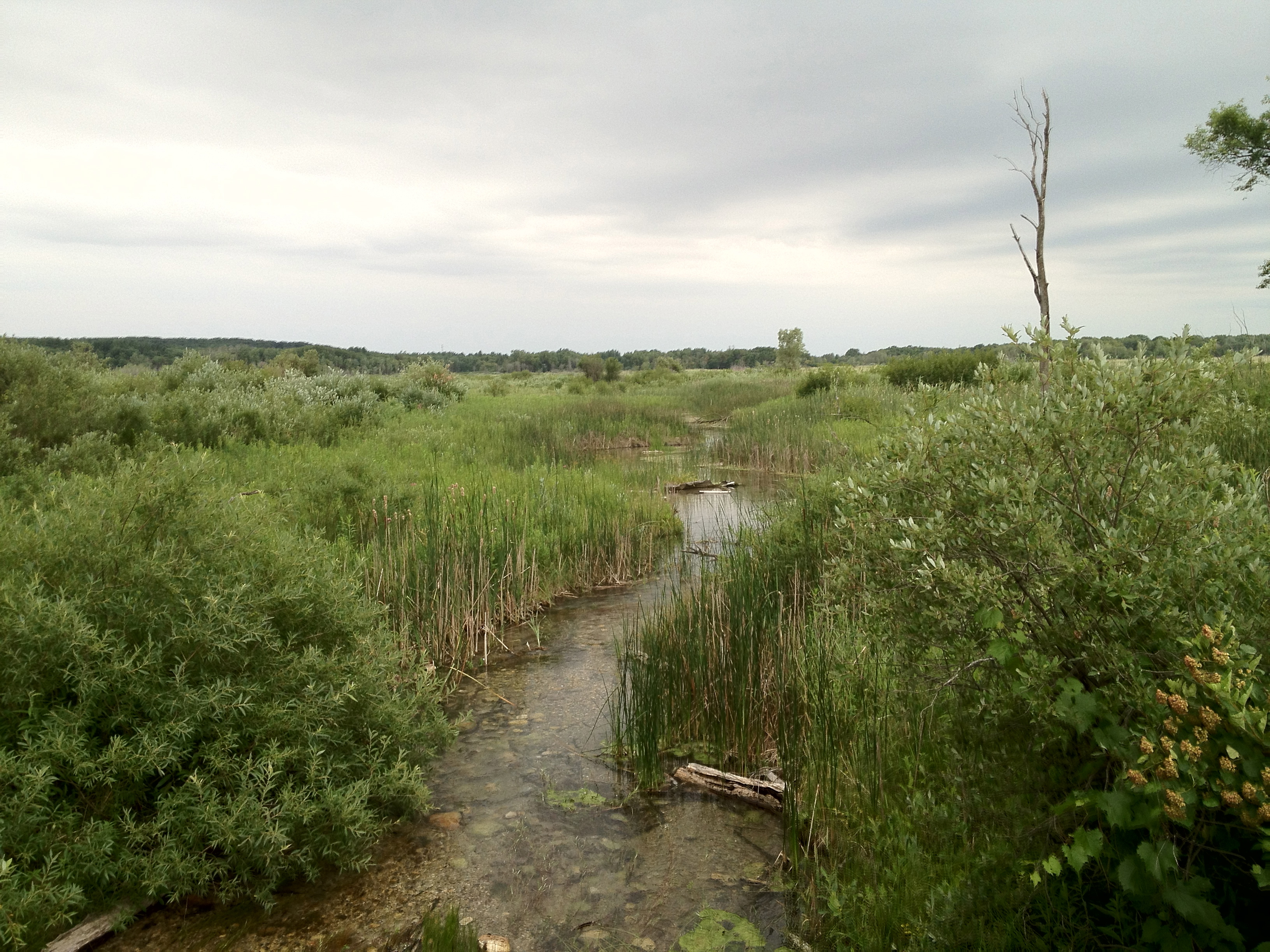
Just for fun, one of my favorite views along the trail…

Check the volunteer page to see what we are planning to do next and come out an join us!

Quackgrass Attack!

Before

After from opposite Before

July 26:  After removing watercress from the Indian Springs quackgrass quickly moved in. So we took care of that, too.  I didn’t have Paul’s brute strength around because he was away acquiring inspiration from another one of our precious planets natural gems- Isle Royale I think he called it- so, as per WDNR,  I knocked it back with some Aquaneat and dug it out with my trusty three-prongued groundbreaker and a garden pitch fork.  We gotta give those Native Sedges, Rushes, Forbs and Brook Trout a chance, don’t we.

Ben Heussner Interview

Lindsay suggested we “…get a hold of the fish people…” to get some feedback/advice.  Ron Kurowski put us in touch with Ben Heussner, Waukesha County Fisheries Biologist with the Wisconsin Department of Natural Resources.  Ben met us at the Scuppernong Springs on July 14th and reviewed our work and also described the Phase II effort to restore the Scuppernong River to its original bed, which his DNR team had just completed.
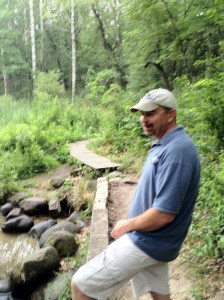
Here is a short video of the “Big Springs“, at the very start of the river, where we talked with Ben.  He is referring to the Trout Unlimited group and what great partners they have been.

Click here to listen to the interview.

Here is Ben showing us the shells he collected from the old riverbed (sorry about the rotated image).

In the early 1990’s Ron Kurowski and others from the DNR created a plan to repair the damage done to the  Scuppernong River from man-made dams, dikes and canals (this was a key component of the Scuppernong River Habitat Area Restoration Project).  The first step was to remove the dam that created “the pond” in the wetlands where numerous springs collected to form the Scuppernong River headwaters.  This was done in 1993 and Ben was there to set the river on its meandering course after the pond drained.

Phase 1 was completed in 2005 restoring 2+ miles of river to its original bed.  The river is healing quite well in this area except for a barrier between the river and one of the old canals that was blown out during the floods back in 2008.  Phase 2 included repairing this break and restoring the stretch of River from the end of Phase 1 to Hwy N.

Later that day I visited the Phase 2 work site.  If you want to check it out, I recommend parking along Hwy N, just North of Wilton Rd. where the River passes under the road and following the river upstream. The work site below is accessed via a DNR “road” off of Wilton Rd just East of Hwy N.
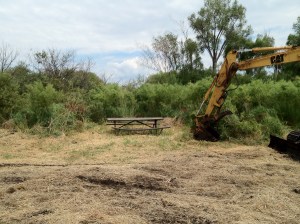
There was major work done here to fill a trench connecting the river to the canal system.  More details on that below.

I followed the 2-track shown below upstream looking for the 2008 “blow-out” repair work.

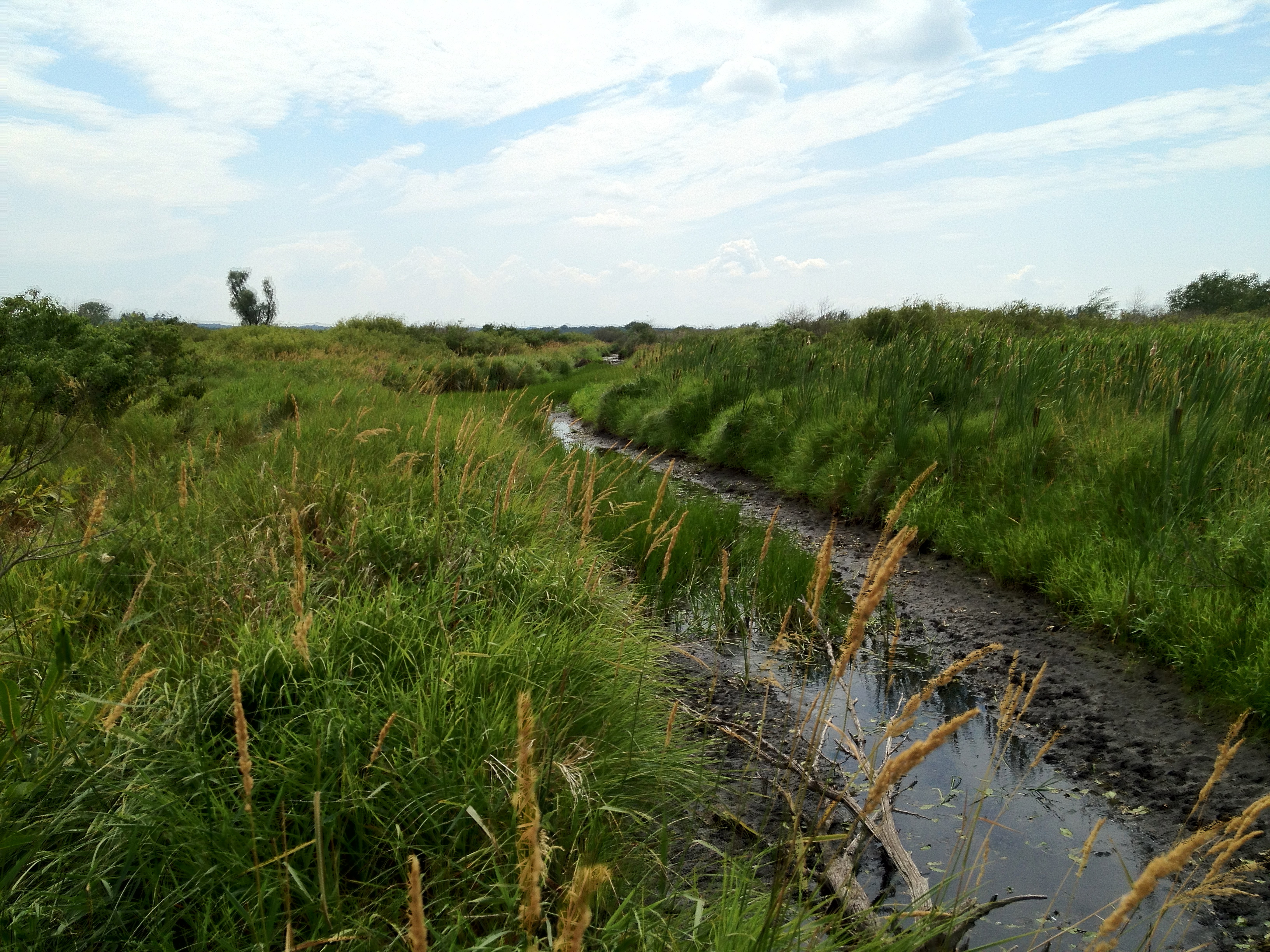
Along the way you can see the old canal drying up now that the breach has been repaired.
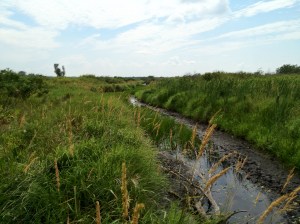
The scenery in this area is blissful… if you want some peace and quite, take this hike up the Scuppernong River.
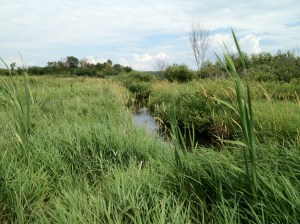
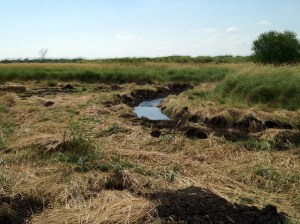
After following the 2-track for approximately 1mile through dogwood and willow brush and open areas, I arrived at the repair site.  I imagine it was pretty tough to drive the machinery back there. The stretch below is the old connection where the river was diverted into the man-made canal.  Now it is filled in and the separation restored.
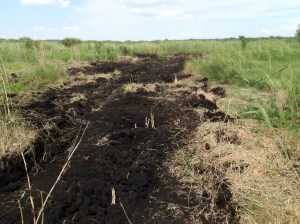
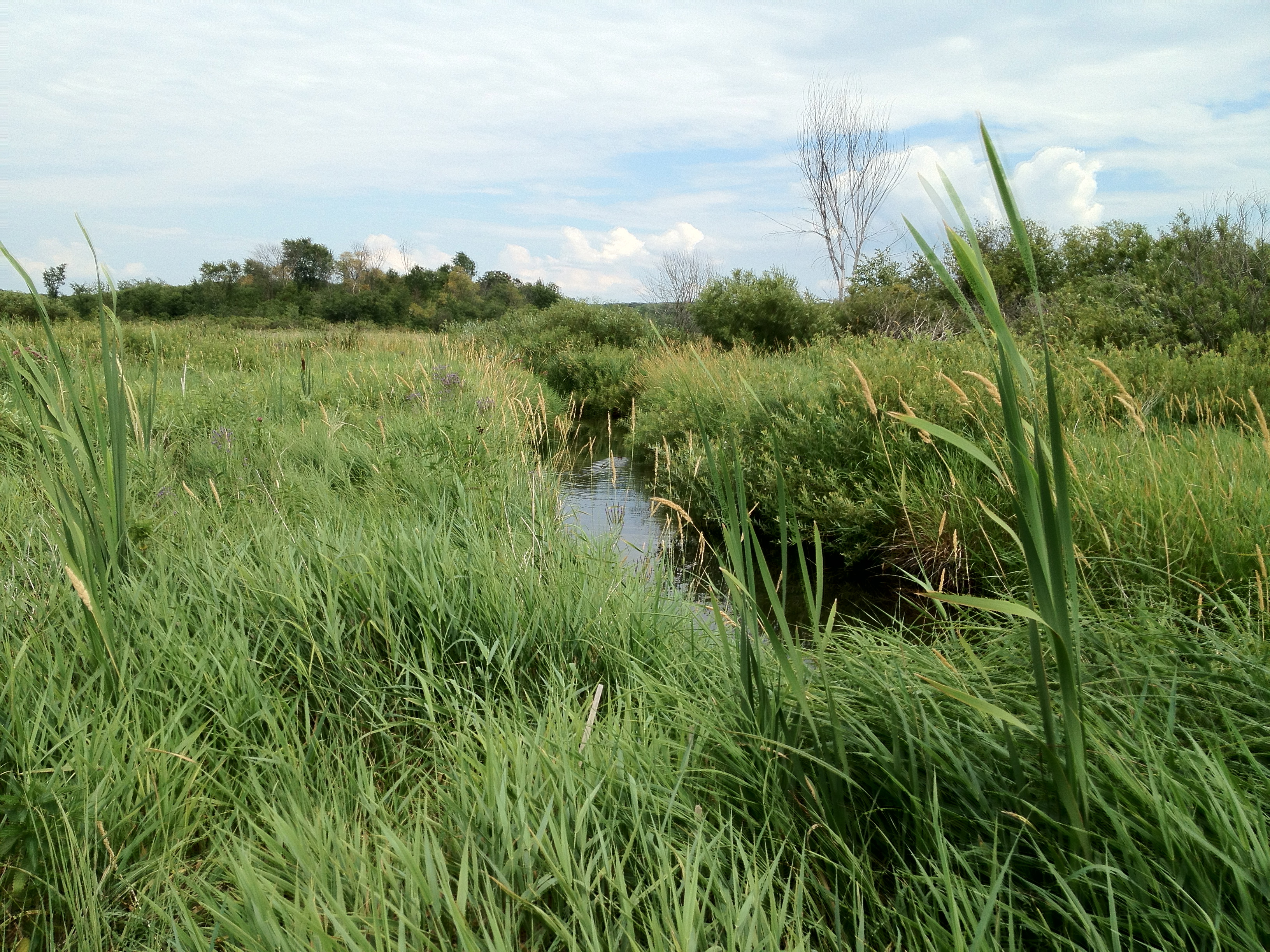
The view upstream from the repaired area.
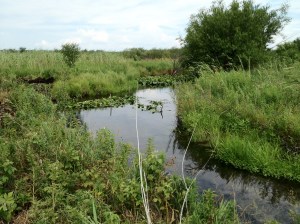
Below is the edge of the fill blocking access to the old canal.
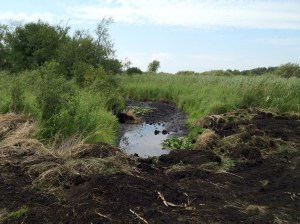
Below is where the breach in the river was repaired.
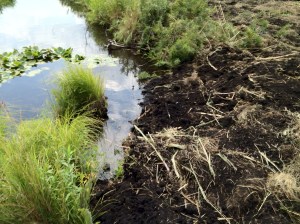
Returning back to the beginning of the Phase 2 work site, where another stretch of connecting trench between the river and the canal was filled in.

The picture below is taken from the old canal looking back at the river.  That was a long ditch to fill!
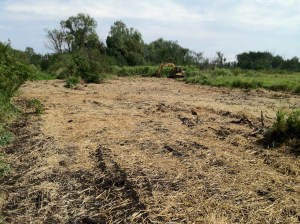
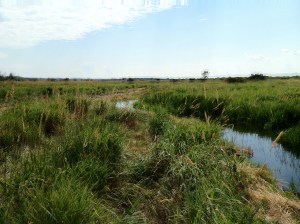
The next pictures show the rest of the Phase 2 effort from the main work site above going West to Hwy N.  Watch for the pool, riffle, run sequence Ben described.  Unfortunately, I don’t have any pictures from before the work was done or during the work in progress.
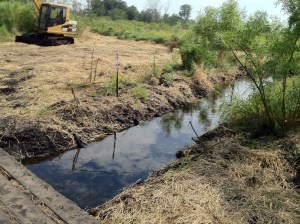
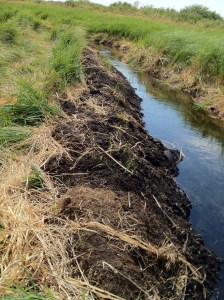
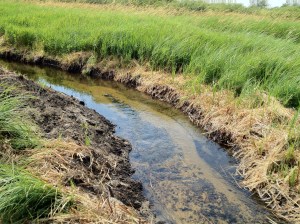
You can see how carefully, they “mucked out” the river-bed.

Ben explained that the gradient change was relatively small, so they had to work carefully and measure the depth frequently.  Checkout the “runs” below.
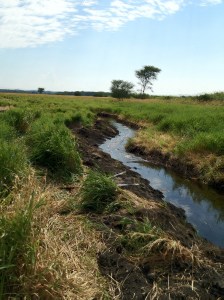
Just before Hwy N.

Thanks to Ben for meeting with us and explaining more about the Scuppernong River restoration effort.  Hats off the DNR crew that accomplished the excellent work shown above in extremely hot and challenging conditions!
Another Spring Opened Up

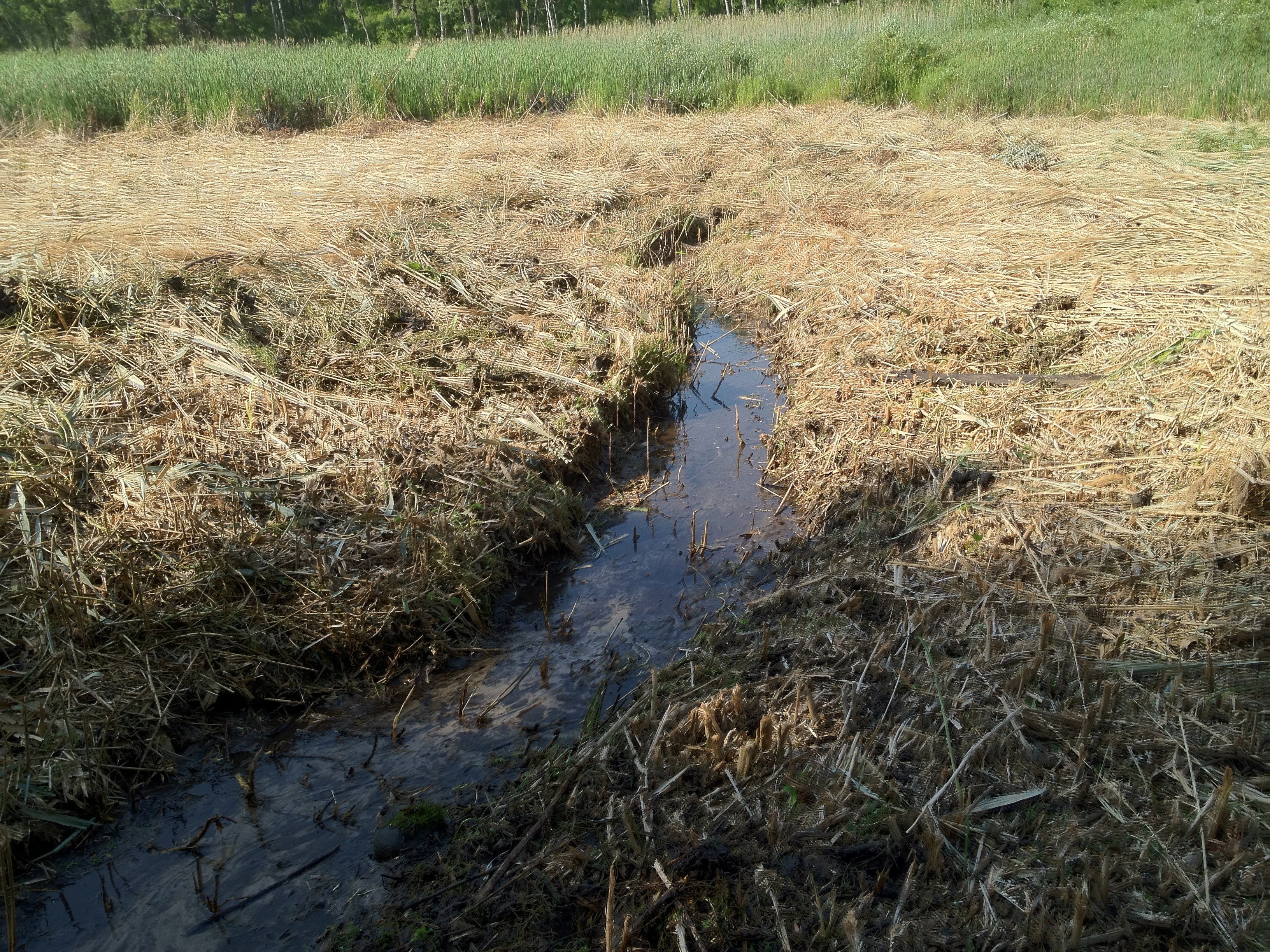
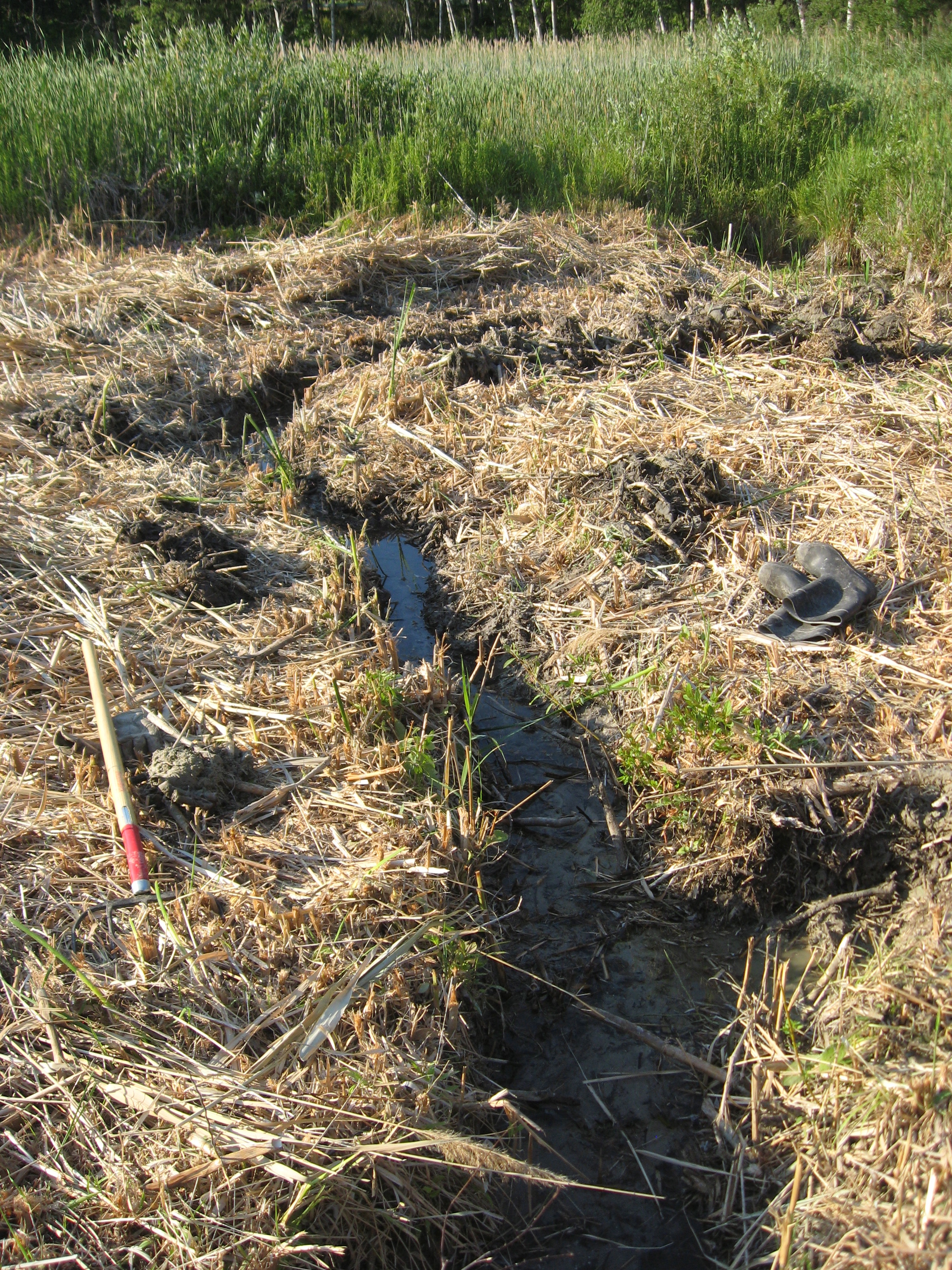
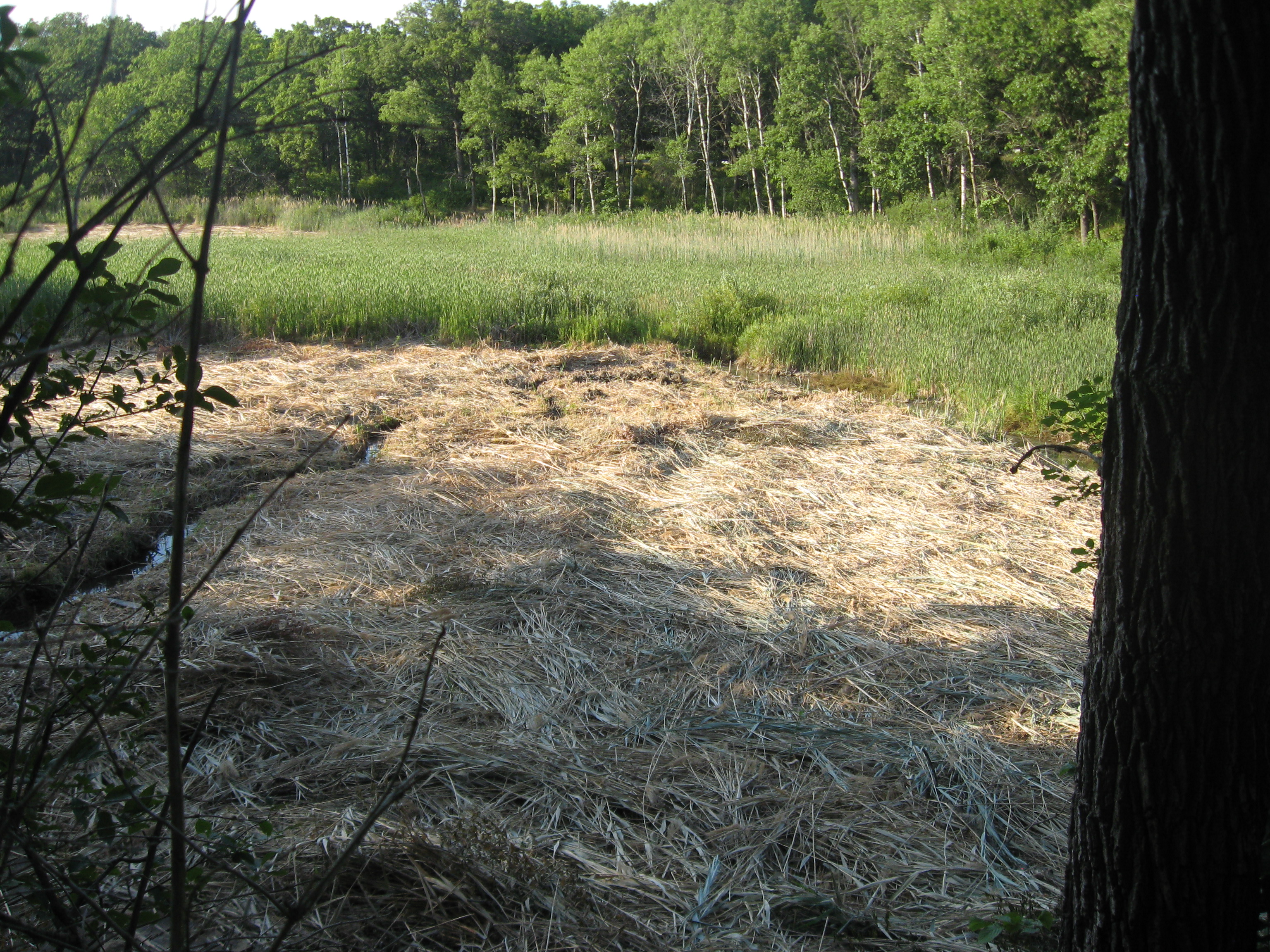
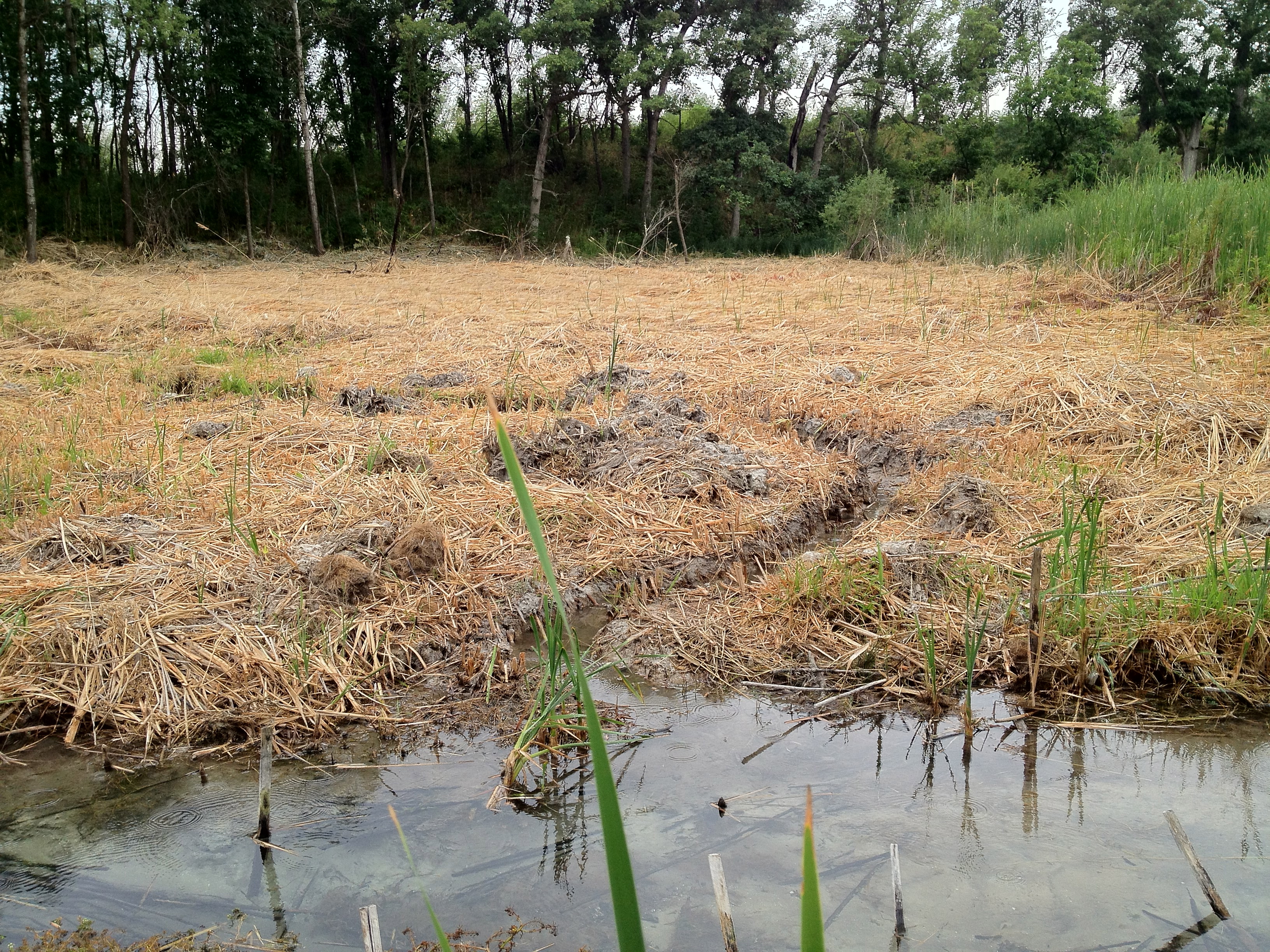
The Scuppernong Springs Nature Trail is full of treasures waiting to be discovered.  Yesterday I continued cutting the Phragmites on the West side of the River just North of the second bridge ( Phragmites Invades the Springs ) and sure enough, there is a beautiful little spring there under this mat of cress and phragmites.

A couple pictures before I continued cutting the phragmites.

Below, after cutting and cleaning out the spring…  This bubbler is just beyond the boardwalk that the Wisconsin Conservation Corps put in back in the 1930s so this spot was recognized long back as one of the scenic attractions of the Springs.

Below is the channel flowing out of the spring shown above toward the River.  I was not able to finish clearing the channel all the way to River.  We will need a shovel to finish excavating it as it has become filled with silt over the years.

On July 9th Lindsay finished opening the channel to the River.

He found another little spring shown on the left below.

Thanks Lindsay!

I finished cutting the Phragmites in this area.

Below are a few more pictures of the area around the second bridge (counting from the very first spring at the head of the valley).

Looking out from the bridge over the River that is just up the trail from the Marl Pits.

The little Oaks growing in the understory are being attacked by Leaf Minor.  We are keeping an eye on this to see if it is affecting any of the mature trees.

Indian Springs Buckthorn Removal Continues

Lindsay and I spent a hot and sweaty day on 7/2 cutting Buckthorn on the South side of the outflow from the Indian Springs.  We made a lot of progress despite the conditions.  Here are some before and after pics.

And after…

One thing that makes this work so rewarding is watching all of the plants that were previously choked out by the Buckthorn emerge.  Below is a Michigan Lily that emerged in an area along the Indian Spring that we cut last year.

Phragmites Invades the Springs

The headwaters of the Scuppernong River are the series of springs that line the hillsides along the main valley/channel where the river begins to flow.  Back in the early 1900’s entrepreneurs dammed the river and created a trout farm.  This significantly disrupted the normal course of the river and flooded the little plain through which the river flowed.  After the man-made dam was removed, beavers moved in and created one of their own, which helped keep the area flooded.  This provided a perfect environment for Phragmites, a large perennial grass, to become established.

A few years back (I’ll have to get the exact date) the DNR removed the beaver, drained the valley, and executed a major project to restore the Scuppernong River to it’s original banks.  But by this time, the many feeder springs coming off the hillsides had become choked with water cress and much of their flow was diverted into the expanding fields of Phragmites that line the river valley.  The root system of the Phragmites is amazing with hollow tubes 1/2″ in diameter drawing water from the springs and river into it’s system.  It creates a mono-culture effectively choking out all competitors, except cattails, which are also and issue at the Springs.

We have begun attacking the Phragmites using two strategies.  We are going to try a small test plot where we grab handfuls of mature plants and cut them off a foot or two from the ground and then daub the fresh cut ends with eco-imazapyr.  Alternately we are brush cutting the Phragmites now and plan to spray the new regrowth with eco-imazapyr sometime in September.  Like the water cress that built up over many years to form virtual dams in the river, the Phragmites stands are comprised of many years growth.  The reeds are very robust and can remain standing for years.  Thus the first pass through these areas with the brush cutters will be tough.  The grass is over 16′ tall and very thick.  Below are some pictures of our brush cutting efforts.  We hope that the combination of clearing the springs and river of water cress, which has lowered the water table in the valley by 6-8″, cutting and poisoning the Phragmites and, nature’s contribution of a hot, dry summer, will put a serious hurt on this invasive plant.

Back in the depression years, the Wisconsin Conservation Corps built a trail system with boardwalks leading to all the major spring locations along the river.  We have cleared many of these paths.  There are at least 2-3 springs at the end of this boardwalk shown above which have become completely overgrown with Phragmites and water cress.  The river is 40 yards to the right and none of the outflow of these springs is making it there, it all feeds this huge patch of Phragmites.  The spring below is right off the end of the boardwalk shown above.   We plan to open up these springs and dig or clear a channel for them to flow directly into the river.

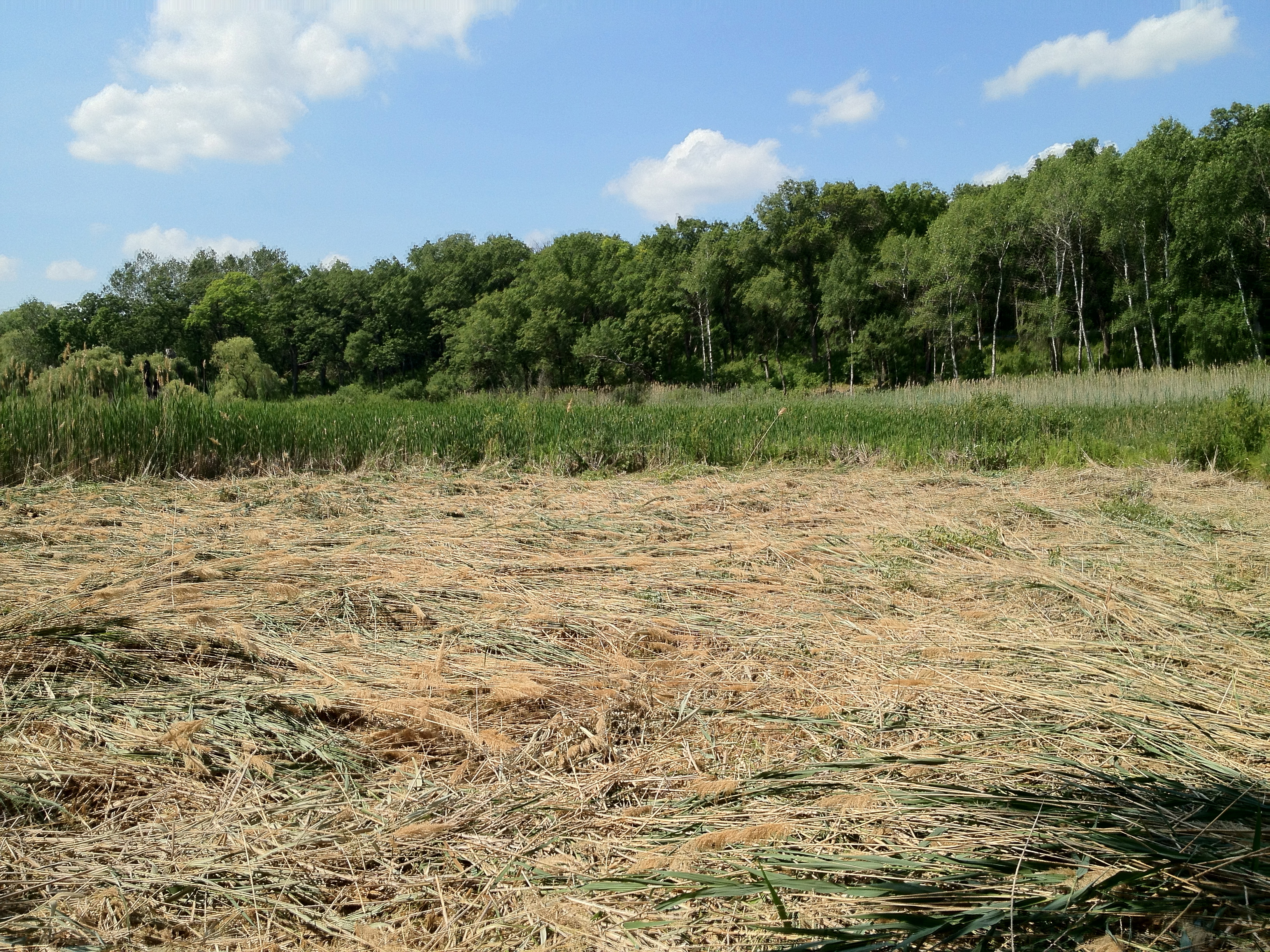
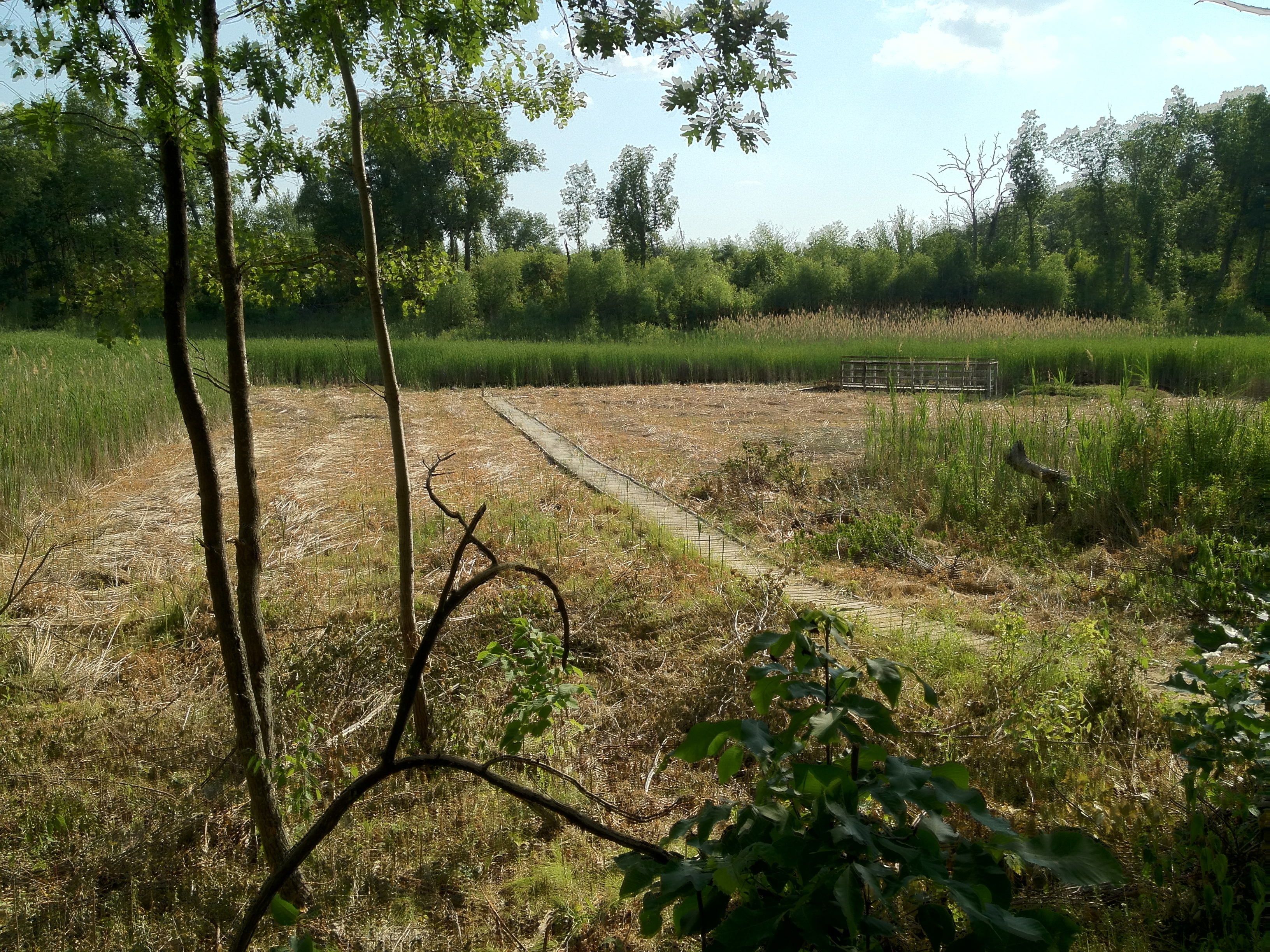
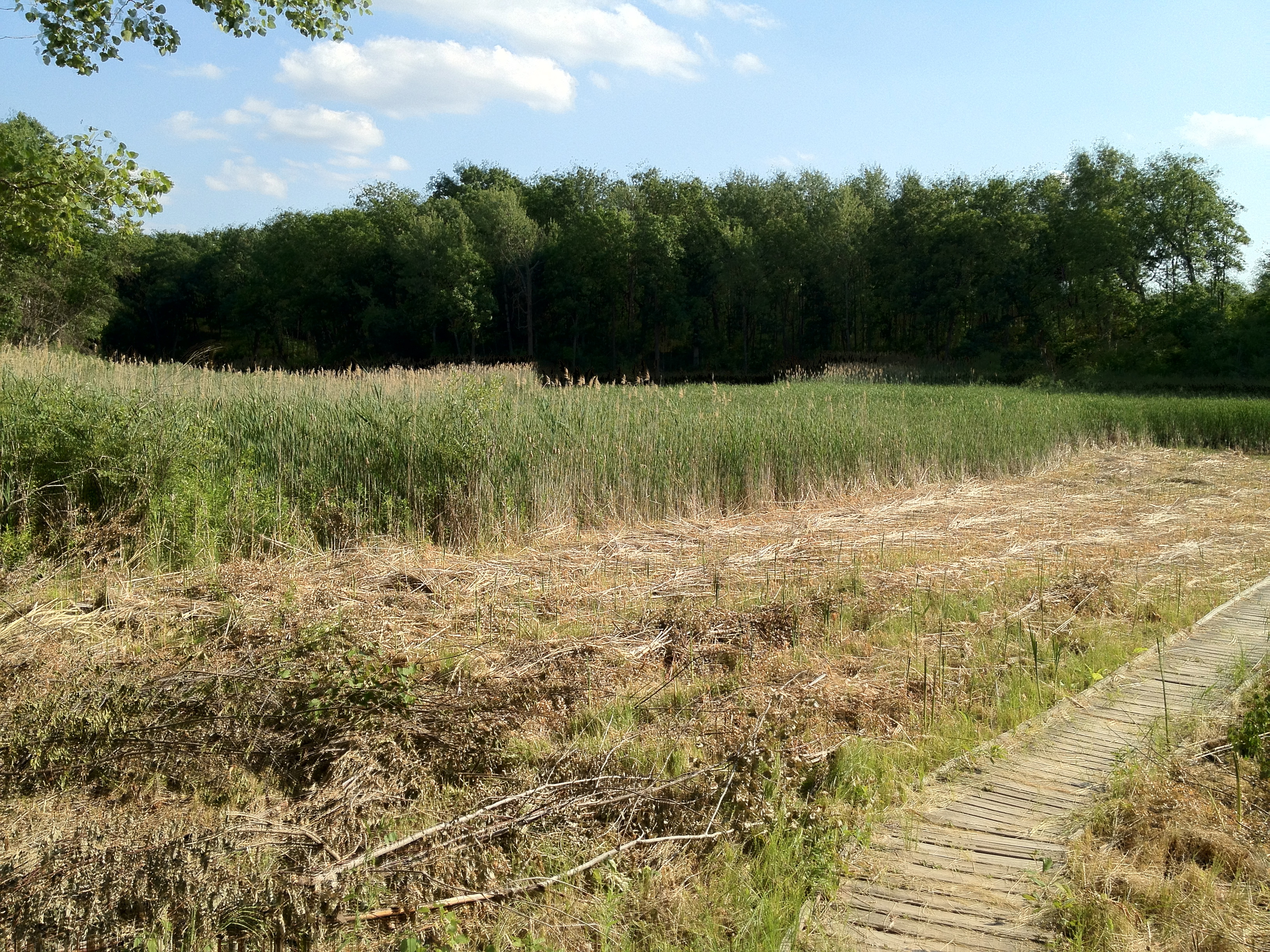
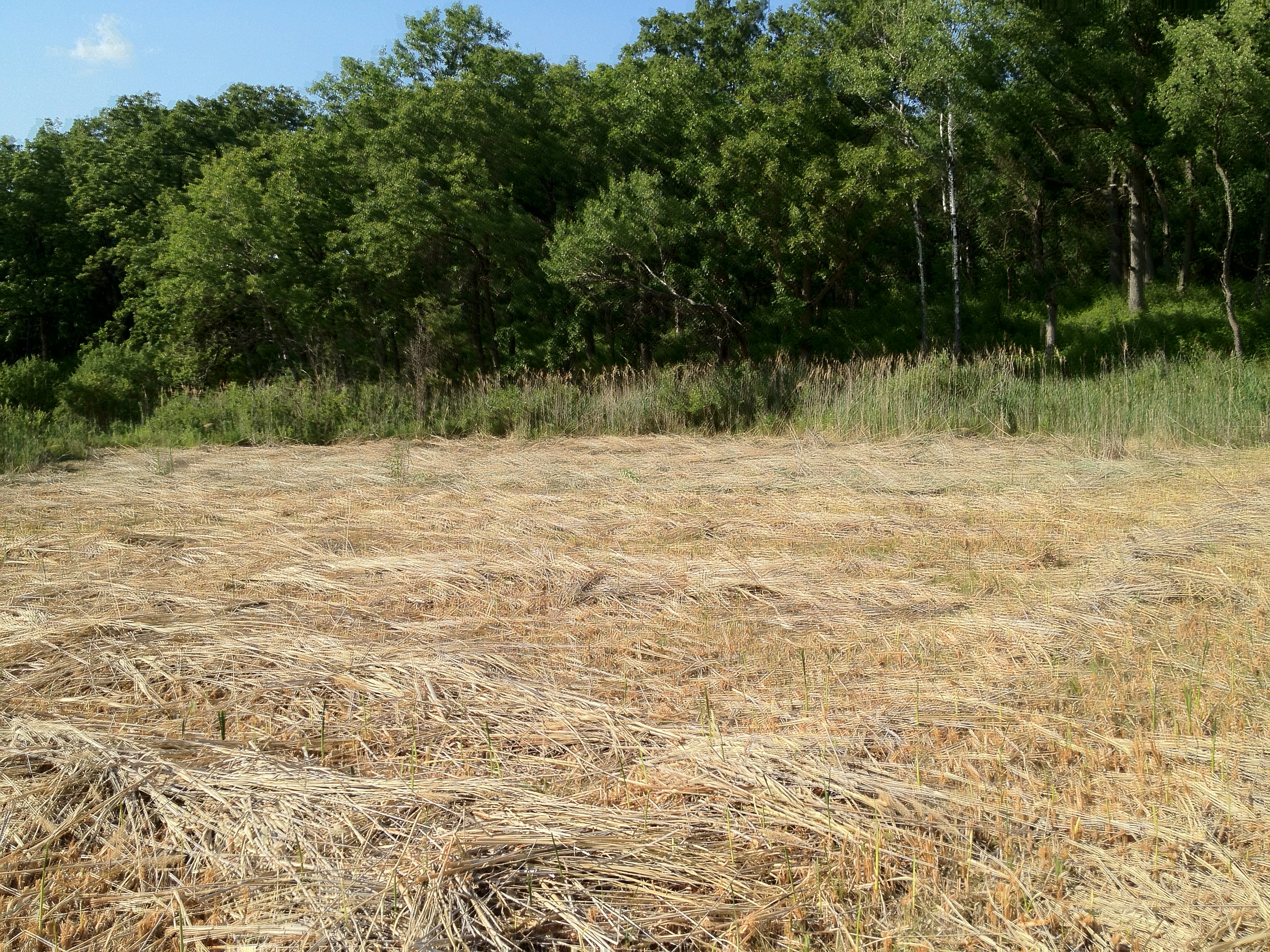
Below are shots after the second pass through this area with the brush cutter.  You can see the clearing around the observation deck in the distance.

Below are some shots taken around the observation deck that overlooks a huge and beautiful set of springs.  The former shop manager at the Southern Unit of the Kettle Moraine State Forest headquarters referred to this spot as “the Little Yellowstone”.  The shot below is taken from the trail above at the Indian Campground.

There are 4-5 major patches of Phragmites in the valley and we intend to get them all cut in the next few weeks, except for our test patch, which we will poison by hand later in the season.