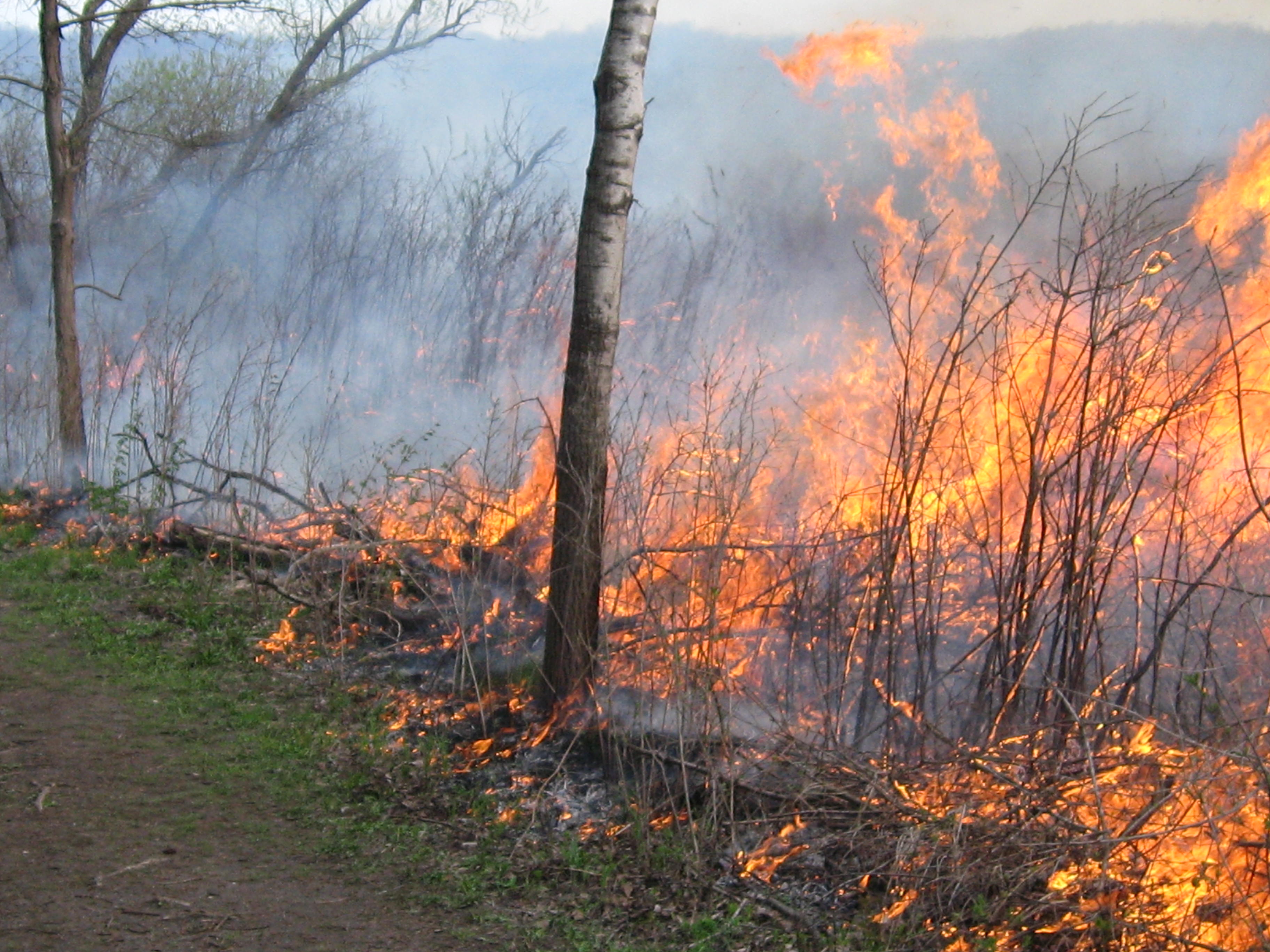
Spring Flames — sounds like the title of a romance novel. My love for The Springs was aflame yesterday in the form of 42 brush piles that, driven by swirling, mostly westerly winds, flared bright and hot. The conditions were good enough that I had no ambition other than to light as many fires as I could.
“God gave the day, God gave the strength. And the day and the strength were consecrated to labor, and that labor was its own reward. For whom the labor? What would be its fruits? These were idle considerations– beside the point.” Leo Tolstoy, Anna Karenina, Book 3 Chapter 12
Based on the age of the brush piles and the wind direction, I picked the north side of the Scuppernong River as the target for the day.
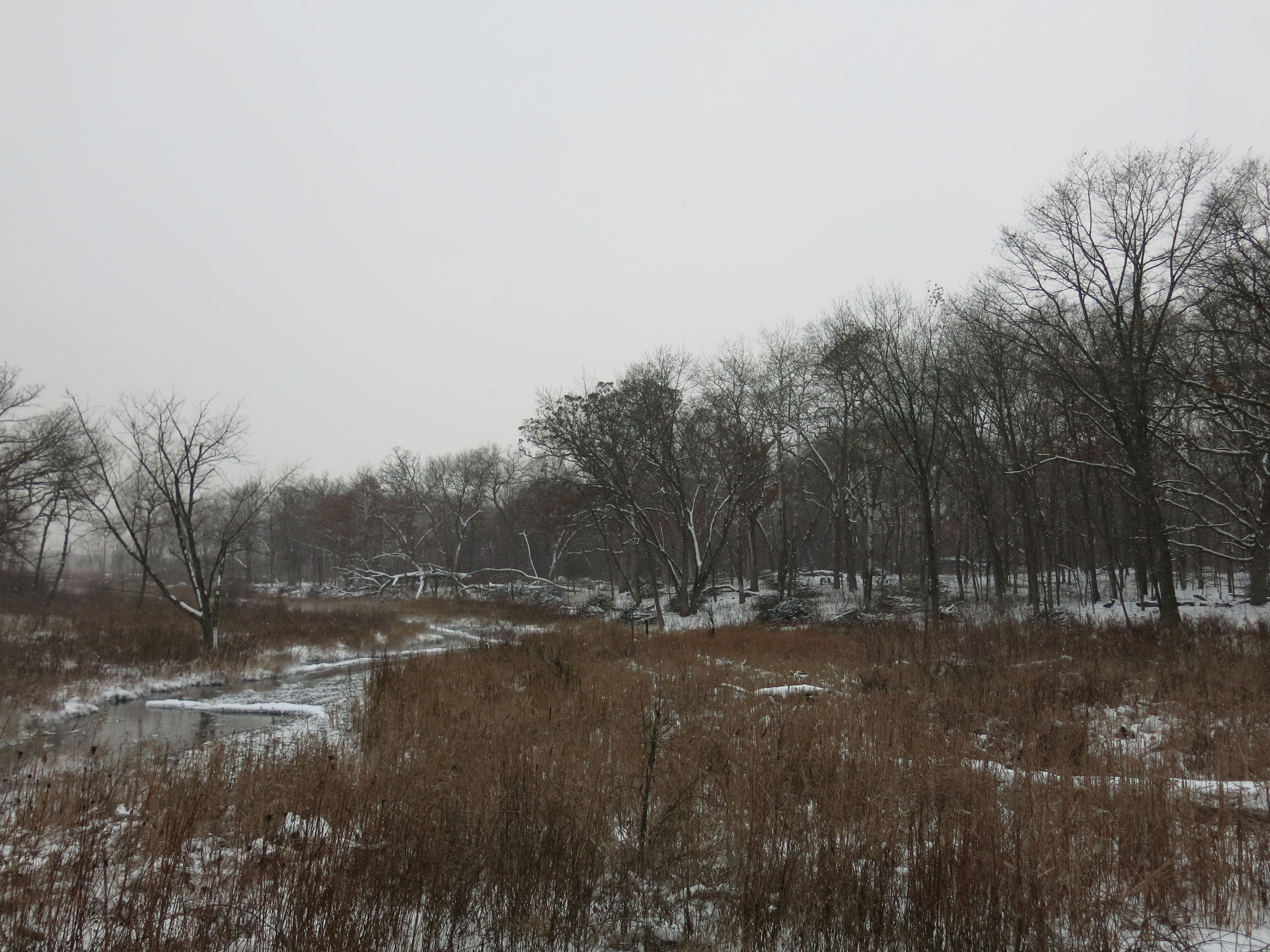
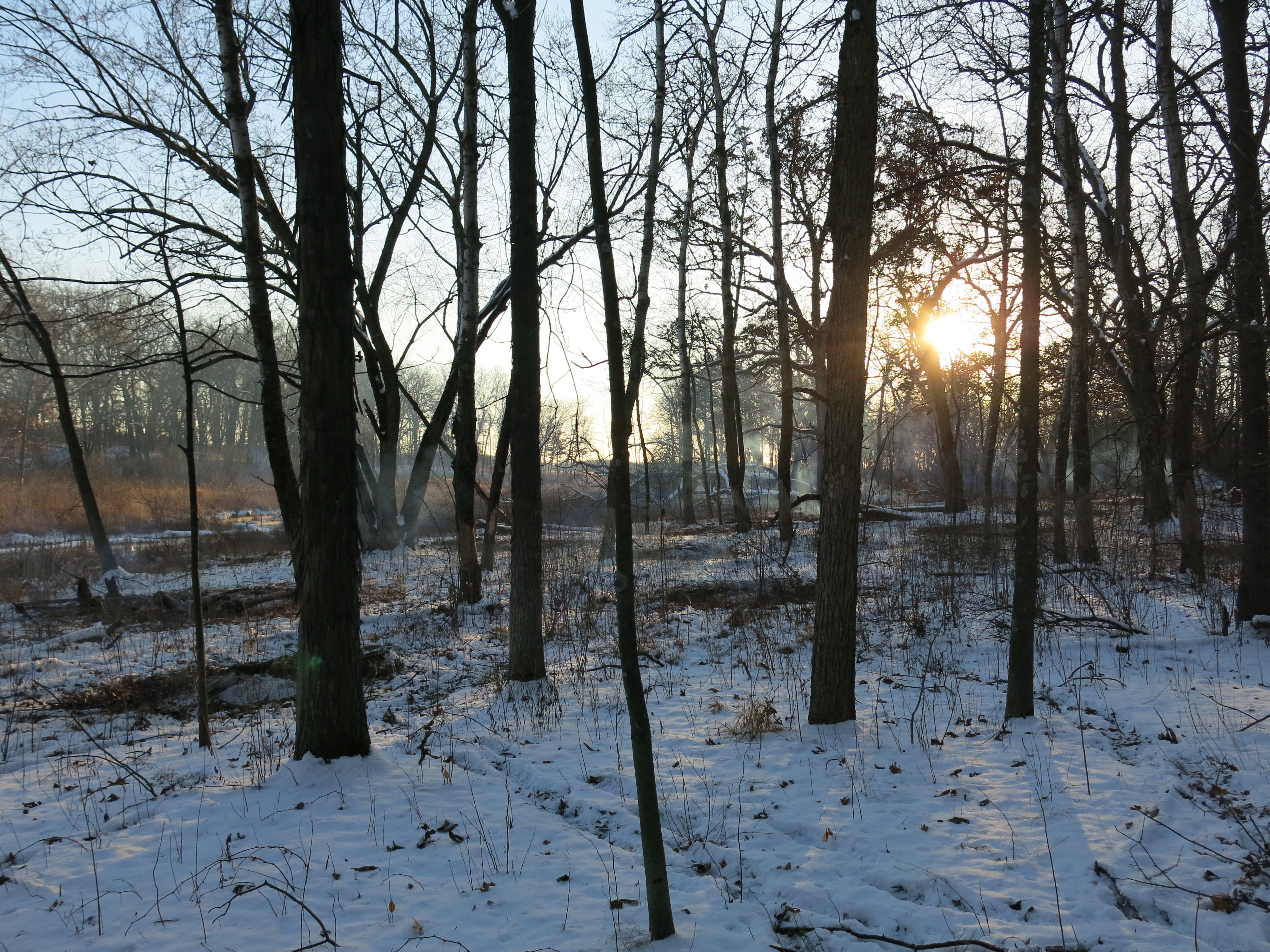
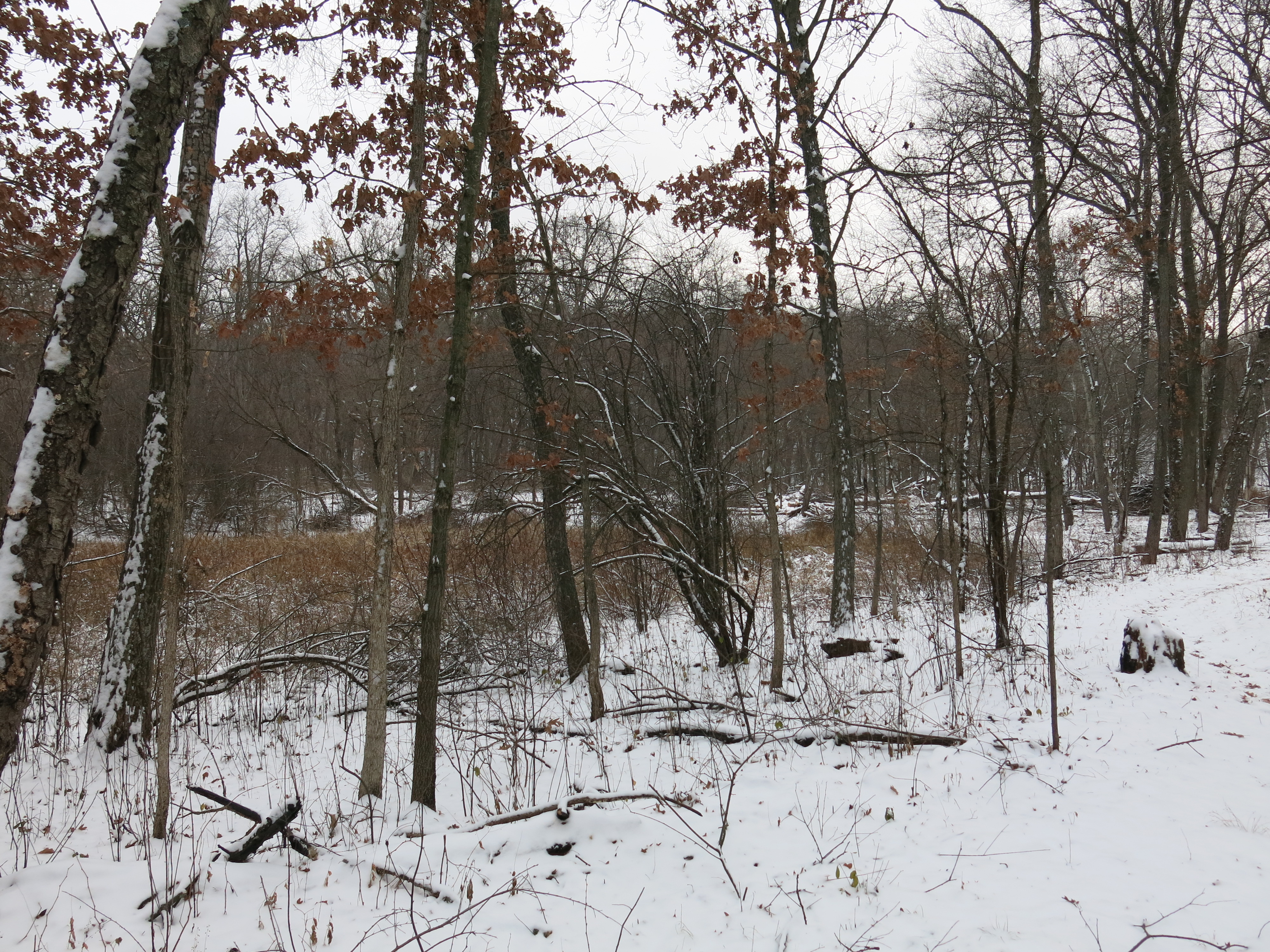
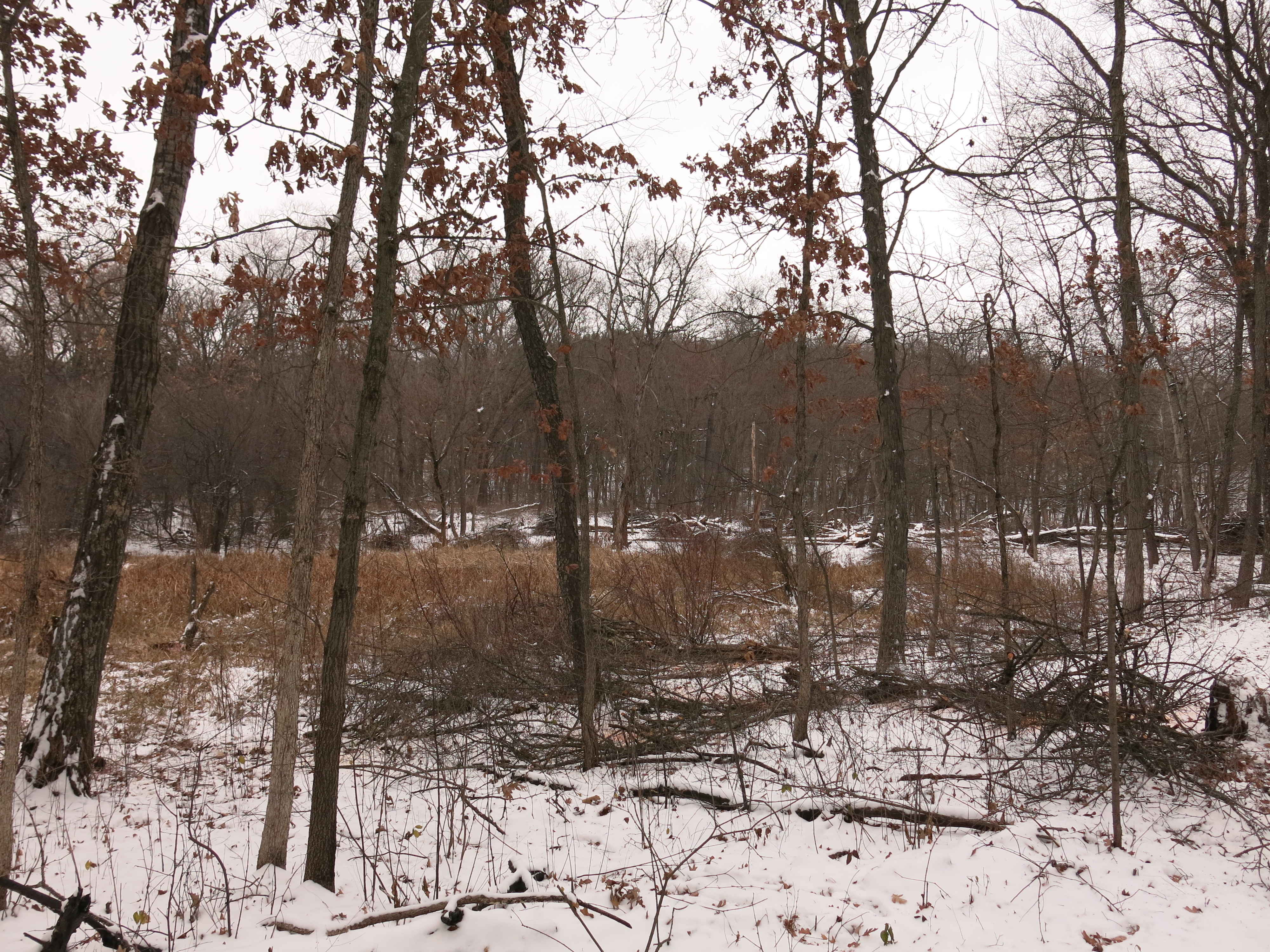
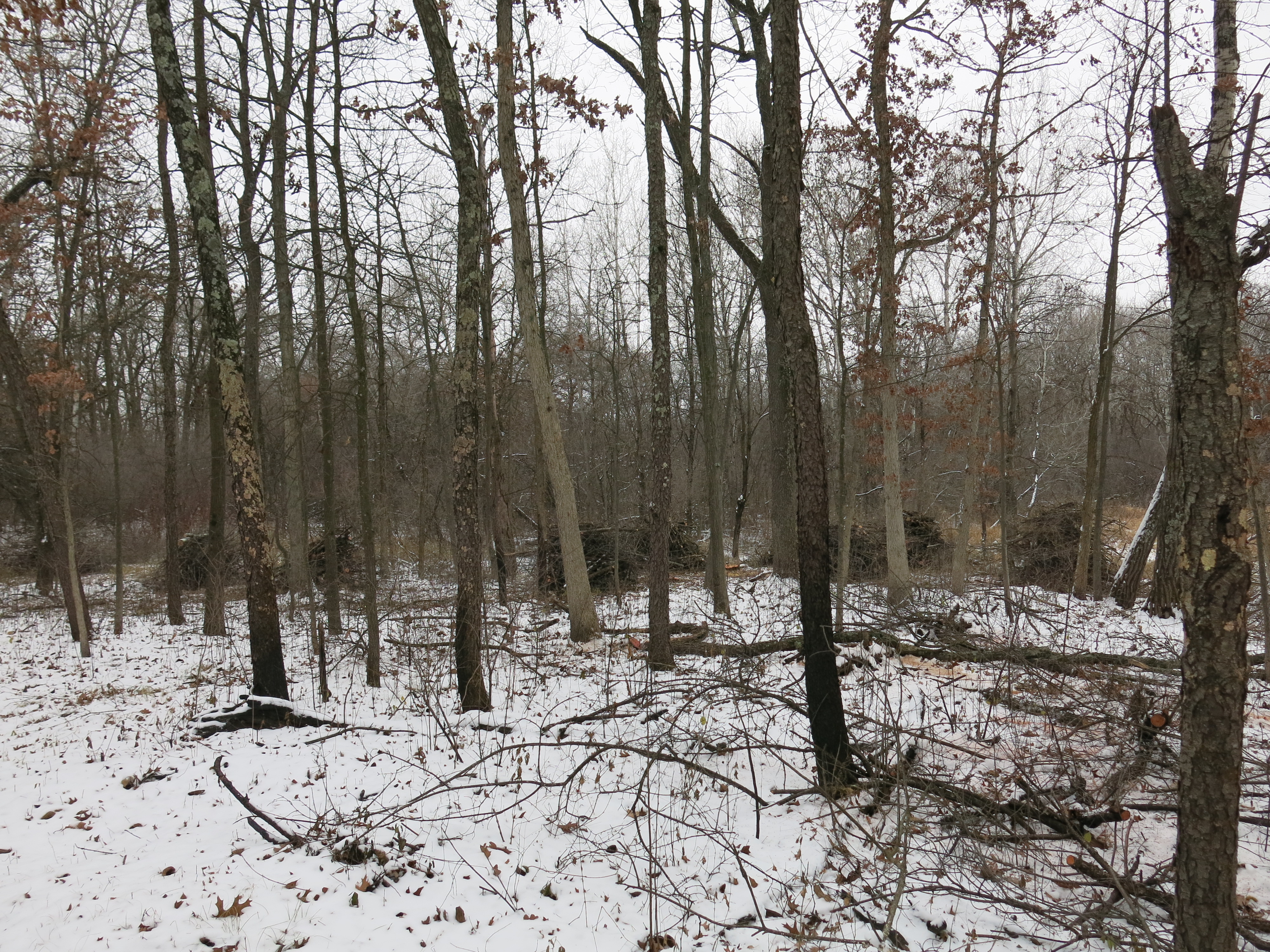
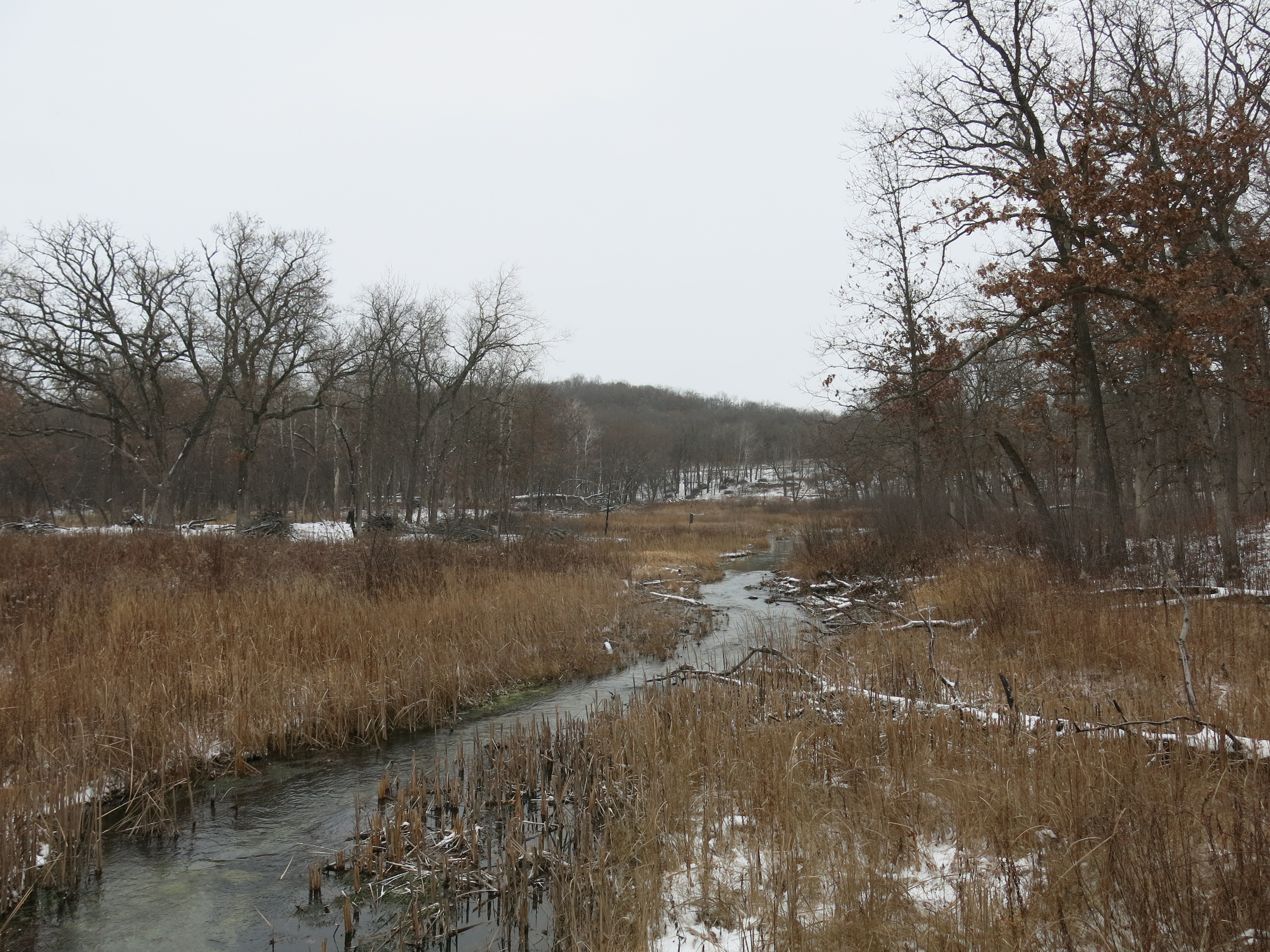
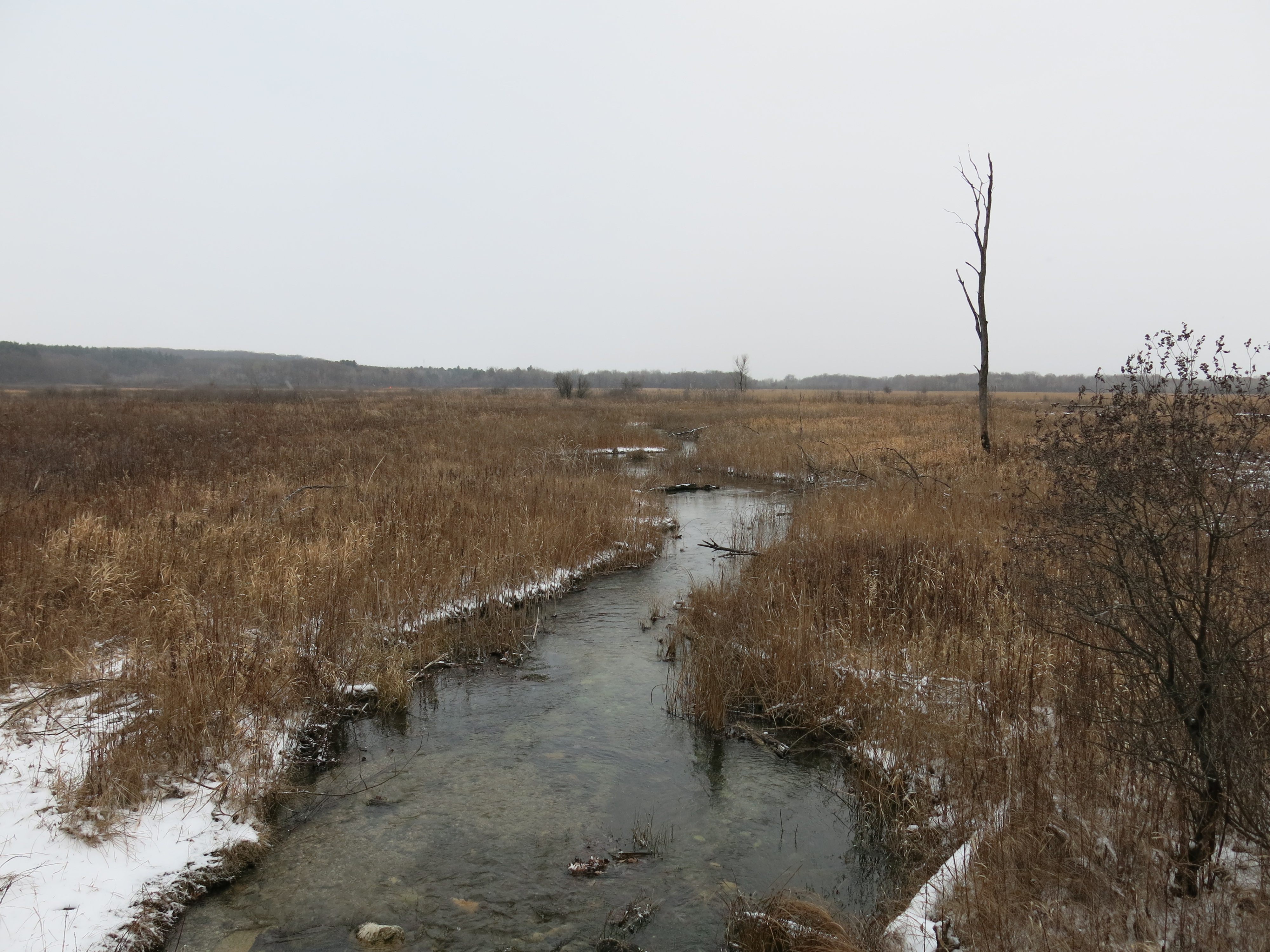
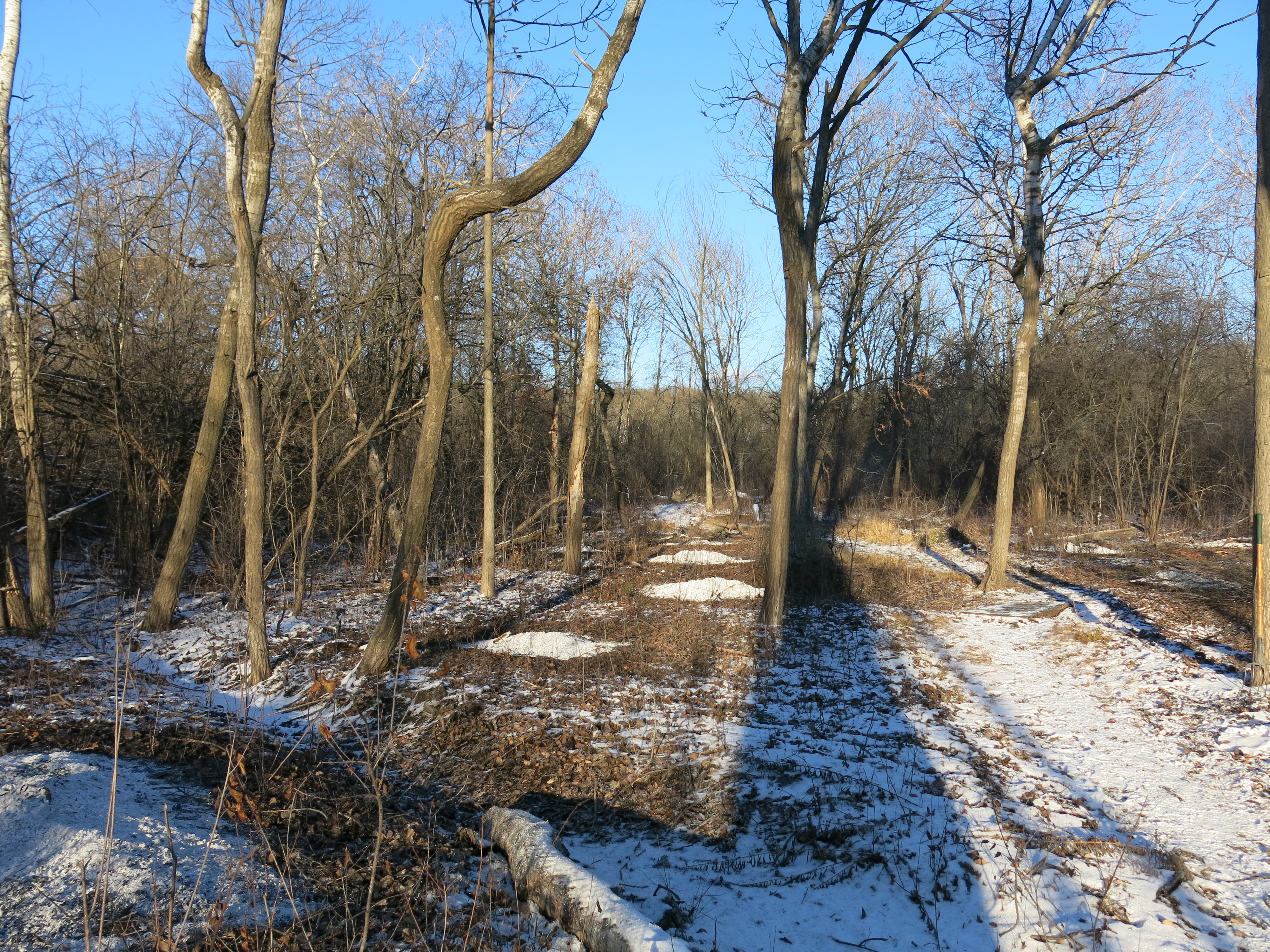
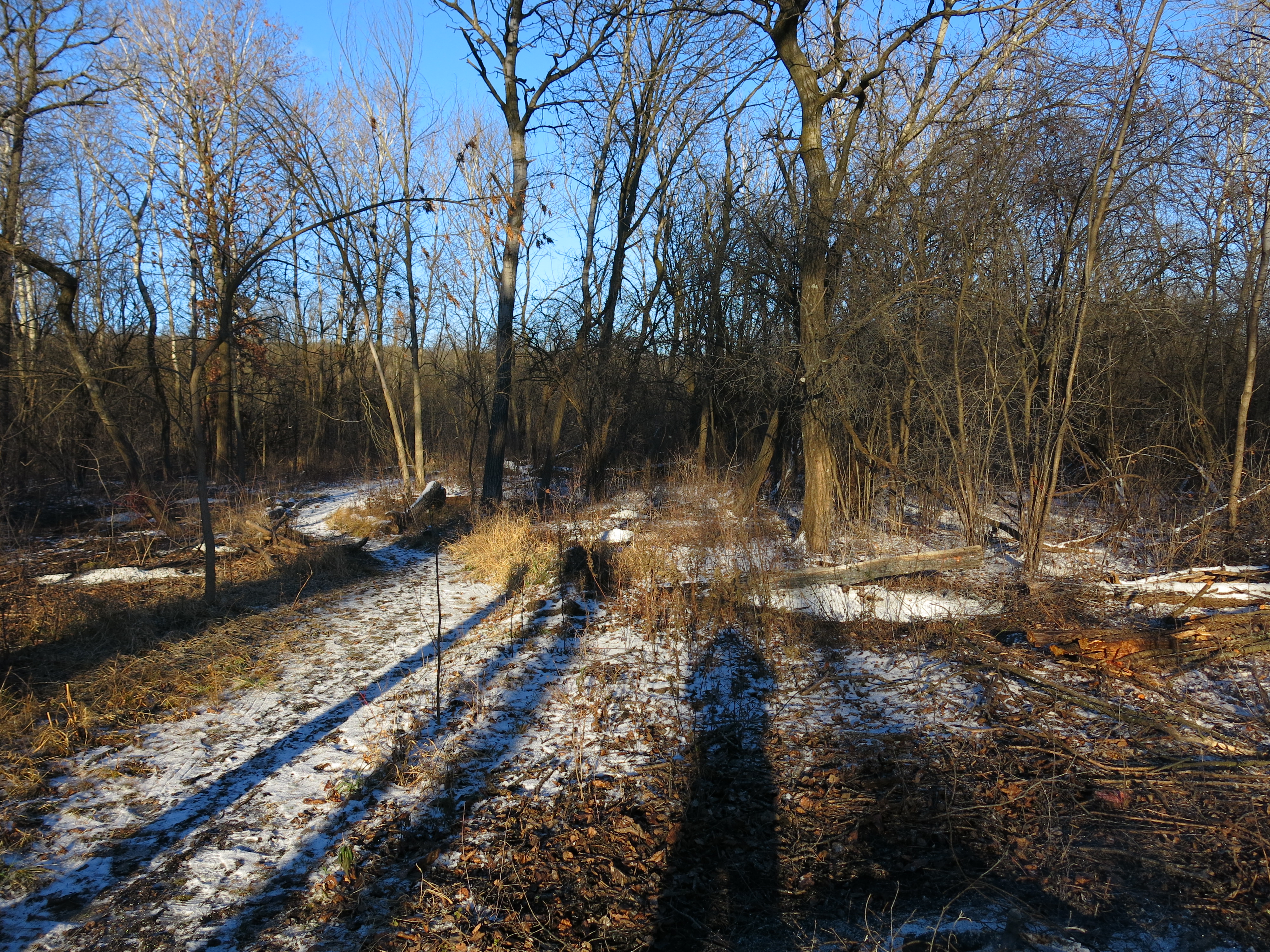
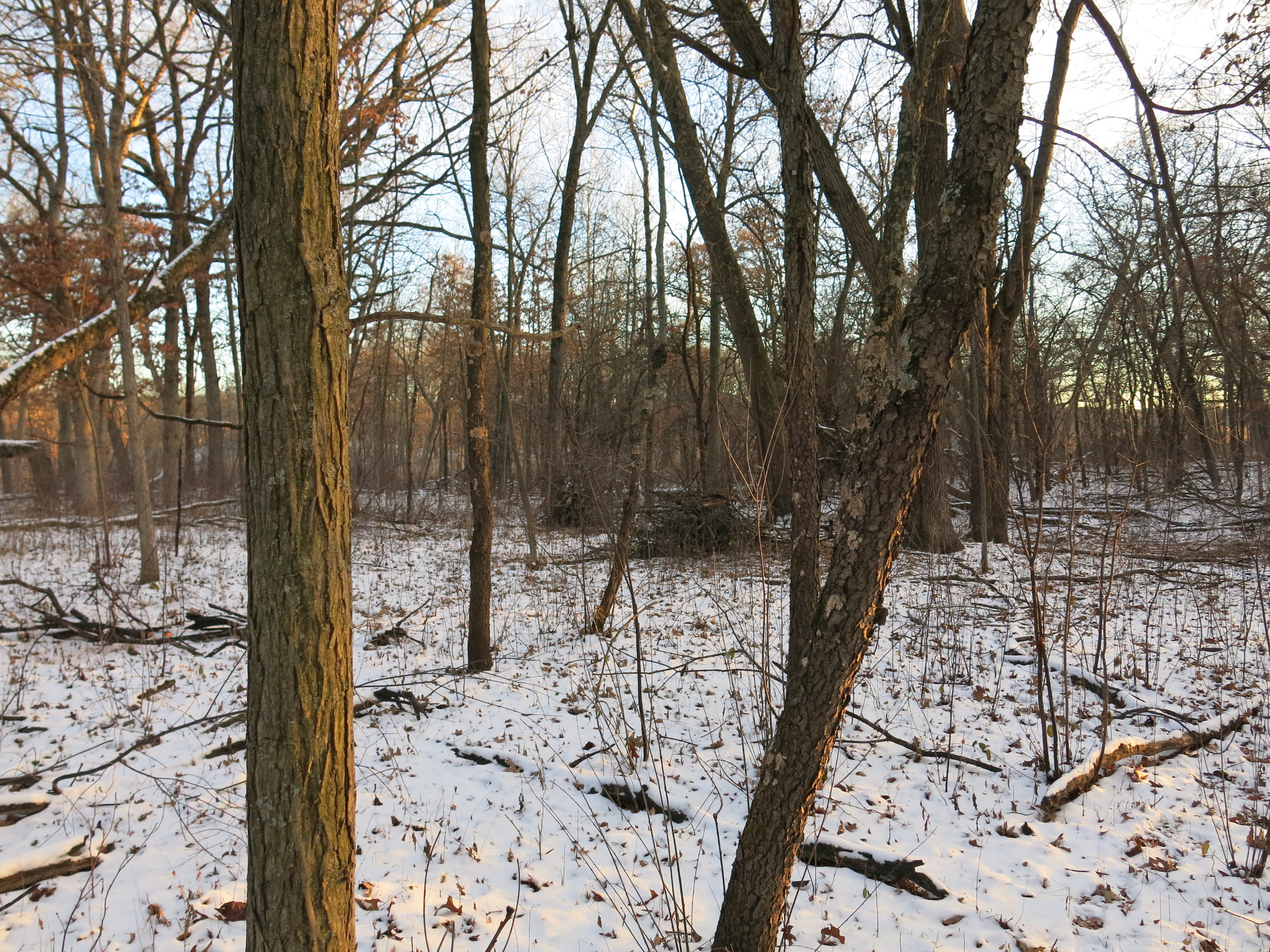
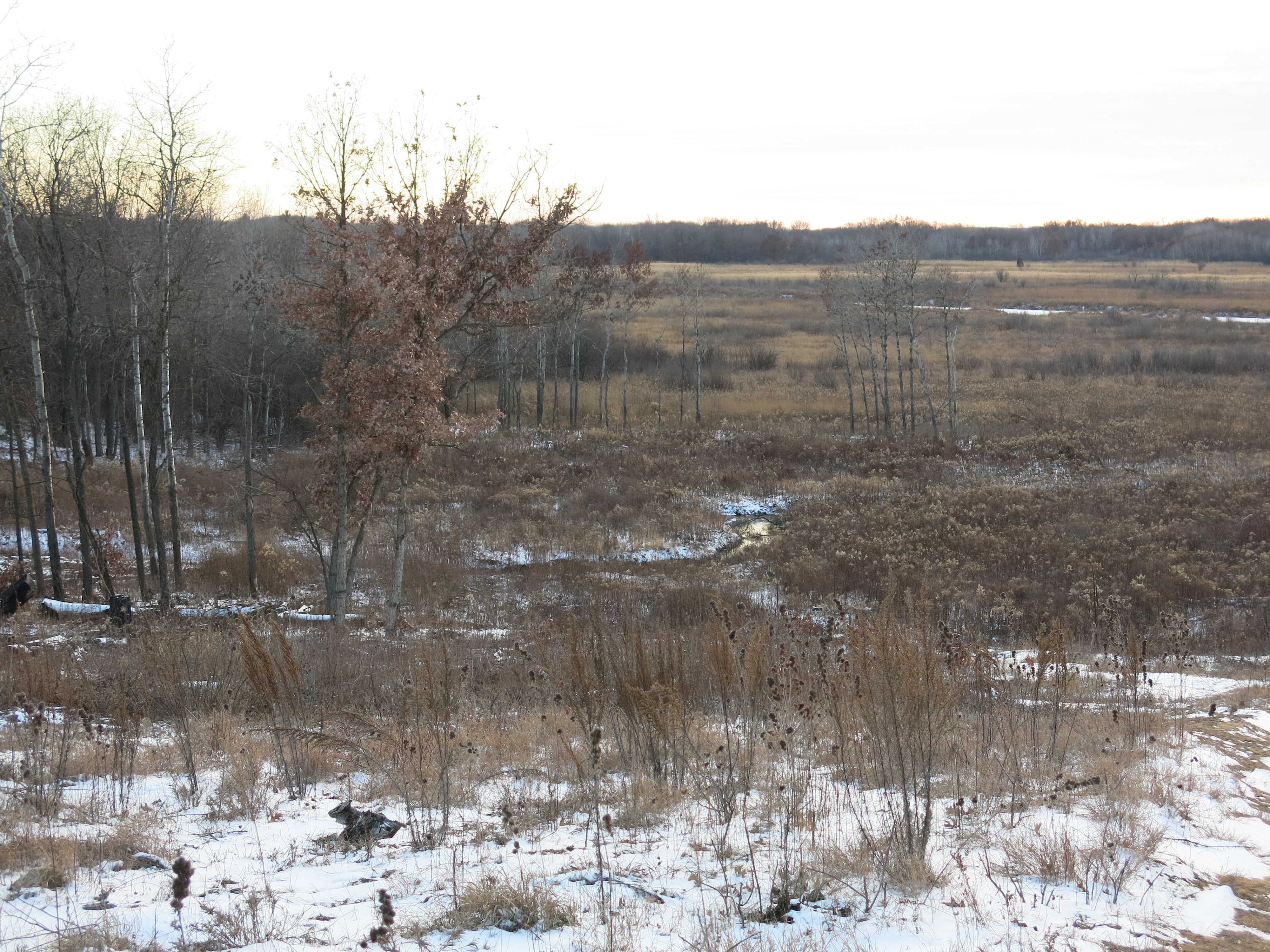
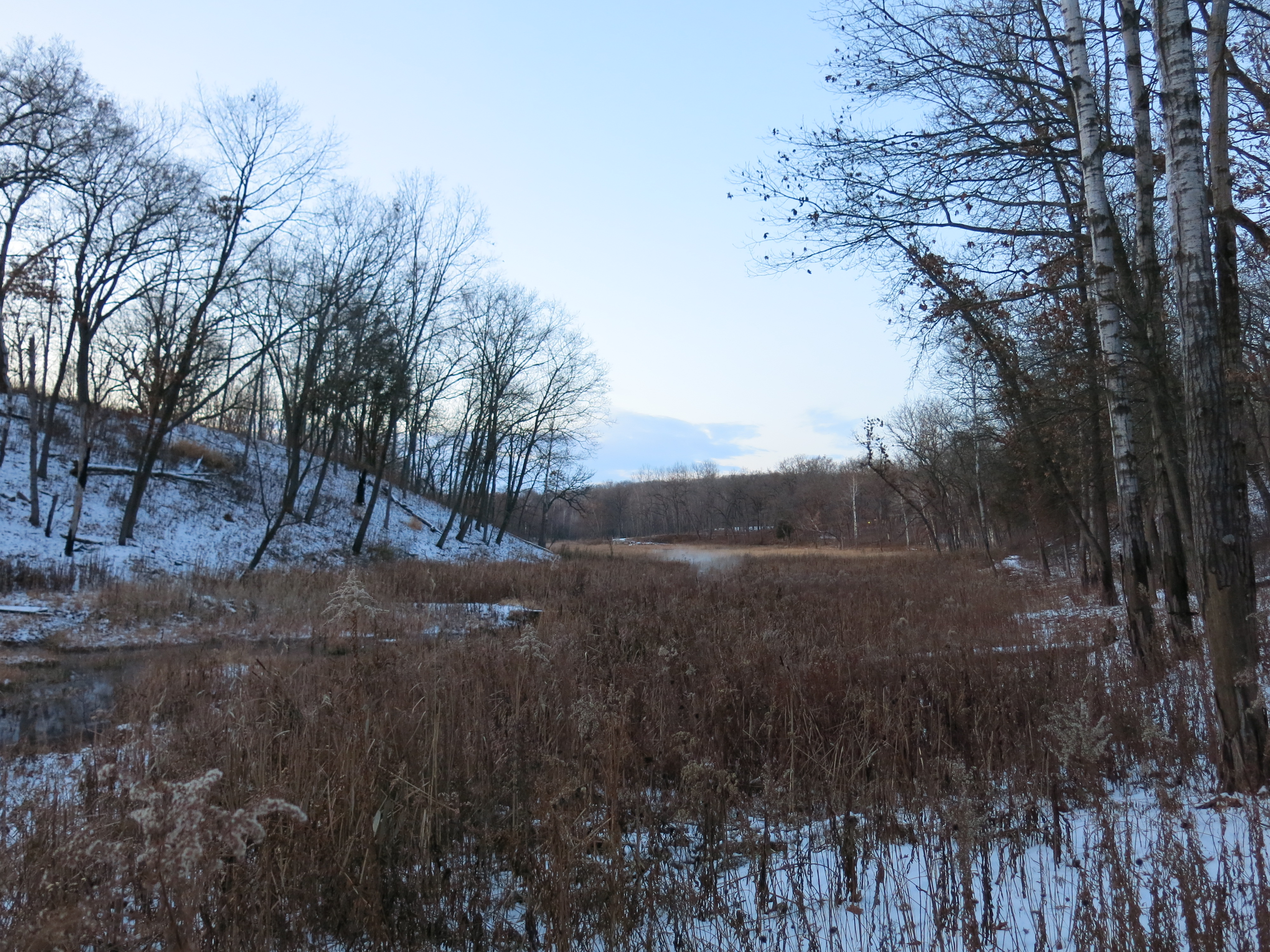
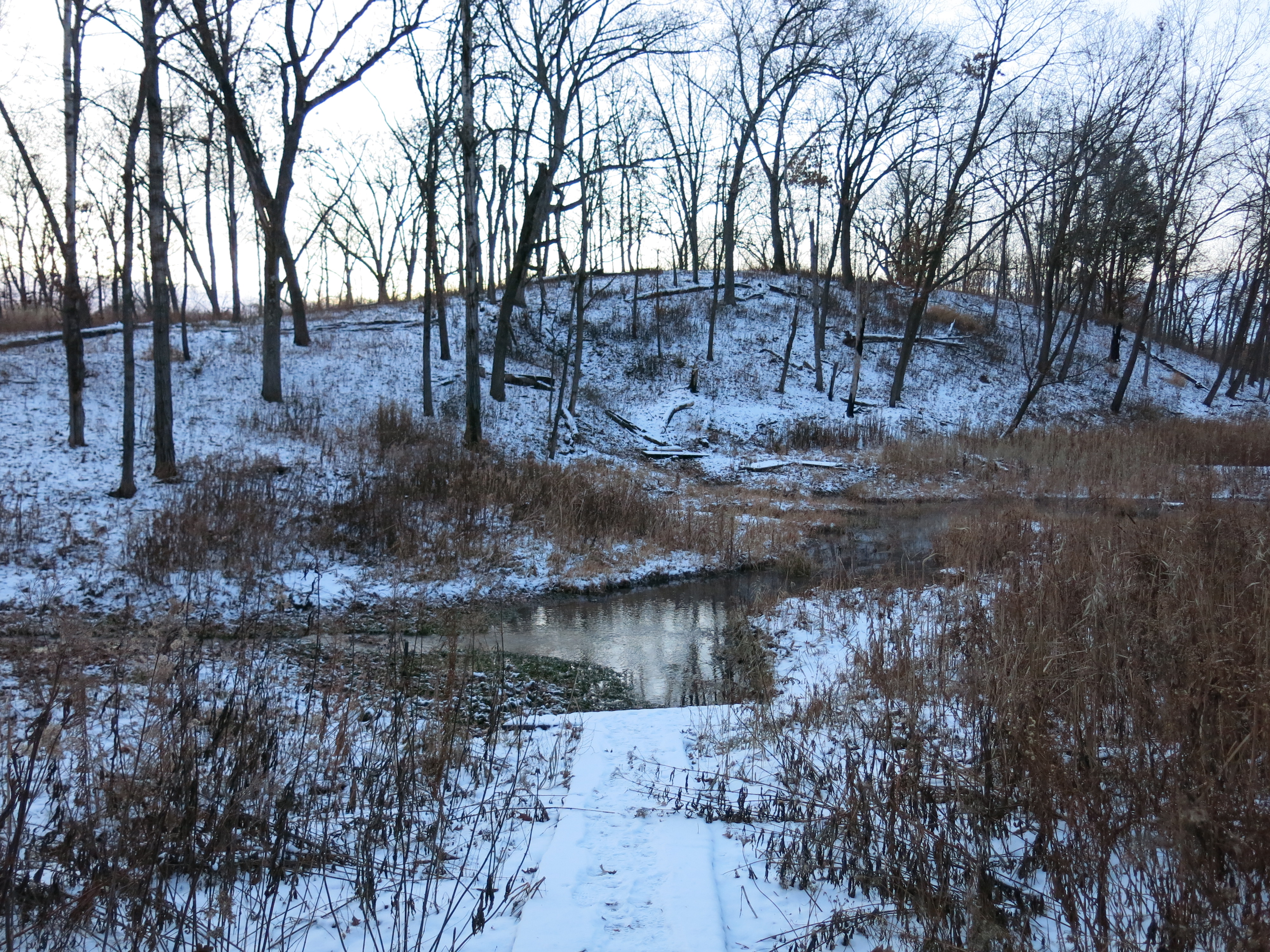
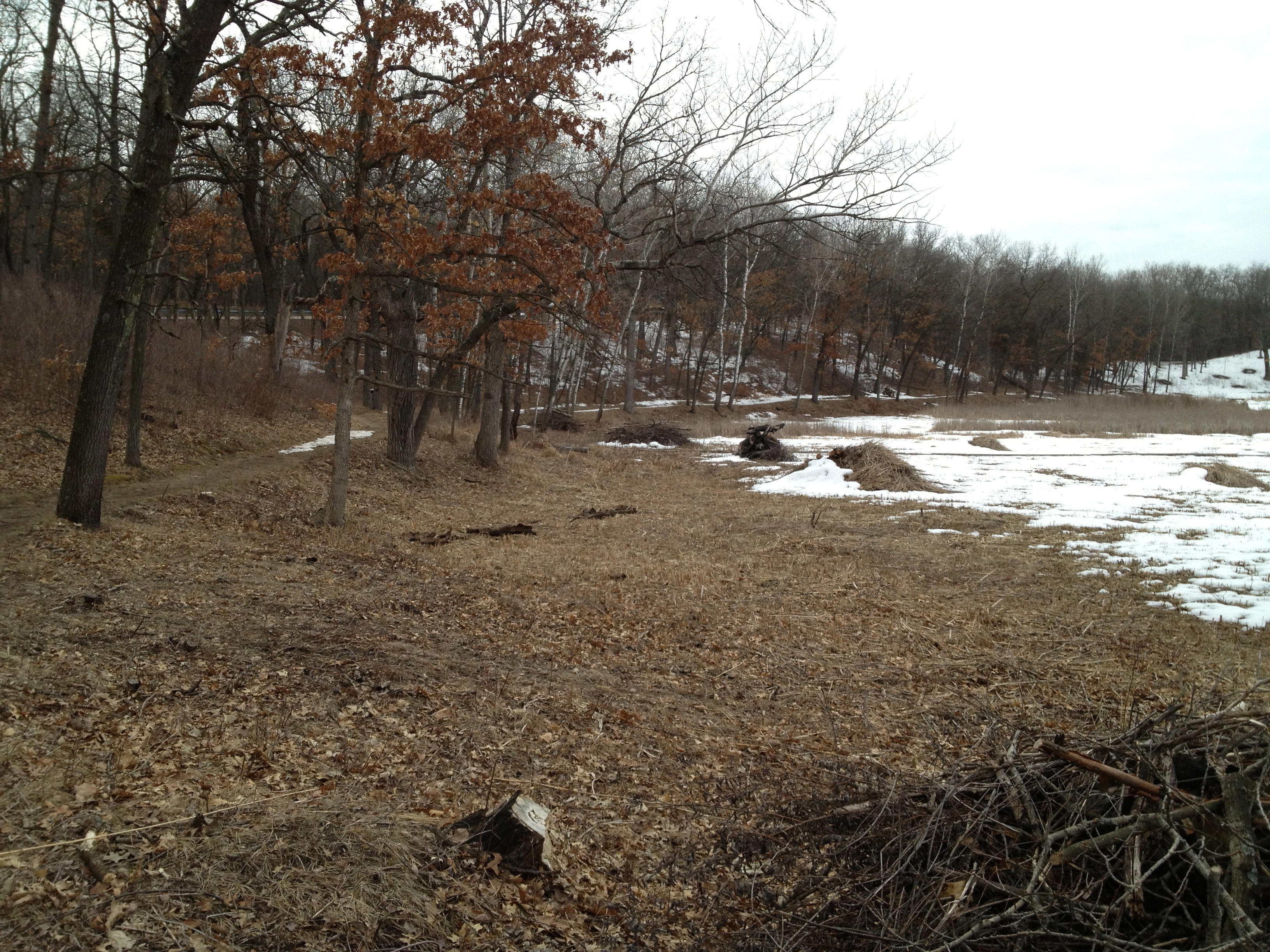
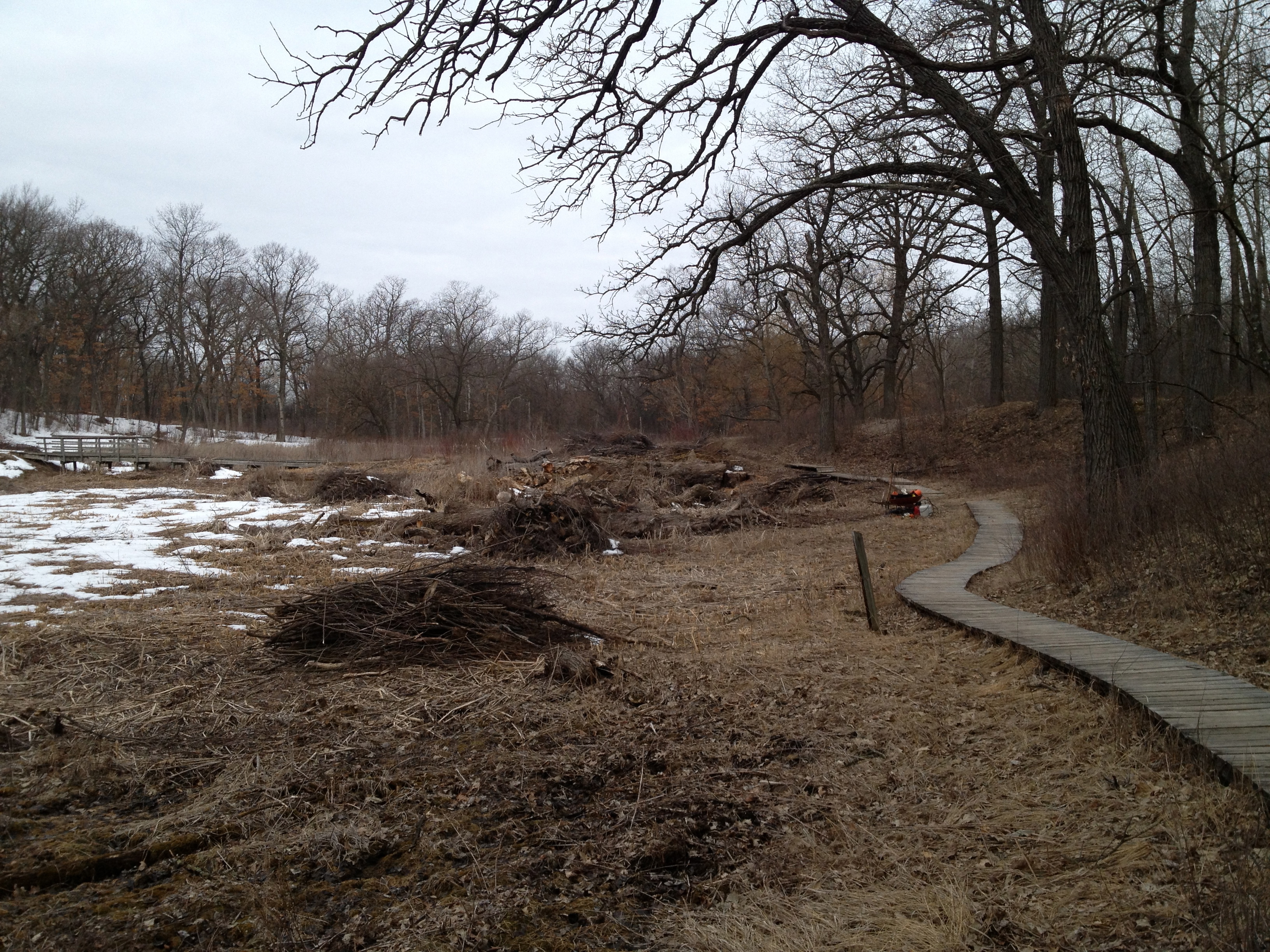
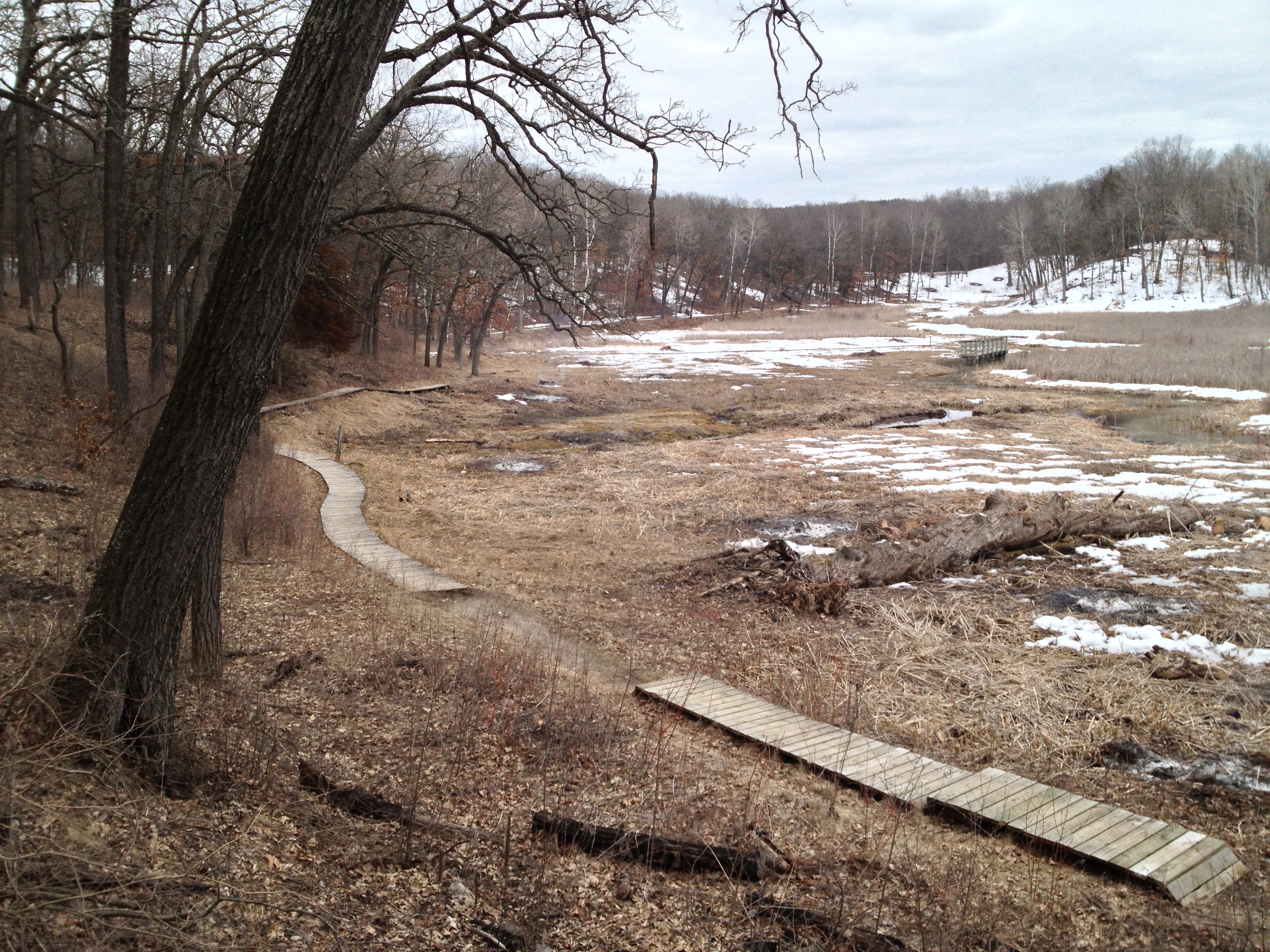
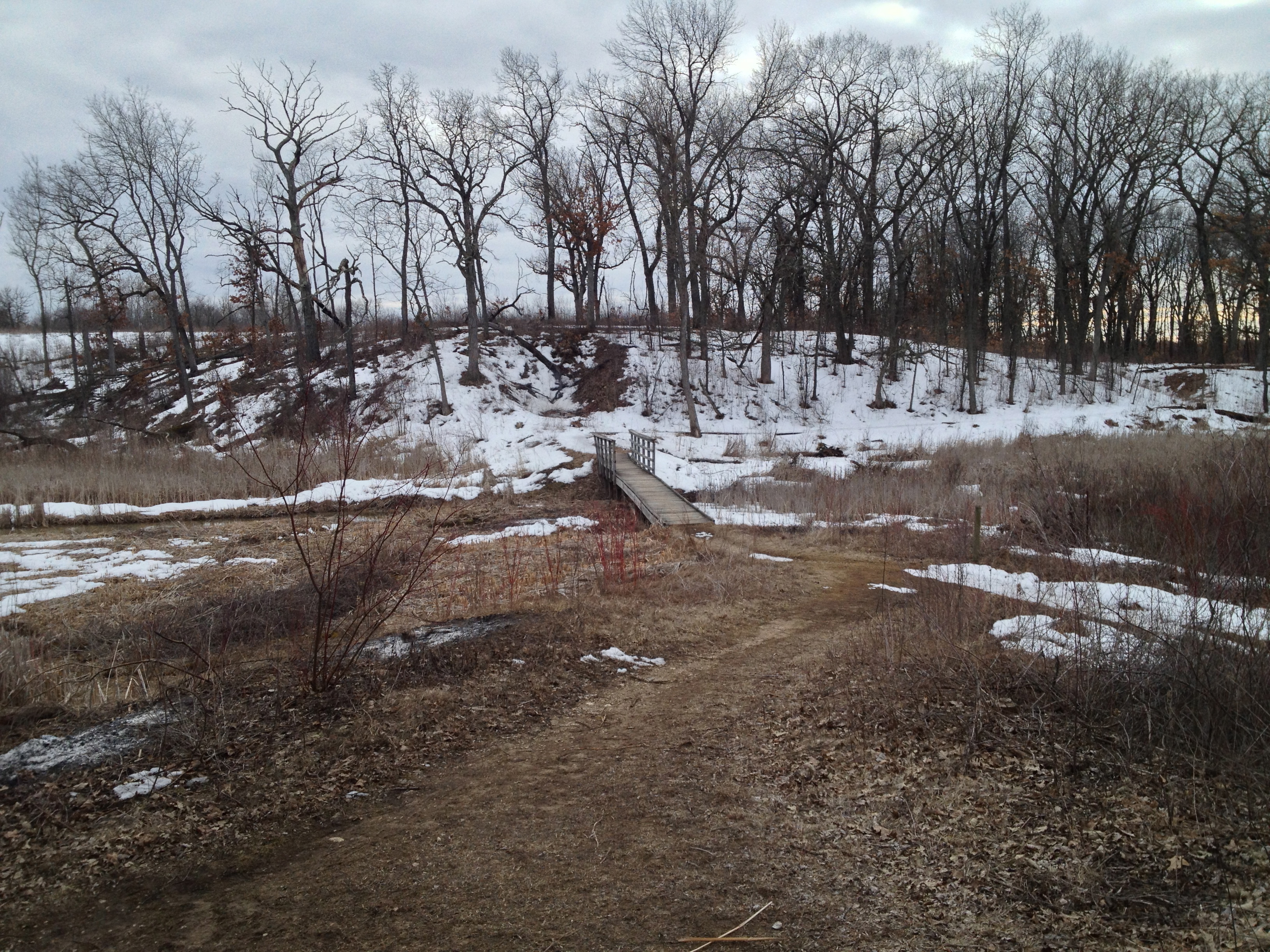
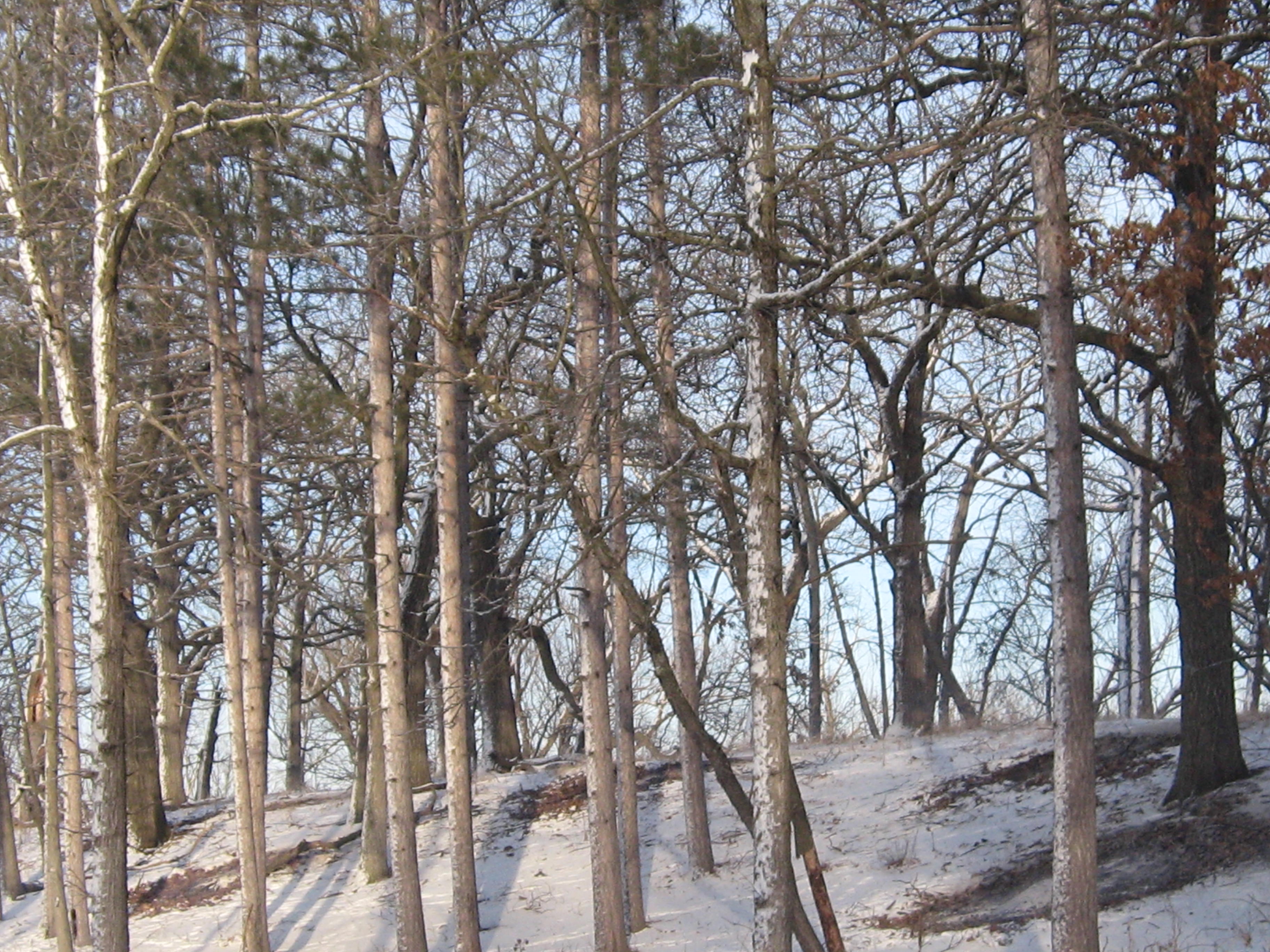
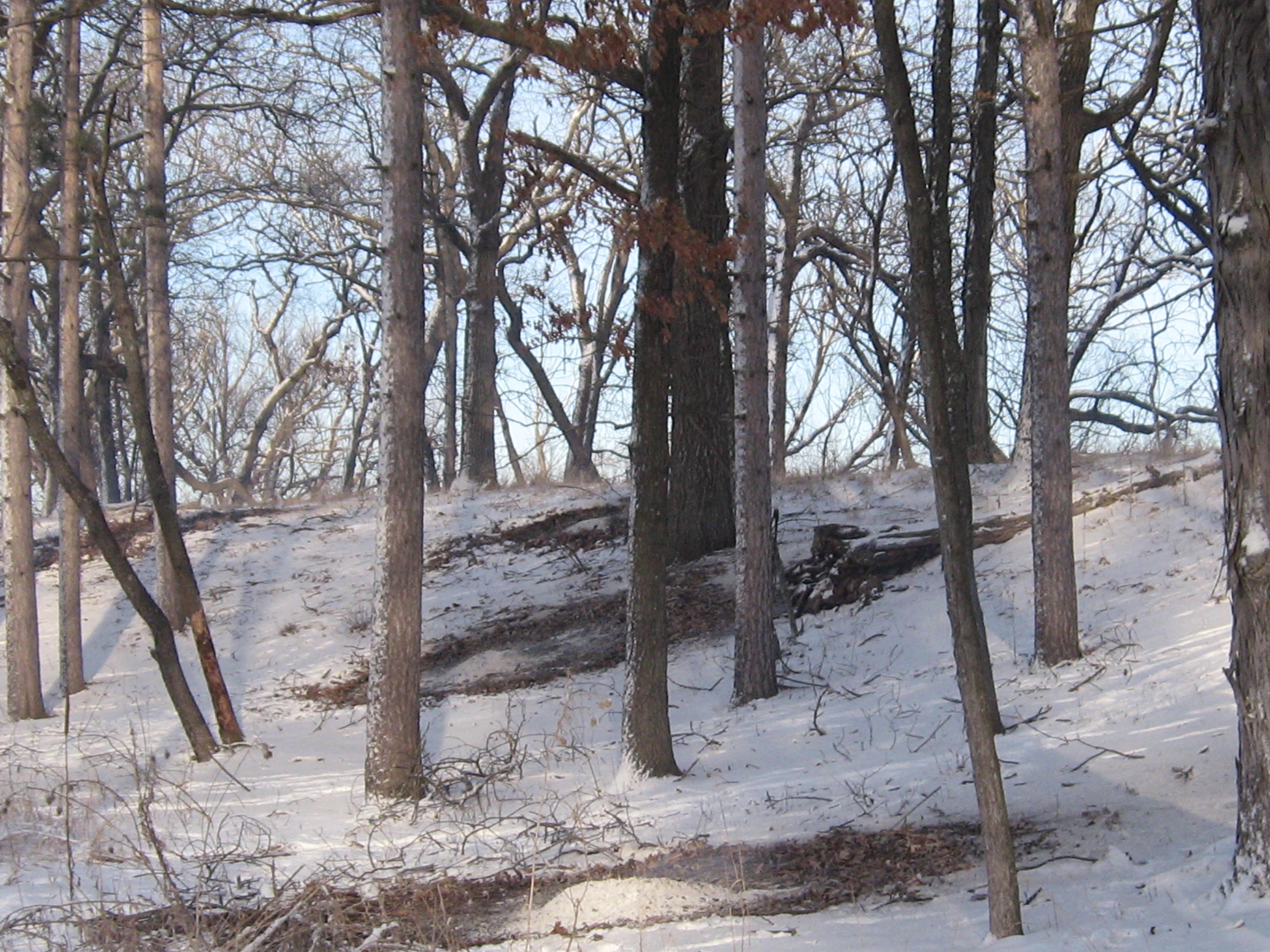
Here are a couple perspectives from the trail just in front of the old barn site.
The view from where I drew my sled.
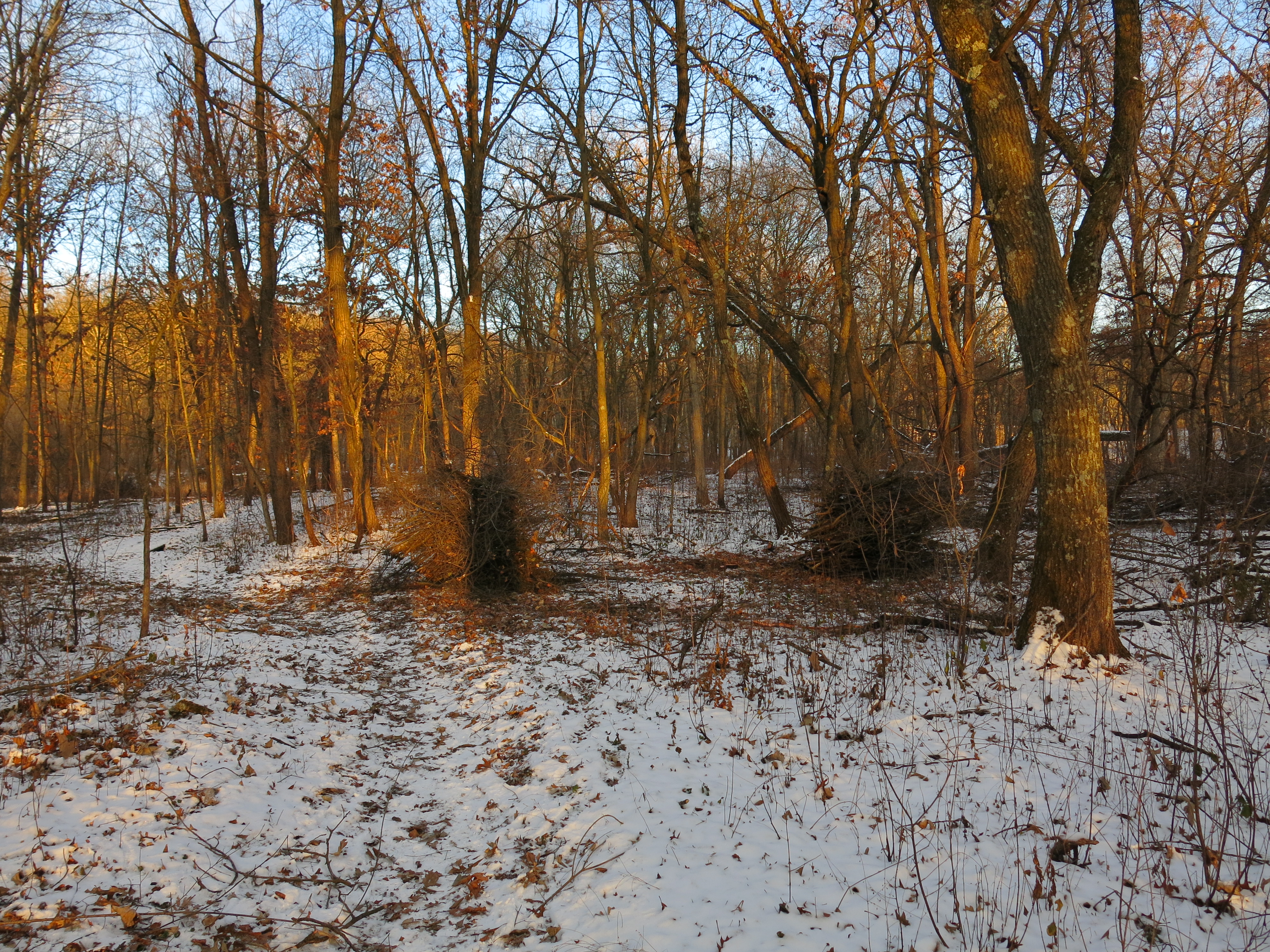
The winds became more consistent as the flurries stopped and the sun broke through, and the times I had to go back and relight a pile decreased. At some point every pile burst into a flare that swirled with the wind and always got my attention.
I changed out of my sweaty clothes and bundled up for a walk whereon I soon met Ben Johnson. He joined my stroll and our conversation made the time and steps fly by, as we enjoyed the beautiful winter sky.
Just like mountaineers climbing higher, then descending only to climb higher still, we begin acclimatizing to the winter season with a longer and longer periods of cold punctuated by balmy warm days like we had today at The Springs.
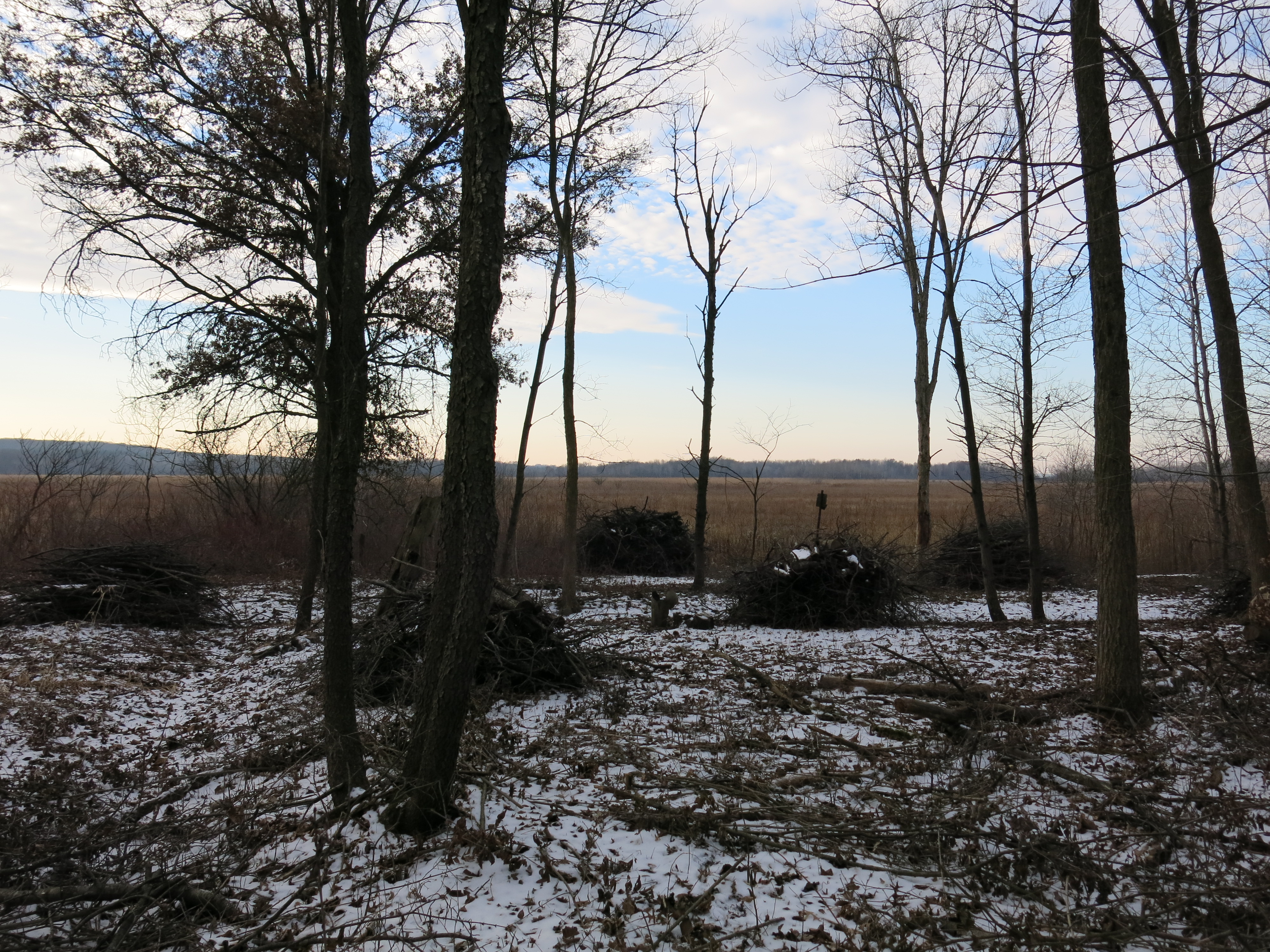
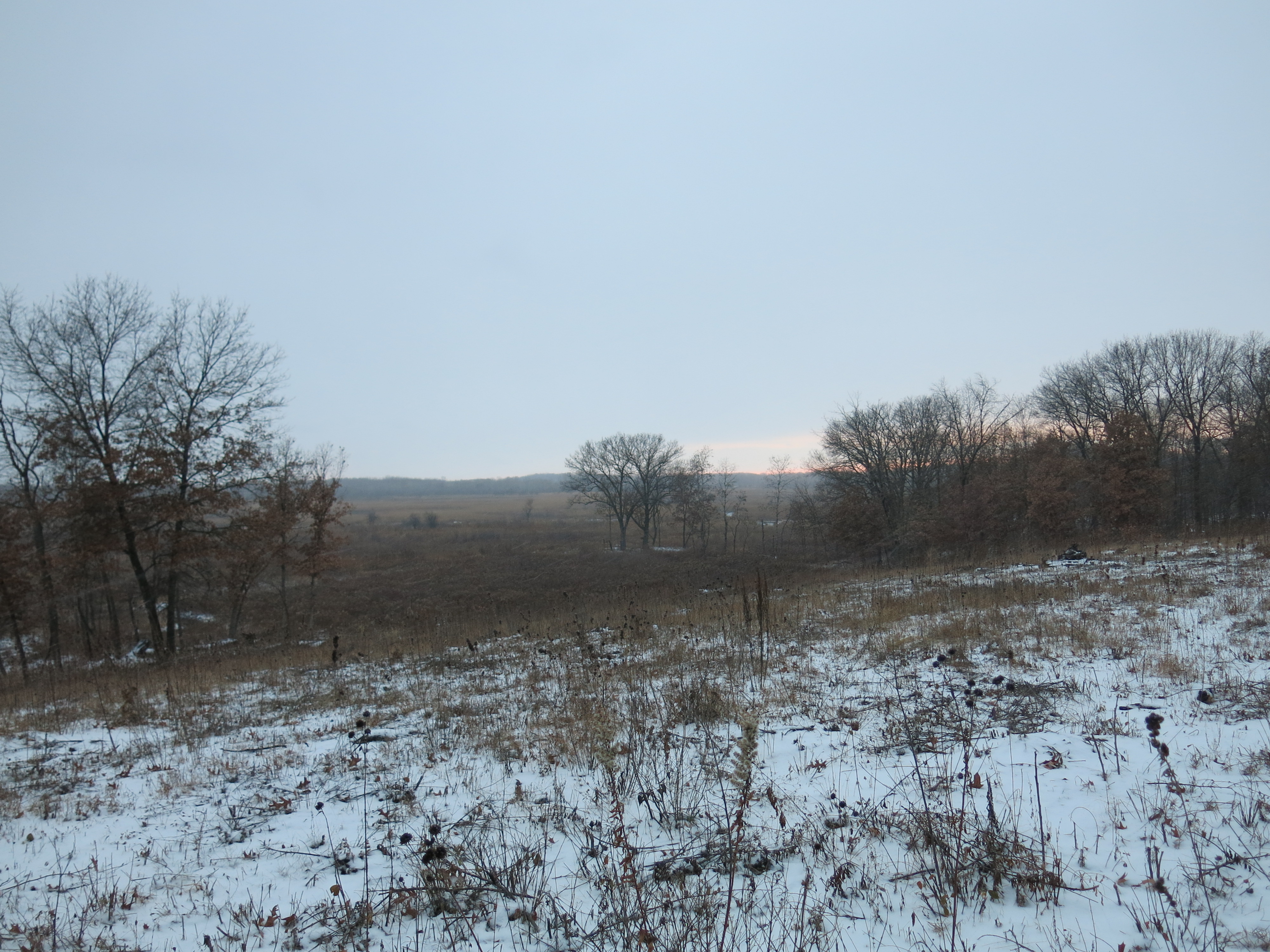
There was still a bit of snow covering the ground and we thought it would be safe to burn some piles. We started just west of signpost #1 where the views into the prairie start to open up. Here is what it looked like before we got started.
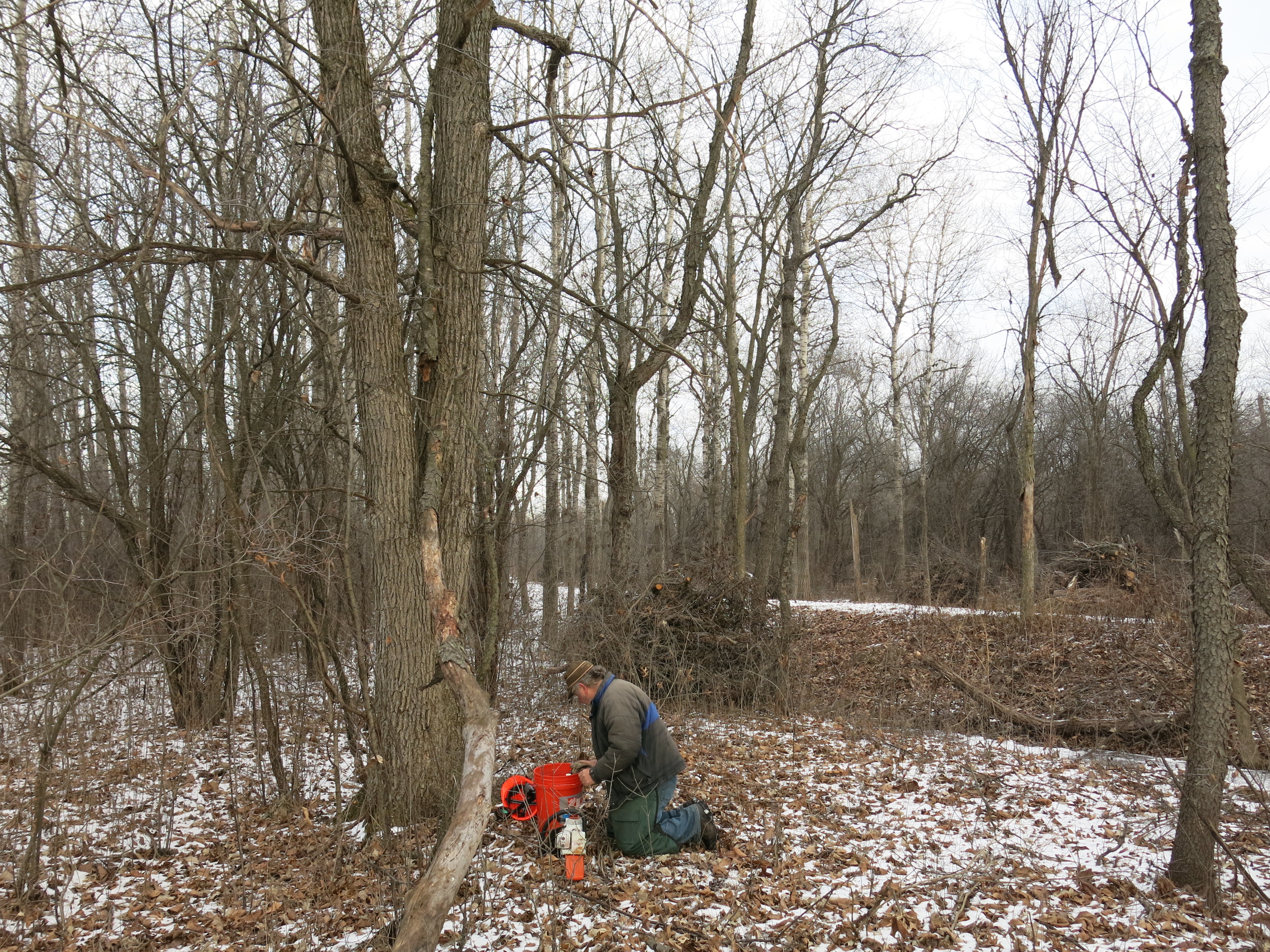
Dick Jenks fueling his machine.
We kept a close watch on the first batch of fires as there was strong breeze blowing in from the southwest.
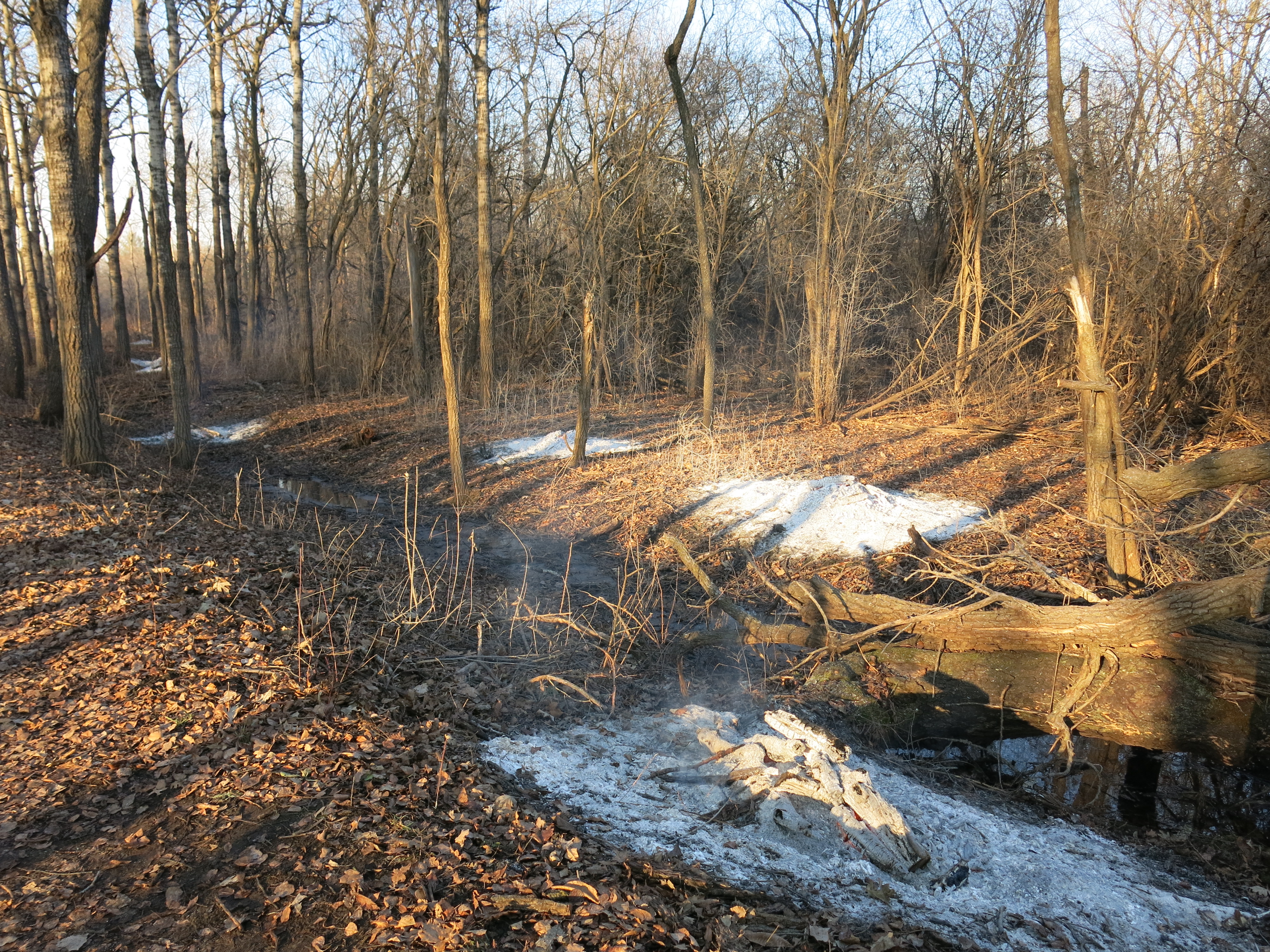
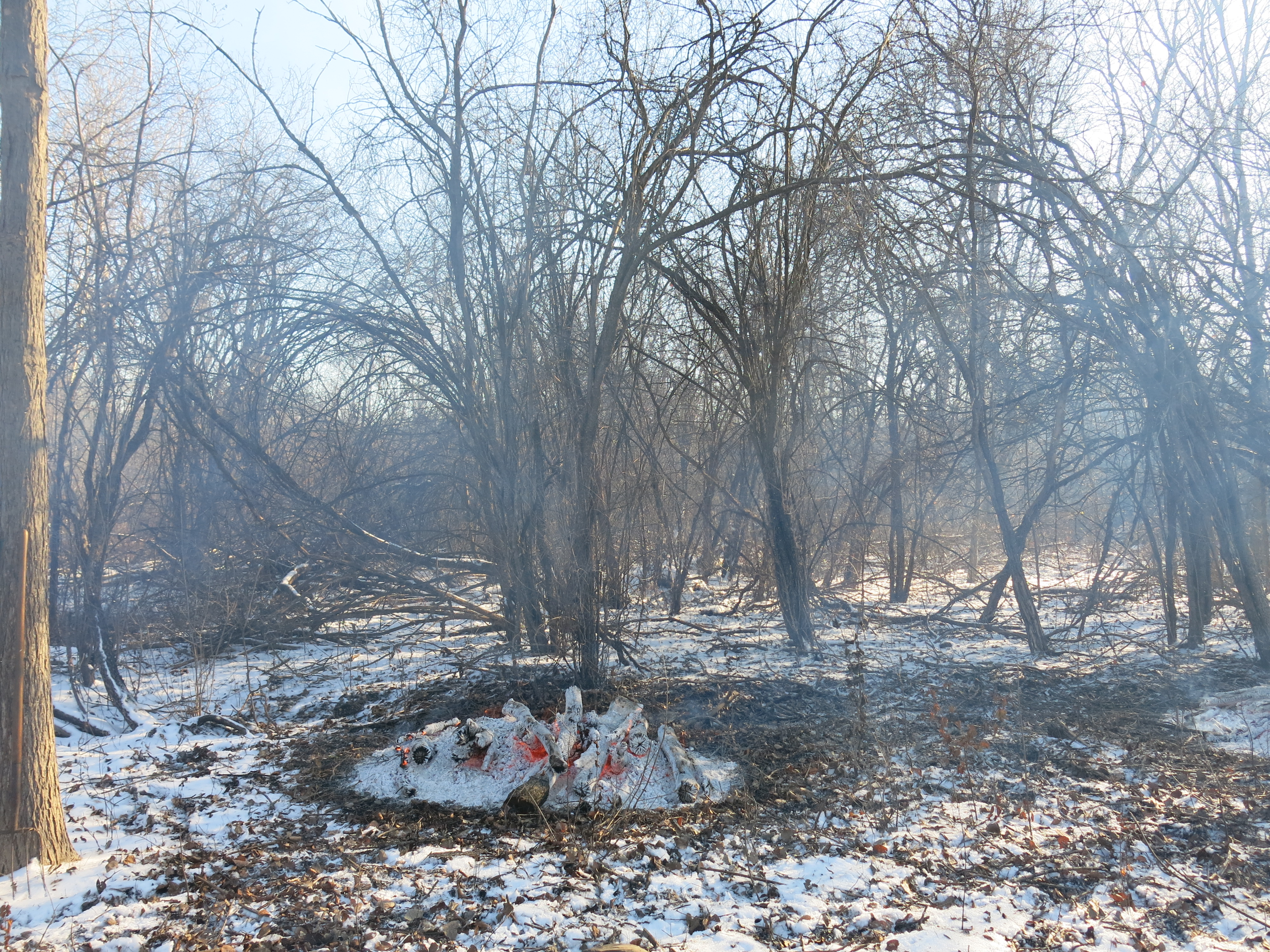
After these fires had calmed down, we proceeded to light the piles along both sides of the buckthorn tunnel. Despite the fact that the buckthorn had been cut only 2 months ago, it was relatively easy to start it burning. Here is how it looked after we got 22 piles lit.
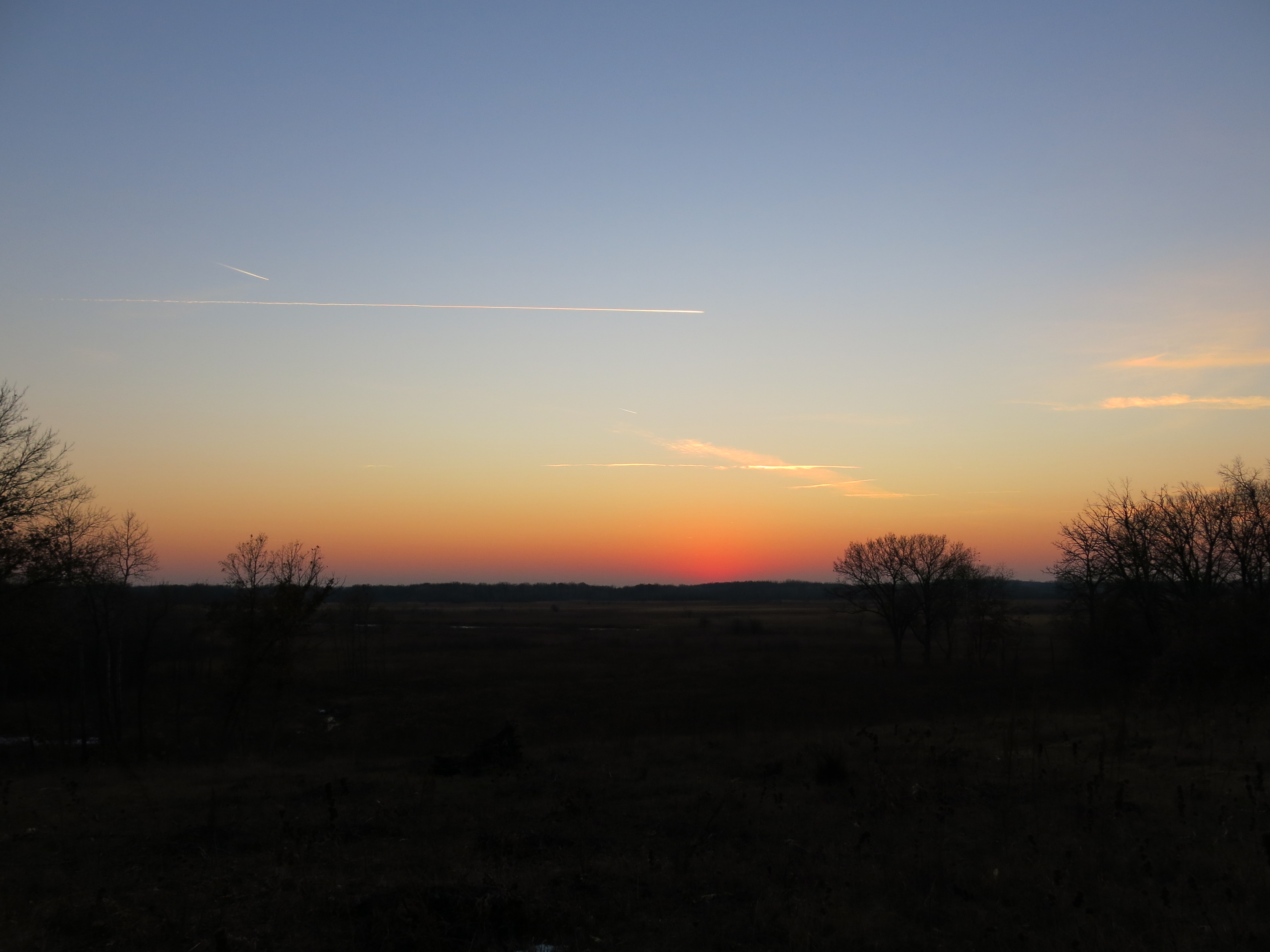
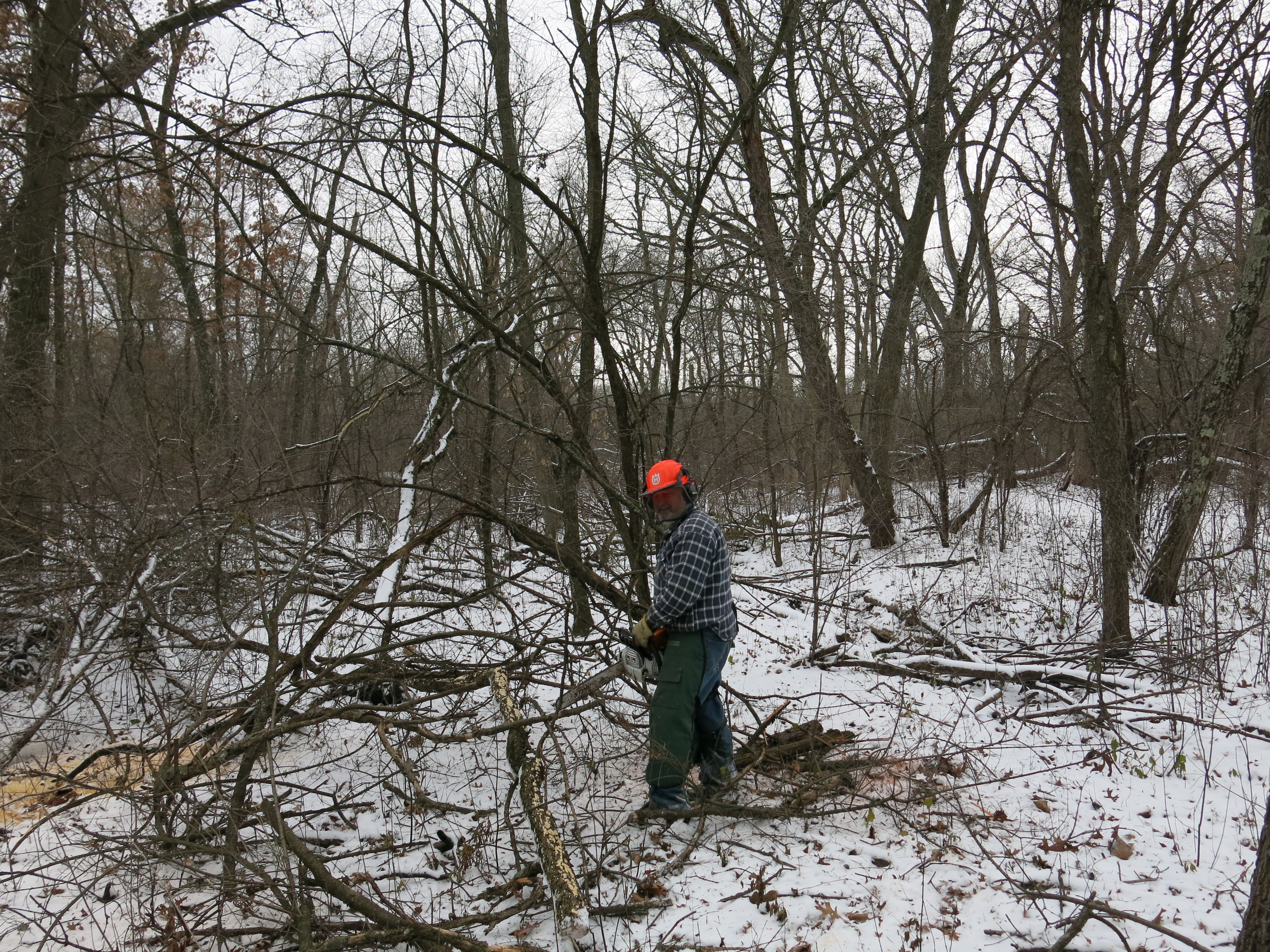
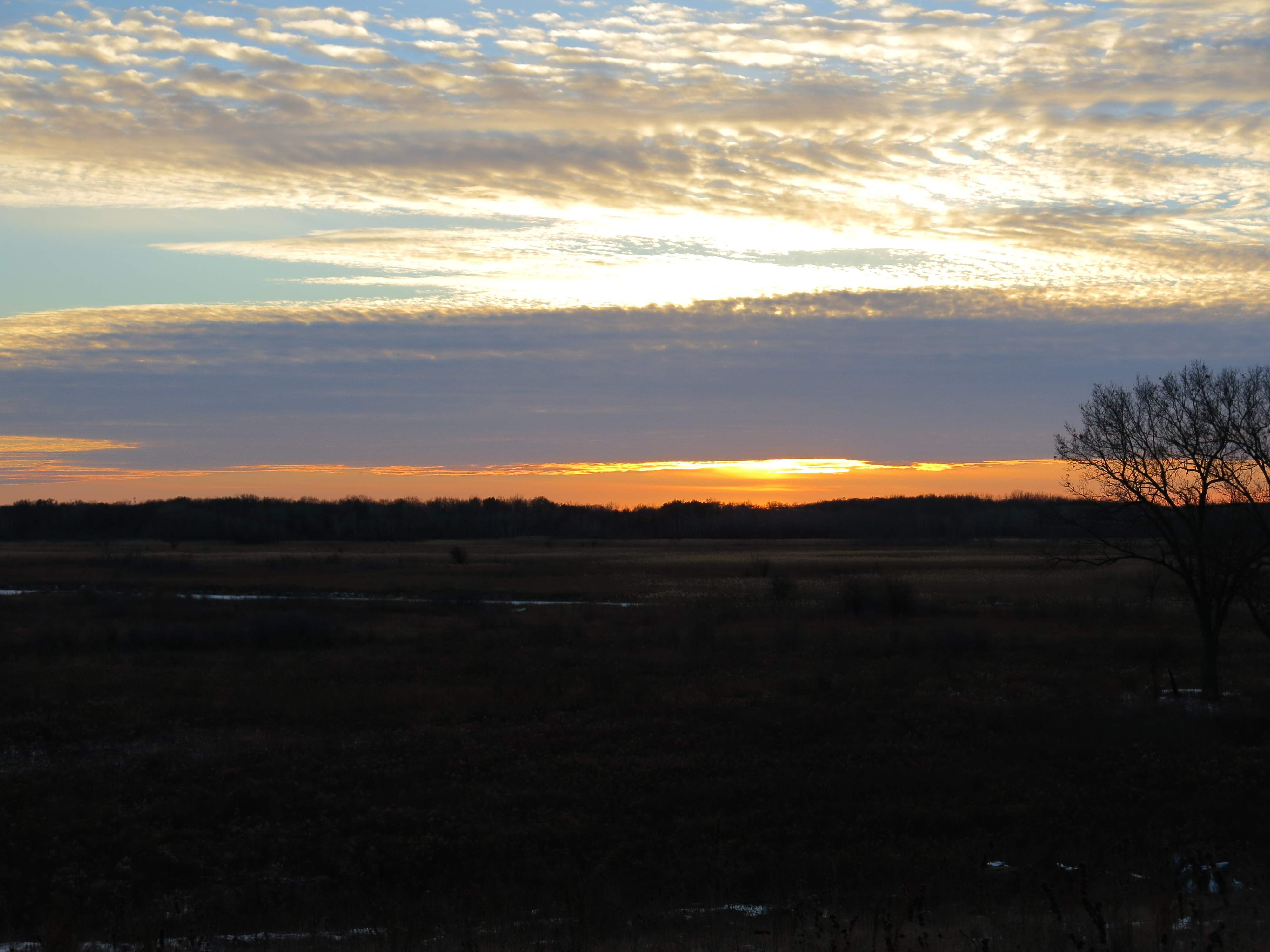
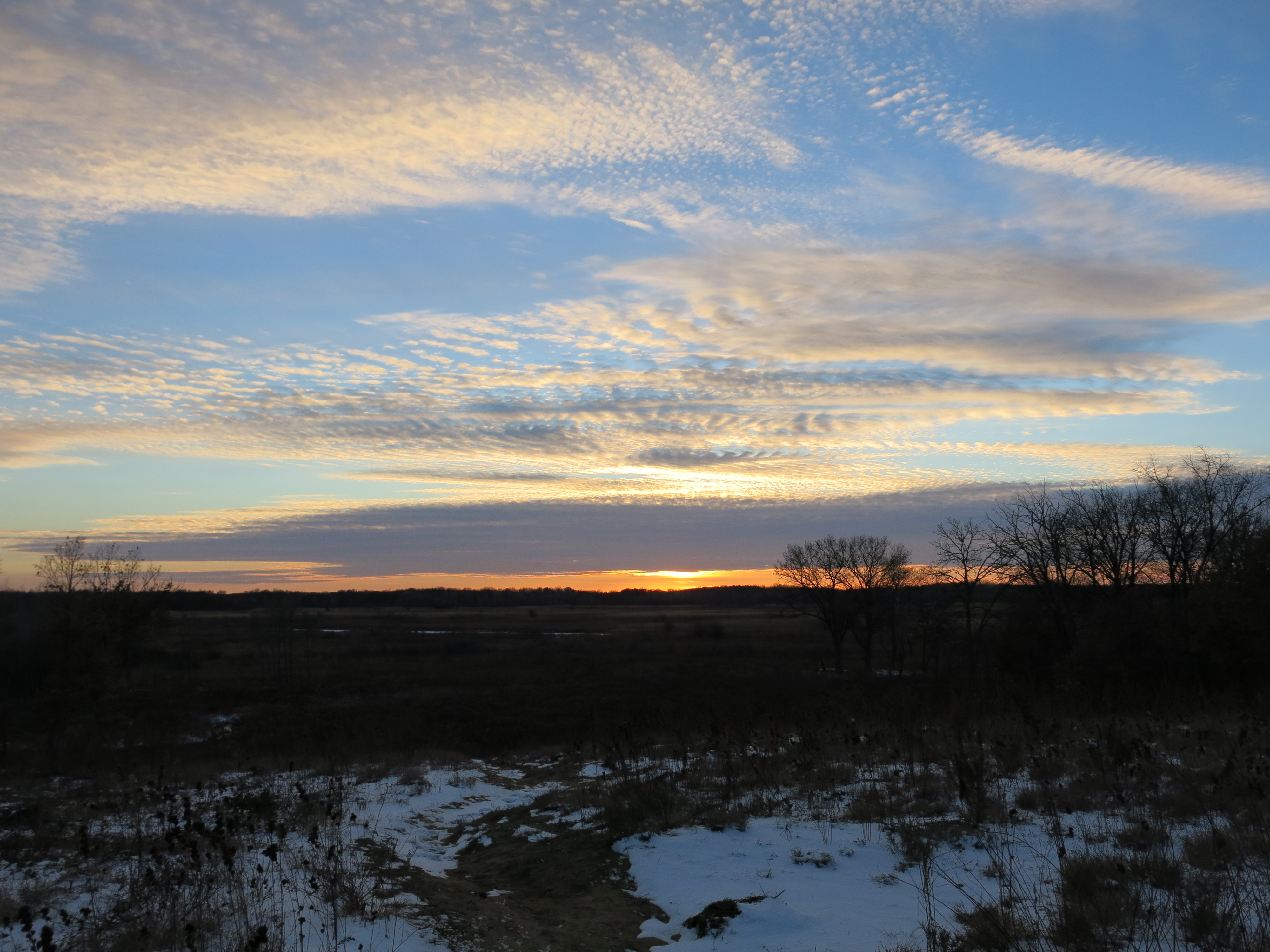
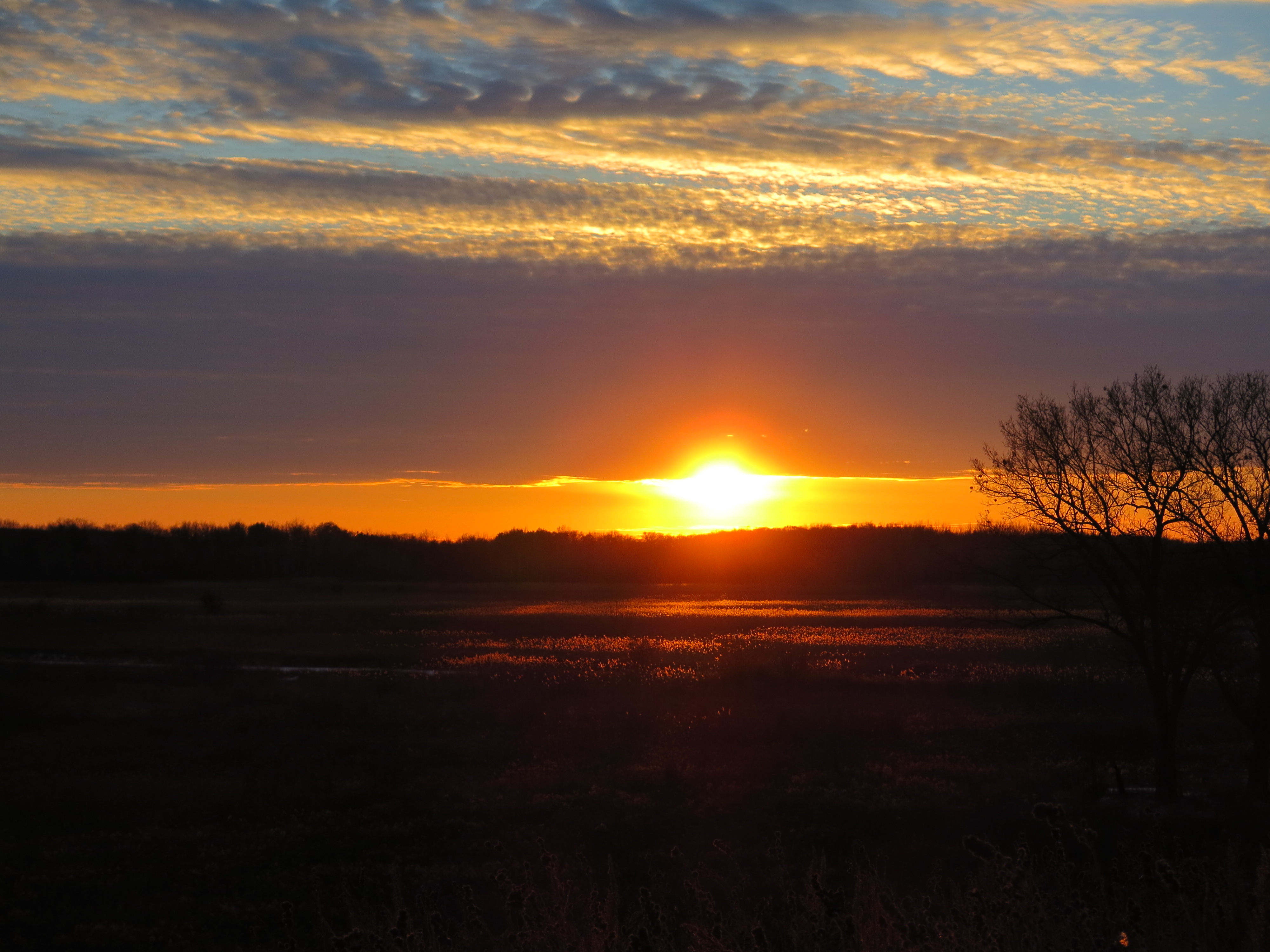
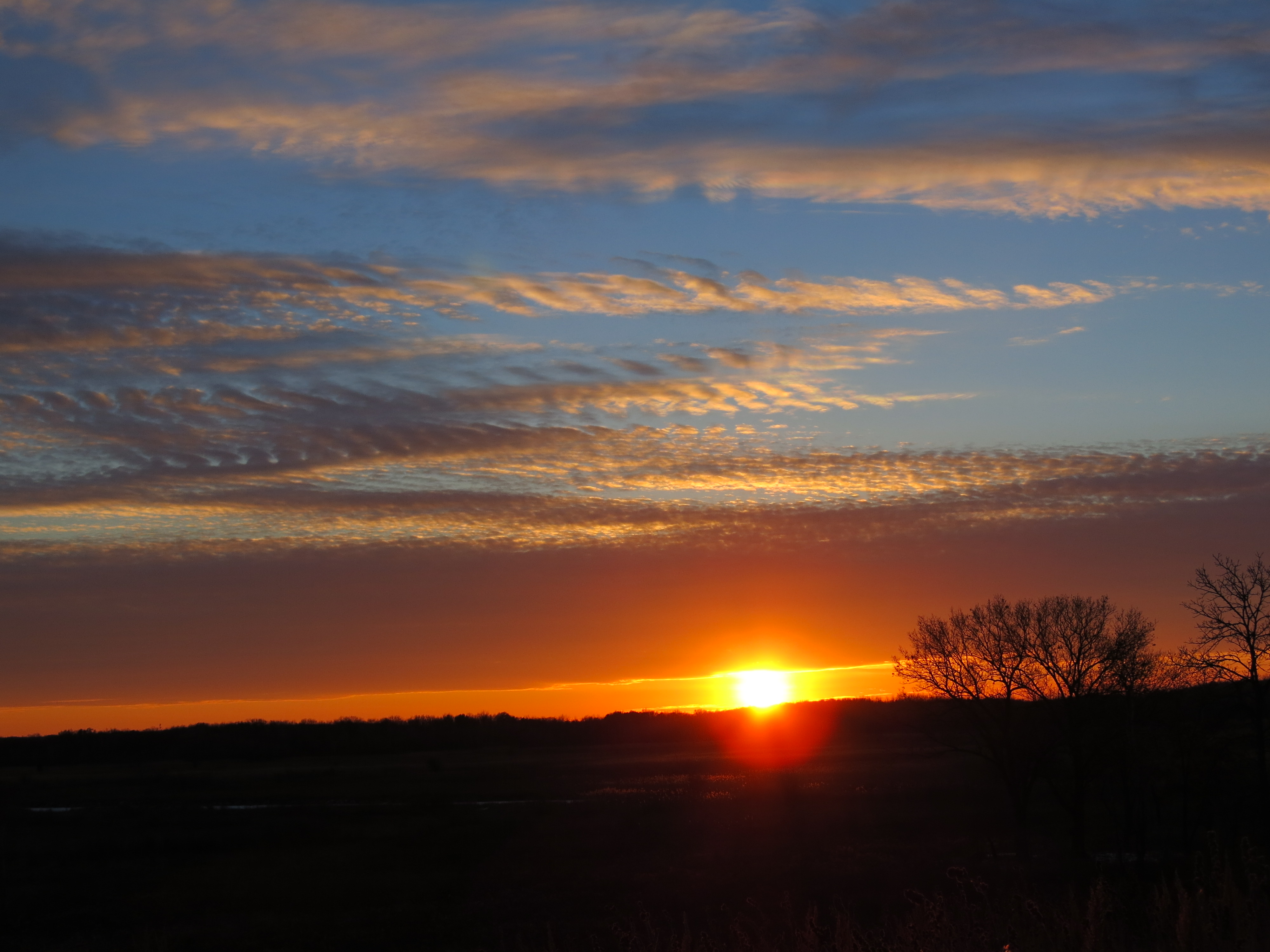
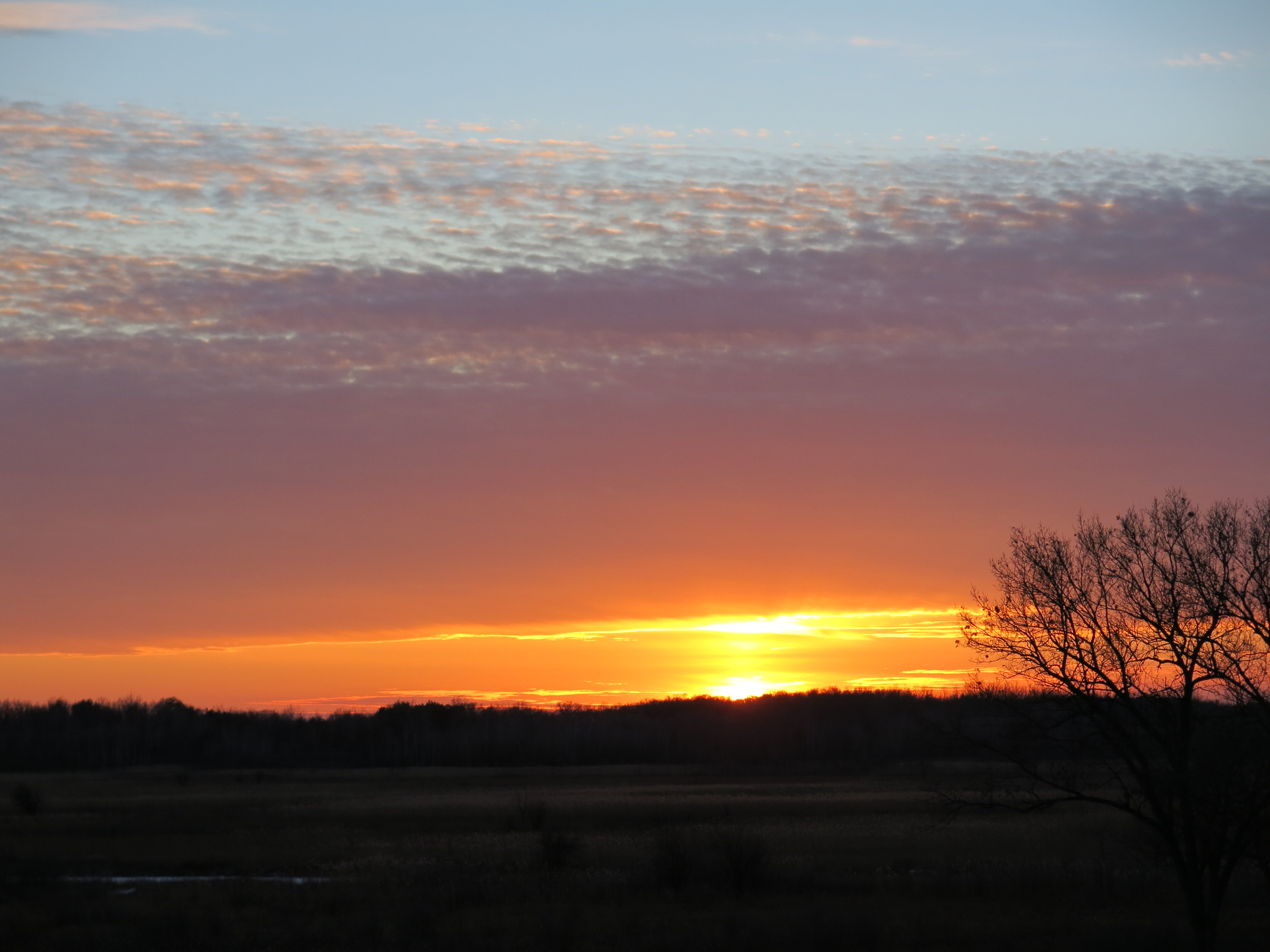
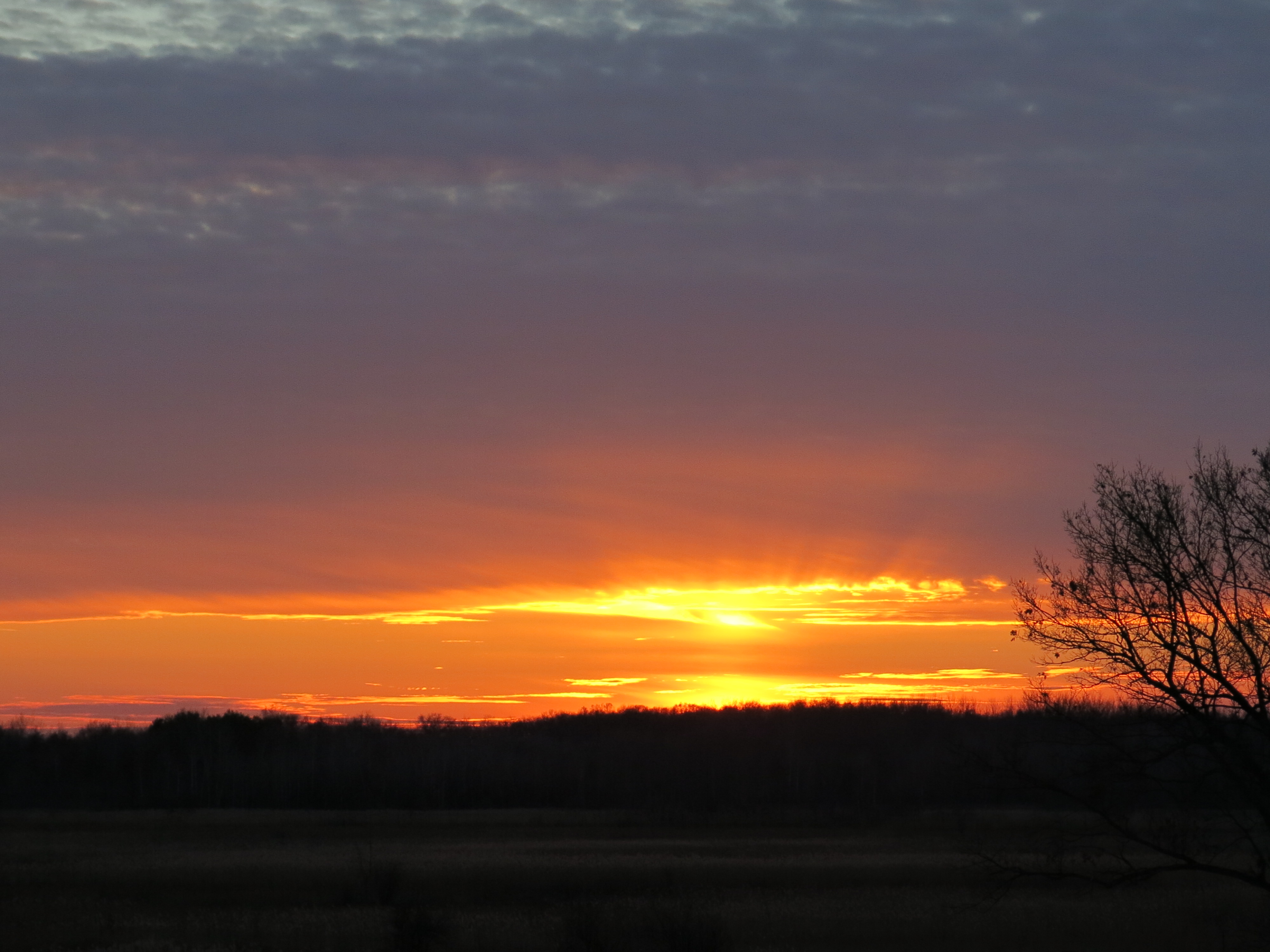
Dick and I cut a bunch of buckthorn as the brush piles burned. It was a warm sunny afternoon and Pati came out to pile brush along the cut-off trail for a couple hours. Then we relaxed and strolled the trails absentmindedly missing the sunset, which seemed to happen faster than usual.
I think I know what Martin Luther King meant when he said “I’ve been to the mountaintop!”
Yes, “Mine eyes have seen the glory of the coming of the lord” too. That’s why I do what I do. Since my first backpacking foray into the mountains 25 years ago I’ve seen some beautiful places and literally been to the mountaintop. Many days and nights in the back country taught me to see the lay of the land and filled a wellspring of unforgettable images within me. At The Springs I have a unique opportunity to shape the landscape and manifest my vision. It’s slowly becoming reality and the best part is sharing the creative process with other volunteers who have also “been to the mountaintop”.
The last two days I’ve been slashing and burning at The Springs with Dick Jenks and Andy Buchta. This was Dick’s first time working at The Springs and Andy was back again after his initiation last week. I really enjoyed their company and appreciated the way they “got after it”.
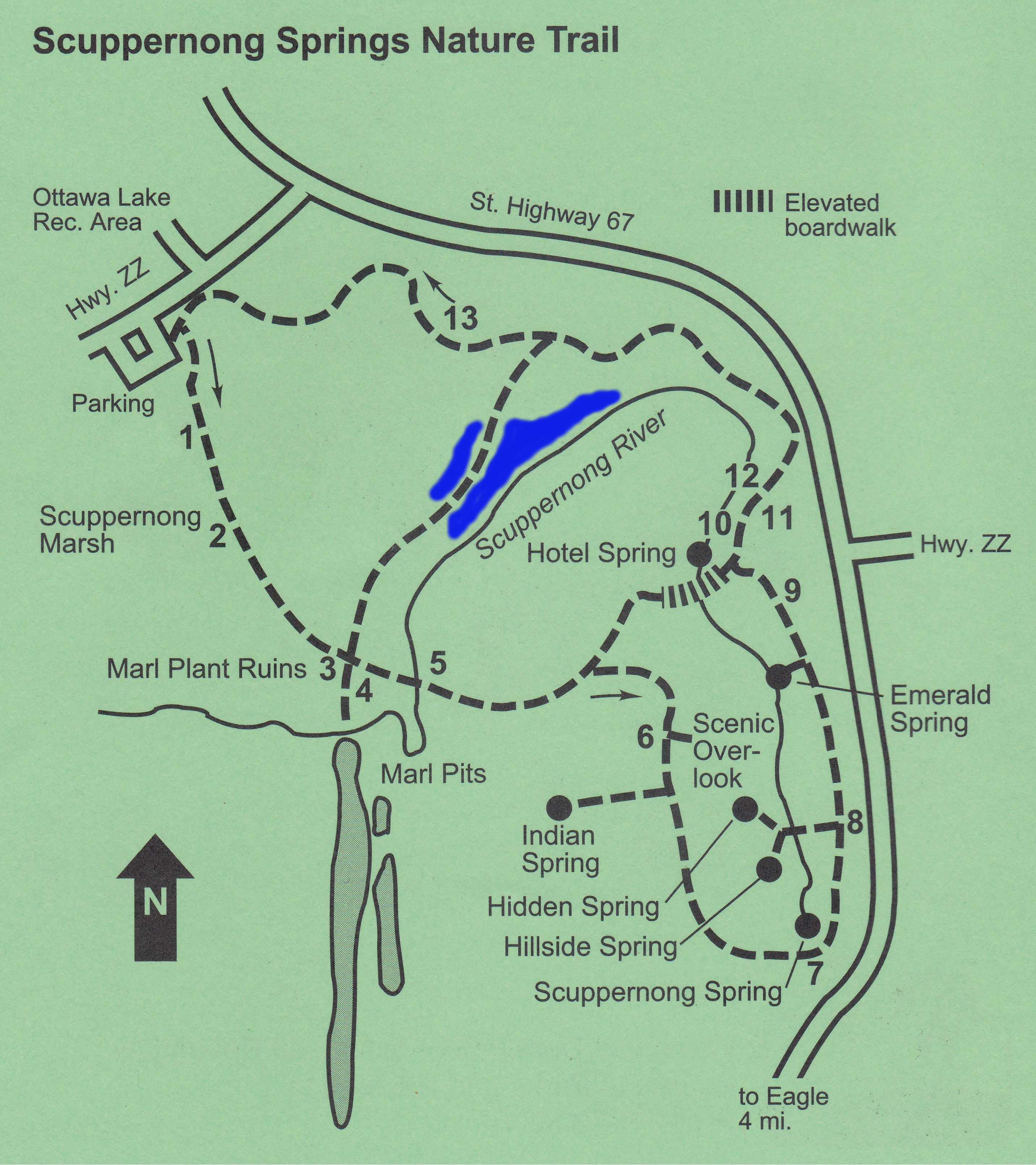
Tuesday we worked along the trail on the northeast section of the loop near signpost #13 and an old cranberry bog.
Dick getting some licks in.
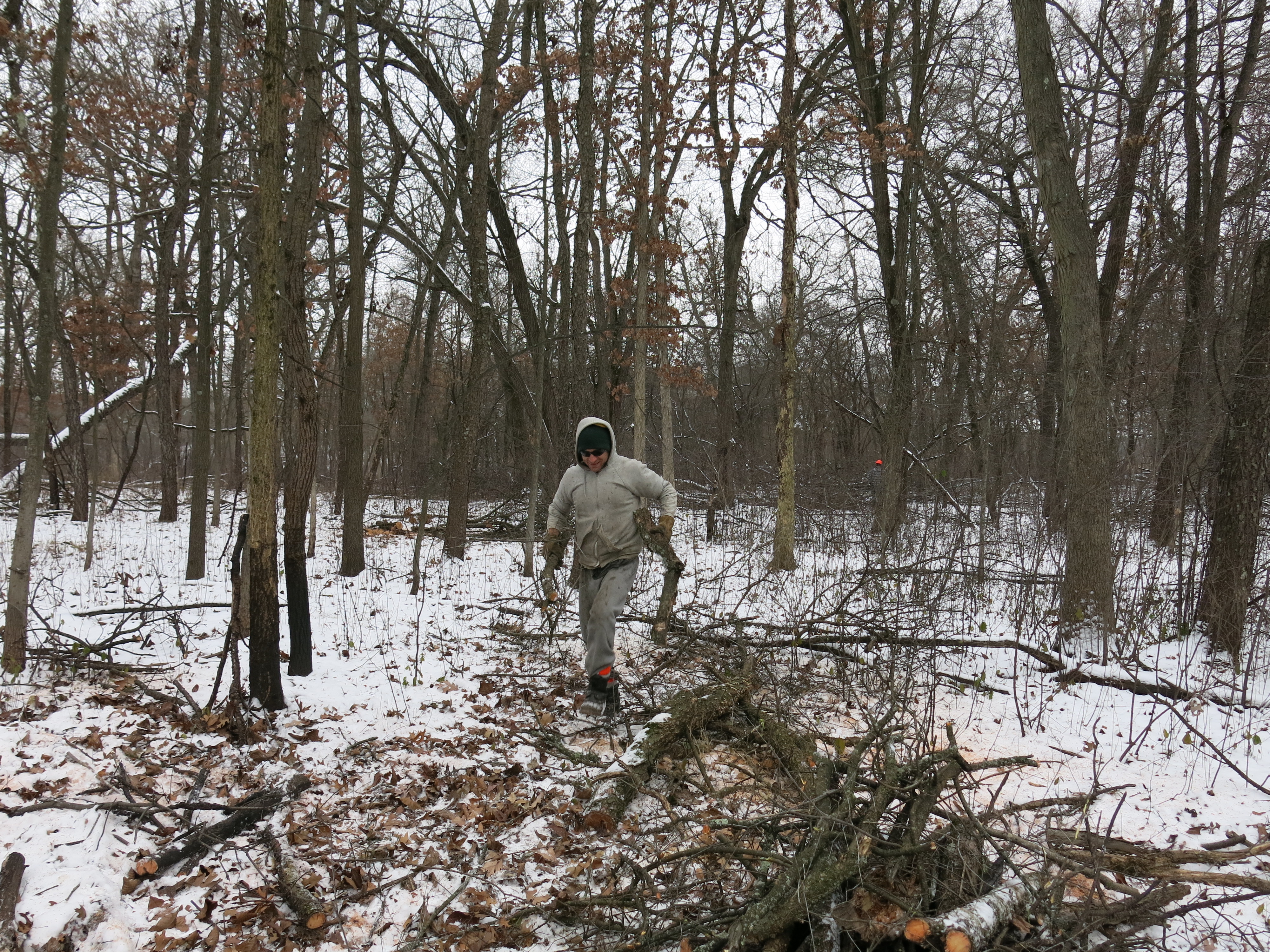
Andy piling brush.
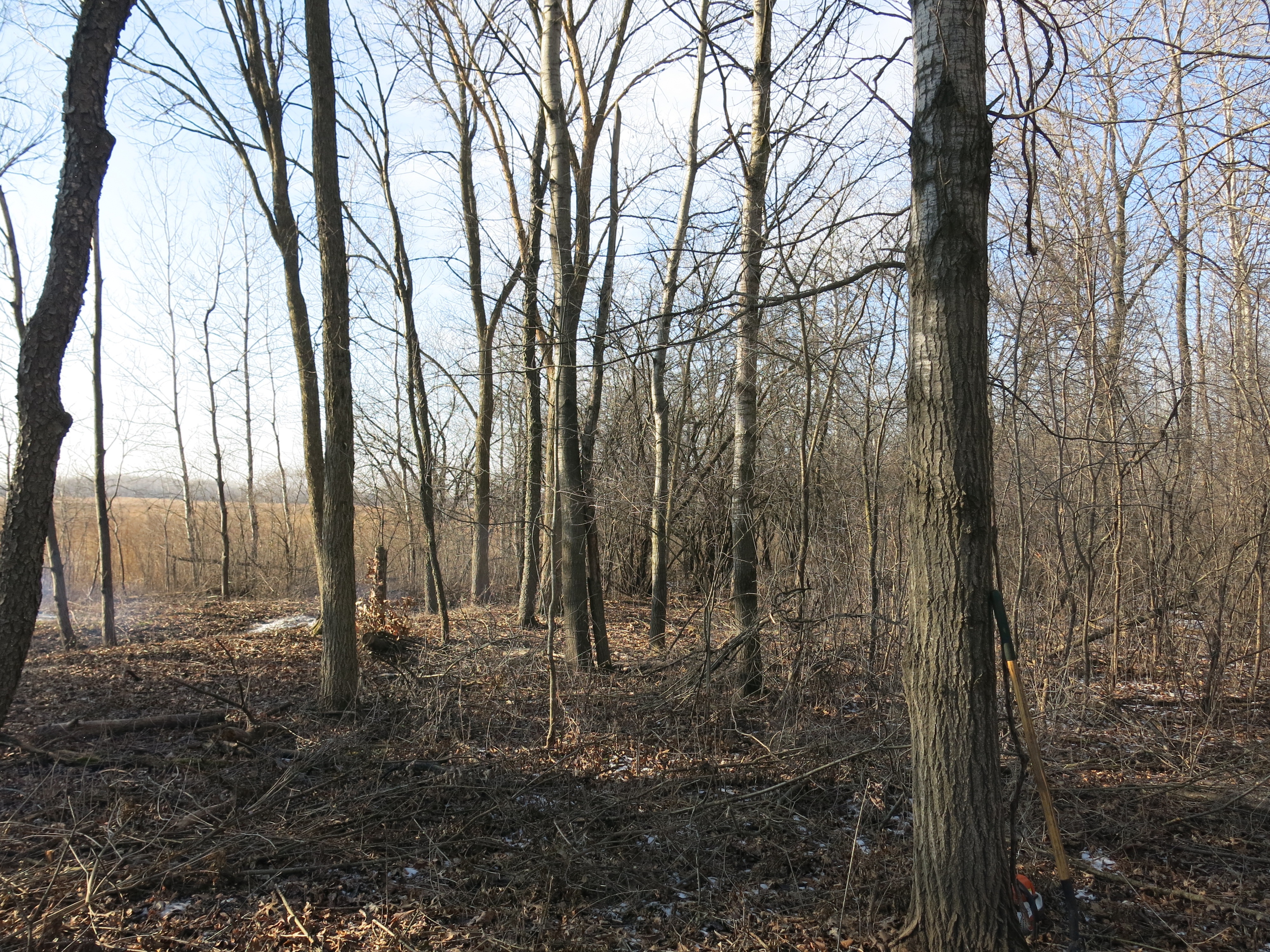
We laid down a lot of nasty buckthorn and opened up the views.
Later, Pati came out to join me for a walk just in time for a snow squall. It dawned on me that tomorrow would be a great day to start burning brush piles.
The next day (today/Wednesday) I was back with my propane torch and Dick joined me to help work the piles.
They were relatively easy to light and we had 21 going in a little over an hour.
Note the buckthorn crowding around the burning piles.
Borrowing a technique used by Mike Fort and the Friends of Lapham Peak, I cut a dozen or so huge buckthorns that were very near the burning piles and we threw the brush right into the fire. Then I cut a whole lot more but it seemed like we barely made a dent in the thicket.
Andy arrived shortly after noon, returning to the area we worked on Tuesday, and finished piling everything we had laid down there.
This past week has been our first taste of really cold weather this season and I’m getting used to it and looking forward to Winter.
How can I describe what a great time I had at The Springs yesterday? The temperature and humidity were as pleasant as a Pacific Island. The air was fresh and breezing and the sunlight clarified everything. My thoughts were occupied by the current time; the present moment. Time is a spiritual current-cy. How do we spend it? What do we pay attention to? ‘As you sow, so shall you reap’ and ‘what goes around, comes around’ aren’t just cliches; they are examples of Natural Law, specifically, the Law of Attraction, which is immutably in-force everywhere at all times. So when I say I had a “great time” at The Springs yesterday, I mean it was joyful to invest my spiritual currency paying attention to nature and working to help create the beautiful world that I want to see.
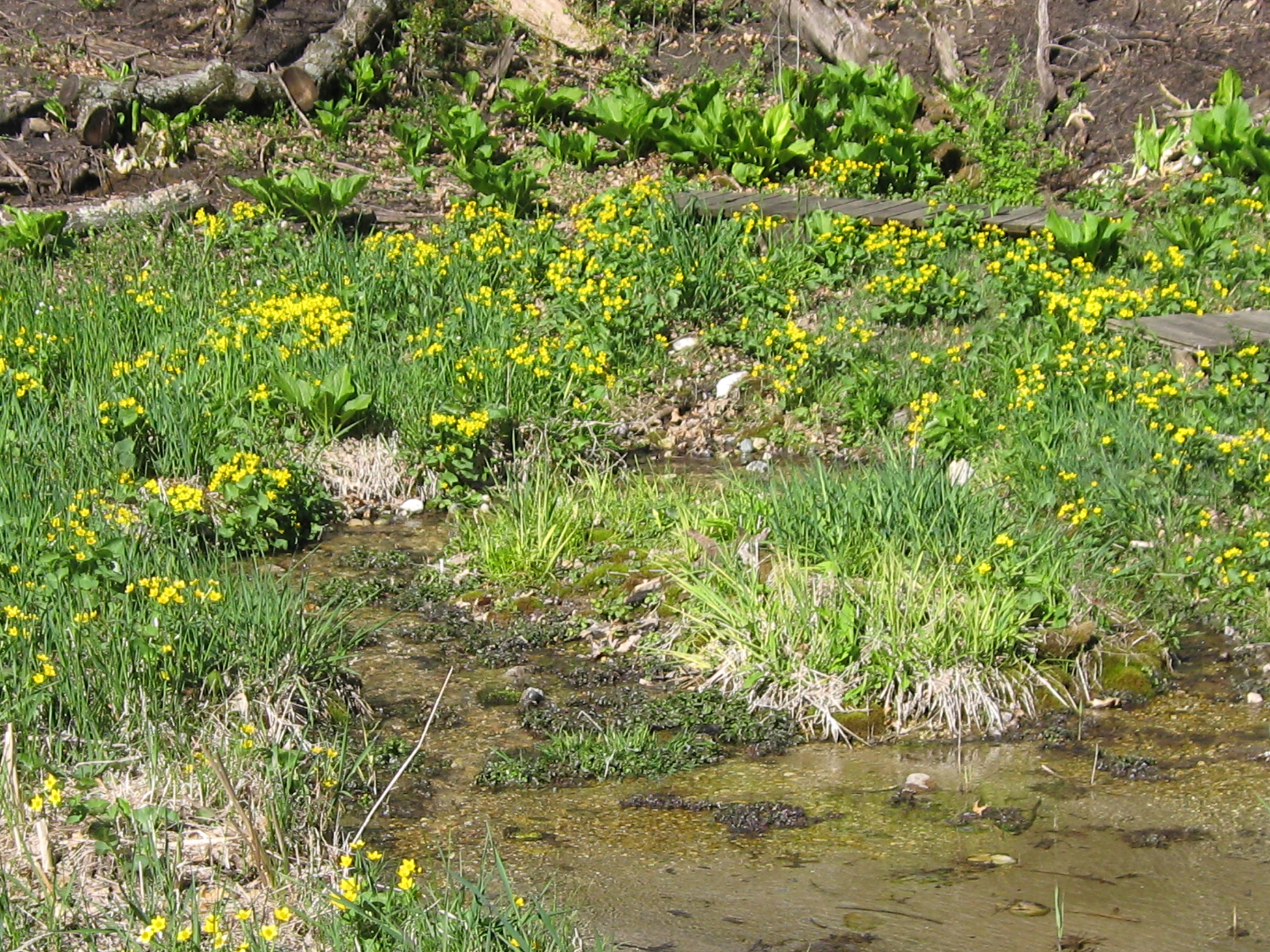
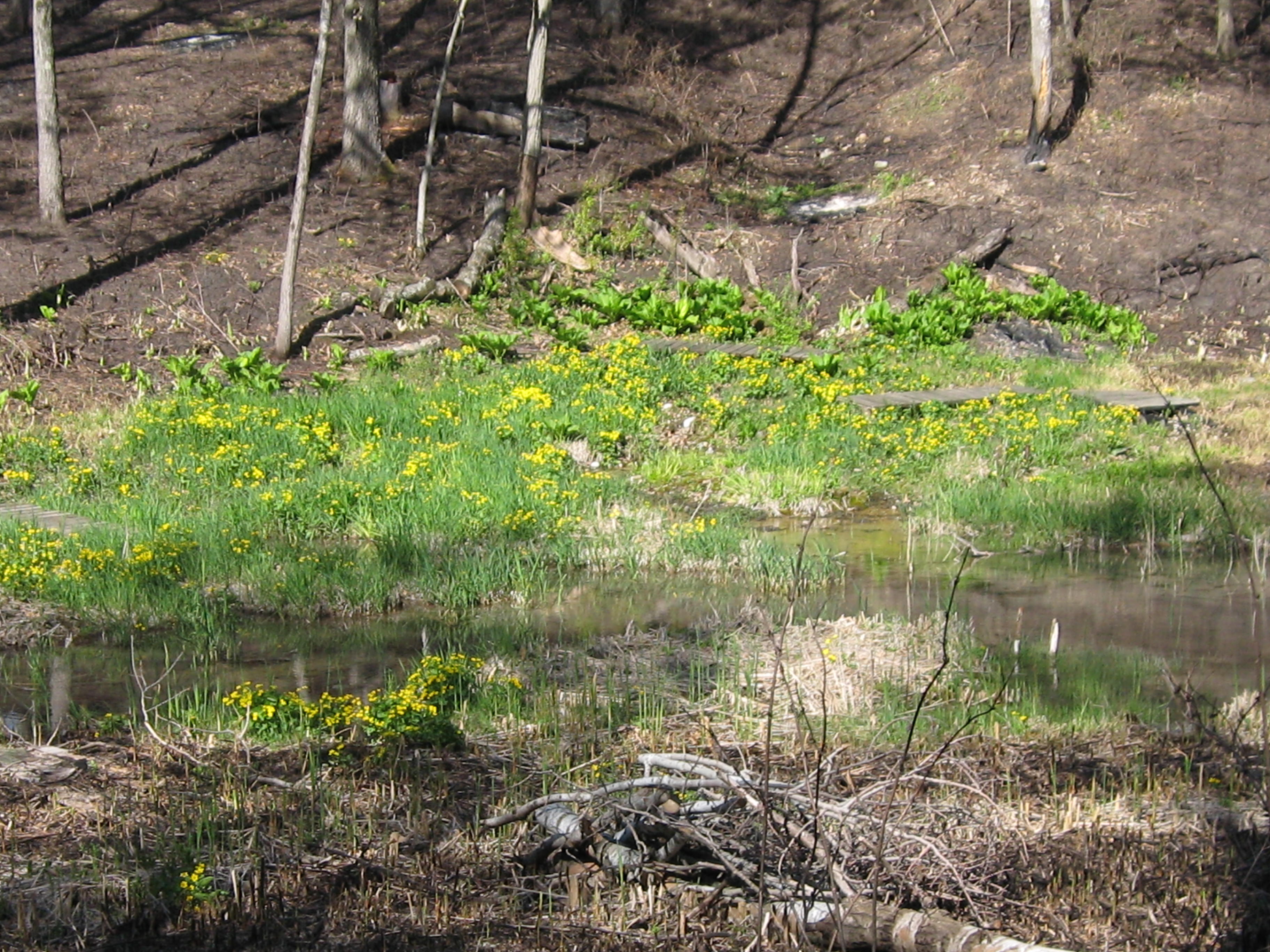
The morning light was flush on the Hillside Springs.
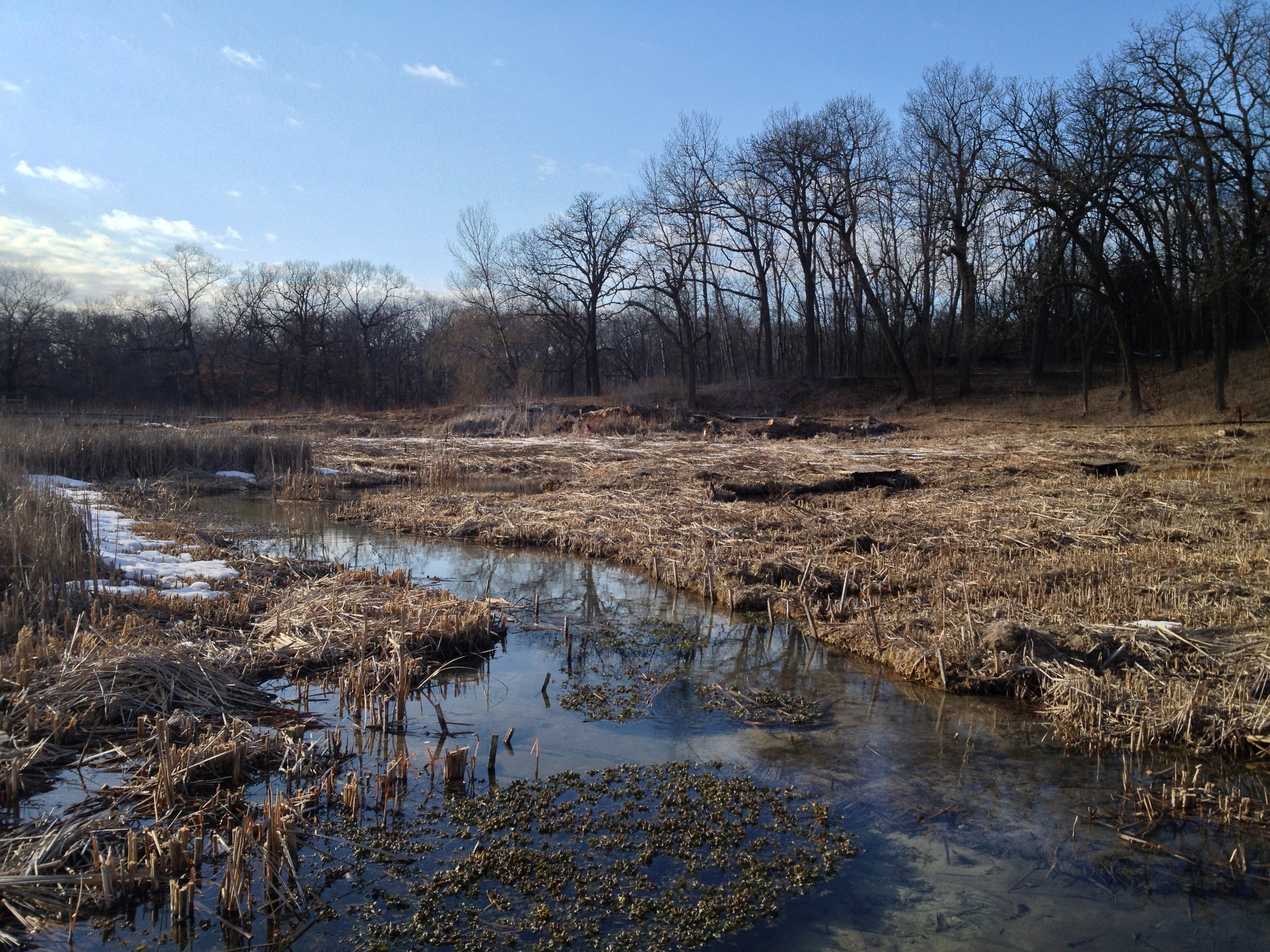
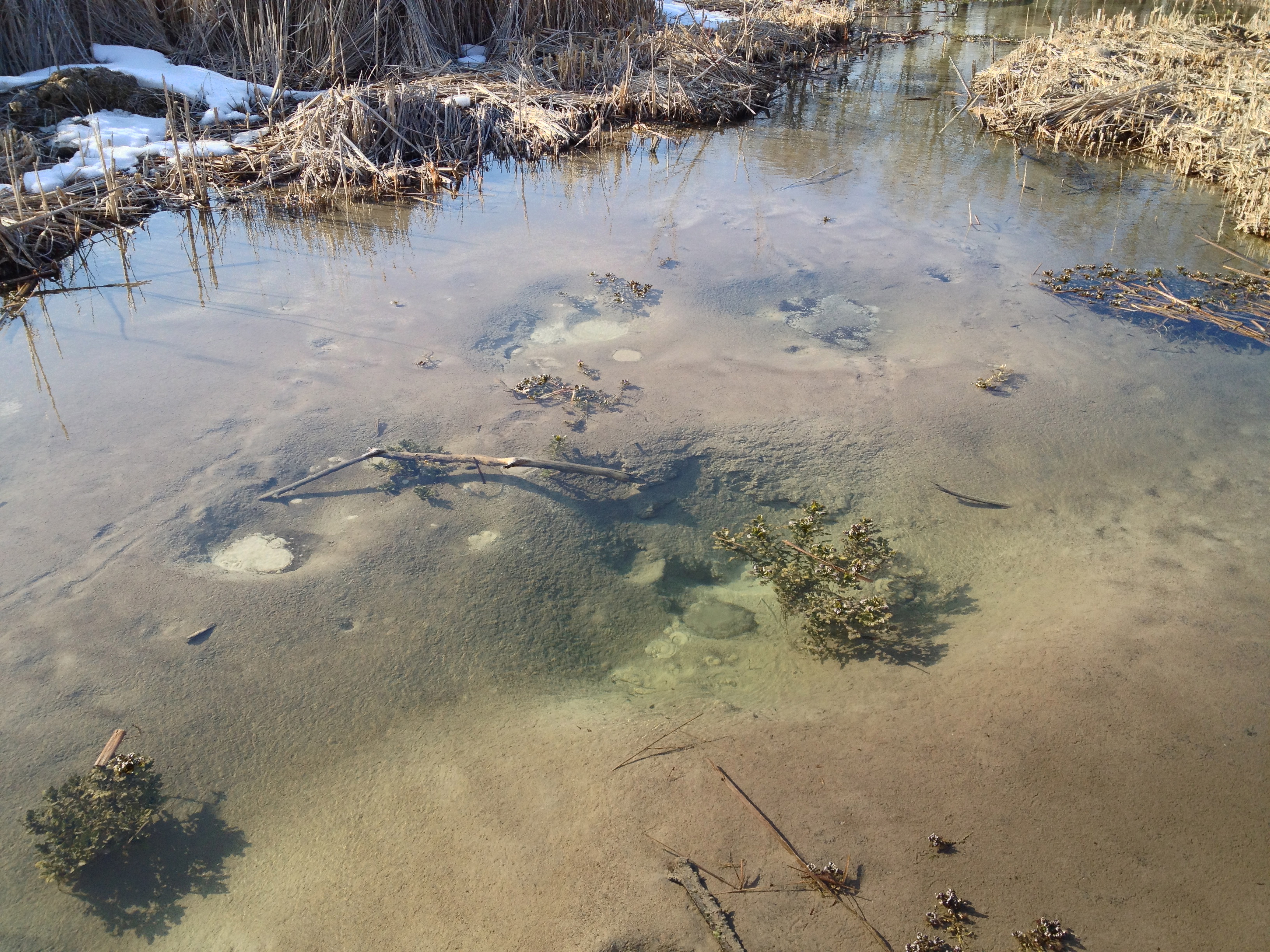
There are lush patches of fresh watercress just below the Scuppernong Spring and I harvested a bagful to include in my green juice recipe.
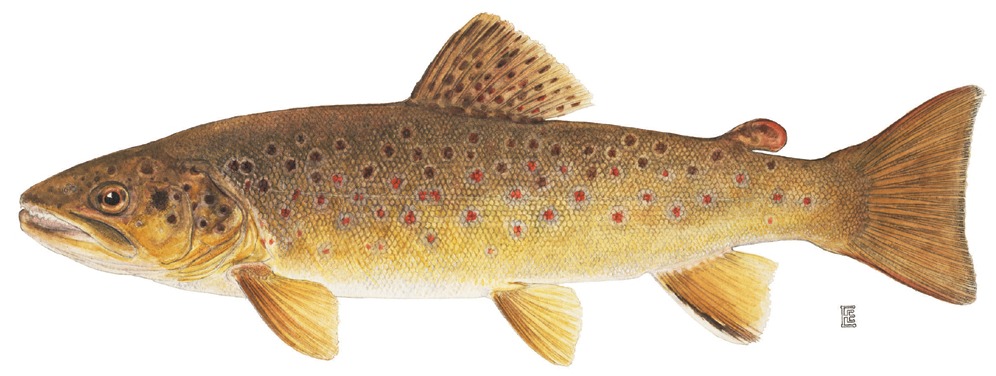
As I was rinsing the watercress at the point where the Scuppernong Spring spills out of its pool and starts to flow as a river, a brown trout emerged from beneath a rock rim and swam about in the pool. I don’t know for sure what is going on with the trout; are they visitors, or a local reproducing population?
Thousands of garlic mustard seedlings have emerged at the south end of the loop trail literally carpeting the ground. I carefully sprayed them with glyphosate trying to avoid the many good plants that are also emerging.
I conscientiously sprayed the spotted knapweed that dominates the sand prairie of the Indian Campground with clopyralid; carefully avoiding the many, many, diverse plants that are also coming up. This sand prairie is going to come alive with color in a couple weeks.
There were more aspen to girdle along the river valley. If we don’t do this, the clonal colonies will spread into and dominate the valley floor.
I piled brush in the afternoon by the old hotel site. You can see the foundation stones in many places now. I forgot to take some pictures, but if you’ve seen one brush pile… I was covered with soot when I finished and took a cool dip in the river by the marl pit bridge to wash off. Clouds moved in and I marveled at their beauty while doing some yoga asanas.
With the video below I attempted to capture one of those ‘you had to be there’ moments.
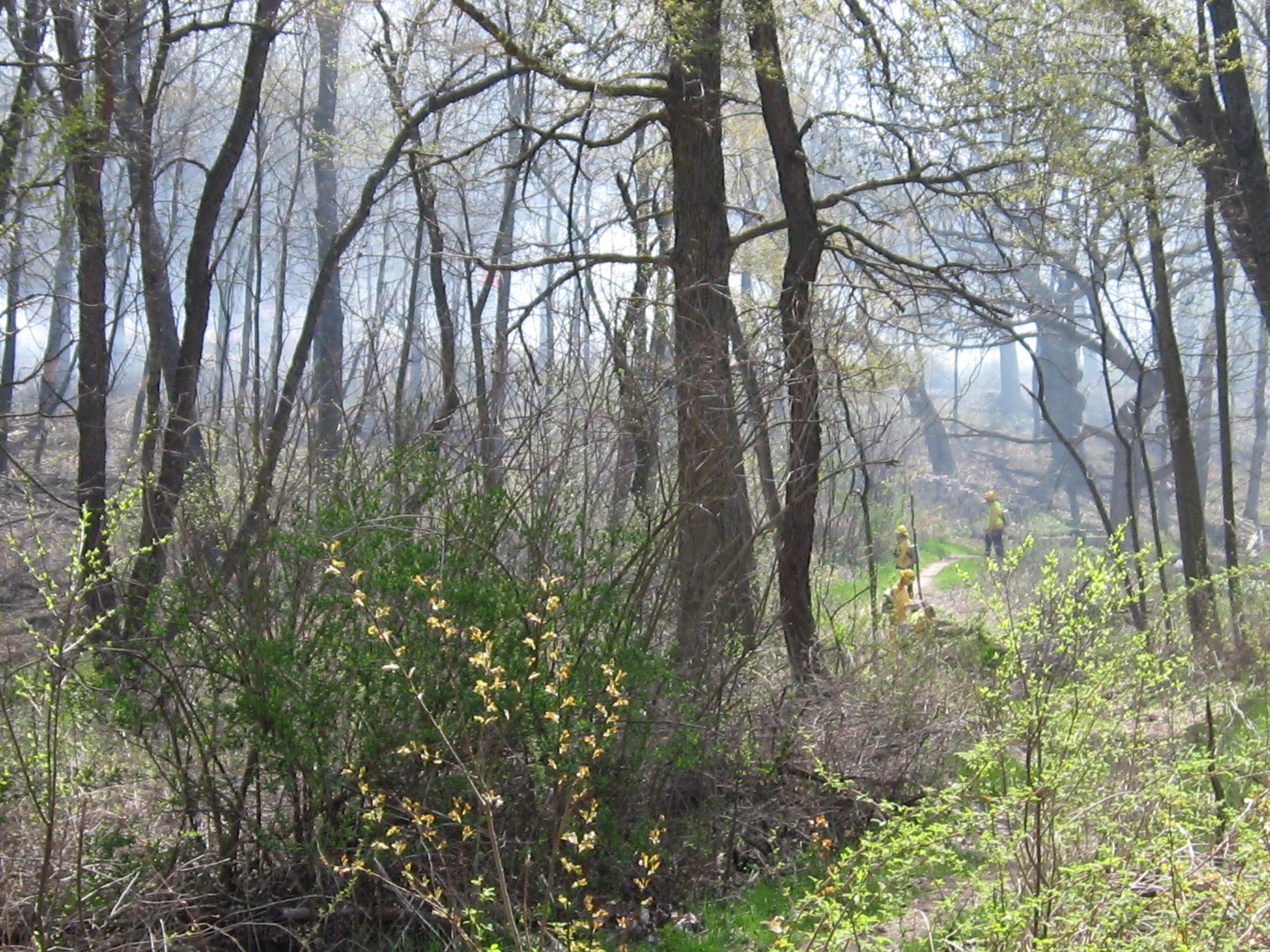
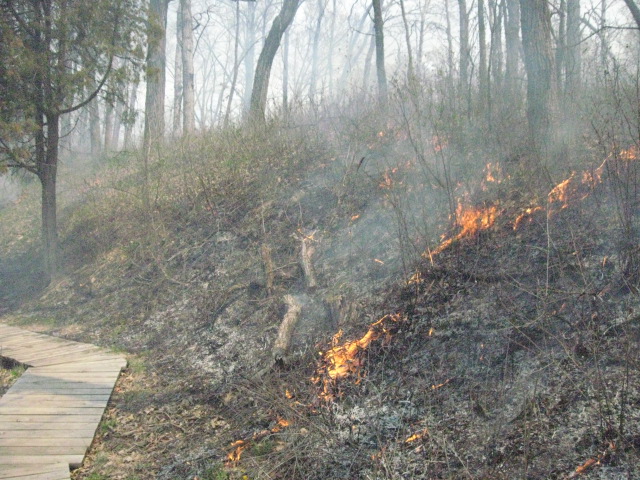
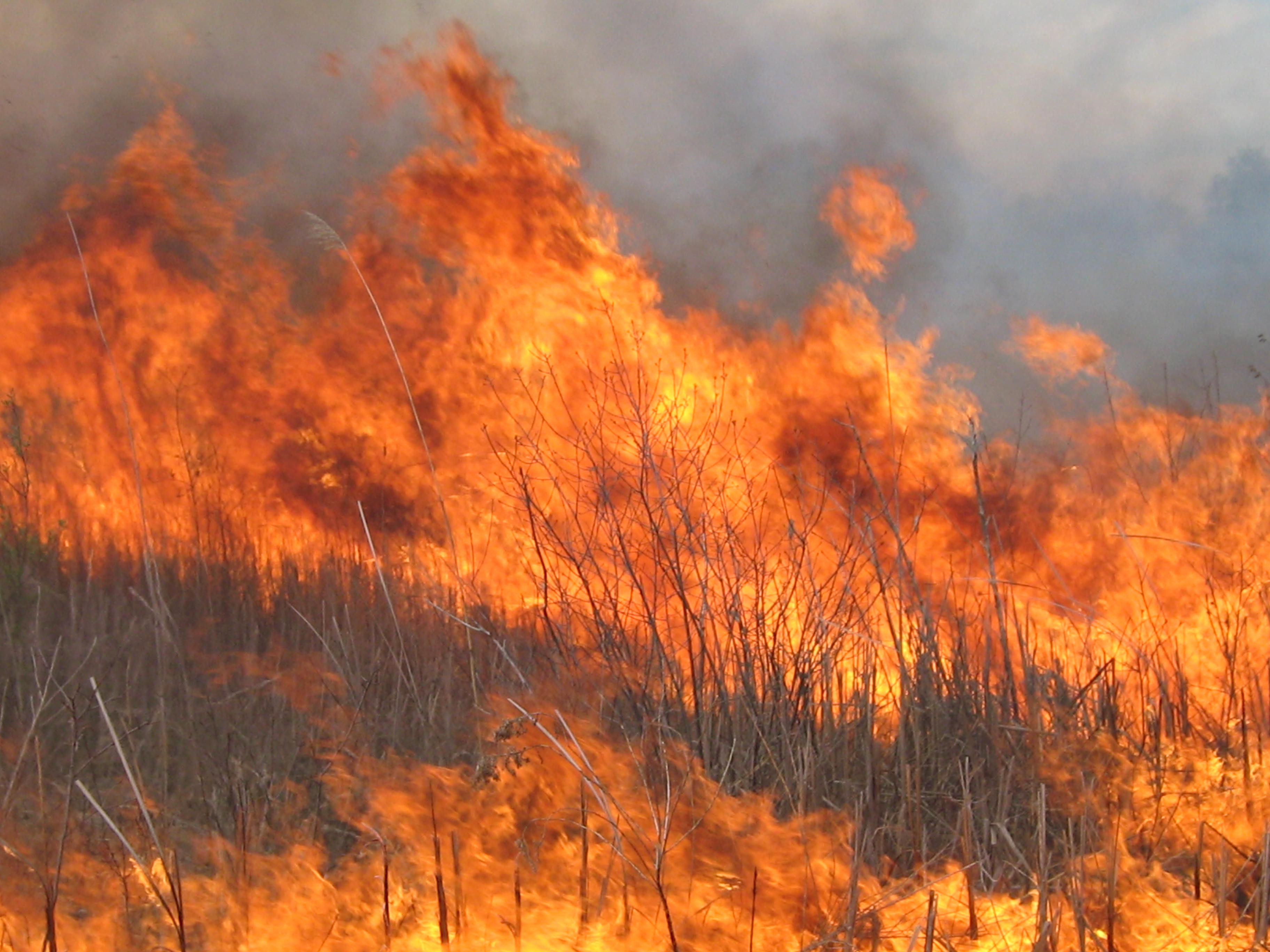
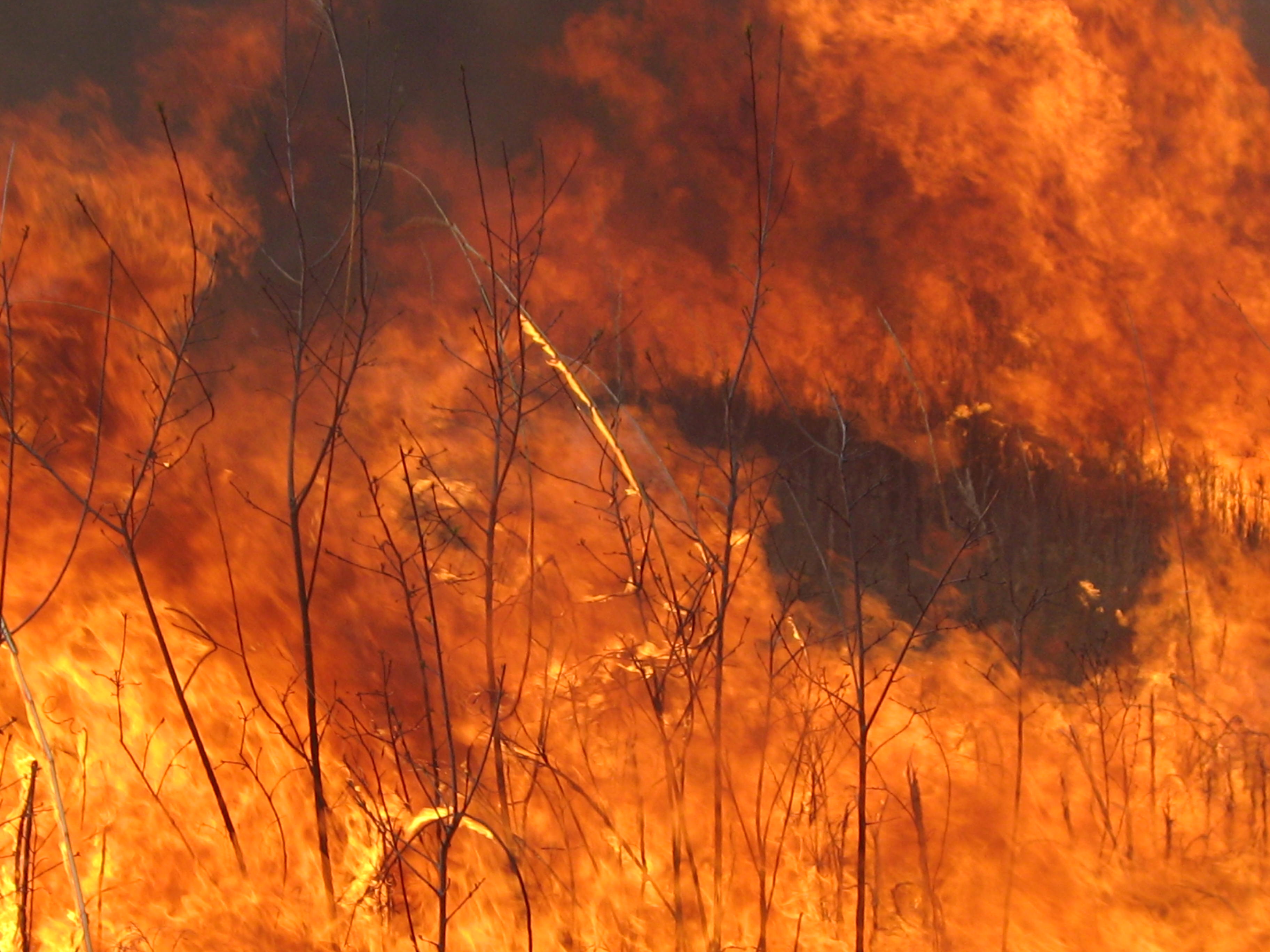
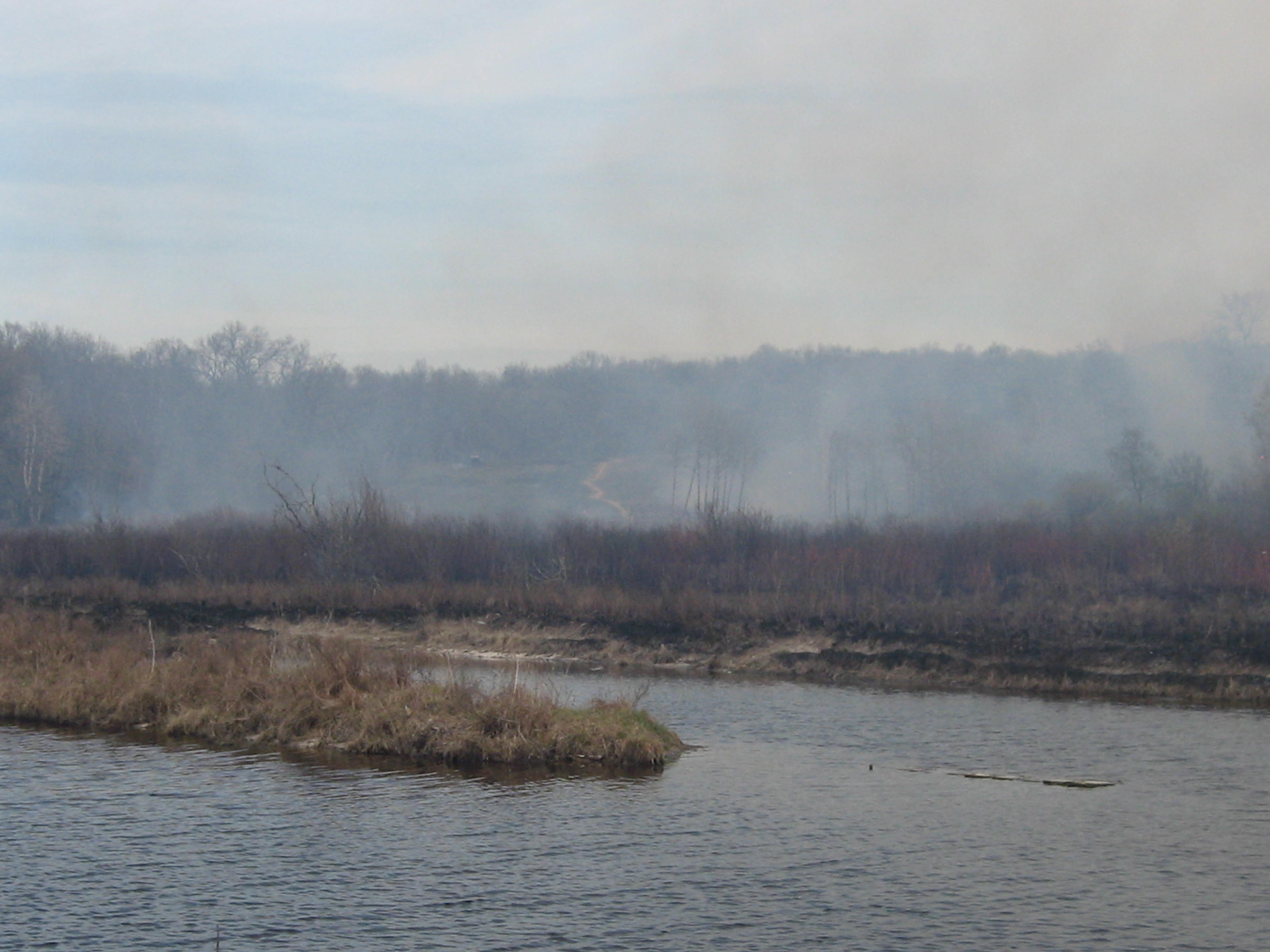
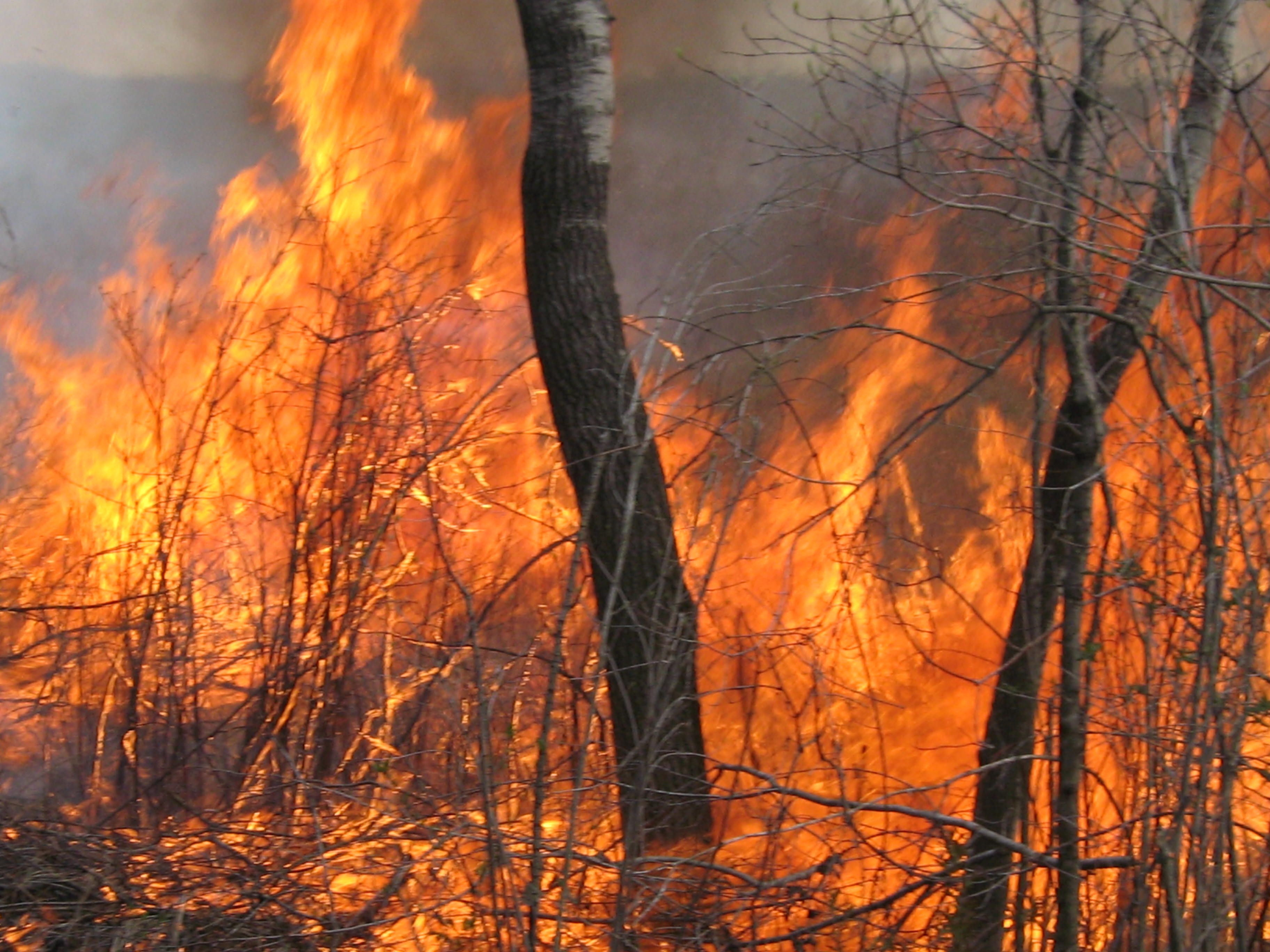
I couldn’t leave. Everyone was gone except for the burn boss, Don Dane, who would maintain an all-night vigil. The sun had set and it was a moonless night. I walked the cut-off trail in the dark for the first time; my path illuminated by glowing snags and the embers from numerous brush piles. What a day it had been! We burned the Scuppernong and I wanted to savor the feeling, the smells, the smoke, the trees, and the night sky.
The day, May 6, began as the forces gathered at Forest Headquarters in front of the maintenance shop.
Paul Sandgren and Don Dane discussing plans with the lieutenant from the Eagle Fire Dept.
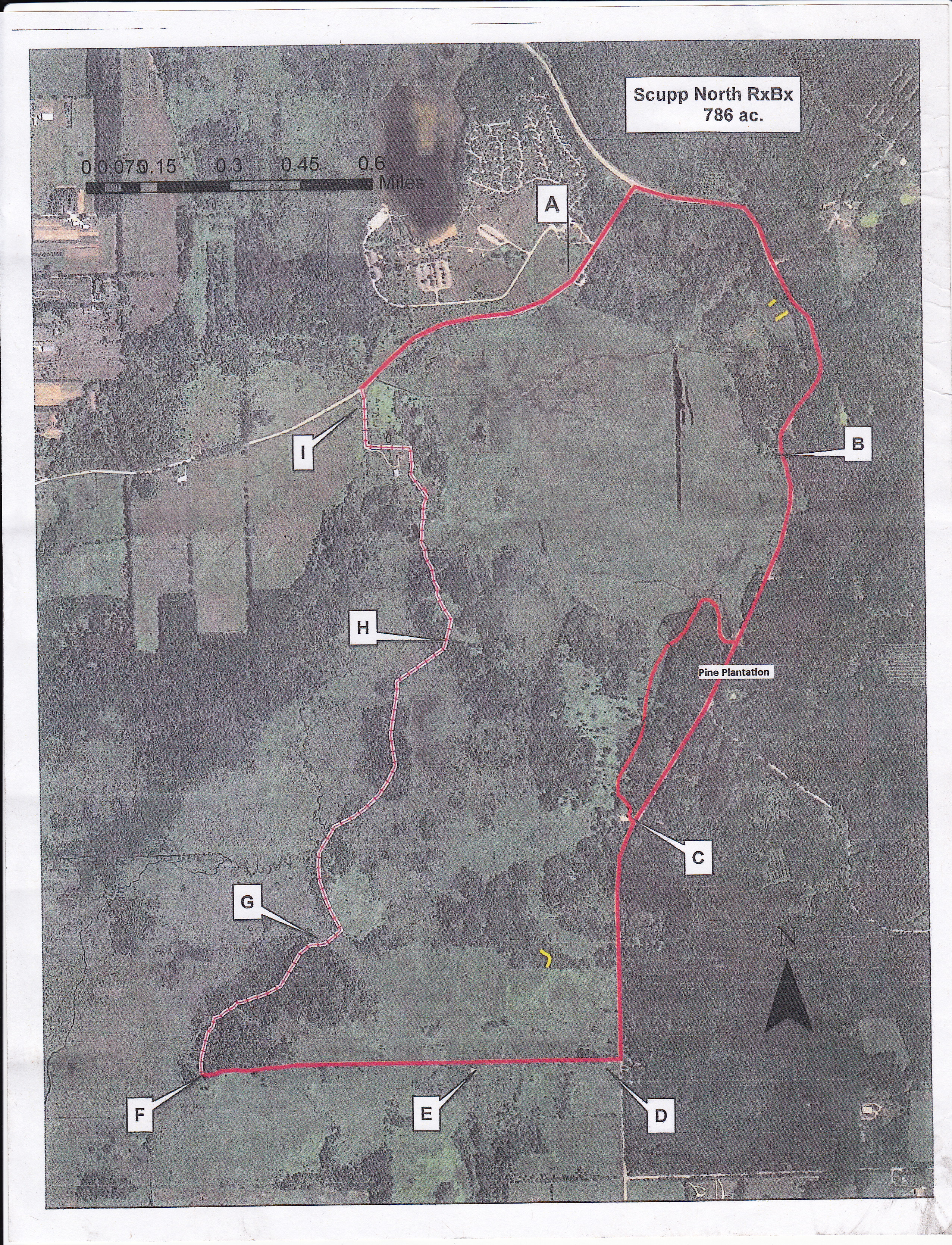
The excitement was building as Don prepared to explain the plan to burn 786 acres of the Scuppernong.
Refer to the plan below as you listen to Don’s instructions in the following video and notice that Amanda Prange is the one who steps forward when Don asks for a volunteer for a tough assignment. “Go Big” is the trend now for prescribed burns and Don effectively integrated people and equipment from multiple sources to implement his carefully conceived burn plan.
Lindsay and I were assigned to line boss Paul Sandgren’s team along with IAT trail boss Pat Witkowski, DNR sheriff Elias Wilson and Rocky, Dan and Melanie, also from the DNR. Our job was to make sure the fires set at the top of the ridge along Hwy 67 did not jump the trail.
The shifting and variable winds did not conform to the expectations in Don’s plan and Paul and Don decided to light the hillside along Hwy 67 from the bottom up instead of the top down, which was very effective.
I was assigned to help in this task and grabbed the last drip torch. Unfortunately, the seal around the throat of the torch was not good and fuel leaked from the rim in addition to coming out the torch nozzle. It is a good thing that Elias was there as he immediately noticed the danger and gently persuaded me to stop. I am prone to momentary lapses of reason and common sense when fixated on a goal, and it is quite likely that I would have immolated myself and ruined the day if Elias had not been there.
We listened to our radios with great interest to the status reports coming in from all quarters and I was impressed by the calm and deliberate way that every issue was handled. Incredibly, “the feds” as Don described them, called just as we were getting under way and tried to shut down the burn. They asserted that the WDNR was using funds from the NAWCA grant to pay for the effort, when in fact this burn had been planned for months before the WDNR was even awarded the grant and no money from the grant was used for the project. Don negotiated with “the feds” and resolved the issue.
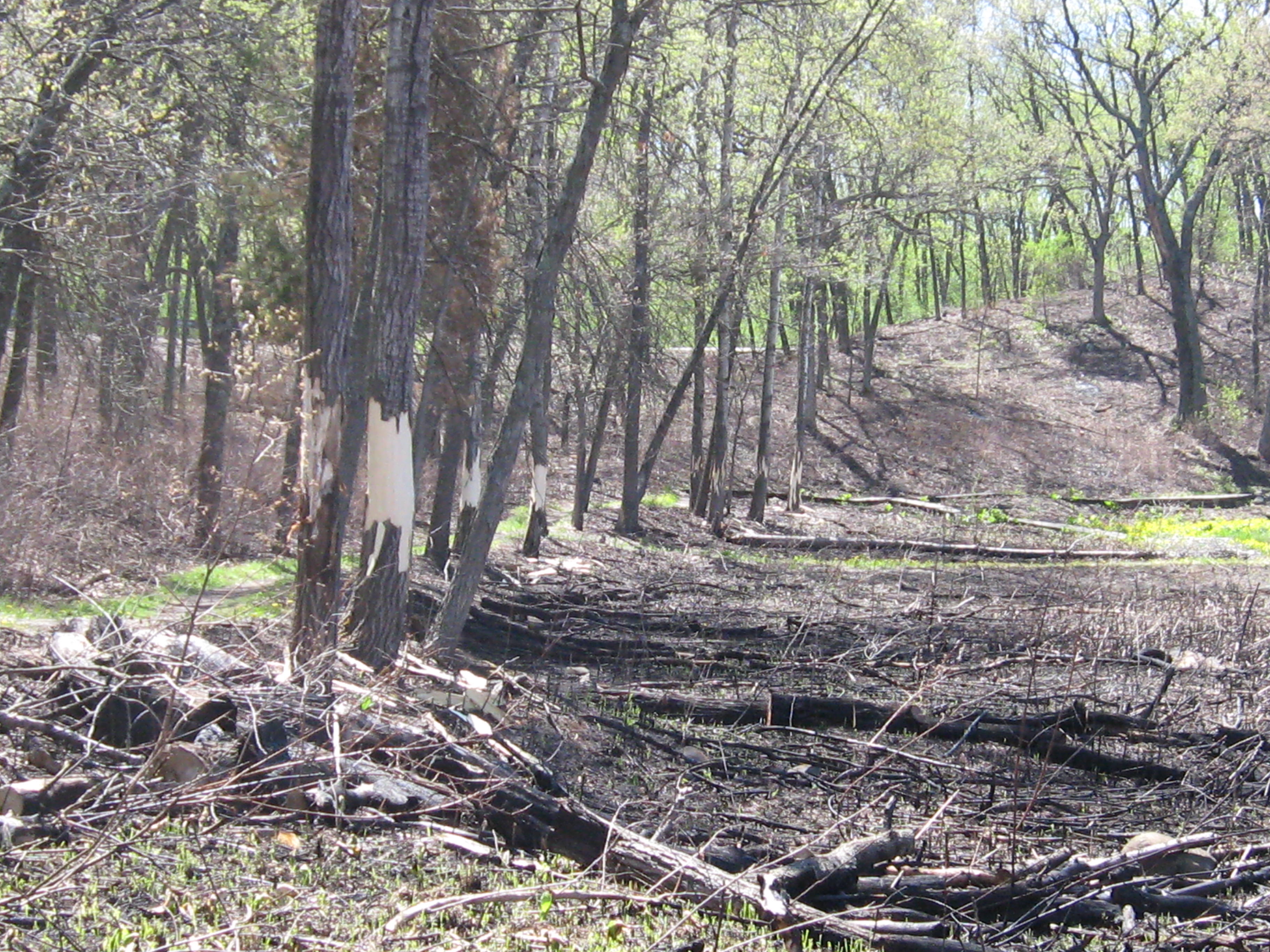
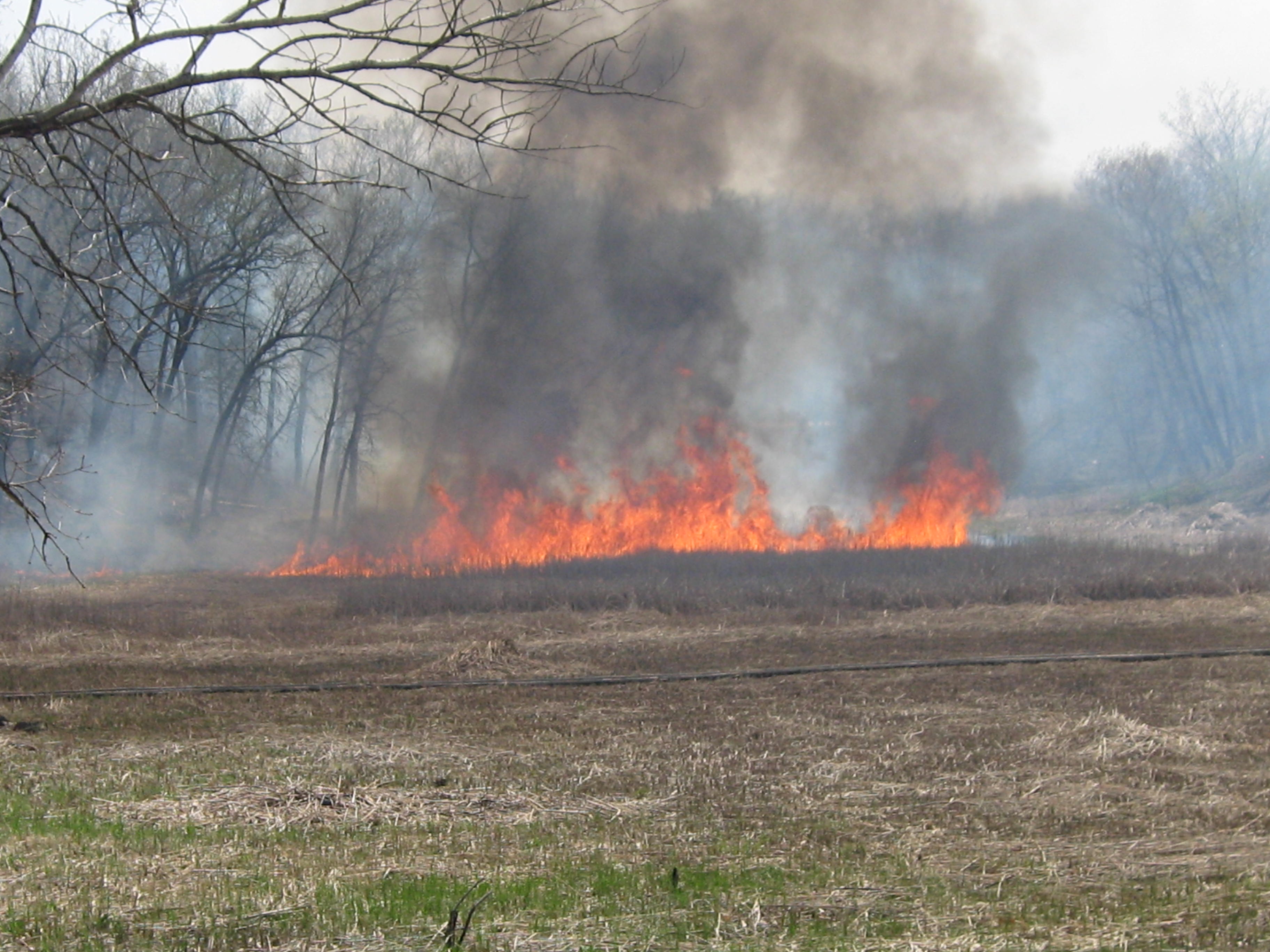
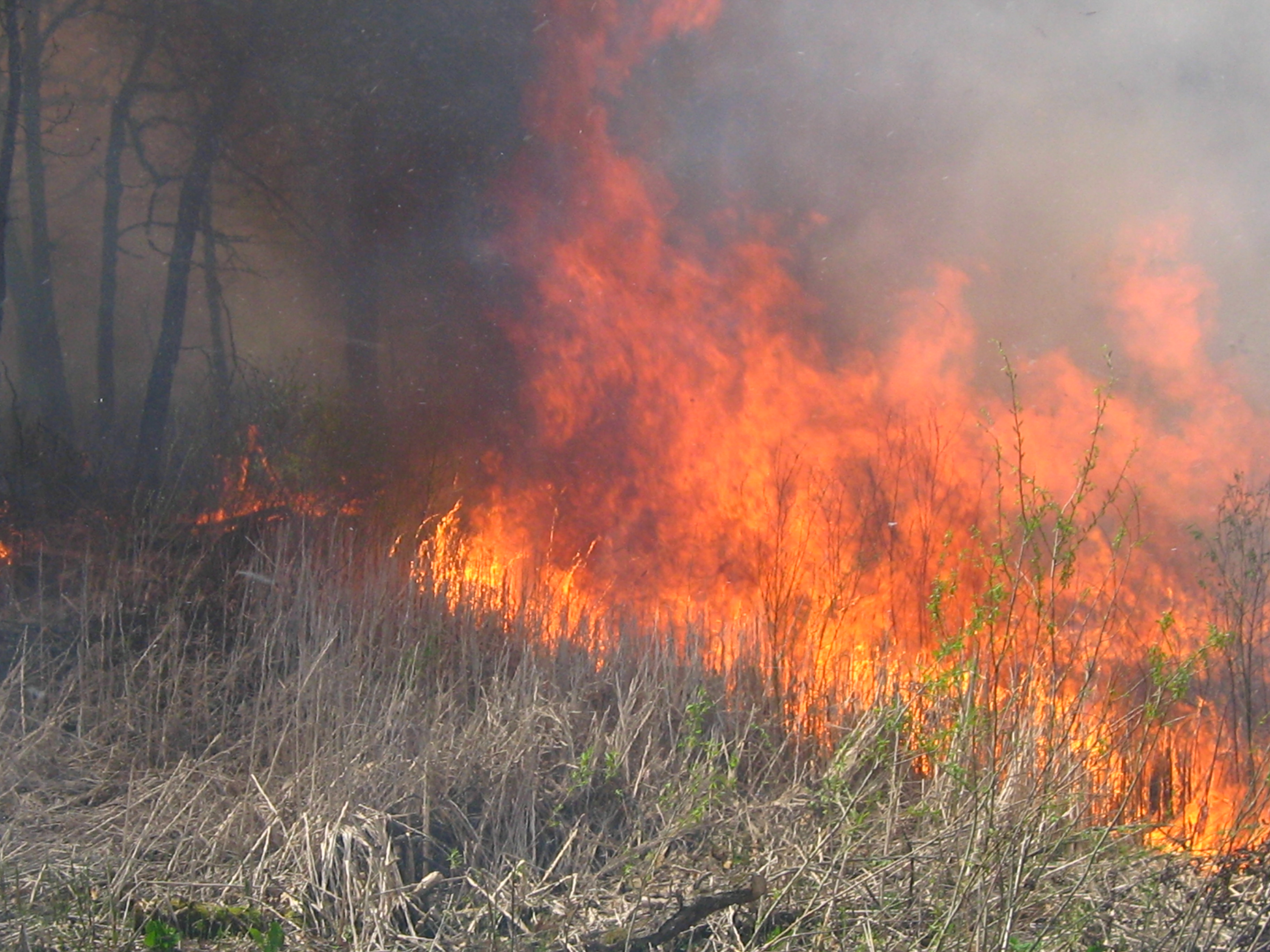
After the hillside was burned we proceeded to light the valley on the east side of the Scuppernong River. Check out this head fire and notice that it is running from south to north.
We took a very short break for lunch and lit the west side of Scuppernong River. I had a good working torch by now and walked along the west edge of the river igniting an incredible head fire that ran to the tree line on the west bank of the bowl that used to form the lower pond.
All the burn teams were making great progress and we heard reports of all the burn lines being “tied in”. The perimeter was secured and the teams began pushing head fires through the interior of the burn unit. I walked along the north side of the river, where it makes its turn west from the old barn site, taking soakers in both boots as I lit the bank of the river all the way to the bridge where the stream gaging station is. The winds where blowing from the south and this line of fire moved aggressively to the north jumping the cut-off trail.
Lindsay moved into the black behind the line of fire and put out flames in a huge oak tree that is laying sideways around 10-12′ off the ground saving this interesting landmark. Paul Sandgren sent me over to light the area on the west side of the marl pits on both the north and south sides of the river. The backing fires lit on the west side of the burn unit were creeping east and the time was ripe to drive a head fire towards them. I had just leveraged a south wind to light the north side of the Scuppernong River and now, out in the open, I had a strong east north-east wind behind me. When I got to the marl pit bridge I found the southeast corner on fire and had to dip my water bottle in the river repeatedly to put it out before any major damage was done. As I walked south along the west side of the marl pits, I lit what soon turned into a raging head fire. My escape route ahead of me was to simply jump the fire line of the creeping back fire.
Here is a perspective looking northeast from marl pit.
I was able to get a good head fire going on the north side of the river as well and we tried to run it as far as we could along the south side of the trail leading back to the parking lot on Hwy ZZ.
I think we burned approximately 95% of the unit, but Don might have a more precise estimate, and, much to my surprise, we lit all of the 50+ brush piles created since the end of the winter burning season.
I am heading out to The Springs tomorrow and I plan to take a lot of “after” pictures to pair up with all of the “before” shots I took yesterday morning before joining the team at forest headquarters.
This was an experience I will never forget. The WDNR team of the Southern Unit of the State Forest led by Superintendent Paul Sandgren, Assistant Superintendent Anne Korman and burn boss, Don Dane, is one of the finest groups of people I have ever had the pleasure to work with.
I stopped at The Springs on my way back from Forest Headquarters; I didn’t want to go home. Wandering the trails in the dark amongst the scattered, glowing fires was pure pleasure. I stopped at one of the bogs to capture the sound of the frogs with the glowing embers of a brush pile in front of me.
I arrived at the DNR parking area at ZZ & 67 above the Hotel Spring for a sympathetically synchronous rendezvous with Don Dane and we celebrated the success of the burn. There was a lot of mop up work waiting for his team today. I hope you got some sleep Don.
It was Ash Wednesday yesterday as Rich Csavoy and I donned our priestly garb (yellow, fire resistant jumpsuits) and offered 22 brush piles as burnt offerings to the sun god; the dominant visual and physical reminder of the work of The Creator.
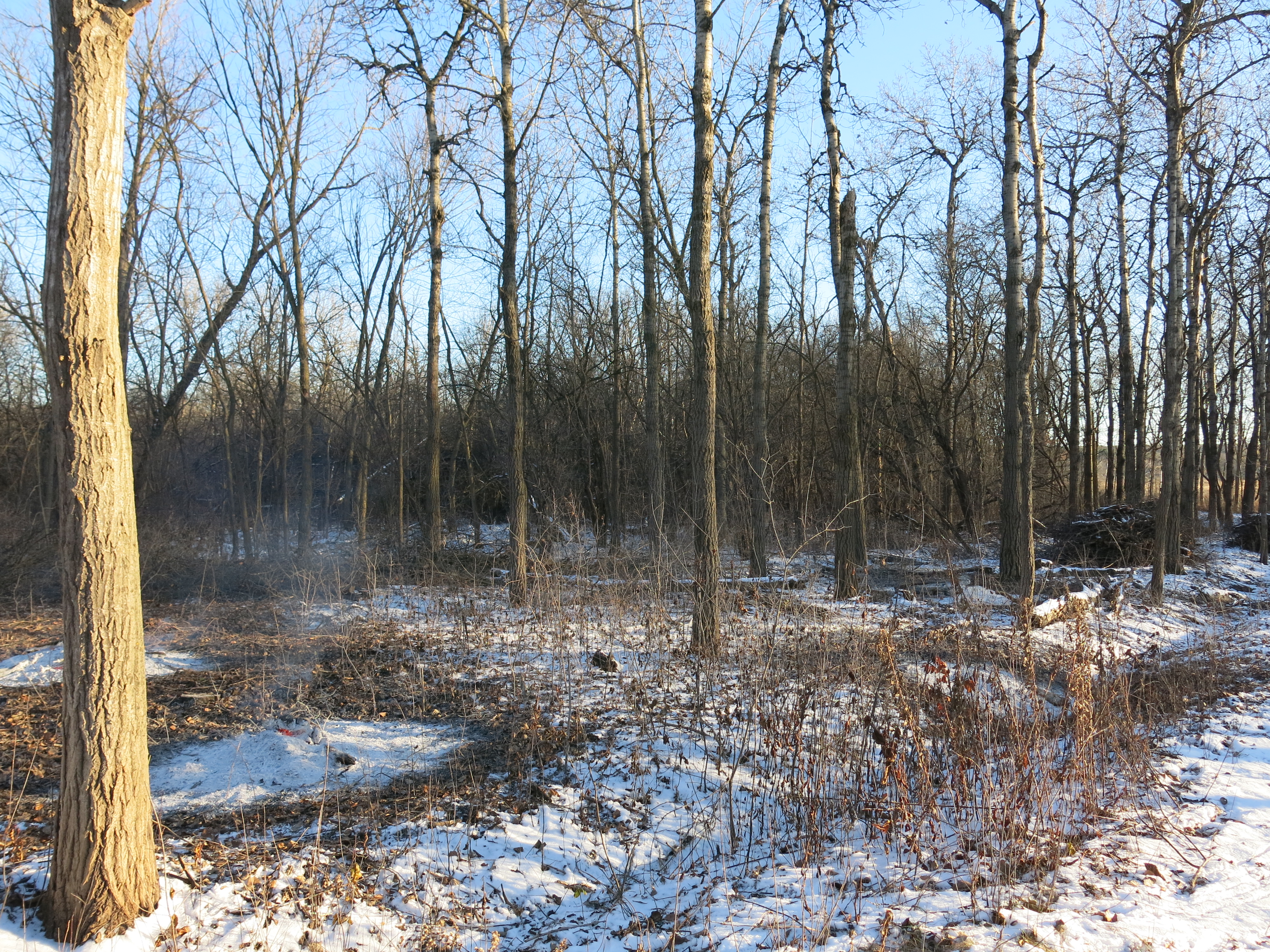
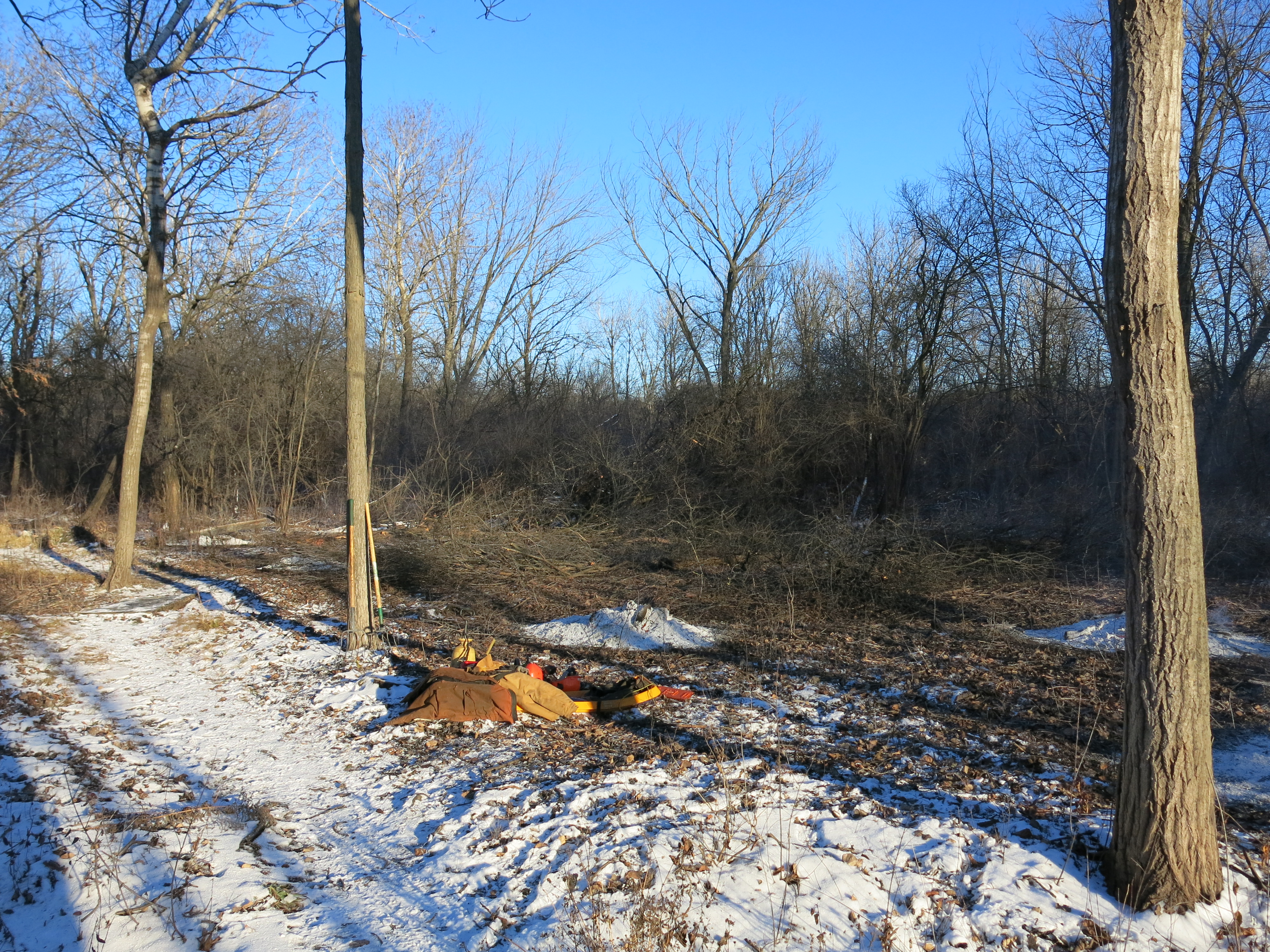
Here are some before shots from the Temple of the Springs taken near the Hotel and Emerald Springs altars.
I was really happy to see Rich coming down the trail just as I was lighting the first couple of piles. We almost had to call tech support to figure out how to attach the suspension system on the inside of his brand new fire helmet. Thanks again to the Kettle Moraine Natural History Association for funding our gear!
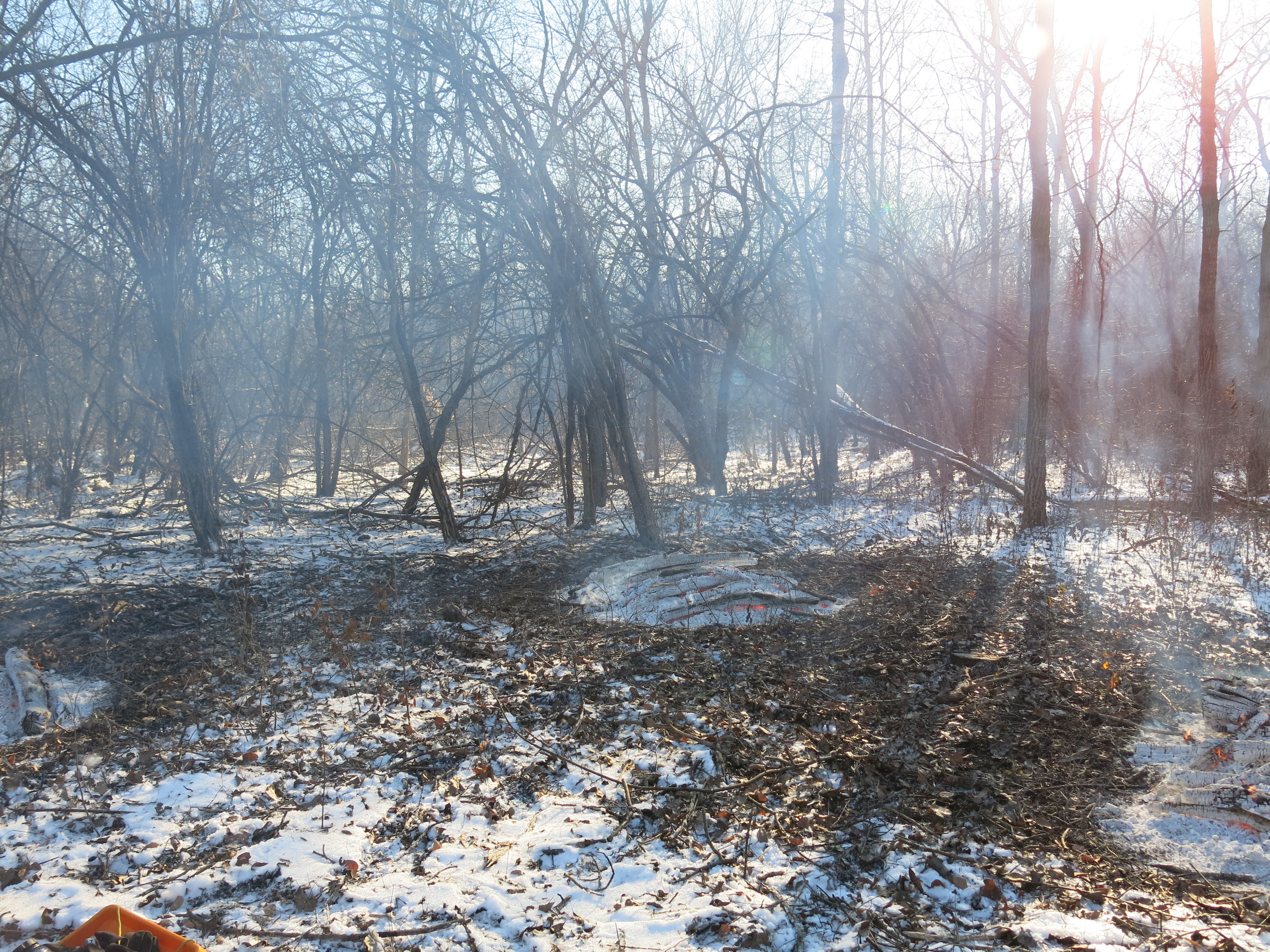
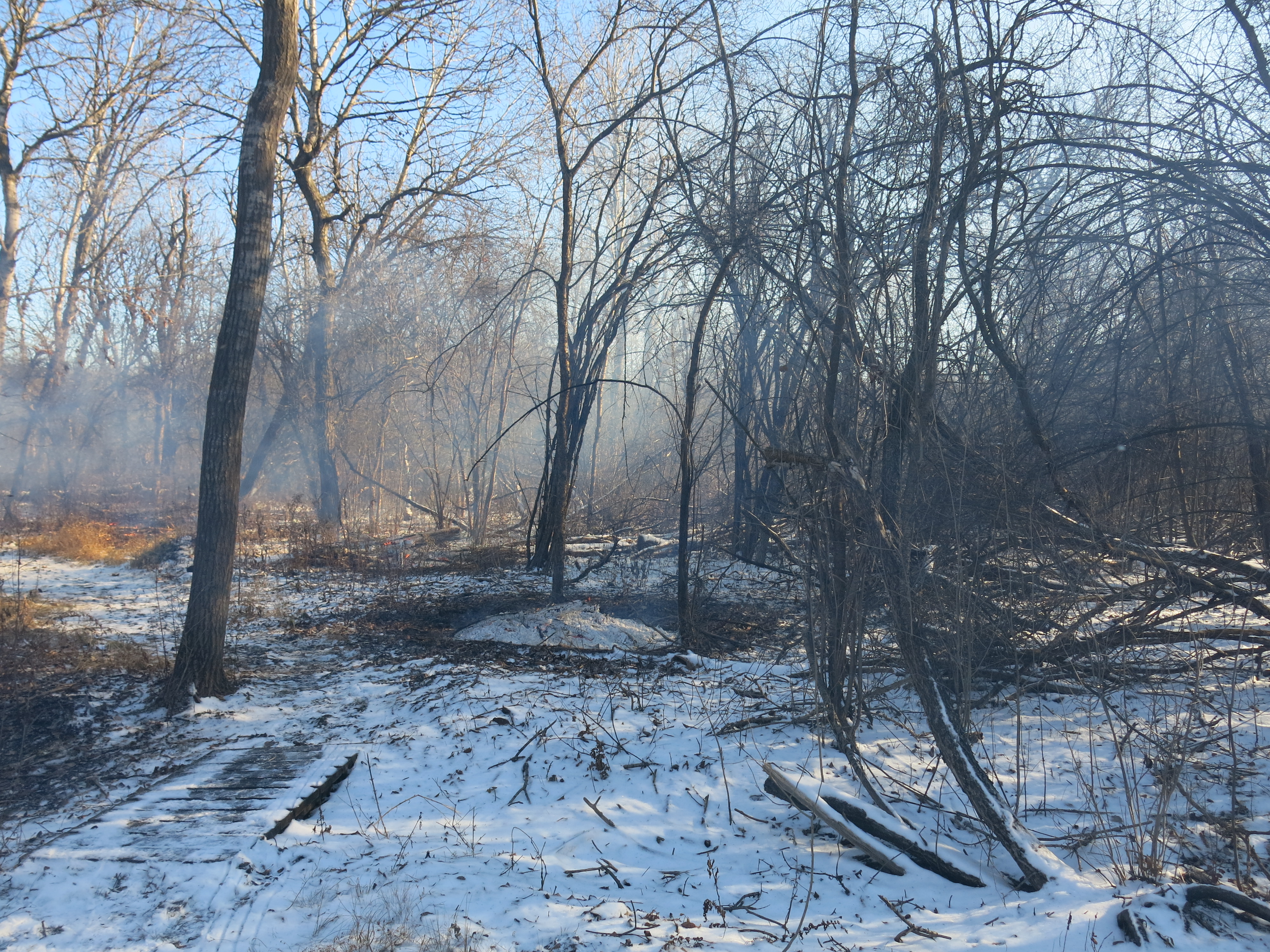
The snow cover was a little sparse and we had to keep a close eye on the perimeters of the fire rings. There were a few cases were the fires began to escape, but, thanks to Rich’s help, we are able to easily contain them. I have had sporadic problems with my torch characterized by extremely low btu output and it happened again yesterday. I resolved it by tightening one of the joints in the torch hose and now I think I finally understand how to keep the torch working perfectly. Here are some after shots.
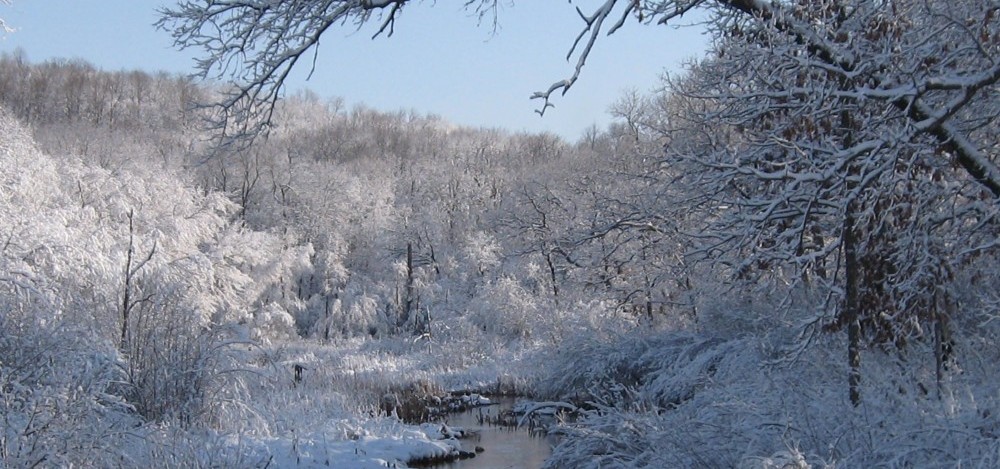
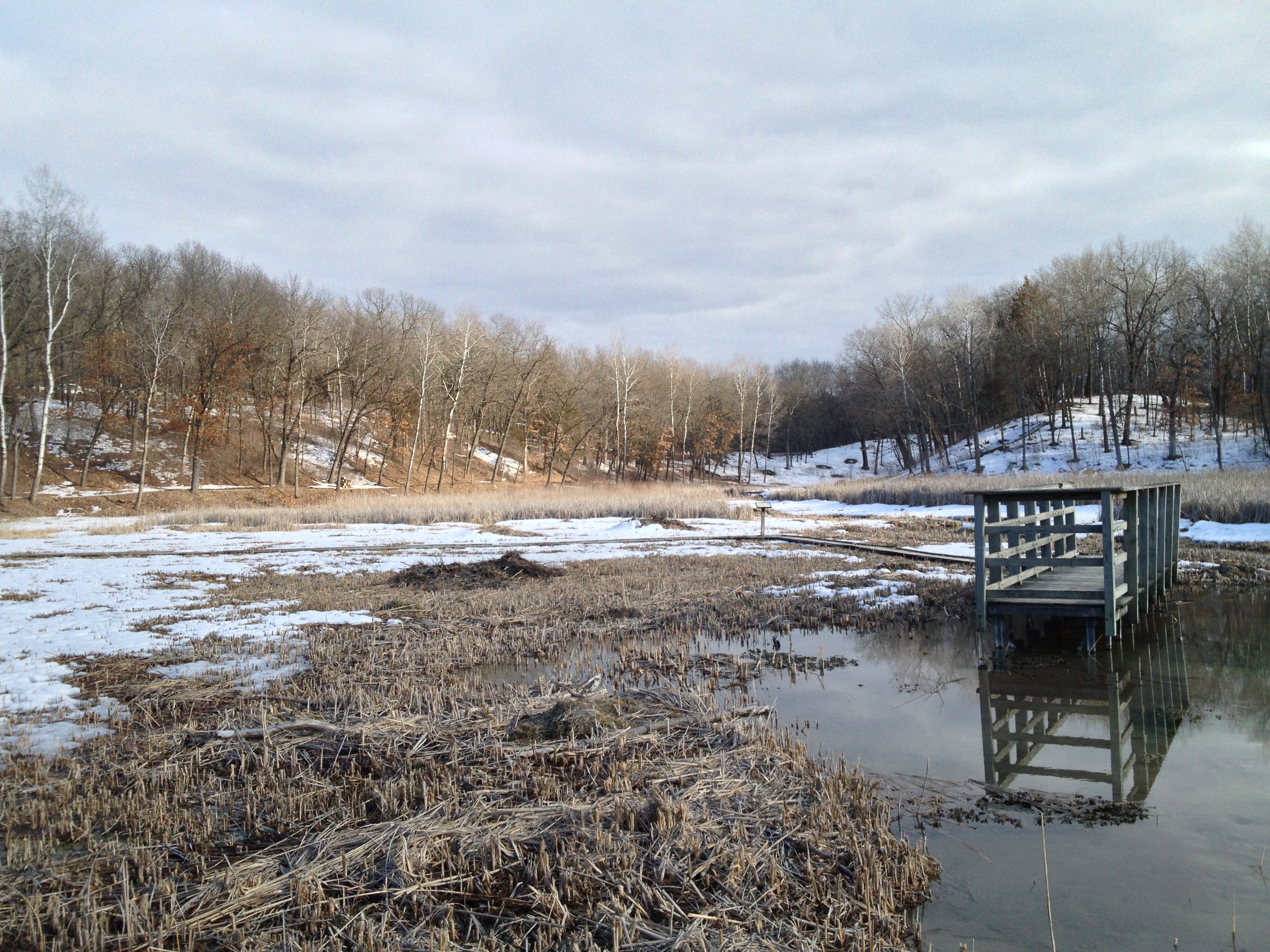
After a cloudy day, bright blue skies moved in from the northeast; a welcome invitation to take a few late afternoon pictures of the Springs and a sure sign that The Creator accepted our offerings.
The Emerald Springs.
The Hillside Springs.
The Scuppernong Spring.
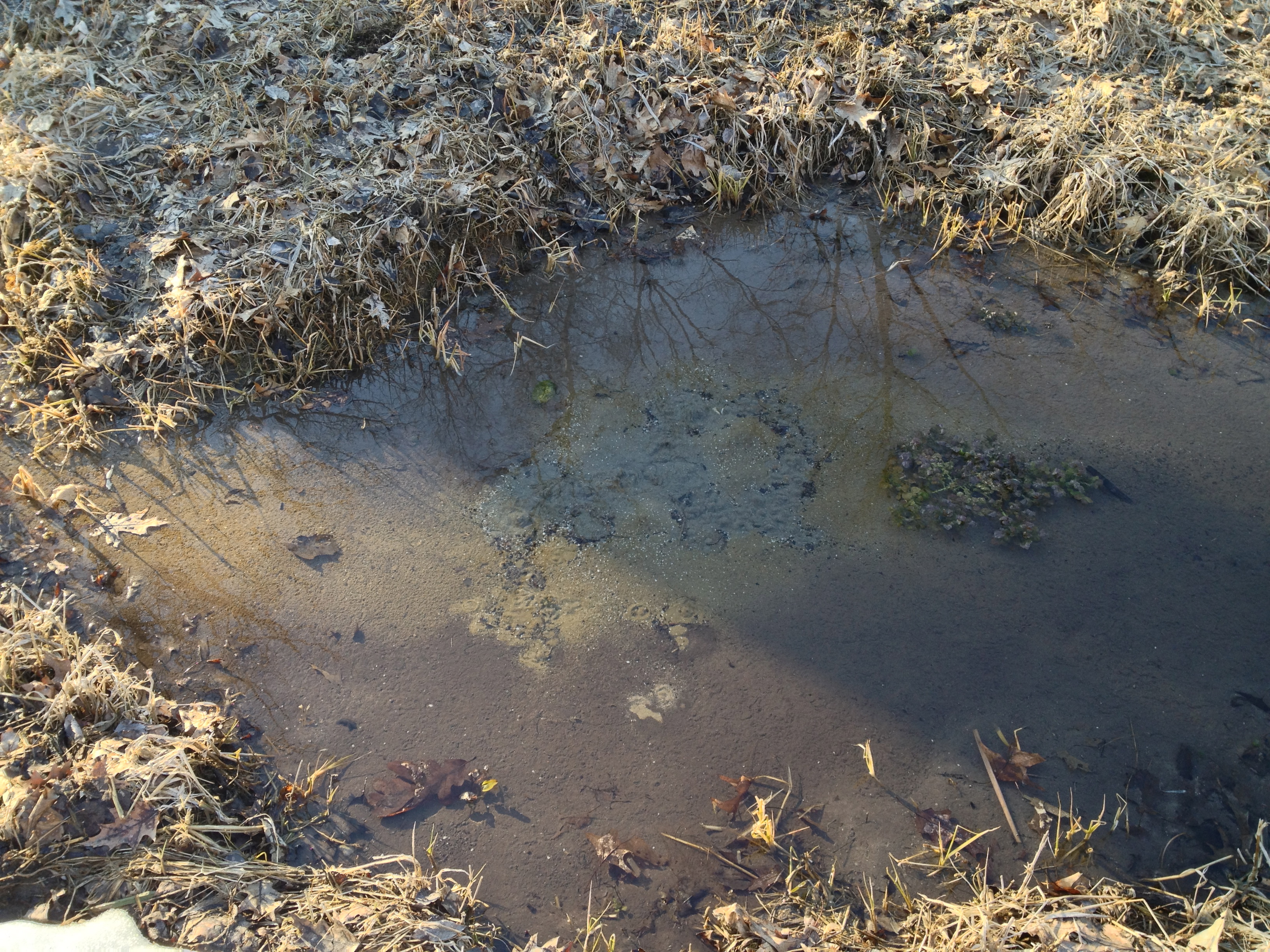
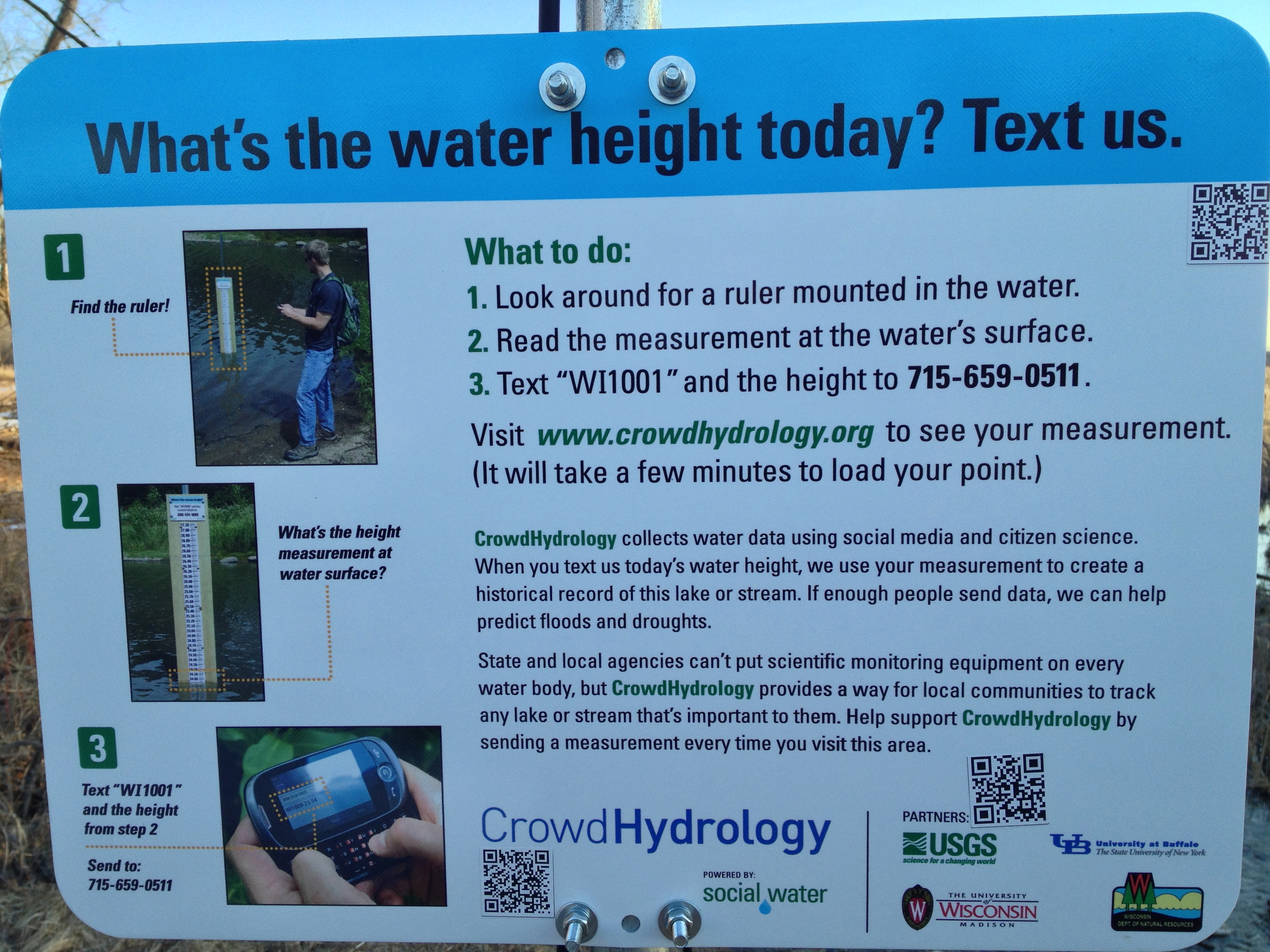
There is a new program via which we can text in the current water level at the gaging station. I was too burnt to try it out.
Hi, and thanks again for following our adventures at the Scuppernong Springs Nature Trail.
We have been waiting for the right conditions to burn the brush piles at the south end of the trail in the area around the Scuppernong Spring and the Hillside Springs and today was the perfect day. Not only was the wind right and the snow cover right but our righteous friends Carl Baumann and Steve Brasch were able to join Lindsay and I. Although we’ve had a lot of snow and rain lately, the piles were bare and pretty dry and they readily took the fire.
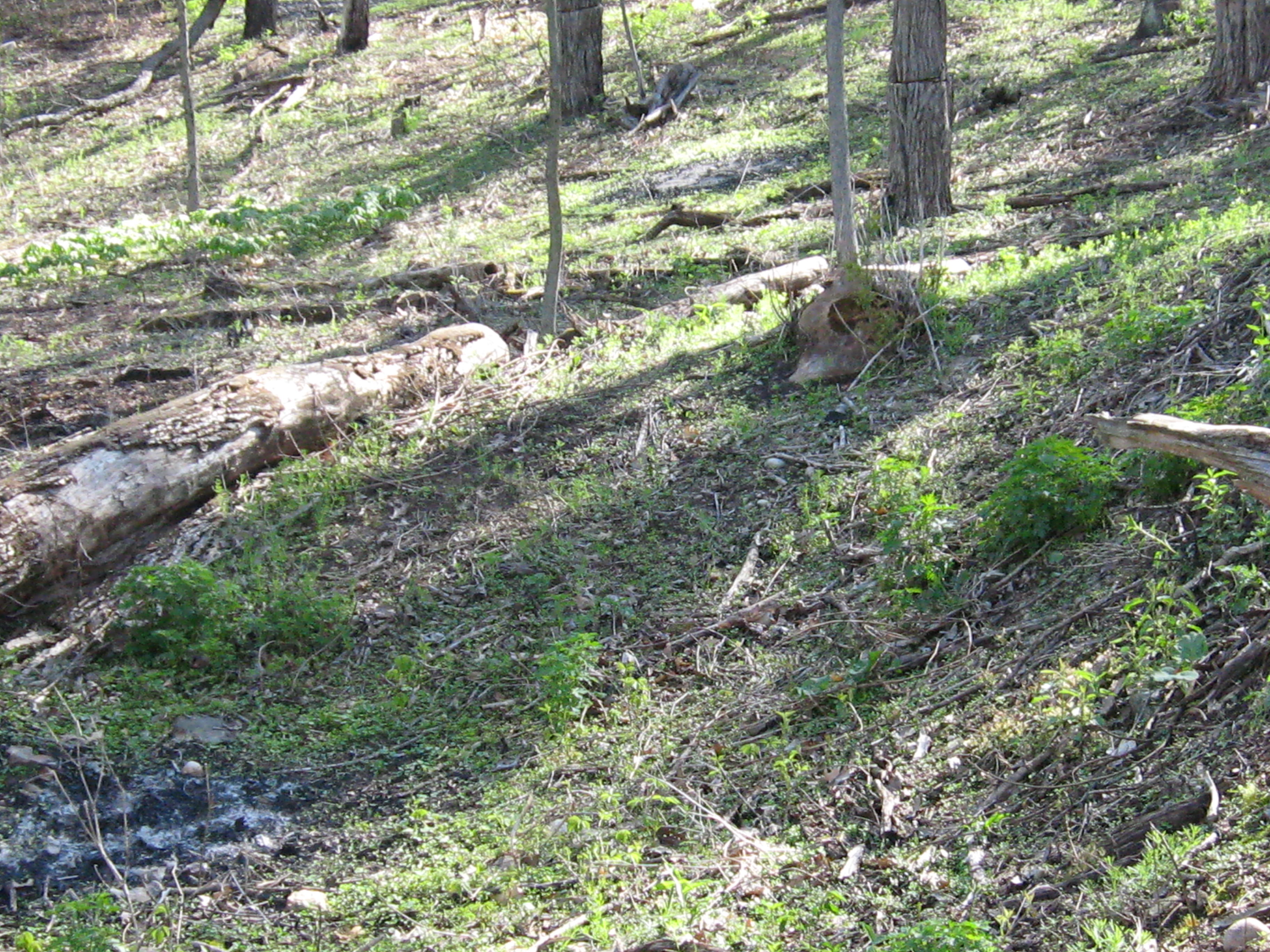
Here is the scene before we started burning.
Carl and Steve followed behind Lindsay and I using leaf blowers to fan the flames we ignited, which really got the piles going and saved a lot of propane.
Here is the crew (Steve, Lindsay, Paul and Carl from left to right).
The winds were pretty swirly down by the piles but as the smoke rose, it was blown away from Hwy 67 by a predominately northeast breeze.
After the 42 fires were “mopped” up, Lindsay, Carl and I took a walk around the trail and we filled Carl in on the details of our plans for the future. It was a splendid day and great fun to work together.
I’ve been looking for a word, an idea, that captures how I feel about finally burning the hundreds of brush piles I left at the Hartland Marsh. Redemption! It looks and feels much better now that most of the piles are gone. You can see the lay of the land more clearly; the view of the horizon through the trees. The scale of the big oak trees is more evident when your eye can follow their lines from the earth to the sky without being obscured by piles of brush at the trunk.
On Monday, February 18th, the Village of Hartland DPW crew (Dave, Jake, Josh, Tom) took advantage of the southerly winds to burn the most problematic brush piles right along Cottonwood Ave on the hillside just north of the gazebo. Yesterday they helped Rich Csavoy, who volunteers with me at the Scuppernong Springs, and myself burn the 33 remaining piles on the north side of Parker Island, which is just over the river from the Parker Brothers home site (this property is now owned by the Waukesha County Land Conservancy). There are less than 30 piles to burn on Village land to complete the cleanup!
Here is a video taken yesterday before we began burning piles on the north side of Parker Island.
And a few pictures.
I must confess I didn’t have a fire in my belly to get to work yesterday and, when confronted with the cold temperature and snowy, ice-encrusted piles, I seriously considered bailing out. But I didn’t, and shortly thereafter Rich, Jake, Josh and Tom arrived to boost my energy and spirits. Here is a video taken after the piles were burned.
Steve Brasch grew up at the Scuppernong Springs. His mother used to drop him off there with his friends in the morning with a promise to pick them up for supper. All day they ran wild; building forts, floating on rafts in the ponds, catching creatures, running, hiding, looking, simply being in the woods. He never lost his love of nature and, armed with a degree, he pursued a career in forestry. Those were the Reagan years and budgets were tight; Steve had to make some tough decisions and leave the forest behind.
Over the years Steve found opportunities to volunteer with many organizations working on land restoration and his passion for the outdoors never flagged. He moved into the Scuppernong neighborhood and, noticing the changes taking place at the Springs, decided to get involved. Lindsay and I really appreciated Steve’s help and camaraderie yesterday as we worked the piles on the cut-off trail. Welcome Steve!
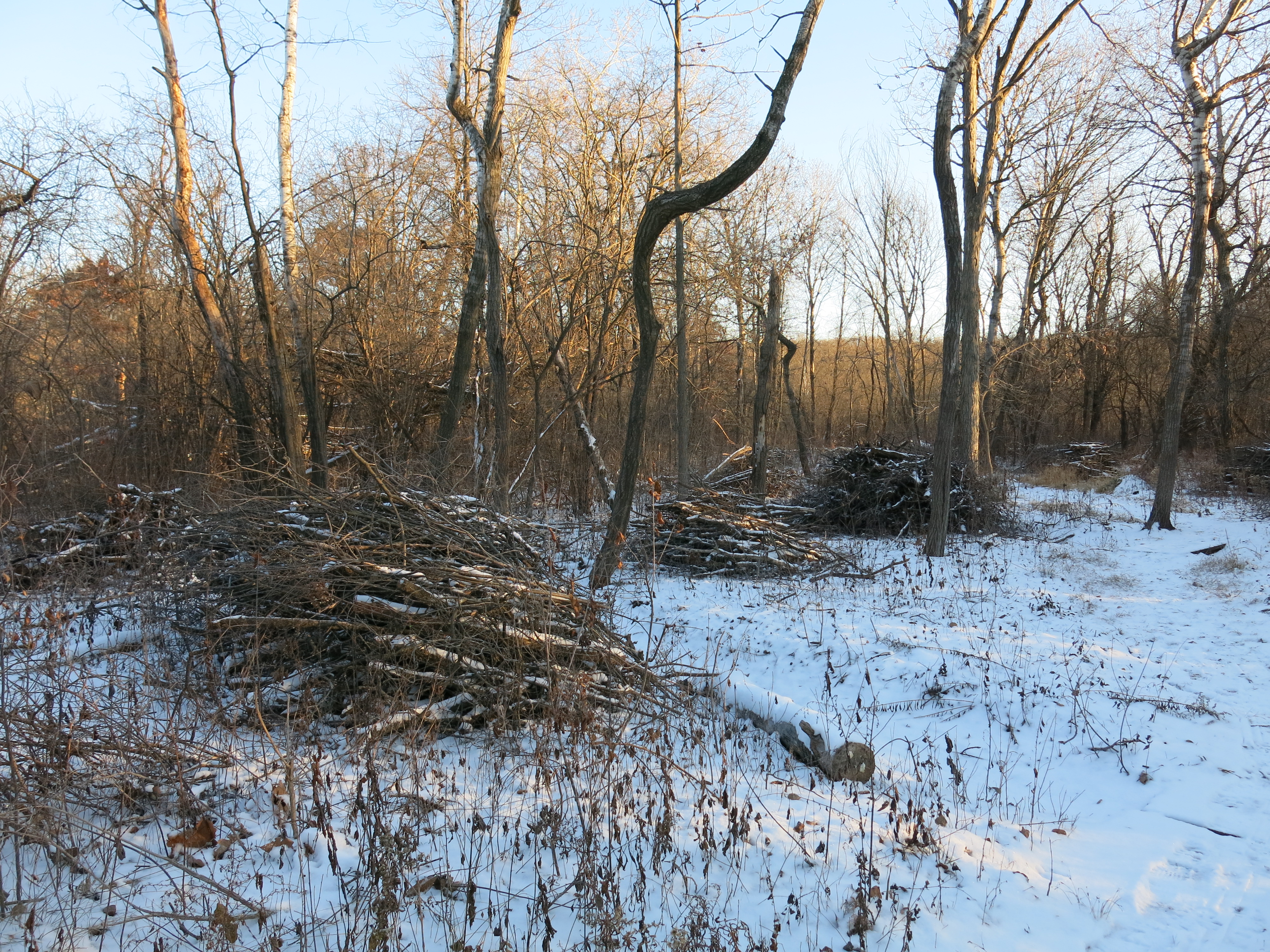
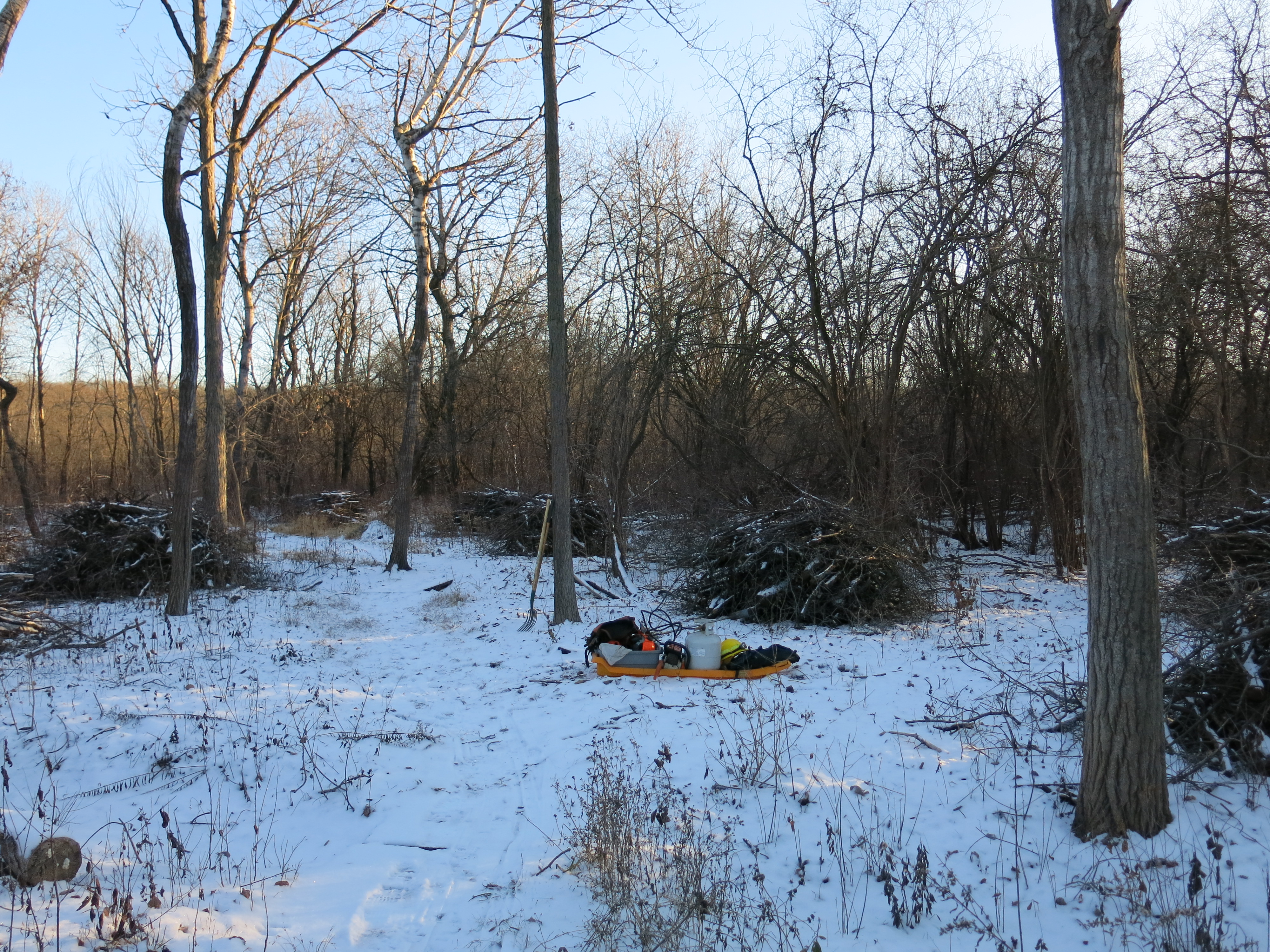
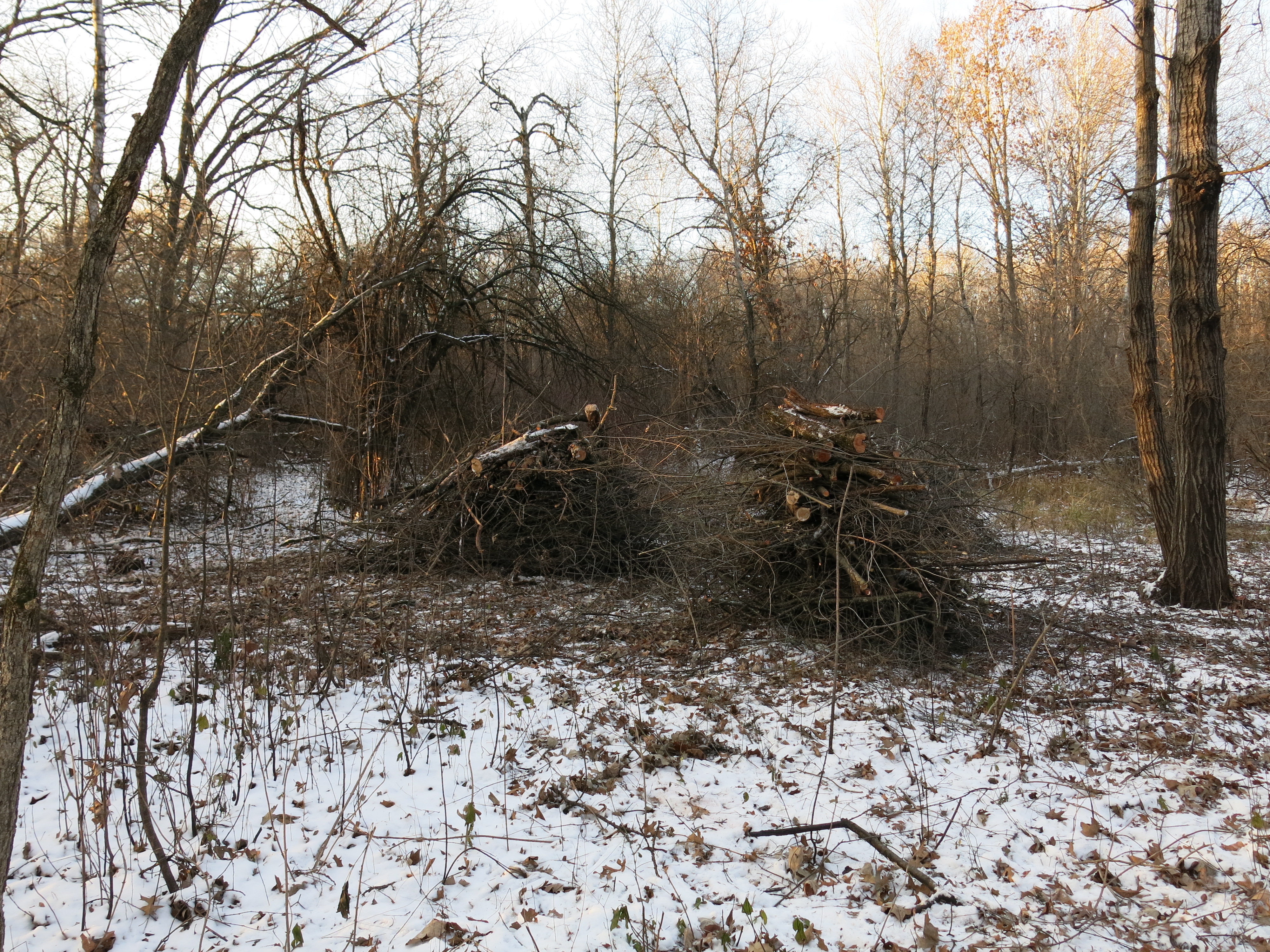
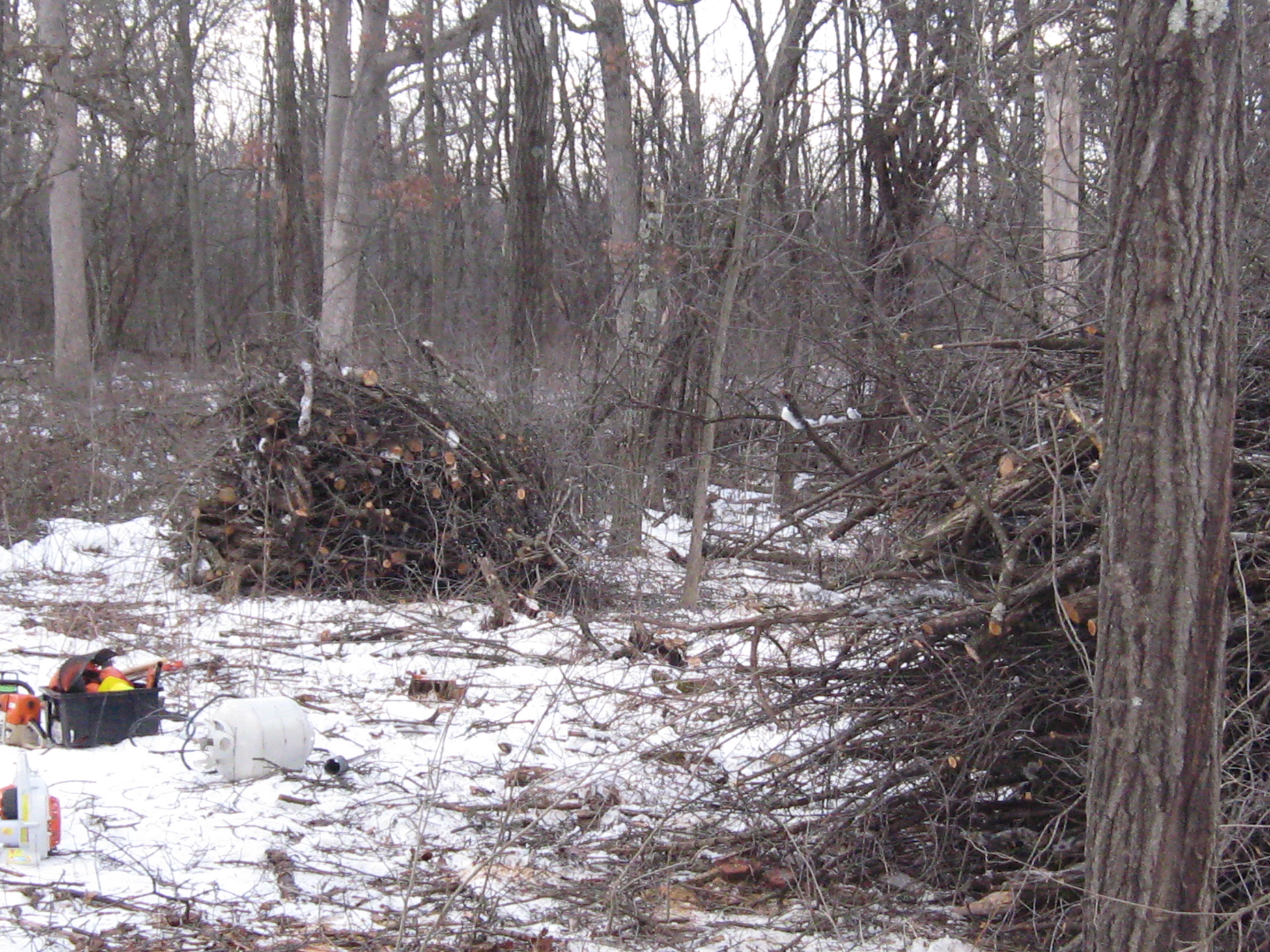
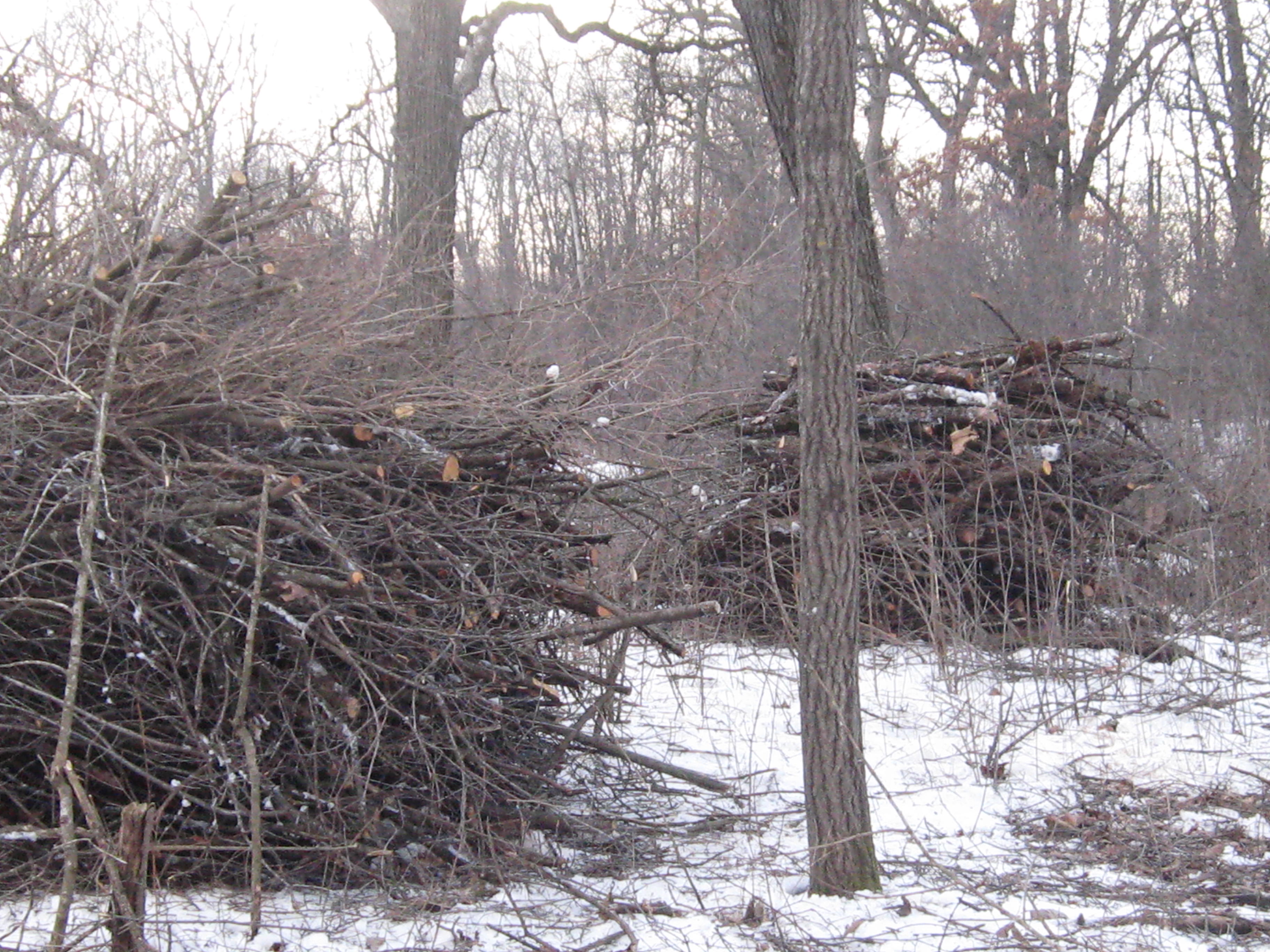
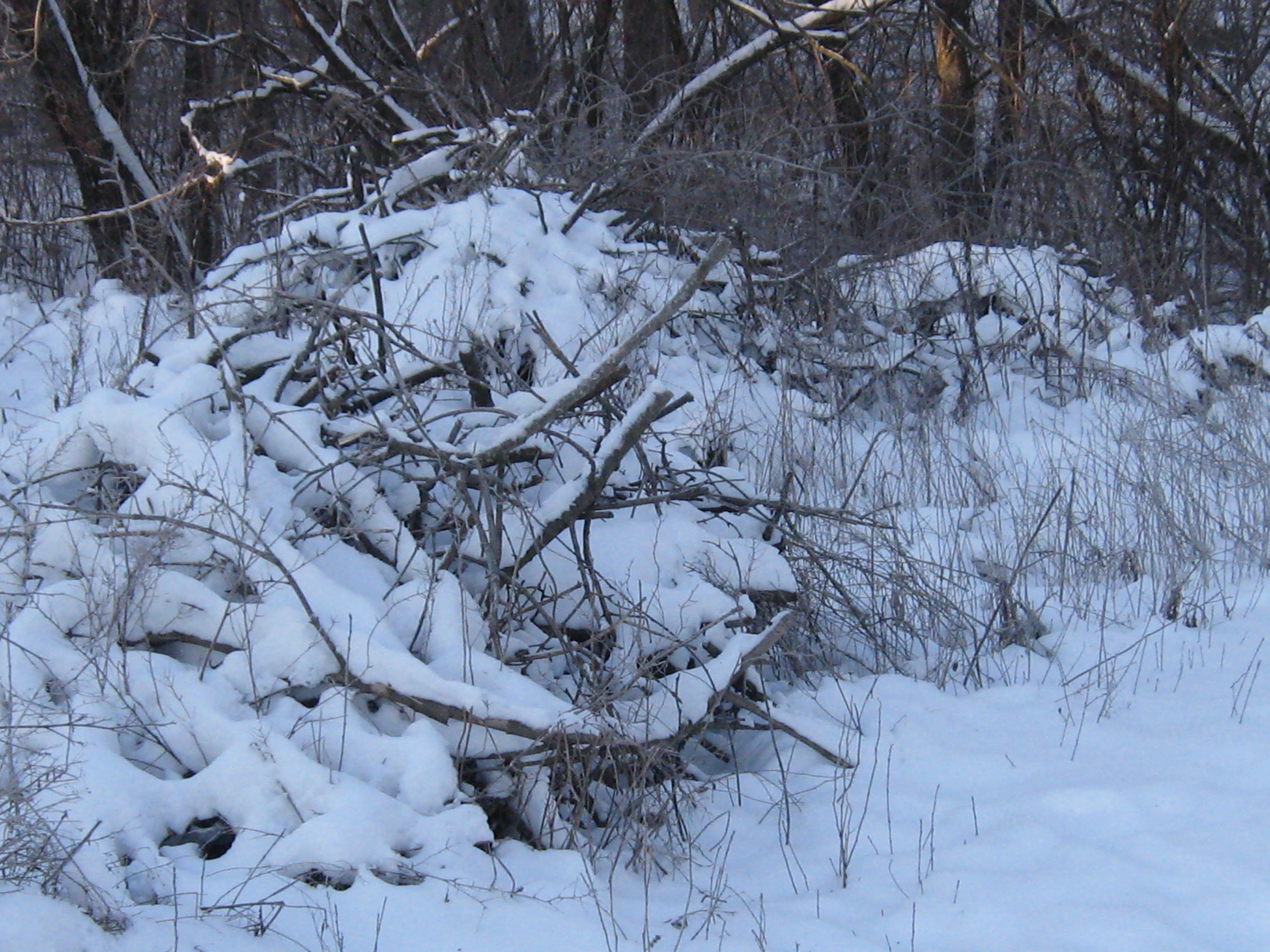
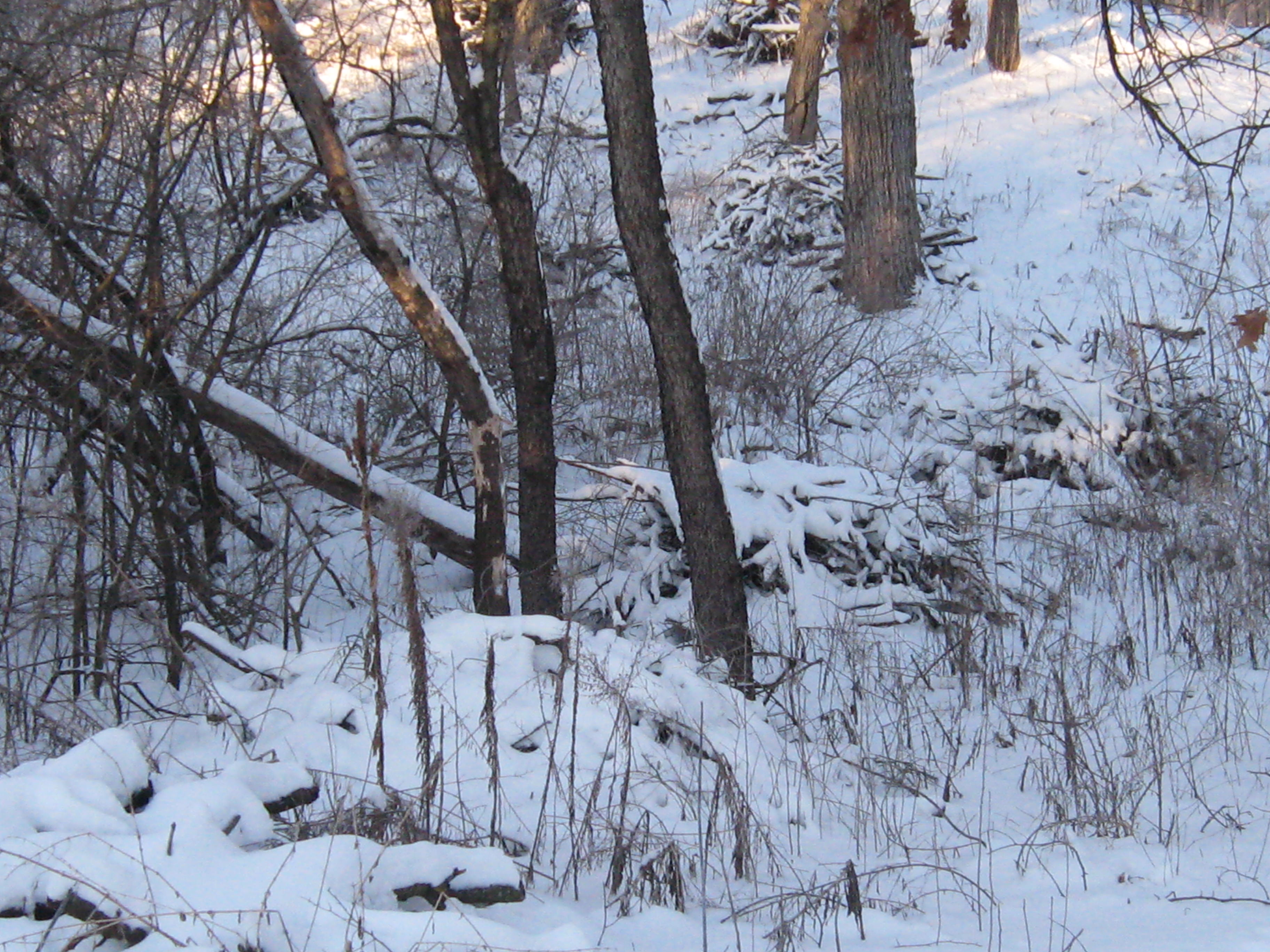
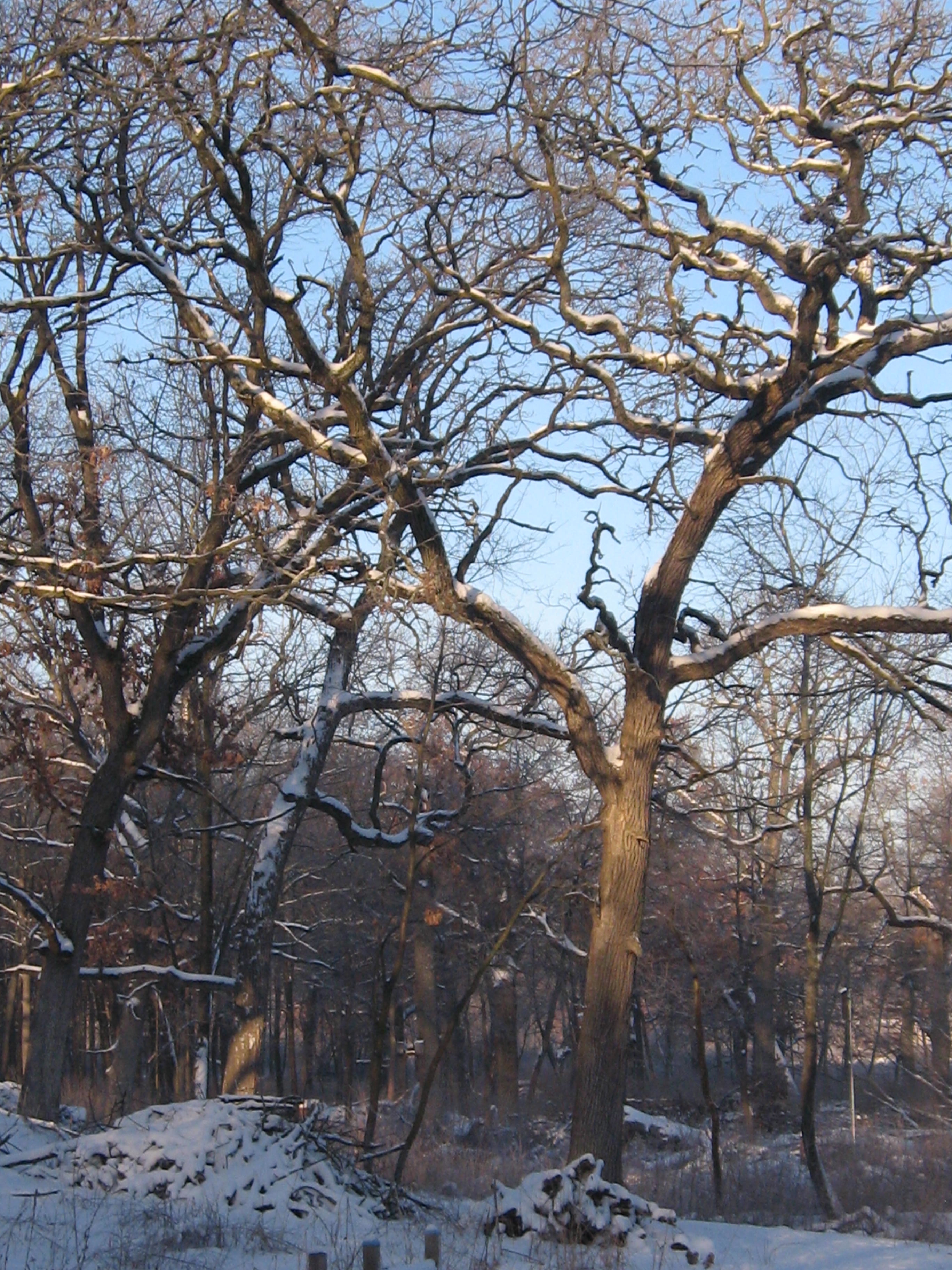
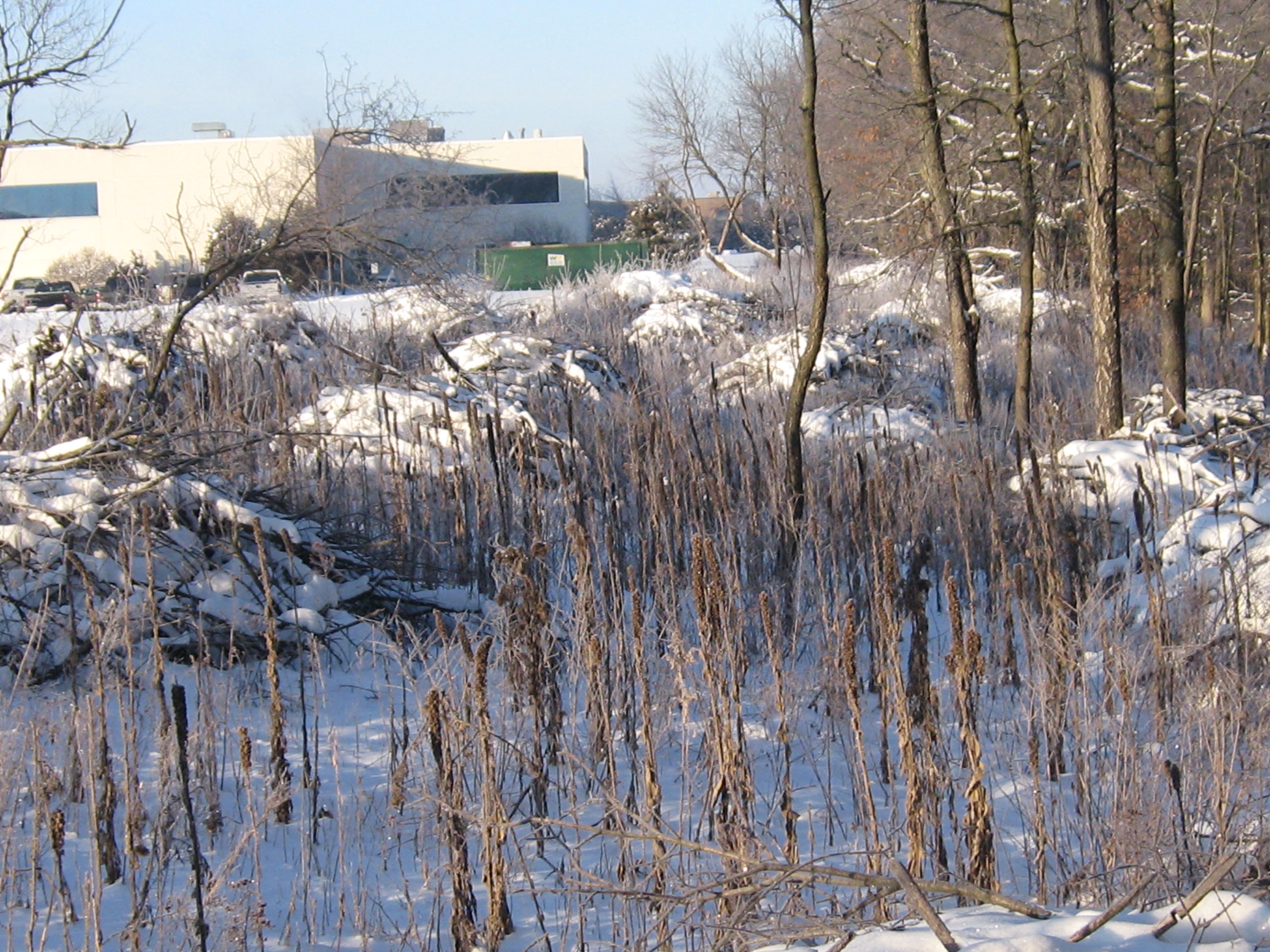
Here are a few pictures of the brush piles we intended to burn. This wood was cut and piled within the last month, which is pretty fresh as brush piles go, but they contained enough dead wood that we thought we could start them.
The plan was to get the existing piles lit and then continue piling the brush we cut last week.
Despite the cold, we got warmed up fast and the layers started coming off. Lindsay brought his leaf blower and that proved to be the difference between success and failure; there’s nothing like a jet of fresh air to kick-start a green brush pile.
We made a few new brush piles too.
We hope to finish clearing the buckthorn and brush between the cut-off trail and the river before spring. The cut-off trail passes through the loveliest woodlands in the whole Scuppernong Springs Nature Preserve and it is a joyful thrill to open this area up.
The Hartland Marsh is dear to me, as only a place can become once you have invested much into it (see About Paul). Despite the wintry weather, things are heating up lately at the Marsh. Ken Neitzke, who led the Waukesha/Milwaukee chapter of the Ice Age Trail Alliance (IATA) for many years, and was inspirational in awakening in me the awareness that I could make a difference, began exploring the possibility of resuming the use of fire in the maintenance of the Hartland Marsh. Ken lit a fire with the Village of Hartland leadership and Jill Rick, the author of the “I Want To Know” column in the Lake Country Reporter, fanned the flames.
IATA trail boss, Pat Witkowski, passed the torch to me letting me know about Jill’s recent article and I appended a comment to the article offering to help burn the brush piles I left behind at the Marsh. The fire jumped to Mike Einweck, the Village of Hartland Director of Public Works and he contacted me to let me know his crew was going to burn piles the next day (today). This was music to my ears and I immediately contacted Mike Fort and John Mesching. They have been working to restore prairies and Oak woodlands at Lapham Peak for many years, and being the jewels of the human species that they are, they both promised to come. Jack often helps at Lapham Peak and he joined us as well. Closing the loop, I contacted Pat to let her know and she also came to help.
I arrived a bit early to take some before pictures and was greeted by Jill Rick, whom I had contacted the night before to ask if she could get a photographer from the Lake Country Reporter to take some pictures. A half hour later Todd arrived and documented our efforts. The Village of Hartland Dept. of Public Works staff members Dave, Jake and Josh arrived around 8:00am and Jill began an interview with Dave, asking rather impertinently, “… do you know what you’re doing?”
I wondered If I knew what I was doing when I tried to light the first pile. Although the wood had been stacked for over 2 years and was well seasoned, we had just had a good soaking rain followed by an accumulation of 4″ of snow. Check out this mess.
Approximately 80% of these piles were made in one day by Arrowhead High School students under the guidance of biology teacher Greg Bisbee. Dave, Jake and Josh began with the piles right along the trail heading down from the gazebo. Situated in a becalmed drainage ditch, these snow encrusted tangles of frozen brush were not eager to embrace the flame. I encountered difficulty as well with piles by the trail and migrated up the hill looking for a little breeze. Soon, Mike and John arrived and we hit our stride. Despite the conditions, together we lit 60 piles.
The best part of the day was being visited by no less than; Augie Wilde, the Fire Chief, Dave Cox, the Village Administrator and Mike Einweck. These patient souls were subjected to impassioned speeches from yours truly about the need to do prescribed burns at the Marsh. The Municipal Code authorizes it and the Village’s own Comprehensive Land Use Plan Chapter 4 ( see Public Interest/Current Legislation under Legislation and Public Hearing Notices) implies it, as there is no other way to achieve its stated goals. I was happy to hear Dave Cox say “Fire is a good thing.” Hopefully, the Village leadership will be able to define some concrete action items to initiate a program of prescribed burning and implement them.
The Native Americans, or First Nation People taught us to plan for the 7th future generation. It is time for the Village of Hartland to embrace this credo and preserve and nurture its natural, open spaces for the 7th generation of Hartlandians to come.
Here is a short tour of the burn site at the end of the day.
After the gear was stowed away and I put some dry socks and boots on, I took a leisurely walk around the Marsh visiting all my favorite haunts. I encourage you to discover the beauty of the Hartland Marsh!











































 Scuppernong Springs Nature Trail
