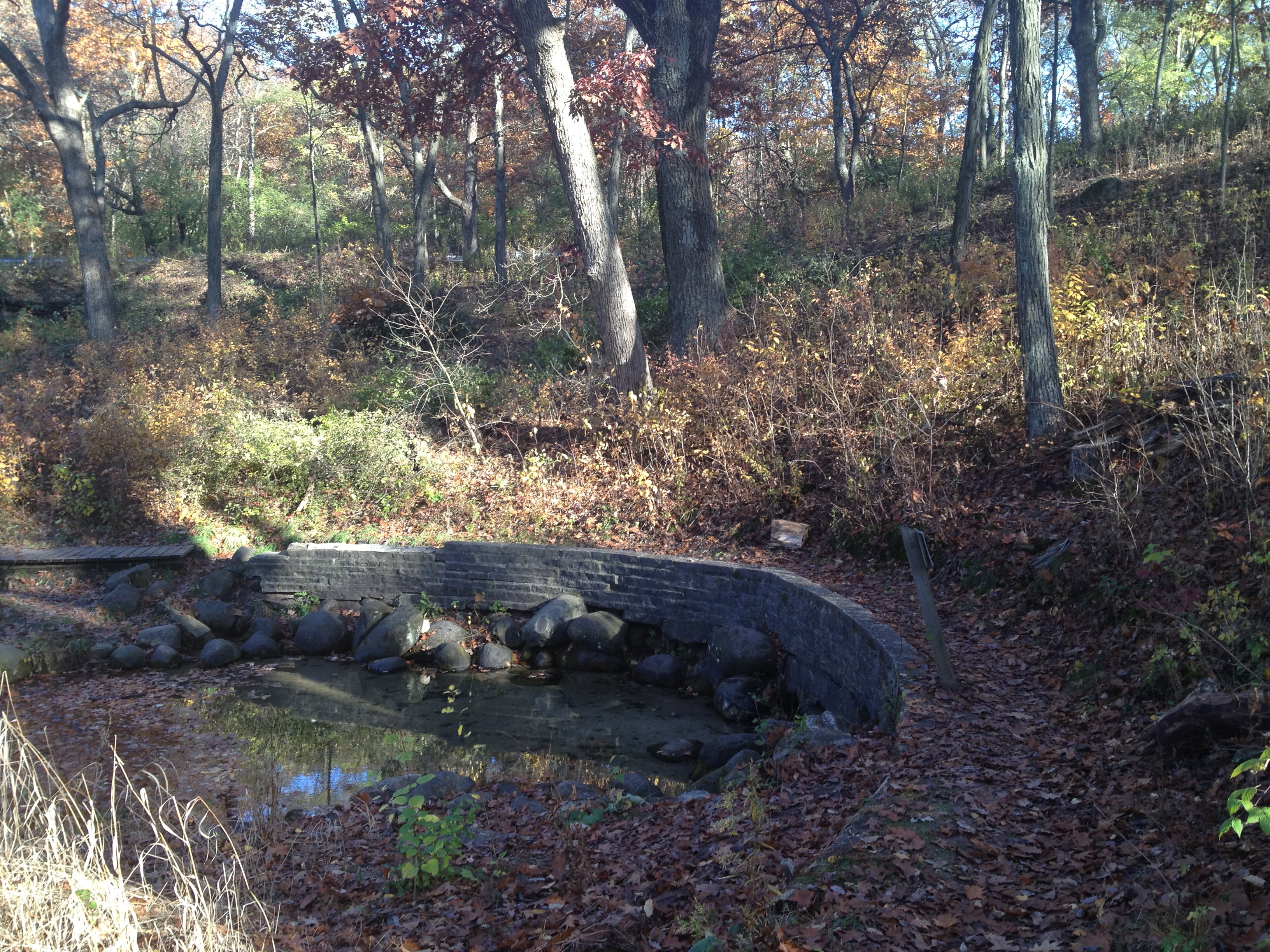
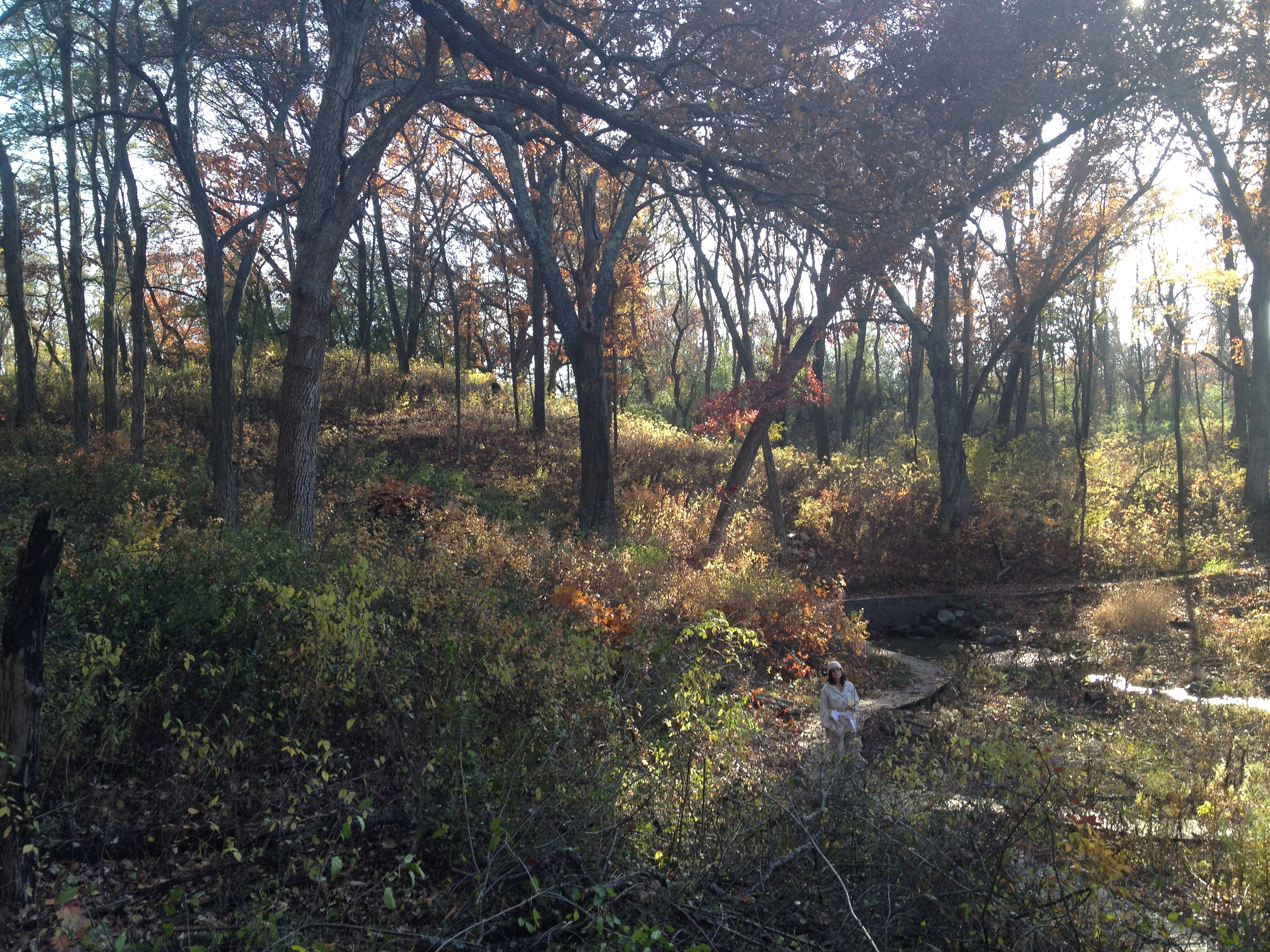
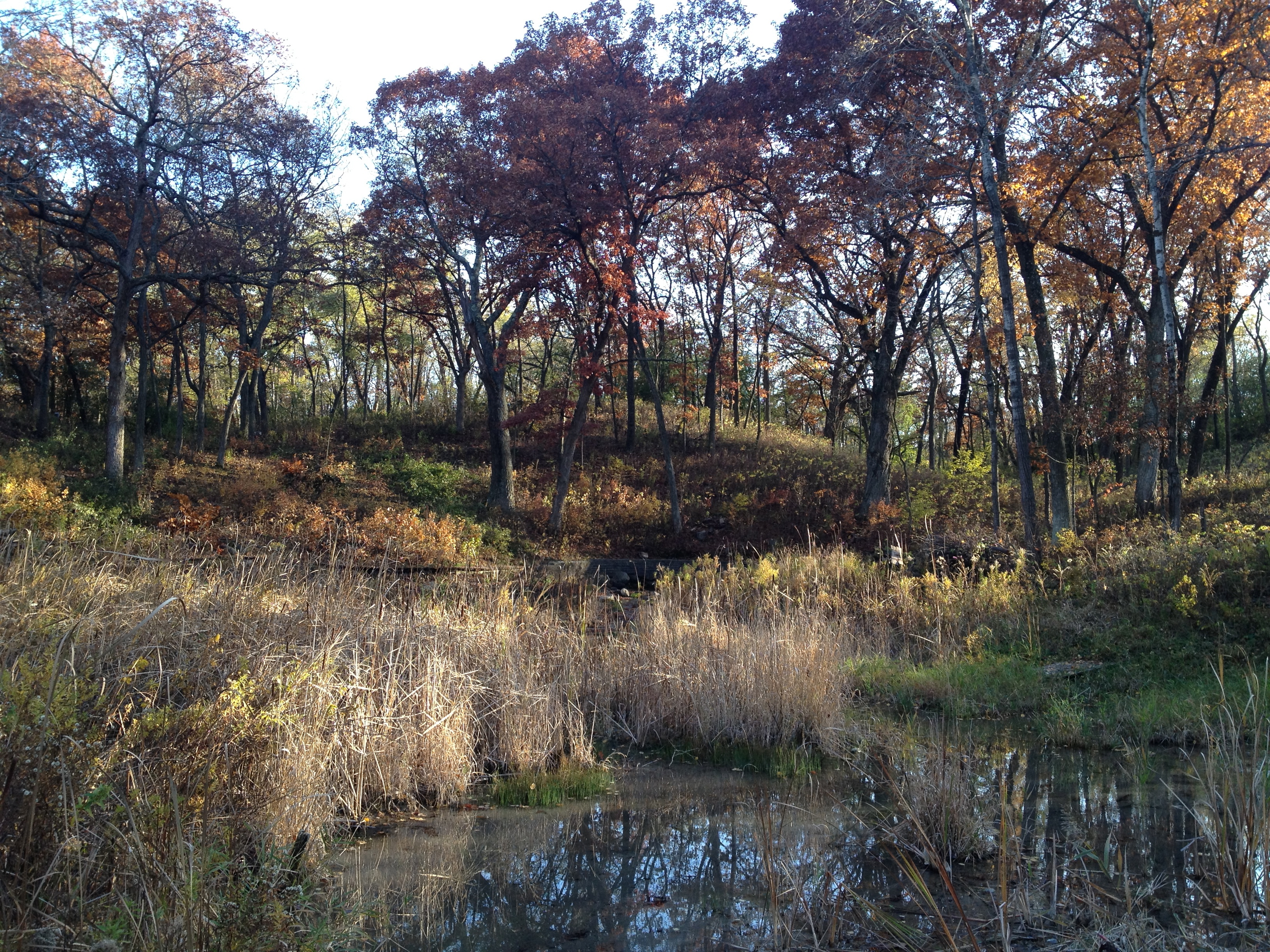
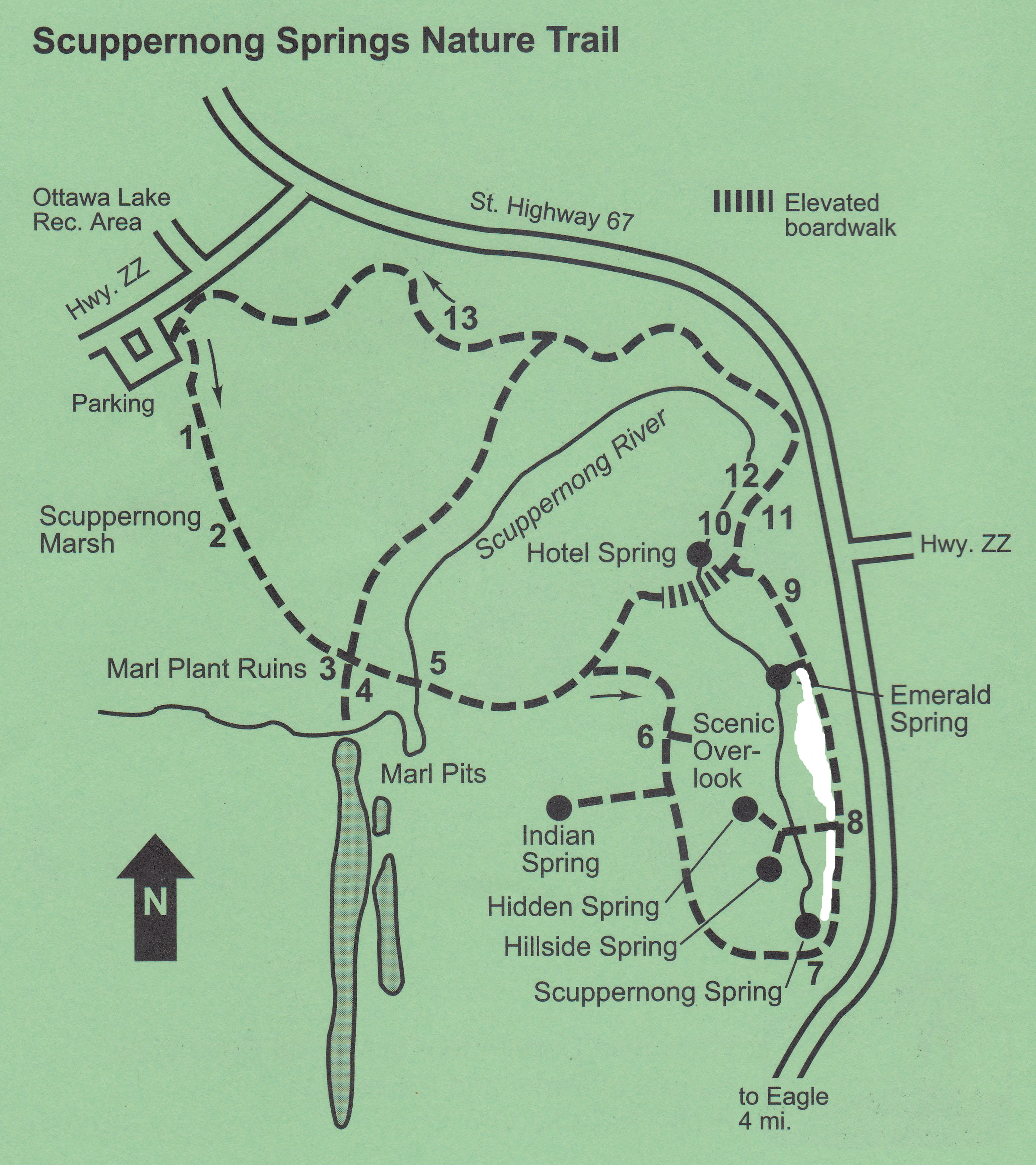
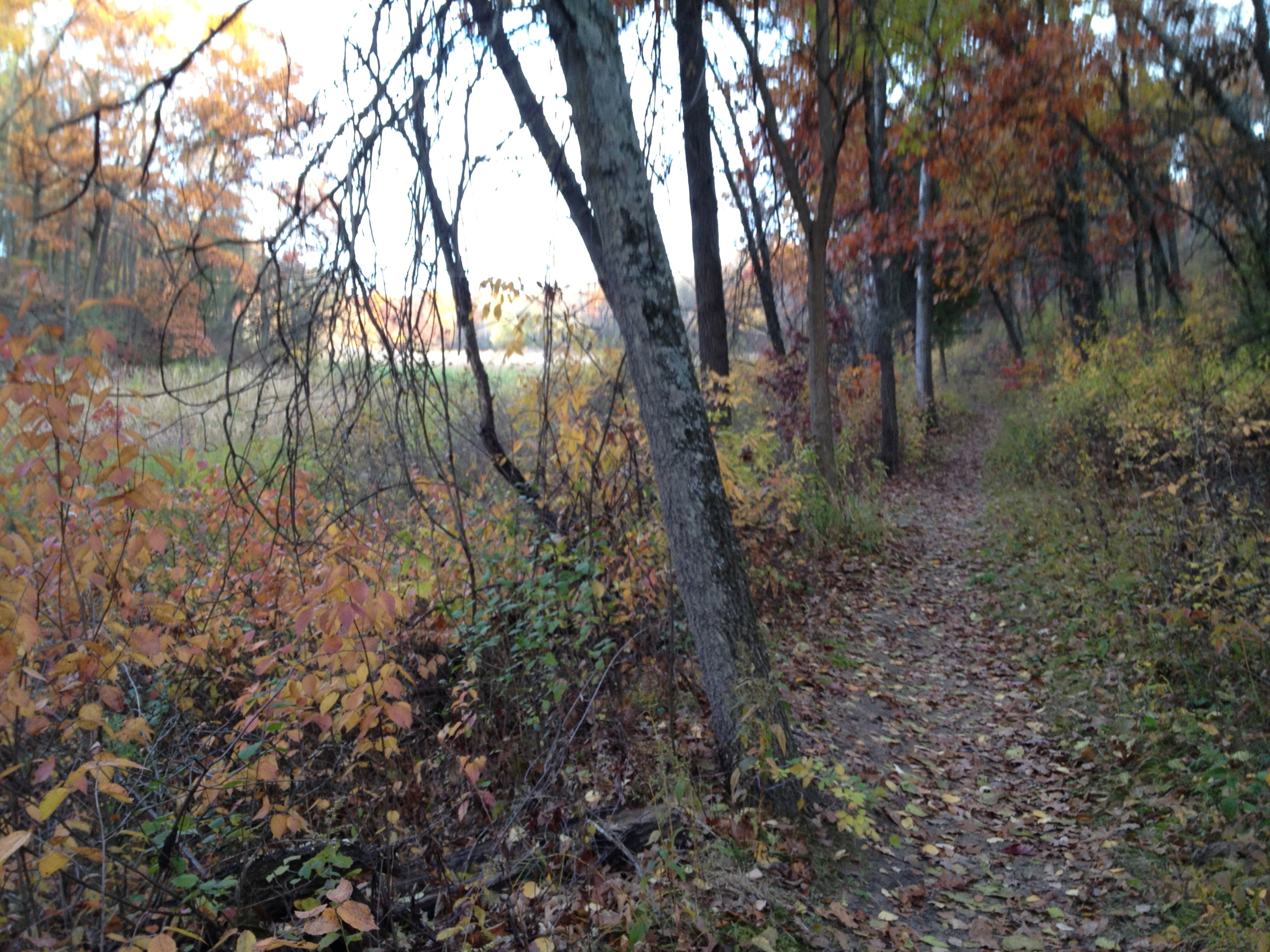
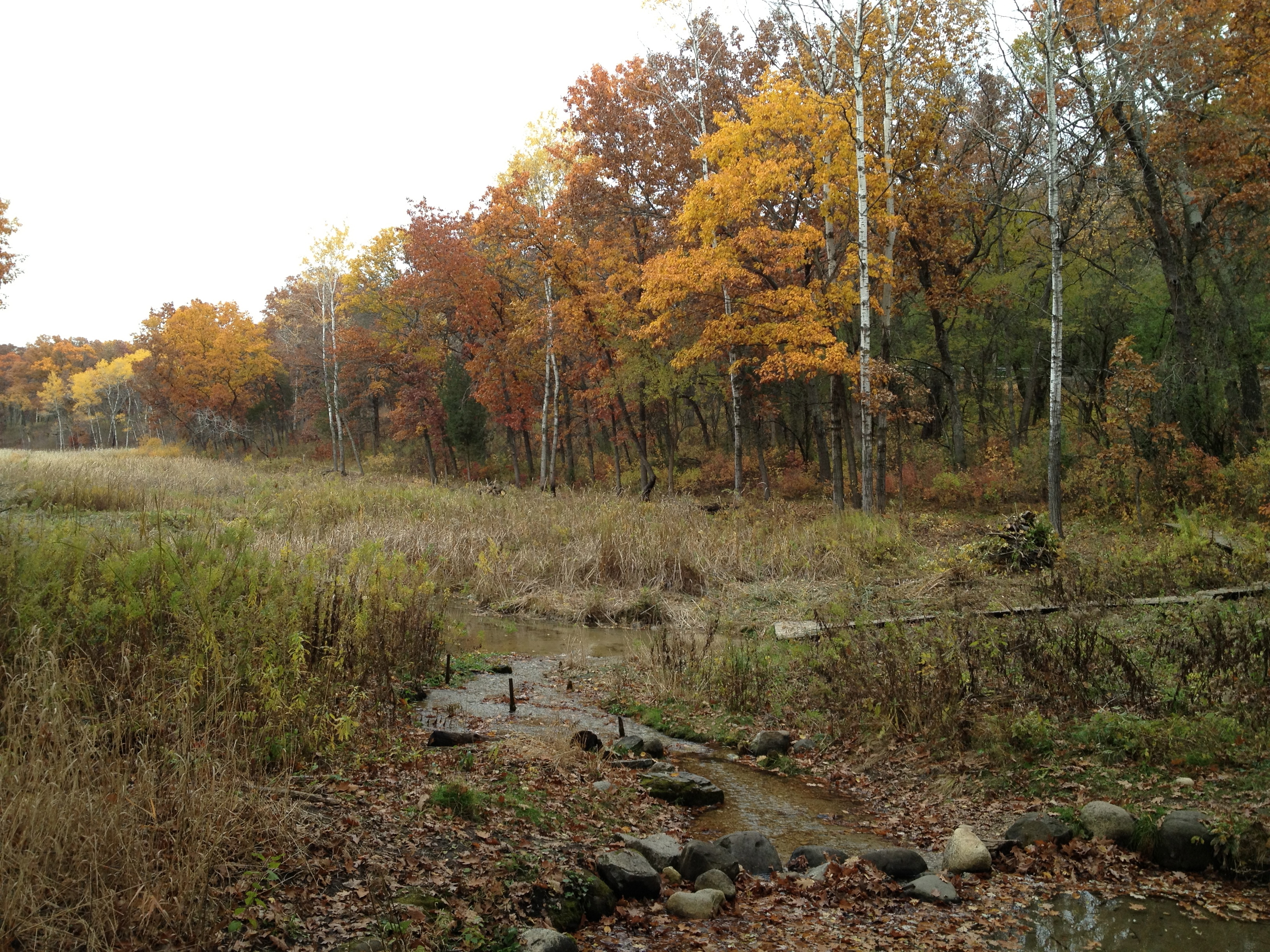
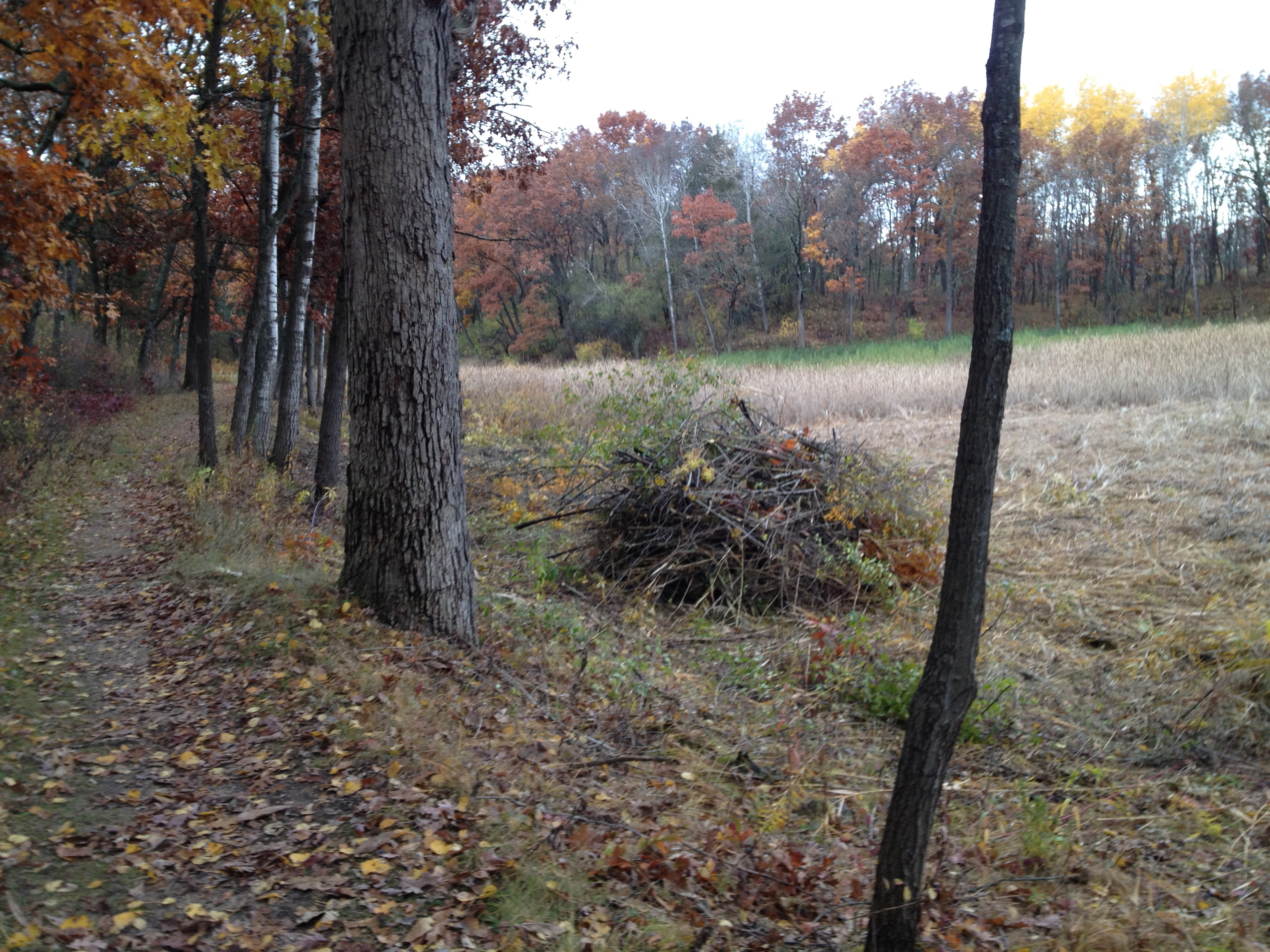
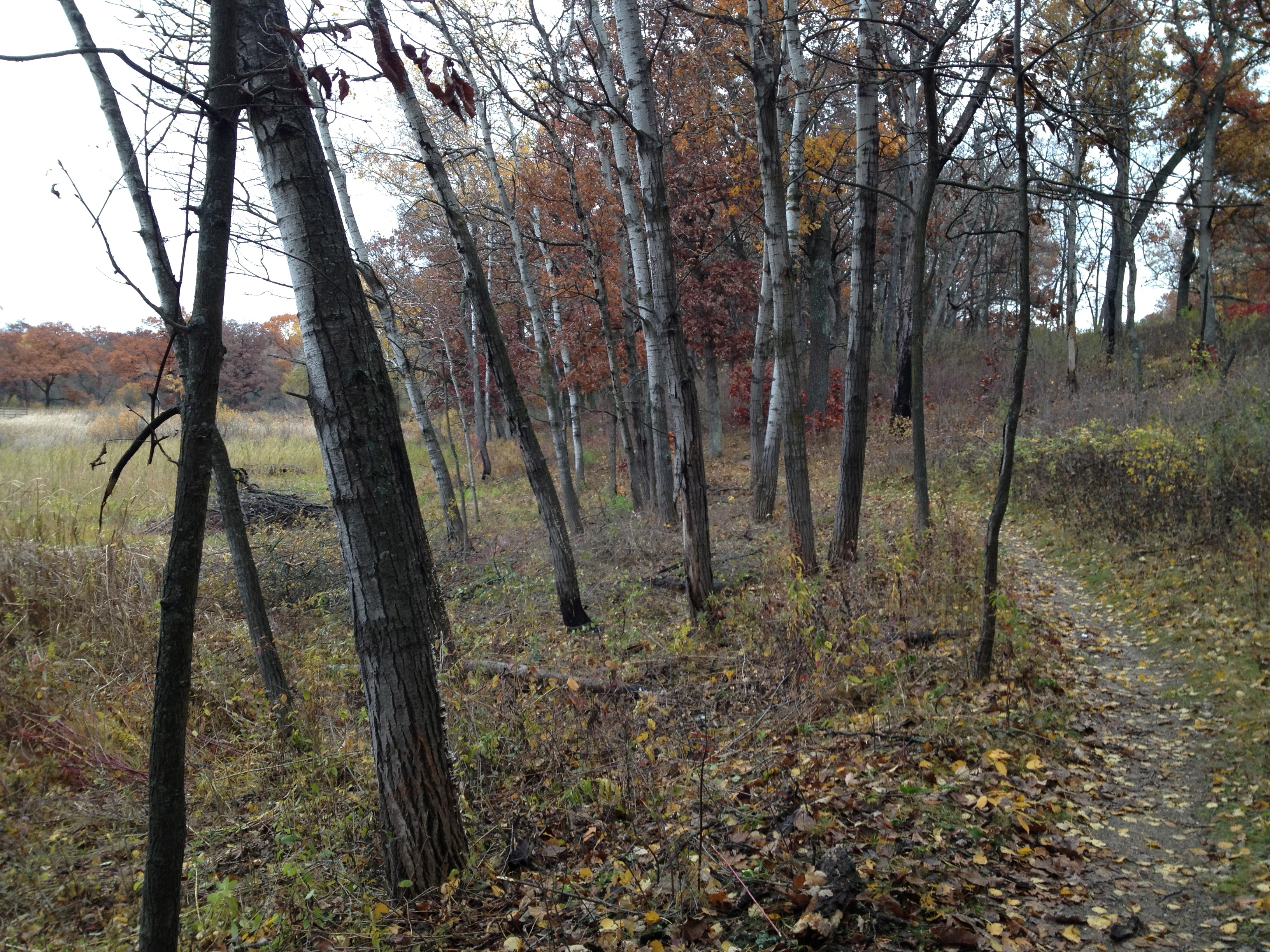
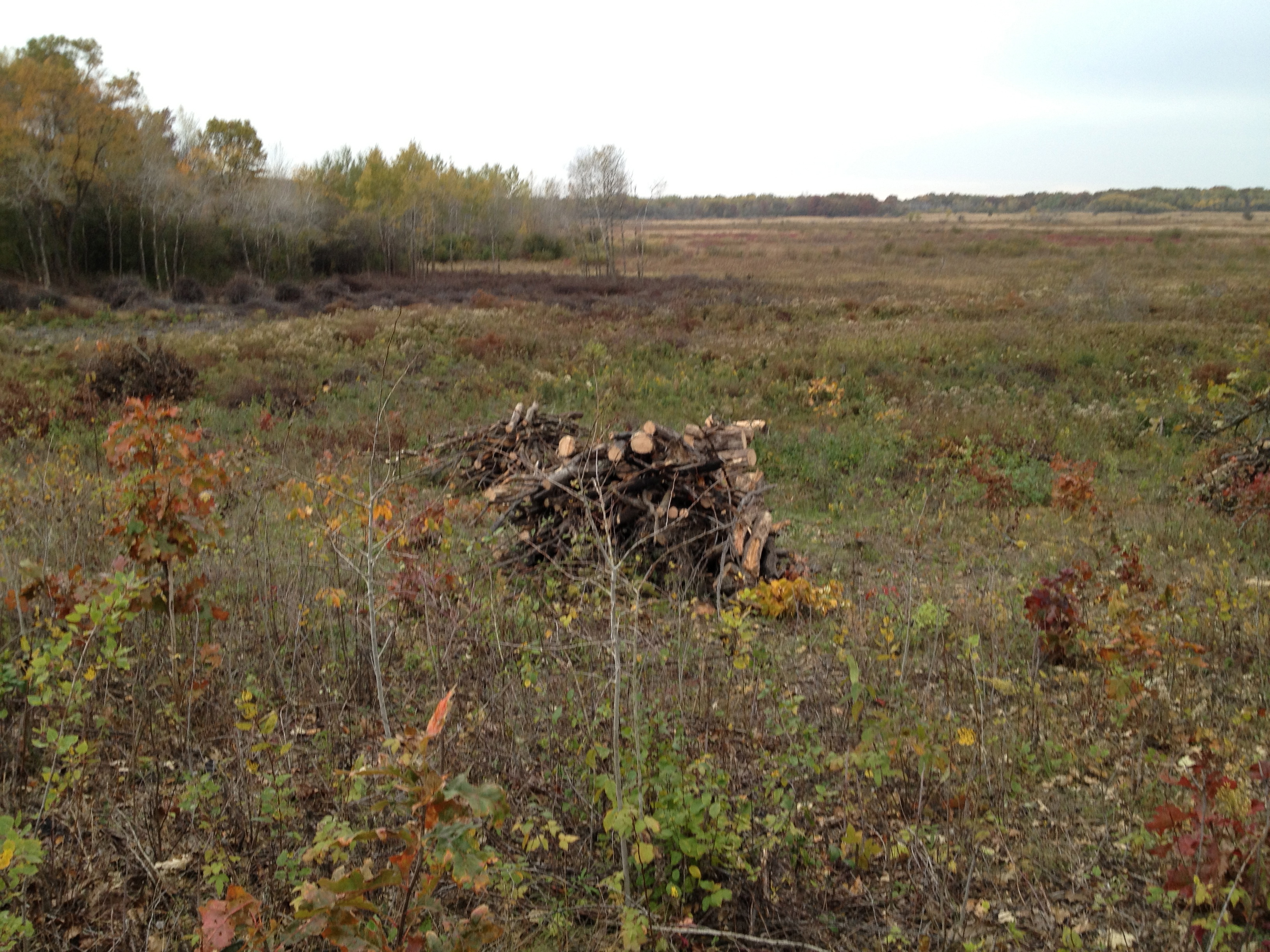
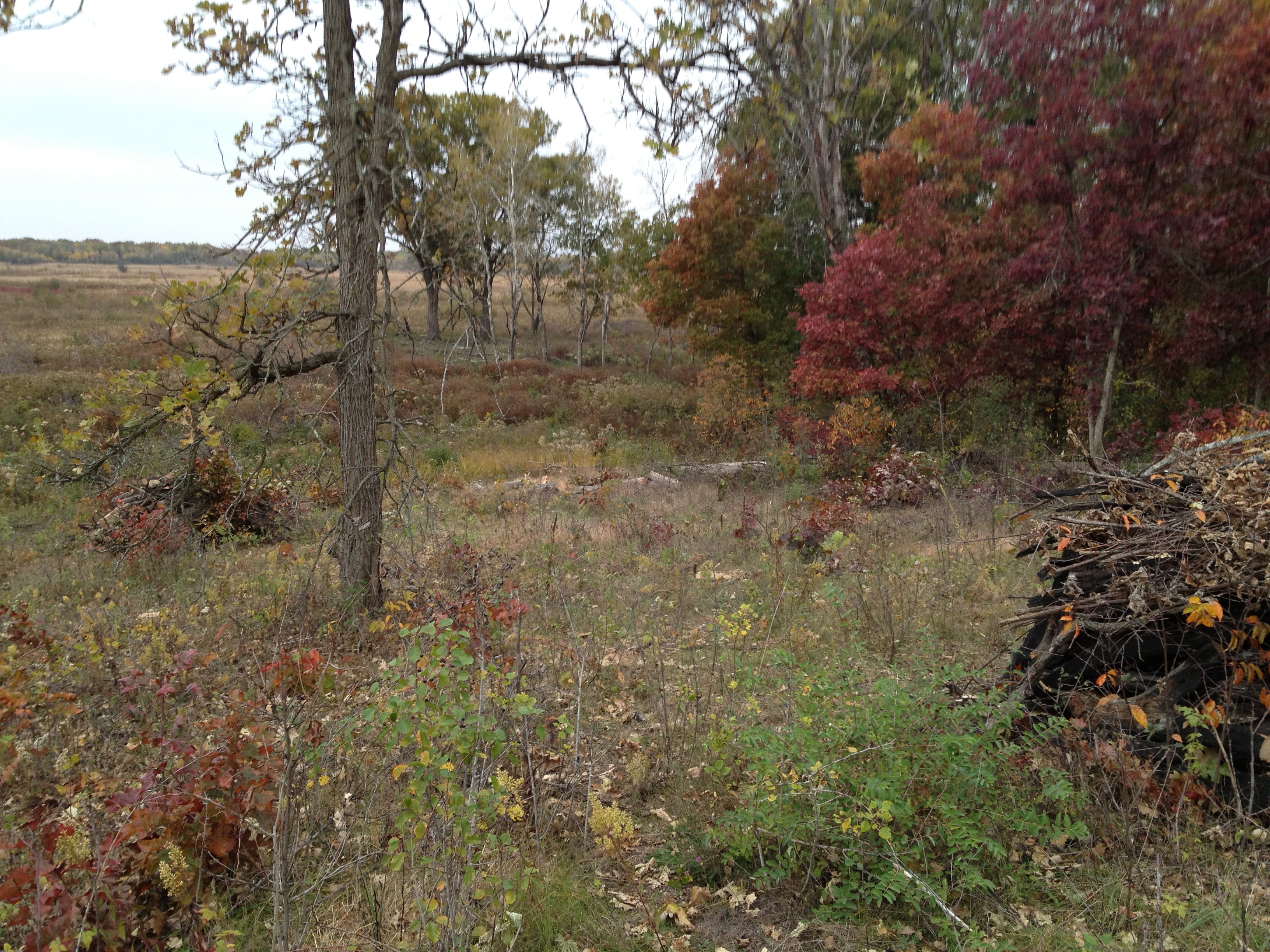
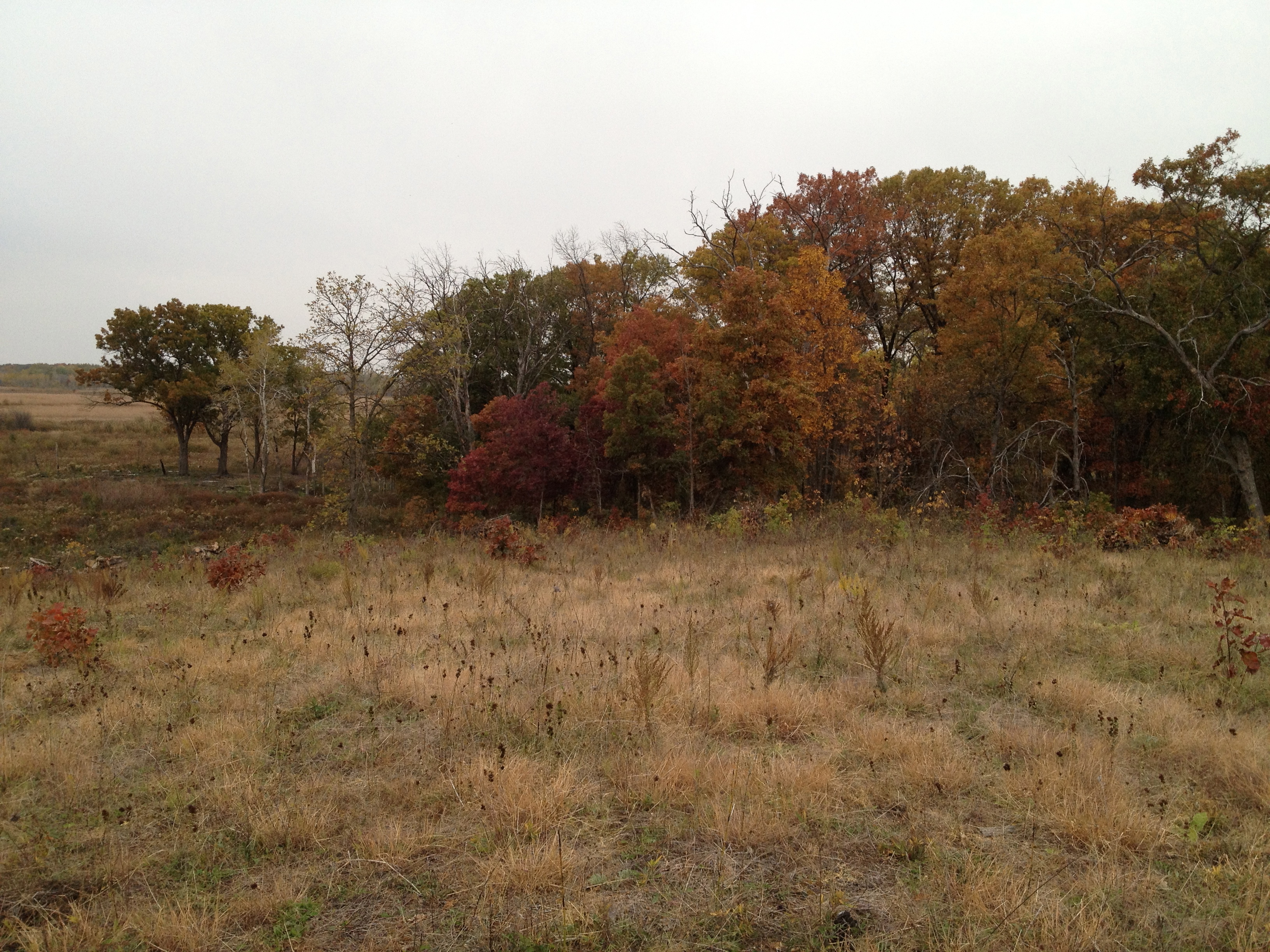
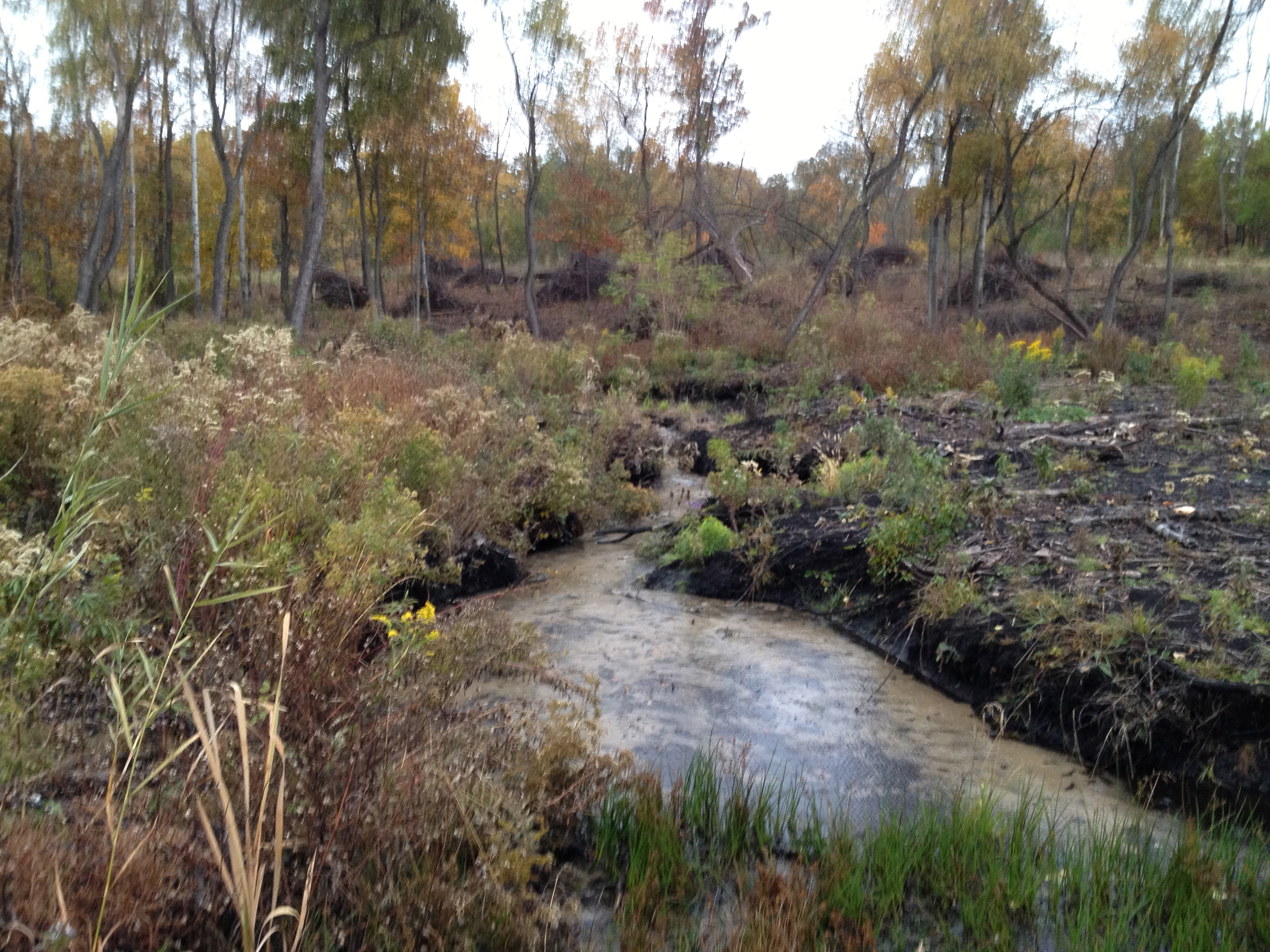
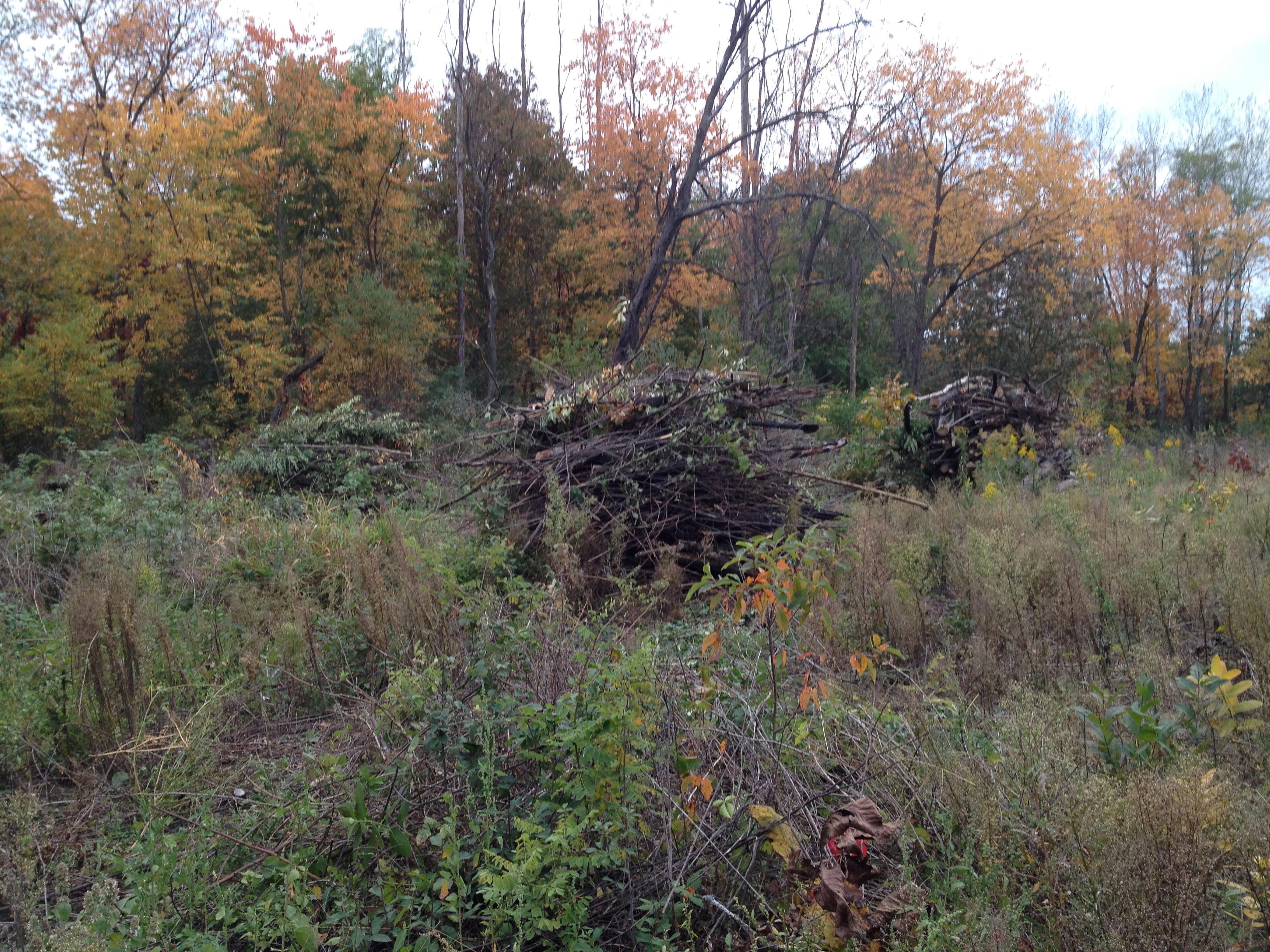
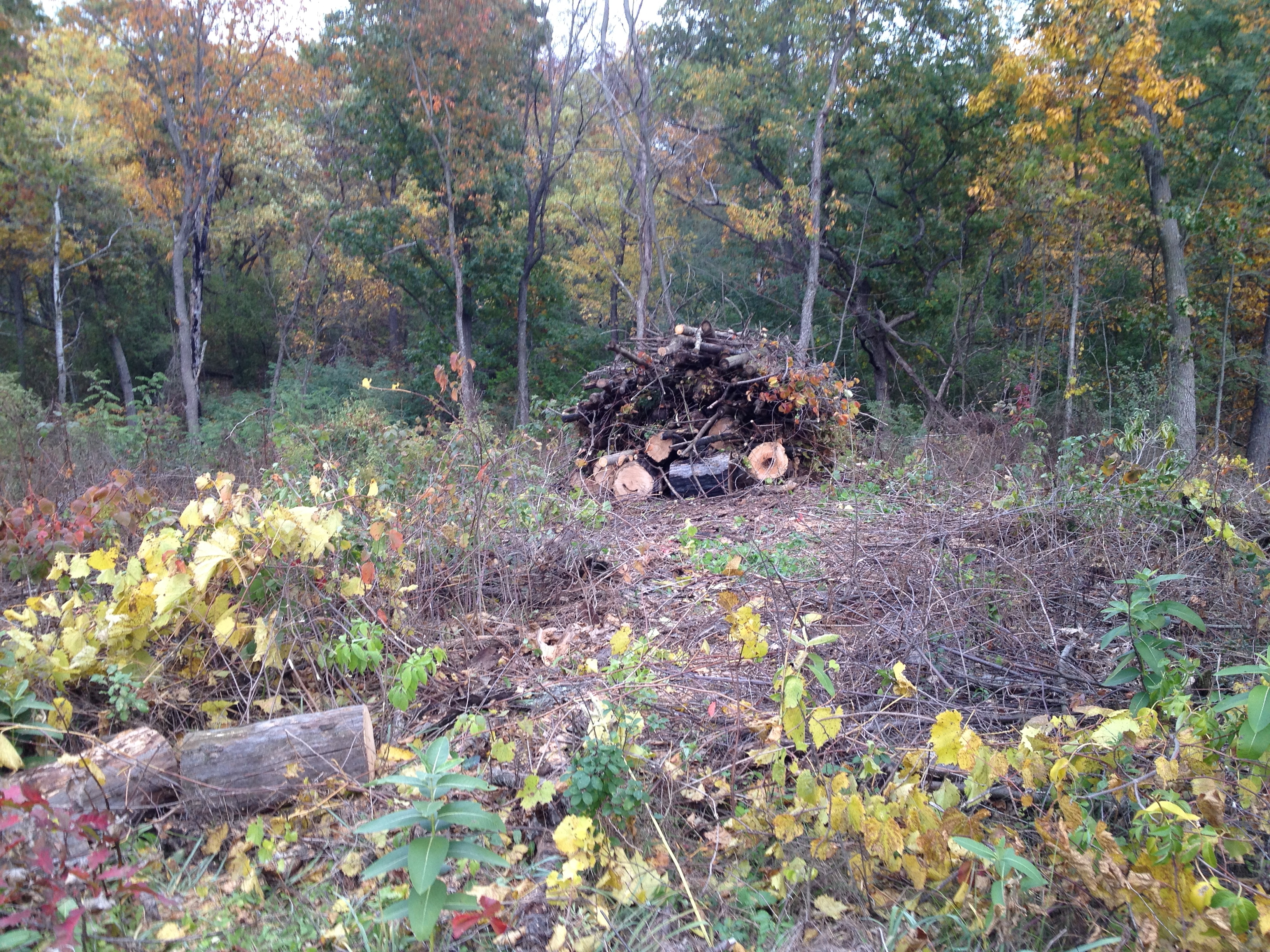
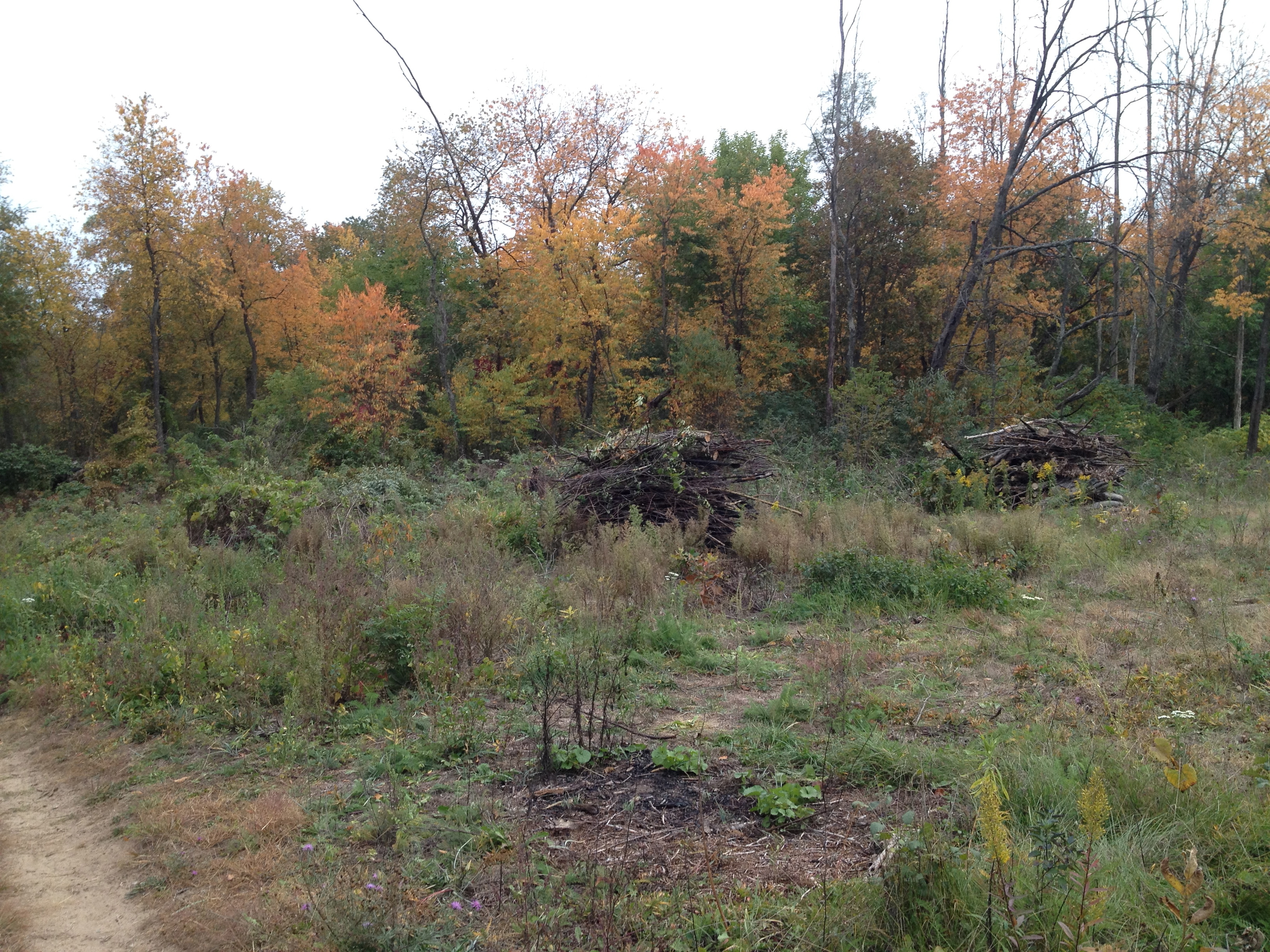
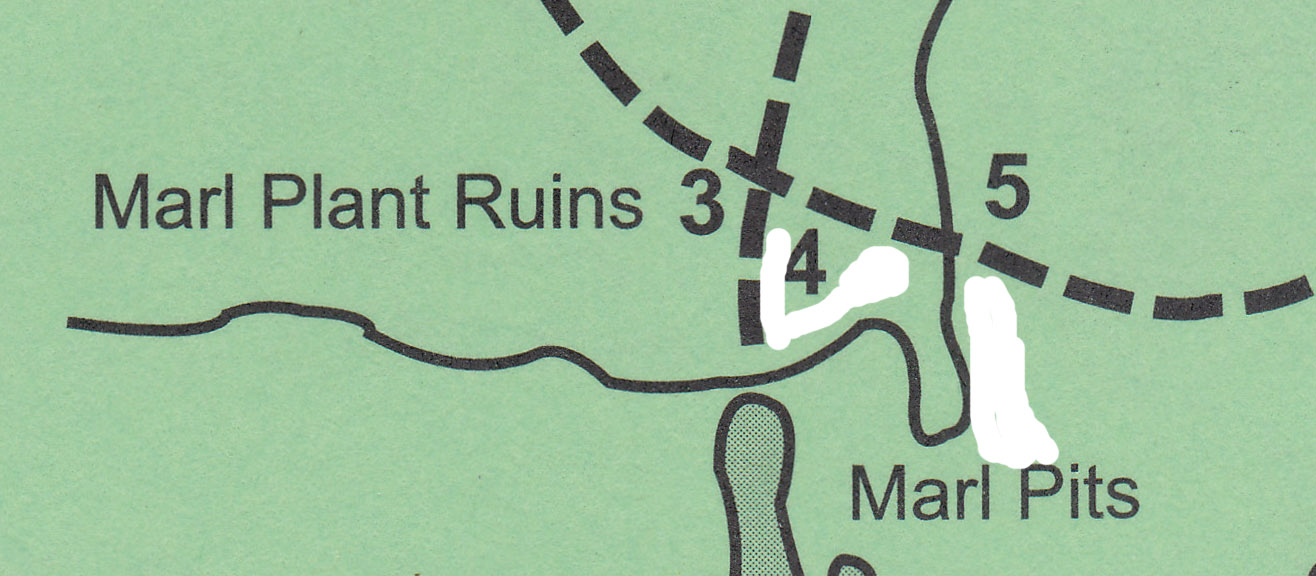
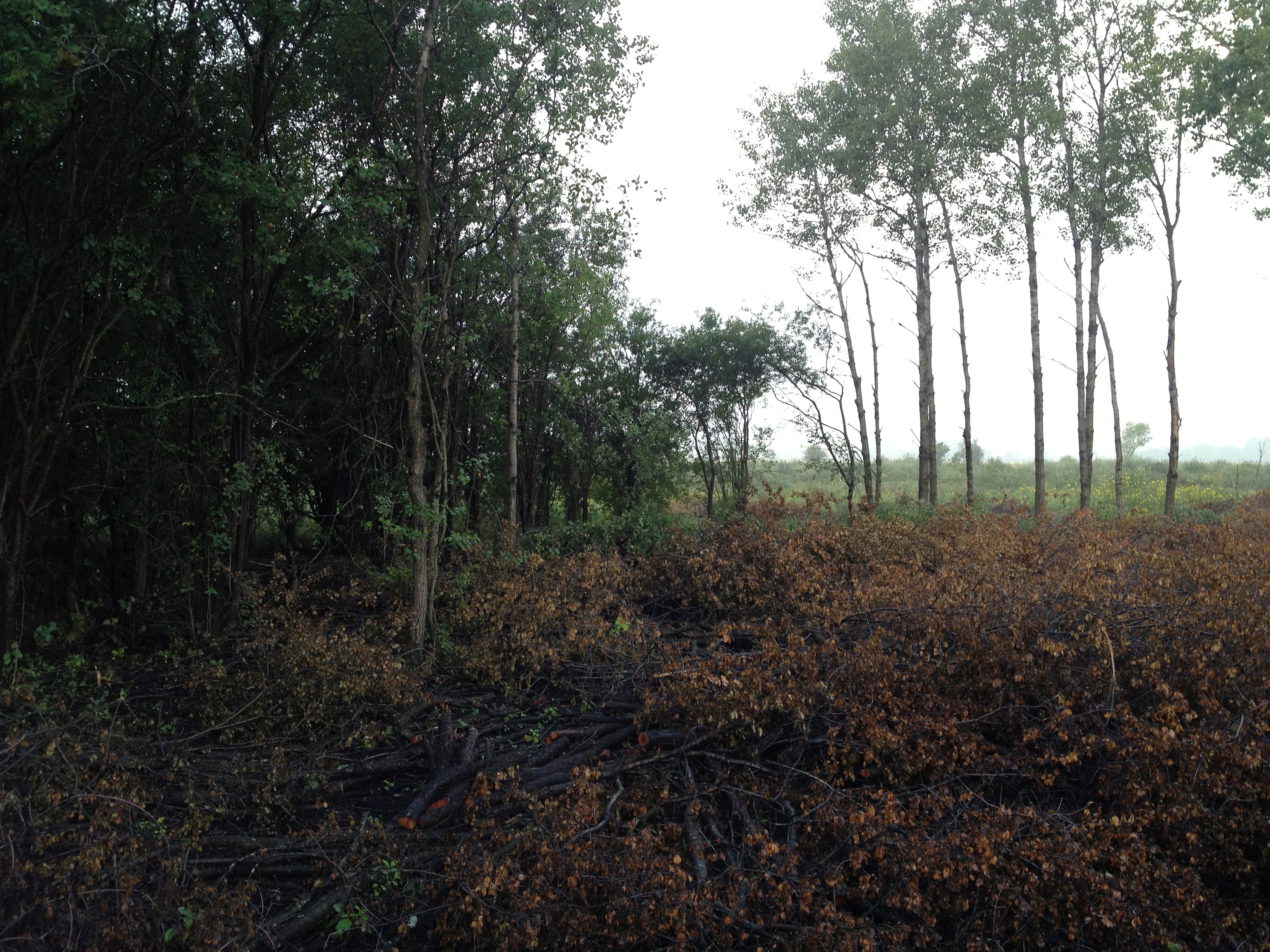
The Scuppernong Spring is where the Scuppernong River starts. It is set in a bowl near the base of a long moraine. There are huge Red and White Oak and Hickory and Cherry trees along the slopes. Approximately 9 years ago I cut the Buckthorn along this slope from Hotel Spring, South, almost all the way to the Scuppernong Spring and yesterday I resumed this effort on the slopes around the Scuppernong Spring. Pati came out later to help pile brush and bring my camera/phone, which I had forgotten. So, no before pictures this time. There are still a few trees to cut and lots of piling to do. Below is a map with the work area marked in white and some pictures taken after the cutting was done. In case you were not aware, you can click on any of the images below to see the picture in full size.
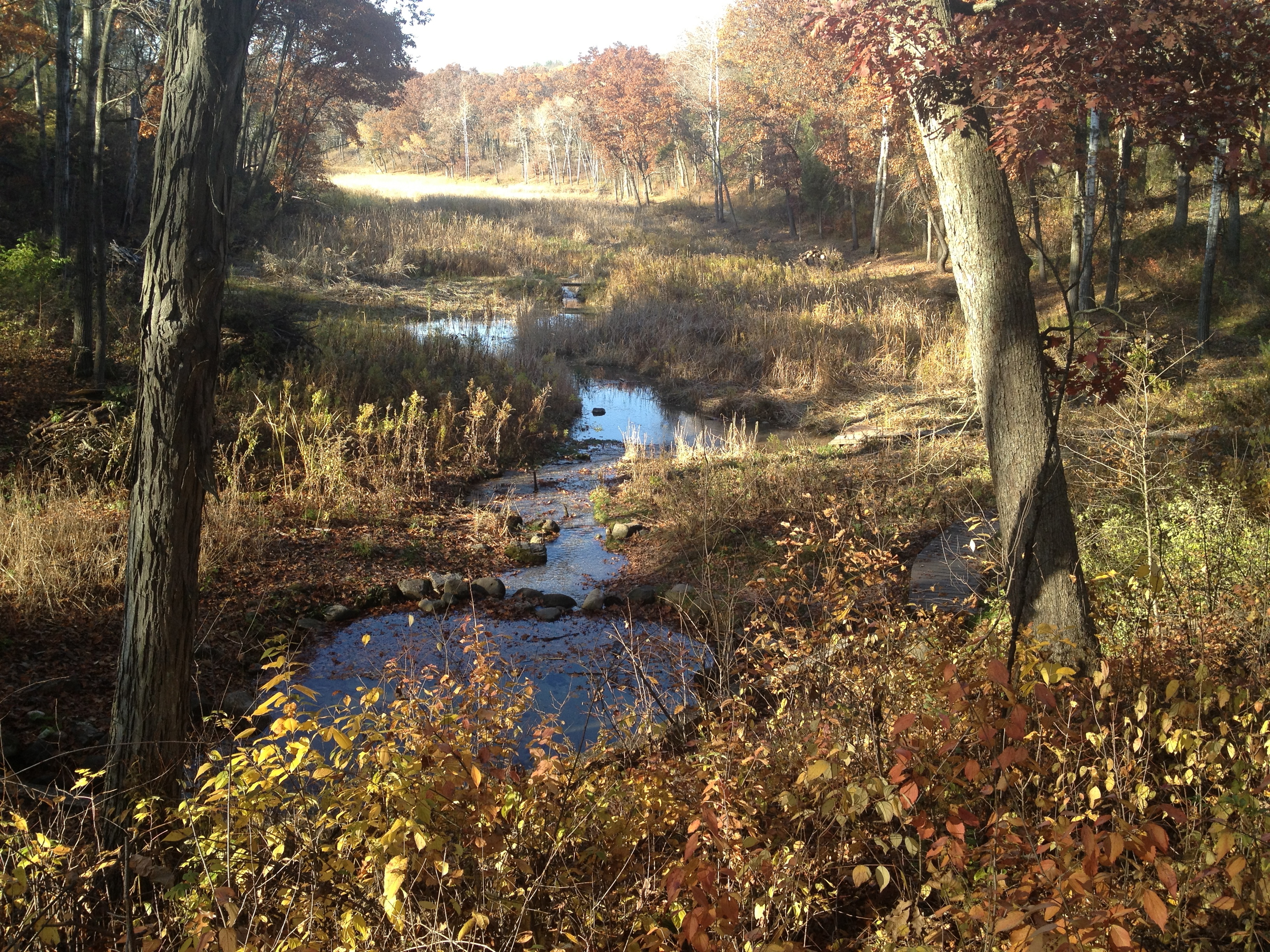
One of our favorite stretches of the Scuppernong Springs Nature Trail is along the River from the Scuppernong Springs to the Hotel Springs. To the East is a steep slope covered by Oak Savannah. To the West the views of the River and Wetlands were obstructed by a lot of brush including Buckthorn, Honeysuckle, Willow, Aspen and the witch’s brooms from charred stumps of Cherry and Red Oak. The area in question is marked in white on the map below.
On Wednesday, October 17th I spent the day working in area between signposts #7 and #8 above. Here are some before pictures.
After a little effort with a brush cutter and chain saw…
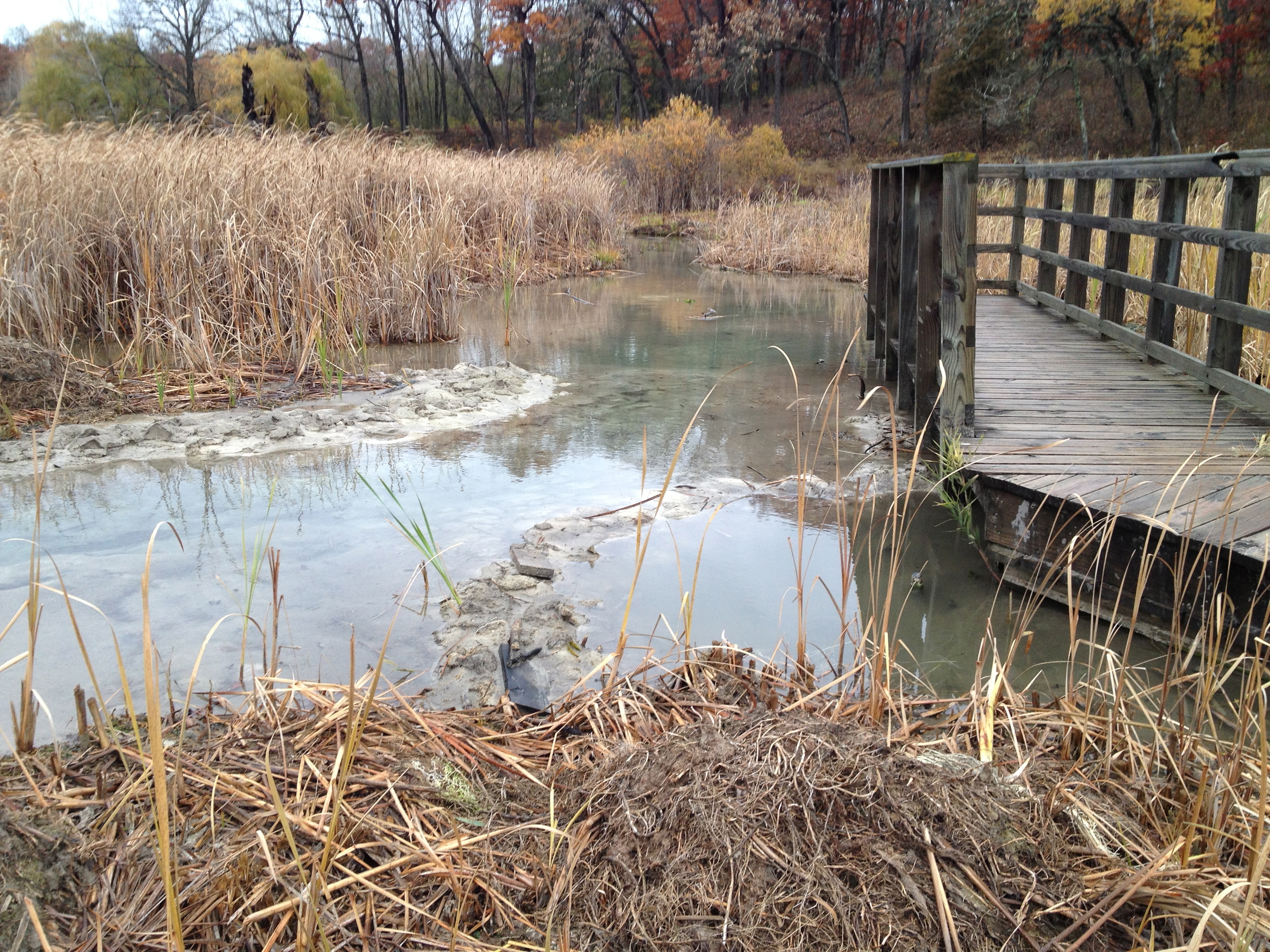
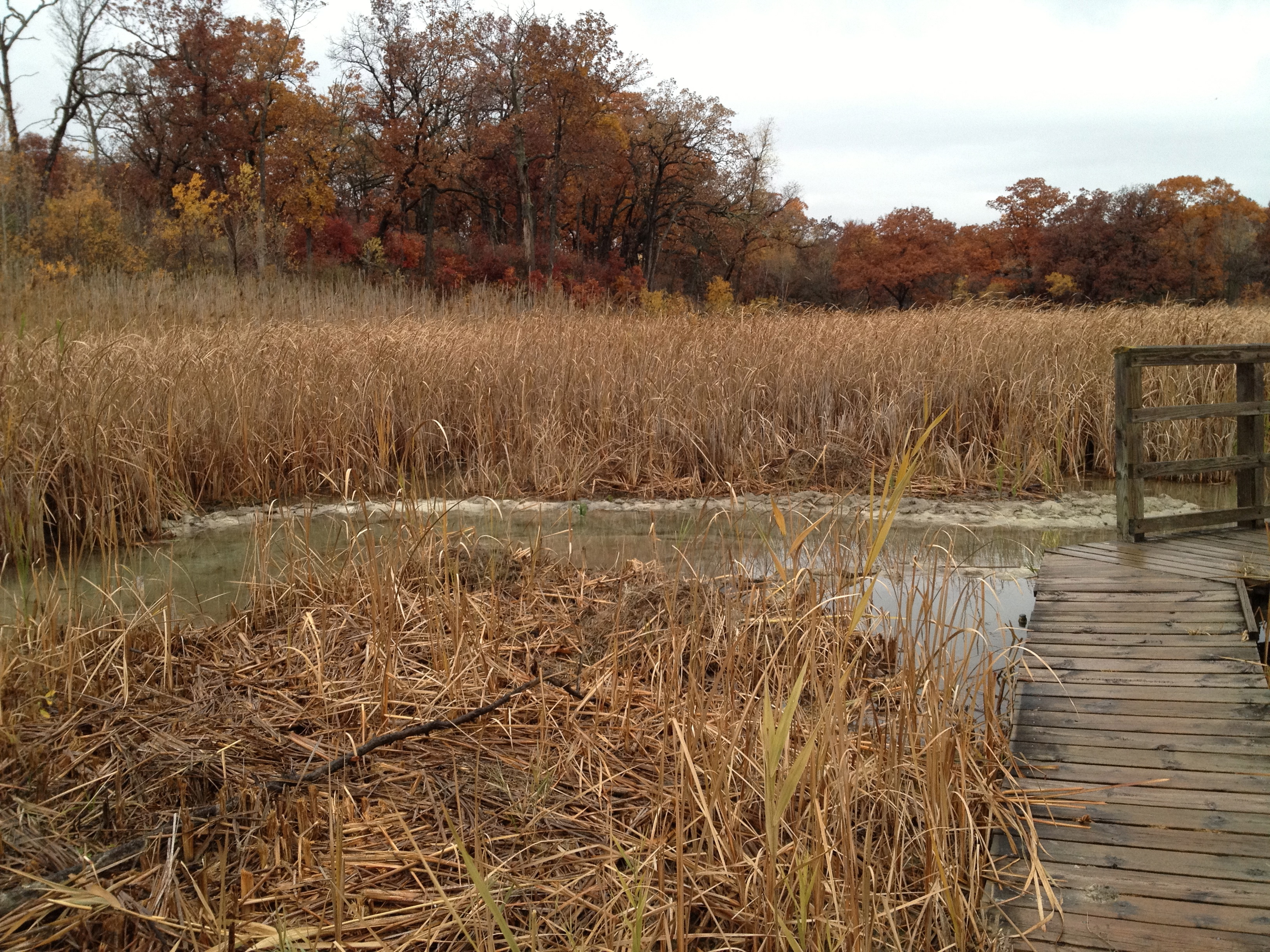
I still had a little energy left so I put on my chest waders and grabbed my shovel. There were a couple of places by the Emerald Spring, where the observation deck is, where the River was spilling over its banks. On his last visit with us, Ron Kurowski suggested we get some bio-logs from the DNR to shore up the banks and keep the River in a narrower channel. I contacted Ben Heussner and found out there were no more bio-logs at the moment, so I decided to just try a low tech solution for now. Here are some views of the areas in question before I started and after.
And two blisters later…
On Thursday, October 18th, Lindsay joined me and we worked on the area just North of where I had left off on the 17th and made it all the way up to the boardwalk leading to the Emerald Spring. In addition to the brush mentioned earlier, we cut a huge patch of Phragmites. Here are some before shots.
And after…
Here is a view of the work area from the bridge over the Scuppernong River down by the Hotel Springs.
We still have some brush piling to do but the views into the Wetlands along the River are much improved.
On Thursday, October 11, Lindsay and I returned to the Hidden Spring to spray the Phragmites that had grow up since we cut it back in July.
Lindsay used the following recipe:
3 gal. clean water
20 oz. Habitat herbicide
2 oz. non-ionic surfactant
Pour 1.5 gal water into sprayer or storage container. Add Habitat. Add surfactant while pouring in remaining water. He used and even flat fan tip on the sprayer.
While Lindsay sprayed, I cut phragmites by hand that was right in the Hidden Spring and along its channel (shown below, before and after). I made the cuts as close to the ground as possible and then carefully dripped Habitat poison into the cut stems, some of which were 1/2″ in diameter. I also pulled some water cress that had regrown.
After that, we resumed our effort to prepare the Indian Campground/Sand Prairie for mowing focusing on an area where Ron Kurowski showed us a huge patch of Lupine growing last Spring. This is in the North West area of the Sand Prairie.
Here are some before pictures.
And after.
Later, we took a walk around to enjoy the scenery, as we usually do, and I got this picture at the Indian Springs looking back up stream towards the source.
There are a lot of Asters, Golden Rod and other flowers in bloom. We are looking forward to when the whole area we are recovering around the Indian Springs is carpeted with native grasses and flowers.
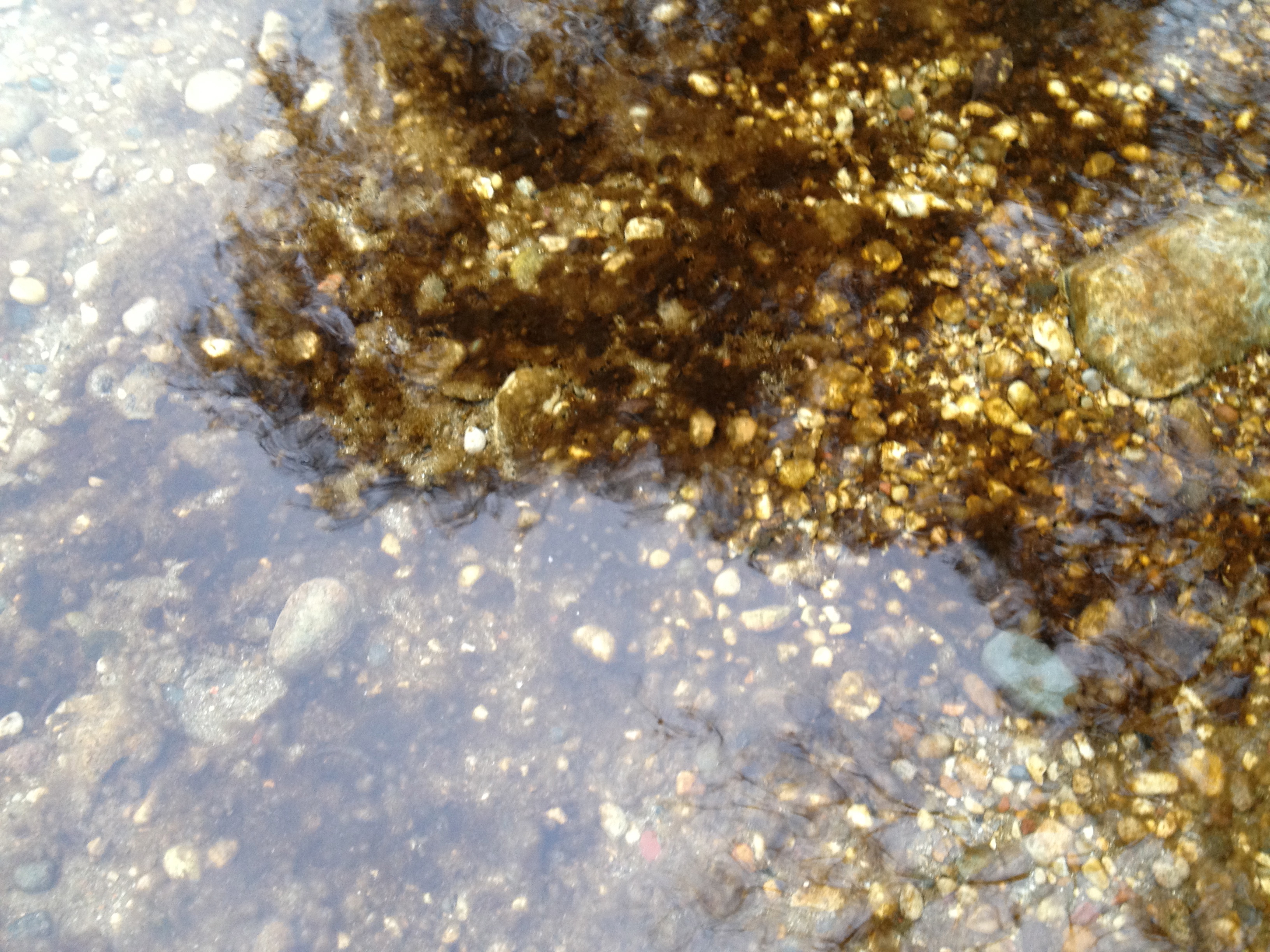
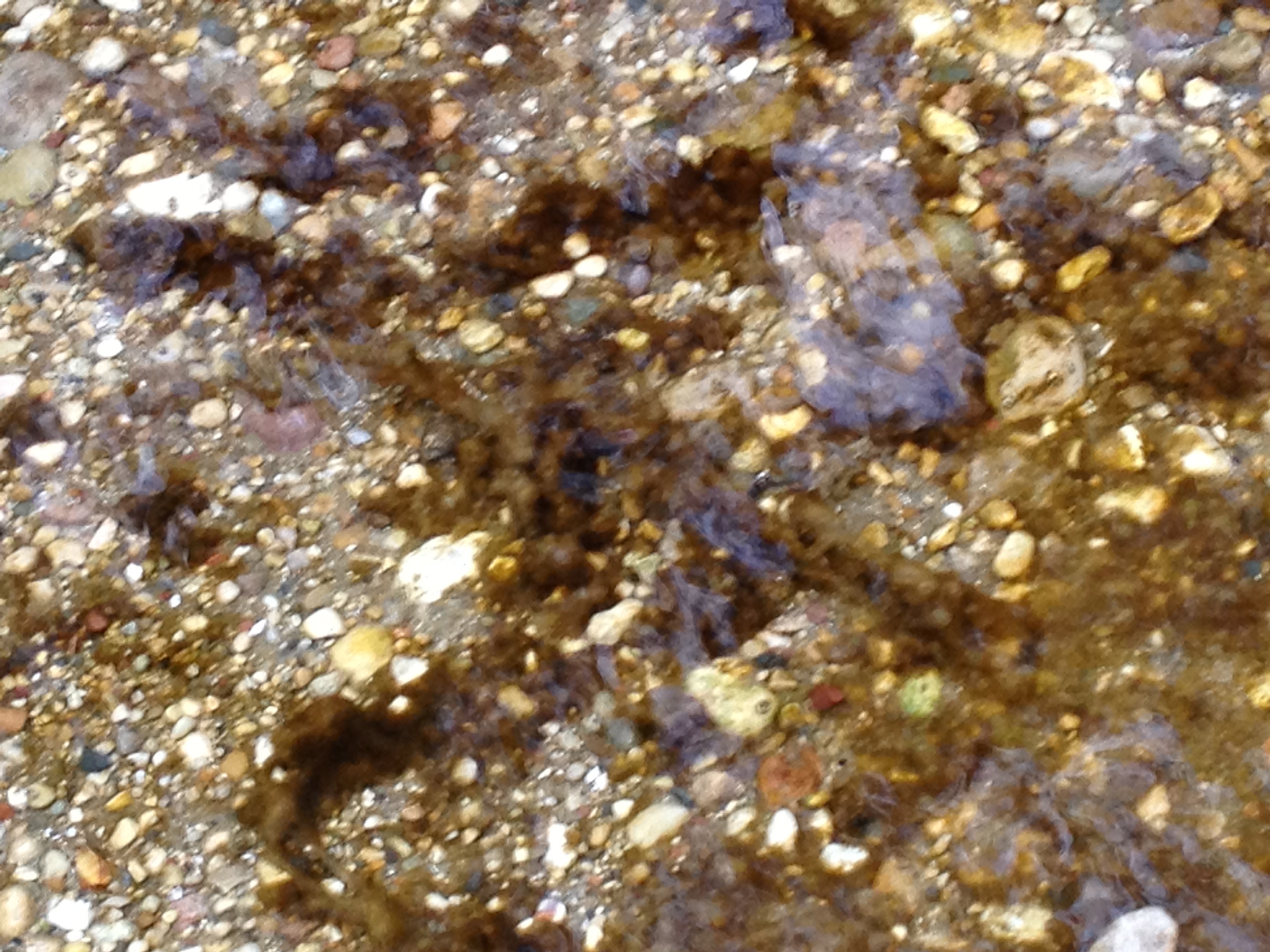
I was out working at the Springs yesterday (poisoning phragmites and buckthorn resprouts and piling brush) and noticed that a brownish/green algae has bloomed in the Hotel Spring. It is coating the rocks and sending up fingers of growth to the surface. It does not have a firm structure and is slimy if you scoop up a handful. If you know about algae, please help positively identify this algae so we can understand what to expect.
I’ve never seen algae in this spring before, but it may be a normal occurrence. Here are a couple of resources that I looked at: Brown Algae, Diatoms, Wikipedia link, but I could not find and pictures that matched what we see above.
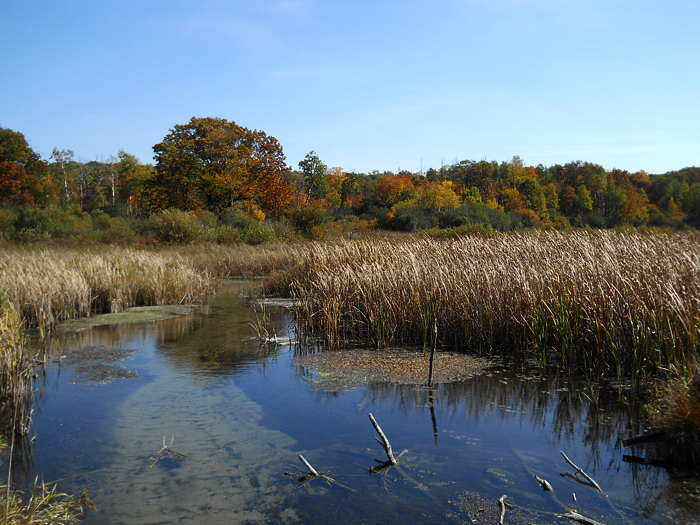
The Scuppernong Springs Nature Trail is one of my favorite places. I started walking it when I was just a young child. I still grab a guide at the entrance of the trail every time I go, although I pretty much have the entire thing memorized. I’ve been to the trail at least once every year, and this year I’ve been lucky enough to visit it 6 times, and planning a 7th visit this October when the leaves change. In fact, last year, on October 8th, I came for the fall colors as well, and it was a fantastic sight along the crystal clear Scuppernong River.
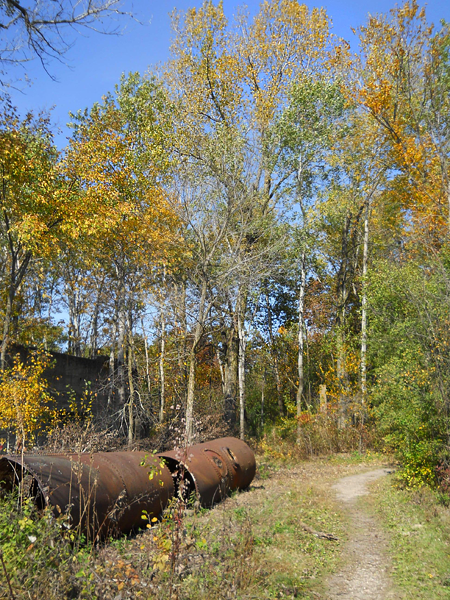
Also some fall colors at the old Marl Plant.
One of the reasons I love this area so much is because it seems to be a good fit for a wide variety of animals and plants, some even threatened or endangered, and the common ones thrive. Snakes are almost a guaranteed sight along this trail in Spring and Autumn. Last autumn I found this young Common Garter Snake next to the main Scuppernong springs.
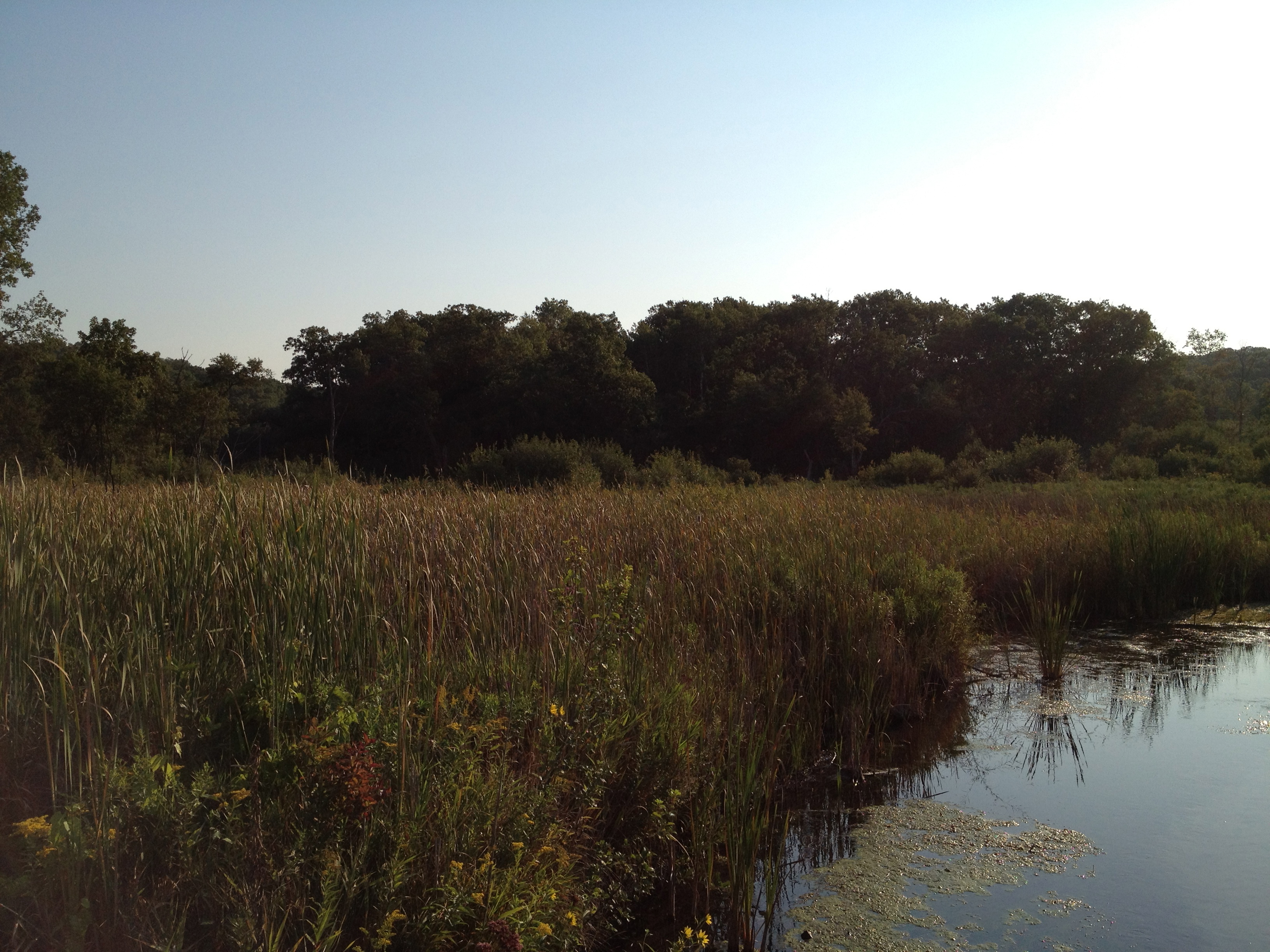
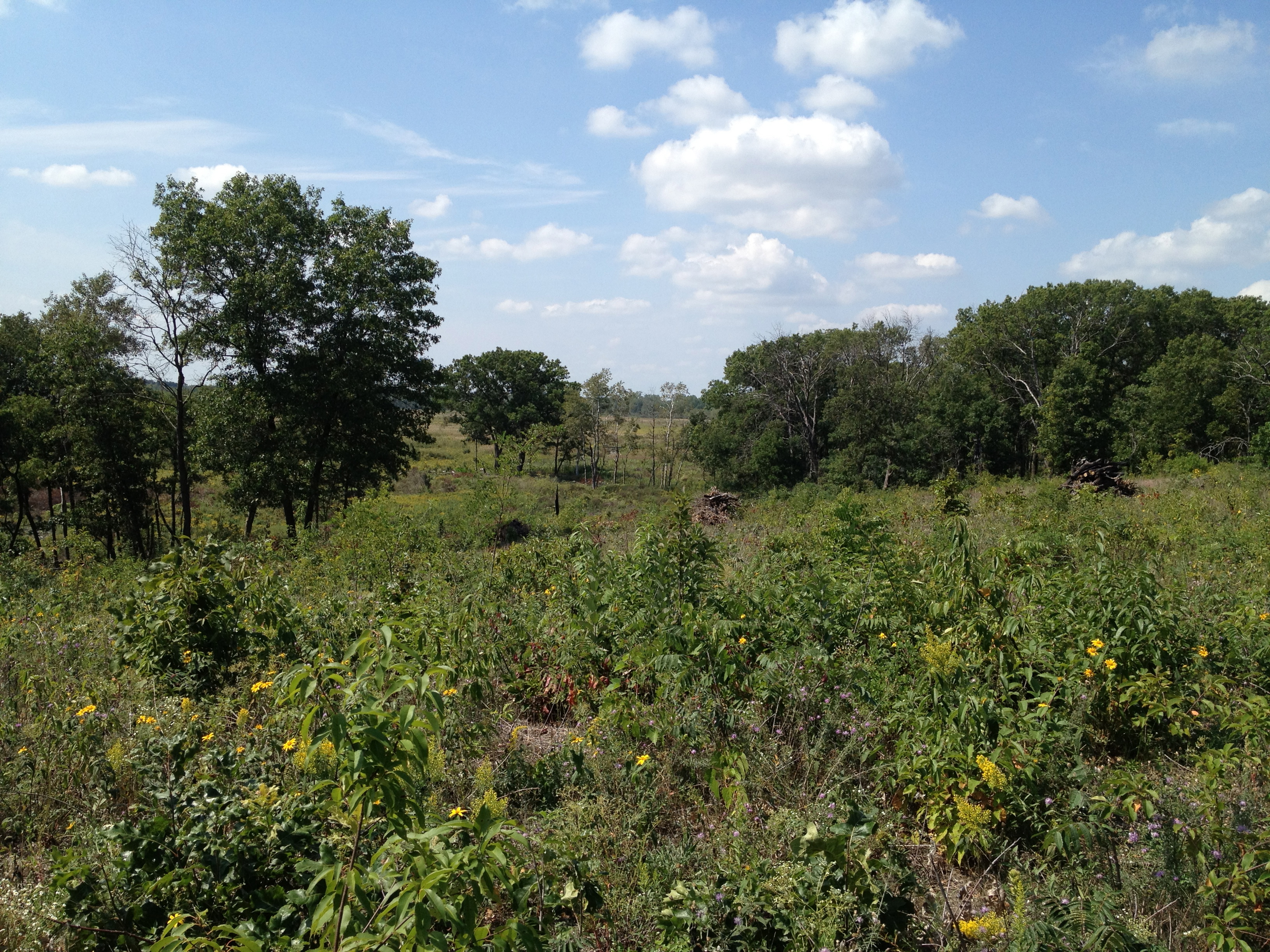
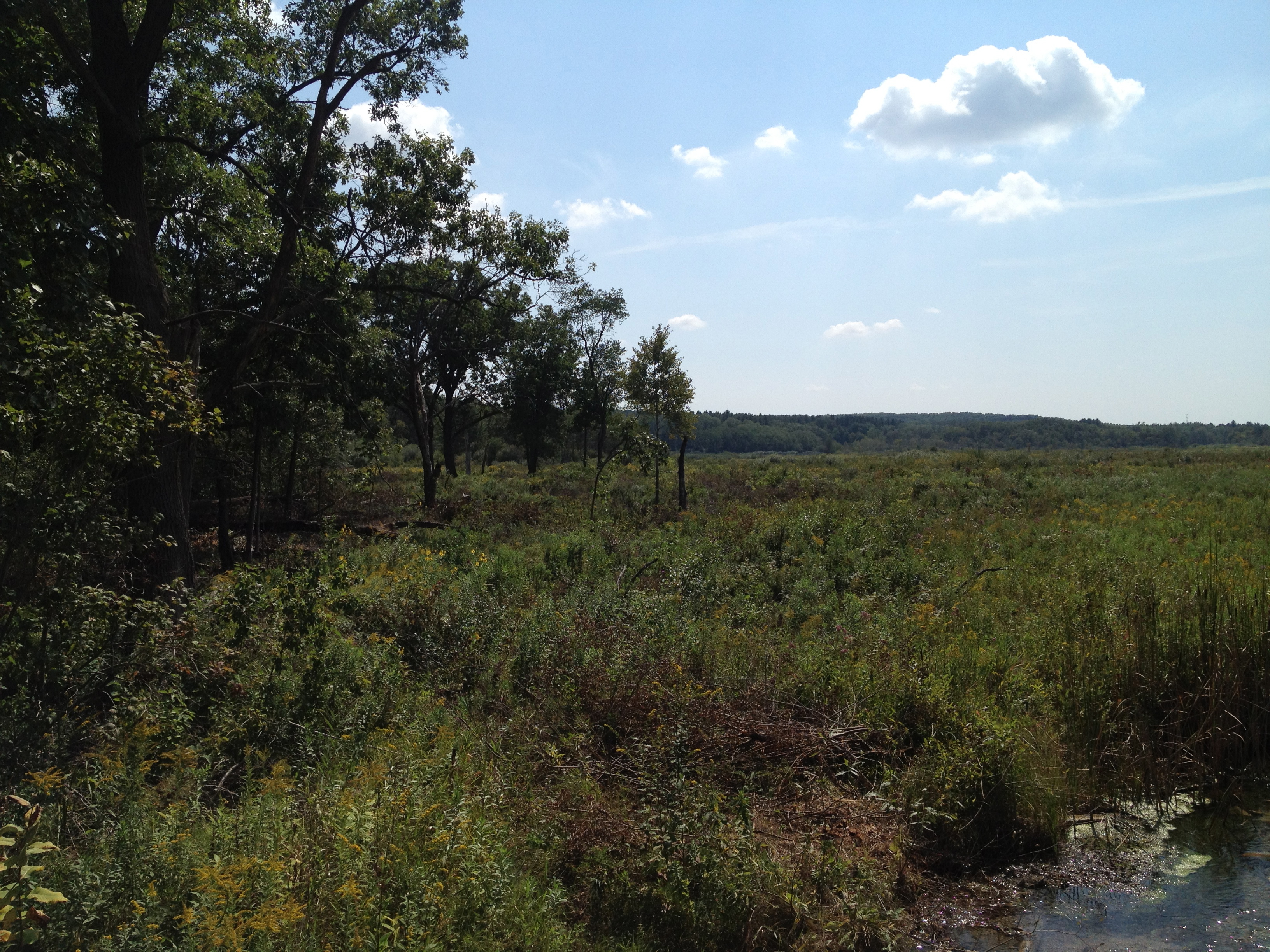
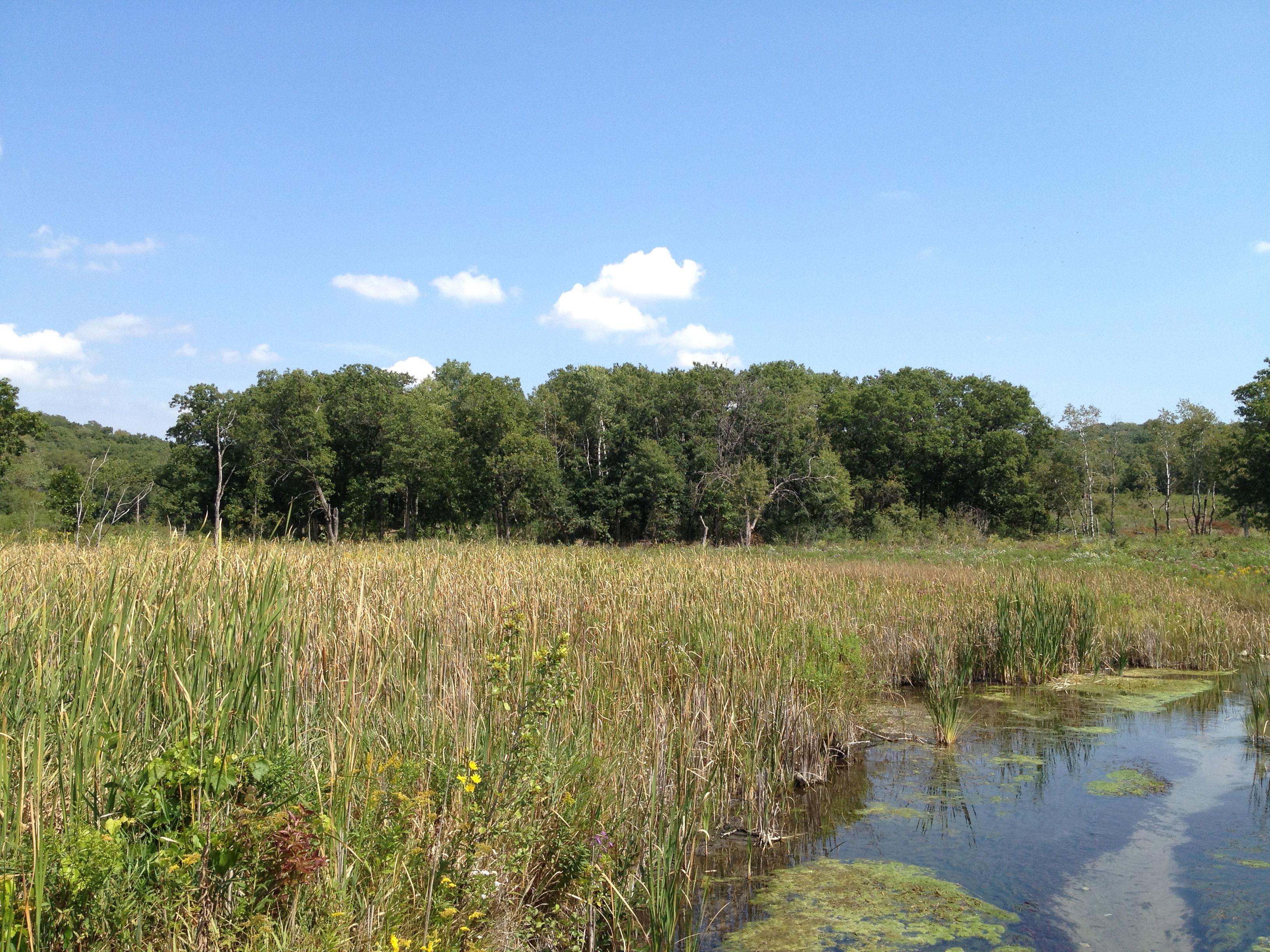
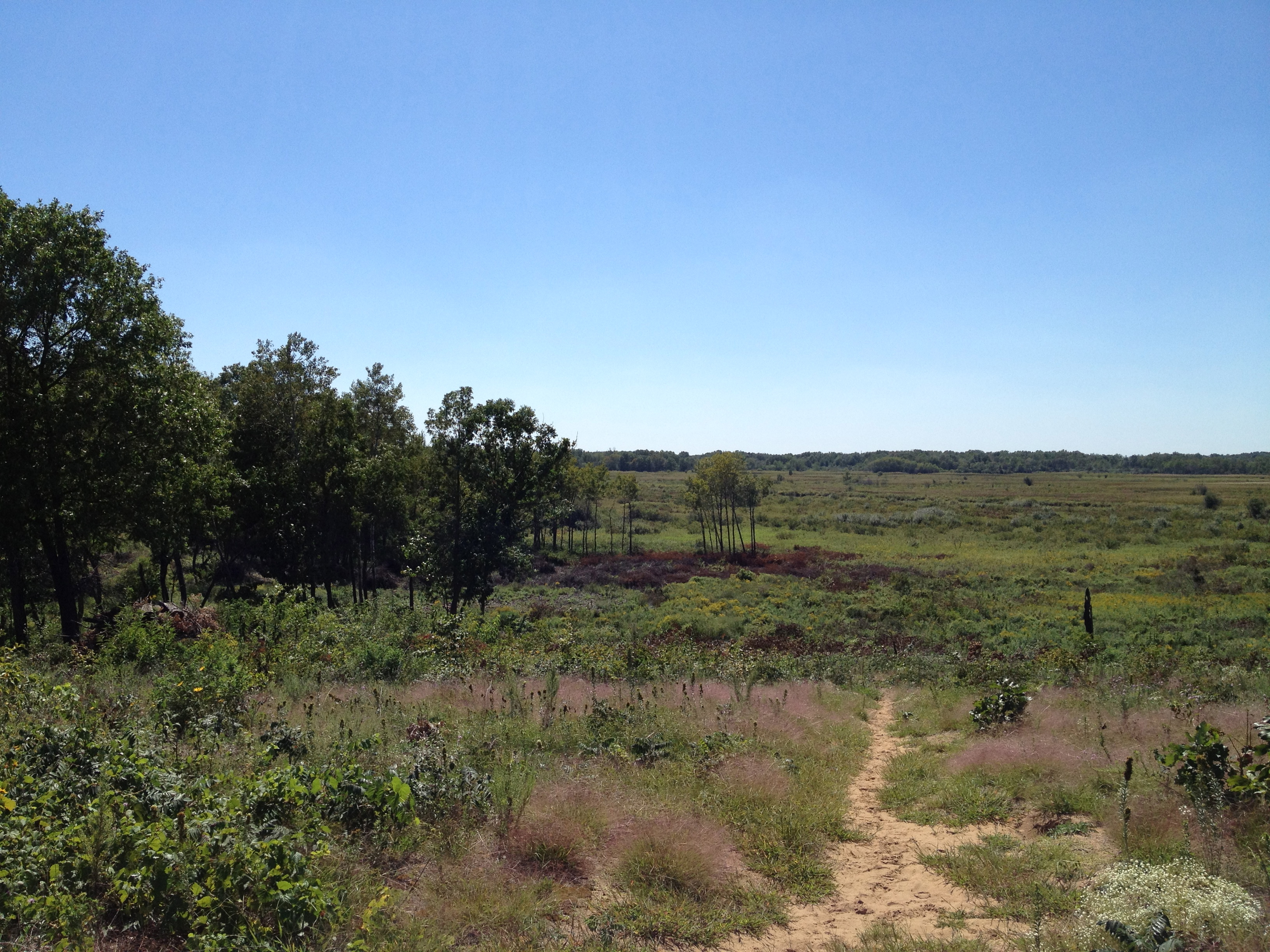
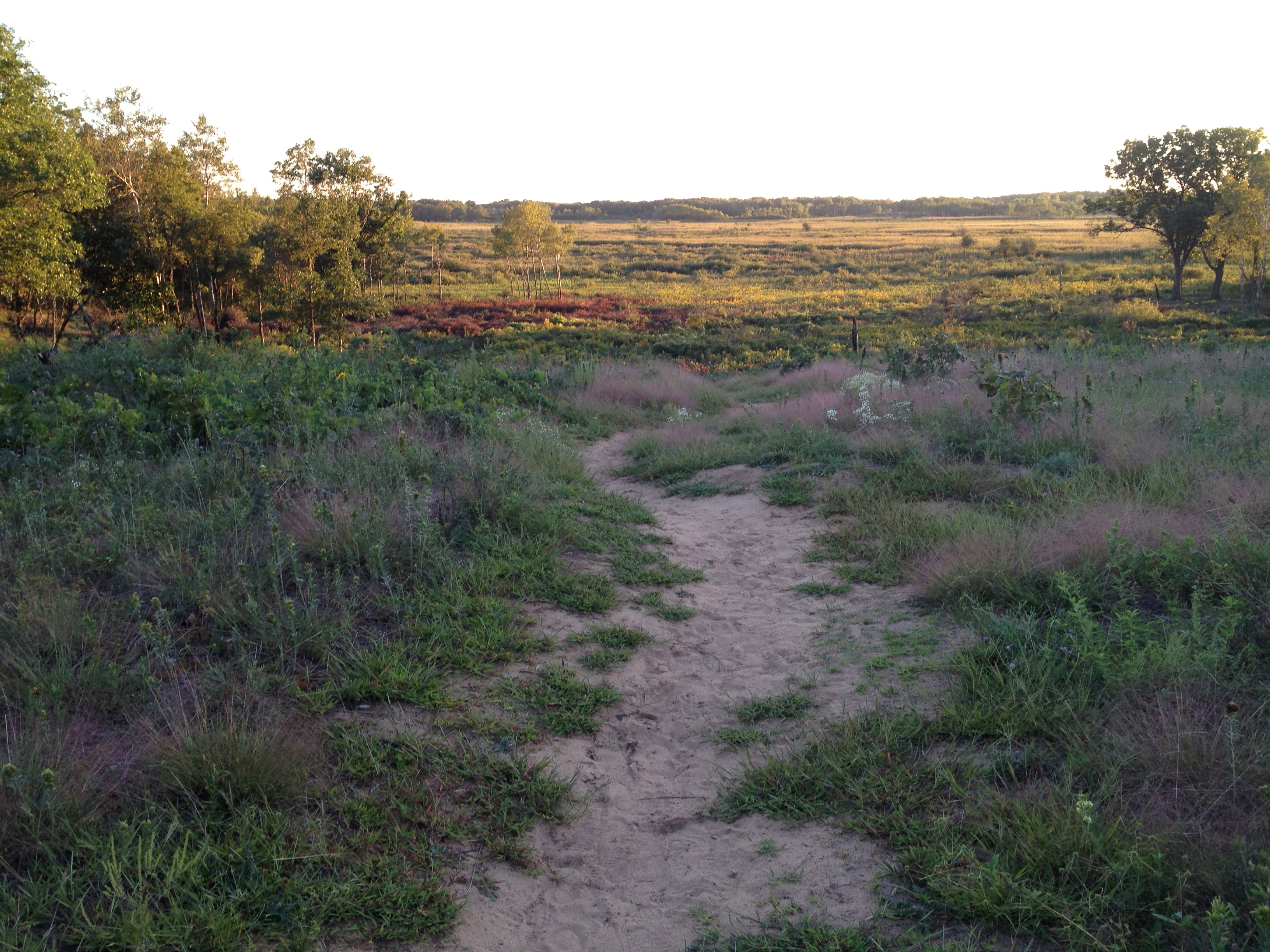
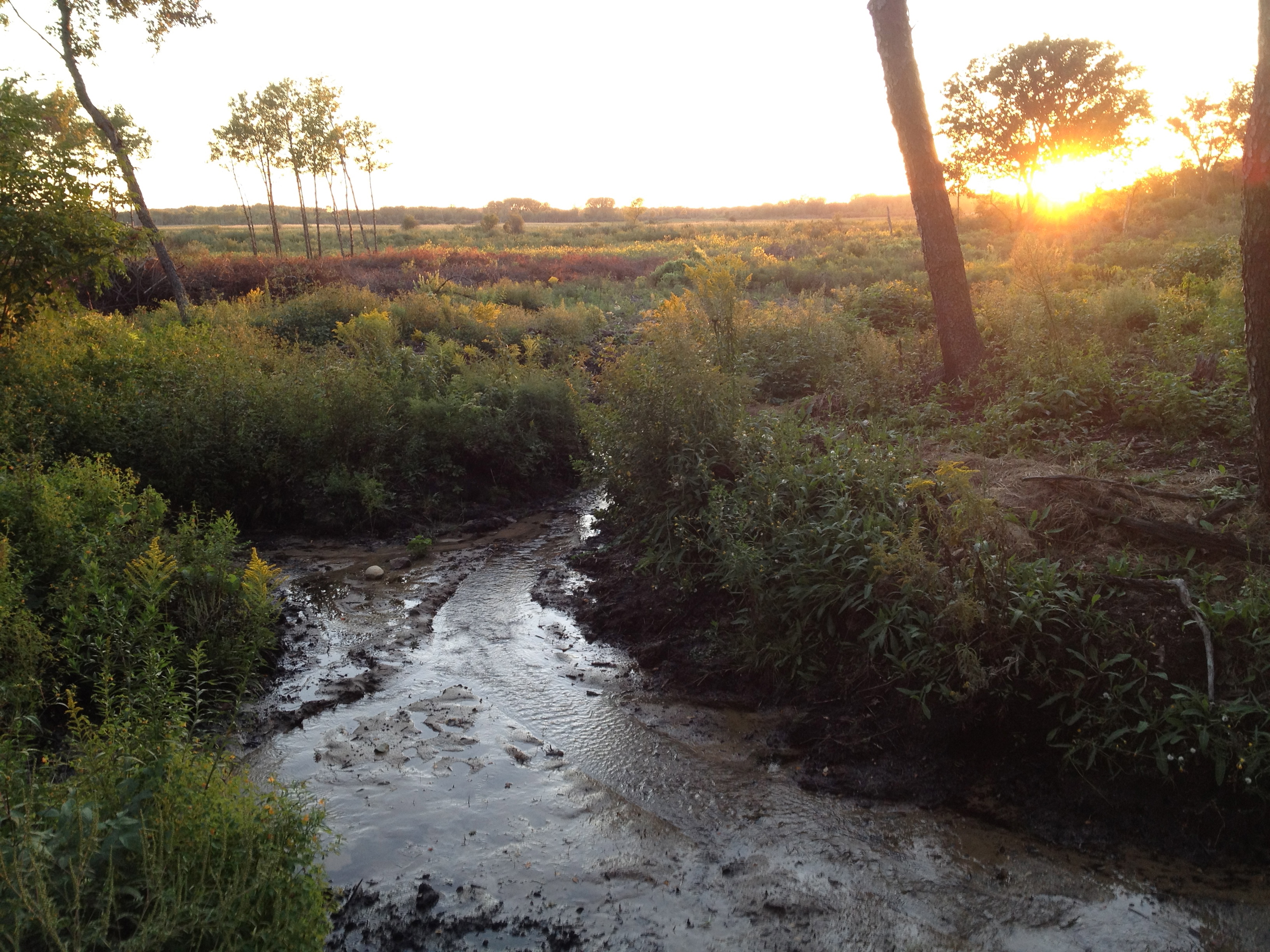
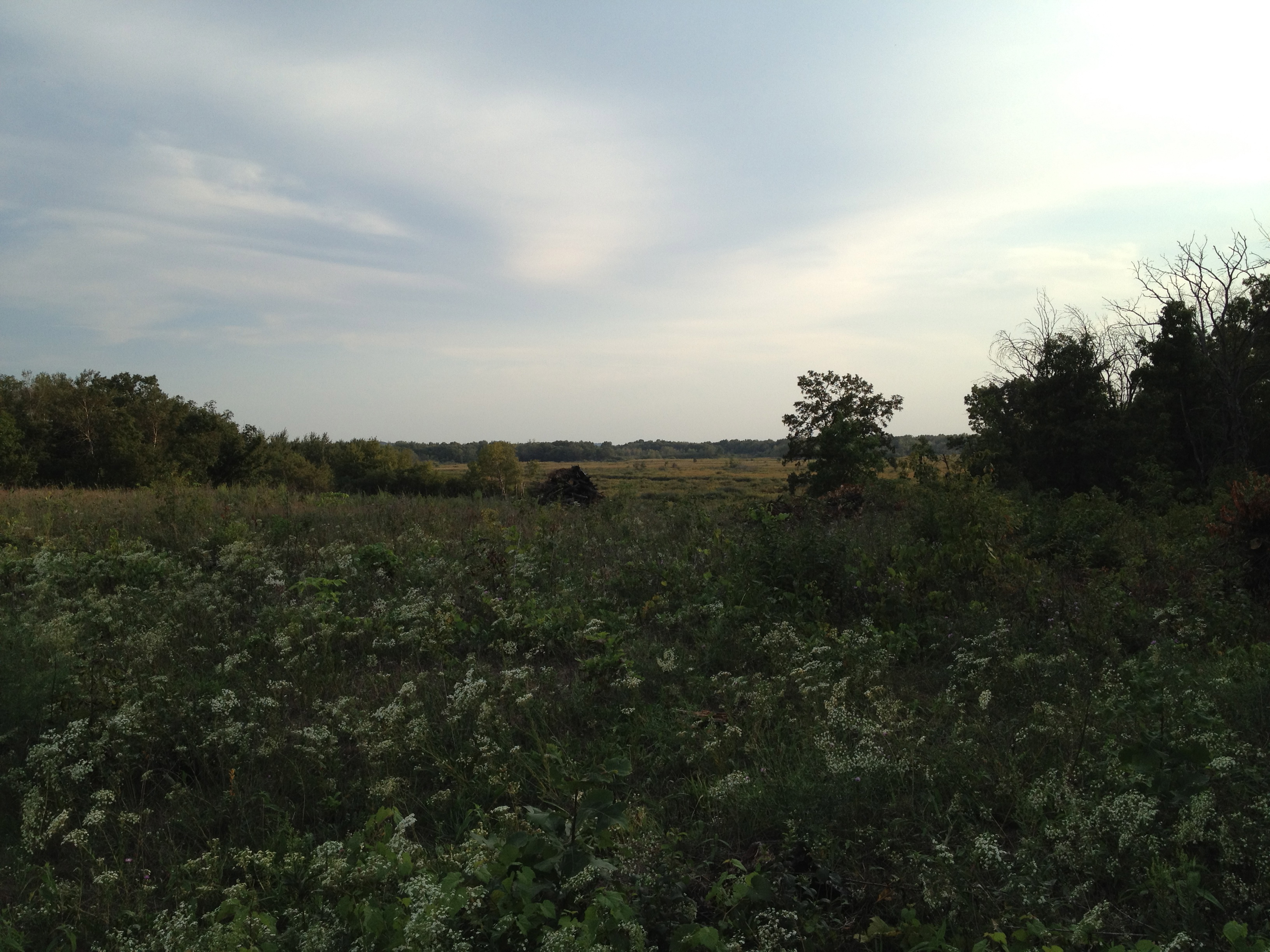
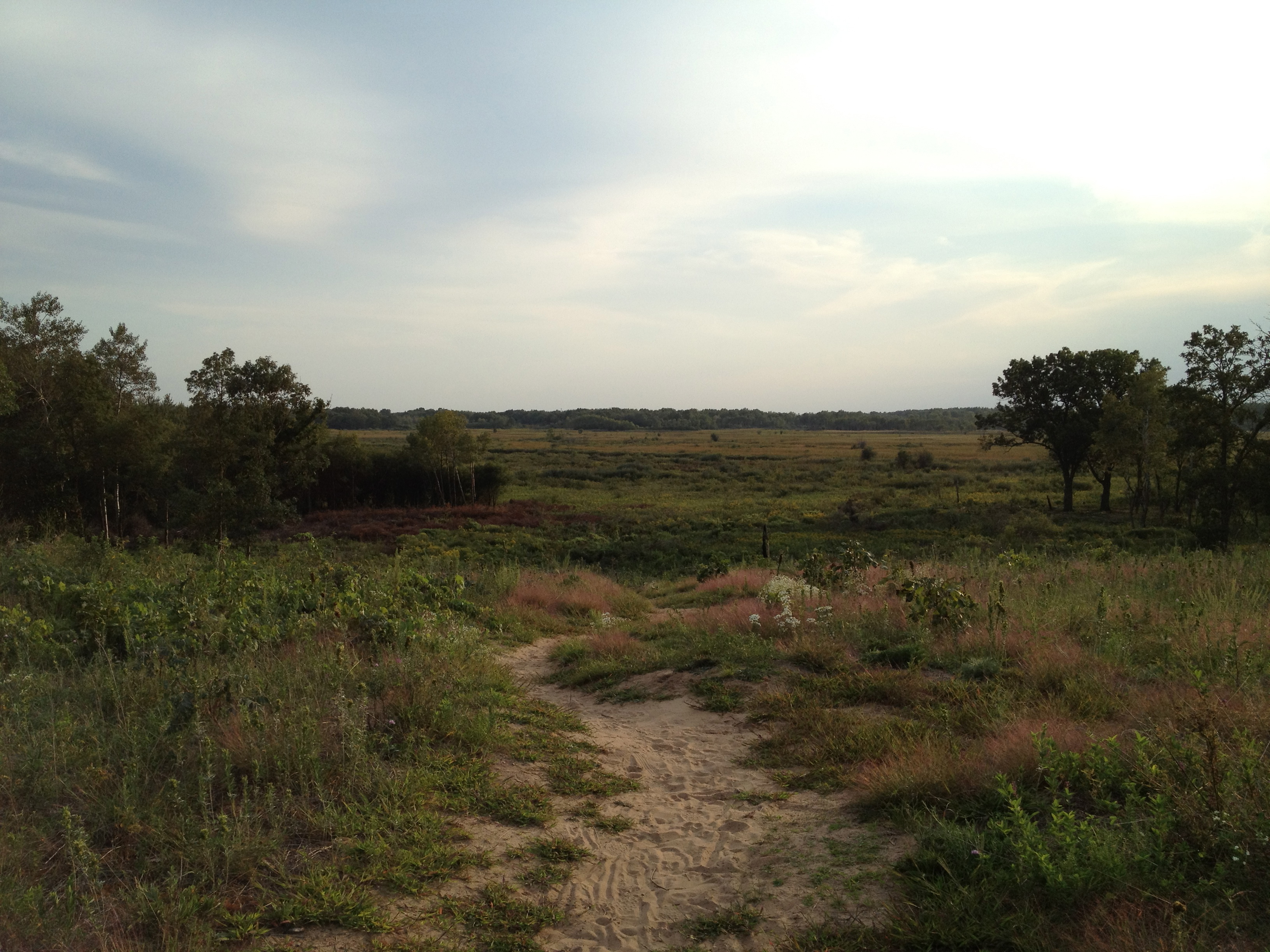
One of my favorite views (and with the recent efforts to clear out some trees, an even better view) of the Scuppernong River Habitat Area, is located at the old Native American campsite. This photo of the fantastic view was taken 8/27/12.
Last Autumn I found this large spider at the Native American campsite. I don’t know spiders, but I think its probably a Wolf Spider.
Here is a photo of the Hotel Spring that I took earlier this year, and I’d like to mention on my last trip there (2 days ago) I noticed one of the bricks had fallen off the wall and into the water.
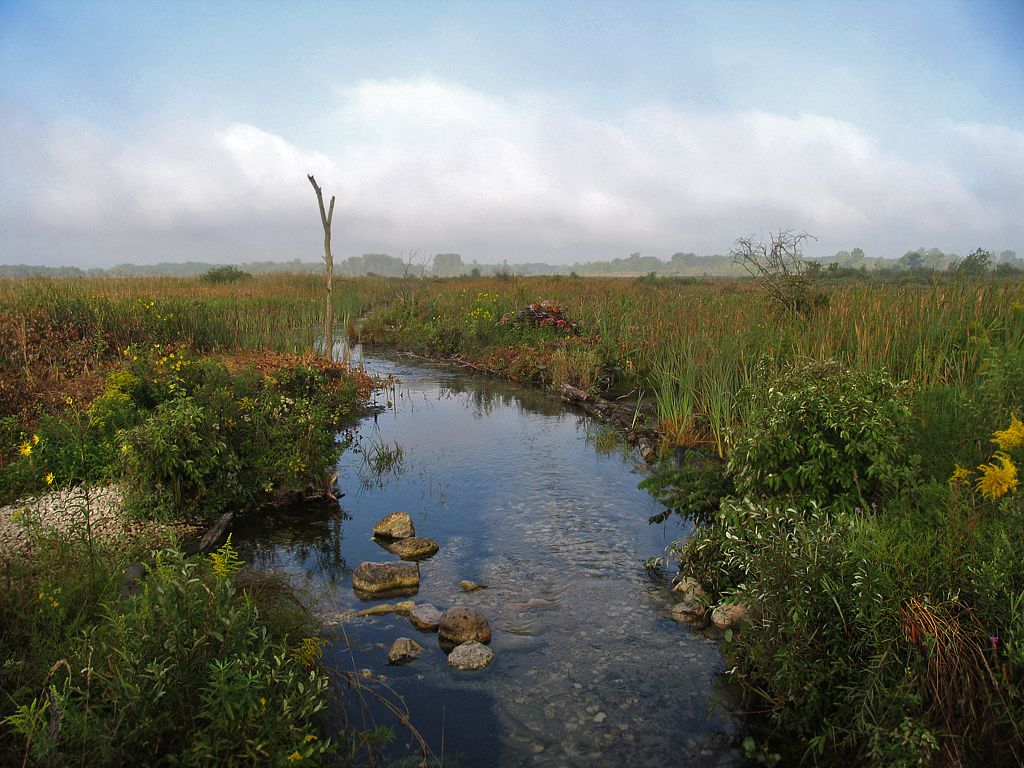
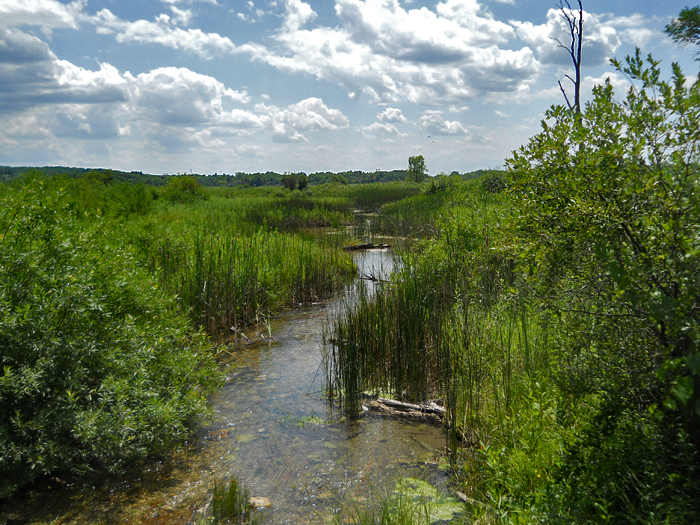
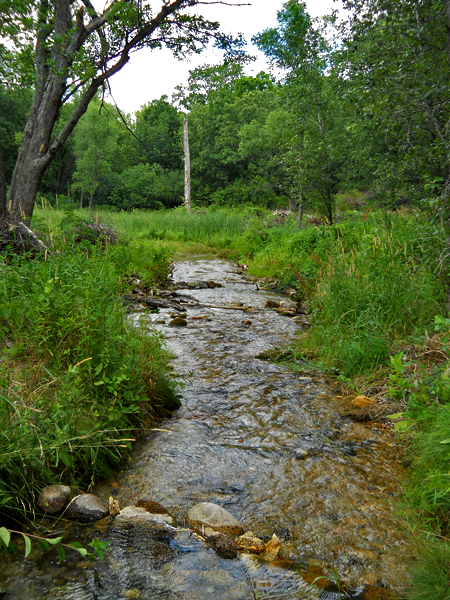
Lastly, I have a few photos of the centerpiece of this trail, the Scuppernong River.
The first photo was taken on August 27th, in the morning before the fog rolled off. This is one of my favorite parts of the trail. There always seems to be a lot of bird life in this area such as Eastern Kingbirds, Cooper’s Hawks, Belted Kingfishers, American Goldfinches, and Great Blue Herons. I know its also a good place to find Garter Snakes, Hog-Nosed Snakes, and Northern Watersnakes. I love that the place is literally crawling with wildlife.
These two photos were taken just past the Marl Works, to the east. This area is listed as #5 on the guide and highlights fur trapping. The first photo was taken in the morning on August 27th, 2012, and the second was taken in the early afternoon on July 9th, 2012.
Finally, this area was recently cleared right near the old Hotel, and is listed #12 on the guide.
(ed. note, Thanks Jon for your story and great pics!)
It’s good to be back at the Springs! Pati and I had a great time on our road trip out West, which included Yellowstone, The Tetons, Glacier, Crater Lake and Mt Shasta. I know this will sound crazy but I am able to share our experience ala John Coffey, the death row prisoner featured in the movie “The Green Mile”, so be sure to visit me out at the Springs so I can lay my hands on you!
Out West, when you want to get something done, you “Get After It” and that is going to be our new motto out at the Springs.
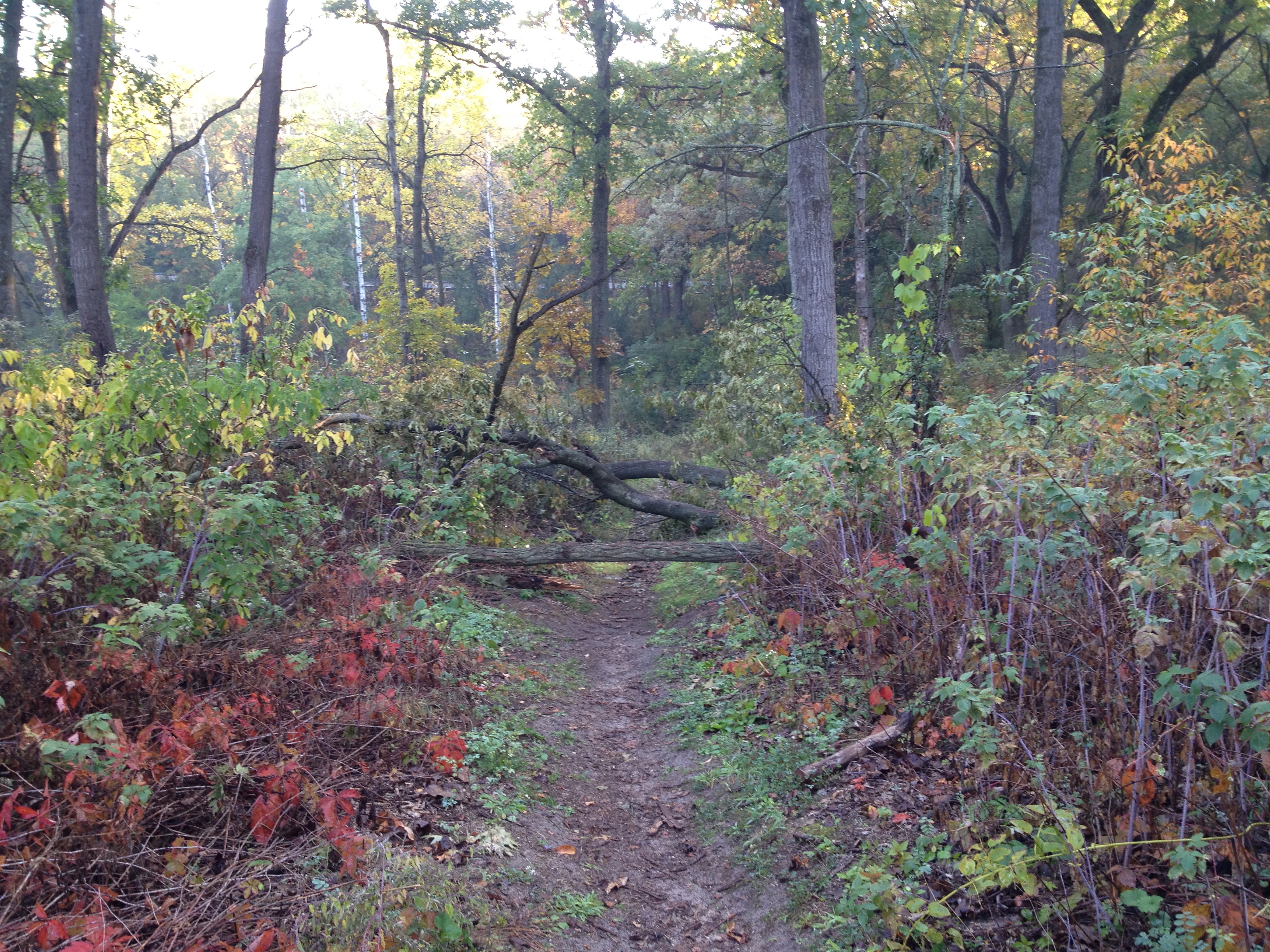
Lindsay and I “got after it” yesterday, 10/4, and the day started with removing a huge Red Oak that snapped off at the base and fell across the trail just up the hill from the Scuppernong Spring.
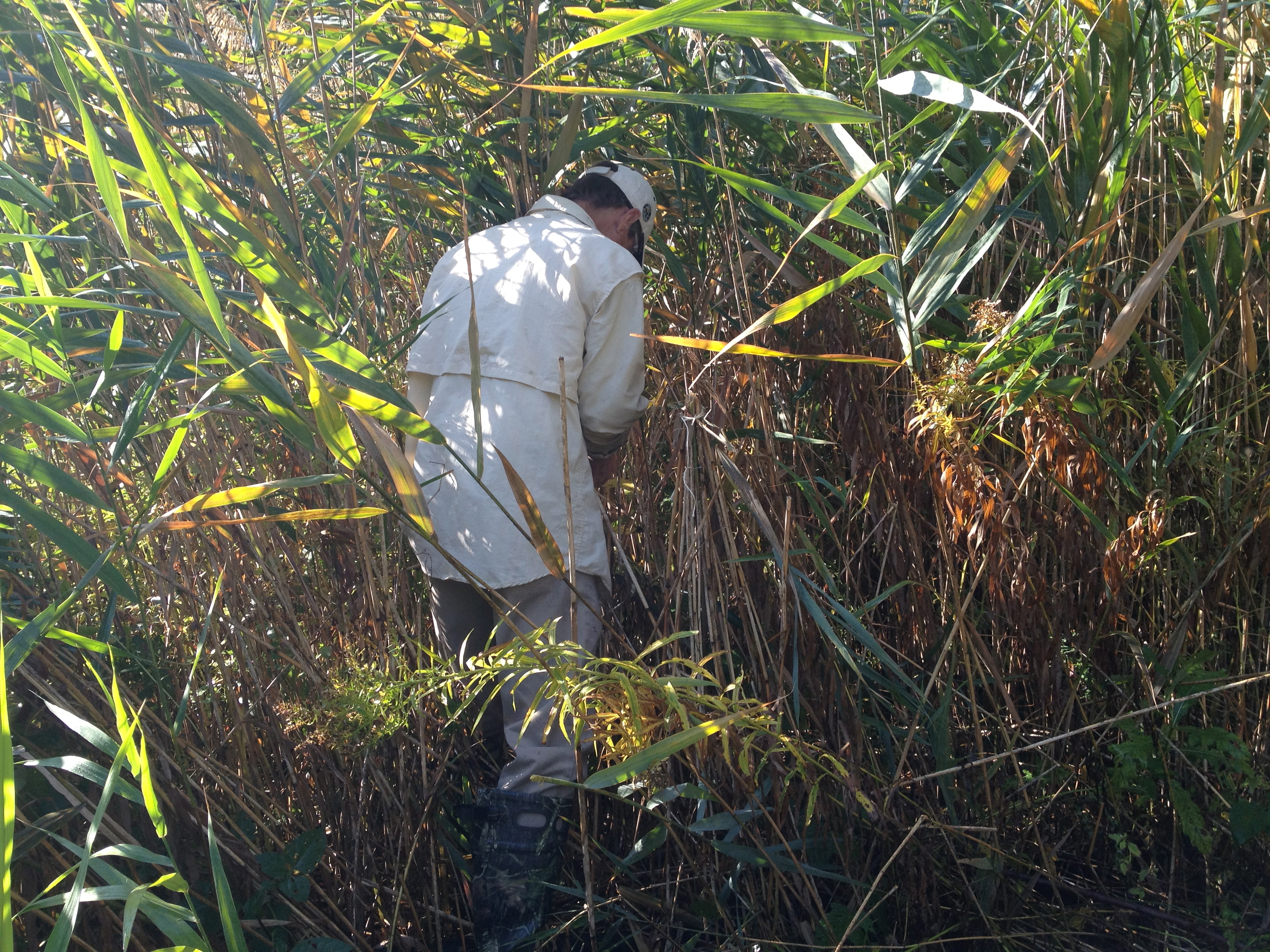
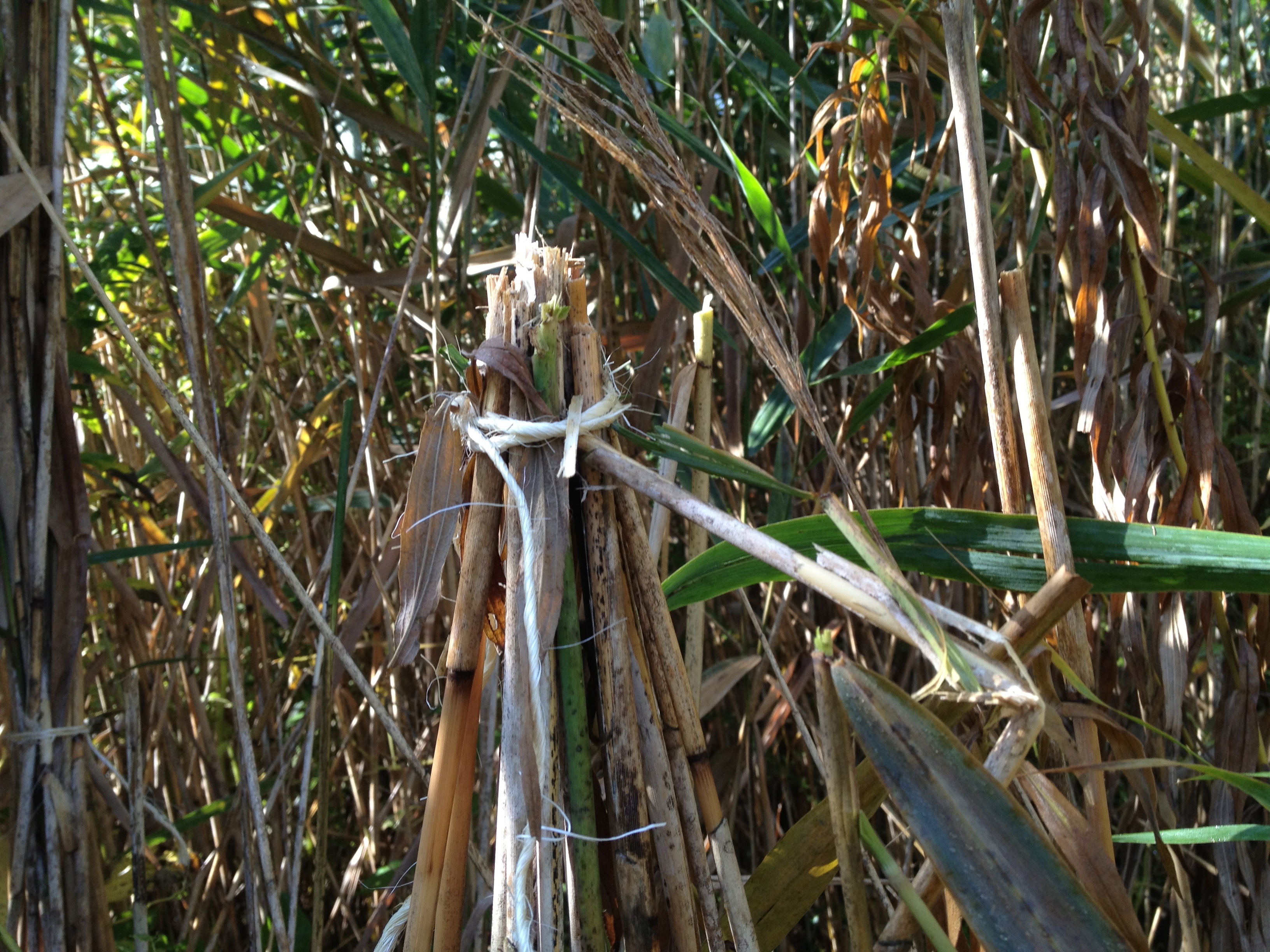
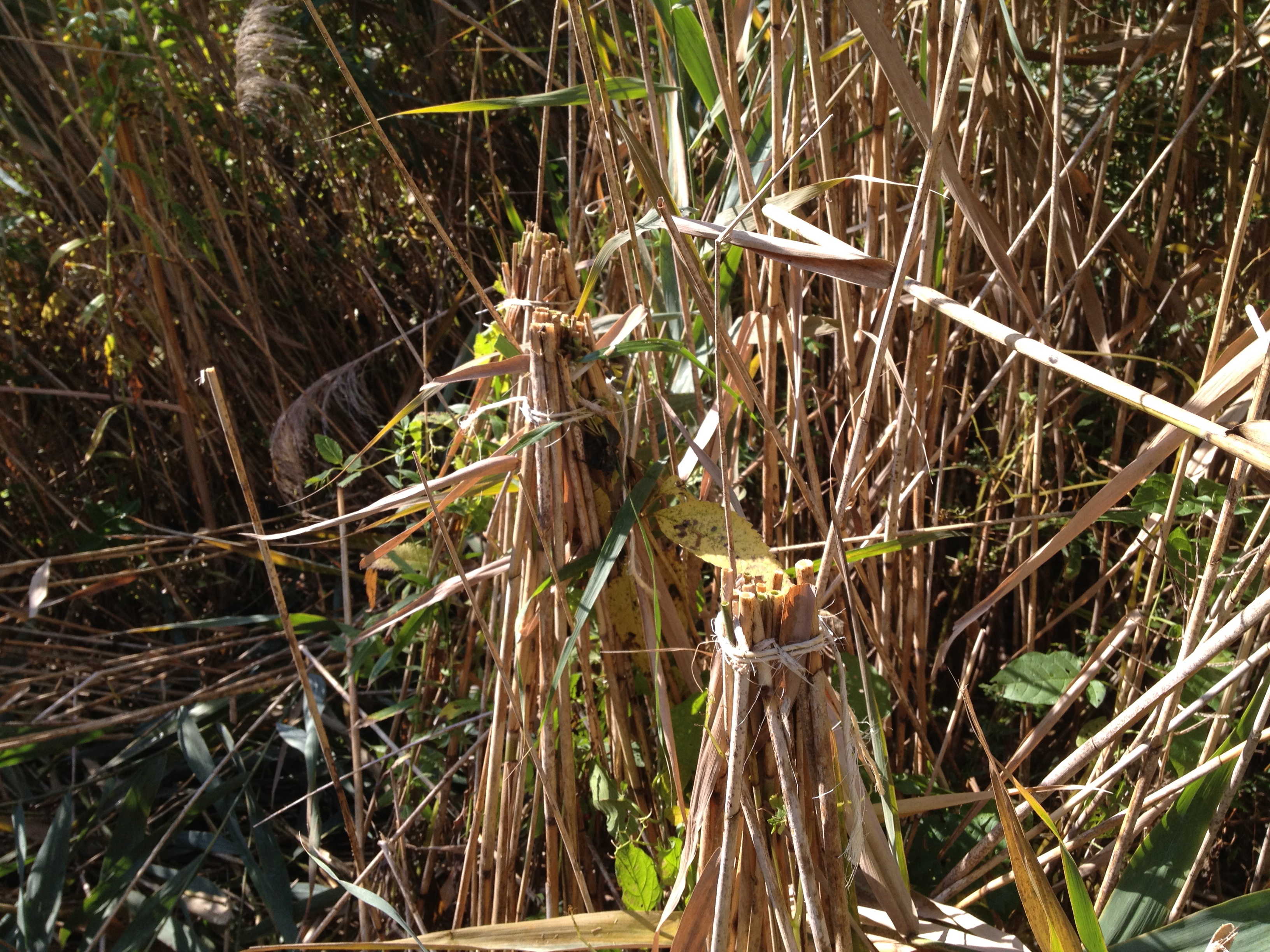
Then we went down to the river just below the Scuppernong Spring to attack a patch of Phragmities that we are treating as a test plot. We want to see how the technique of bundling, cutting and poisoning with Habitat works. Lindsay learned the technique while volunteering with the DNR (Jared Urban) at the Bluff Creek Site. Here our a few pictures
As we were “getting after it”, Dave Hoffman, DNR Bureau of Endangered Resources Specialist, who is currently working to secure a grant via the North American Wetland Conservation Act to continue the restoration efforts in the Scuppernong River Habitat Area begun by Ron Kurowski, paid us a visit. What a coincidence! With the departure of DNR veteran Tim Peters, Dave is stepping up to fill the gap in coordinating the DNR efforts to execute the master plan for the Scuppernong River watershed. We toured the site with Dave and captured a short interview with him, which you can listen to here Dave Hoffman Interview 20121004.
I’m revisiting a couple of areas that I worked on last year. On the first pass through these areas along the river, I focused on Buckthorn and left a lot of brush including Willows and Dogwoods and a lot of scruffy, half-burned, Cherry trees and spindly Aspens that have fallen over without the Buckthorn there to prop them up. The areas in question are highlighted below.
Trail boss Don Dane and retired DNR naturalist Ron Kurowski both recommended cutting these woody plants to clear the way for the natural Fen and Wet Meadow plant communities. This will also improve the views from the bridges at the Marl Pits #4 and on the Scuppernong River at #5 above on the map as well as reveal clear views of the Marl Pit bridge and Scuppernong River from the Scenic Overlook on the Indian Campground.
Here is view from the Scenic Overlook looking in the direction of the Marl Pit bridge. The brush in question is just to the right of the two big Red Oak trees in the center of the picture.
Here is view from the bridge over the Scuppernong River at signpost #5. The brush is on the left in the shadows.
And here is the view from the Marl Pit bridge. The brush appears above the cattails and below the large trees.
That was harder than I thought it would be. After 10+ hours cutting in a Willow thicket, I was about ready to throw my chain saw at it. It was hot today (9/3), and I was pouring sweat from the minute I fired up the chain saw. Here are the after pictures, first from the scenic overlook. It’s hard to see in this picture but you can now see the river flowing underneath the Marl Pit bridge.
And the view from the bridge over the Scuppernong River at #5.
And the view from the Marl Pit bridge. Notice you can see through to the scenic overlook.
I’m taking a break for a month and will be back at it around 10/6. Hope to see you out at the Springs sometime.
It’s been a while since we cut Buckthorn at the Indian Springs. Lindsay took a bite out of it on Saturday 8/25 and I did some cutting yesterday 8/27. Here are some before shots.
At the work site as the fog was lifting.
And the view from the scenic overlook.
6 tanks of gas and bar oil later the view from the work site.
And the scenic overlook.
And from the Indian Spring.
We are focusing on cutting now to allow the Buckthorn to dry out as much as possible. We’ll pile it later to finish preparing it for burning this Winter, when we get some snow cover.
On his last visit, Ron Kurowski showed me where a spring was hidden by the old hotel site. I have marked it with a white line on this map.
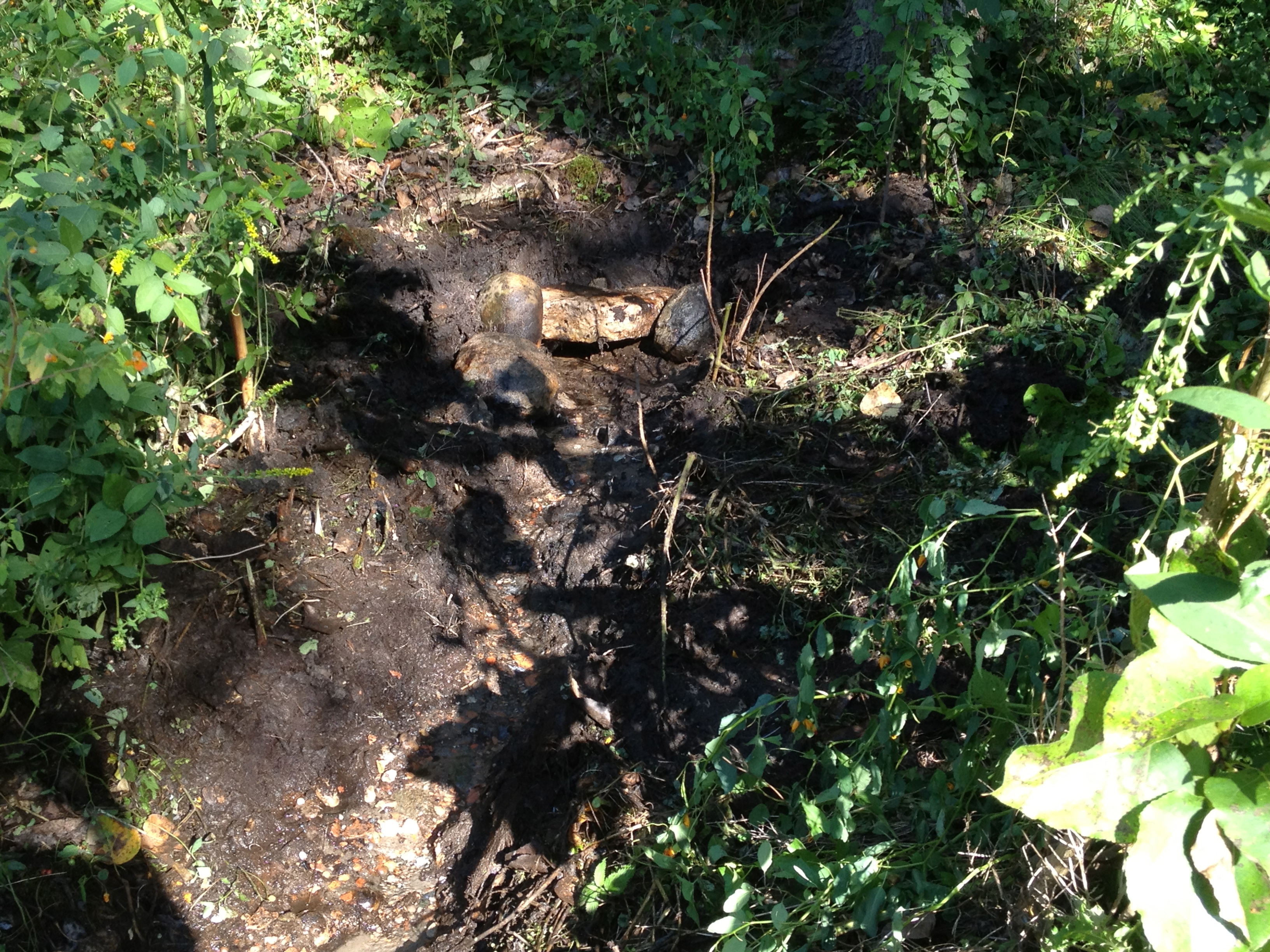
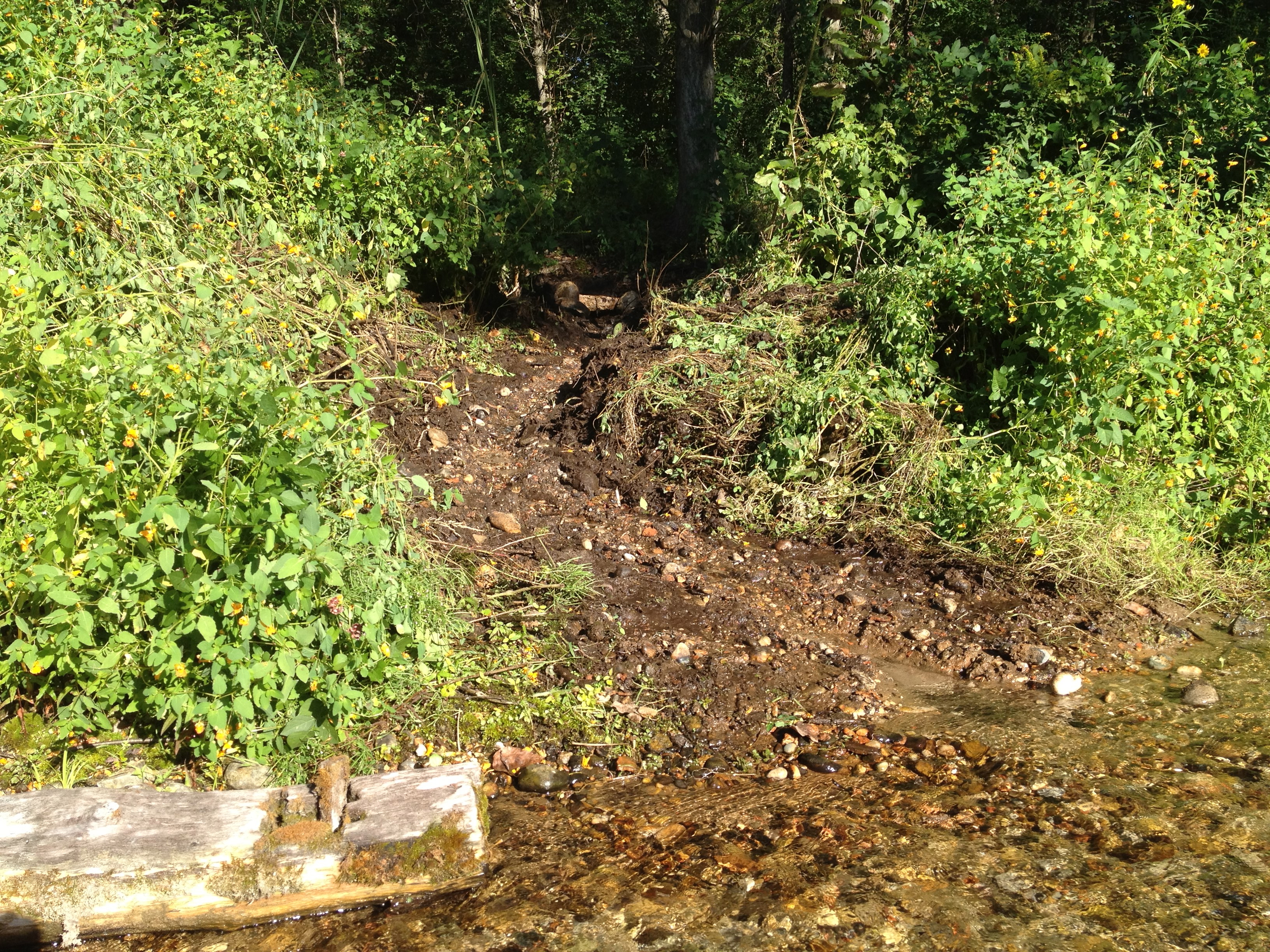
I forgot to take some before pictures, but all you could see was a bit of water cress. Below are pictures of the “new” Spring after I cleaned it up. When I found the 4″ pipe that was originally installed to collect and channel the outflow of the Spring and unplugged it, the water began flowing at a much higher volume. Thanks Ron for pointing out the location of this Spring!
The view from the trail. The outflow pipe is hidden under the big flat stone.
And the view from the river.
It was another beautiful day at the Springs. Here are a few closing shots.
The scenic overlook and Indian Campground after the recent clearings as seen from the Marl pits.
Here is a guest blog from Ron Kurowski, retired DNR naturalist.
This is a photo of forked aster (state threatened plant),
which is found in only one location at the Scuppernong Springs at present. It is found on the east side of the sand dune in the more open woods, towards the bottom of the slope (left of the boardwalk).
It appeared suddenly after several controlled burns. At times I have seen over 100 plants blooming in this general location. There is also a colony blooming at Paradise Springs, so I would suspect that it likes wet soils.
You will also find the larger gentian growing here too, probably reaching its peak, sometime around the middle of September. (ed. note, the picture was taken along the Marl Pit)
This picture shows the large marl pit at its south end.
I have never seen the water level in the marl pits so low. The plant community to the left of the marl pit is part fen and sedge meadow. The fen is just starting to show its beautiful flowers, so people who walk along the marl pit in the next
couple of weeks will see several fen flowers including grass-of-Parnassus, nodding lady’s tresses orchid, small fringed gentian (state threatened) Ohio goldenrod, marsh thistle, and gerardia. Fens are springy wet grass lands
that very alkaline and the rich marl (calcium carbonate) soils make this a
very special site.
(ed. note Thanks Ron! Regarding Purple Loosestrife and Tracy Hame’s recommendation that we introduce the Loosestrife Beetle, Ron explained that the DNR has been doing this for many years in this area. I am following up with him on this to see if we should step up this effort. The Purple Loosestrife appears to be getting the upper hand.)
My last 4 visits to the Springs were spent prepping the Indian Campground for mowing and burning. I made good progress on 8/21 on the Northeast section.
Cutting stumps and charred logs in the sand is tough on the chain, bar and sprocket. The grit gets in between the swiftly rotating parts and wears them down fast. I had to constantly stop and tighten the chain because of the wear on the links. I wore out 4 chains, a bar and 2 sprockets.
To preserve my sanity, I needed to work on something a little easier and more fun so yesterday I focused on continuing the effort to open up the views to the West from the Indian Campground Scenic Overlook.
I am a landscape artist in my dreams and when I resumed working at the Springs in April 2011 my first goal was to open up the views West from the Scenic Overlook. To that end, I began clearing Buckthorn on both sides of the Indian Springs and yesterday was the day to “take the curtain down” and see what we could see. Here is a before picture and video panorama.
The trees in the foreground of the picture above on the left included Cherry, Red Oak and Hickory. Normally I focus on Buckthorn but in this case, recognizing the land was previously an open wetland/meadow, the DNR recommended these trees be cut. I purposely preserved the longest, straightest pieces of wood that I could. I know a couple people who turn wood on lathes and they may be able to make something from these pieces. If you would like to harvest some 10-14″ diameter 20-30′ foot long pieces, of Cherry, Red Oak or Hickory, please help yourself. In the interest of making a dramatic change, I focused on cutting and saved the piling for another day. I must admit, as I contemplated the days work and the huge difference I was about to effect, my heart was racing. As we used to say, it was a rush.
Here is an after picture and video panorama.
The row of Buckthorn on the left in the picture above is the target for the next workday. Later that evening I was joined by my wife Pati, who road her bike out from our home in Milwaukee, and I took a few more pictures.
I hope you like it!
Later that afternoon Ron Kurowski, retired DNR naturalist and the force behind the Scuppernong River Habitat Area project, stopped by and we took a walk around. I can best describe his mood as ebullient. He showed me pictures and described the many flowers, some rare, that he had seen already on his walk. I asked him to document his findings and send me the descriptions and pictures so I can post them as a guest blog here. Thanks Ron!
Ron filled in more of the history of the most recent beaver activity in the area and explained the relationship between the dam they made at the Marl Pit bridge and the defunct short cut trail that used to bisect the loop trail. The dam caused so much water to back up that it flooded the area to the North where the cutoff trail went. Check out the map above, this is a huge area! Although beavers have always been an important contributor to the natural landscape, the powers that be dictated that they had to go. Ron hired a trapper to remove the beaver and he said one of them was over 100 lbs, the biggest beaver he had ever caught. Ron said the beaver at the Marl Pit dam used to be quite an attraction. My efforts to redirect the river back onto its main channel,from where it had gotten diverted by the beavers, is holding up around 90% effective. This will have to be redone.
As we toured the Springs, especially the area around the Emerald Springs, Ron suggested that we contact Ben Heussner, DNR Fish Biologist, and get some of the left over “geo logs” that were originally used to help constrain the river into a narrower channel. We need to install more of these logs and do some dredging to continue the efforts to put the river back into its natural bed. There is still too much water spreading out into the surrounding land around the Emerald Springs and it is feeding the Phragmites and Cattail. We’re not done “fixing the water” yet.








































 Scuppernong Springs Nature Trail