The walls were closing in on me when I left Milwaukee on September 19th and I hoped a little camping adventure at Ottawa Lake would provide some breathing space. The serendipitous discovery of a little Shangri-La at the Ottawa Lake Campground walk-in sites #335-334 will bring me joy for years to come.
I had been camping at Whitewater Lake for the first 3 nights of the trip and met Pati there on Sunday morning. We visited the Whitewater Prairie
and took a hike on the Ice Age Trail
and then she offered to help me setup camp at Ottawa Lake. Lindsay and Connie joined us shortly after with a bottle of wine to compliment Pati’s and we got the dinner and the fire started.
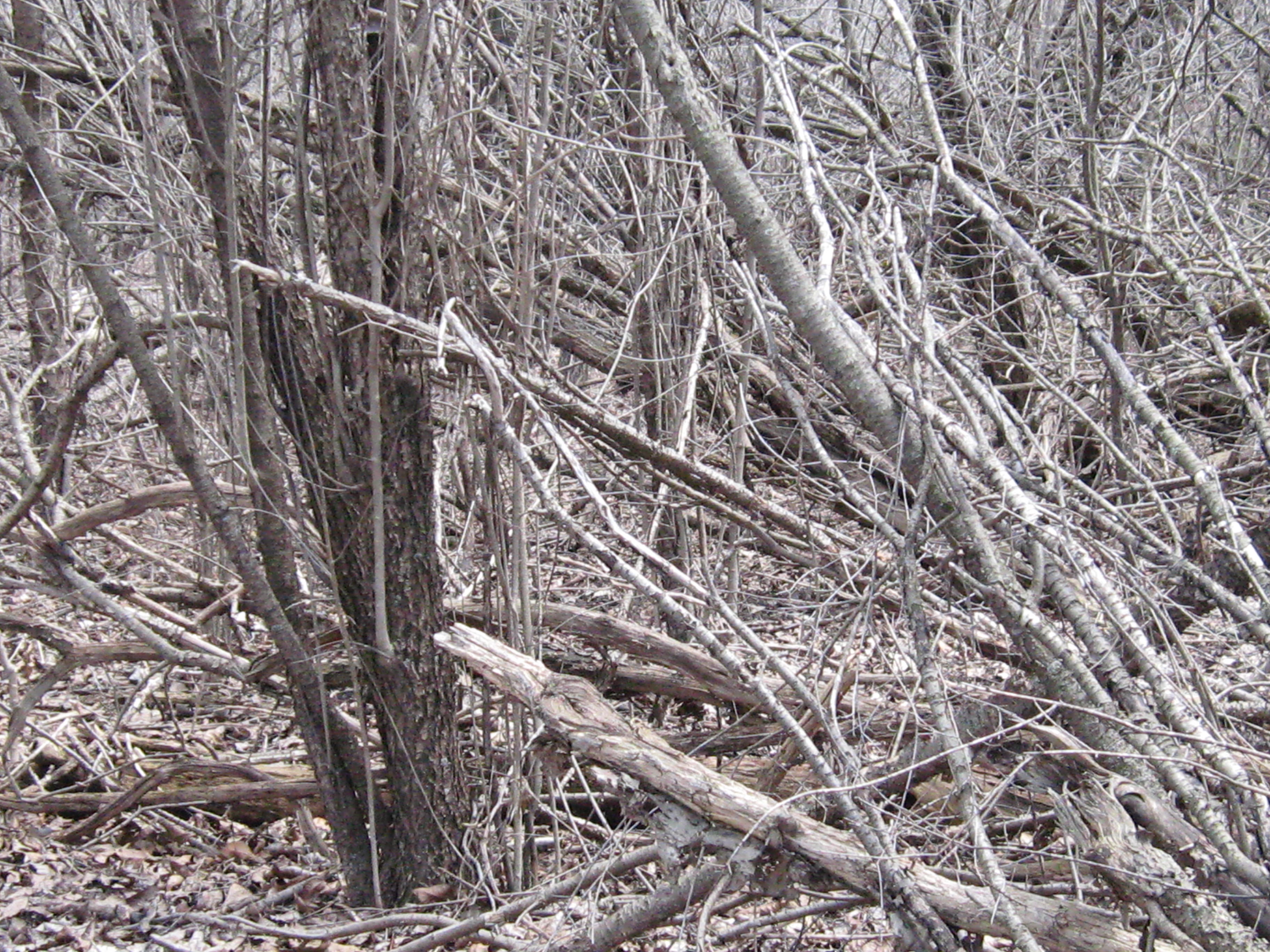
Lindsay and I squinted through the wall of buckthorn blocking the view to Ottawa Lake and I was determined to cut a corridor through it the very next day. “Cut it all!” Lindsay exclaimed. Pati called it my Shangri-La, and with The Springs right across Hwy ZZ it definitely qualifies as a mystical, harmonious, earthly paradise; I could definitely be permanently happy there!
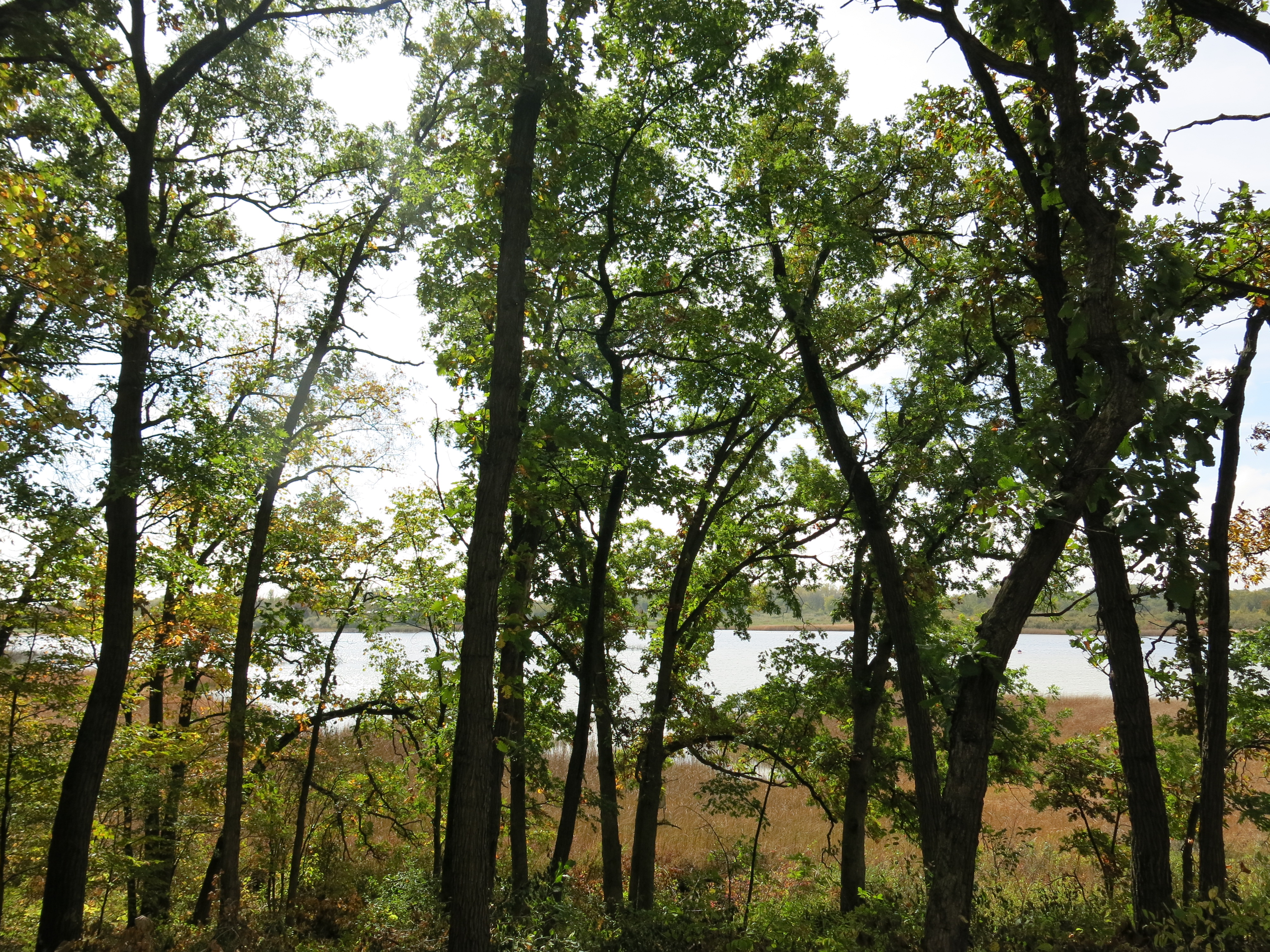
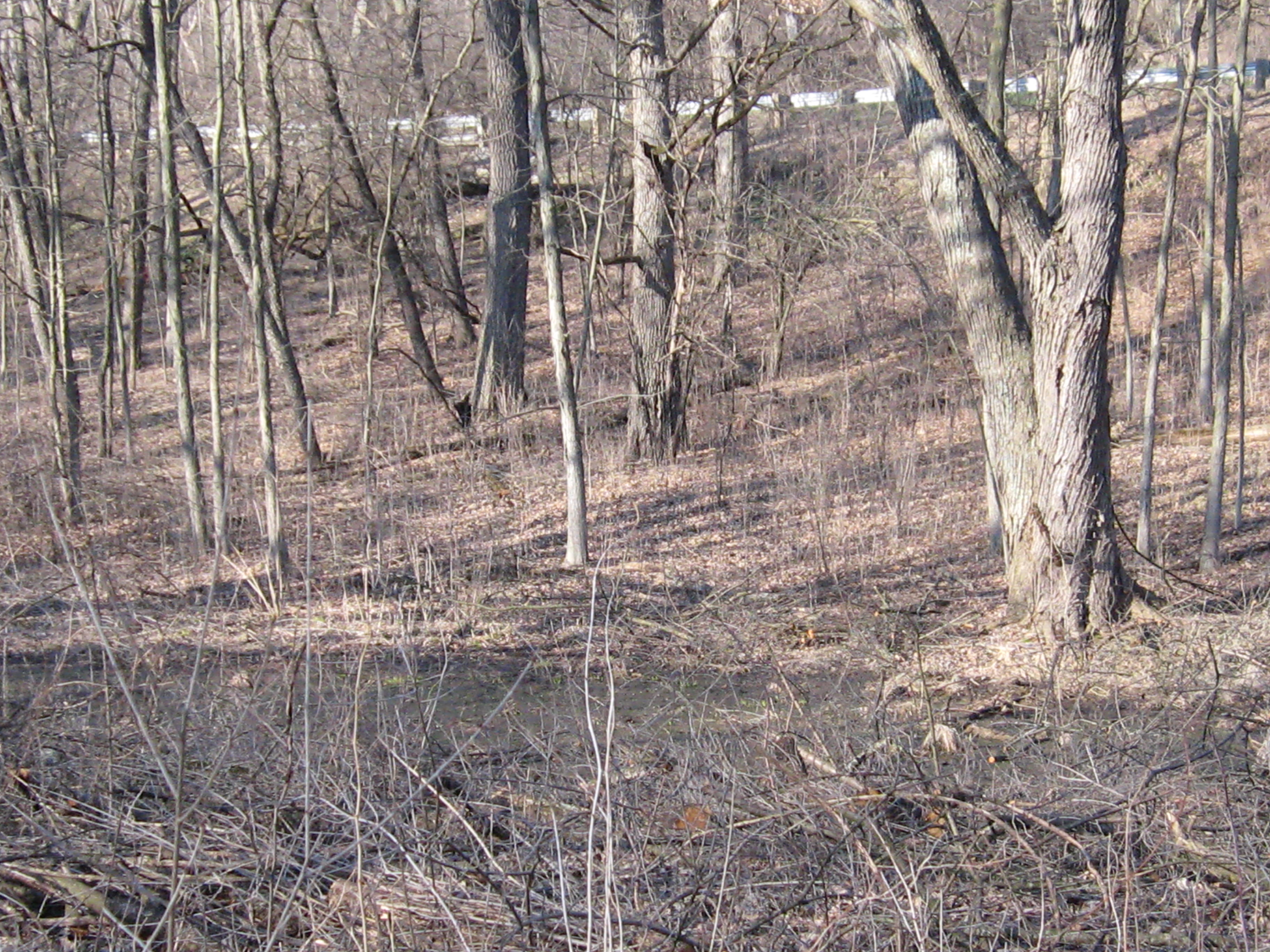
Here is the view from site #335 as I was just getting started.
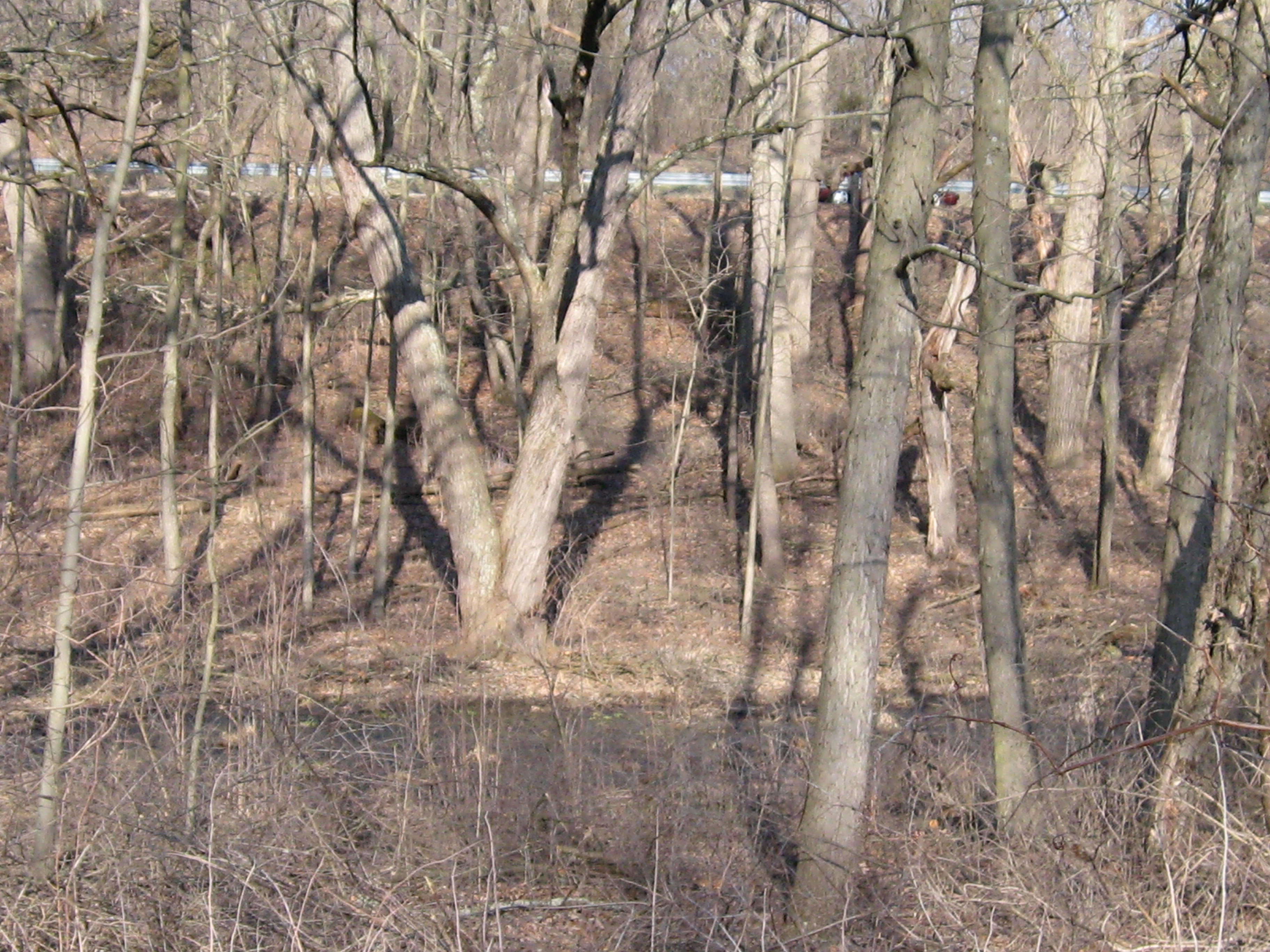
And after…
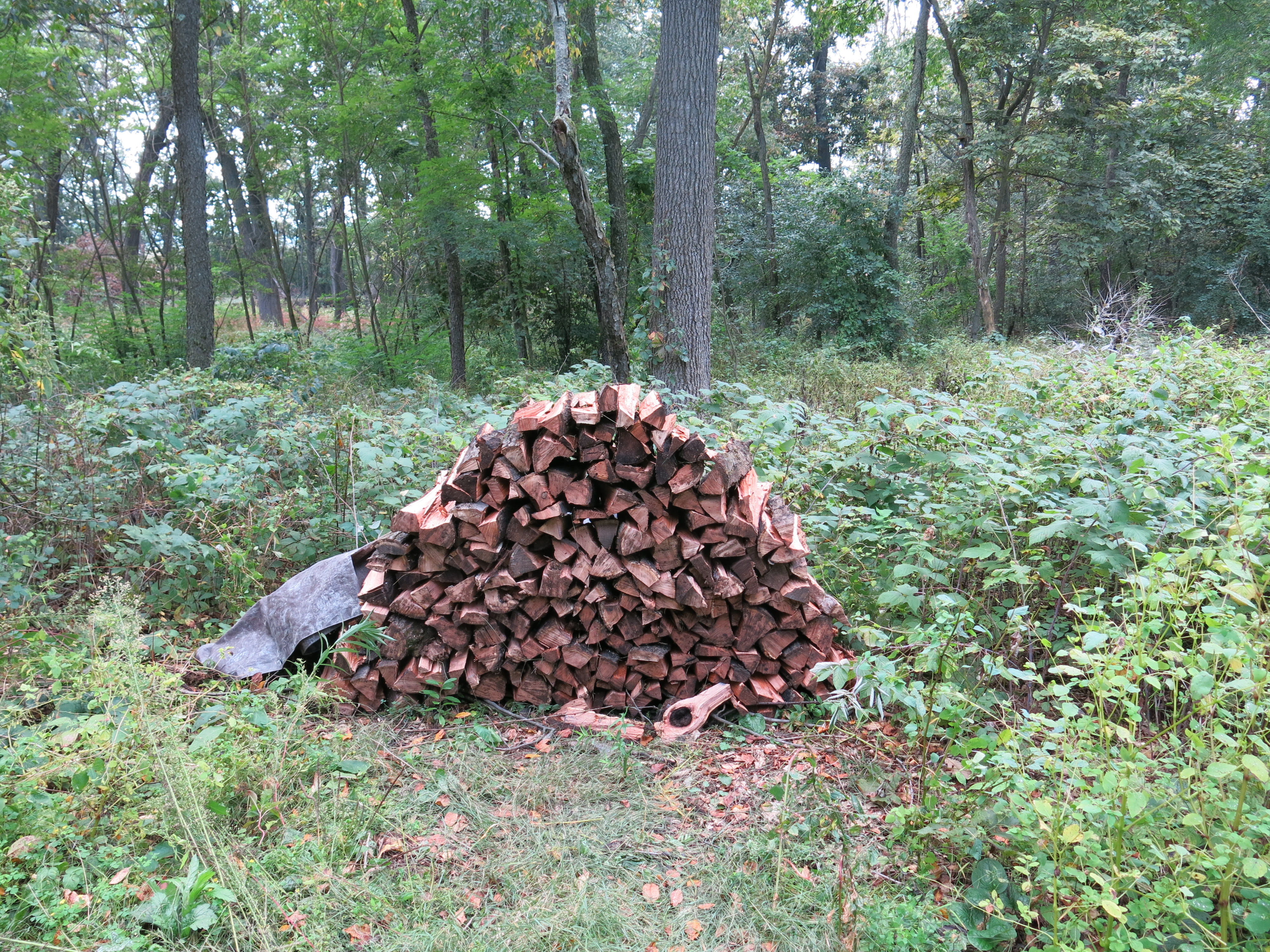
I harvested a downed red oak for firewood
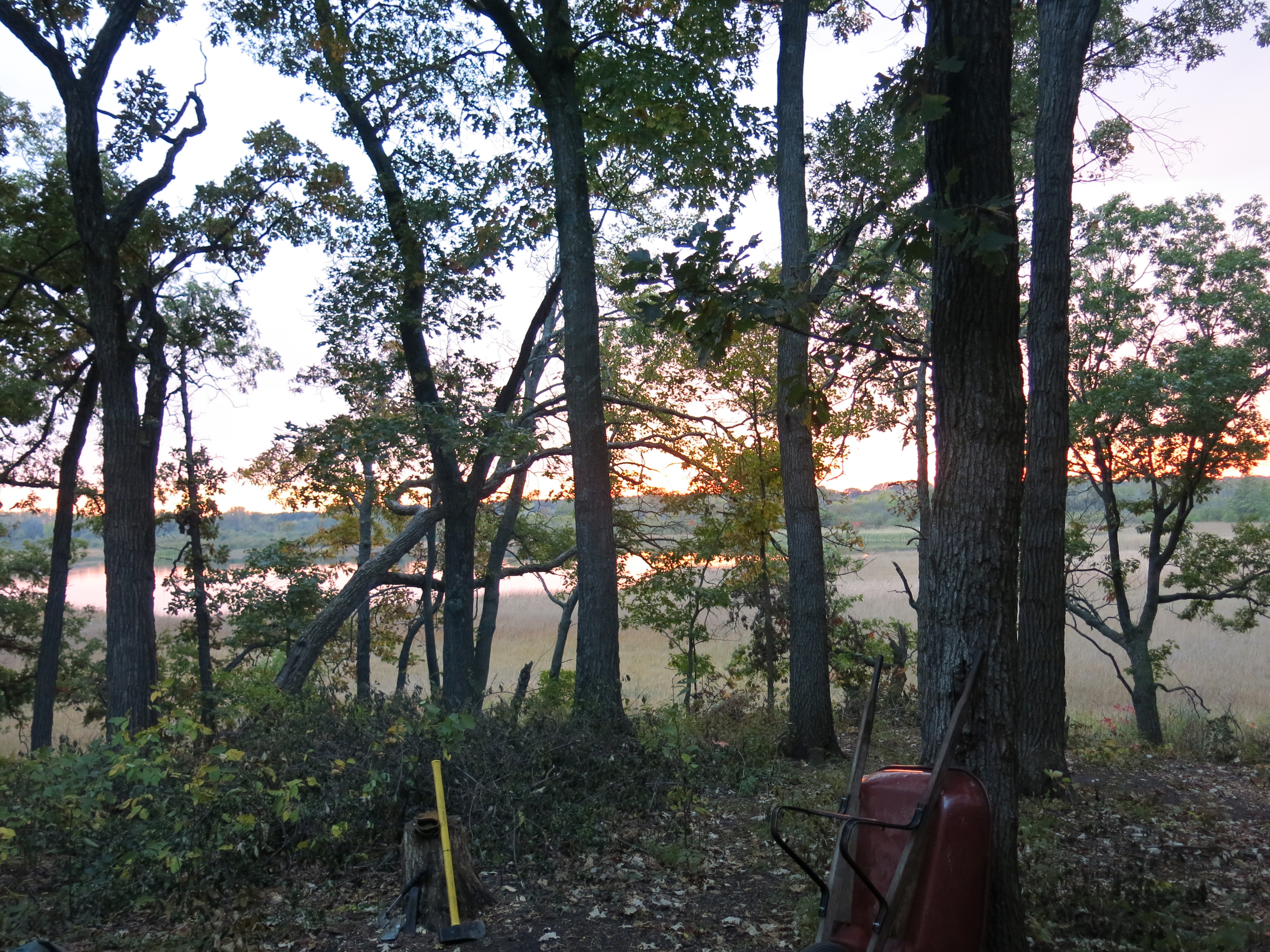
and enjoyed many nights playing guitar by the fire as the music passed through me like the wind.
When I wasn’t cutting buckthorn or sharpening my chains I did a little sight seeing of a couple of nearby sand prairies and got in a few yoga asanas at the marl pit bridge. I hit a stretch of phenomenal weather; warm, sunny days and dark, starry nights.
I don’t know what this plane was spraying; that is not a normal contrail.
I returned to site #335 for 5 more nights the following week and was fortunate that no one was camping at site #334, the other walk-in site, so I had the opportunity to cut the buckthorn blocking the views of this site too. Here is how it looked before I got started.
and after.
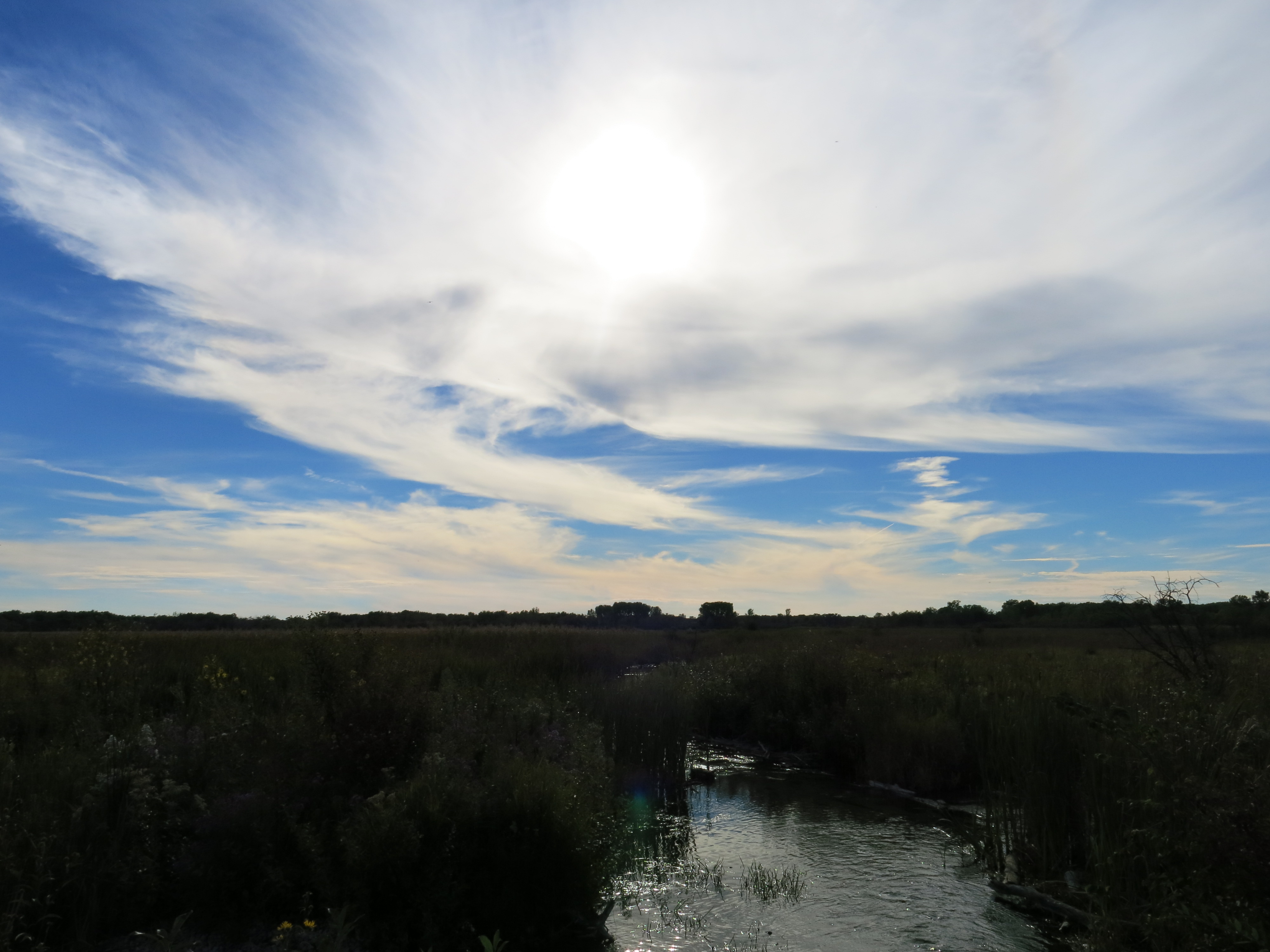
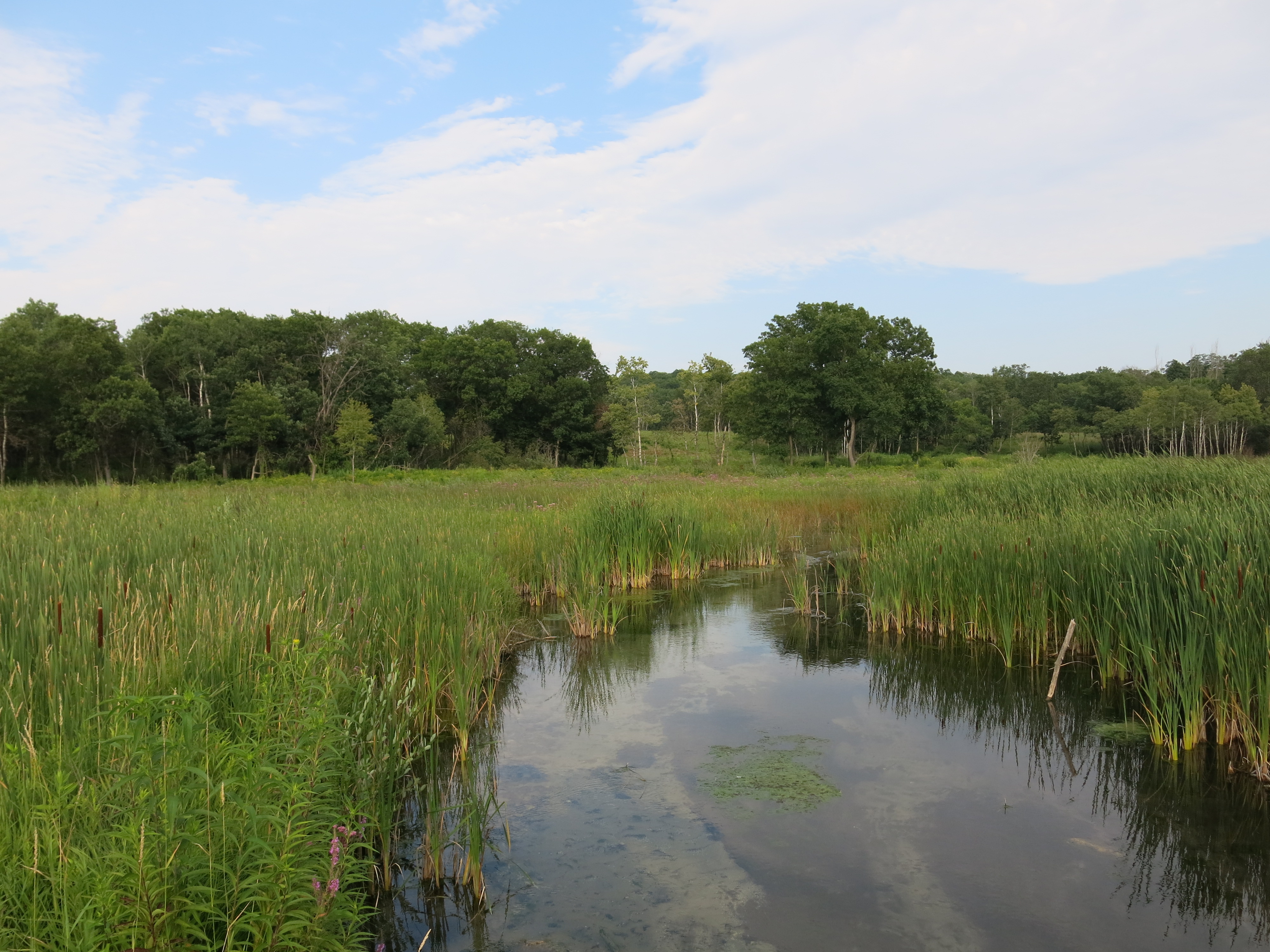
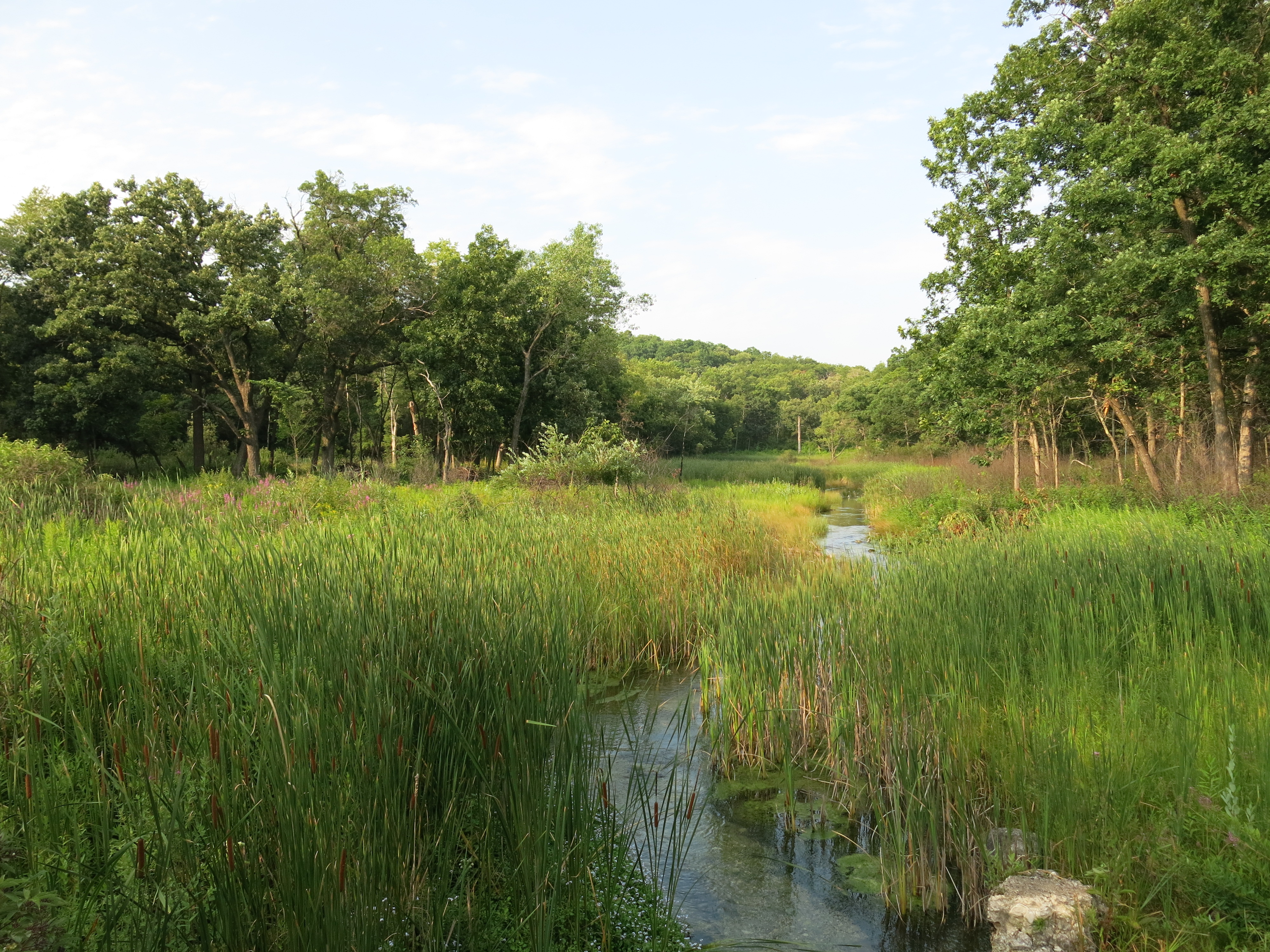
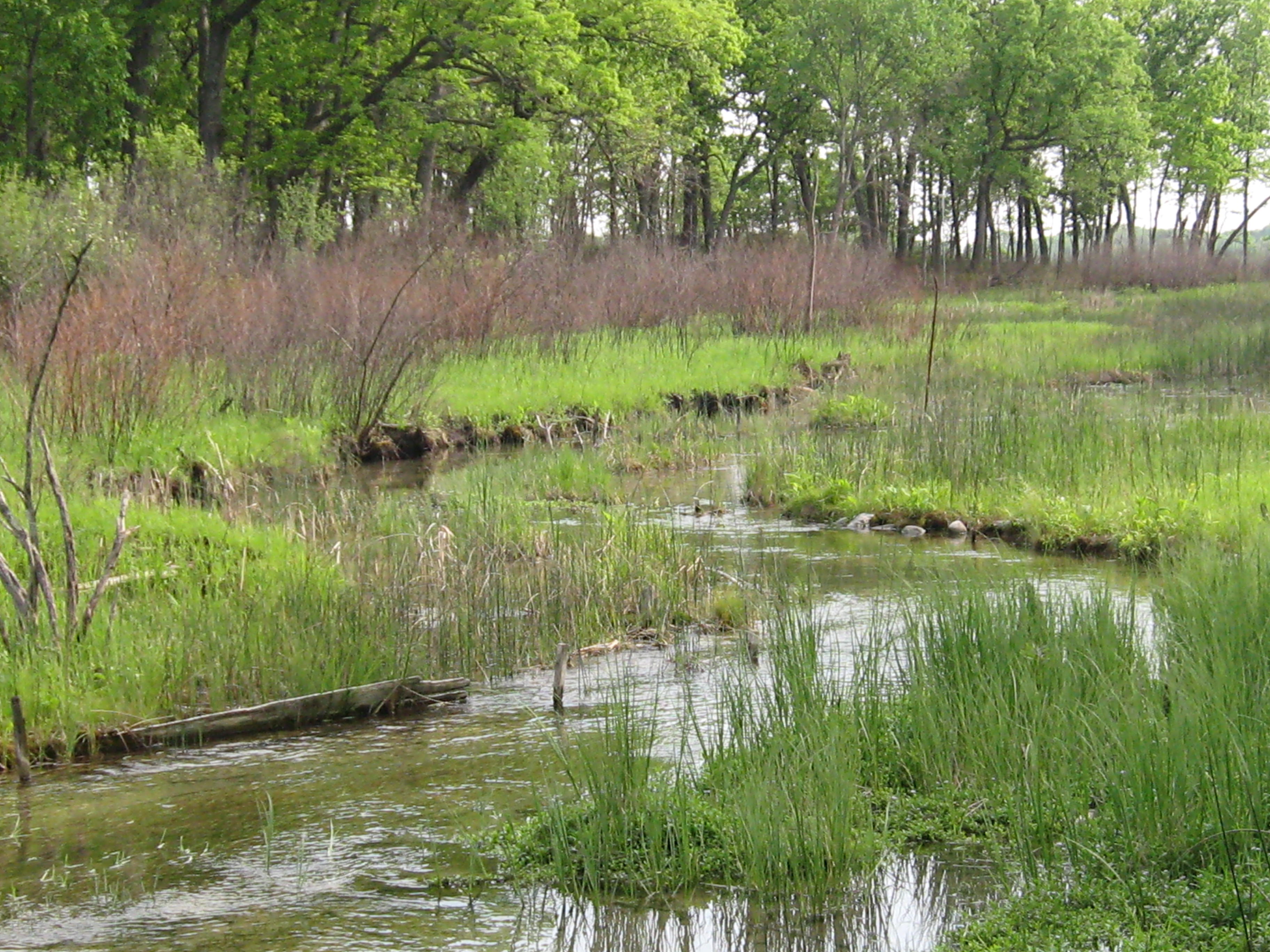
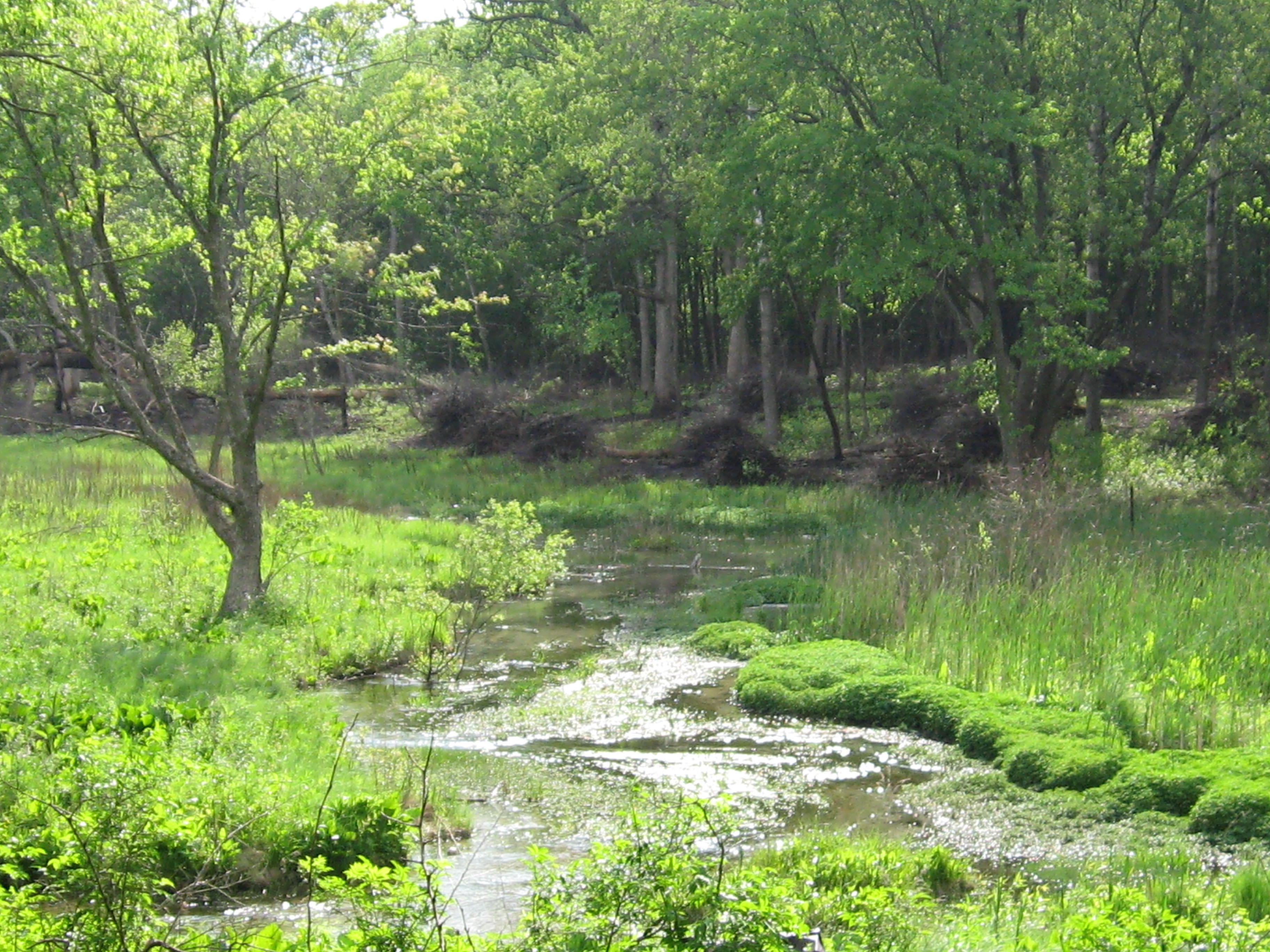
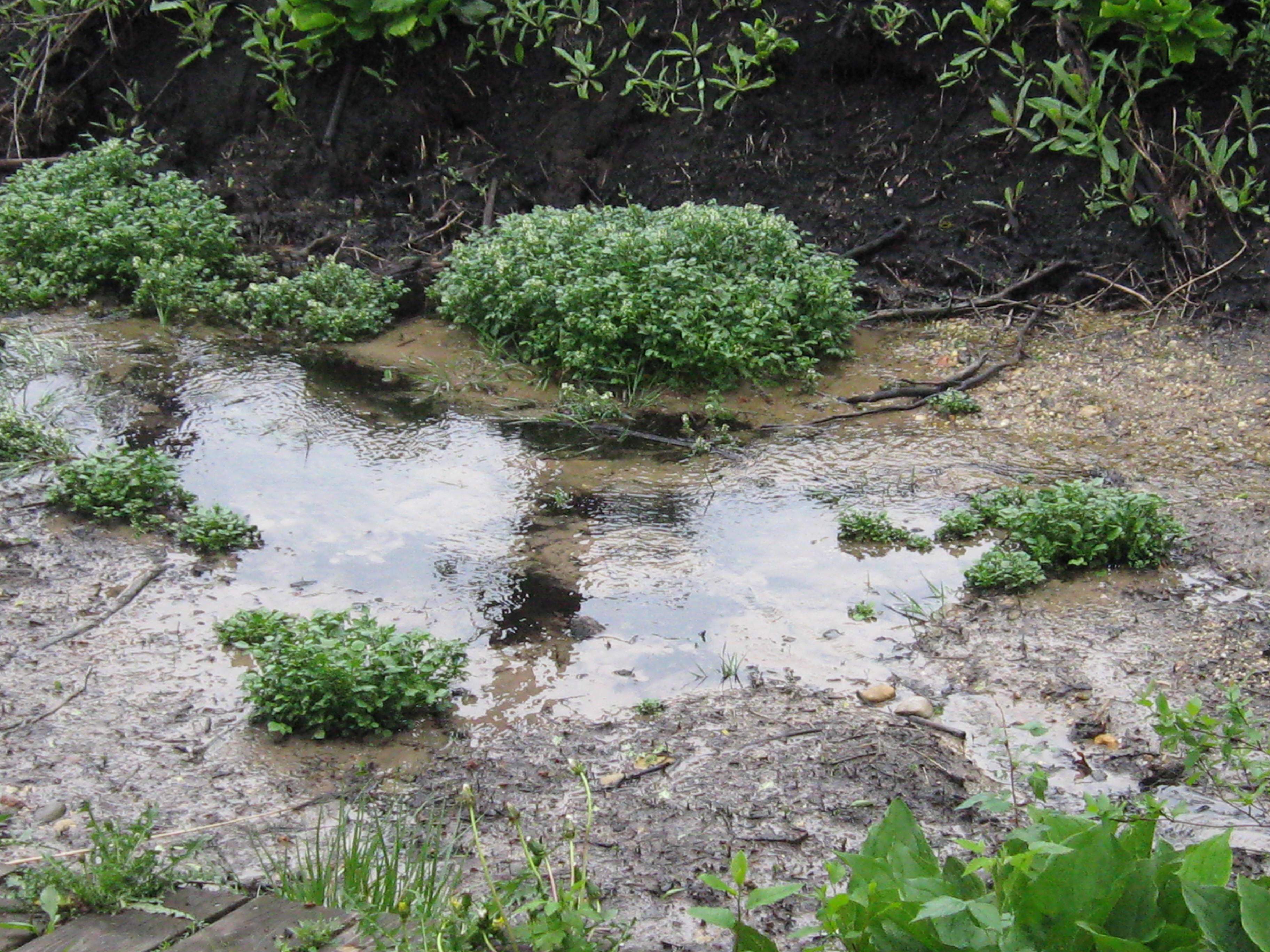
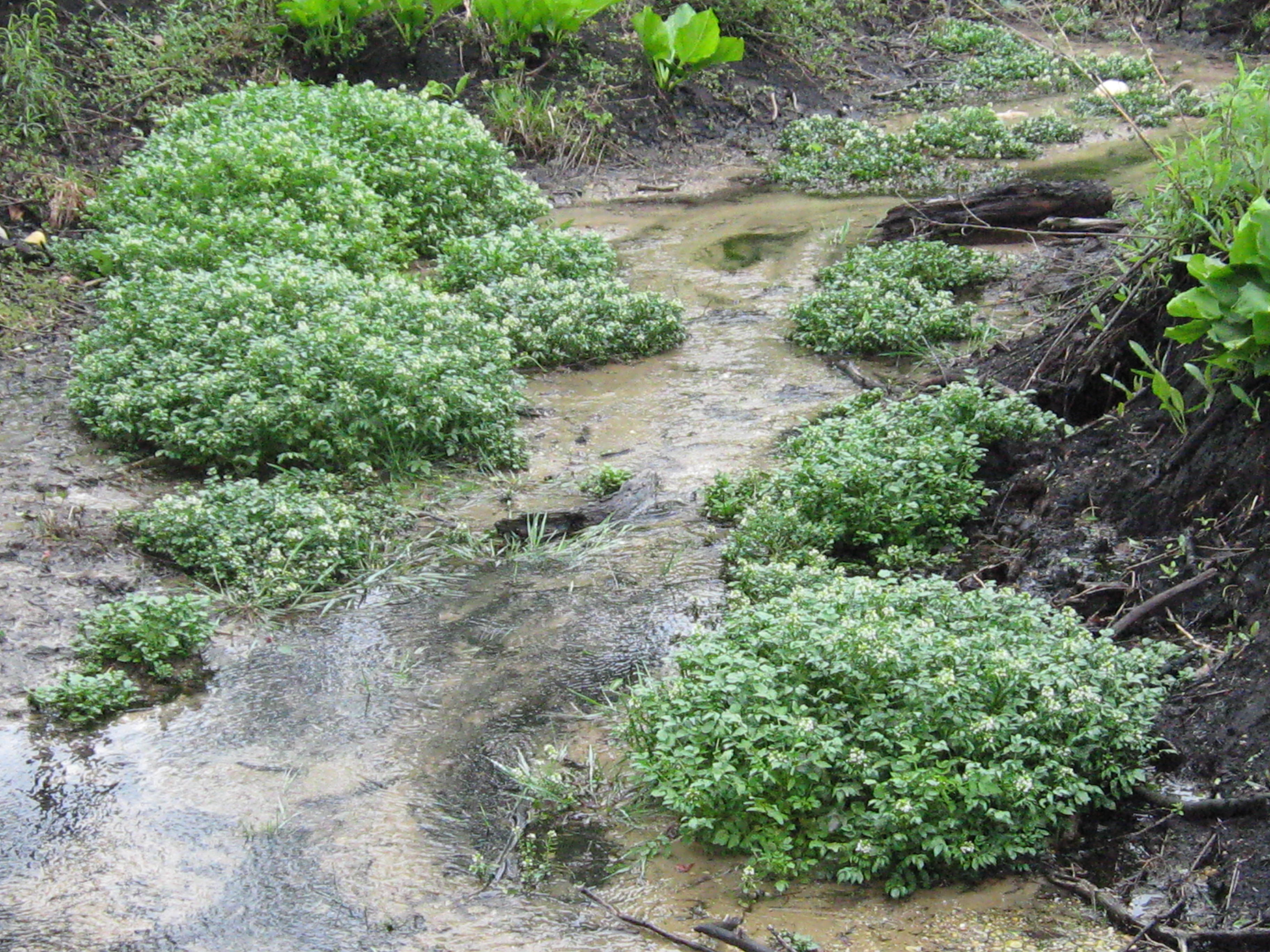
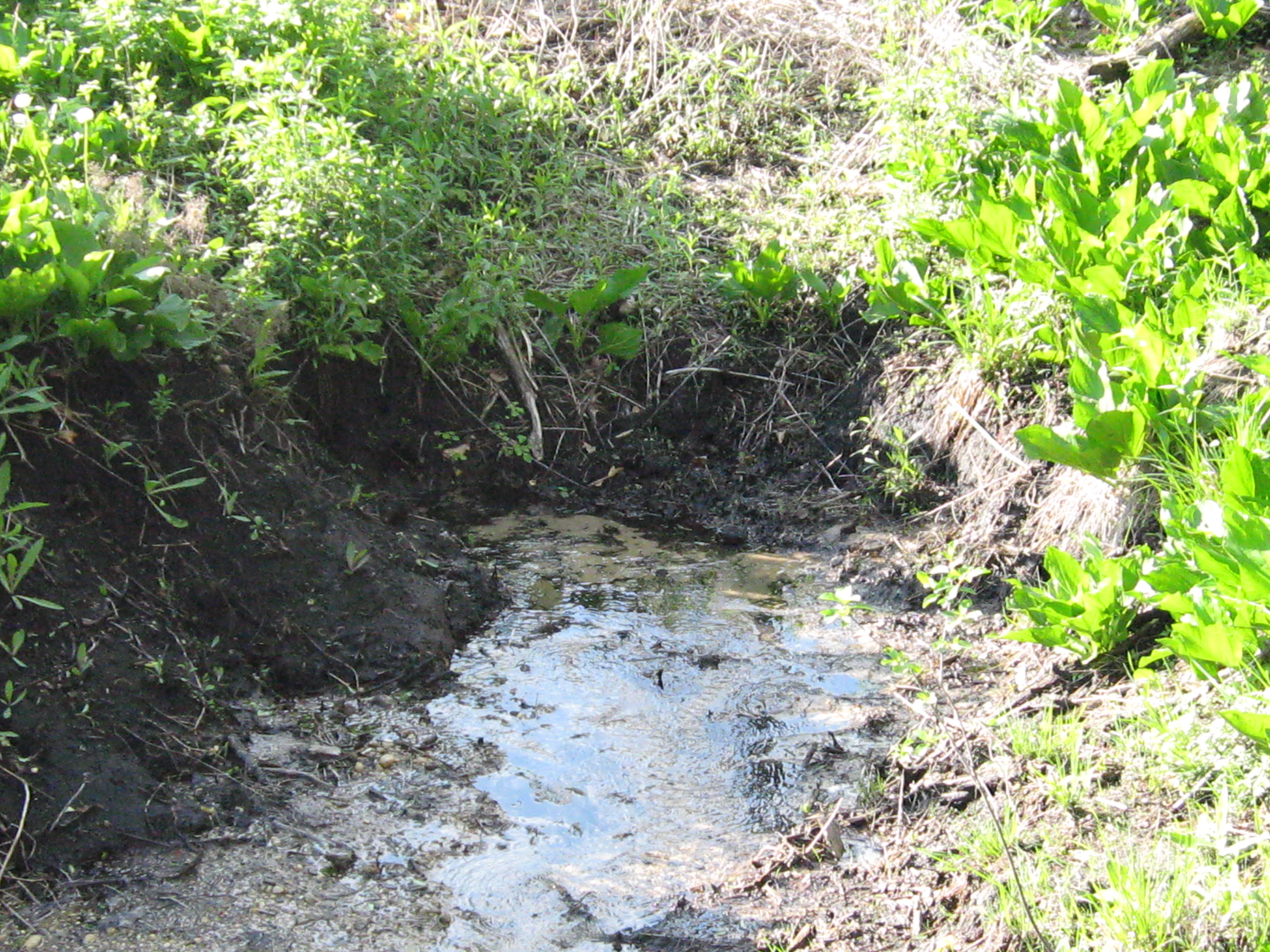
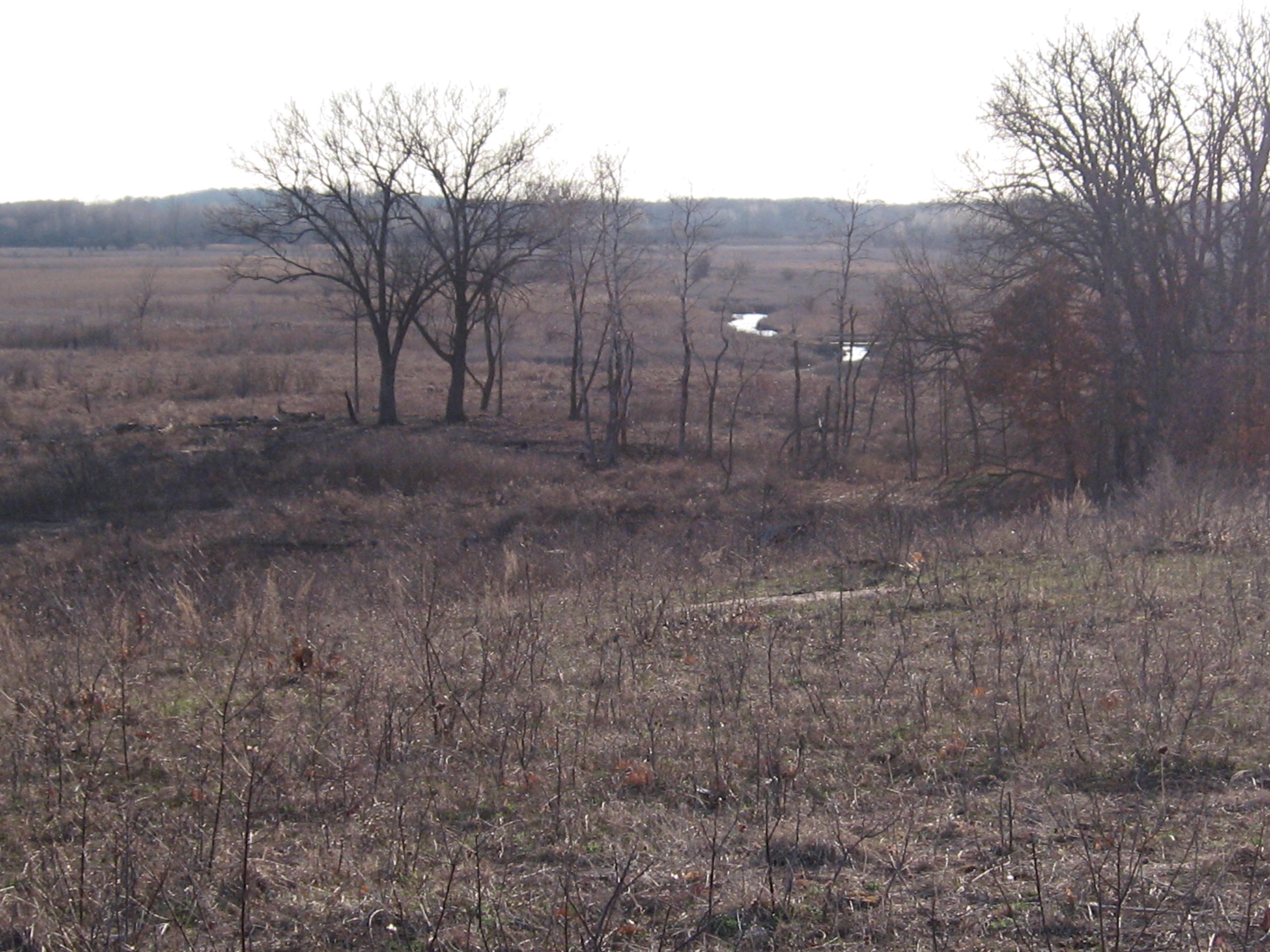
I followed the trail that runs along the east side of Ottawa Lake north past site #334 and found this crystal clear stream flowing from the spring that is on the North/East side of Hwy 67, across from the Sky Dance dog kennels. This is yet another spring source ultimately feeding the Scuppernong River.
I’m really looking forward to returning to Shangri-La for another week at the end of October!
Thanks again for following my exploits at The Springs!
I’m going camping near The Springs — back online in a couple weeks. I’ll definitely be mixing a little work with pleasure and hopefully, will have some good stories to tell when I get back.
I’m under assault again from borrelia burgdorferi, and his bacterial buddy, ehrlichia. They definitely have a monthly cycle. I could barely get out of bed yesterday, but I’m feeling much better now. I’m hoping that fresh air and water, and lots of rest, exercise and good organic vegetarian food will get me back on track. Nevertheless, I have tons of medical tests to review with my doctor when I get back in town — it ain’t over yet.
I want to reveal the natural beauty of the landscape at the Scuppernong Springs and hope to inspire a peaceful and harmonious mental state in all who pass thru. By cutting down curtains of buckthorn and cattail, I’m deepening the field of vision creating unique perspectives, both narrow and broad, that showcase the lay of the land. Water percolates through the undulating glacial moraines to the east, springing forth in the valley at the headwaters of the Scuppernong River, and flows west into the prairie. The Springs are a unique, “world class”, convergence of topographies and ecosystems.
Saturday, September 14, was a beautiful day to be out in the Kettle Moraine (hmmm, are those chemtrails?)
Amanda Prange and Melanie Kapinos have organized volunteer workdays in the Southern Unit of the Kettle Moraine State Forest that include a wide variety of activities. Here is the latest schedule:
I joined the seed gathering party at Paradise Springs and we started collecting in the prairie just west of the Gotten cabin, which is astonishingly beautiful! Amanda informed me that there are two sand prairies, one a half mile from forest headquarters and another off Piper Road, that are almost ready for seed collecting and I’m going to check these places out next week. Below, Amanda explains what seeds to gather and how to do it.
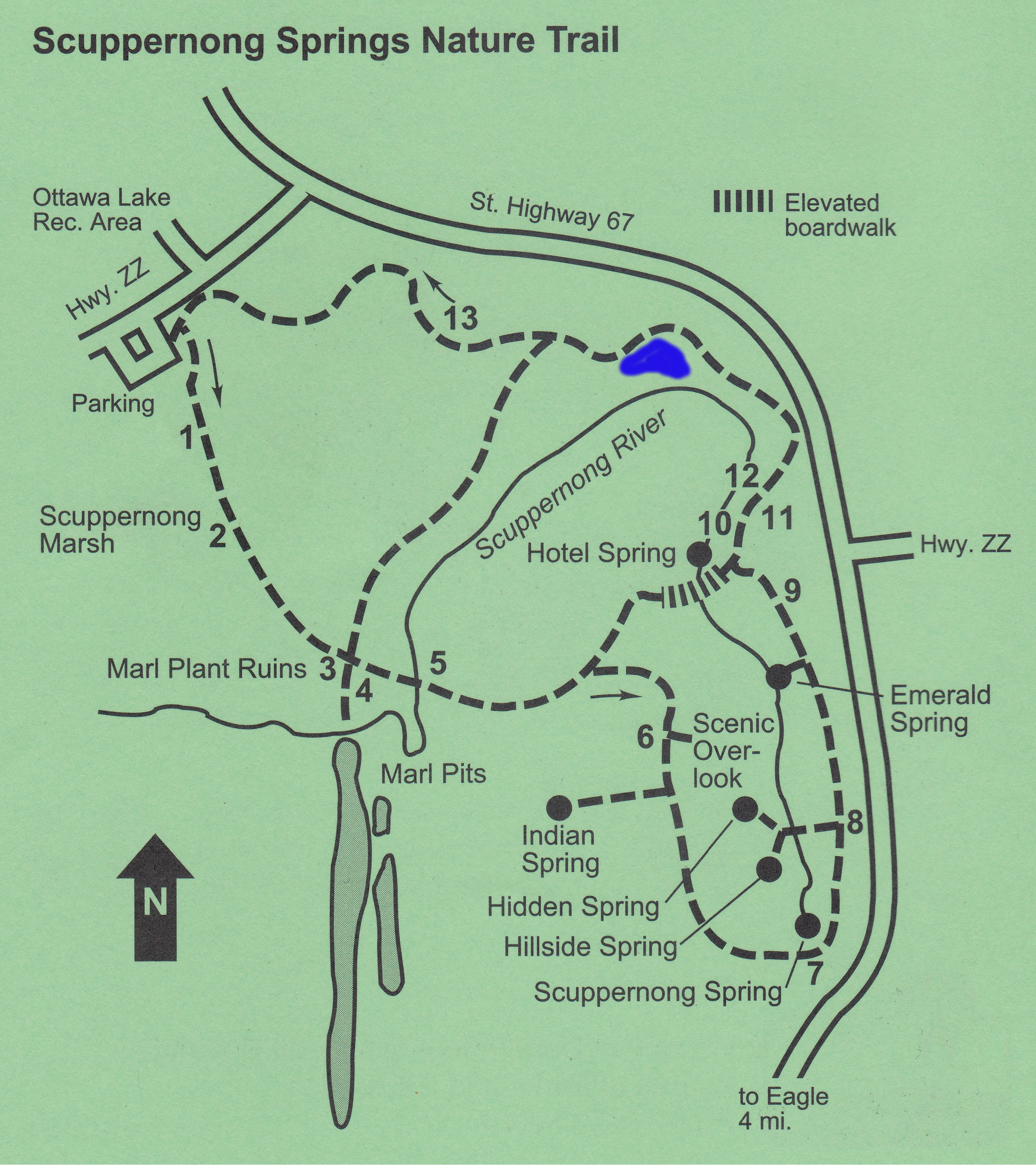
Before joining the seed gathering, I stopped at The Springs and visited the location shown in blue below, to collect, and dispose of, all the american burnweed seed heads that were just beginning to release.
I must confess, that I lacked the patience and skill required to harvest seeds from the prairie that day and didn’t stay long. I was chomp’in at the bit to return to the area marked above to cut buckthorn and open up the views down to the river valley from this stretch of the trail. Here is what it looked like before I started.
And after…
It was a busy day at the Springs and I really enjoyed meeting Kevin and Rachael, first time visitors, at the marl pit bridge.
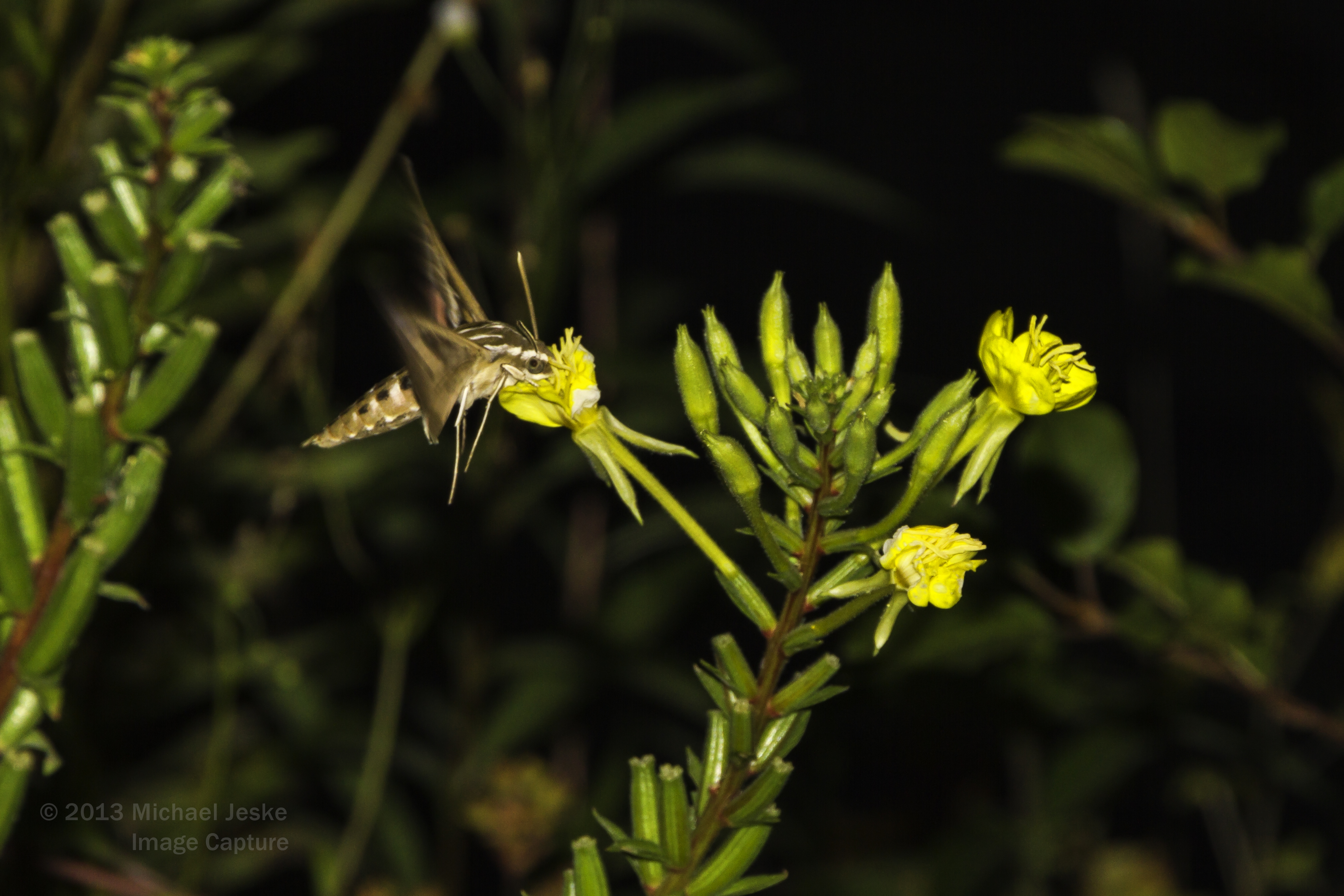
On my customary evening stroll my path converged with a family including two beautiful and interested young people, and they warmed my heart. Later, back at the marl pit bridge I ran into Michael and Karen, who live nearby and subscribe to this post, and we had an excellent time talking and trying to photograph sphinx moths in the fading light. I encouraged them to do a guest post!
Its finally dawned on me; Go Organic! Stop using poison on the land if you don’t want to poison the land! It’s obvious to me now after reading Atina Diffley’s award winning memoir Turn Here Sweet Corn. The organic approach is the embodiment of the Hippocratic Oath; do no harm. Atina’s love story with the land opened my eyes to the potential of applying organic farming techniques to our work at the Scuppernong Springs Nature Preserve. Atina and her husband, Martin Diffley, (Organic Farming Works LLC) are pioneers in the organic farming movement in Minnesota, their efforts culminating in a “Kale versus Koch, Soil versus Oil” pipeline smackdown where they stood up to the Minnesota Pipe Line Company, which is operated by the Koch Pipeline Company, a subsidiary of Koch Industries, and prevented a pipeline corridor from being routed right through their Gardens of Eagan Organic Farm. They saved their land AND Atina contributed to the preservation of other organic farms via the creation of the Organic Appendix to the Agricultural Impact Mitigation Plan that all pipeline and transmission line companies must comply with if they succeed in routing their lines across organic farmland.
Atina explains that it’s all about relationships: people to the land, plants to the soil and people meeting each others needs in community. I’m inspired to only employ non-toxic ways to nurture The Springs back to health a la organic farming techniques; I want the Scuppernong Springs Nature Trail to be “Certified Organic”. Atina and Martin helped me realize the importance of building and protecting the soil and, after reviewing the research on the residual effects of Milestone and Transline and their potential to leech into groundwater, I concluded that I could no longer use them in any context at The Springs. Jason Dare began turning me in this direction and now I’m fully committed. The only exception to the ban on poison that I will make is to use Tahoe/Triclopyr on cut buckthorn stumps (painting, not spraying), and hopefully, we’ll find a natural alternative to that as well.
I claimed to want to garden the sand prairie. What was I thinking? Would you use poison in your garden? In the past two years I had acquired no less than 7 different poisons: Aquaneat/glyphosate, Habitat/imazapyr, Bullzeye/glyphosate, Milestone/aminopryalid, Transline/clopyralid, Tordon/picloram and Tahoe/triclopyr, all of which I have returned to the DNR except the Tahoe stump killer. Martin Diffley summed it up pretty well: “If we don’t change direction, we’re going to end up where we’ve been going.”, and my approach was slowly poisoning The Springs. One story from Turn Here Sweet Corn that really impressed me was how they handled a 9 acre field of quack grass. Despite being pressed by demand for their produce to get this land into production, Martin recommended they wait for just the right combination of dry and hot weather. When it finally arrived, they used a 930 Case tractor fitted with a Vibra Shank field digger to “rake” the weeds, exposing the roots to the blazing sun, repeating the process over 6 weeks until the quack quit. That got me thinking about the phragmites and cattails in the valley along the Scuppernong River headwaters; maybe we could do the same thing there! Like Einstein said, “We can’t solve problems by using the same kind of thinking we used when we created them.”, and now that my organic consciousness has been awakened, I’m seeing new, non-toxic, solutions.
Yesterday, Pati and I met with DNR Trail Boss Don Dane to walk the trails and review our approach to restoring the Scuppernong Springs Nature Preserve, and we we joined by John and Sue Hrobar. I’m prone to excited bursts of non-stop chatter and, true to form, I began by telling Don that I wanted to go organic. He was totally on board with this and promised to help us achieve that goal. The first area we reviewed was the valley along the headwaters of the Scuppernong River that is dominated by phragmites and cattails. I told him Martin’s story and we talked about mowing and raking and Don suggested that, in the short term, I get a hedge cutter and simply cut the seed heads off the phragmites and cattails at a height that will leave the myriad of other plants that have emerged in the “understory” since the burn undisturbed. This will drain the energy from the phragmites and cattails while allowing the native plants to compete and, combined with fire, we hope this will be an effective strategy.
One of my big concerns is all of the buckthorn seedlings and resprouts that have emerged since we cleared the mature buckthorn. I explained this to Jason Dare and he suggested I rely on fire to control them. I talked to Don about this and he is committed to burning the scuppernong every 2-3 years. That was the assurance I needed! In the meantime, Don suggested brush cutting areas where the resprouts are thick to better enable fire to move through. We talked about the north end of the trail, buckthorn alley, and agreed that I should focus on clearing the buckthorn there to help facilitate getting a hot fire through this part of the Nature Preserve; the DNR has never been able to burn this area.
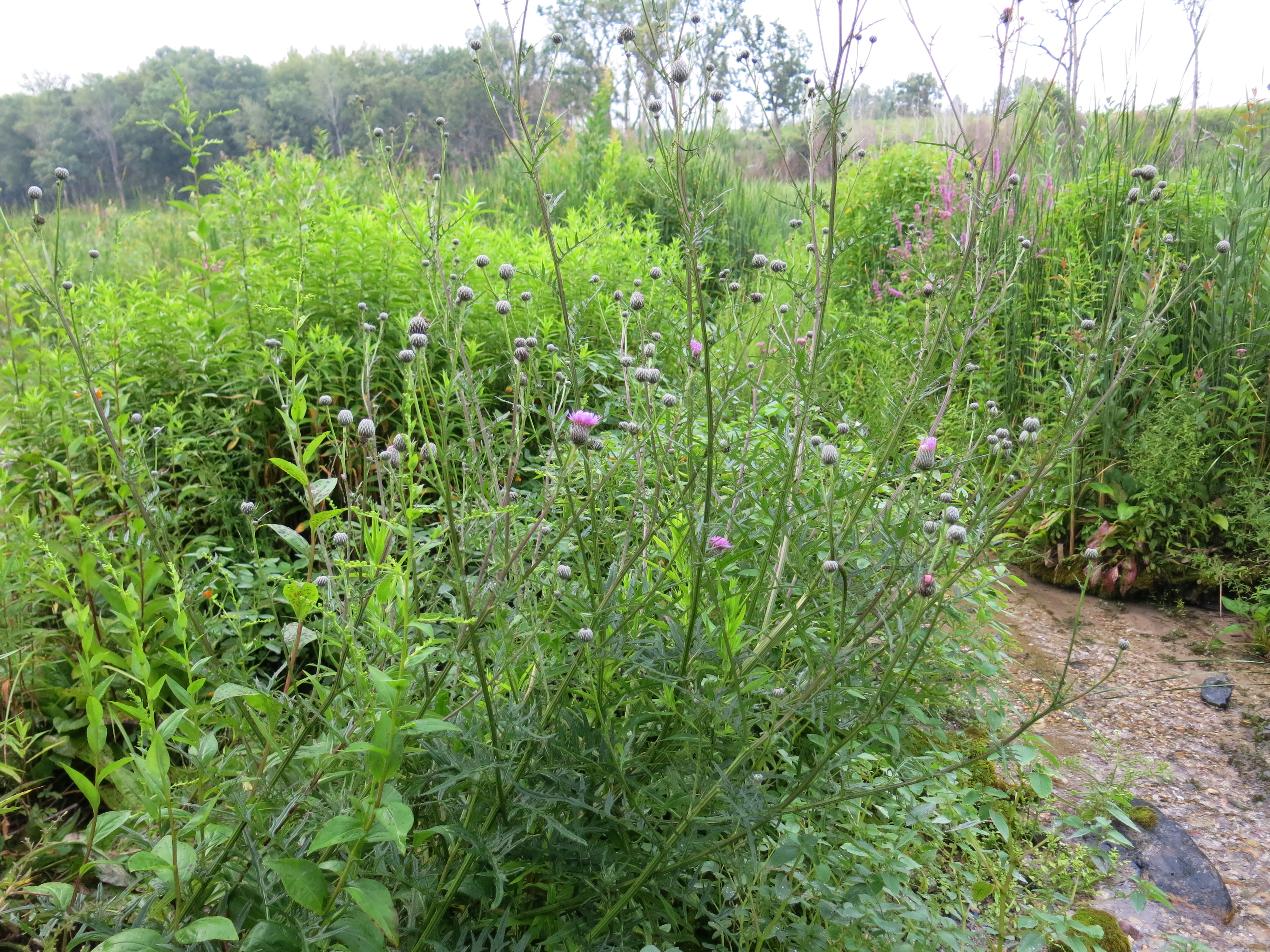
Here is a native swamp thistle Don pointed out by the hatching house springs.
John, Sue and Don at the gaging station bridge. I’m hoping that more volunteers will step forward if they know we going organic.
Pati and I spent the afternoon pulling spotted knapweed on the sand prairie, which Don said they also refer to as a cliff messenger prairie. The purple lovegrass is thriving!
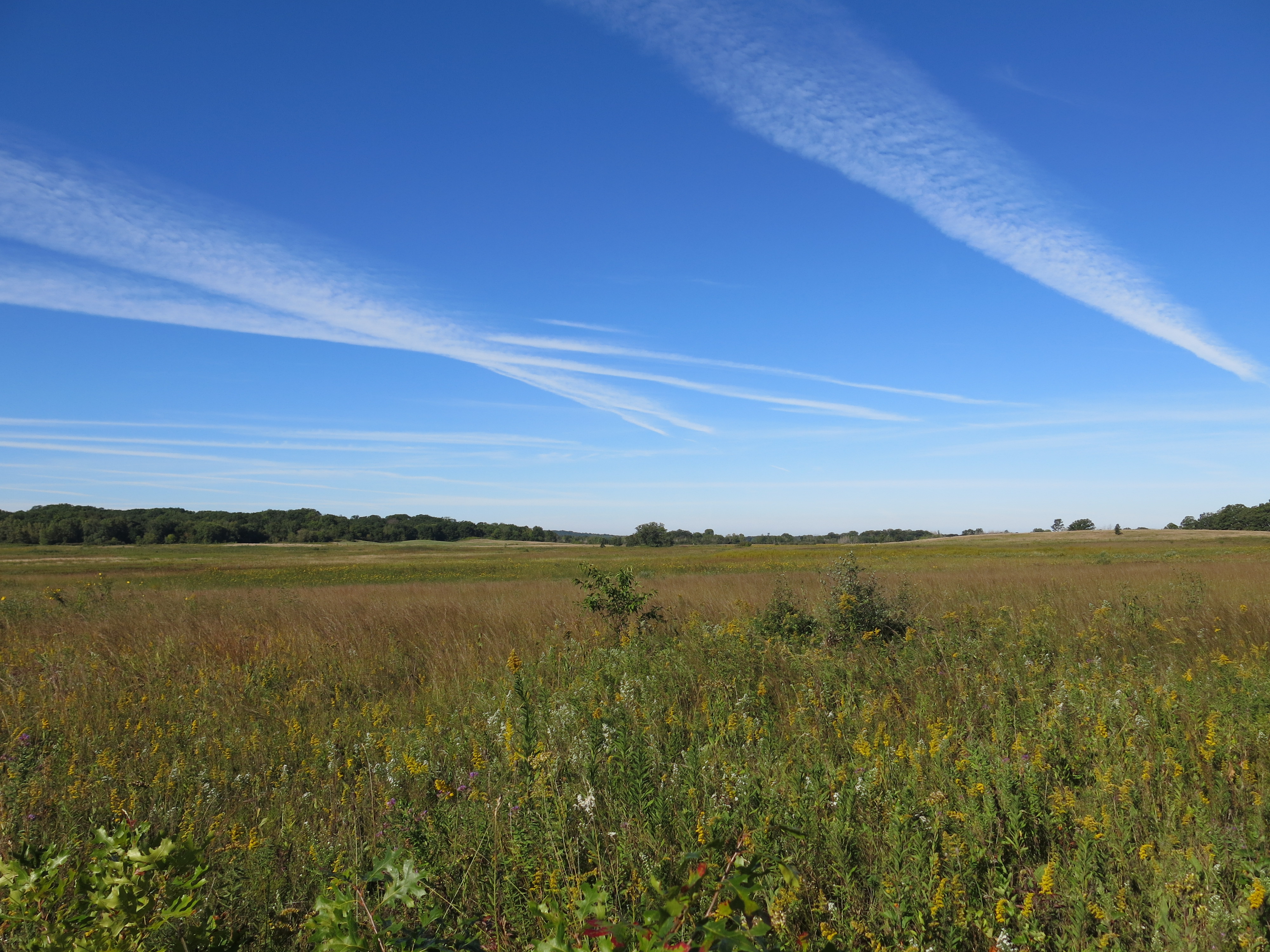
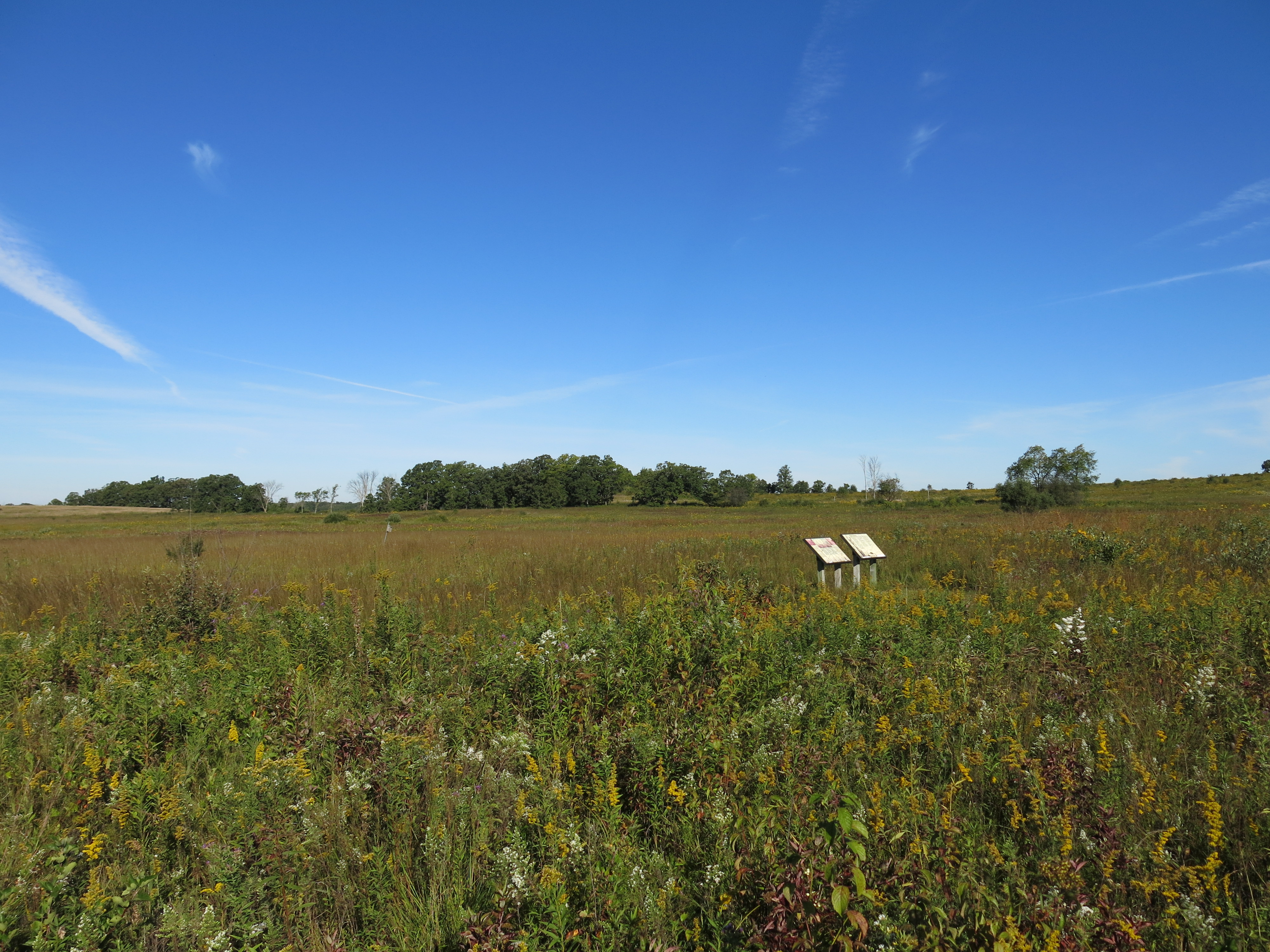
Here is a view of the sand prairie.
I felt totally calm and at peace with my hands in the sandy soil pulling spotted knapweed all afternoon. The rough blazing star and golden rod are set to flower and I’m really glad I took the time to clear the prairie with the brush cutter rather than simply mowing it. Here are a few parting shots from the marl pit and gaging station bridges.
You have to walk a ways down south along the marl pit canal to get a good angle on the sun as it sets farther and farther north on the horizon. The rate of change in the amount of daylight increases as we approach the summer solstice and it is dramatically evident in the big sky country at The Springs. The trees, grasses, flowers and weeds, have responded luxuriantly to the sun and rain and the land is vibrant with myriad shades of lush greens. The Burn back on May 6th was definitely the highlight; a dramatically pivotal punctuation to Spring, 2013.
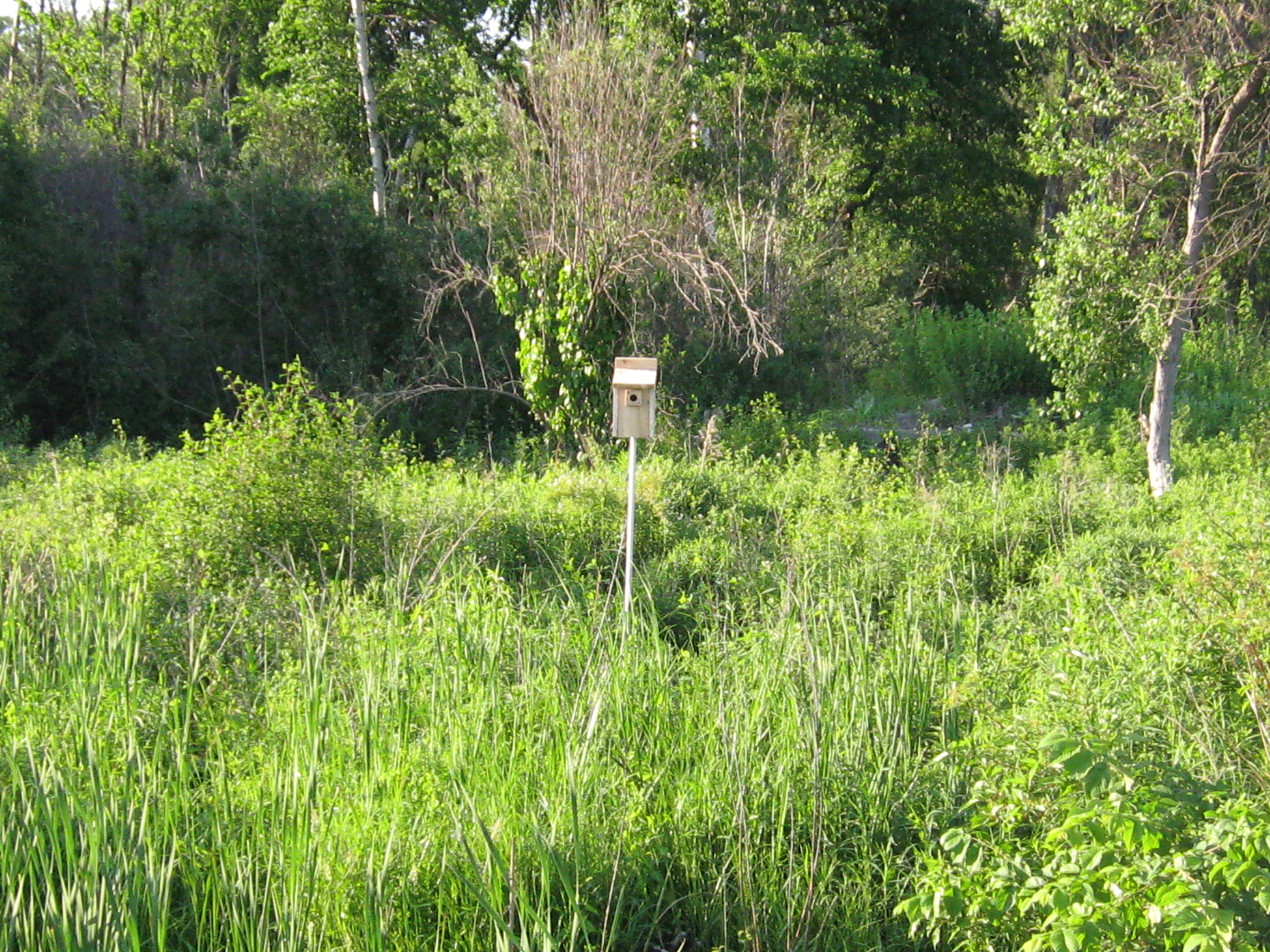
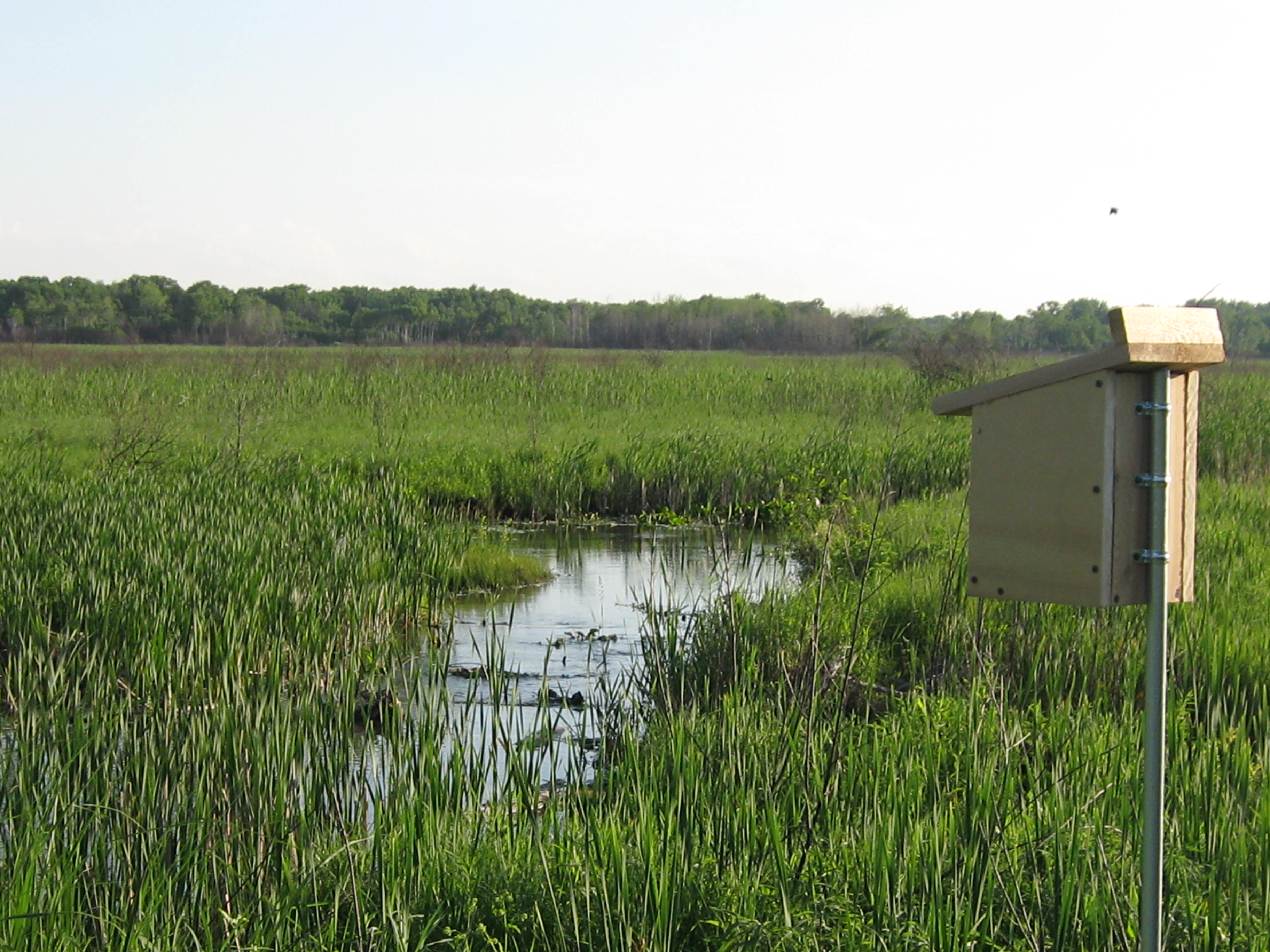
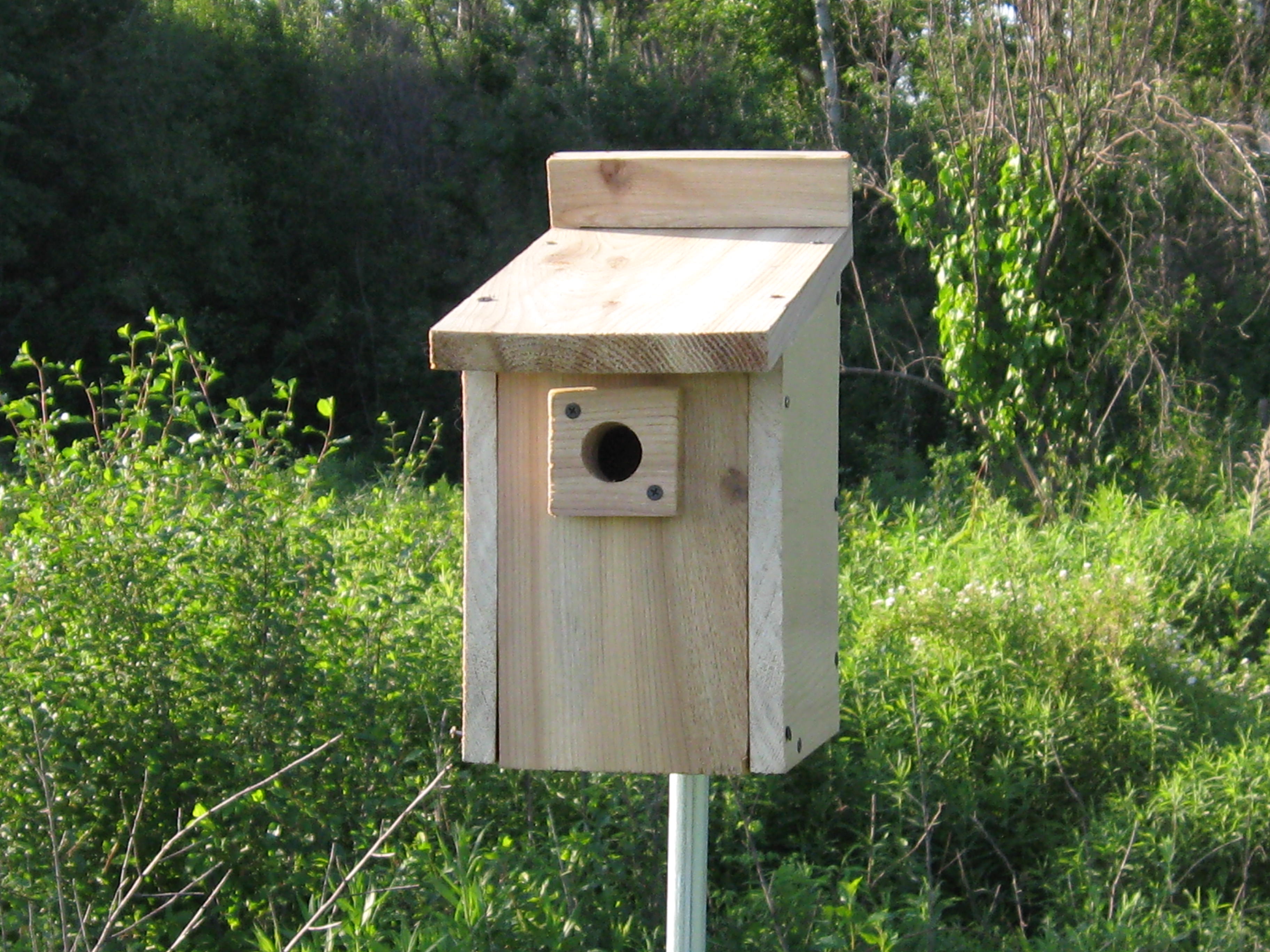
The Scuppernong Springs are a “world class site”, per former DNR Naturalist Ron Kurowski, and getting more and more well deserved love and attention these days. Spring Lover, Jon Bradley recently erected this beautiful, custom built, tree swallow house near the marl pit bridge.
Thanks Jon! It should be occupied in no time.
Amanda, Melanie and their crew of volunteers continued to install the new interpretive signs that Don Dane made. They look pretty darn good!
I was out at The Springs yesterday and sprayed some spotted knapweed on the Sauk Campground and some garlic mustard, creeping charlie and burdock between the old hotel and barn sites. “What is a weed? A Plant whose virtues have not yet been discovered.” — Ralph Waldo Emerson (more good weed quotes here). Rich Csavoy taught me another weed, white cockle, which is in full bloom on the Sauk Campground. Reed Canarygrass is already going to seed amongst the many springs in the river valley. Isn’t it ironic that Cannabis Sativa, one of the most versatile plants on earth, goes by the nickname “weed”?
It was a beautiful afternoon with a refreshing north breeze, deep blue skies and cauliflower clouds sailing by. I cut a curtain of buckthorn and prickly ash between the cut-off trail and the river on a little peninsula where Carl Baumann took some serious cuts last winter. Here is how it looked when I got there.
Five hours later…
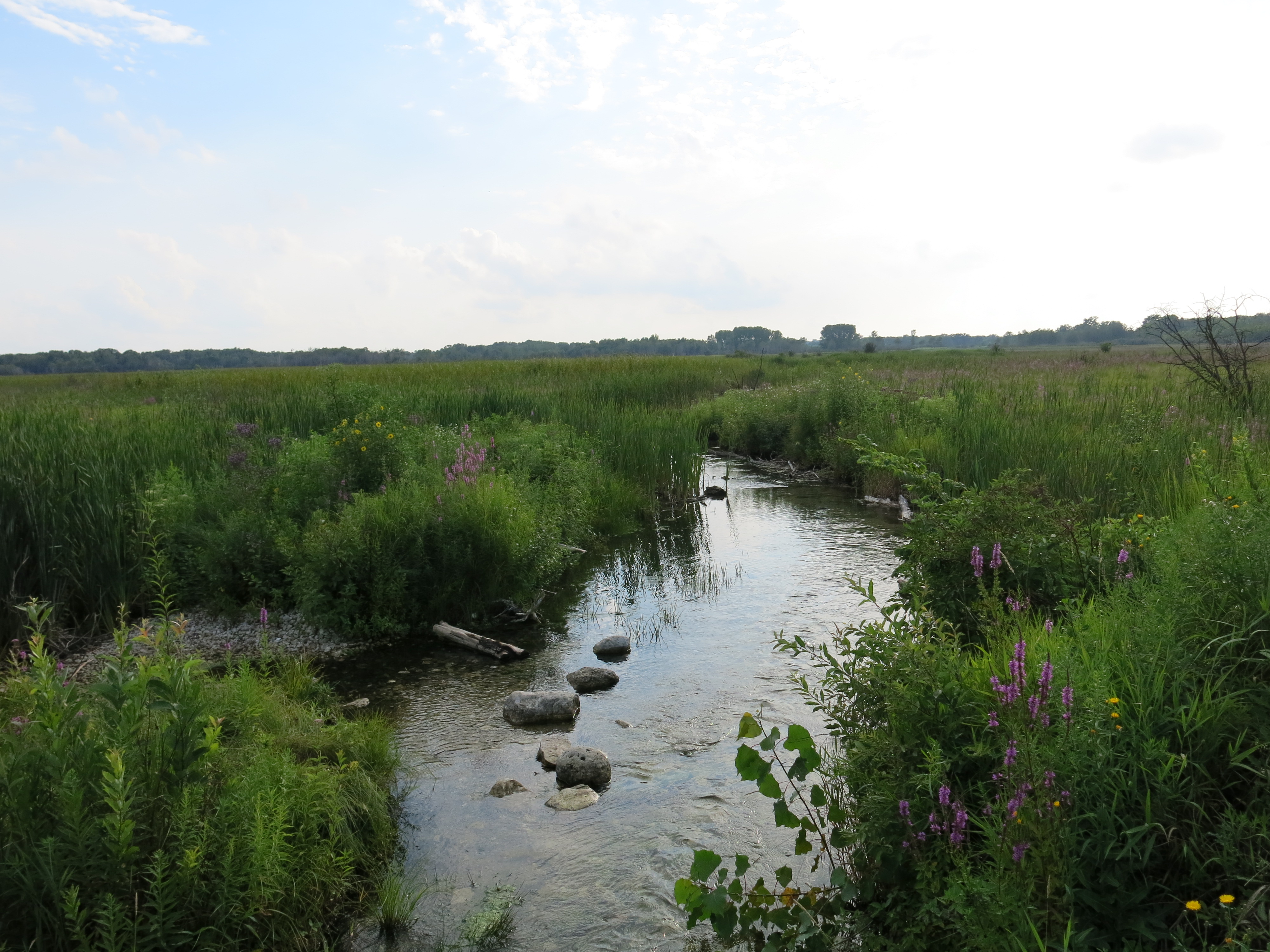
A view from the gaging station bridge.
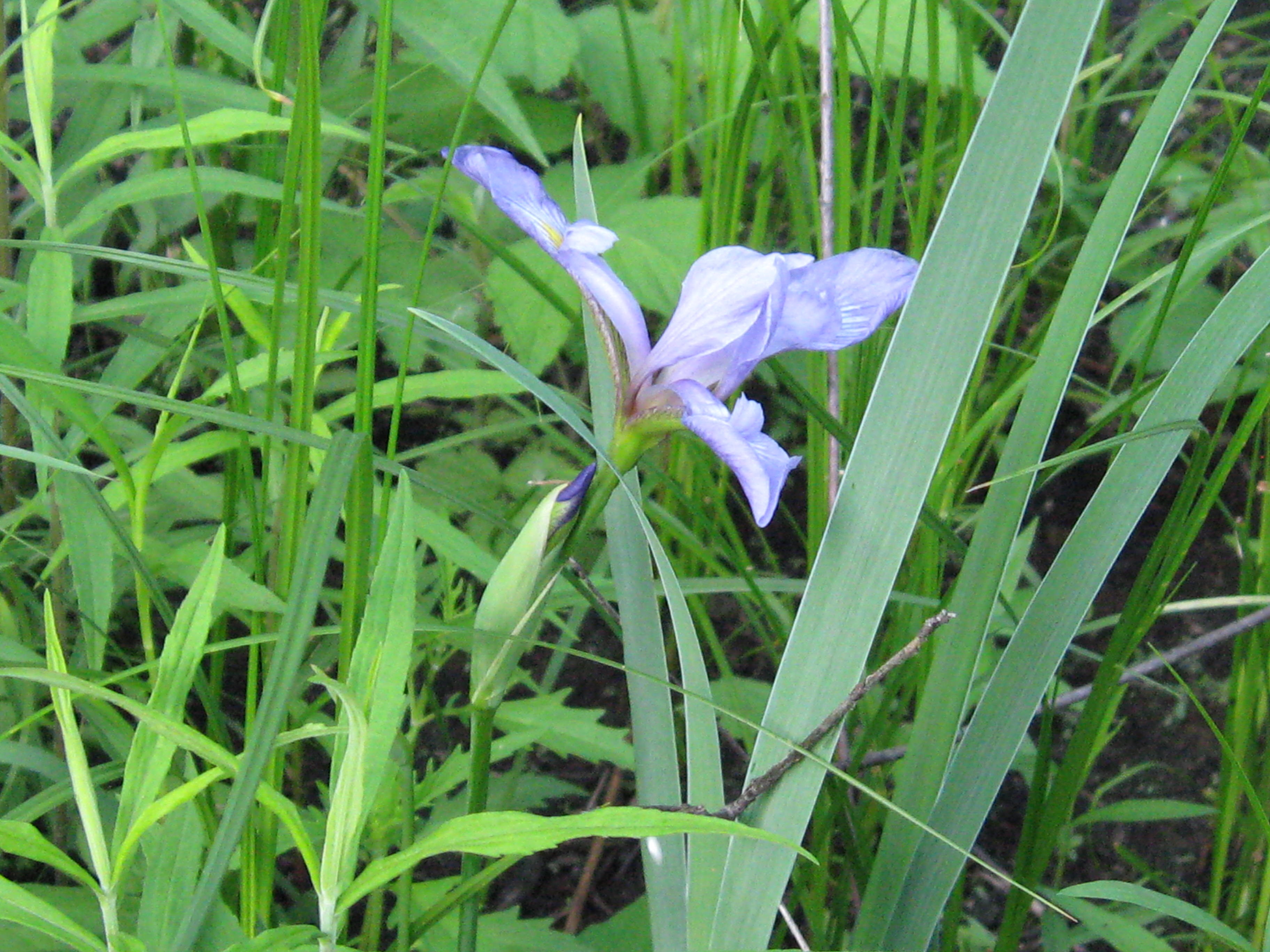
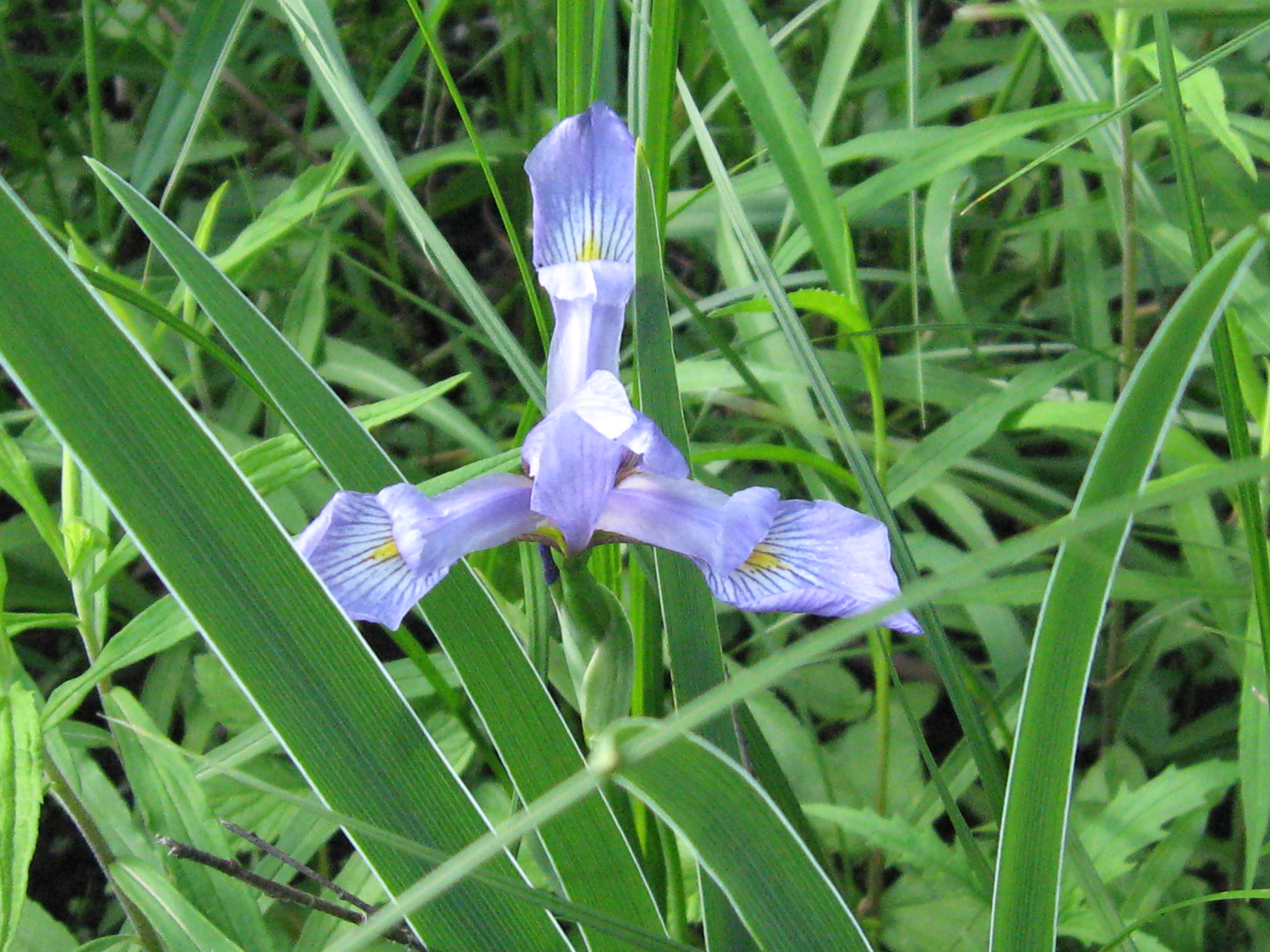
I saved a couple of wild plum trees amongst the buckthorn and found a patch of blue flag irises.
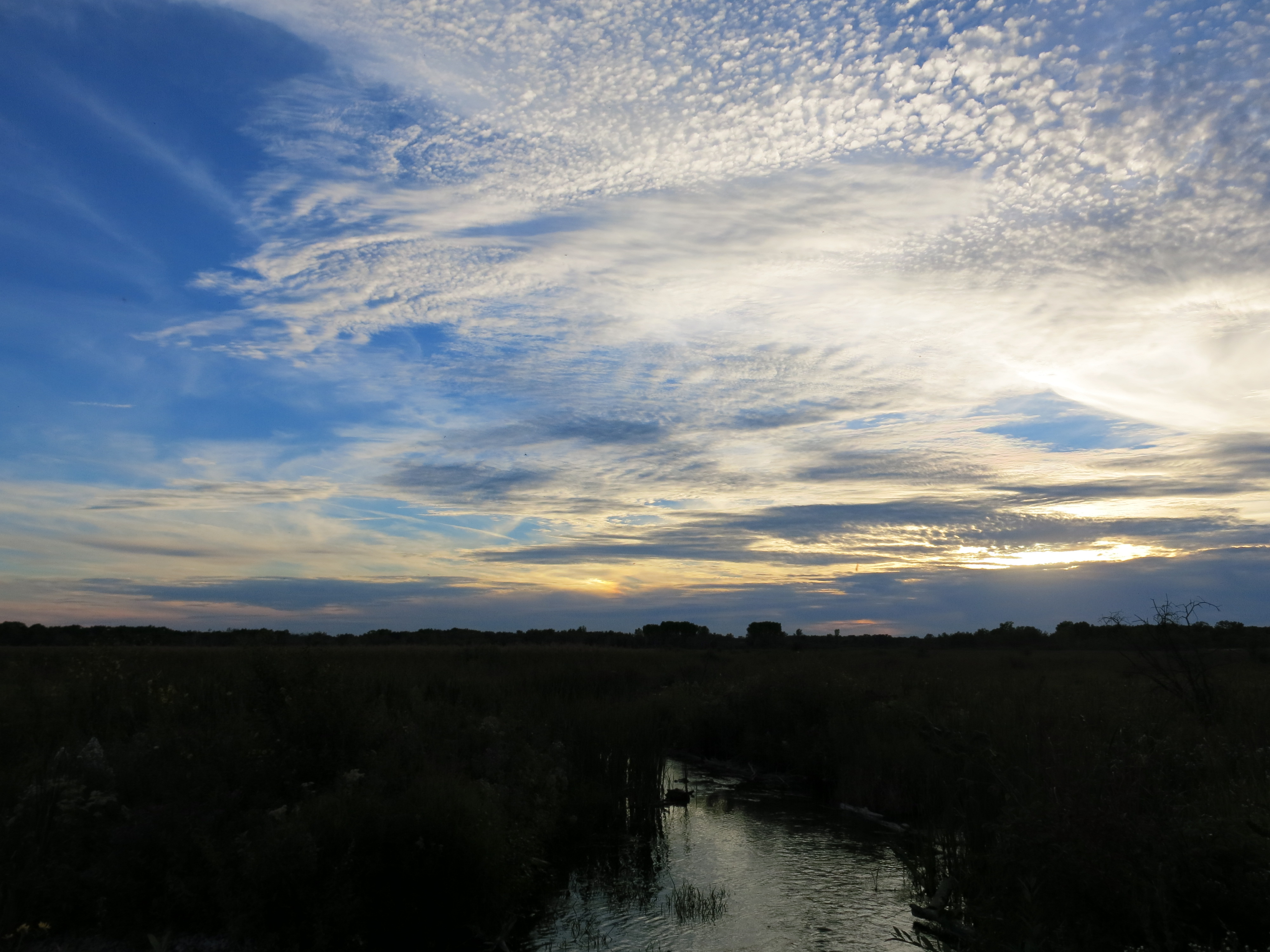
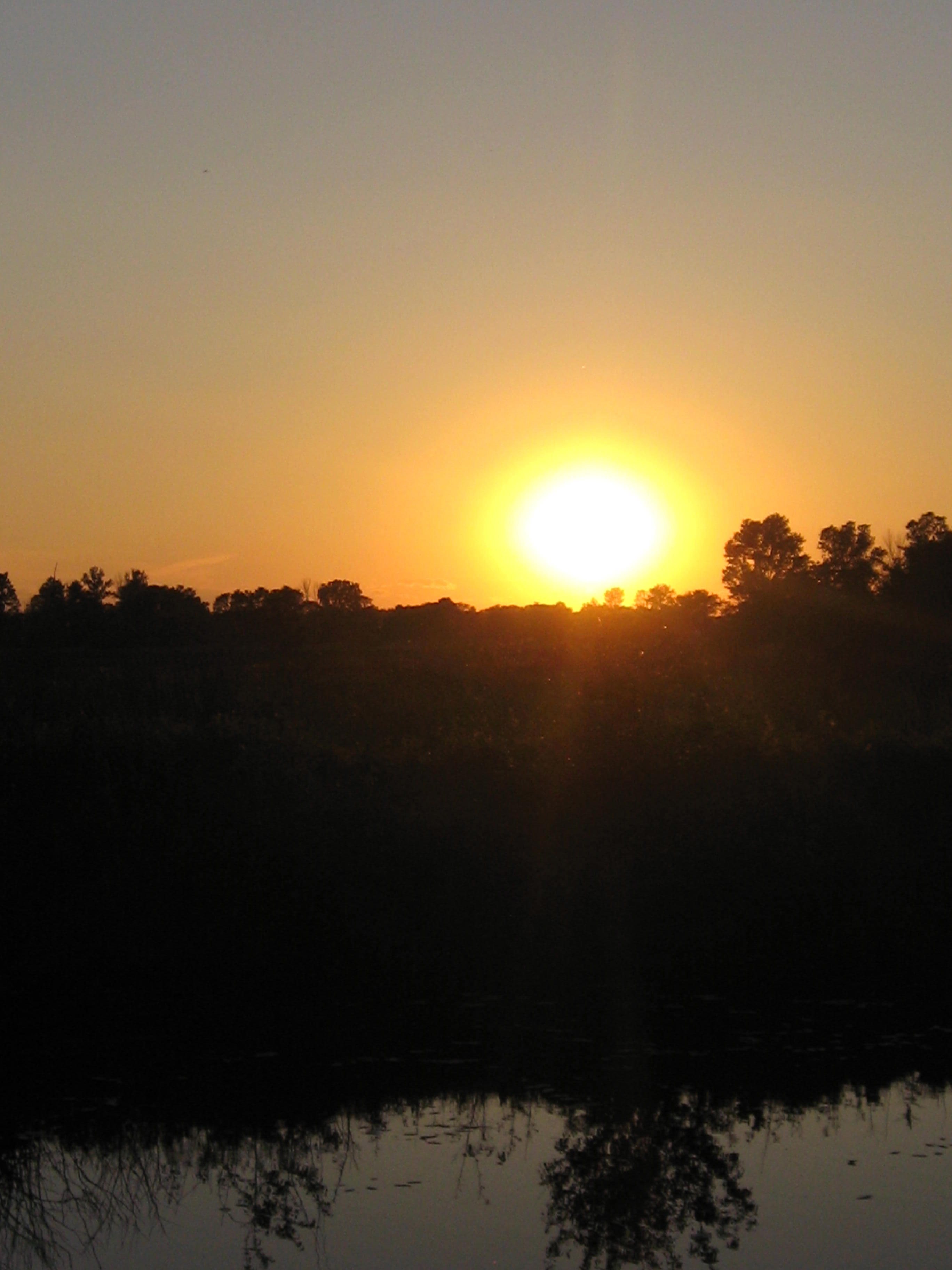
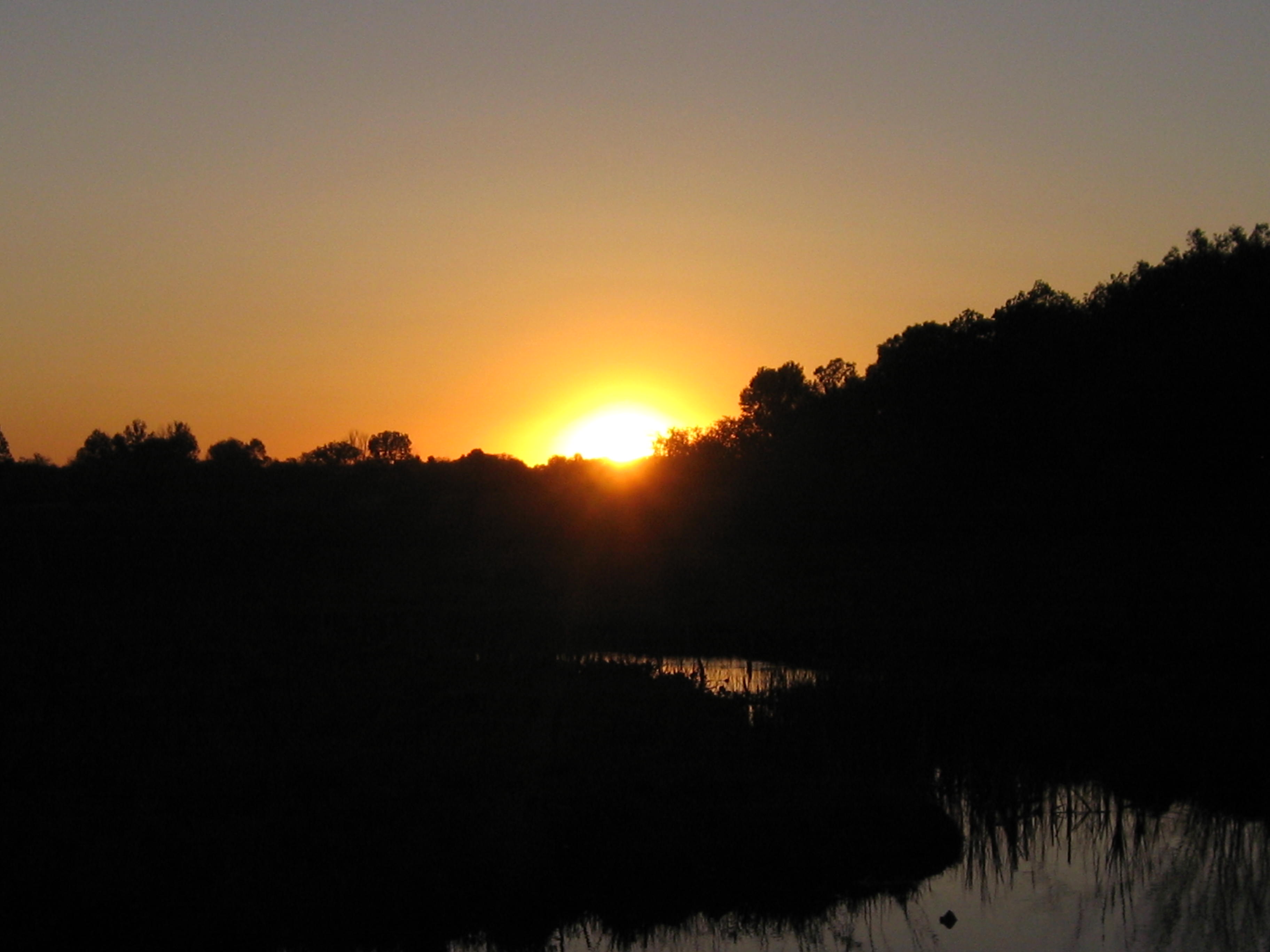
I did some serious relaxing at the marl pit bridge in the evening and wandered down the canal a bit to get these shots of the sunset.
The sensation is like that of a feather vaguely wandering across the skin. Slowly, like ripples spreading in a pool of consciousness, the mind awakens to the touch; there is something crawling on me! Out at The Springs we are under attack from the ground and air by ticks and mosquitoes. Good Lord! The ticks are thick and “questing” and, along with their airborne allies, they share an affinity for the same flesh to satisfy their wanton blood lust. The ticks leave a memory upon the surface of the skin that comes to mind again and again; long after they have moved on. Every itch and tingle is a tick! They are in My Truck, waiting for me!
Despite the little things that try patience and distract from the pure joy of living, I spent two Happy Days at The Springs this past Wednesday and Thursday (May 29-30). Rich Csavoy joined me on Wednesday and we had a marvelous time girdling aspen, pulling garlic mustard, piling buckthorn and discussing the first principles of philosophy. Here is a video tour of the north side of the Scuppernong River, just west of the old barn site, where we made around 13 piles.
The view downstream from the work site.
Looking at the new brush piles from the hotel site.
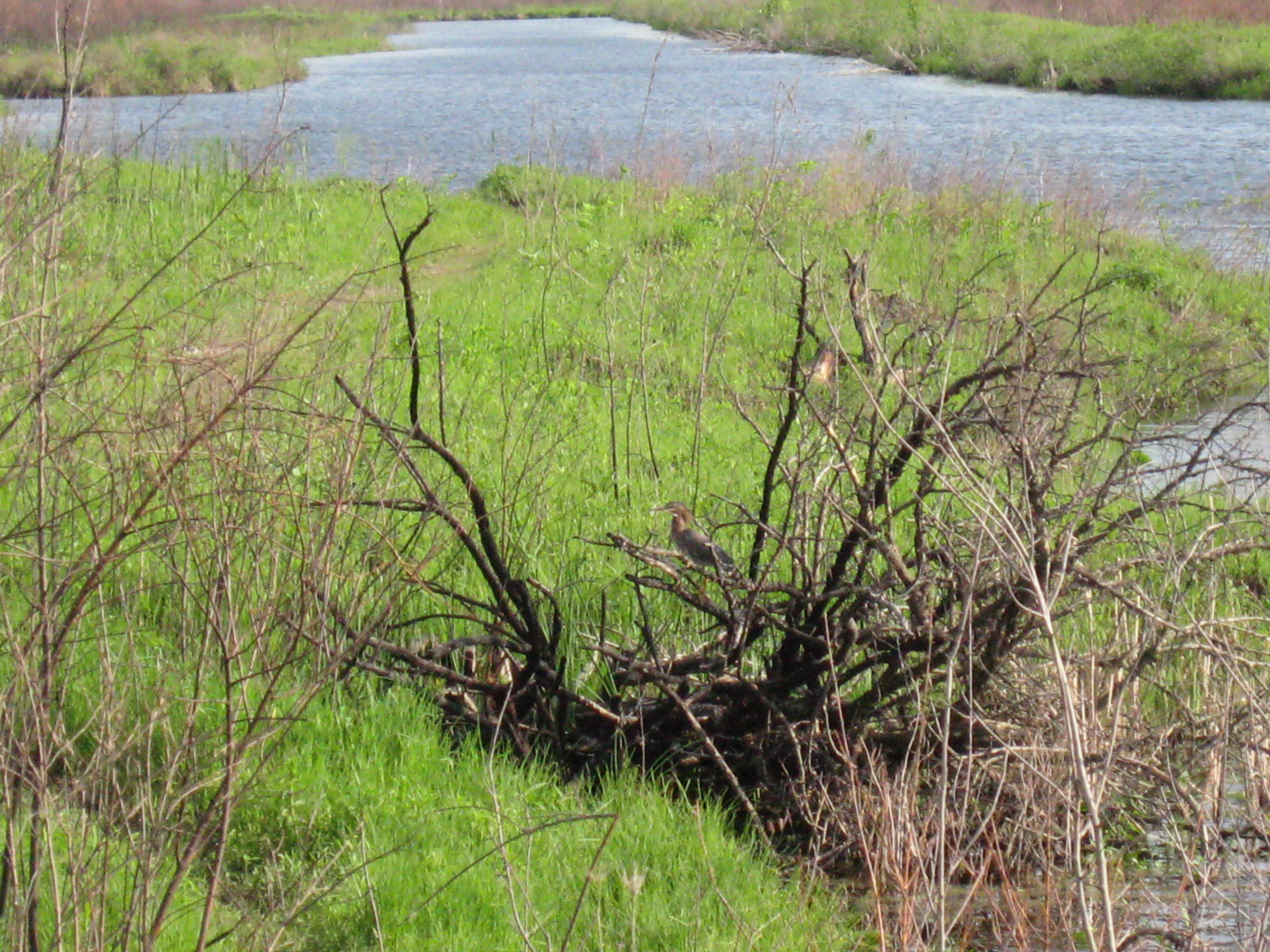
We are seeing a green heron quite frequently at the marl pit bridge.
The Sauk Campground as seen from the marl pit.
The pit.
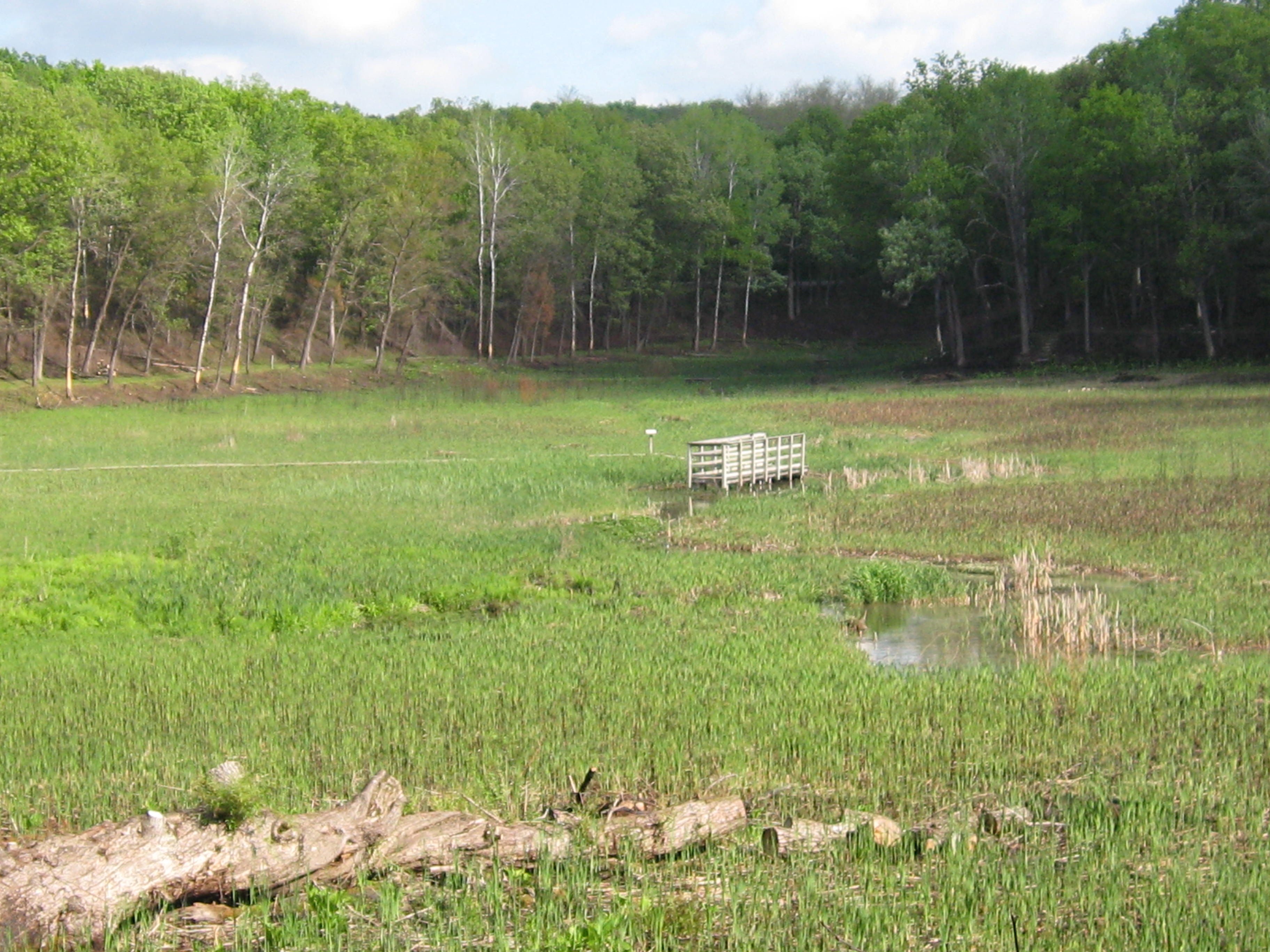
The valley.
Lindsay, and his mate, Connie, stopped over and shared a delicious bottle of Zinfandel from the Lewis Station Winery wine with me and we surveyed the prairie as evening descended.
I was back at it again on Thursday with a stop down at the Scuppernong Spring to get some drinking water.
Here is a walking tour of the Sauk Campground with the advantage of the morning sun behind me.
I took a chance that it would not rain and sprayed 8 gallons of glyphosate on first year garlic mustard seedlings, which literally carpet many newly cleared areas. Then I girdled a clonal colony of aspen on the west side of the river across from hotel site. The goal is to keep the boundary areas along the river valley free of aspen. And finally, I returned to the north side of the scuppernong river, west of the old barn site, between the river and cut-off trail, to pile buckthorn.
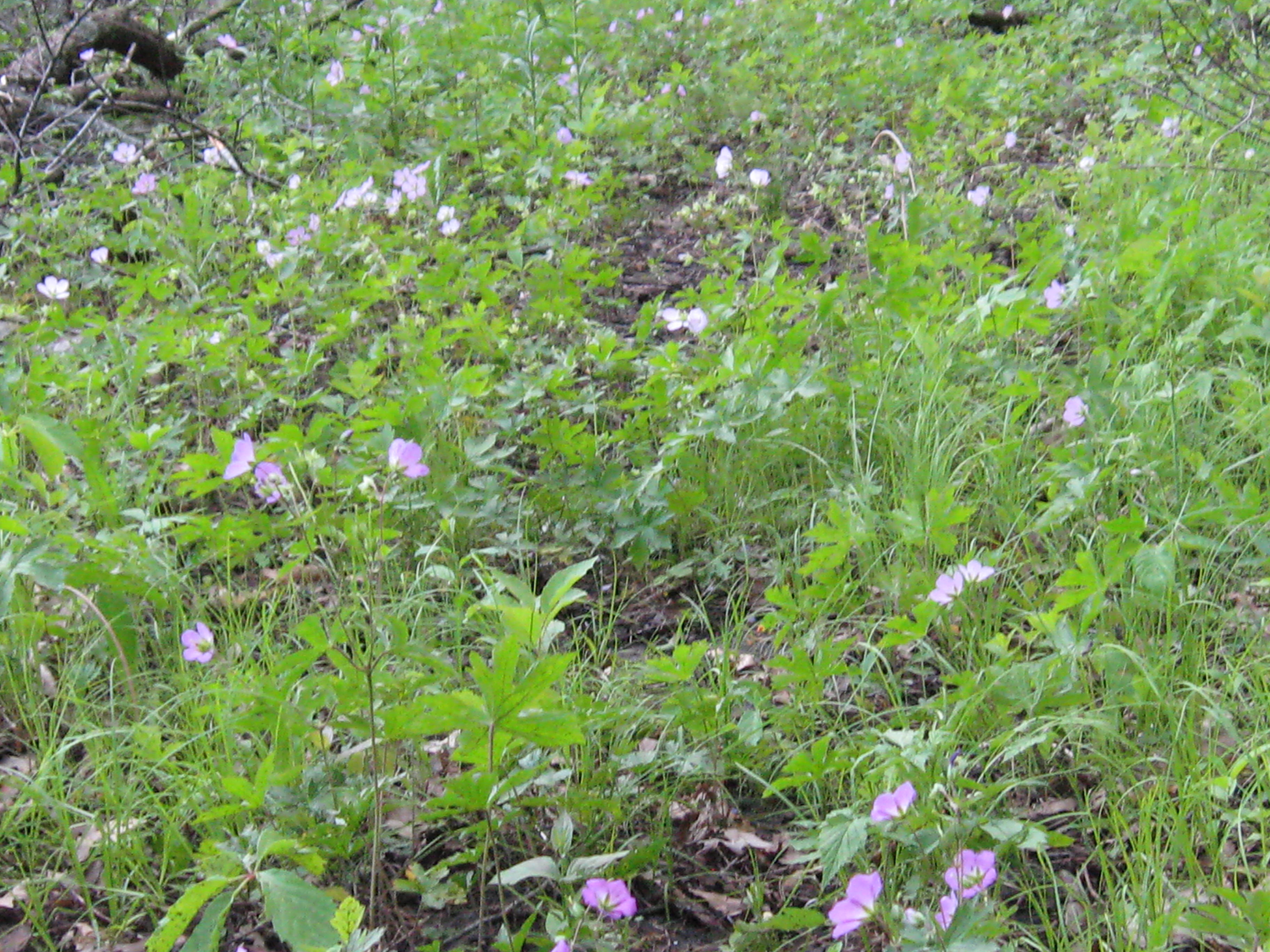
Check out this patch of geraniums!
The water level is up to around .4′ from the early spring levels around .34′ and it seems like the river channel is getting more narrowly defined, i.e. some of the marl and muck is getting washed downstream.
The Emerald Springs are constantly changing their configuration.
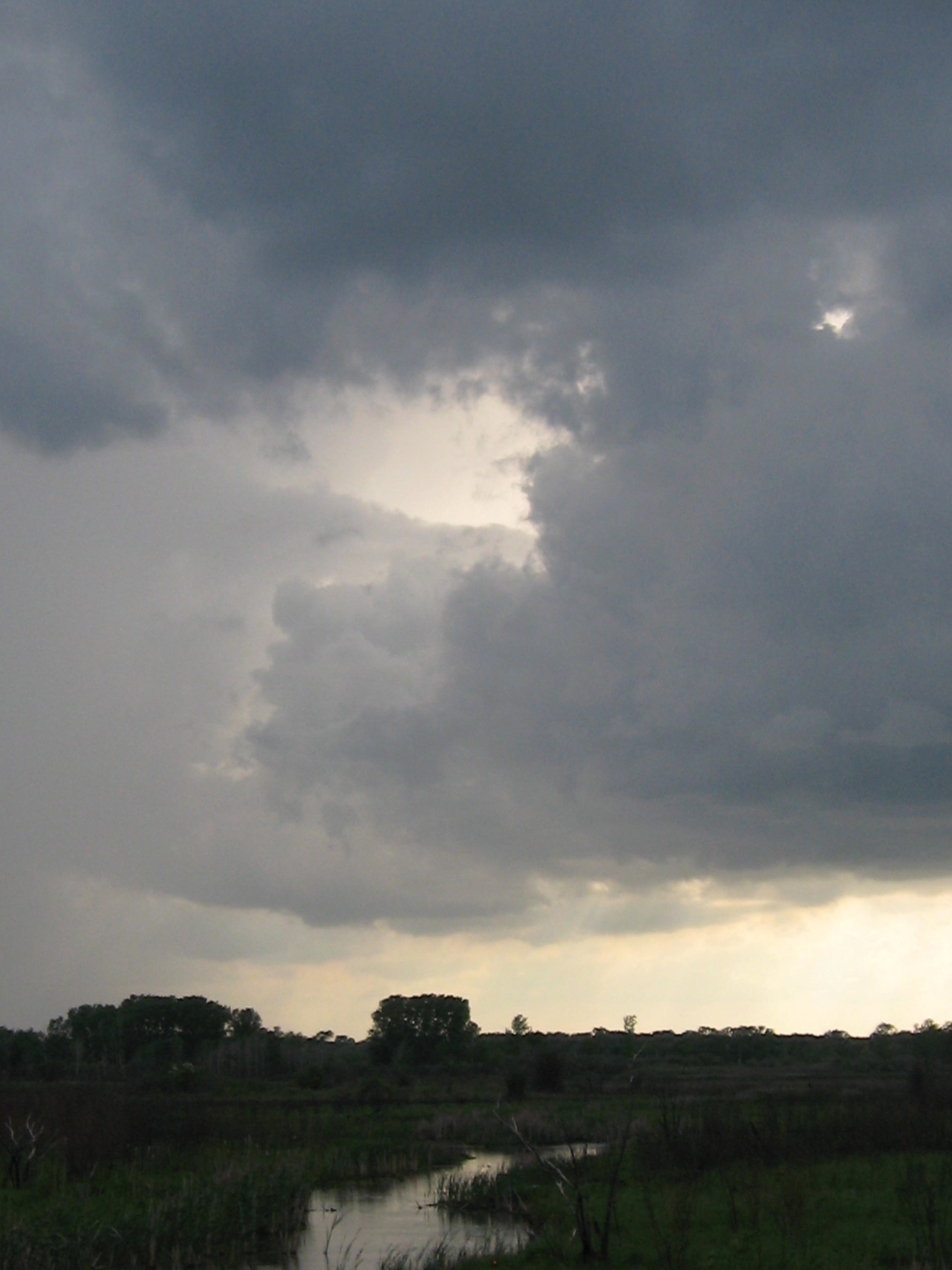
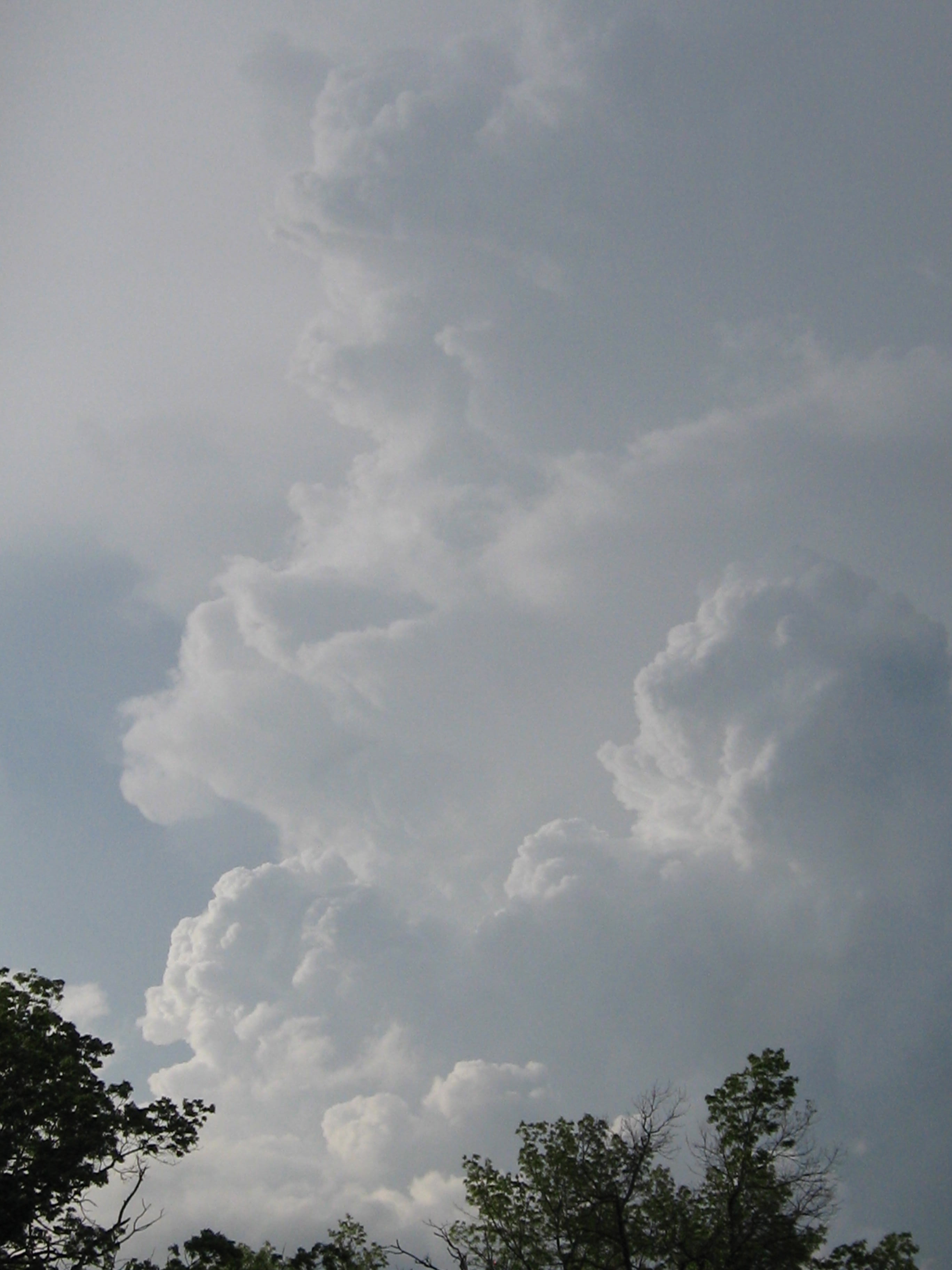
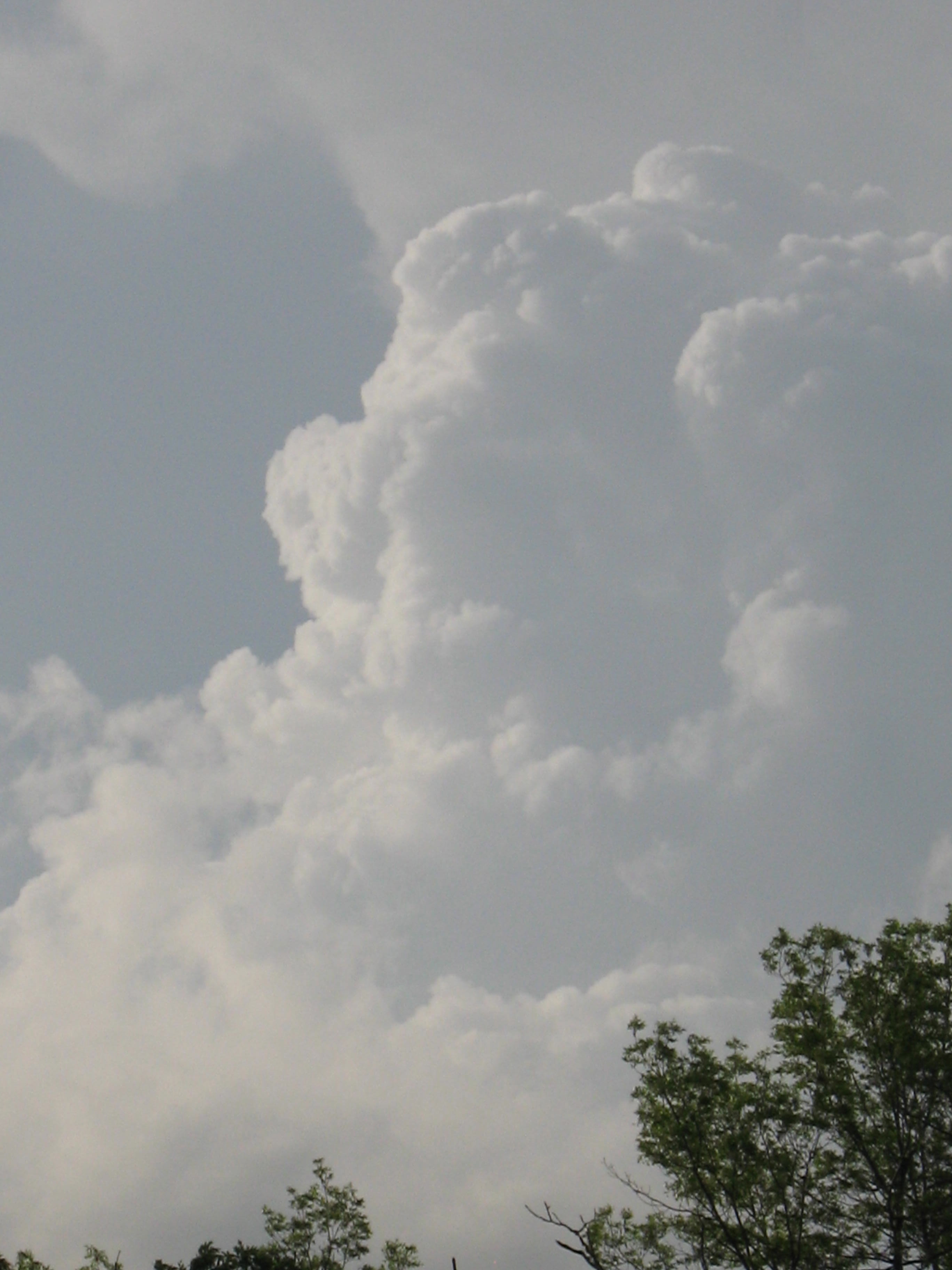
When the glorious pearl and alabaster clouds of these noonday storms are being built I never give attention to anything else. No mountain or mountain-range, however divinely clothed with light, has a more enduring charm than those fleeting mountains of the sky–floating fountains bearing water for every well, the angels of the streams and lakes; brooding in the deep azure, or sweeping softly along the ground over ridge and dome, over meadow, over forest, over garden and grove; lingering with cooling shadows, refreshing every flower, and soothing rugged rock-brows with a gentleness of touch and gesture wholly divine.
After a couple days, I start to miss The Springs. They draw me away from the present moment into a dreamy future, which became reality for me last Thursday as I worked, wandered and wondered in a Garden of Eden. This place is flowing with living waters and I drew some for the day at the Scuppernong Spring.
I crossed the Indian Campground on my way to an area at the bottom of the slope to girdle some Aspen trees.
It wasn’t until I started working with real Indians, I mean people born in India, that I started to become frustrated with the common use of the term here; a case of mistaken identity. Language is so powerful! Who were the “First People”, the “Native Americans”? If only we could have learned from them how to live in harmony with the land and honored them with their own names.
Watercress and quack grass are two non-native plants that can really take over an area. Lindsay pulled a ton of these invaders from the Indian Spring, or maybe we should call it the Sauk Spring after the tribe, along with the Fox, that ceded over 50,000,000 acres of their tribal lands to the United States in the Treaty of St. Louis back in 1803. Cede — to surrender possession of. We didn’t expect these deeply rooted plants to disappear and I thought it would be a good time to clean the spring again.
After girdling aspen for a while, I donned some rubber knee boots and pulled the new batch of water cress and quack grass that were rapidly spreading. Here are a series of videos and photos taken later in the day that give a tour of the Sauk Spring.
I love the sound of the water.
This view is a bit downstream from the source where an earthen dam was blocking the channel.
There is a second spring source that merges with the main channel on its way to the Scuppernong River.
The Sauk Spring is a relatively quiet place to hang out with a great view of the prairie.
Next, I headed to the old barn site, which is quite a bit noisier, to pile some buckthorn. Garrett and Jenny, two new volunteers, joined me and we did some stacking. I’m hoping to work with them again soon!
Finally, it was time for some fun and by this time the clouds had been blown away by a refreshing north wind.
This vernal pool as at the south end of the loop trail.
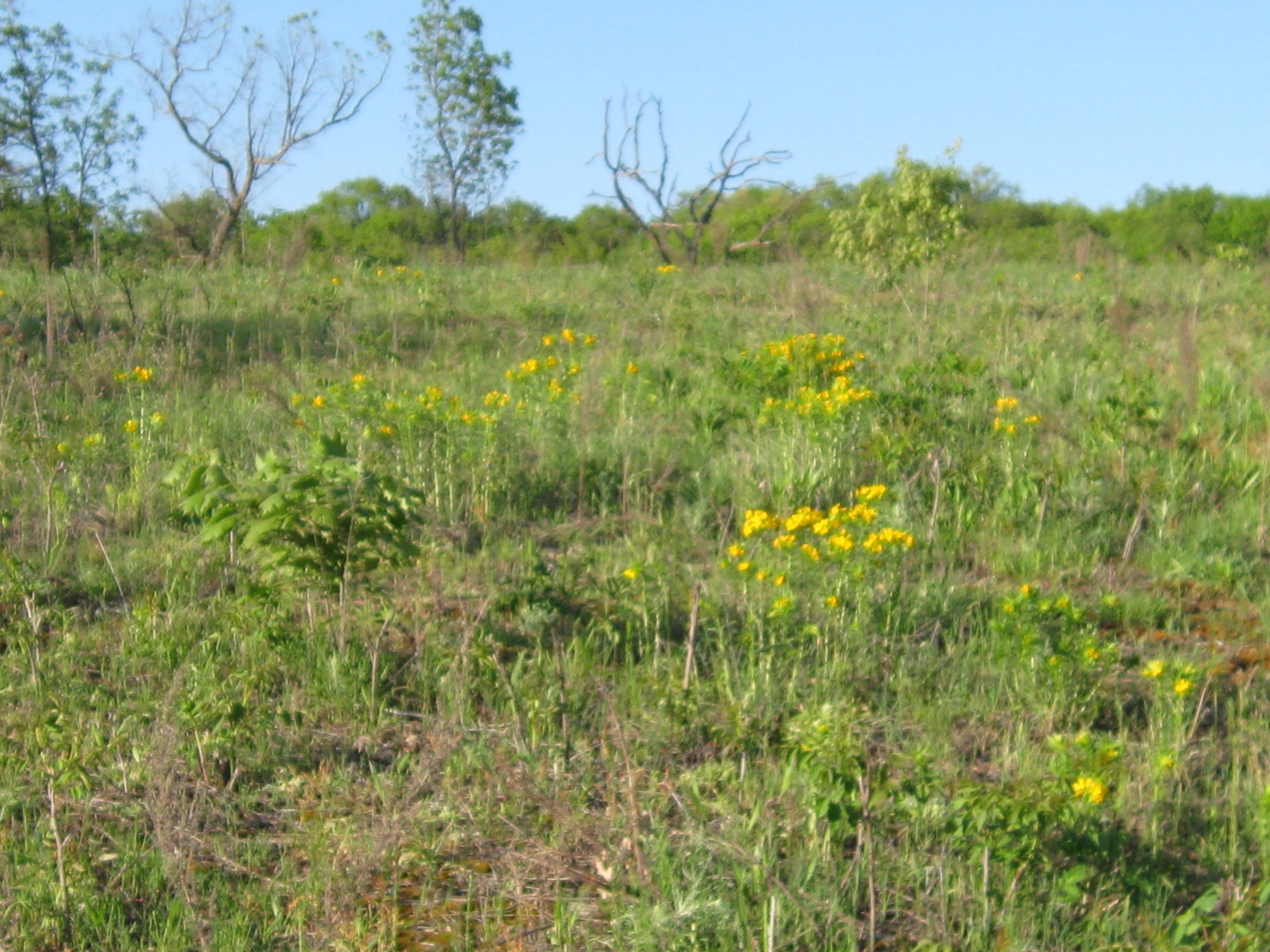
The Sauk Campground is a sand prairie that really comes alive with color in the spring. The Hoary Puccoon is in full bloom.
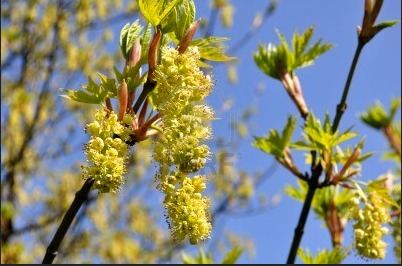
The seasons progress slowly giving us time to appreciate the changes as they unfold. I like to watch the tips of the oak branches as their buds open and flowers emerge.
Spring is a great opportunity to use fire to control invasive plants and it has been a long time since the Scuppernong Springs Nature Preserve has had a prescribed burn. Buckthorn seedlings are thick in many places, especially the slope along the trail below Hwy 67 on the left side of the video below.
The alternative to fire is repeated brush cutting and poison application, which is a loosing game. So I am very thankful and excited that the DNR has prioritized the Scuppernong Springs for a prescribed burn this year. In fact, assuming the weather forecast for tomorrow, May 6th, doesn’t change, we should have perfect conditions. DNR veteran Don Dane is the burn boss and he has been working on the plan for months. The scope is approximately 900 acres covering an area south of Hwy ZZ and west of Hwy 67. I’m really looking forward to participating!
I wasn’t able to get to The Springs last week so I was eager yesterday to see the progress of Spring.
I started the day girdling aspen down by the Hotel Springs. This is an extensive clonal colony with huge trees and a lot of work remains.
I took a break mid-morning to attend the Kettle Moraine Natural History Association’s annual meeting at forest headquarters. Susan Beyler, fisheries biologist and NR Region Team Supervisor with the DNR, filled in for Ben Heussner and made an excellent presentation on the “Fishes of the Mukwonago River”. She also covered the restoration efforts being made on the old Rainbow Springs golf course, which the DNR recently acquired, to remove all of the culverts that were installed to control the river. This area comprised a wide diversity of unique habitats before the bulldozers arrived and they are hopeful that some of this diversity will re-emerge. I hope to meet with Susan at the Scuppernong Springs to take a tour and get her unique perspective.
After the meeting I headed over to the buckthorn alley to resume cutting there.
The buckthorn trees here are tall and thick so it was slow going.
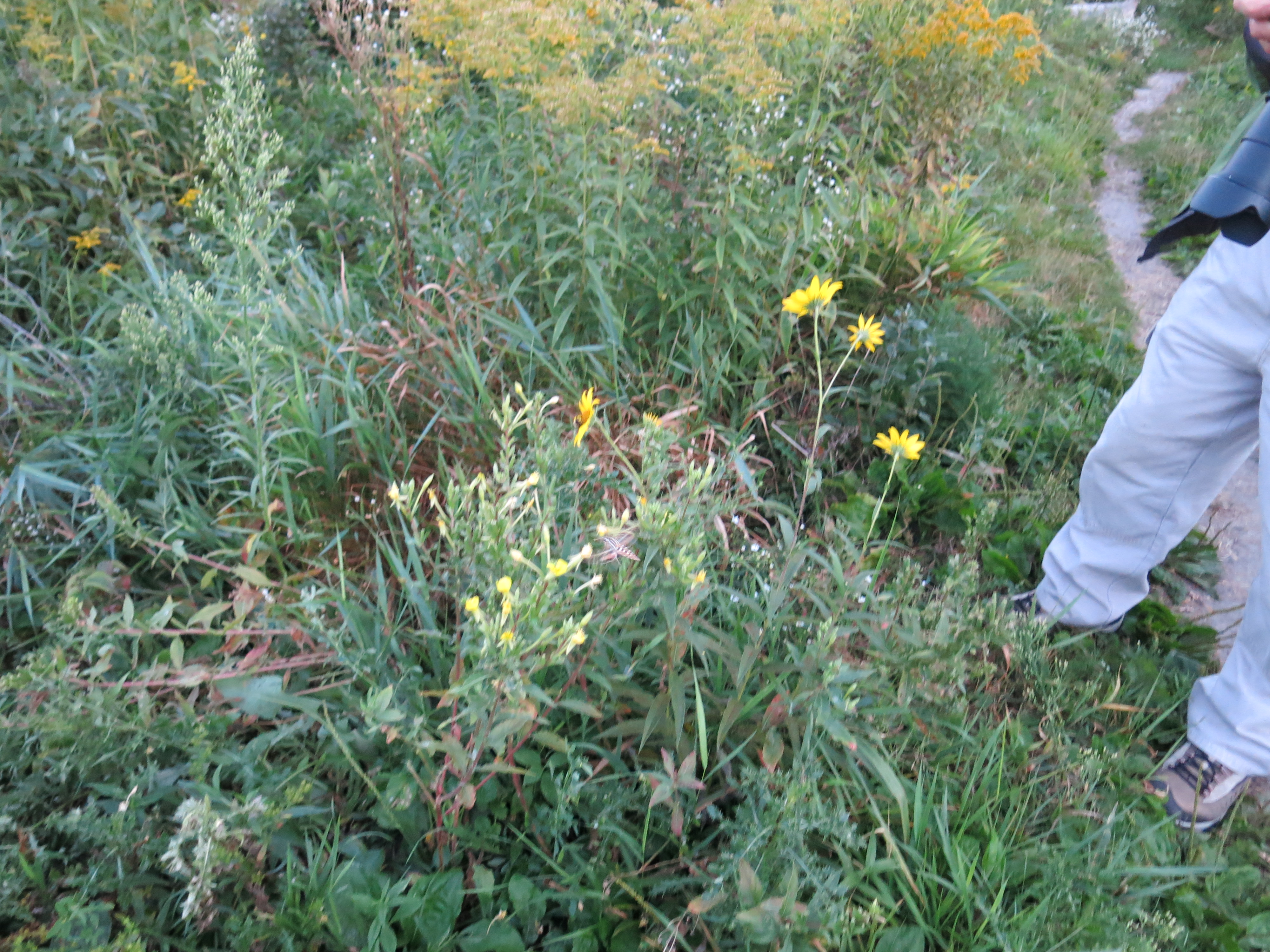
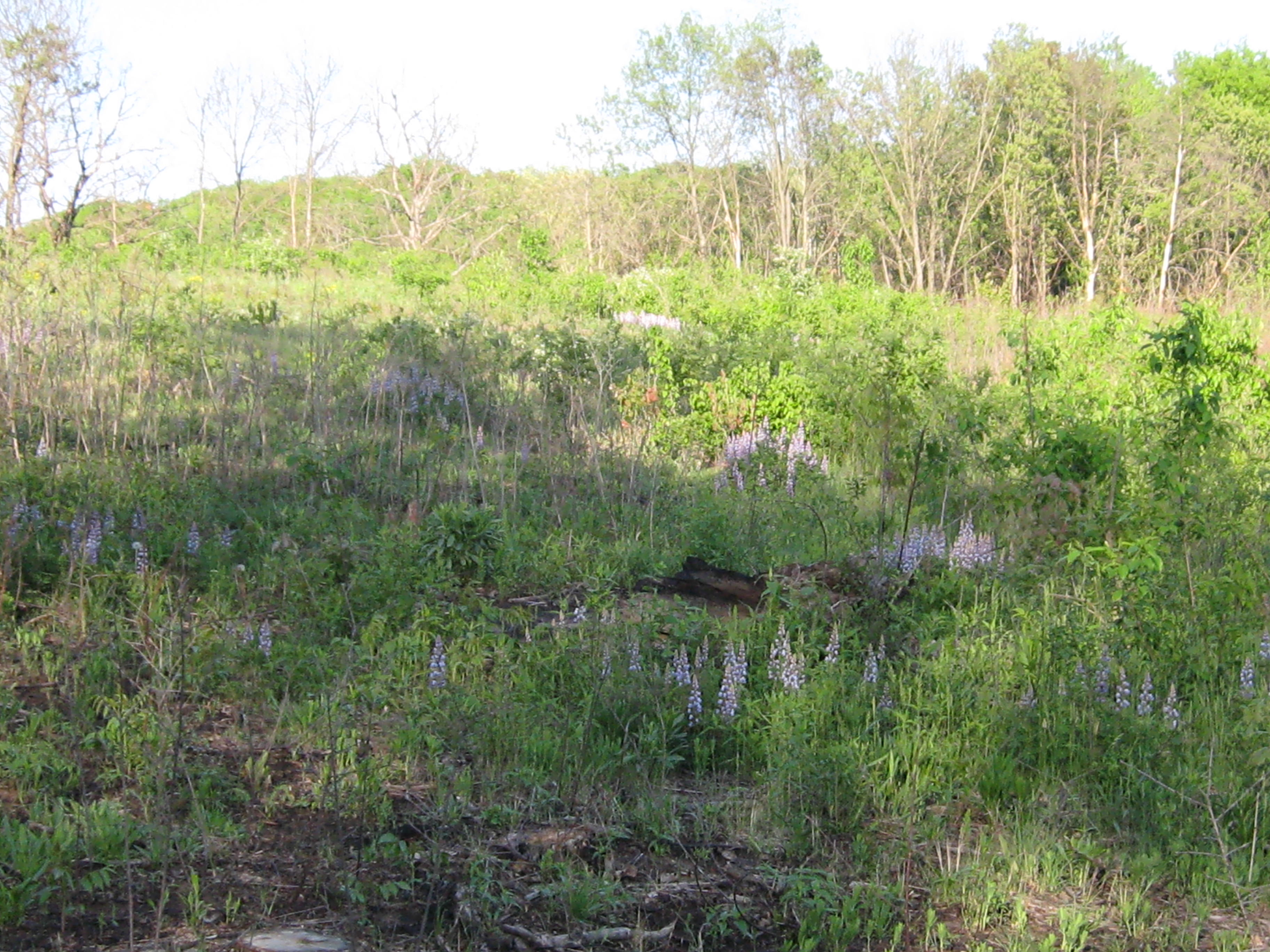
Later, I took a walk on the cut-off trail and noticed lots of flowering plants emerging. It will be interesting to see how they survive the fire.
The frogs were calling from the bogs on the north side of the loop trail.
John Hrobar sent me this link to an interesting article:
New scientific studies reveal Midwestern frogs decline, mammal populations altered by invasive plant Researchers say this is a call to action to remove European buckthorn from the region
The Hatching House Springs have been hidden for years and it is really interesting to see what is coming up there now.
As we head towards the summer solstice, I find I have to locate myself farther and farther south on the Indian Campground to get the best view of the sunset.
I like to fancy myself as someone who knows how to think critically, but I suffered a momentary lapse of reason recently acting on belief instead of real knowledge. Fortunately, the consequences in this case were minor and served as a good reminder. To think critically consistently, a tool like the trivium is indispensible; grammar, logic and rhetoric, these are the keys we can use to distinguish truth from fiction and knowledge from mere belief or opinion.
In my last post I reported that we have been spraying spotted knapweed with glyphosate, aka, RoundUp, on the Sand Prairie believing this was the right approach for this invasive plant. The problem is I had not researched this plant i.e. I had not done my grammar and answered the questions of the Who, What, Where, and the When as applied to spotted knapweed. Lindsay sent me the link above via which I learned that the preferred technique is to “Apply selective herbicide clopyralid during bud growth in early June for best results (48 oz per 100 gal water).” I complained in the post that I didn’t have any clopyralid without doing the grammar on this compound. Thankfully, Lindsay did and he informed me that clopyralid is the active ingredient in Transline, which we do have. So this was a good reminder for me to apply critical thinking skills as we continue to try to restore the Scuppernong Springs Nature Preserve.
The scientific method goes hand in hand with the trivium and critical thinking and I’m trying a little experiment in the Scuppernong River just a few yards upstream from the bridge across the former embankment that created the upper pond. When Ben Heussner and his team of DNR Fish Biologists recently inspected the river, he pointed out that the river was not “head cutting” at this point and that is why it is still filled with silt and marl upstream. I’m trying a little low tech experiment to encourage the river start head cutting here.
Saturday, April 27, was a very pleasant day at The Springs and I started out spraying garlic mustard along Hwy 67 north of the old barn site. The understory here is severely degraded and consists mostly of garlic mustard.
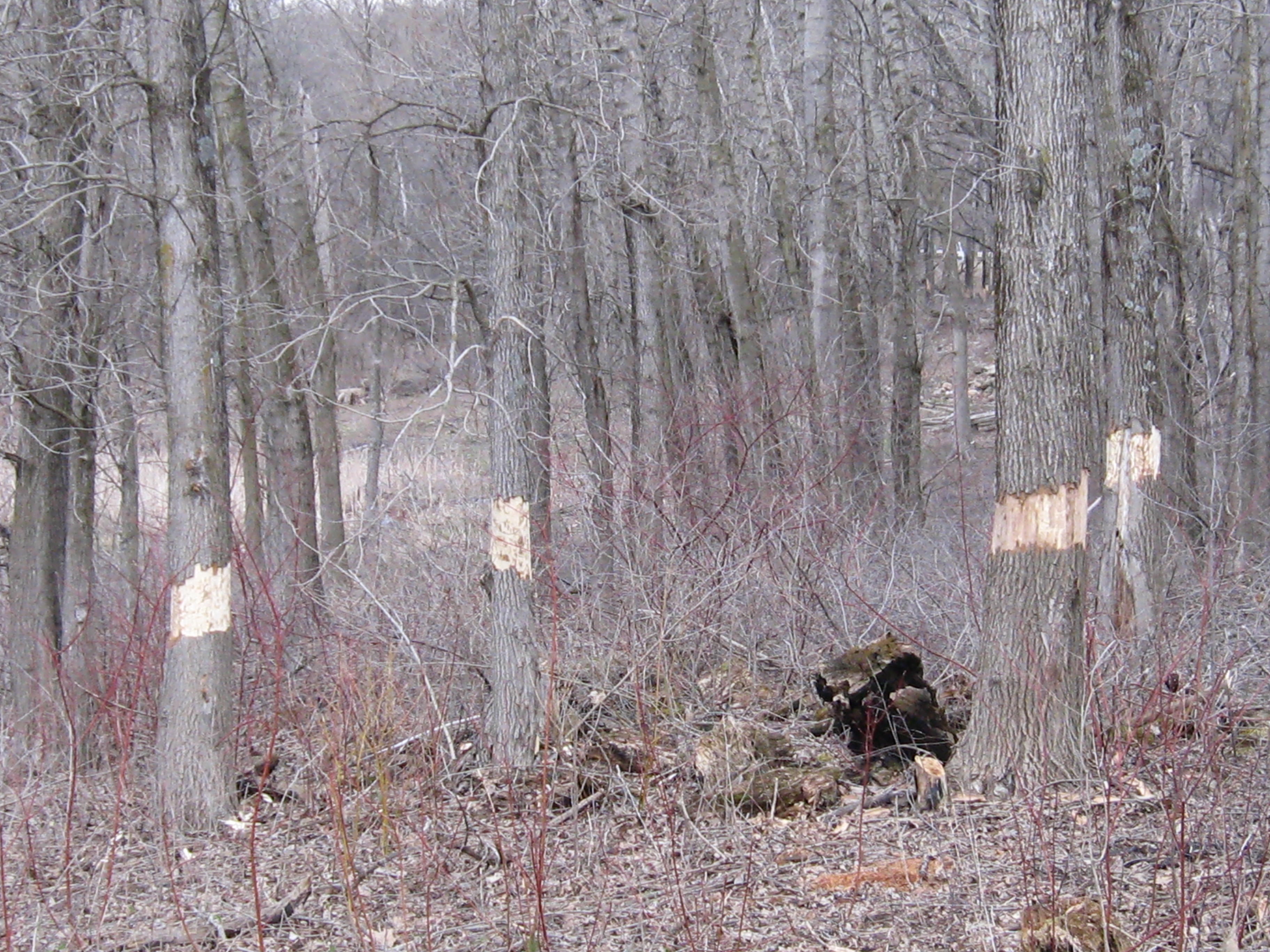
Then I spent a couple hours girdling aspen at the old hotel site. There are some huge trees here and I was skeptical about attacking them with hand tools, but the bark is separating very easily from the trunks now and I made good progress.
Around mid-day, I headed over to the Buckthorn Alley, or, perhaps tunnel is more descriptive, and got started on one of the nastiest buckthorn thickets I have ever seen.
I made a small dent and already you can start to see things, like the sky, that will make this section of the trail much more enjoyable and interesting.
The day flew by and I had a date with Pati at home, so I had to depart before the sun set. Here is a parting panorama taken from the Indian Campground.
When I visited the land that time forgot on the north end of the Scuppernong Springs Nature Trail, I reached into my backpack for a can of spinach and realized I had left it at home.
I rarely walk the section of trail marked in blue below because it is so dark, damp and uninteresting compared to the rest of the trail.
At the end of the day yesterday, I walked this section of the trail to make sure there were no trees downed across it and review just how badly degraded it was. Here is a tour of the first hundred yards or so.
After passing through this buckthorn thicket, I thought “Thats all I can stands, I can’t stands no more!” I’m changing my priorities to focus on this section of trail. I’ve been reminded of my old hero, Popeye, by my recent diagnosis via MRI that I have torn the head of the long biceps tendon on my left arm. I got whacked there by the branch of a red oak tree that I was clearing off the trail back in October of 2012. One solution offered by the orthopedic surgeon was to sever the head of the biceps tendon completely; apparently the Creator was confused when deciding to join this muscle with the scapula and we don’t really need it. The only downside he explained was that my biceps muscle would bunch up reminiscent of Popeye The Sailor.
My rotator cuff is torn as well, but after three months of physical therapy and Feldenkrais Lessons with Pati, the pain and discomfort has subsided and I can live with it.
Yesterday morning, Rich joined me as we continued our efforts to spray the spotted knapweed on the sand prairie that covers the Indian Campground. The site listed above explains “Apply selective herbicide clopyralid during bud growth in early June for best results (48 oz per 100 gal water).” hmmm, we don’t have any clopyralid and it is only April; so our use of glyphosate at this time of the year is not the preferred technique; nevertheless, since glyphosate attacks any green plant, I’m hopeful we will see good results (we focus the spray as much as possible to reduce collateral damage).
Roberta “Berta” Roy-Montgomery joined Rich and I and we finished girdling the aspen in this bowl.
Rich and Berta had other commitments for the rest of the afternoon and I headed over to the area north of the old barn site to continue cutting buckthorn between the loop trail and Hwy 67.
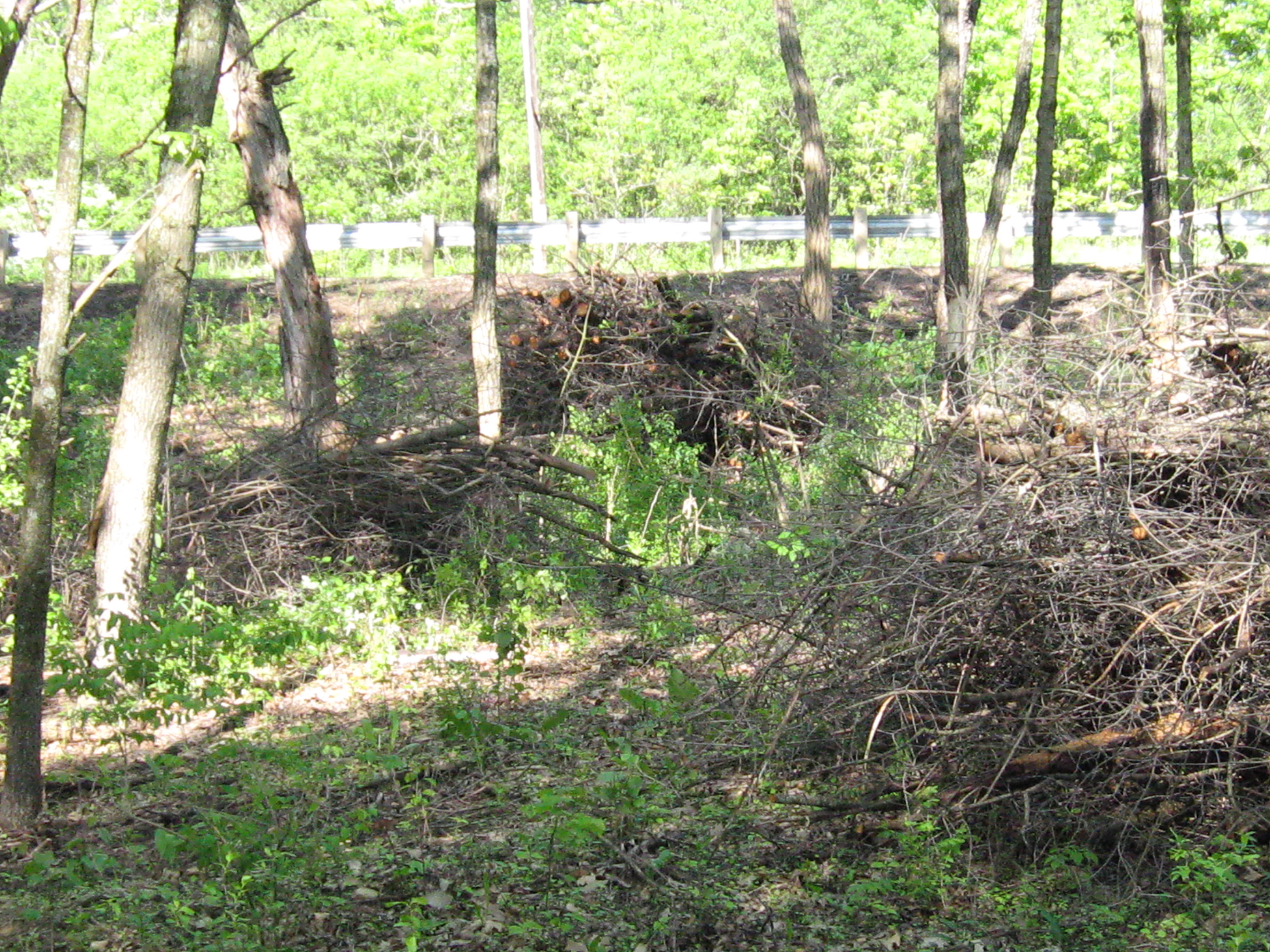
This is probably as far as we’ll get in this area for now as our focus is shifting to the Buckthorn Alley.
Here are a couple of views of the area just cut. You have to walk amongst the oak, cherry and hickory trees in here to really appreciate their size and beauty.
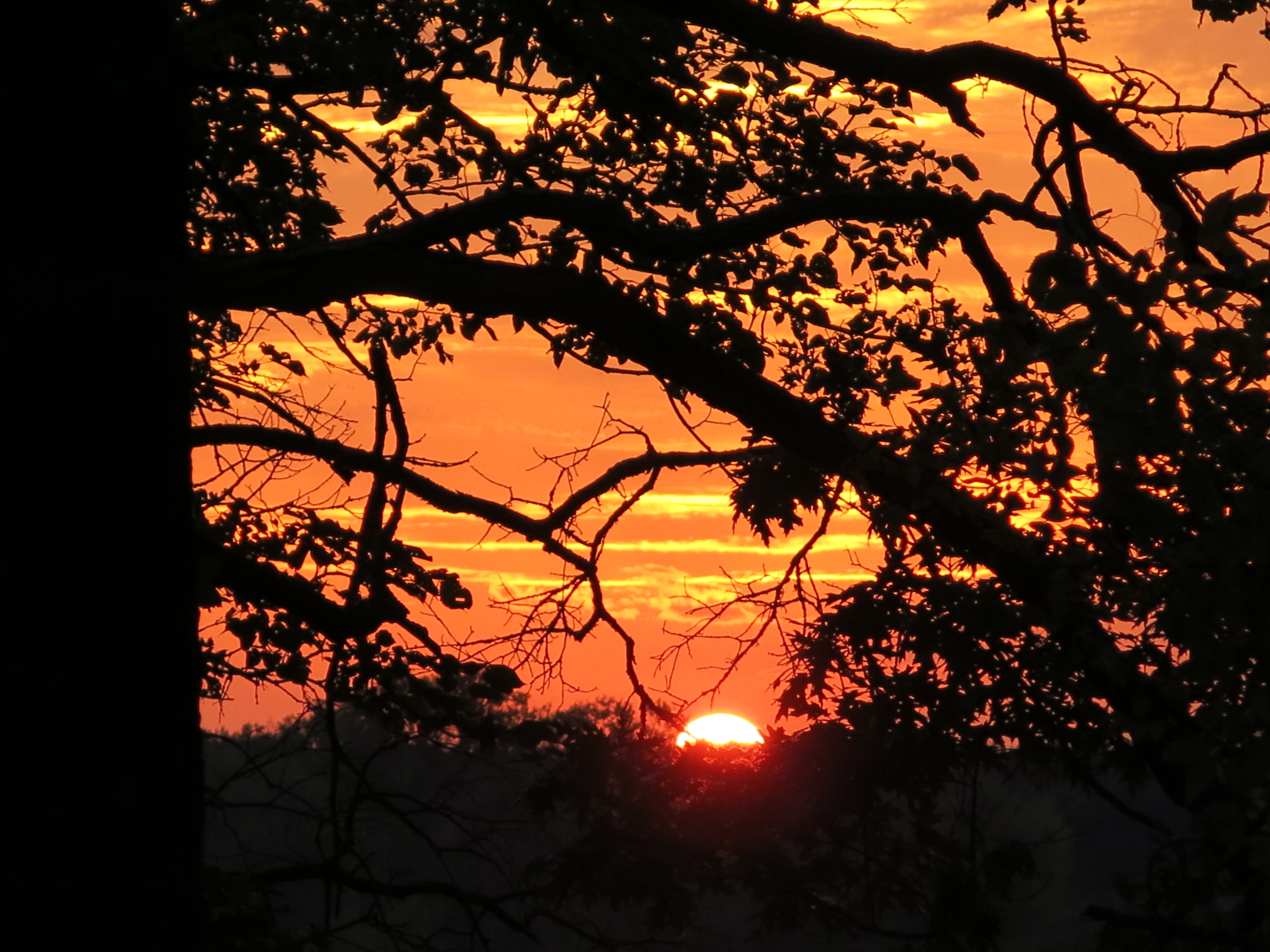
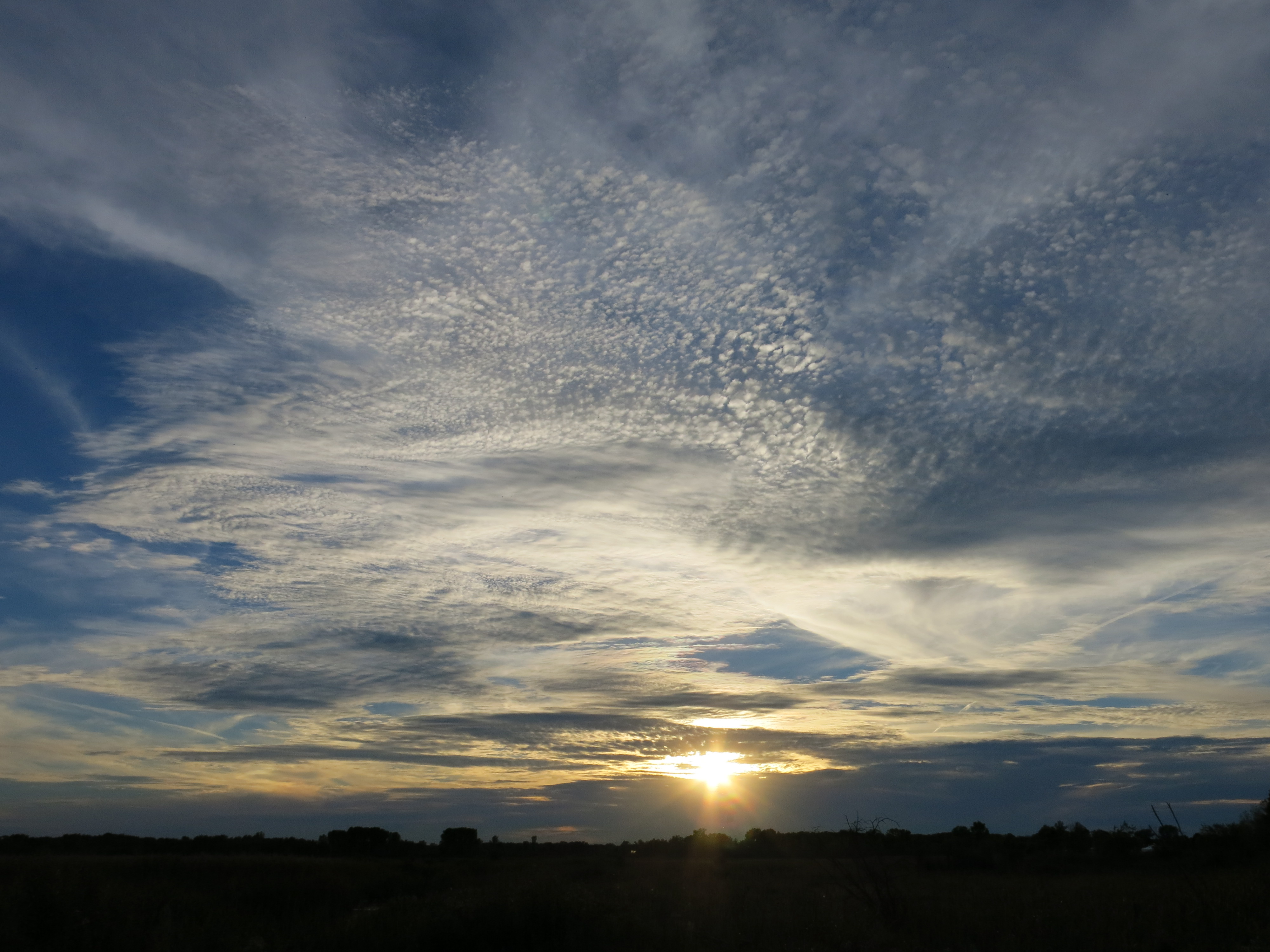
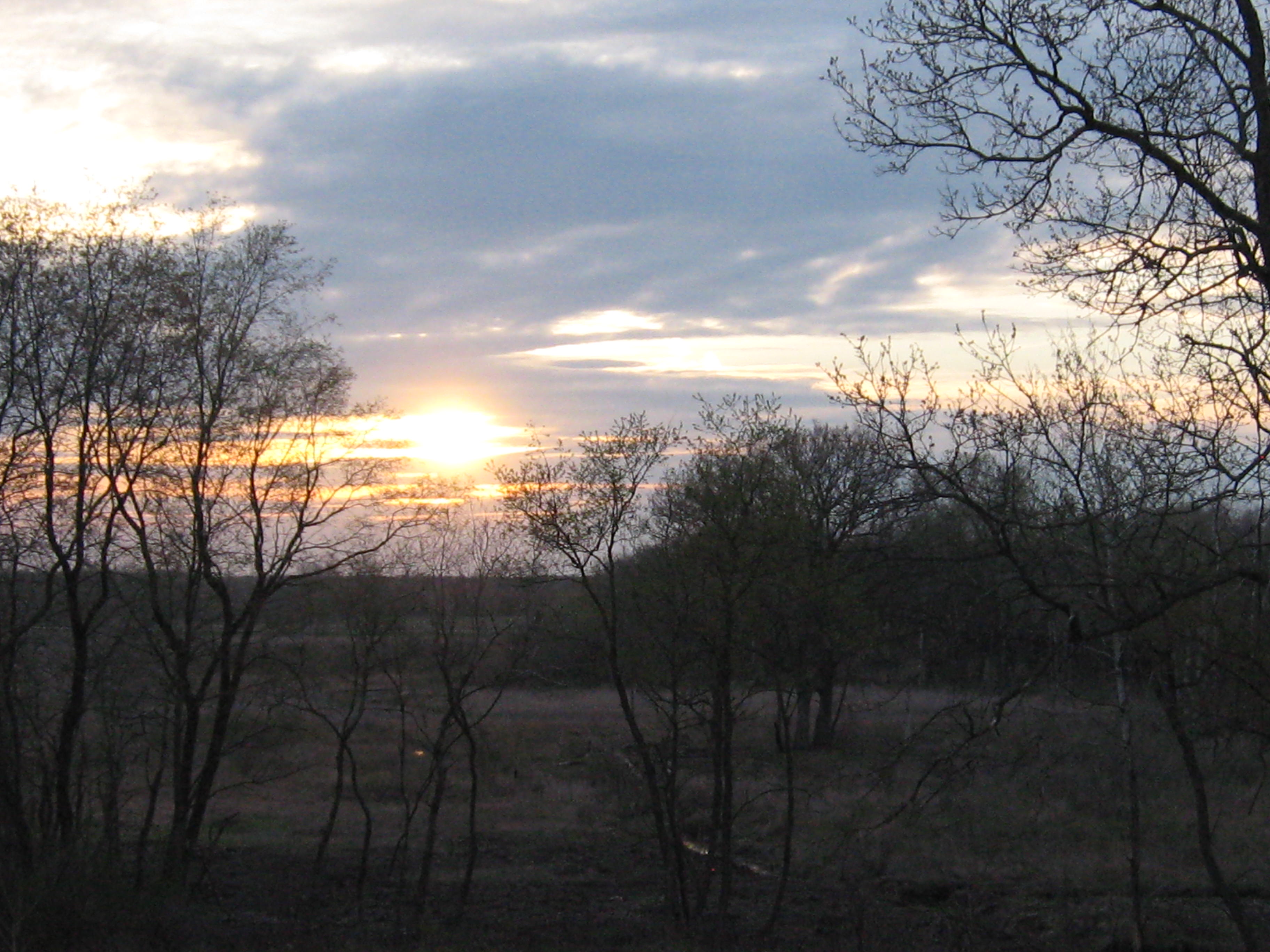
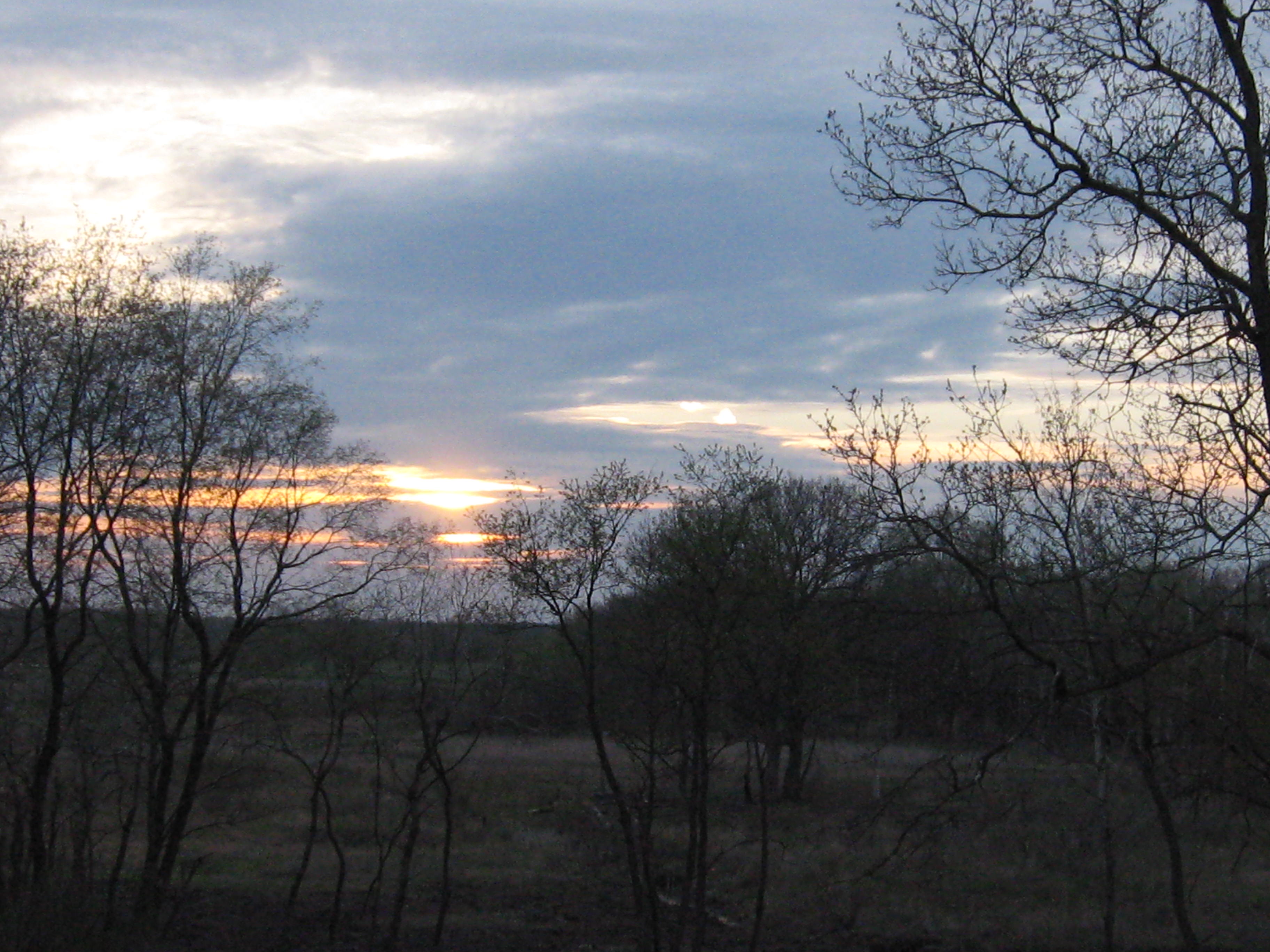
I couldn’t stay for the sunset but did grab these parting shots.
















































 Scuppernong Springs Nature Trail
