I’ve been looking for a word, an idea, that captures how I feel about finally burning the hundreds of brush piles I left at the Hartland Marsh. Redemption! It looks and feels much better now that most of the piles are gone. You can see the lay of the land more clearly; the view of the horizon through the trees. The scale of the big oak trees is more evident when your eye can follow their lines from the earth to the sky without being obscured by piles of brush at the trunk.
On Monday, February 18th, the Village of Hartland DPW crew (Dave, Jake, Josh, Tom) took advantage of the southerly winds to burn the most problematic brush piles right along Cottonwood Ave on the hillside just north of the gazebo. Yesterday they helped Rich Csavoy, who volunteers with me at the Scuppernong Springs, and myself burn the 33 remaining piles on the north side of Parker Island, which is just over the river from the Parker Brothers home site (this property is now owned by the Waukesha County Land Conservancy). There are less than 30 piles to burn on Village land to complete the cleanup!
Here is a video taken yesterday before we began burning piles on the north side of Parker Island.
And a few pictures.
I must confess I didn’t have a fire in my belly to get to work yesterday and, when confronted with the cold temperature and snowy, ice-encrusted piles, I seriously considered bailing out. But I didn’t, and shortly thereafter Rich, Jake, Josh and Tom arrived to boost my energy and spirits. Here is a video taken after the piles were burned.
Steve Brasch grew up at the Scuppernong Springs. His mother used to drop him off there with his friends in the morning with a promise to pick them up for supper. All day they ran wild; building forts, floating on rafts in the ponds, catching creatures, running, hiding, looking, simply being in the woods. He never lost his love of nature and, armed with a degree, he pursued a career in forestry. Those were the Reagan years and budgets were tight; Steve had to make some tough decisions and leave the forest behind.
Over the years Steve found opportunities to volunteer with many organizations working on land restoration and his passion for the outdoors never flagged. He moved into the Scuppernong neighborhood and, noticing the changes taking place at the Springs, decided to get involved. Lindsay and I really appreciated Steve’s help and camaraderie yesterday as we worked the piles on the cut-off trail. Welcome Steve!
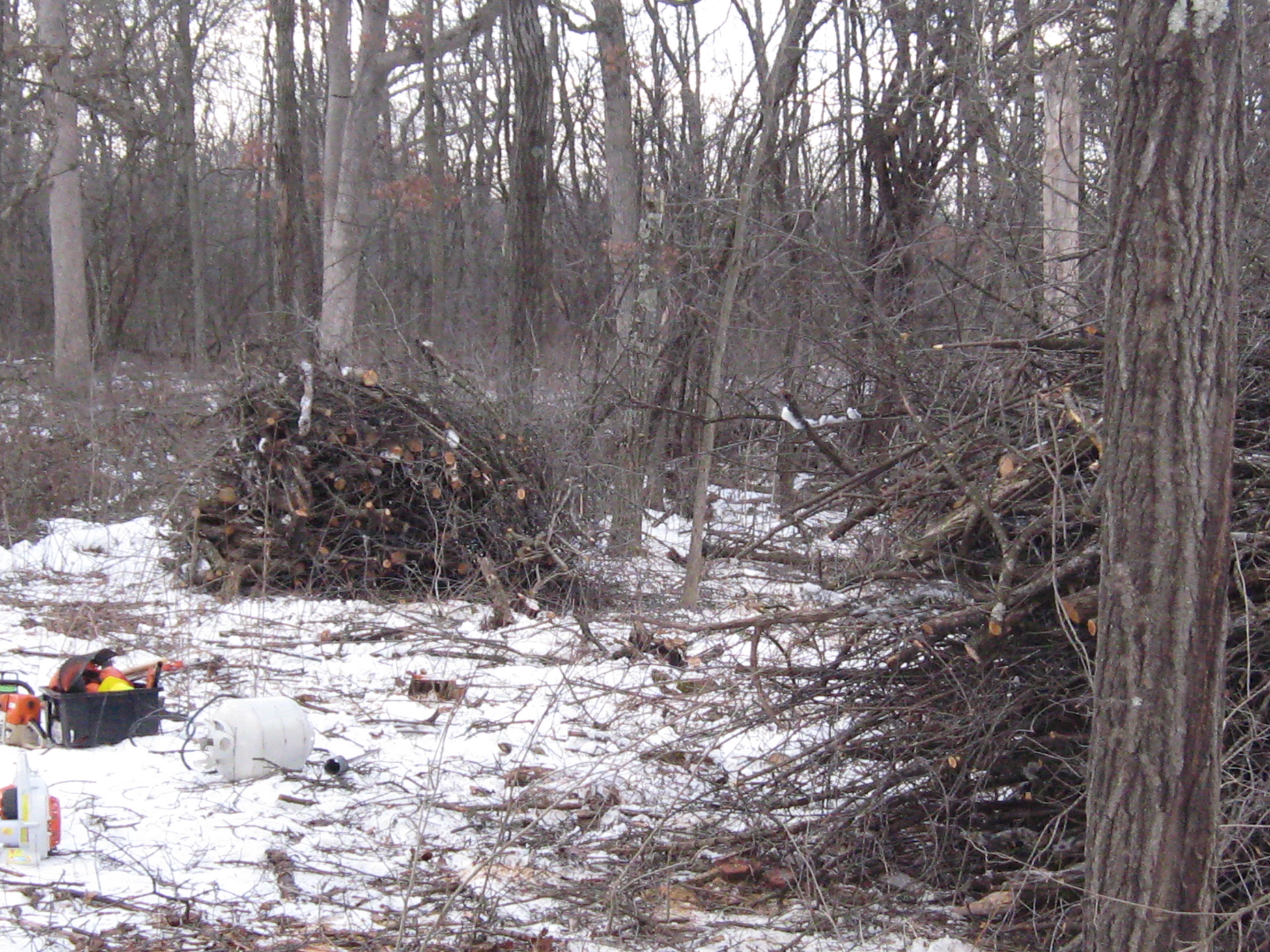
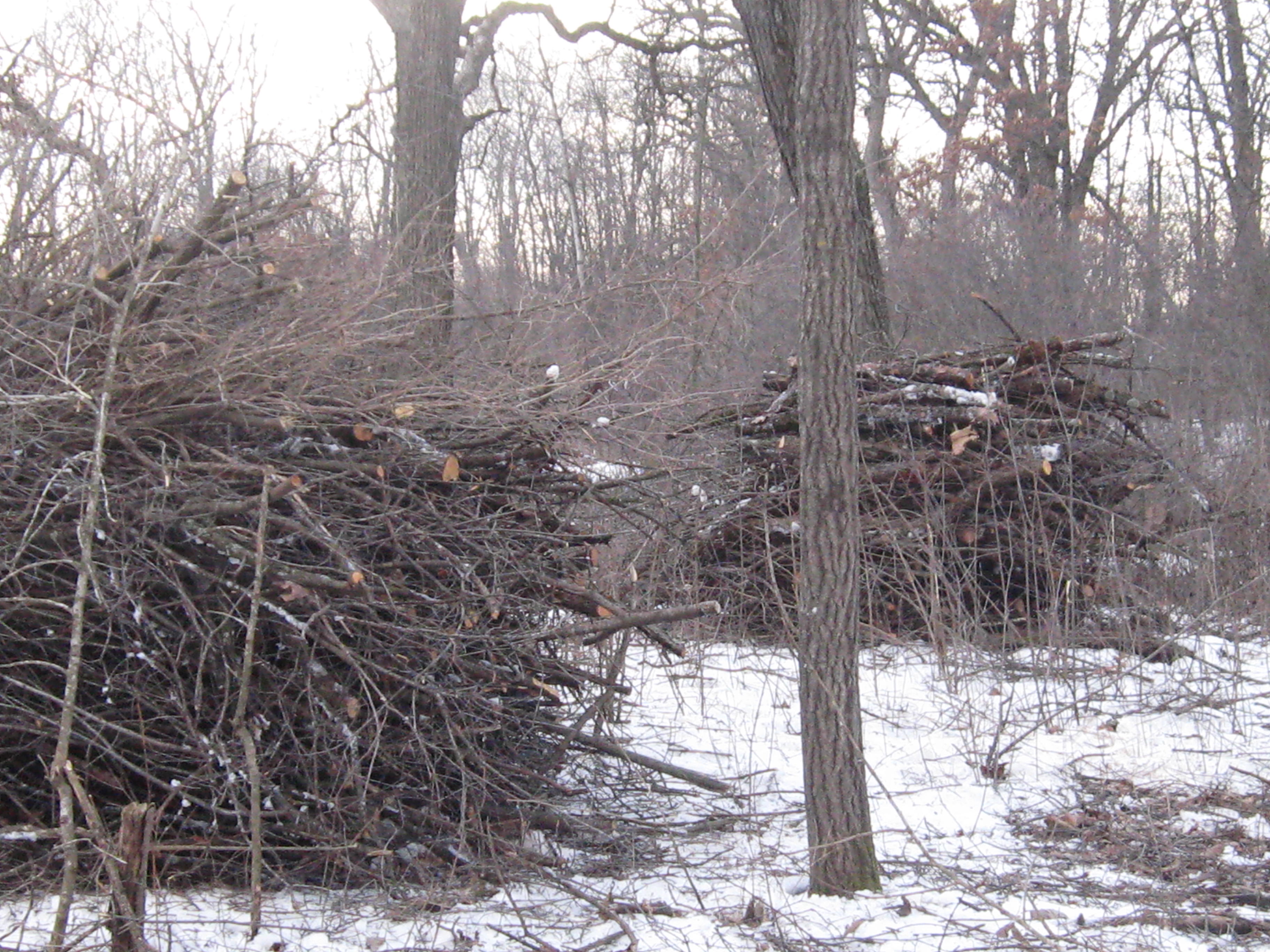
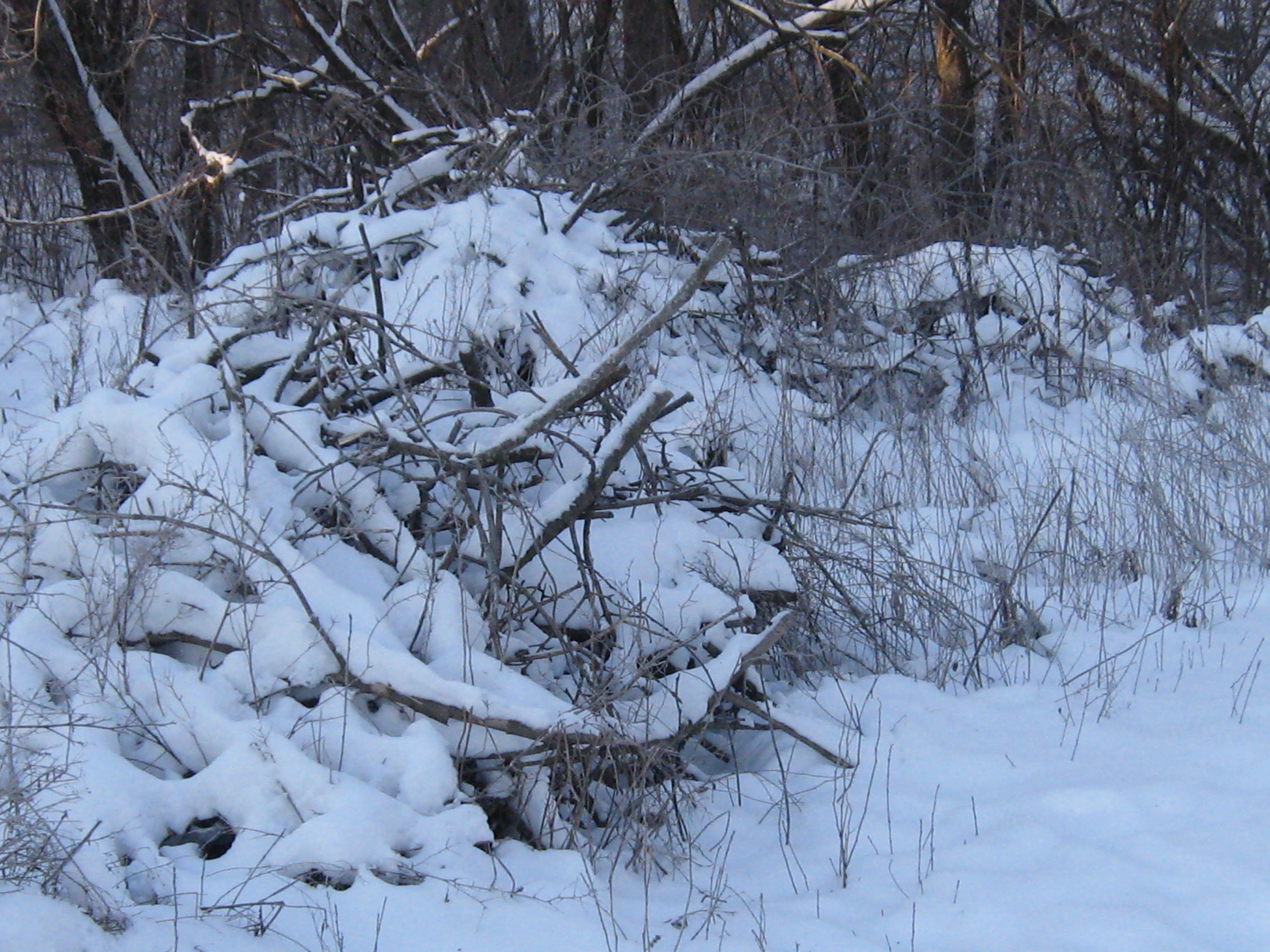
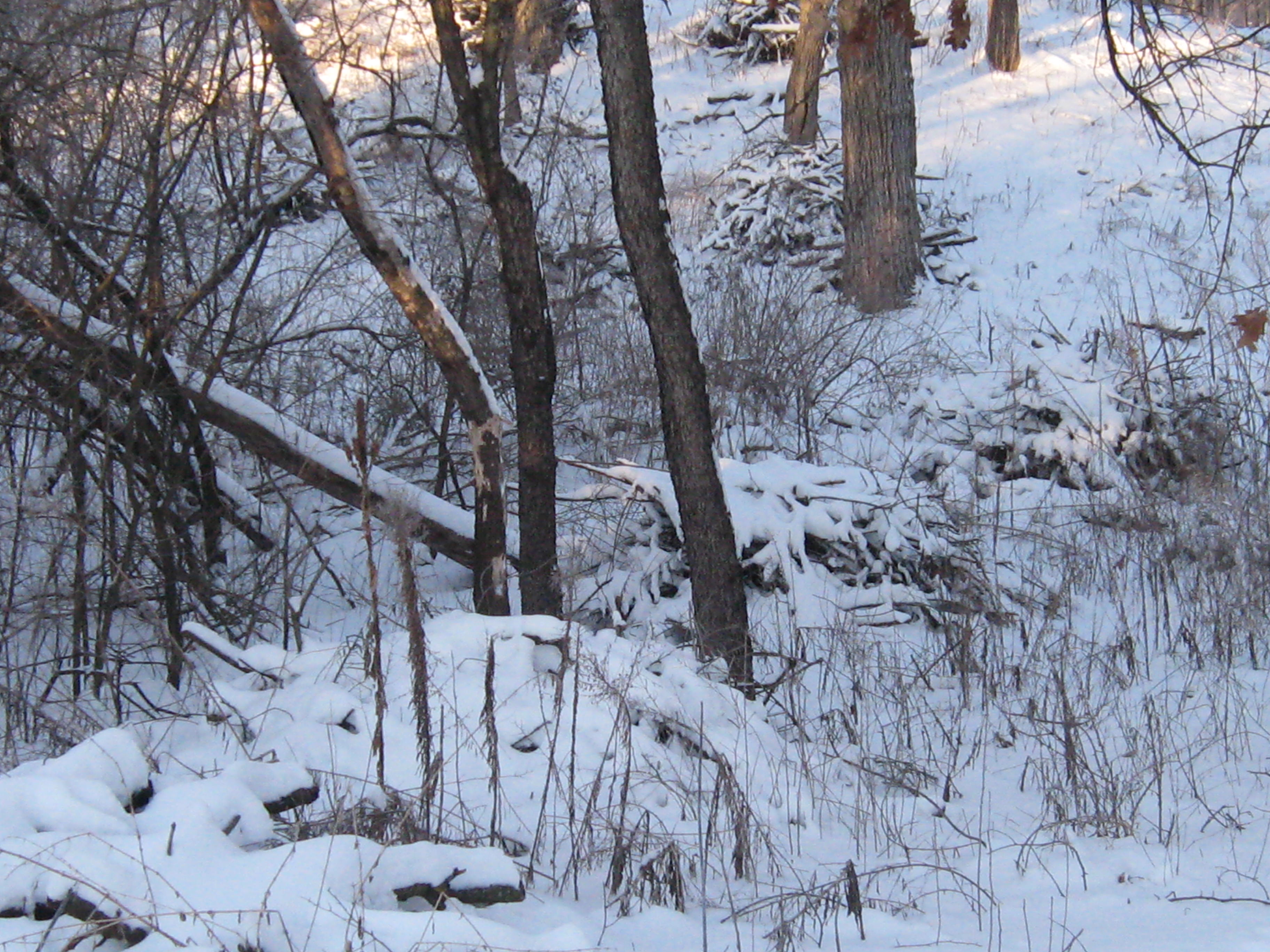
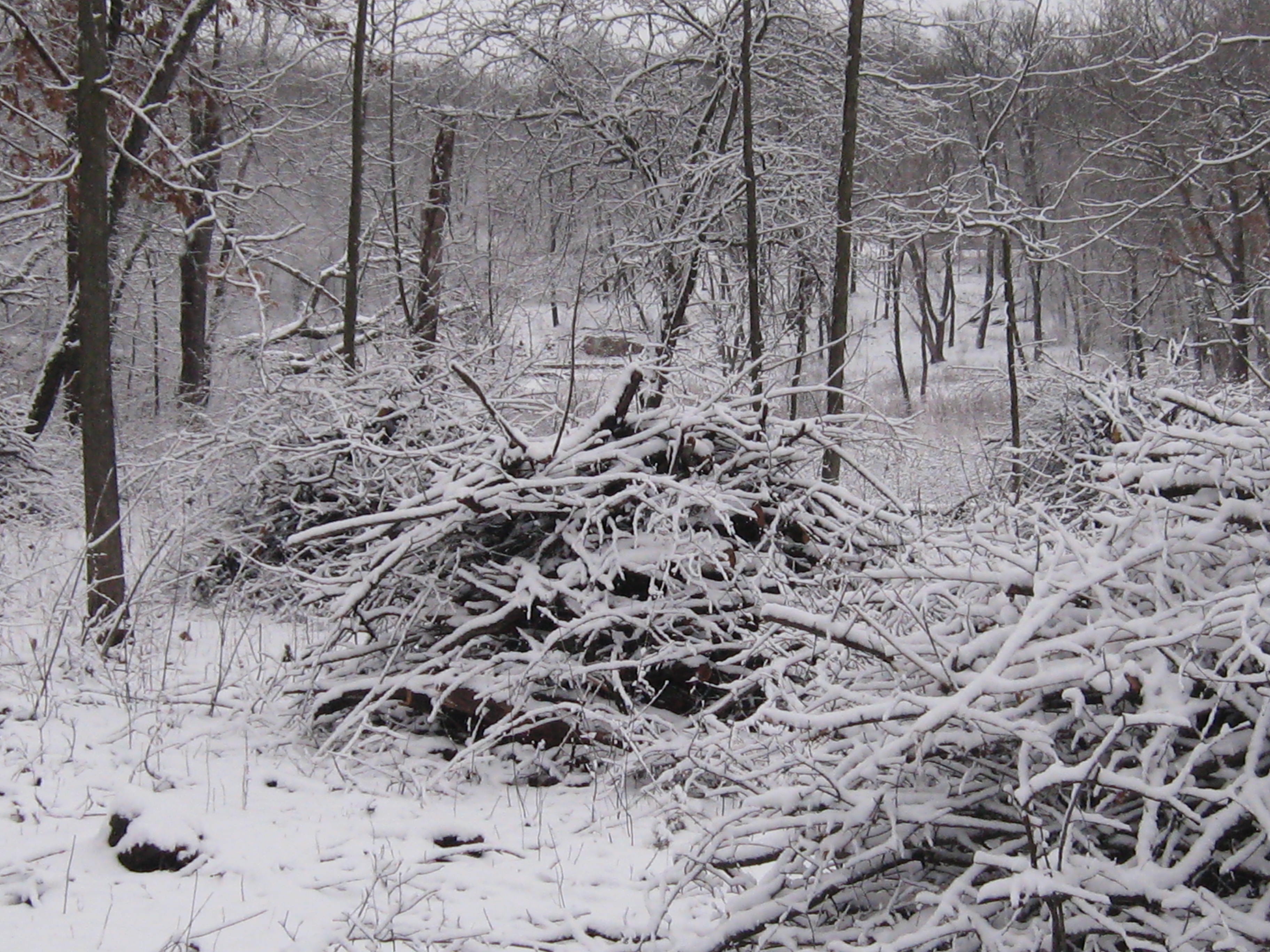
Here are a few pictures of the brush piles we intended to burn. This wood was cut and piled within the last month, which is pretty fresh as brush piles go, but they contained enough dead wood that we thought we could start them.
The plan was to get the existing piles lit and then continue piling the brush we cut last week.
Despite the cold, we got warmed up fast and the layers started coming off. Lindsay brought his leaf blower and that proved to be the difference between success and failure; there’s nothing like a jet of fresh air to kick-start a green brush pile.
We made a few new brush piles too.
We hope to finish clearing the buckthorn and brush between the cut-off trail and the river before spring. The cut-off trail passes through the loveliest woodlands in the whole Scuppernong Springs Nature Preserve and it is a joyful thrill to open this area up.
The Hartland Marsh, aka Ice Age Marsh, aka Ice Age Wetland, is an important wetland in the Bark River watershed. It filters runoff water from the commerce centers on its north and south and the roads and subdivisions of the Village of Hartland to the east and helps prevent flooding downstream. It’s diverse landscapes include Oak and Hickory uplands and three islands. And bubbling forth from the labyrinth of rock formations below, are many crystal clear springs that join the Bark River.
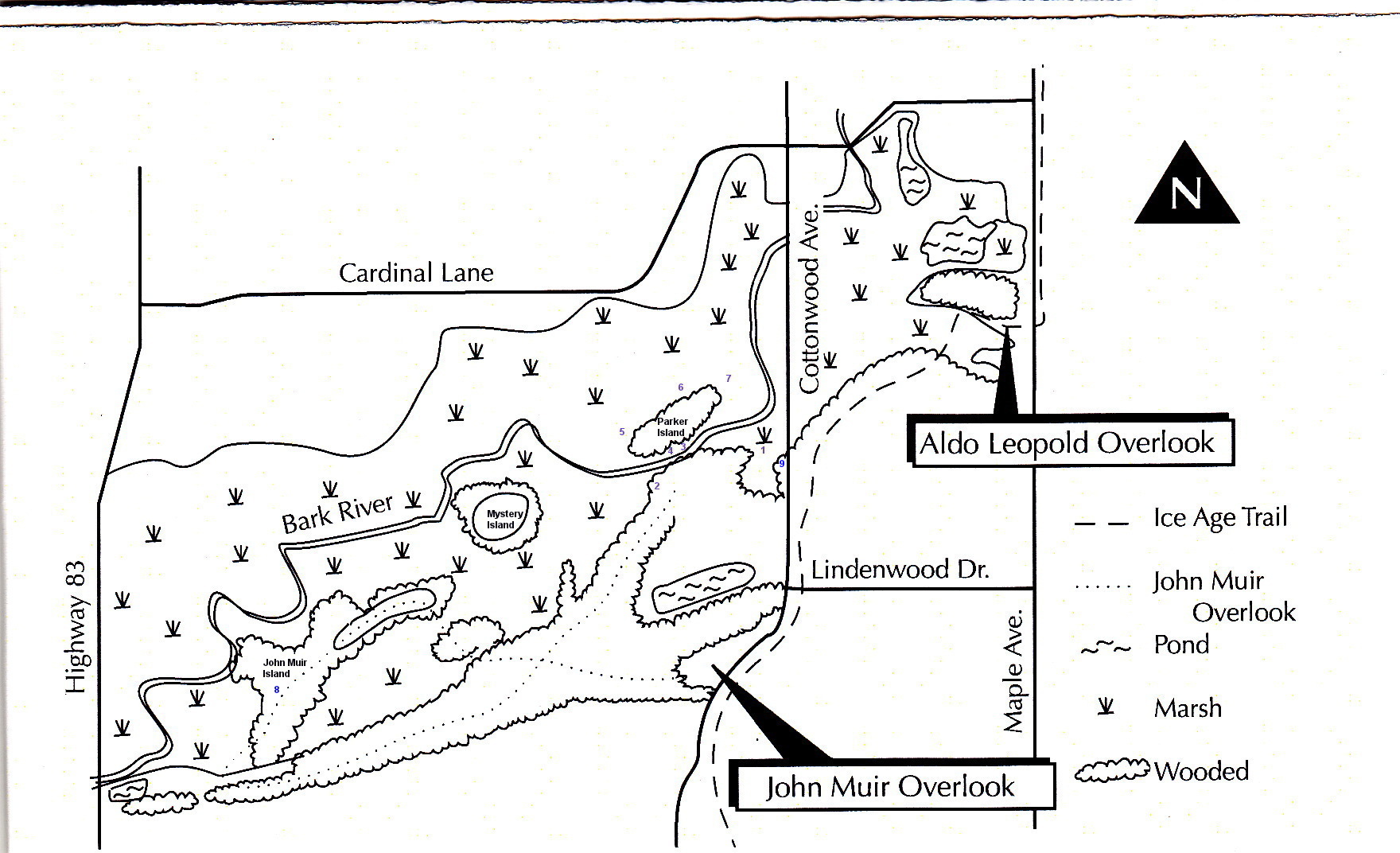
Please refer to the About Paul page on this site for a Google Map showing the location of the Hartland Marsh. I love to show people around the marsh, but since we may not get a chance to meet there, here is a little tour. We’ll start at the old Parker brothers home site on the south side of the Bark River. This is just north of the detention pond and farm field on the west side of Cottonwood Ave. I’ll be referring to this map; note the numbers of the springs in blue to correlate with the text (click the image to view full size).
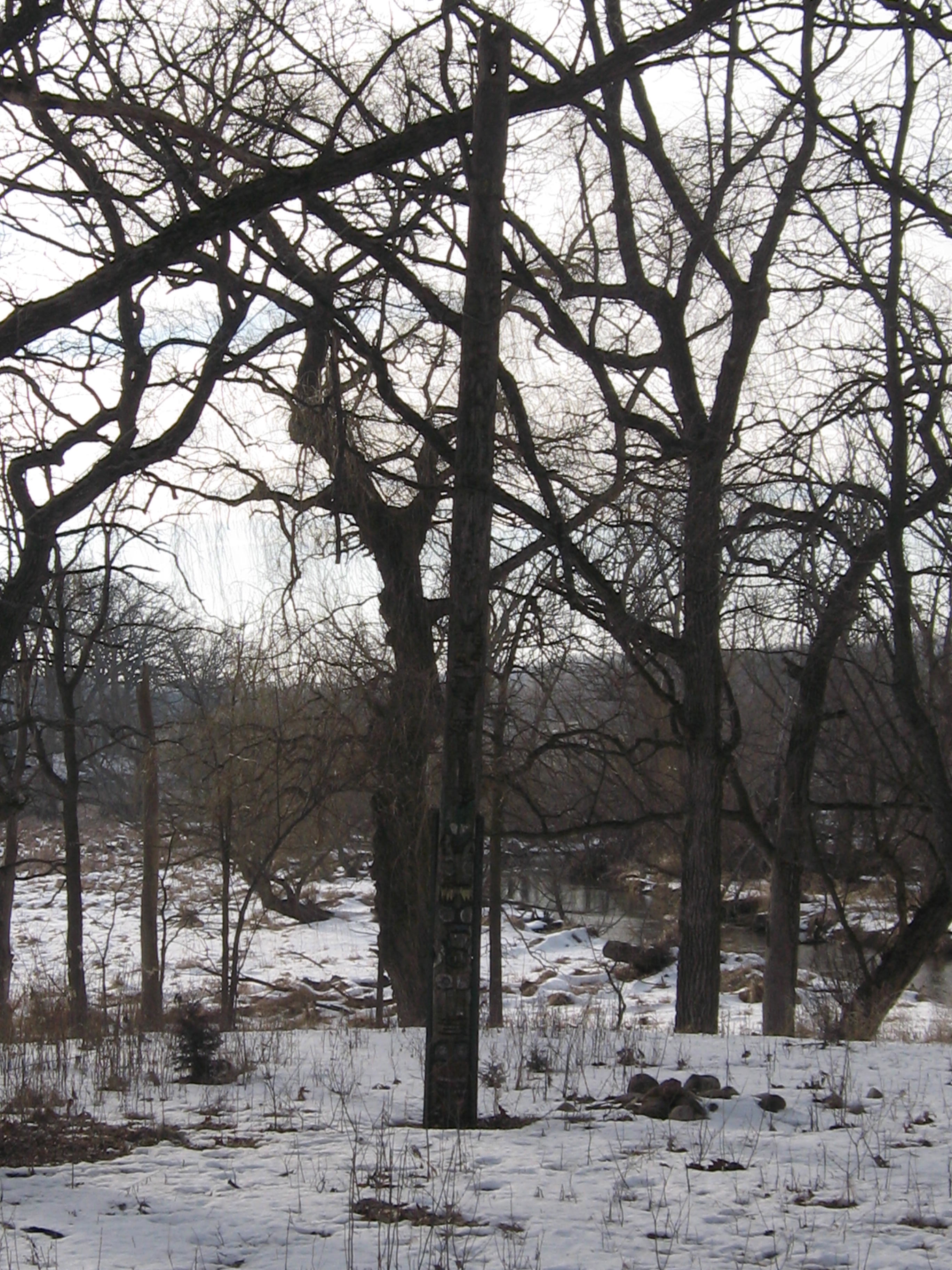
Upon their return from World War I, John and Jim Parker built a cozy home on top of a “low finely modeled hill” surrounded by springs and mature oak trees. John Parker carved this totem pole, which I found laying on the hill above the river completely obscured by a buckthorn thicket. Marlin Johnson, who was instrumental in acquiring this property for the Waukesha County Land Conservancy, and Brian Engel stood the pole up.
To west down river and across the marsh we see the Mystery Island.
And passing silently by to the north is the Bark River.
The first spring marked #1 on the map above is just east of the home site near the base of a huge willow tree. You will often catch a glimpse of a great horned owl here.
At the base of the hill on the west side of the home site at #2 is another spring. The outflow of this spring used to pass through the mouth of a turtle that was chiseled out of stone. We used to keep the Bark River search and rescue canoe docked alongside the channel for easy deployment.
Crossing the bridge we encounter springs #3 and #4.
I’ll never forget the time the bridge almost got washed down the river. It was hanging on by one corner with the span pointing downstream. The water was so deep that Mike Fort and I were barely able to reposition it. Later, Pati and I laid a fresh deck of 2×6 planks on it. I’m always amazed to consider how high the river got.
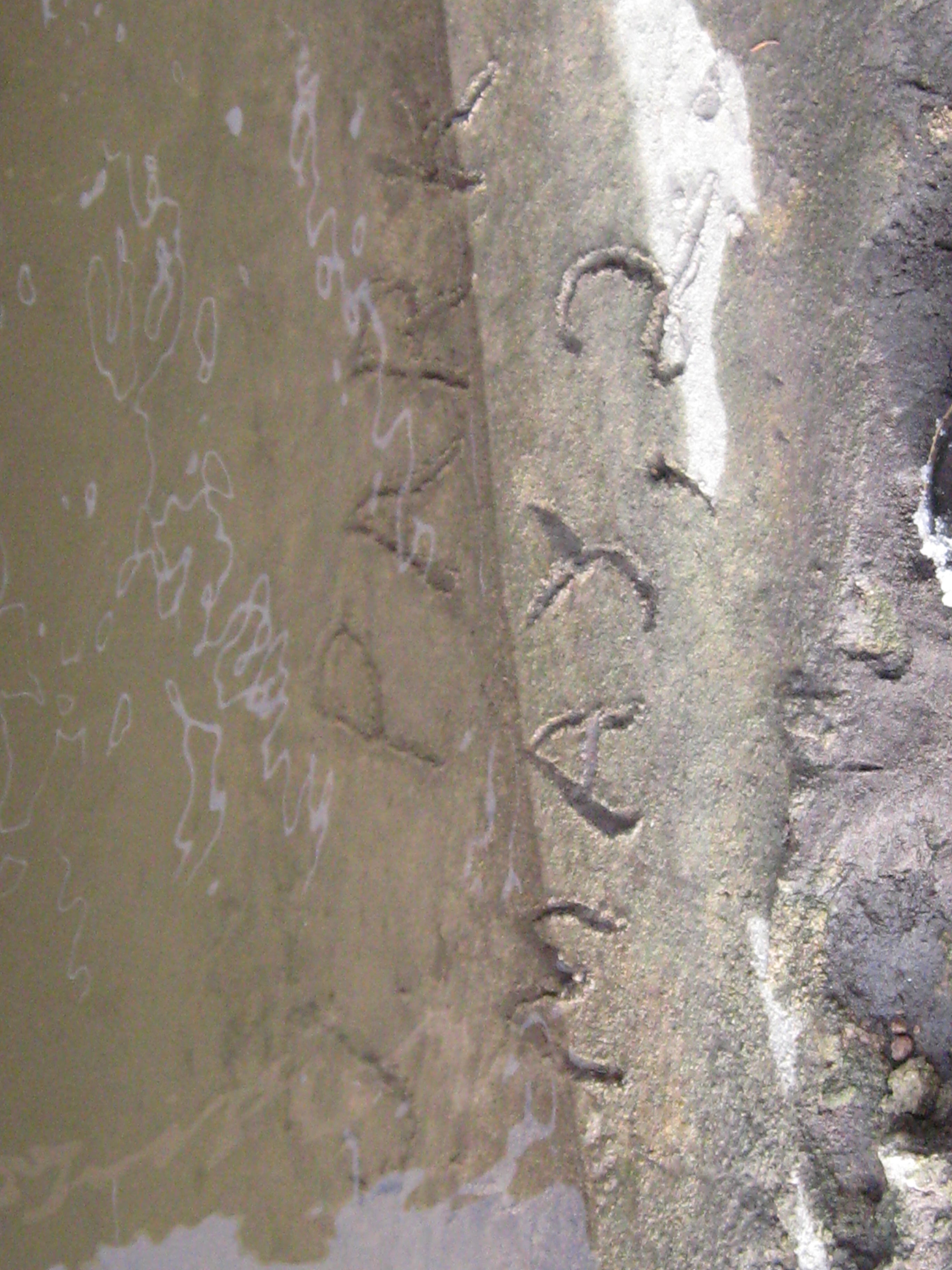
Can you make out the “J. Parker May 2, 1948 on the concrete foundation above? I wonder if it was John or Jim?
Crossing the river we find spring #5 on the west end of Parker Island.
And around 2/3 of the way east on north side of the island is #6.
The Fire Chief, Augie Wilde told me there used to be a pond here where people caught Northern Pike. They must have made a dam trapping the outflow of springs #5 and #6.
The seventh spring is just off the east side of Parker Island.
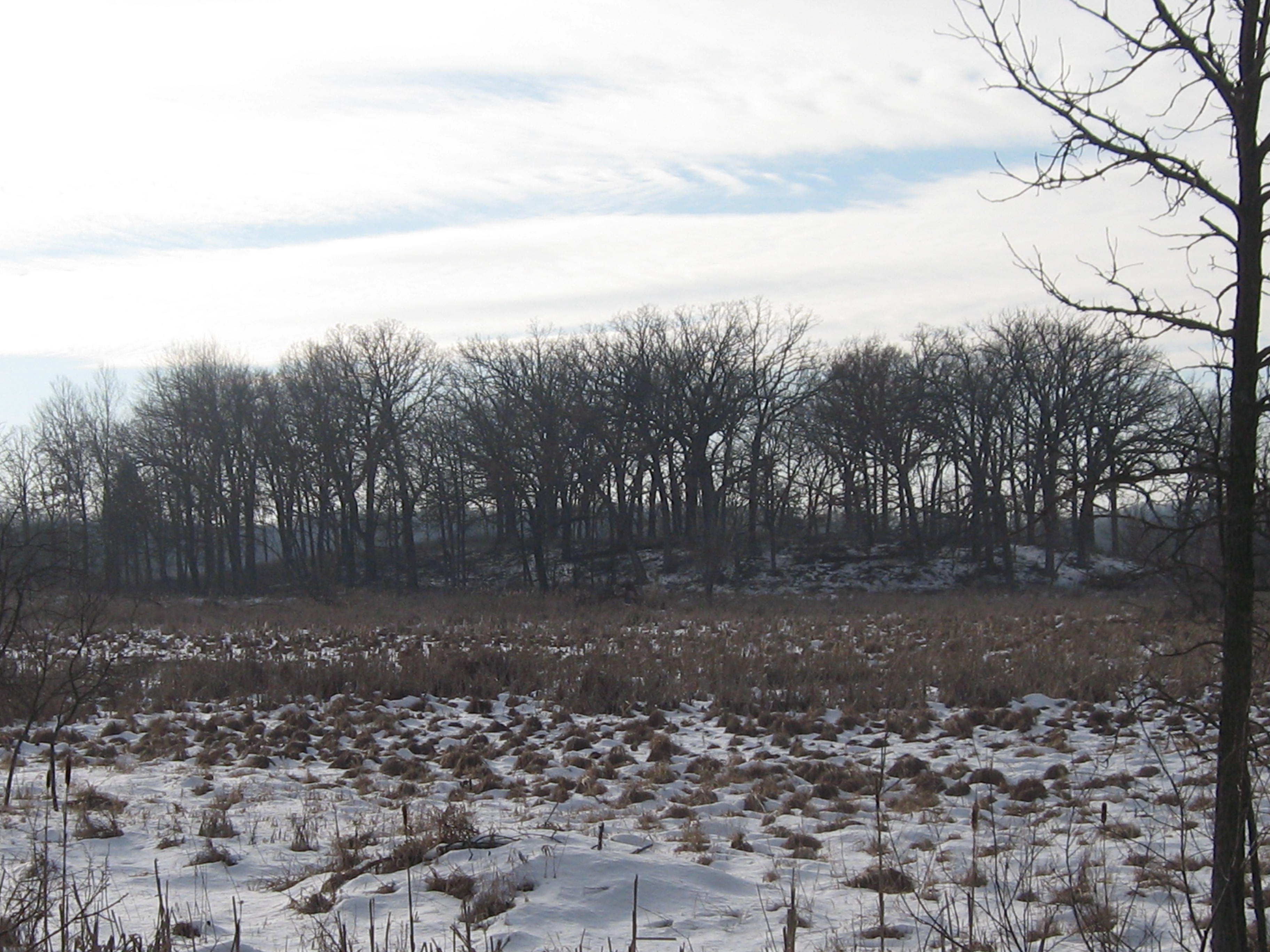
There is a beautiful oak, hickory, cherry and pine woodland on the island.
Leaving the Parker Island, we follow the south side of the Bark River downstream to the Mystery Island. Winter is the easiest time to visit.
Here is the view along the trail connecting the Waukesha County Land Conservancy property with the Village of Hartland and Ice Age Trail Alliance properties.
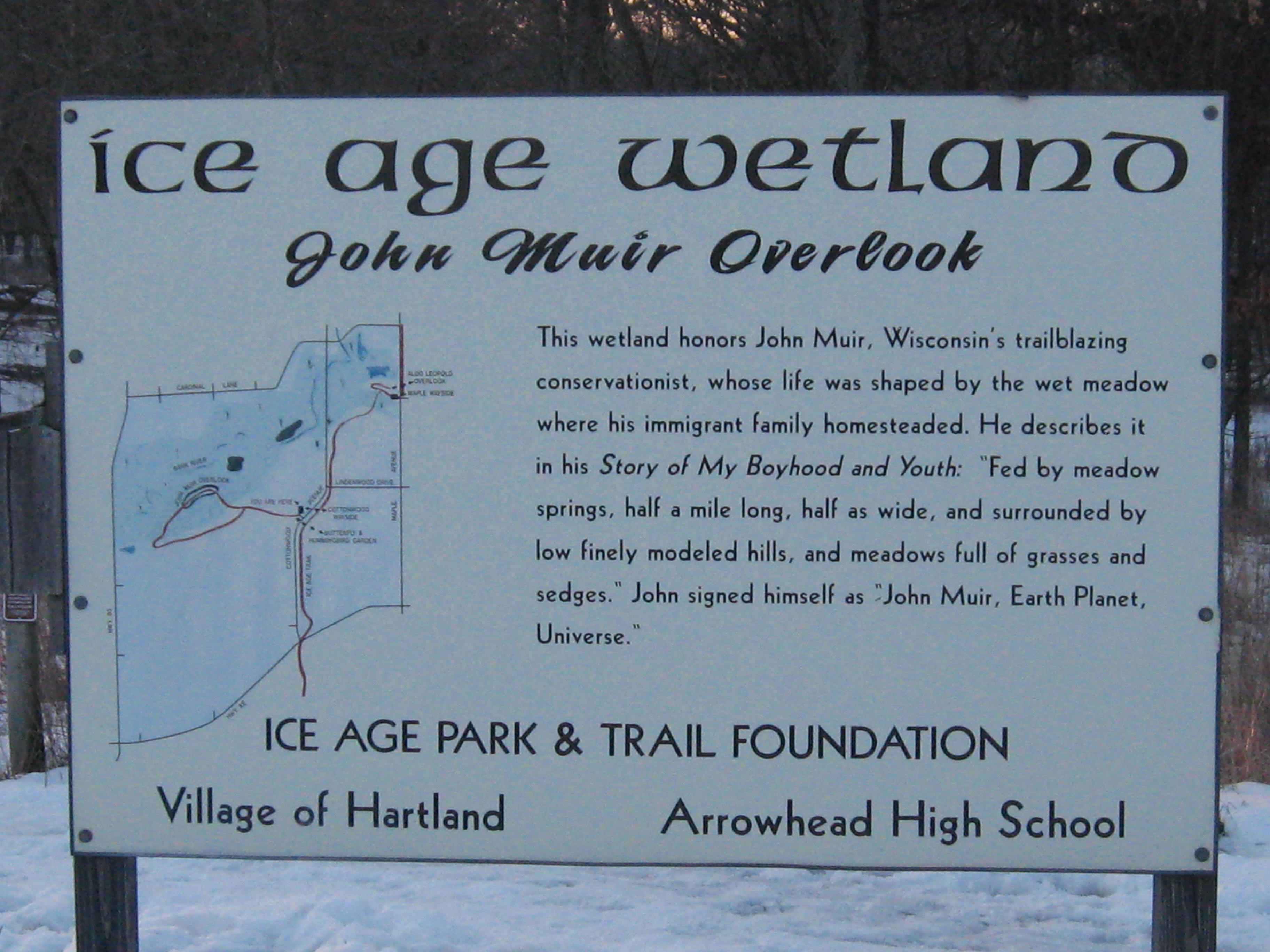
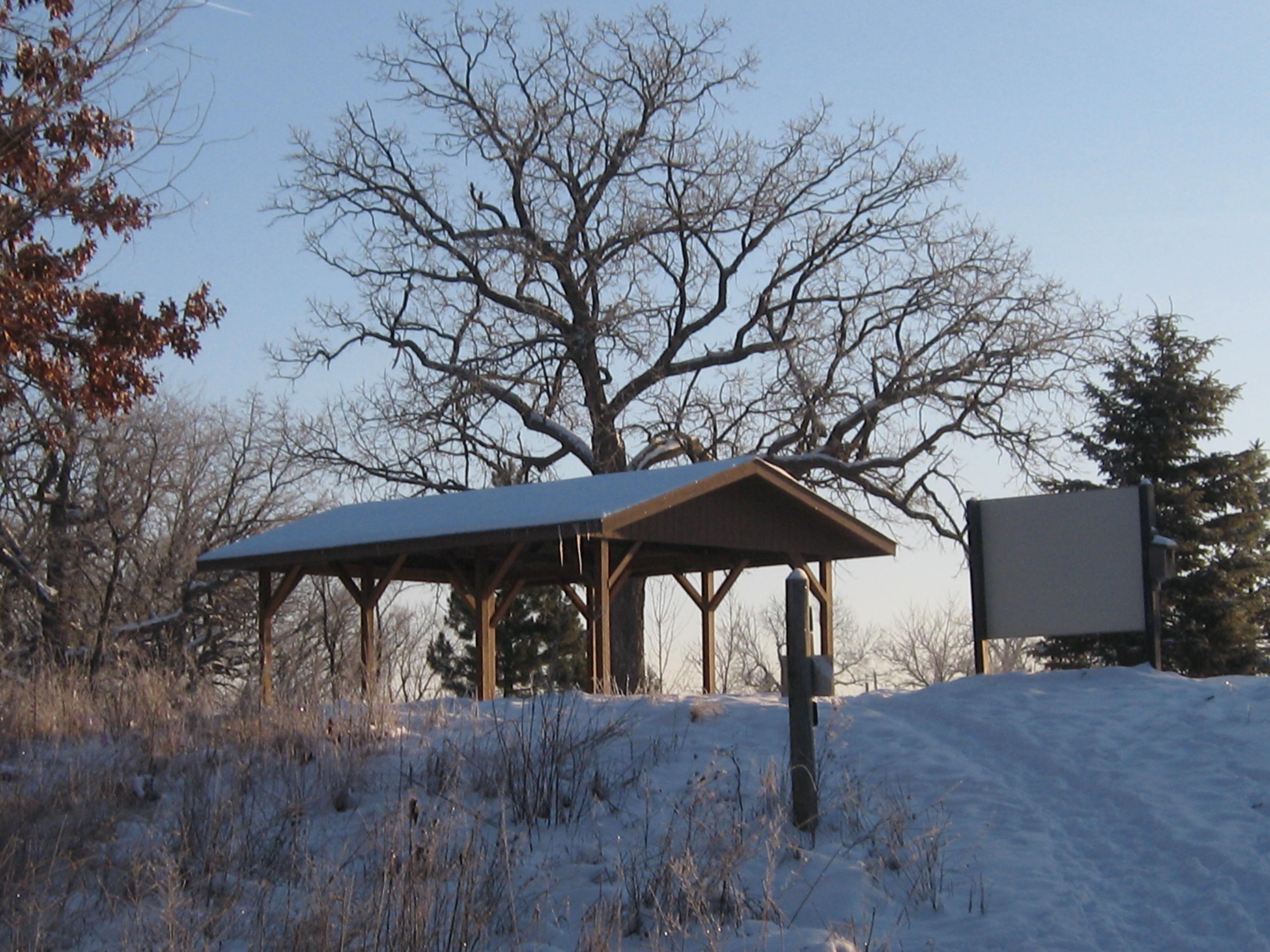
There is a nice picnic site and parking lot at the Cottonwood Gazebo and this sign.
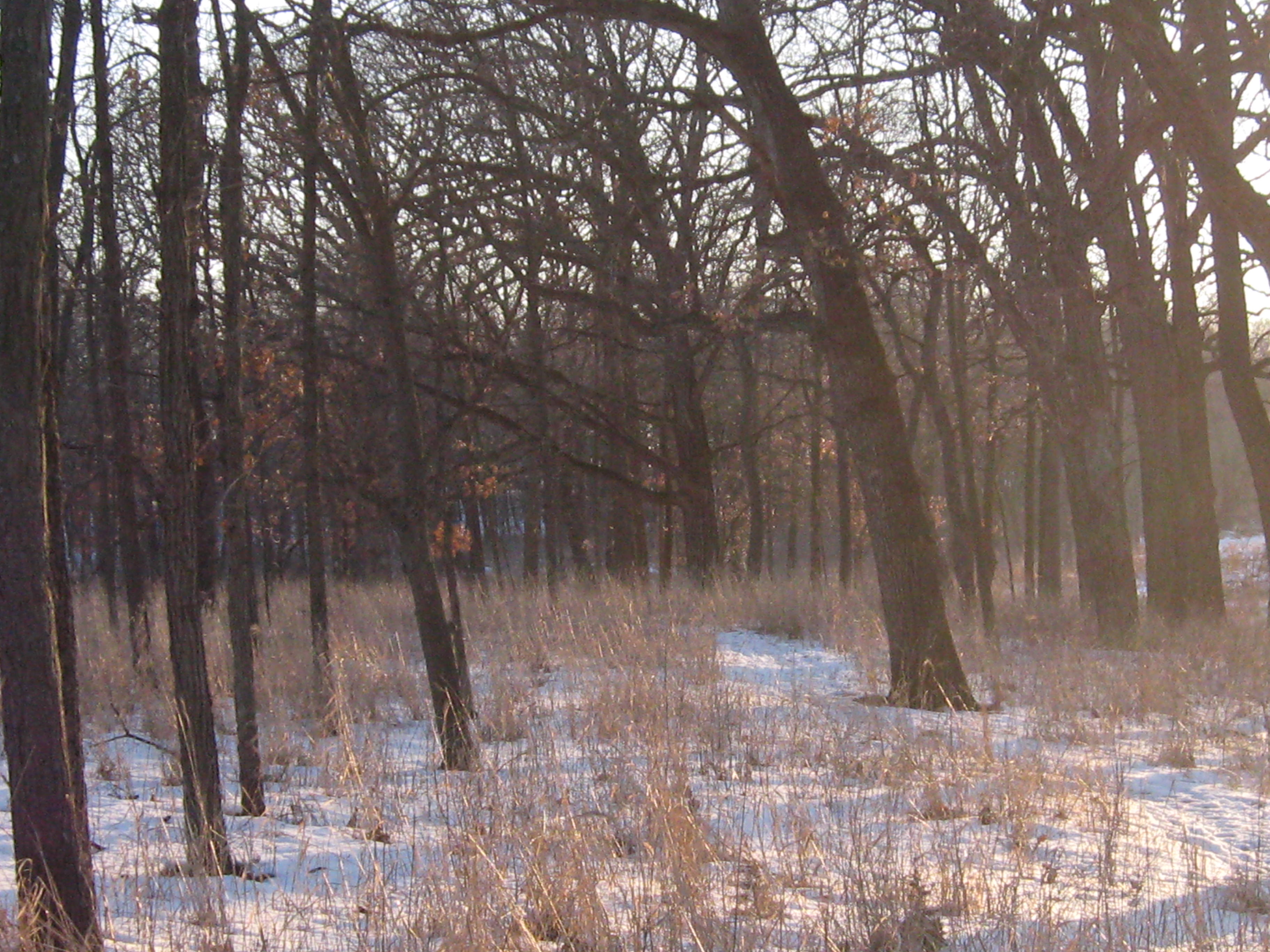
Here is the view from the sign above looking west down the loop trail. You can see the charred remains of burned buckthorn piles.
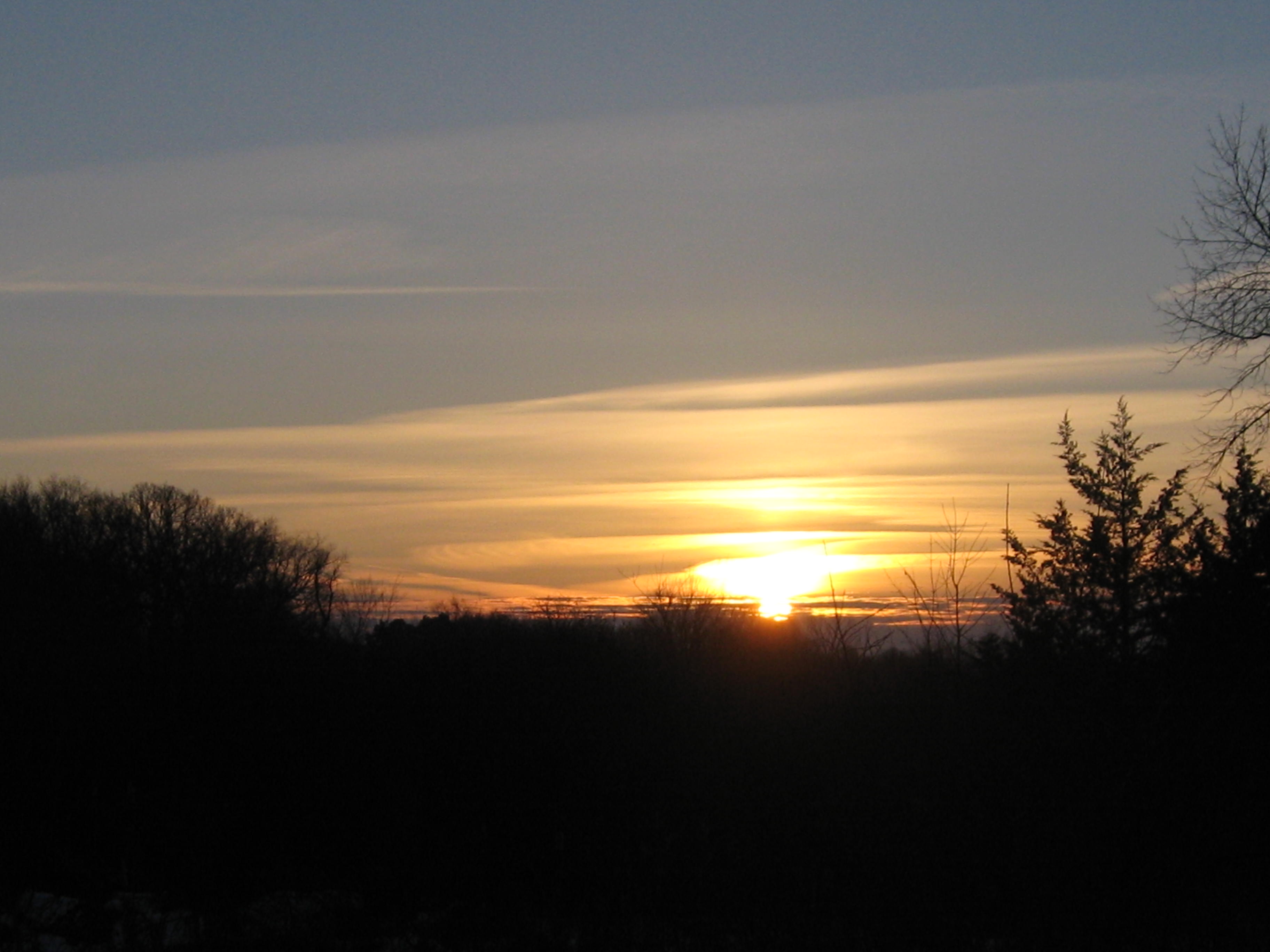
The daylight was fading as I made my way to the John Muir Island via the excellent set of boardwalks that the Ice Age Trail Alliance built.
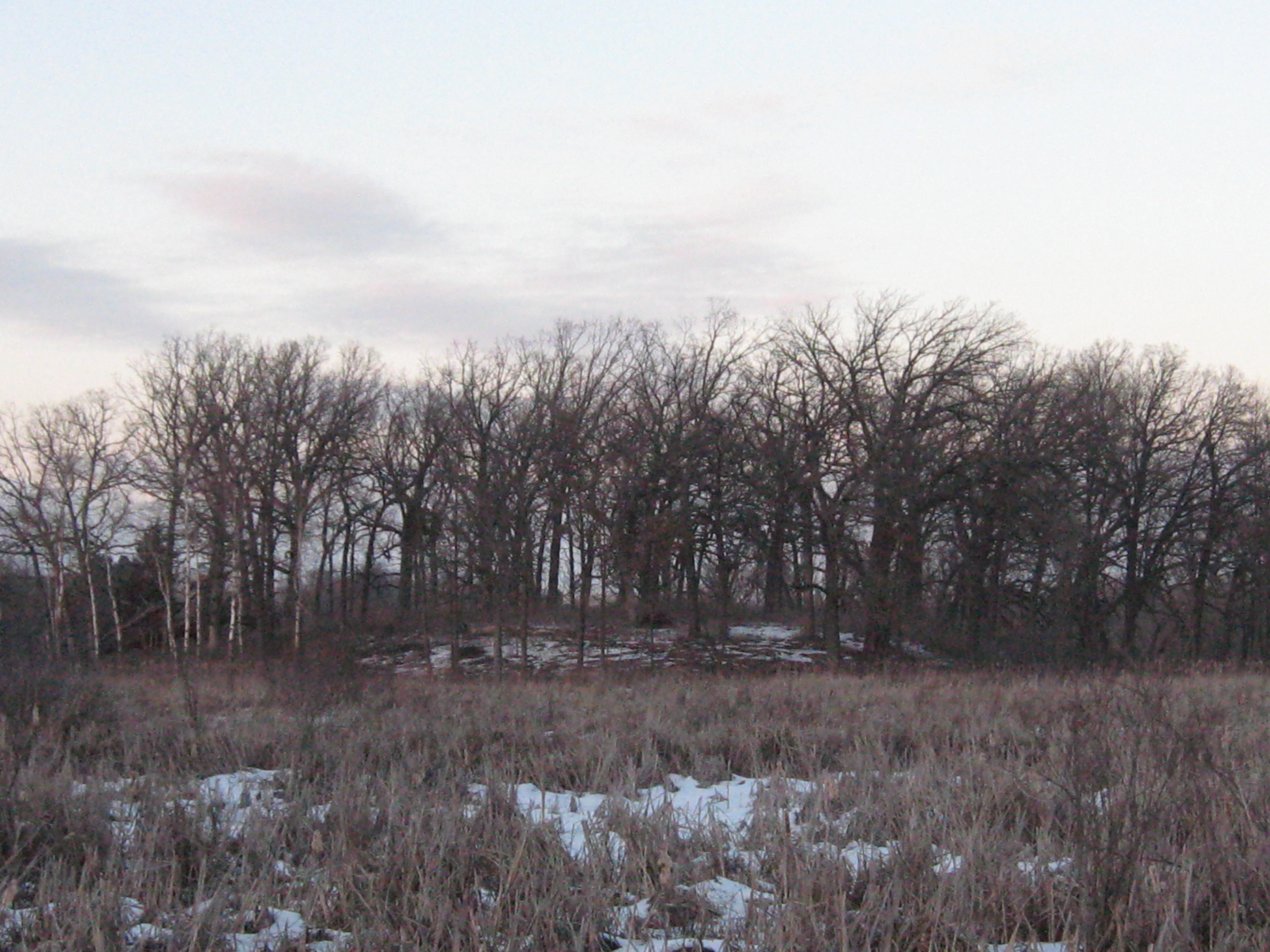
The southwest side of Mystery Island as seen from the boardwalk leading to the John Muir Island.
There is another set of springs at #8 at which I have seen muskrats chomping on water cress in the dead of winter. And finally, right along Cottownwood Ave. at #9 is another set of springs.
I hope this little taste of the Hartland Marsh will motivate you to pay a visit and see for yourself.
It’s a new day at the Hartland Marsh and we aim to seize it! The Village of Hartland is taking a fresh look at the natural spaces within its borders and exciting new developments are in the offing. One of the first steps initiated is the removal of all the brush piles, and we are making great progress on that front.
On February 12th and 13th crews from the Village of Hartland Dept. of Public Works and the Ice Age Trail Alliance burned another 123 brush piles at the Marsh. This is a great relief for me since I’m the one responsible for making the piles! On the 12th we focused on the island north of the Bark River on the Waukesha County Land Conservancy’s property. Dave, Jake, Josh and Tom, from the Village DPW and Mike Fort, John Mesching and Glenn Ritz, from the IATA joined me. We had many distinguished visitors!
Here are a couple of videos showing the area in question.
Marlin Johnson has played in instrumental role in the evolution of the Hartland Marsh (The Bark River Chronicles, by Milton Bates, includes a good summary) into its current state and he joined us in the early afternoon. Augie Wilde, the Village Fire Chief and Dave Lamerand, the Village President also came out to show their support.
Marlin and Augie.
Glenn and Mike taking a break.
Josh and Jake had way too much fun.
Here are a couple of videos after the burn.
After we were all done I took Dave, Jake and Josh to see The Biggest Oak Tree for miles around. You have to get right up next to this beauty to really appreciate it.
Yesterday, the 13th, we were back at it; this time continuing were we left off last time on the Village land down the trail from the Cottonwood Gazebo.
It was the same cast of characters including Jack and Bob from the IATA. Dave Cox, the Village of Hartland Administrator visited and we discussed the situation at length. It is clear that the winds of change are blowing through the Village of Hartland bringing good things to the Marsh.
Lastly, we have many stacks of excellent Buckthorn firewood on the Village property shown above. Please do come and take this wood and make use of it. You can contact Mike Einweck, the Director of Public Works to get permission. You can drive your vehicle down the trail from the Cottonwood Gazebo and load the wood directly.
Tell your friends about the Hartland Marsh and let the leadership team at the Village know that you support their efforts to take care of the land!
I knew I was going to like Carl. He found this website while researching something on the internet and, being one who has his thoughts, emotions and actions in harmony, in a unity of consciousness, he contacted me immediately asking to help. Carl is a hard working, down to earth, righteous dude and we thoroughly enjoyed his company.
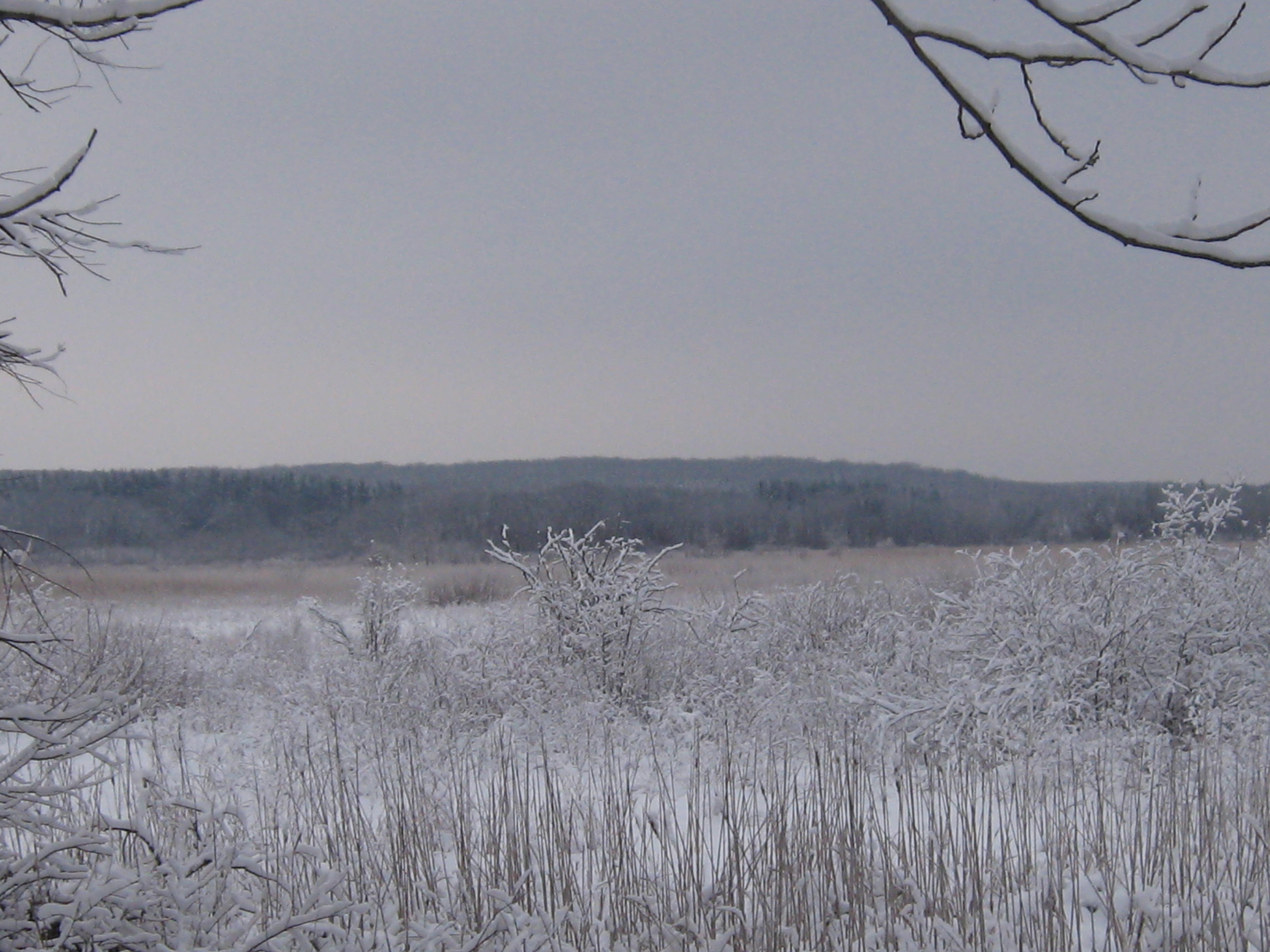
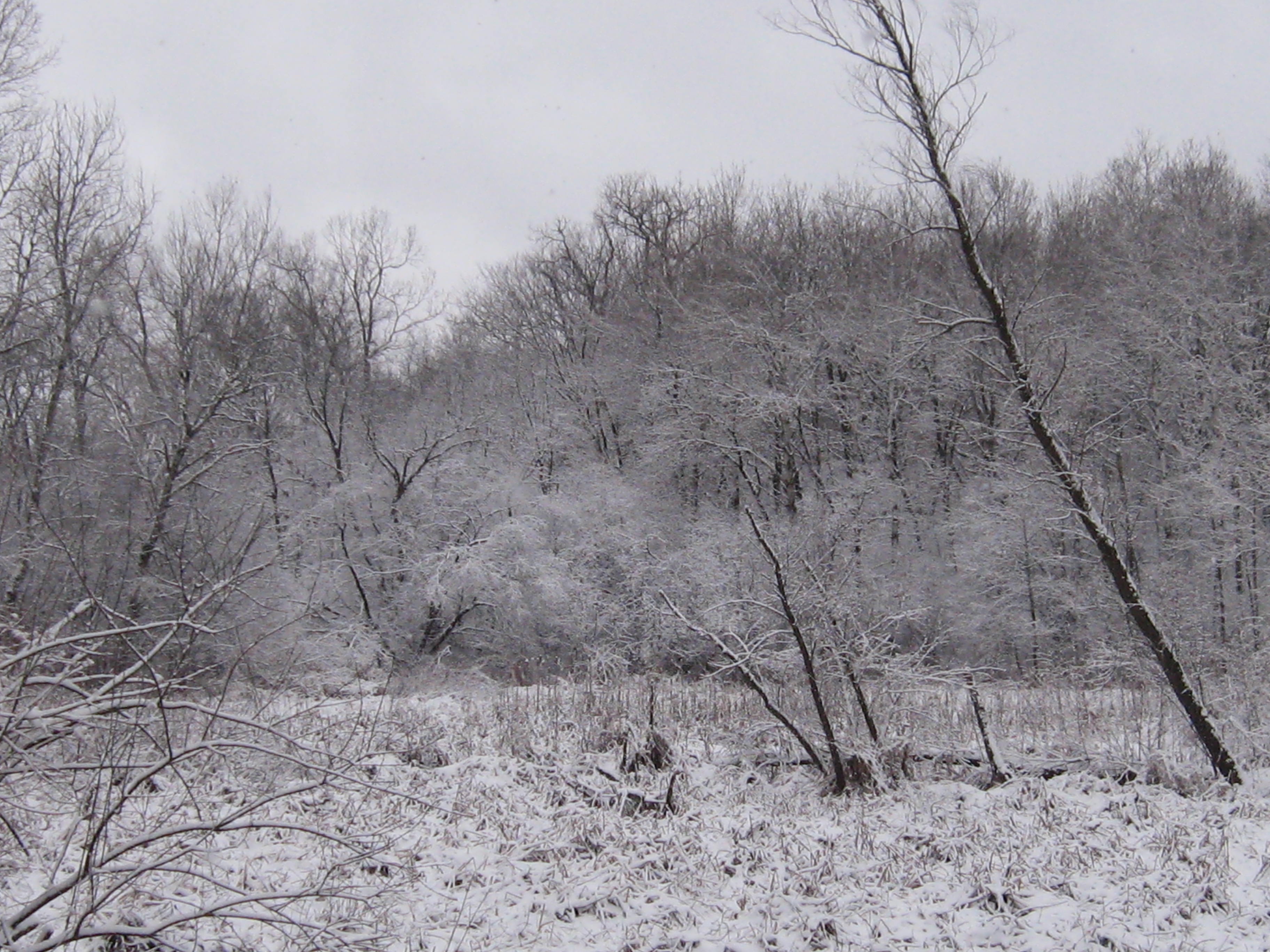
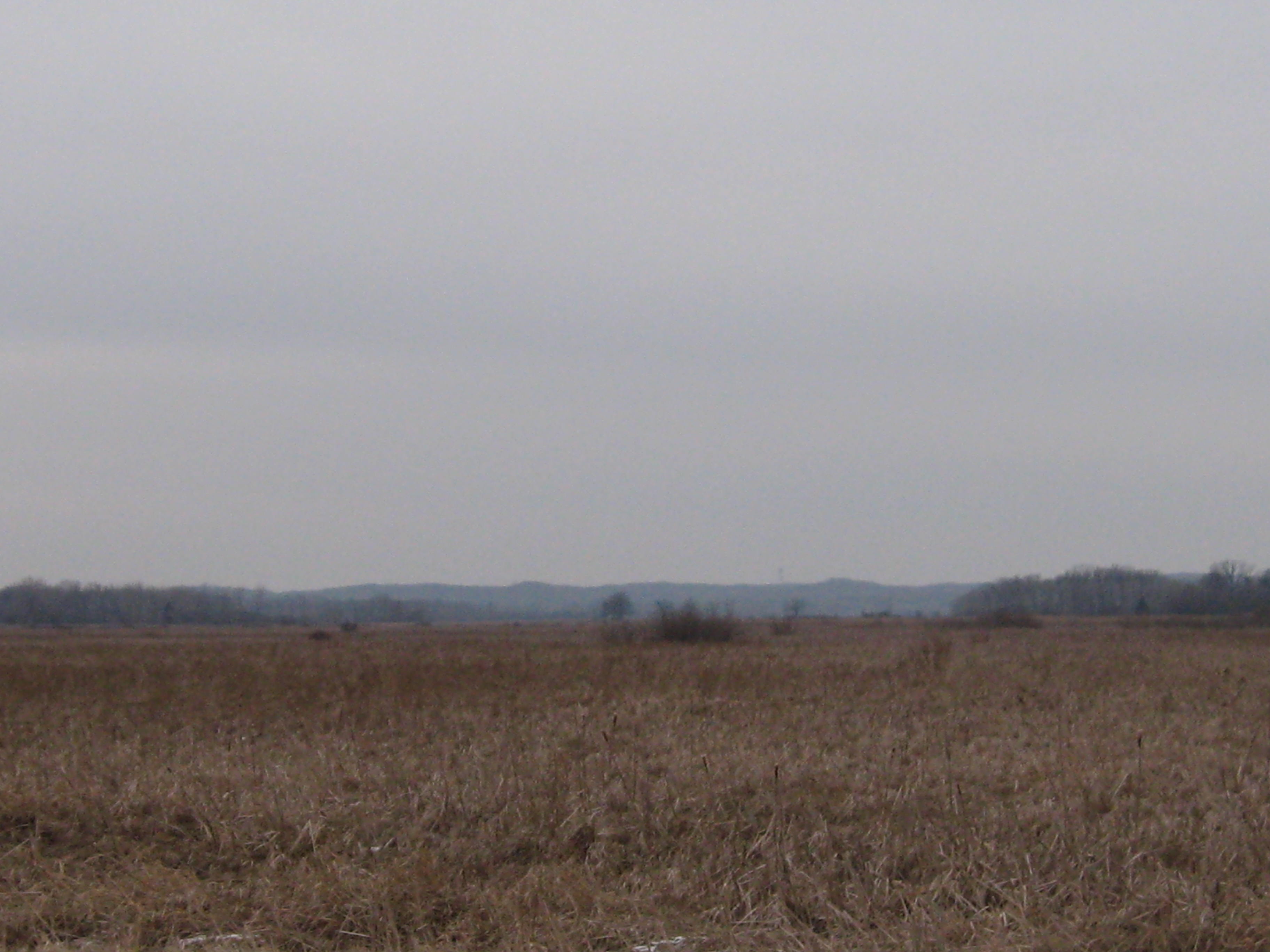
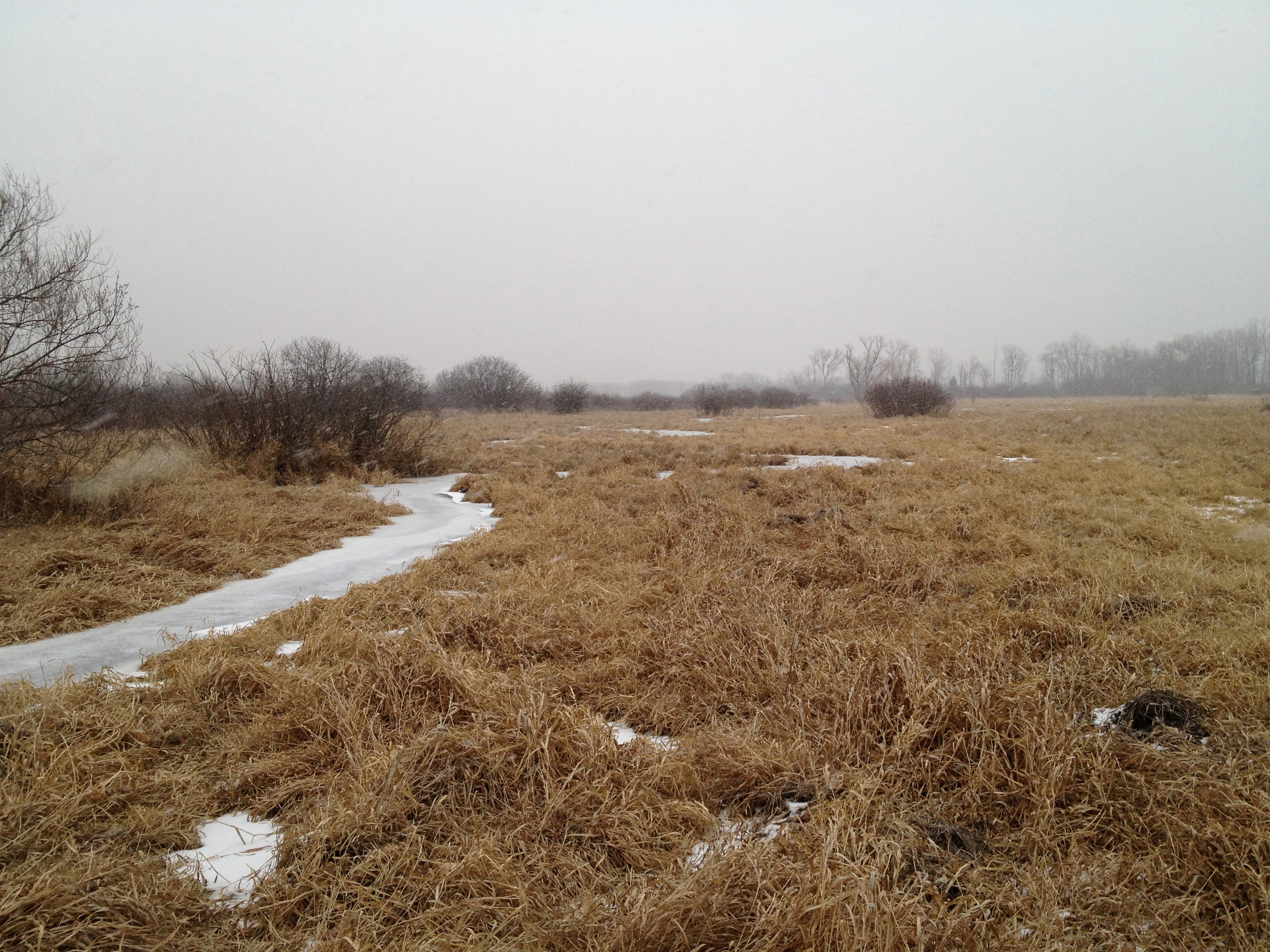
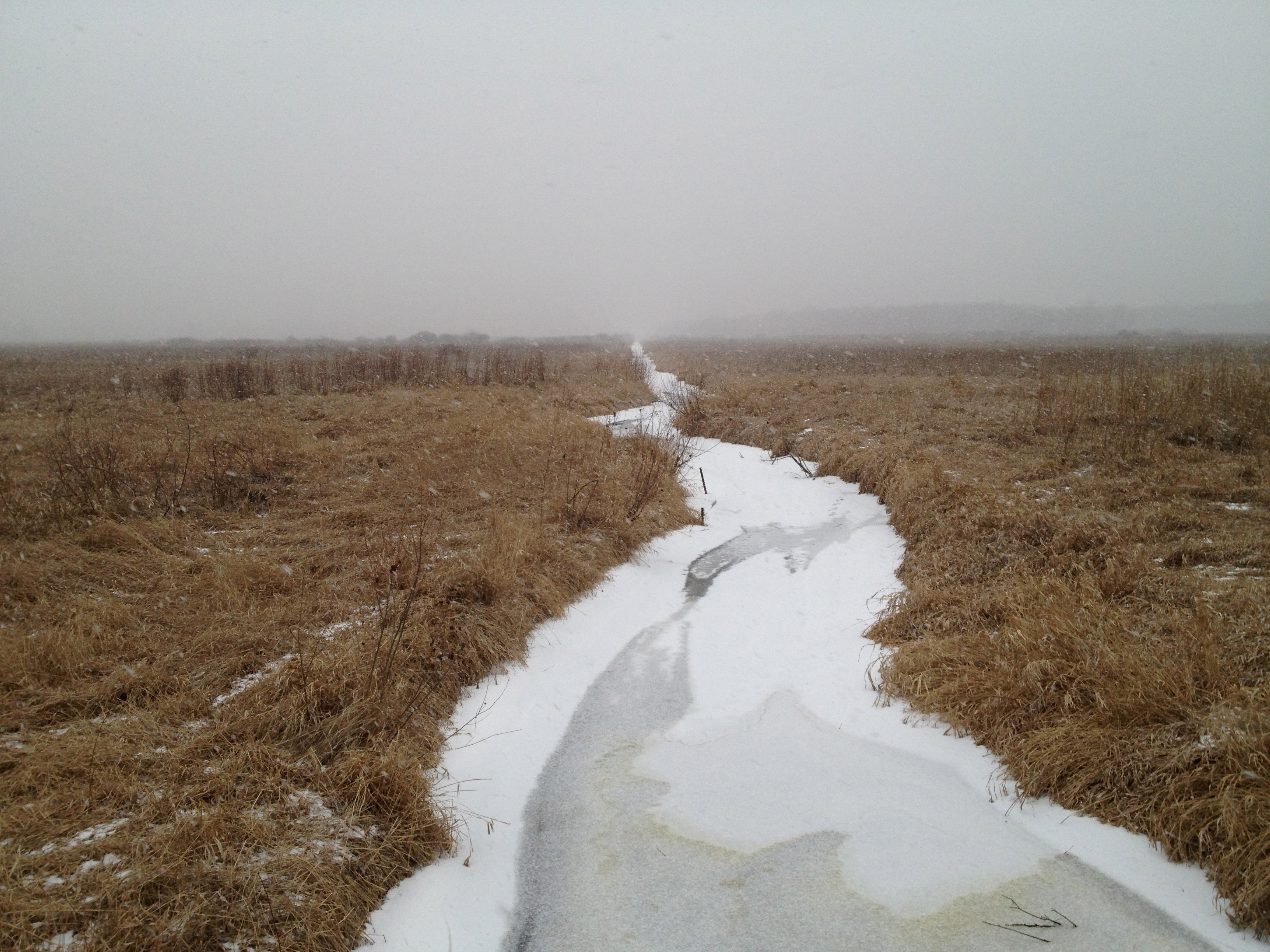
I love these views of the Scuppernong River Habitat Area, which contains the largest prairie east of the Mississippi.
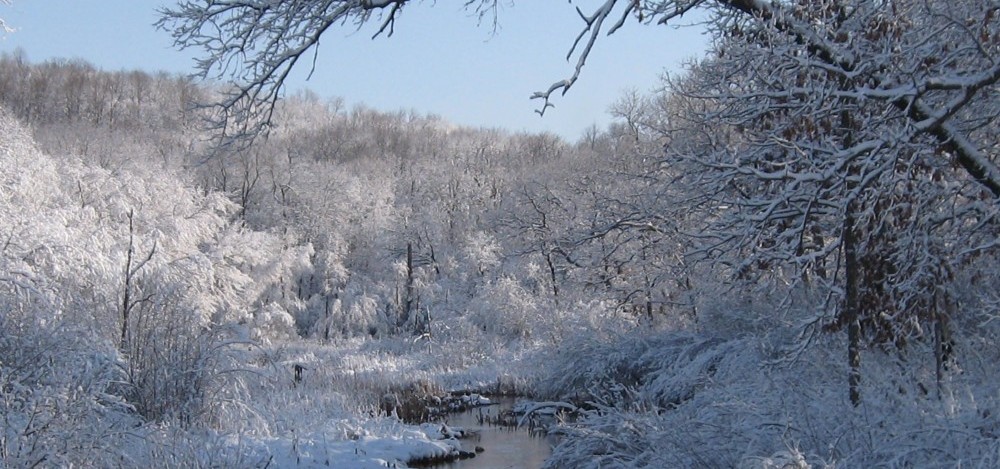
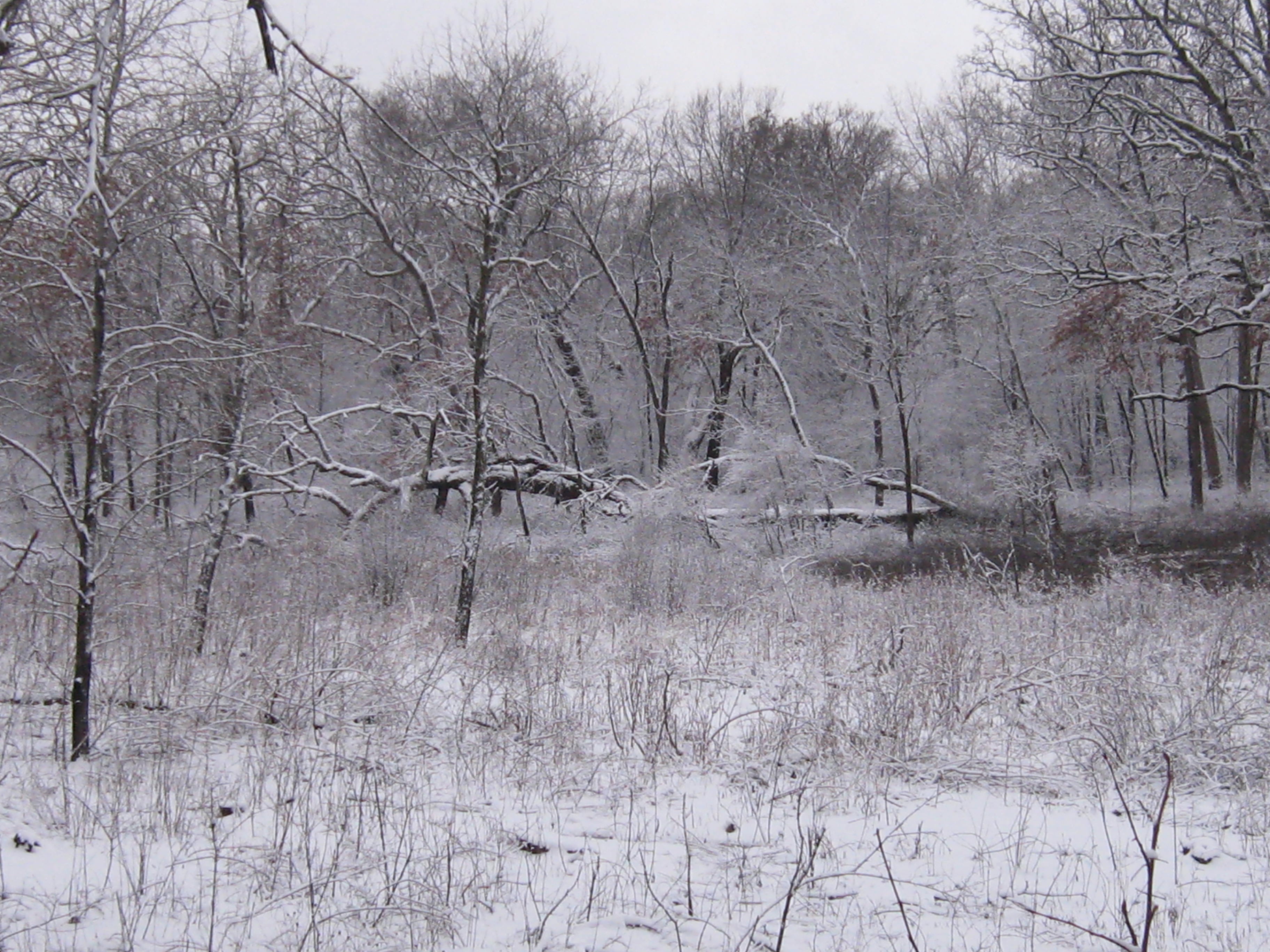
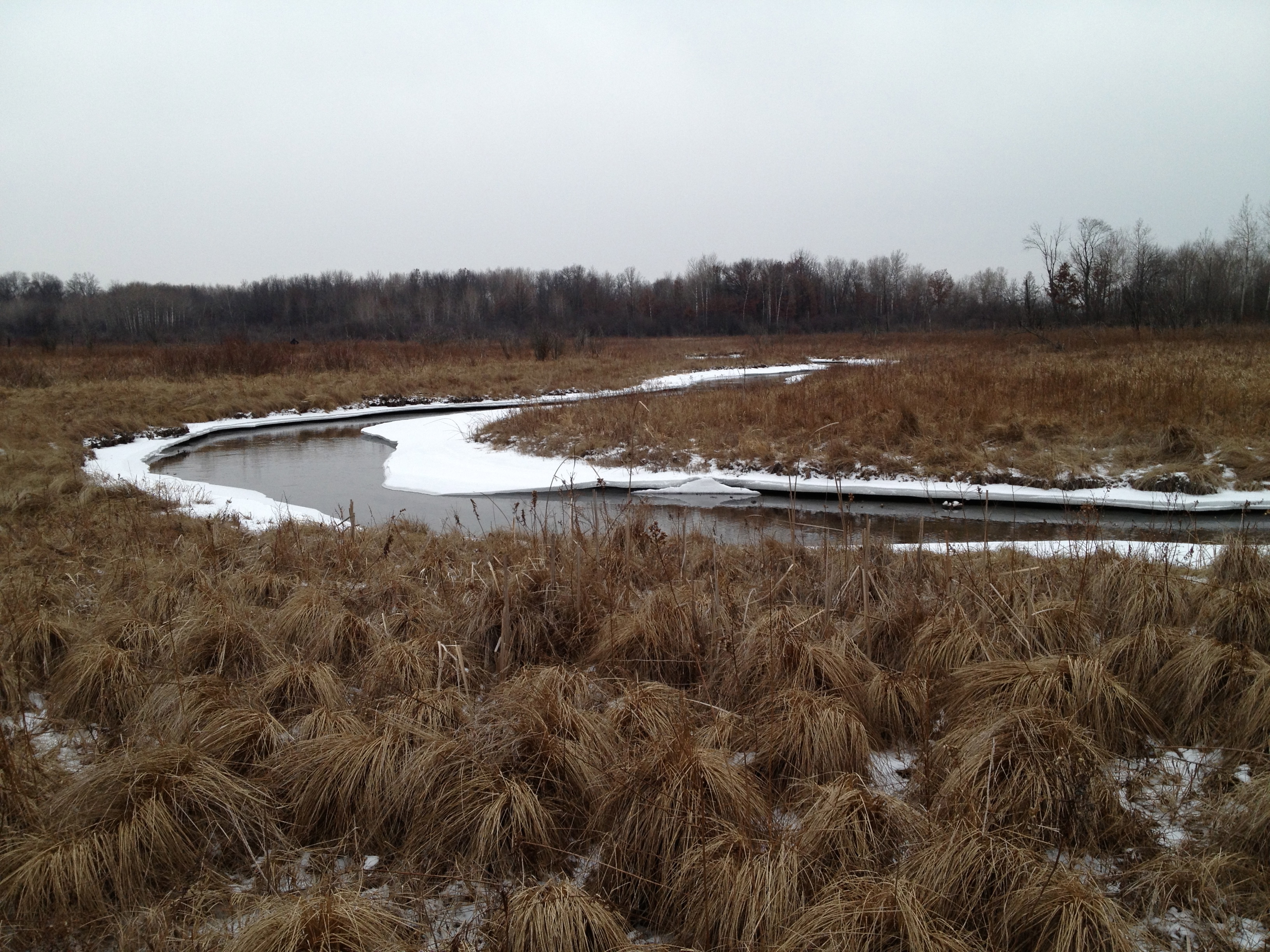
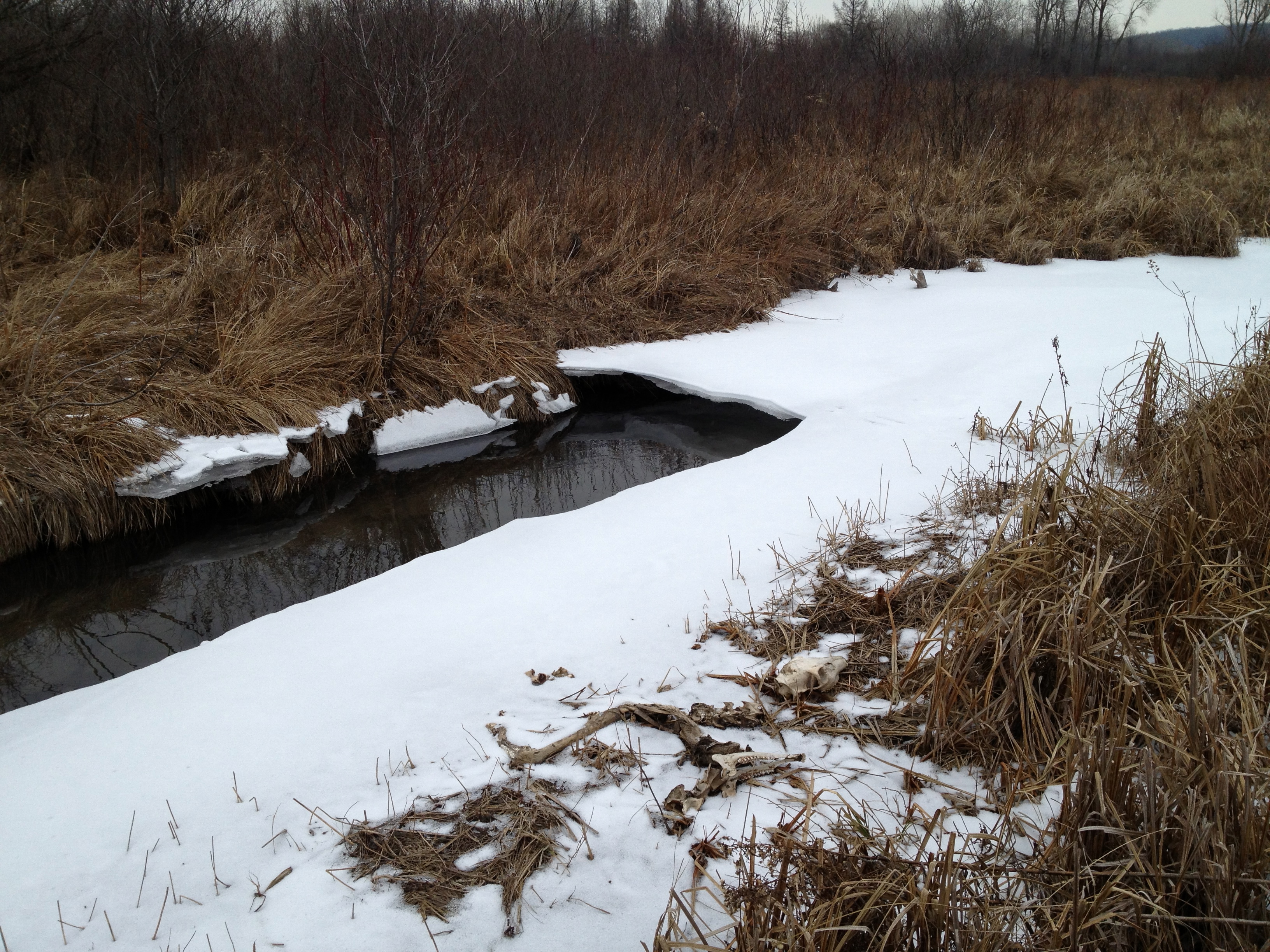
Every season is beautiful at the Scuppernong Springs. I’ve been looking forward to the snow because it covers the scars we have left with all of our cutting and burning. They will be healed by the spring, but until then, its nice that they are covered with a blanket of snow.
Here is the view of the worksite on the cut-off trail from the bridge over the Scuppernong River where the water flow gauge was recently installed.
I took the next three videos on my way to get some drinking water for the day at the Hotel Springs. The river takes on a special character when framed with snow.
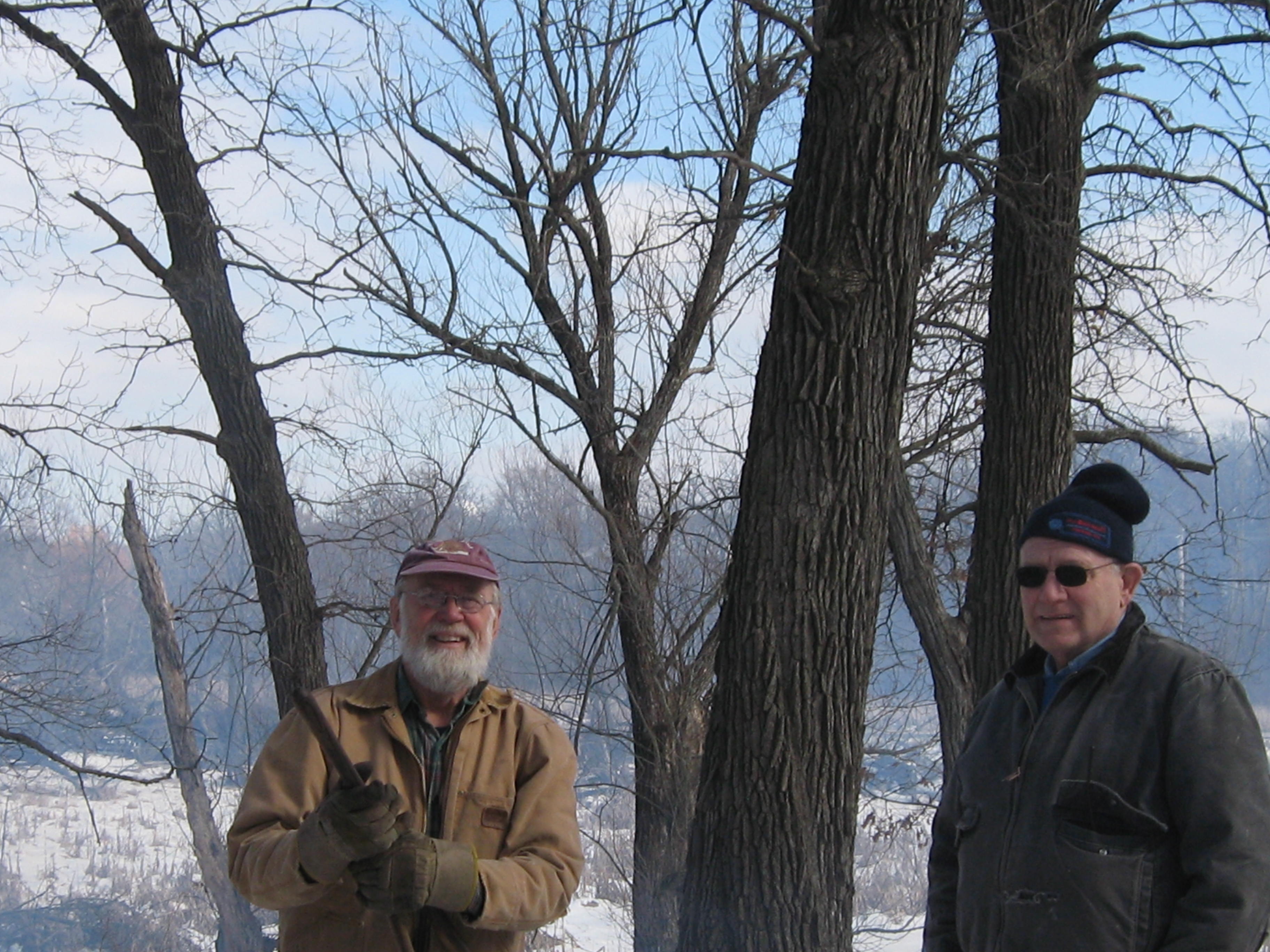
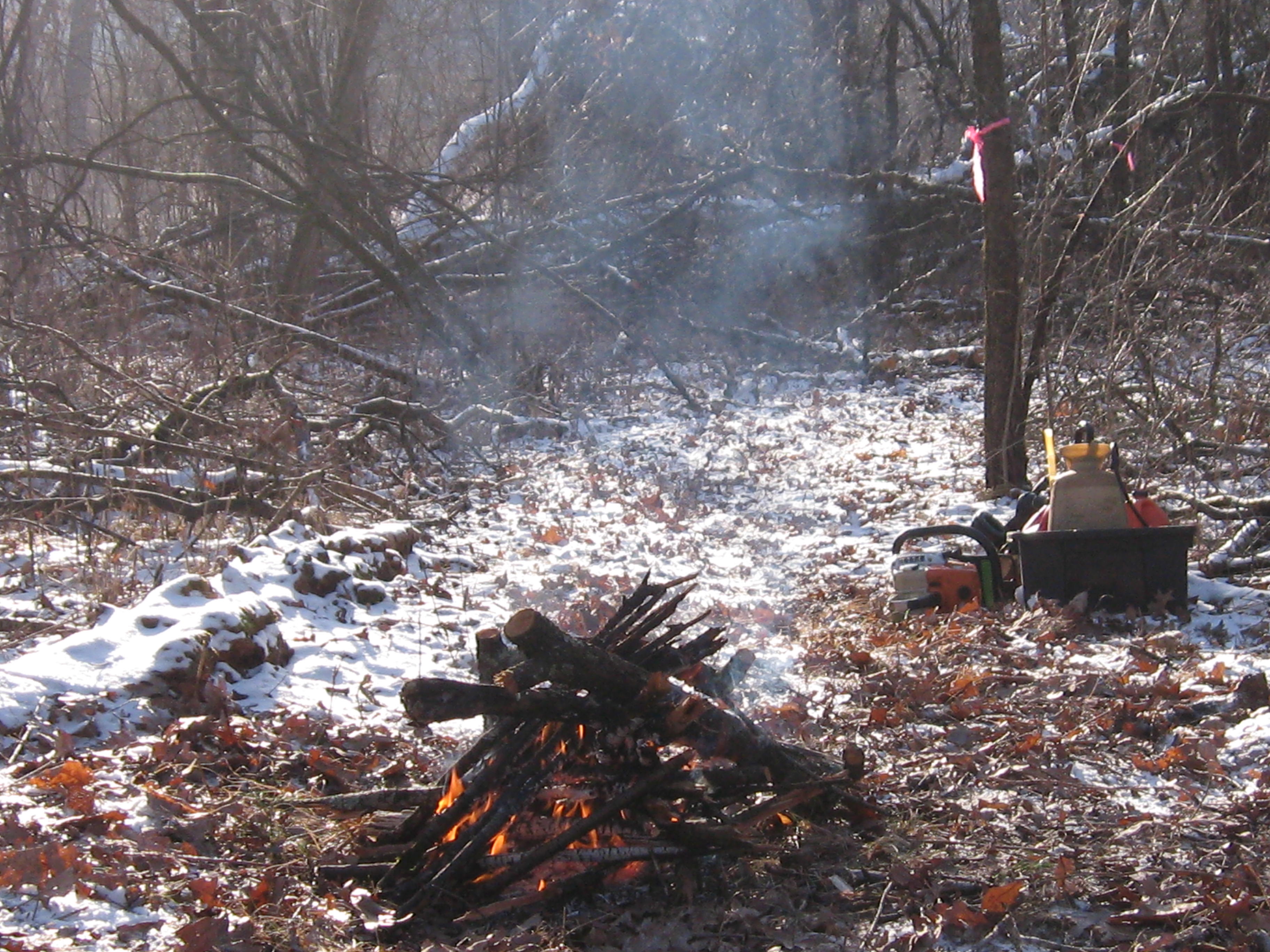
Here is the worksite. There are some really nice, big oaks along the cut-off trail. I was joined by Rich Csavoy and Carl Baumann. I struggled a bit to get a fire going but it was well worth it.
Like moths, we couldn’t resist the flames and quit a bit early to talk story and warm ourselves by the fire.
Before I knew it, the afternoon was turning into evening, and I hurried back to the bridge to get an after video of the worksite from that perspective.
John and Sue Hrobar joined us by the fire and their faces lit up with excitement as they described the dozen robins and bluebirds they saw near the Hotel Spring. It was another wonderful day at the springs spent with old and new friends; sweet as can be.
The Hartland Marsh is dear to me, as only a place can become once you have invested much into it (see About Paul). Despite the wintry weather, things are heating up lately at the Marsh. Ken Neitzke, who led the Waukesha/Milwaukee chapter of the Ice Age Trail Alliance (IATA) for many years, and was inspirational in awakening in me the awareness that I could make a difference, began exploring the possibility of resuming the use of fire in the maintenance of the Hartland Marsh. Ken lit a fire with the Village of Hartland leadership and Jill Rick, the author of the “I Want To Know” column in the Lake Country Reporter, fanned the flames.
IATA trail boss, Pat Witkowski, passed the torch to me letting me know about Jill’s recent article and I appended a comment to the article offering to help burn the brush piles I left behind at the Marsh. The fire jumped to Mike Einweck, the Village of Hartland Director of Public Works and he contacted me to let me know his crew was going to burn piles the next day (today). This was music to my ears and I immediately contacted Mike Fort and John Mesching. They have been working to restore prairies and Oak woodlands at Lapham Peak for many years, and being the jewels of the human species that they are, they both promised to come. Jack often helps at Lapham Peak and he joined us as well. Closing the loop, I contacted Pat to let her know and she also came to help.
I arrived a bit early to take some before pictures and was greeted by Jill Rick, whom I had contacted the night before to ask if she could get a photographer from the Lake Country Reporter to take some pictures. A half hour later Todd arrived and documented our efforts. The Village of Hartland Dept. of Public Works staff members Dave, Jake and Josh arrived around 8:00am and Jill began an interview with Dave, asking rather impertinently, “… do you know what you’re doing?”
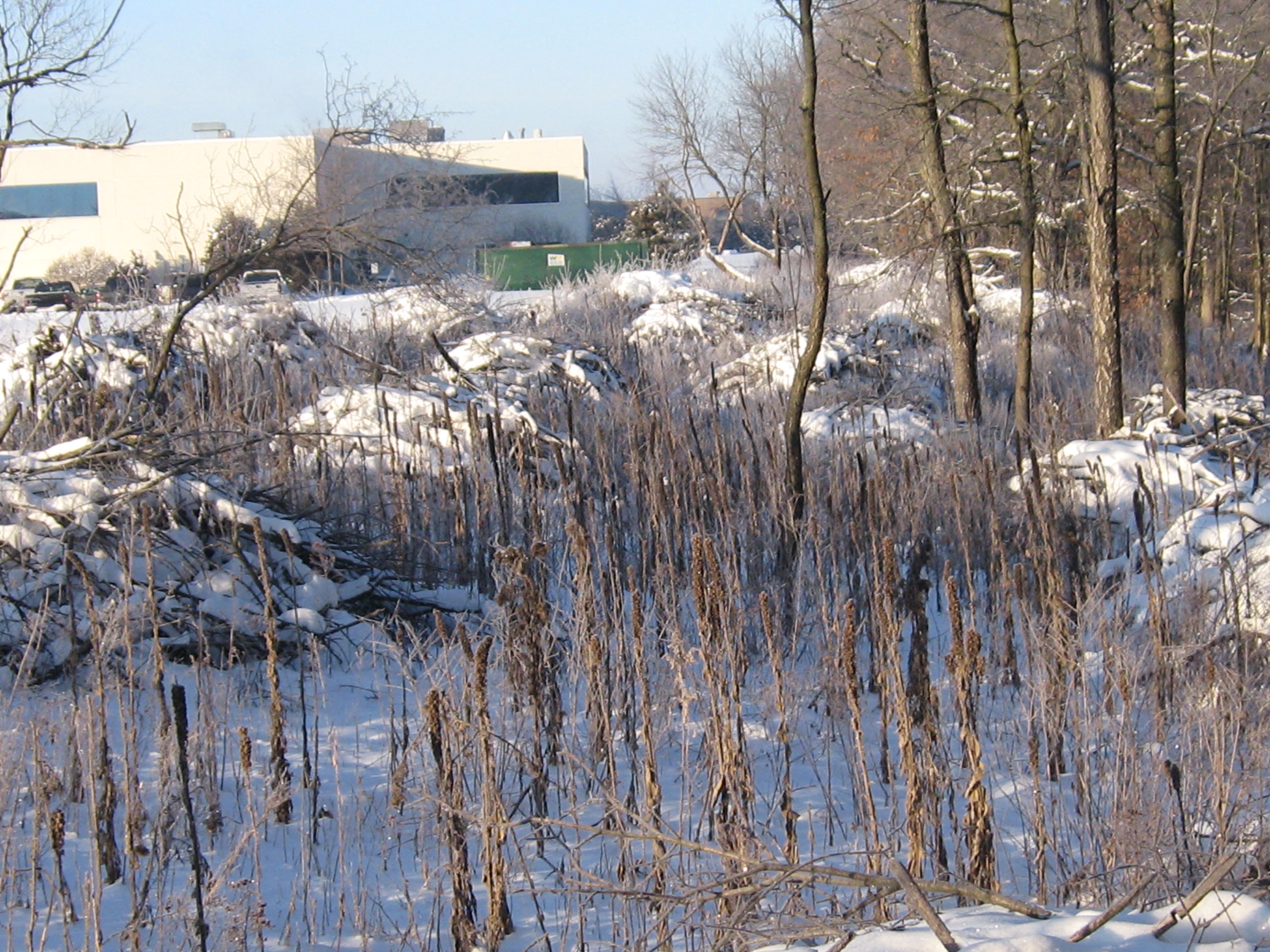
I wondered If I knew what I was doing when I tried to light the first pile. Although the wood had been stacked for over 2 years and was well seasoned, we had just had a good soaking rain followed by an accumulation of 4″ of snow. Check out this mess.
Approximately 80% of these piles were made in one day by Arrowhead High School students under the guidance of biology teacher Greg Bisbee. Dave, Jake and Josh began with the piles right along the trail heading down from the gazebo. Situated in a becalmed drainage ditch, these snow encrusted tangles of frozen brush were not eager to embrace the flame. I encountered difficulty as well with piles by the trail and migrated up the hill looking for a little breeze. Soon, Mike and John arrived and we hit our stride. Despite the conditions, together we lit 60 piles.
The best part of the day was being visited by no less than; Augie Wilde, the Fire Chief, Dave Cox, the Village Administrator and Mike Einweck. These patient souls were subjected to impassioned speeches from yours truly about the need to do prescribed burns at the Marsh. The Municipal Code authorizes it and the Village’s own Comprehensive Land Use Plan Chapter 4 ( see Public Interest/Current Legislation under Legislation and Public Hearing Notices) implies it, as there is no other way to achieve its stated goals. I was happy to hear Dave Cox say “Fire is a good thing.” Hopefully, the Village leadership will be able to define some concrete action items to initiate a program of prescribed burning and implement them.
The Native Americans, or First Nation People taught us to plan for the 7th future generation. It is time for the Village of Hartland to embrace this credo and preserve and nurture its natural, open spaces for the 7th generation of Hartlandians to come.
Here is a short tour of the burn site at the end of the day.
After the gear was stowed away and I put some dry socks and boots on, I took a leisurely walk around the Marsh visiting all my favorite haunts. I encourage you to discover the beauty of the Hartland Marsh!
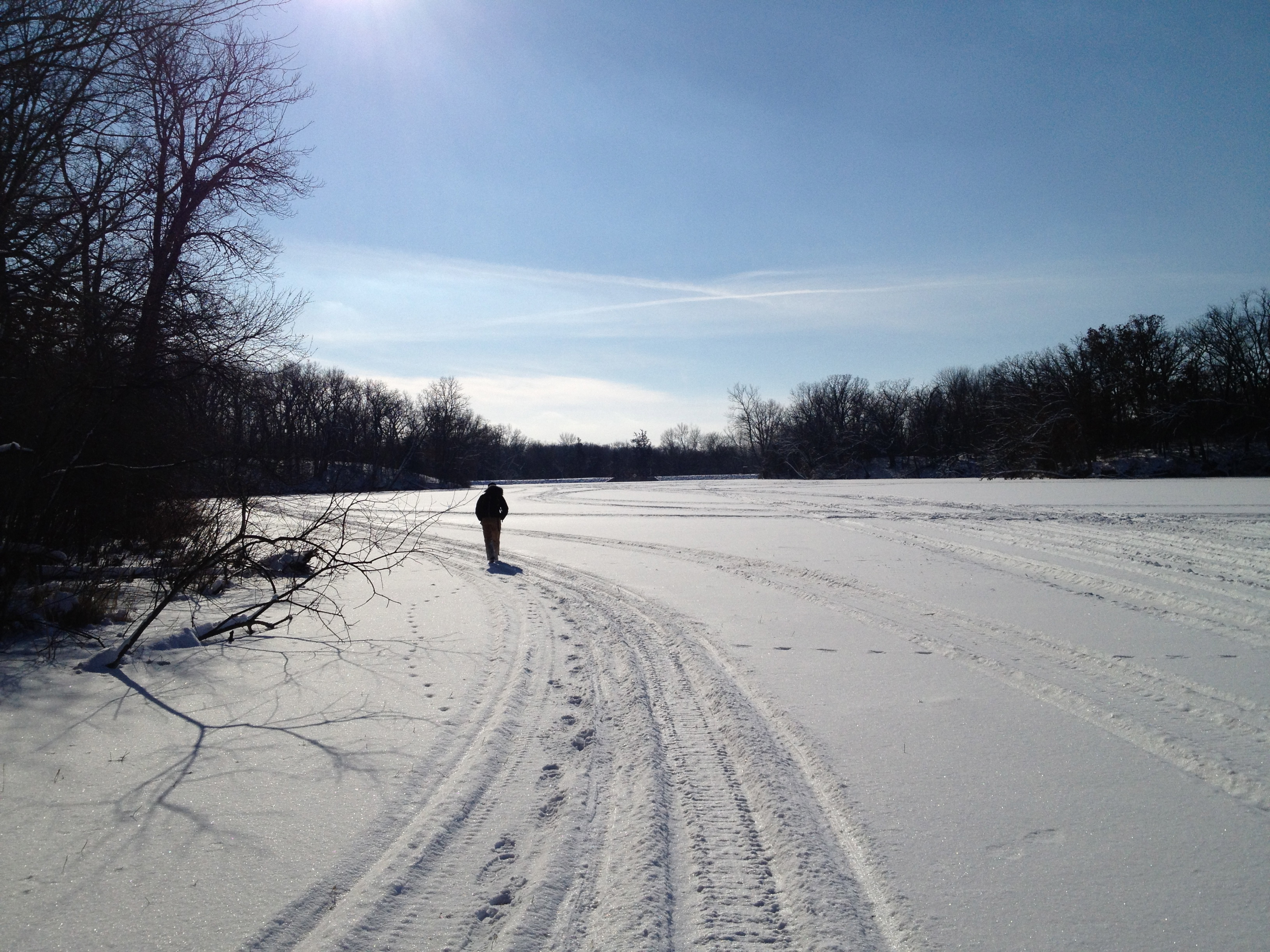
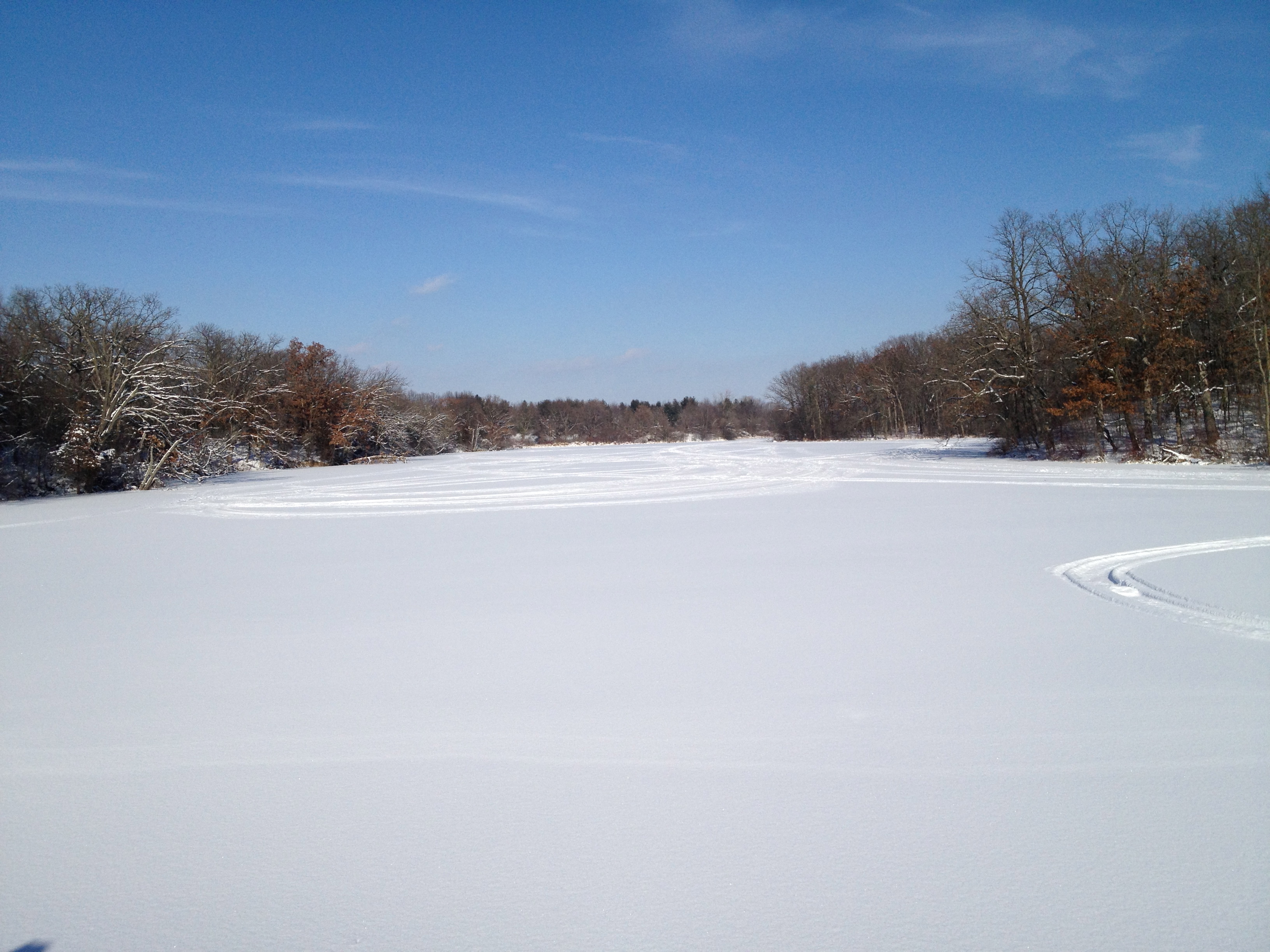
We couldn’t have had a nicer day for the second leg of our Journey Down the Scuppernong River. Spindrifts of fine white snow crystals swirled and danced. The morning sky was mostly cloudy but the stiff breeze from the northwest promised to bring clearing and sunshine. Pati and Lindsay were all geared up and, after consulting the maps one last time, we headed southwest, from where the river crosses Hwy N, to our destination at the dam on the south end of Upper Spring Lake.
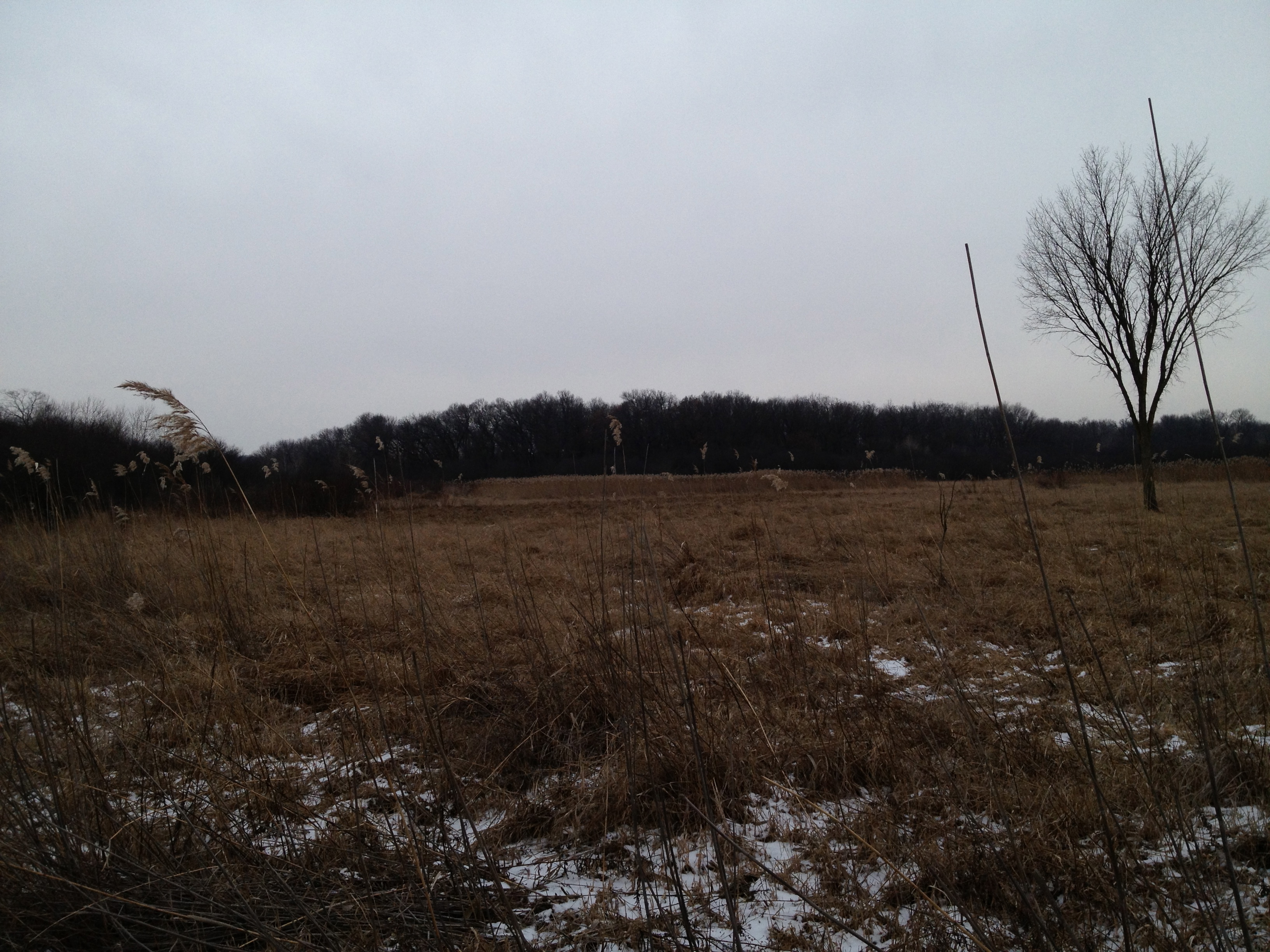
The next couple videos provide nice panoramas of the Glacial Lake Scuppernong horizon.
Check out the Google Map included with post of the first leg of our journey to follow our course. Here we have come to the end of the long, straight, channel which began our route.
Below we are following the southern border of the Dempsey Farm Partnership.
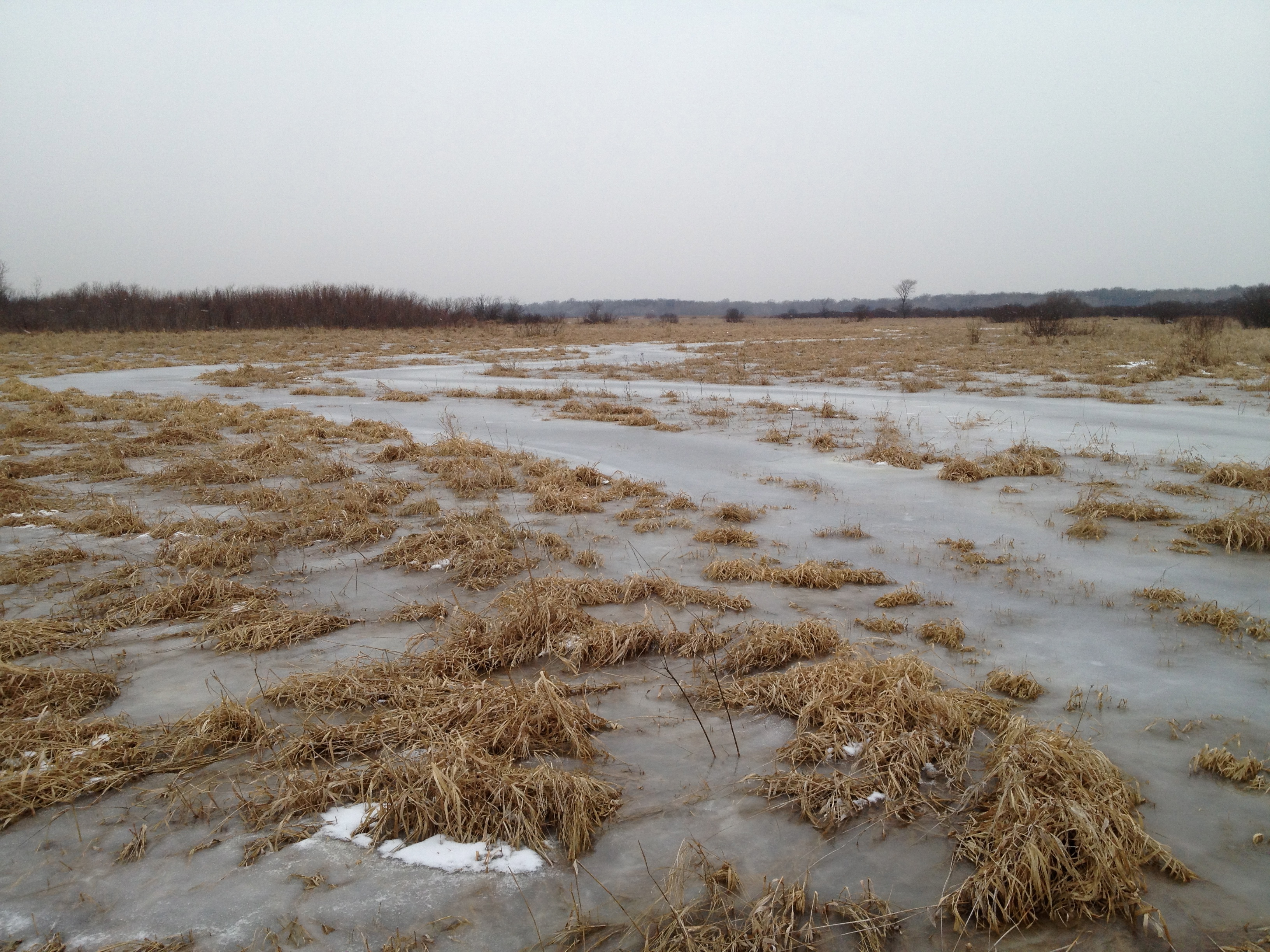
The frozen wetlands made for easy hiking, but we did have to scramble through a dogwood and willow thicket or two.
That got us all warmed up.
I got confused and took us down a channel that went south instead of following the main river course; a detour of 1/2 mile or so.
We came to a beautiful old home site just east of Hwy Z.
Then, after a short lunch break, we arrived at Hwy Z.
The frozen river’s edge made for easy walking.
We emerge onto Upper Spring Lake.
The scenery was marvelous!
The dam at the end of the lake came into view.
We have heard a few complaints about the dam preventing fish from traveling up the river and now see what they mean.
The dam is on private property but we could not resist checking it out; fortunately, we did not get hassled. That completes the second leg of our journey!
Since we were in the neighborhood, we stopped at the Scuppernong Springs Nature Trail on the way home to visit the origins of the river. Here is the Emerald Spring.
The Hidden Spring.
We had a wonderful day exploring the river!
We hope to do our next leg of the journey in a couple weeks.
The dead of winter forecast called for snow followed by a deep freeze. I don’t mind cutting with a little snow and if it turned into a blizzard, well, then I’d just have to quit and enjoy it. So I made my way out to the Springs without a care in the world; happy and at peace.
The work site was, again, the cut-off trail. This land of oak giants by the riverside is thick with buckthorn, and it was gratifying indeed to give them a good whacking.
The snow started falling immediately after I took that video and it didn’t take long until I was pretty thoroughly soaked. The work is strenuous and kept me warm despite the wet. I cut my limit of 6 tankfuls and called it a day.
After changing into some dry clothes, I did a little sight seeing. Below is where the trail first breaks out into the main prairie.
Now that we have hiked the river from the Scuppernong Spring all the way to Hwy N, I finally know what I’m looking at and can see where the Scuppernong River threads its way through the hills to the west. Below we see the Marl Pit and the Indian campground.
River shots.
Below is along the north side of the river, along the cut-off trail, just upstream from the bridge where the ground water monitoring station was installed. This is where we will be cutting next.
Continuing down the cut-off trail.
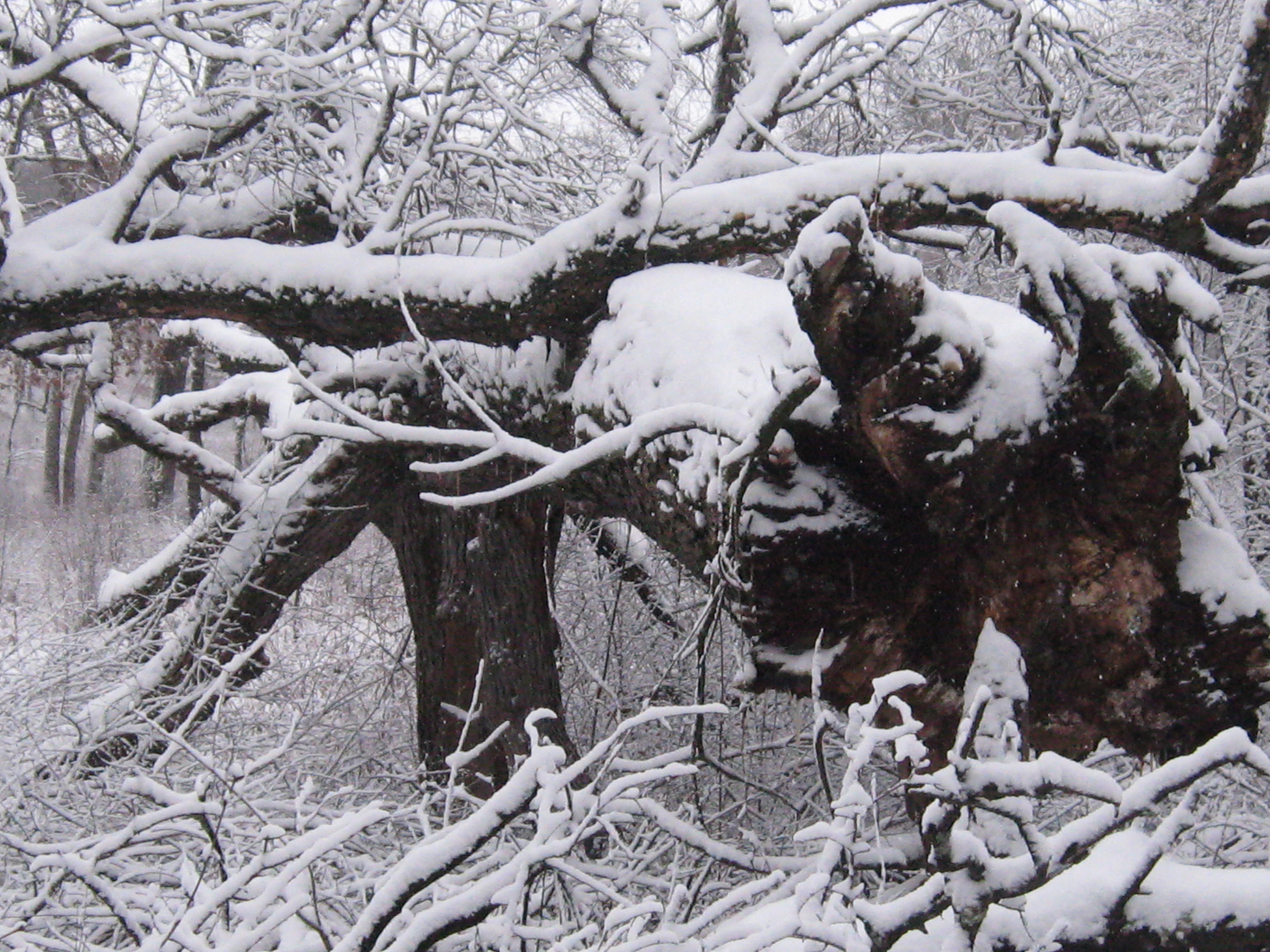
Here is that huge oak that looks like it was lifted right out of the ground.
New views of the river are opening up along the cut-off trail.
Below is an old cranberry bog where the cut-off trail joins the main loop.
The old barn site.
Looking across the river from the hotel site at the work in progress on the cut-off trail.
The water is up a bit!
Thanks for taking the time to enjoy the Springs with me, and I hope to see you there soon!
Inspired by The Bark River Chronicles by Milton J. Bates, we are going to follow the Scuppernong River from its source at the Scuppernong Spring to where it merges with the Bark River, 15 or so miles downstream, just south of Hebron in the Prince’s Point State Wildlife Area. Lindsay, Pati and I took the first leg of the journey today hiking from the Scuppernong Spring to where the river crosses Hwy N.
We left Pati’s car at the intersection of Wilton Rd and Hwy N and took Lindsay’s truck back to the Springs.
There we met Rich Csavoy and we split the sack of Upland Woodland seeds that Don Dane gave us into 4 parts and we sowed the seed; first at the old barn site along the river north of the Hotel site and then on the far south side of the loop trail by our starting point at the Scuppernong Springs.
Snow is forecast, but we are hoping to get to Hwy N before the skies let loose.
The next video was taken at the site of the new Ground Water Monitoring (Stream Gaging) Station. The data is now live at the USGS Water Watch site. Mike Parsen, the Hydrogeologist from the
Wisconsin Geological and Natural History Survey explains, “If you scroll over these circles you’ll see the name of the station at both Scuppernong Springs and another gaging station we installed at Paradise Springs a few miles to the southwest of Scuppernong. If you click on the circle, a pop-up window with tabs will appear where you can view a hydrograph of the creek stage. As the USGS collects more measurements they will develop a rating curve for this specific stretch of the creek, which will allow them to calculate flow rates for the creek.”
Mike sums up the effort “… we at the Wisconsin Geological and Natural History Survey (WGNHS) are cooperating with the U.S. Geological Survey (USGS) on this project which is funded by the WI DNR. To perform the work and meet the permitting requirements we worked with KMSF (Southern Unit) Staff as well as the WI DNR and US Army Corps of Engineers.” The Installation Report is here and provides an excellent explanation for how the monitoring unit works. You can see the nitrogen bubbles releasing every second or so from the end of the orifice line as described in the report.
Next we take a look around at the Glacial Lake Scuppernong basin and Ottawa Lake.
And proceeded to where the outflow channel from Ottawa Lake joins the river.
The river takes a sharp left turn to the south and follows a straight course until it comes along side a pond, at which point it turns right to the west.
Here are a few perspectives looking up and downstream.
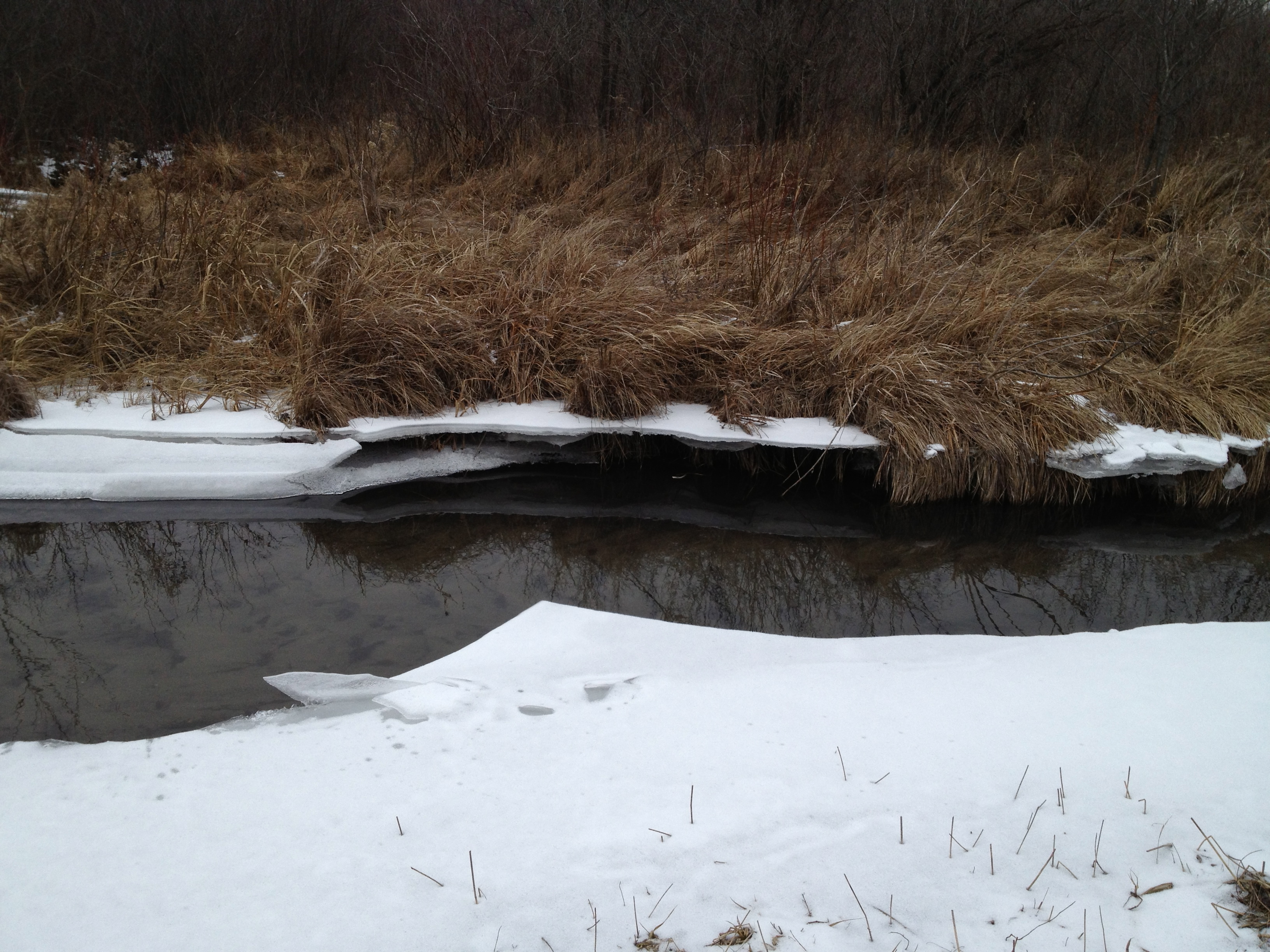
The ice showed evidence that very recently the river was 6-8″ higher in this area.
The vegetation varies from rushes, sedges, flowers and grasses to cattails and phragmites, dogwood and willow.
The next point of interest is where another spring joins the river. The origin of this water source is a spring on the east side of Hwy 67, just north of Road X. If you know the name of this spring, please add it in a comment to this post.
If you follow the course of the river in the google map embedded above you will notice it comes up close behind a homestead. I believe the DNR recently purchased this property.
A bit further downstream we came to the site of the repair work the DNR did last summer (see end of that post) to close off the connection between the river and a drainage canal.
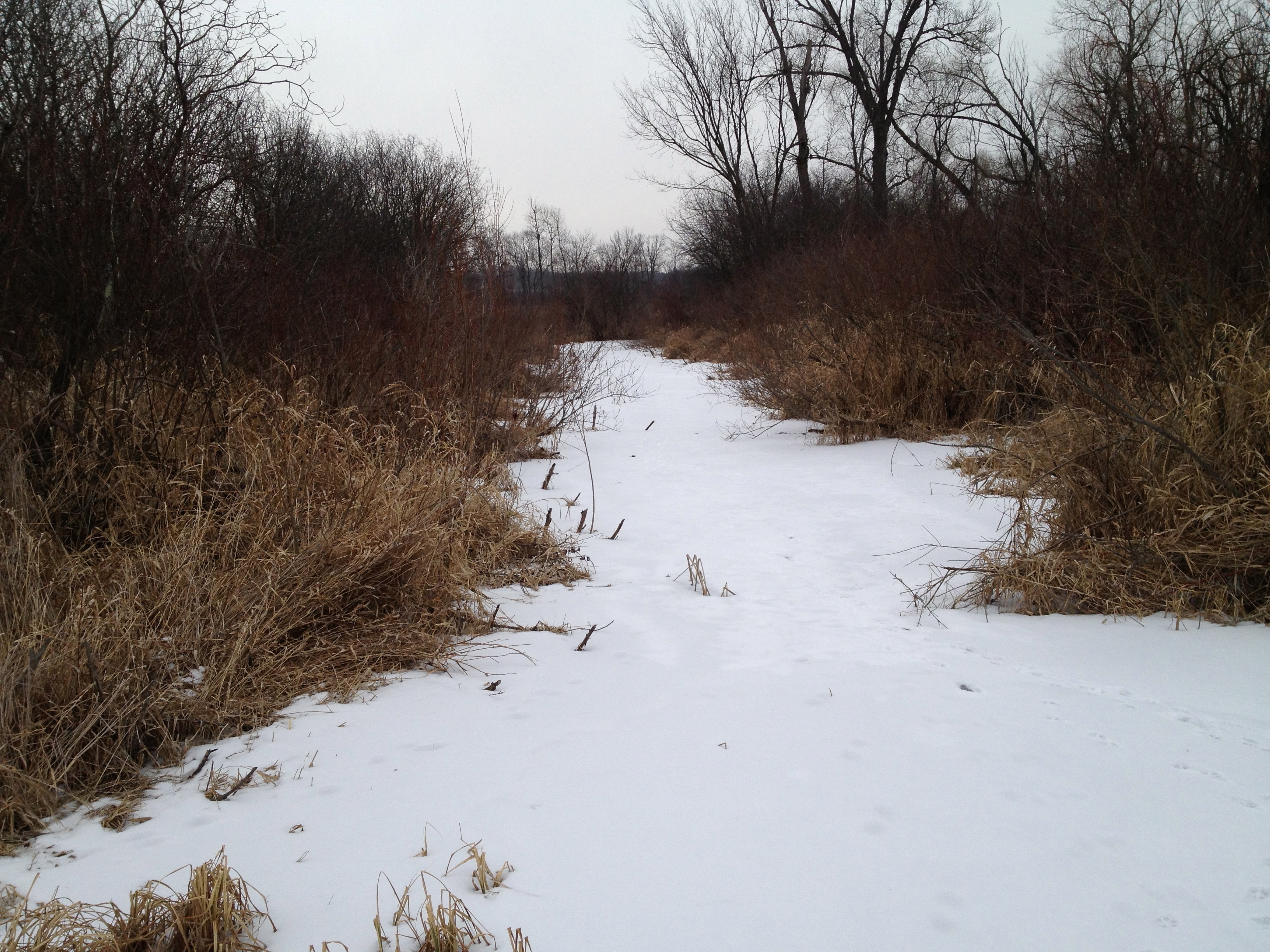
Strolling along the DNR two-track “road”, we came across a ditch that crossed the river perpendicularly and, much to my dismay, joined up with the channel that was disconnected from the river just upstream. You can see the ice path joining the river to the channel above it.
The view of the ditch that bisects the river looking south.
Here is the channel full of water; is this by design or accident?
Another look around at the lay of the land in these next two videos. We are way out in the boonies here.
The next point of interest is the site where the DNR staged their equipment for the project they did last Summer mentioned above in the link to the Ben Heussner Interview. It was a lot dryer back then; good thing the wetland was frozen.
As we approached Hwy N, the snow and sleet began to fall. You’ll hear me musing repeatedly about why there is water in the channel. I will follow up with the DNR about this to see if it is expected.
The river and channel merge at Hwy N.
That was a nice little trip! We recommend the south side of the river if you want to give it a try. We noticed a lot of areas to gather seeds, or “plugs” next year to sow or plant back by the headwaters, where we are trying to diversify the cattail and phragmites mono cultures that currently dominate there.
Here is the view looking west downstream from Hwy N. We hope to hike the next segment to Hwy Z soon.
Thanks for following the Scuppernong Springs Nature Trail posts and watch for the next segment in our Journey Down The Scuppernong River.
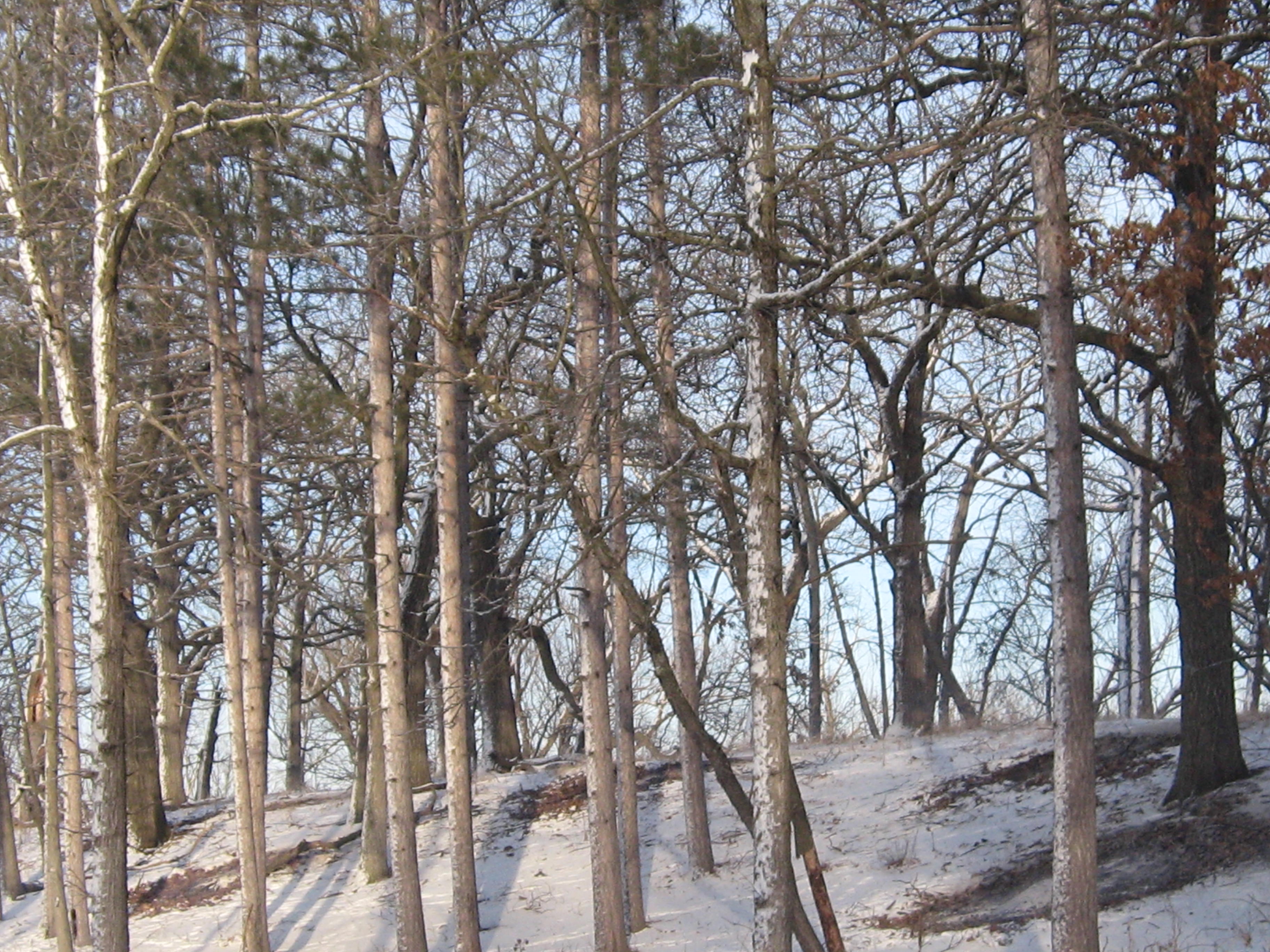
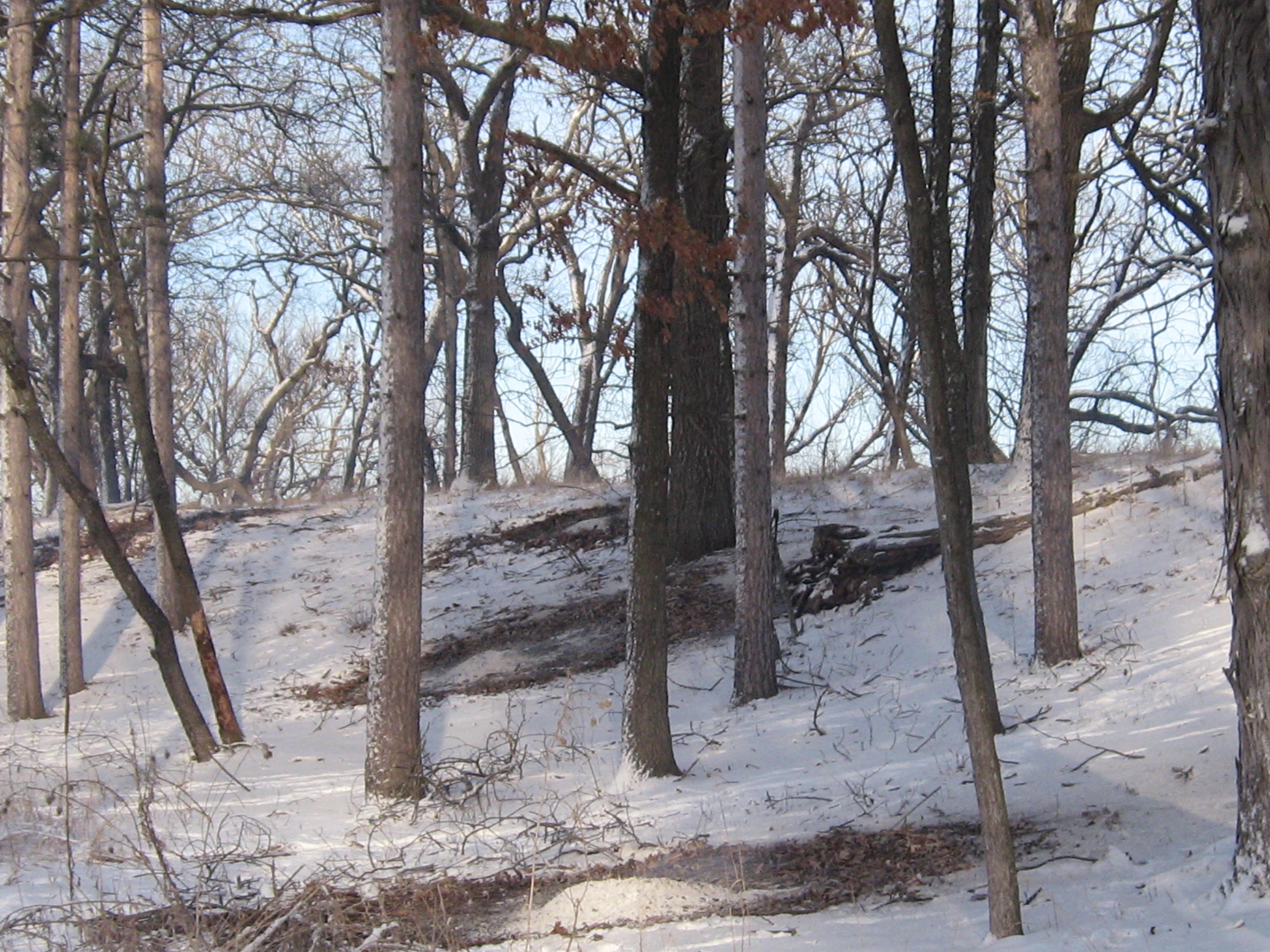
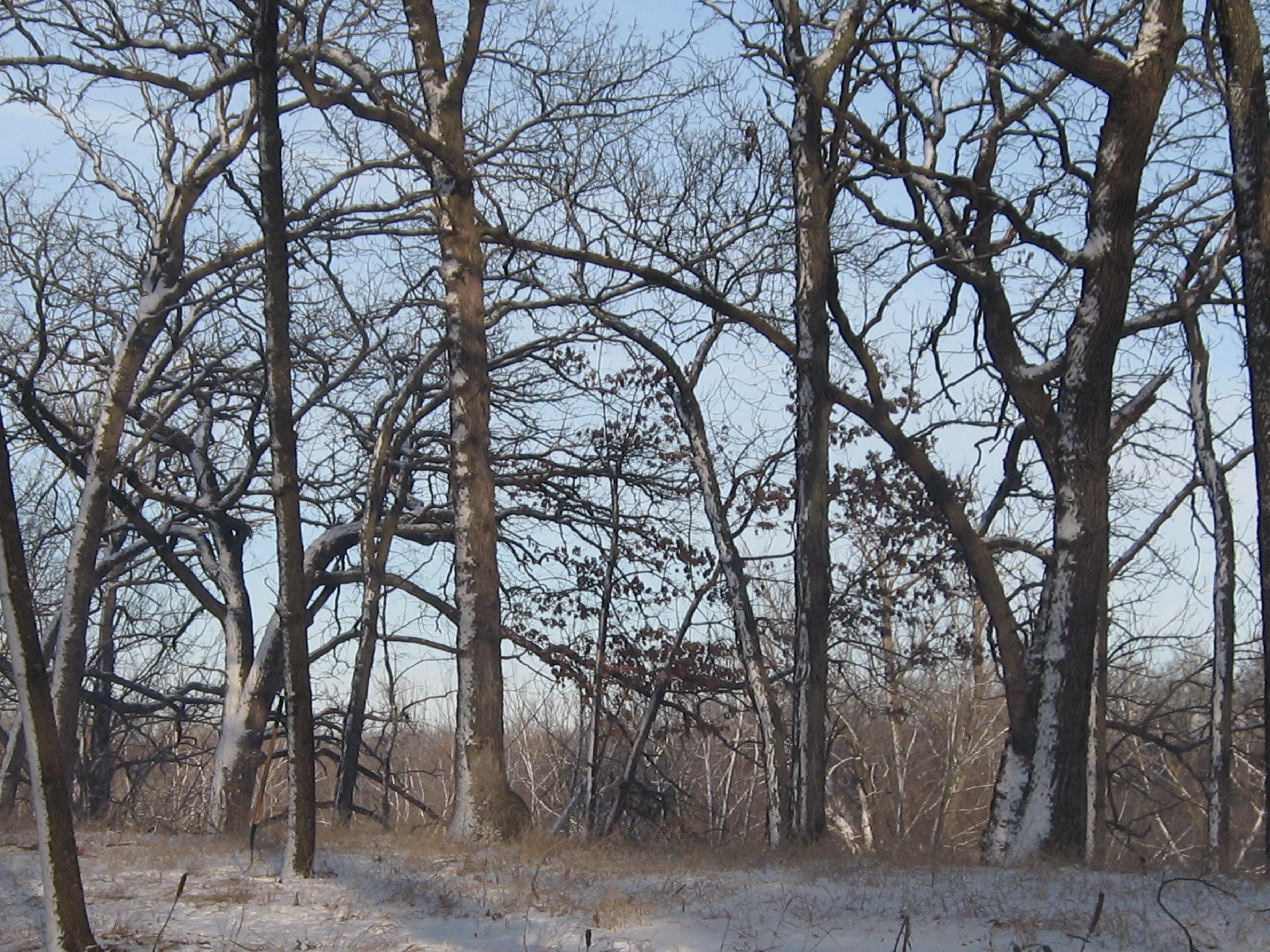
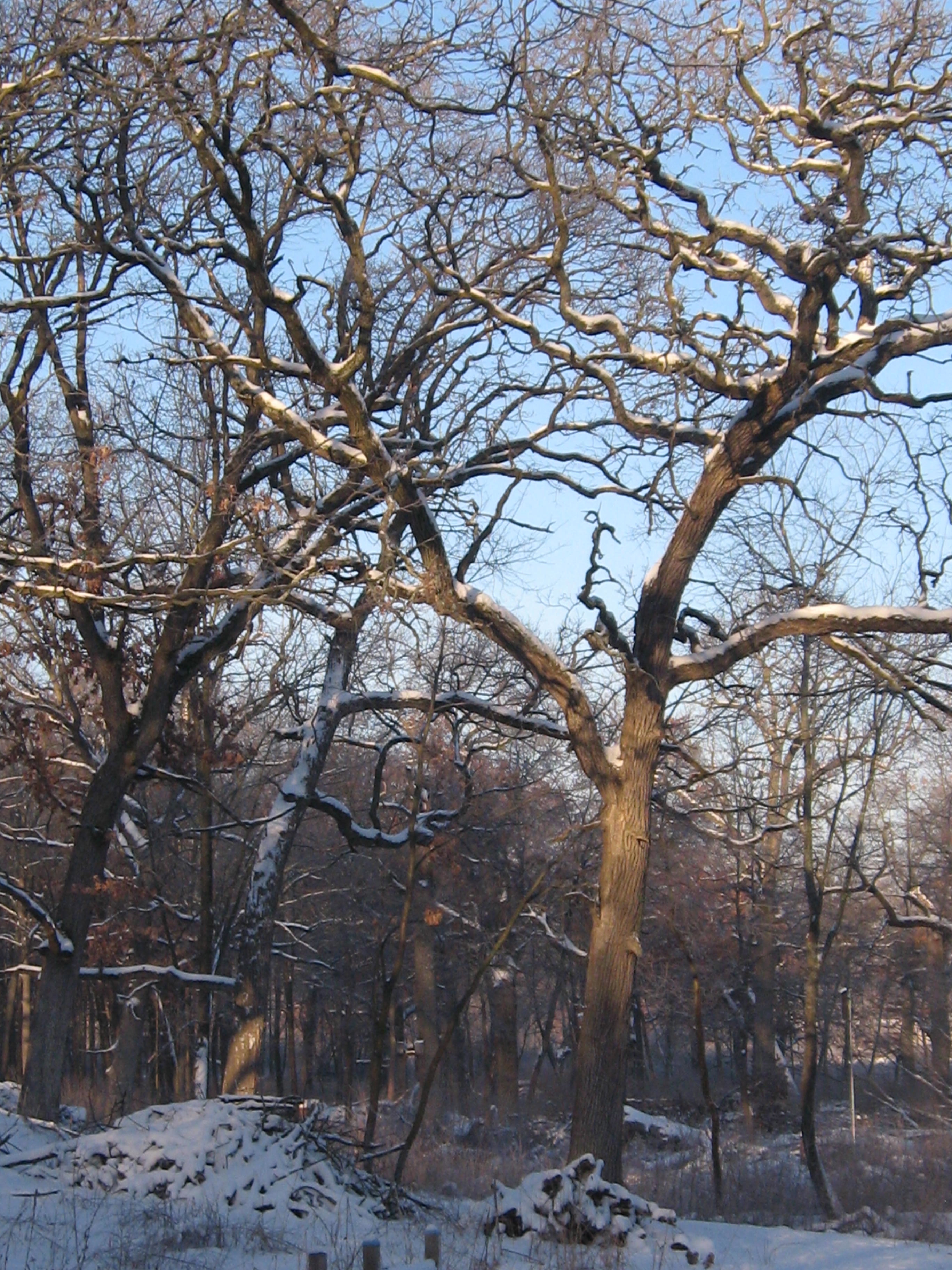
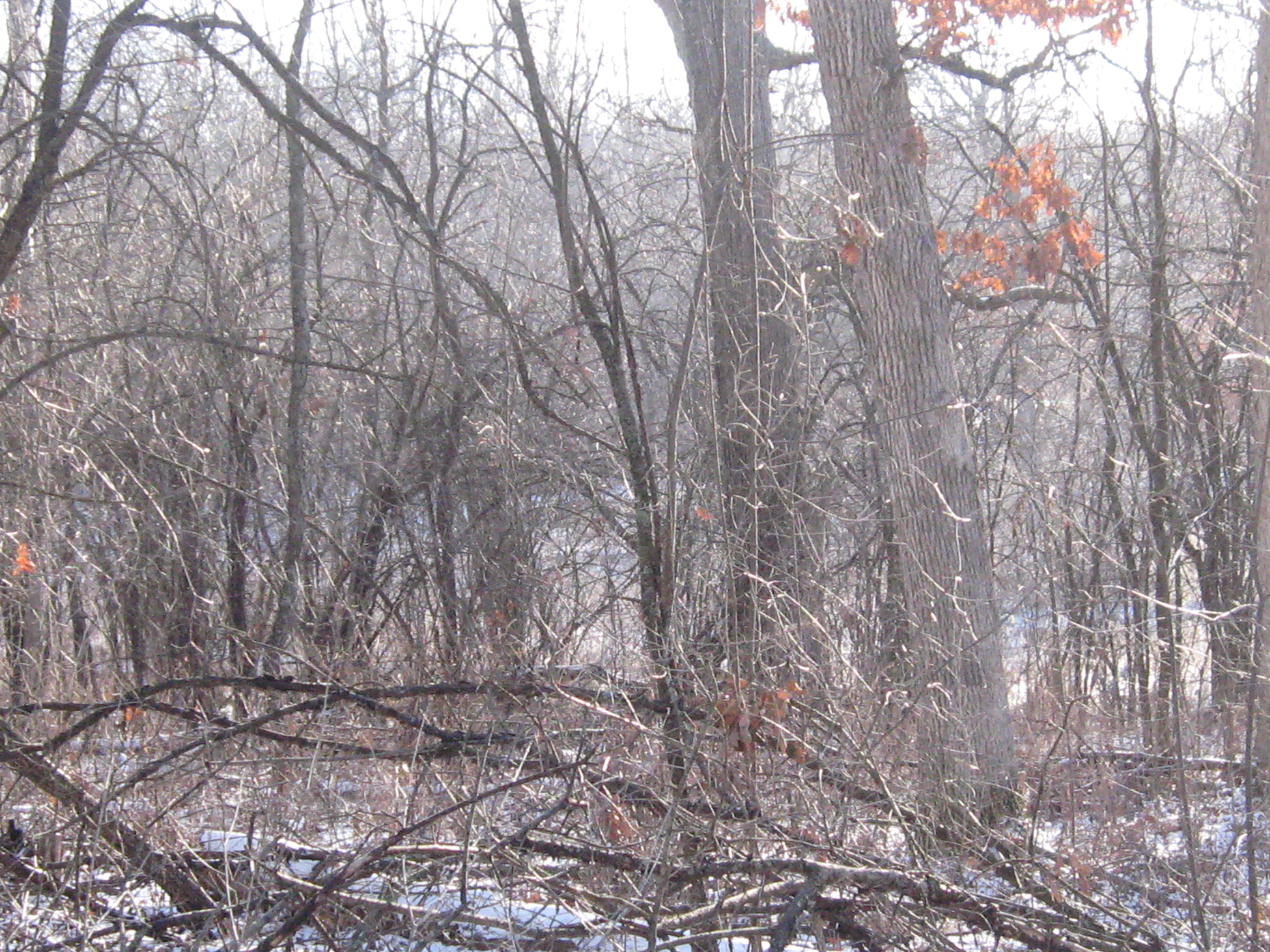
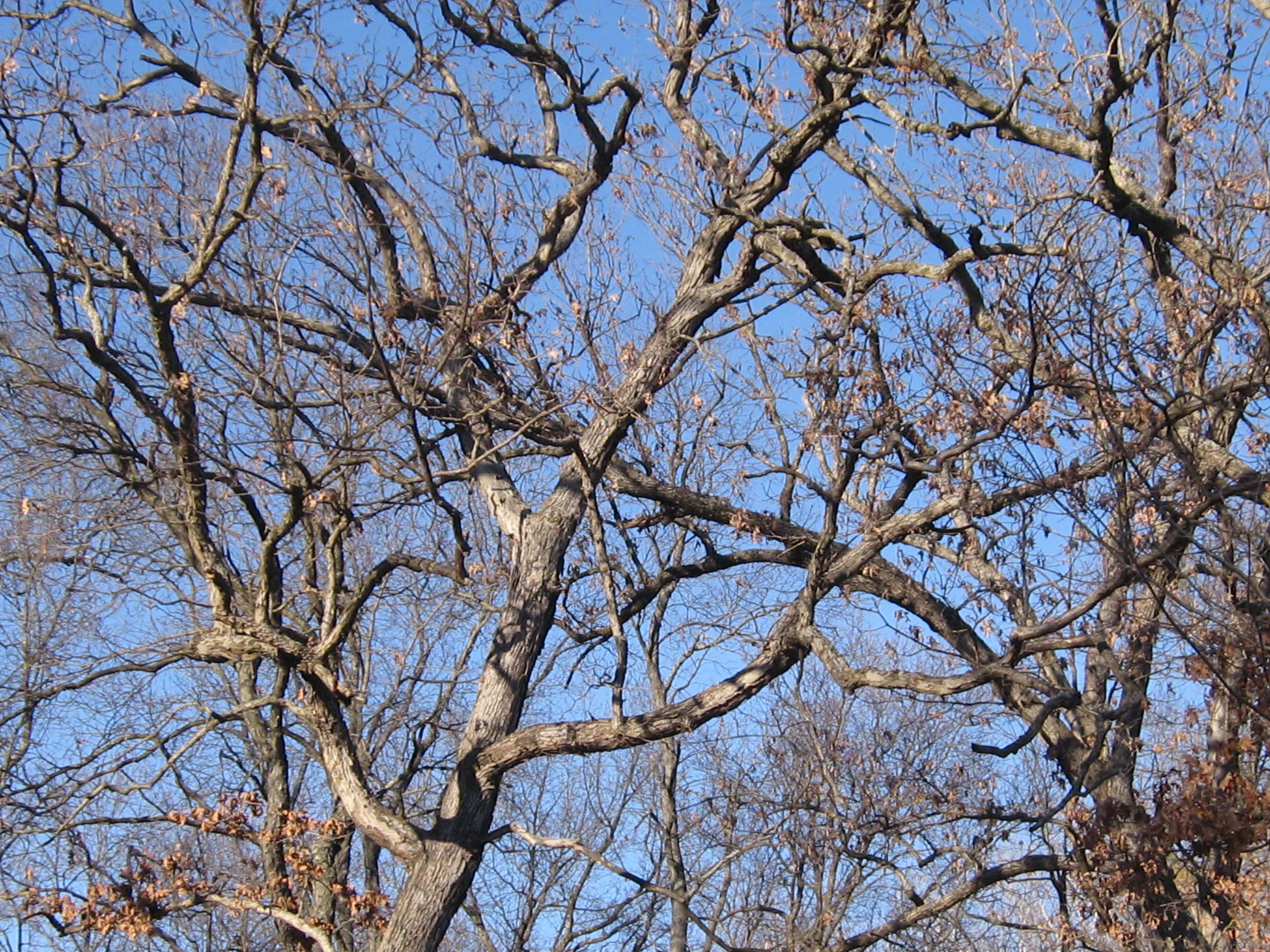
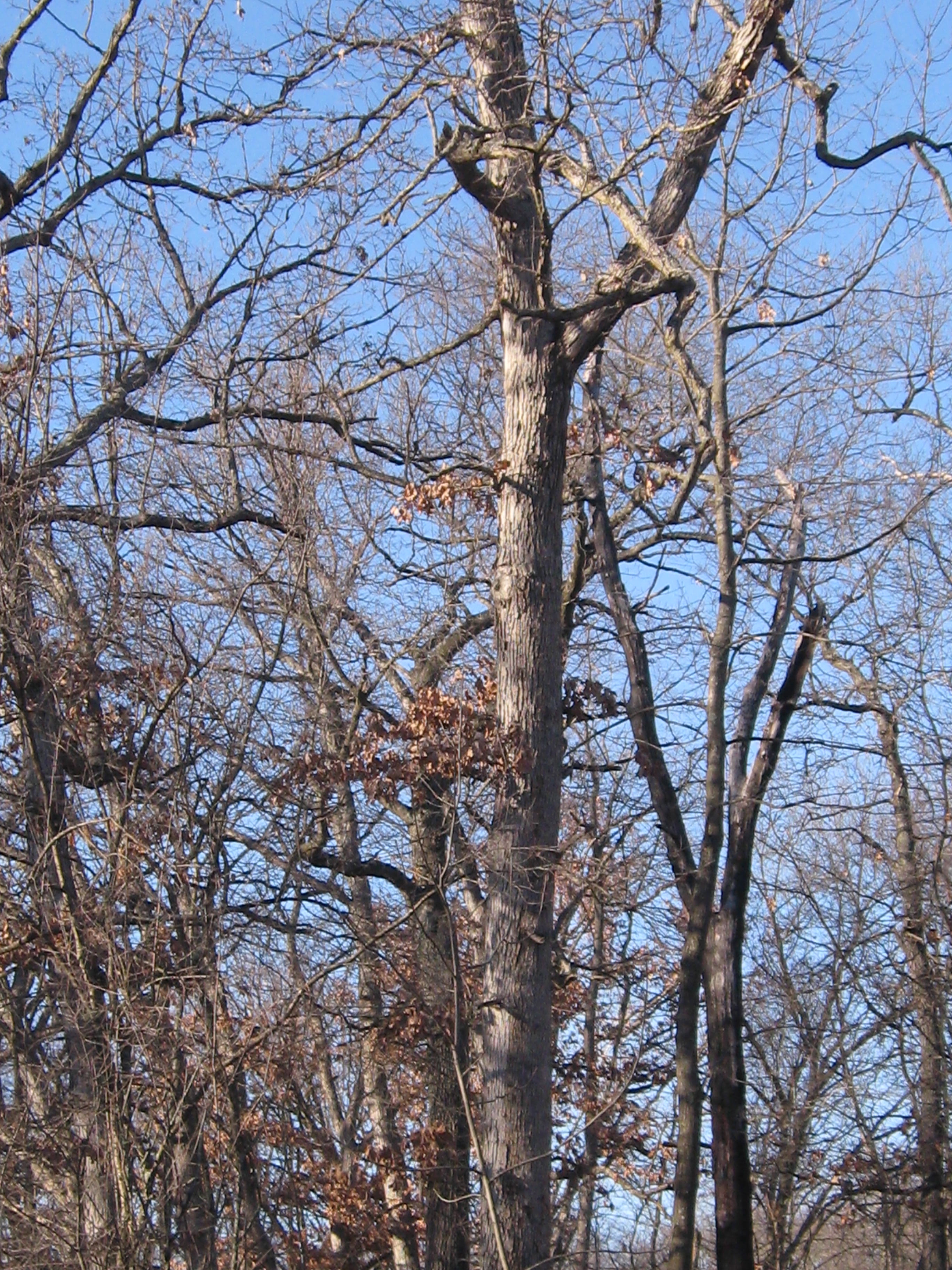
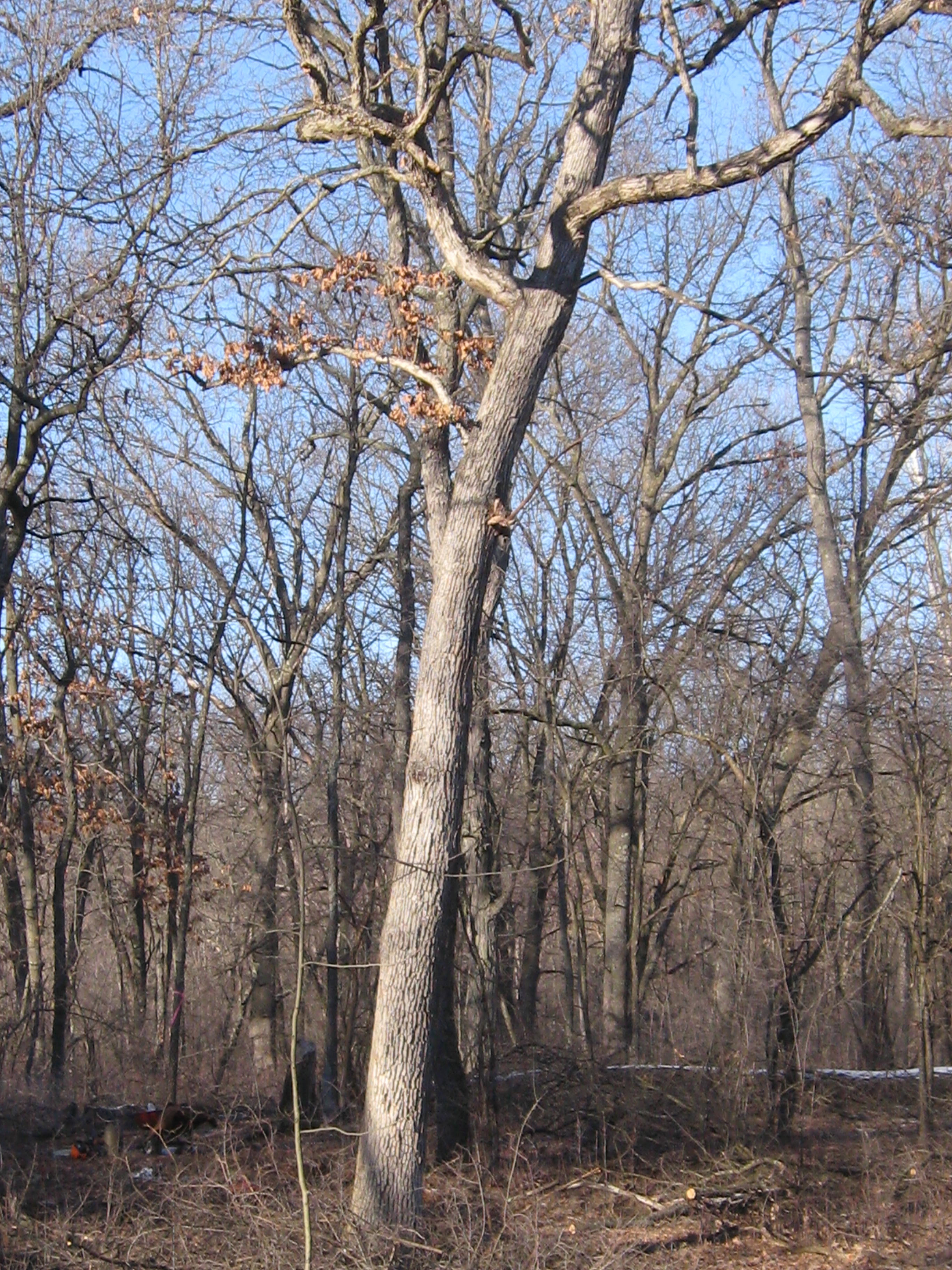
The White, Black, Red and Burr Oaks on the Cut-Off trail create a sacred space. These majestic works of art exhibit the most graceful, dynamic, flowing, architectural lines possible. Removing the clutter and tangle of Buckthorn from beneath their sweeping canopys is akin to wiping away the dirt from the ceiling of the Sistine Chapel. I’m honored and thankful for the opportunity to do it!
It couldn’t have been more peaceful and beautiful at the Springs today as I continued clearing Buckthorn along the cut-off trail in the area marked in white below.
I made a little fire, and needed it to defrost my sprayer, but with the bright sunshine and light winds, I was plenty warm.
There were some huge and TALL Buckthorns in this area and they all seemed to be sprouting dozens of interlocking trunks and branches. It tries your patience after a while and I had to quit after 6 tankfuls with the chainsaw.
Its tough to capture the scale of these beauties in the Oak Cathedral.
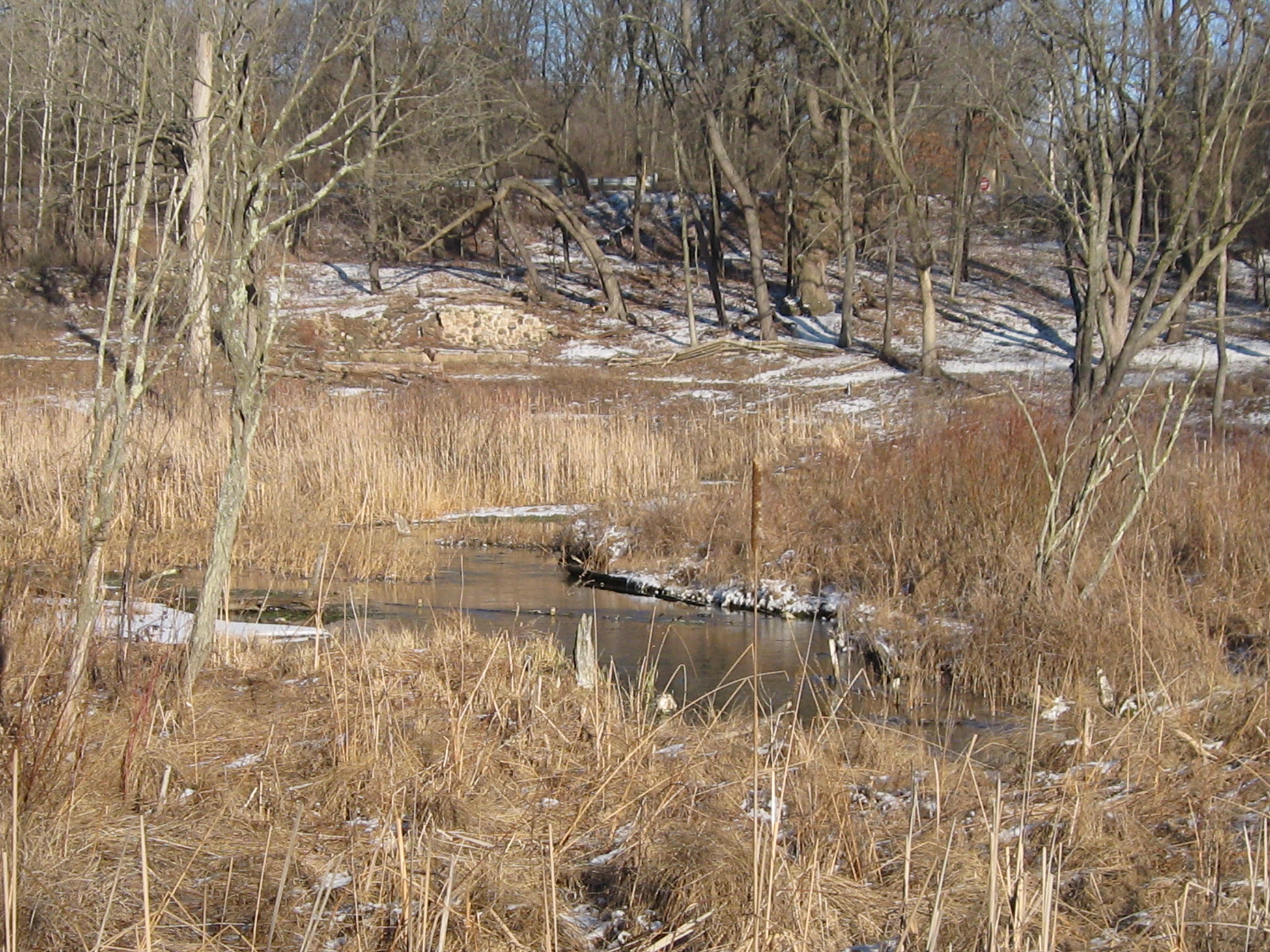
The Scuppernong River is near and will be visible from the trail.
In THE PONDS OF THE SCUPPERNONG, Robert Duerwachter described efforts to create a goldfish farm in this area of the river. I think I found the spot. There are some old pipes laying there, which we’ll haul out, and a spring is flowing into the river.
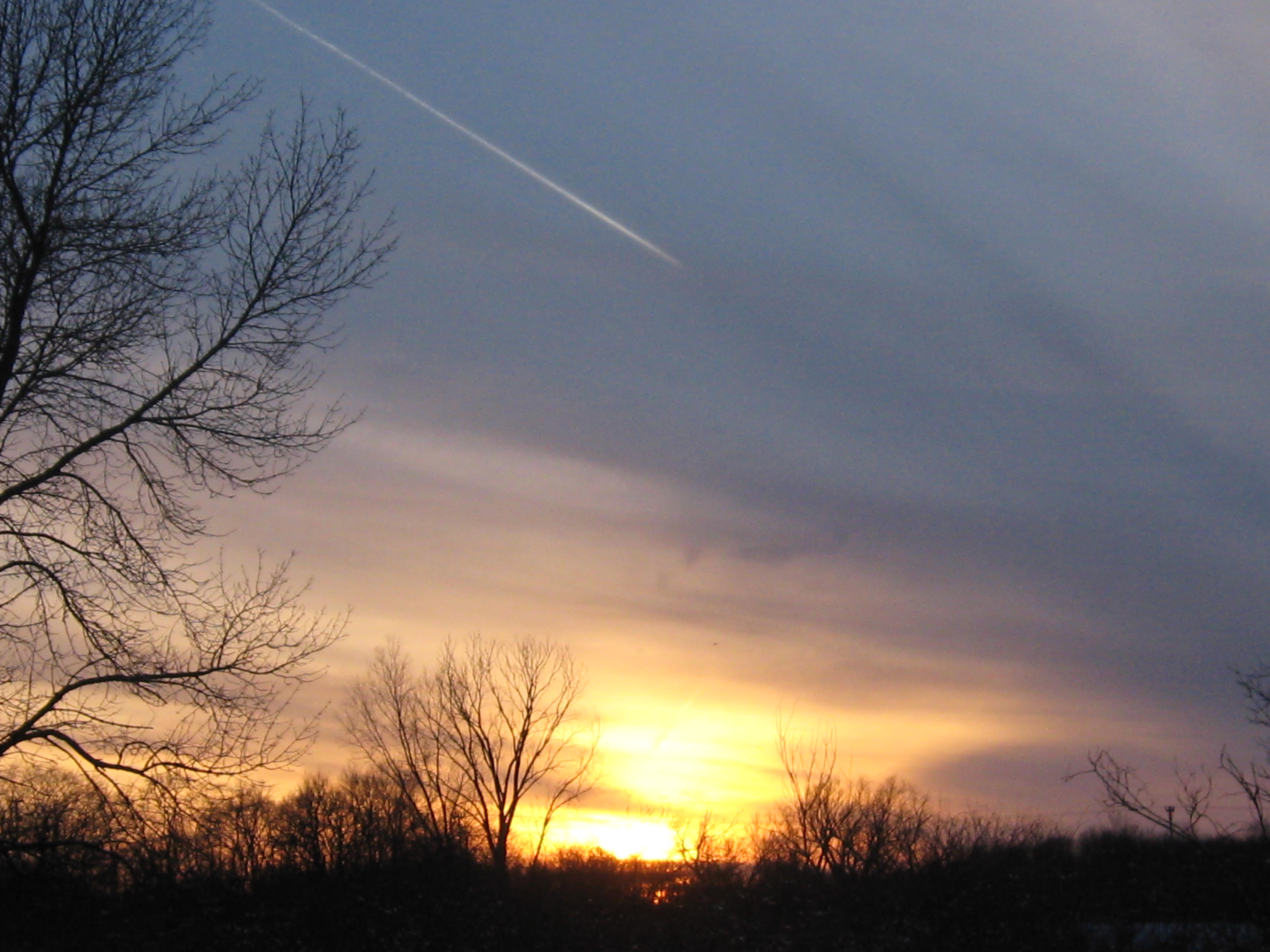
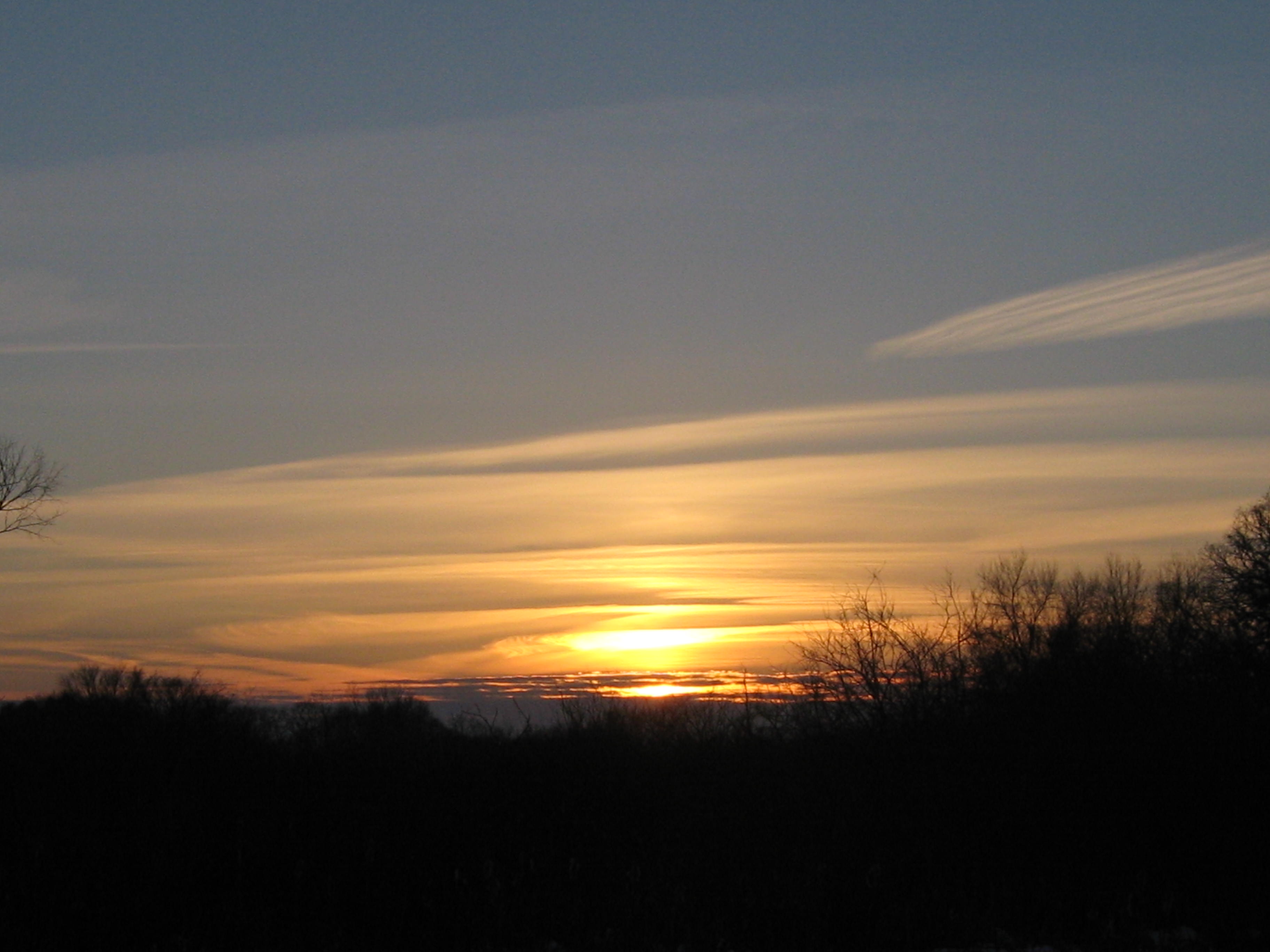
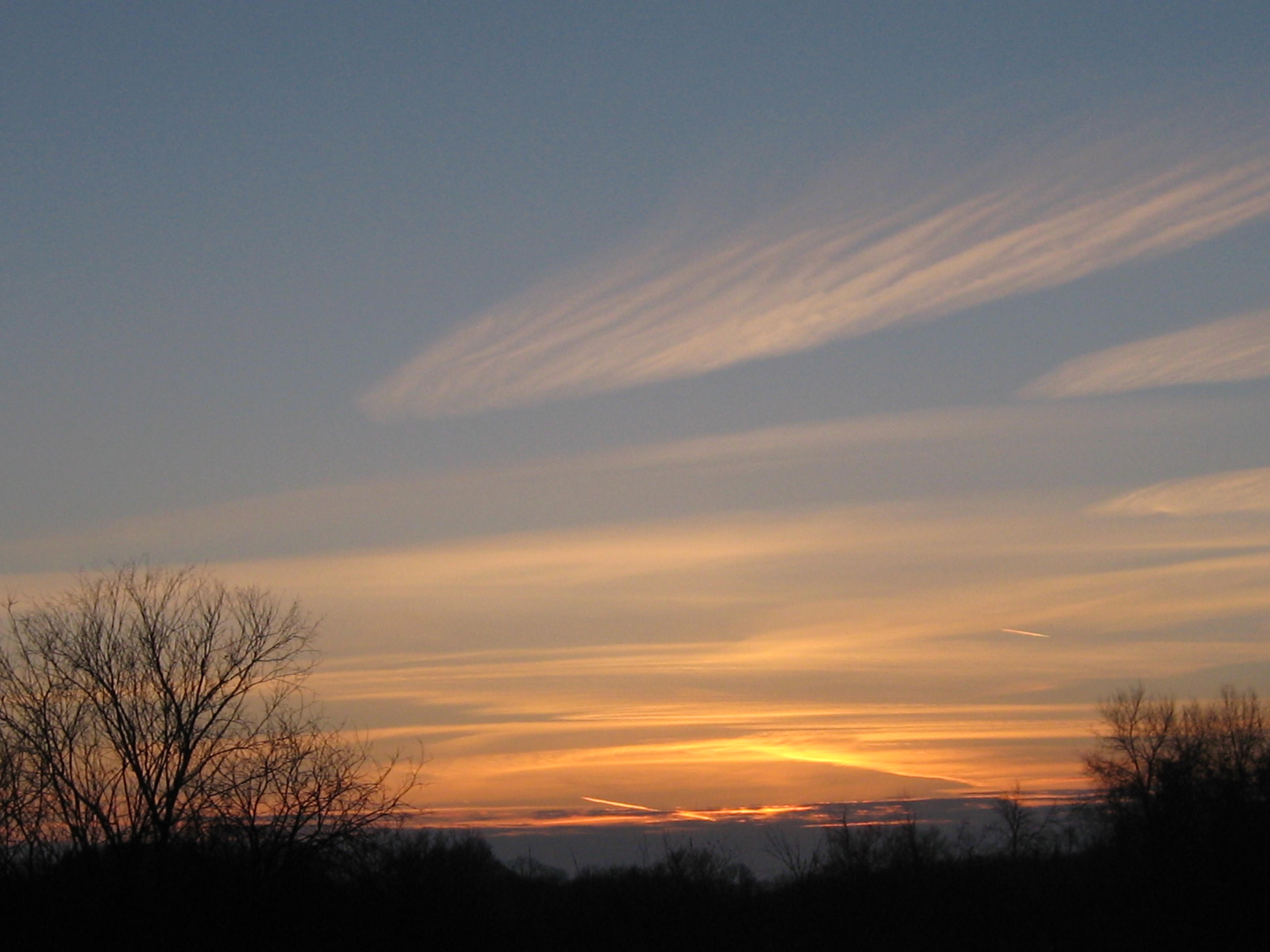
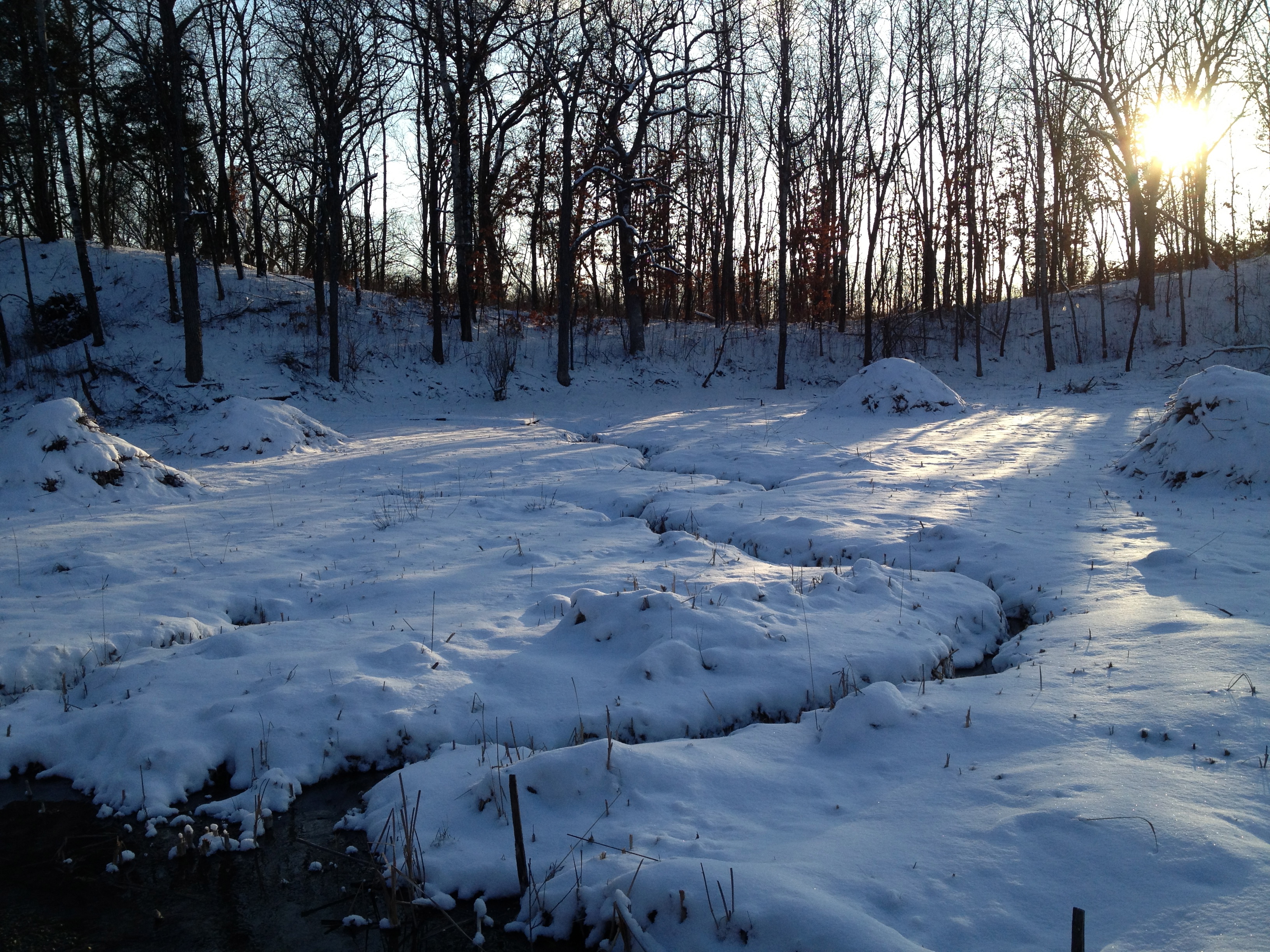
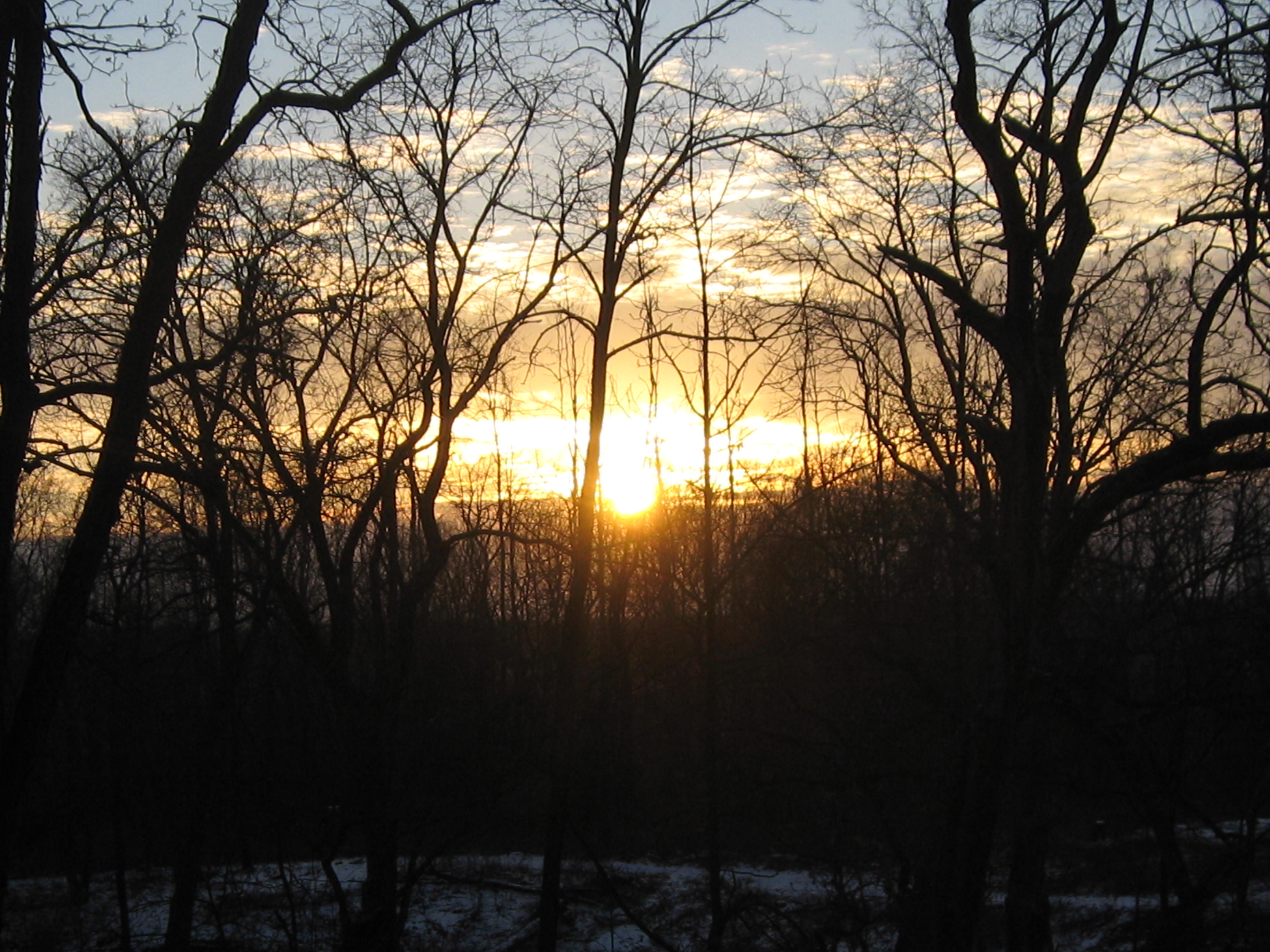
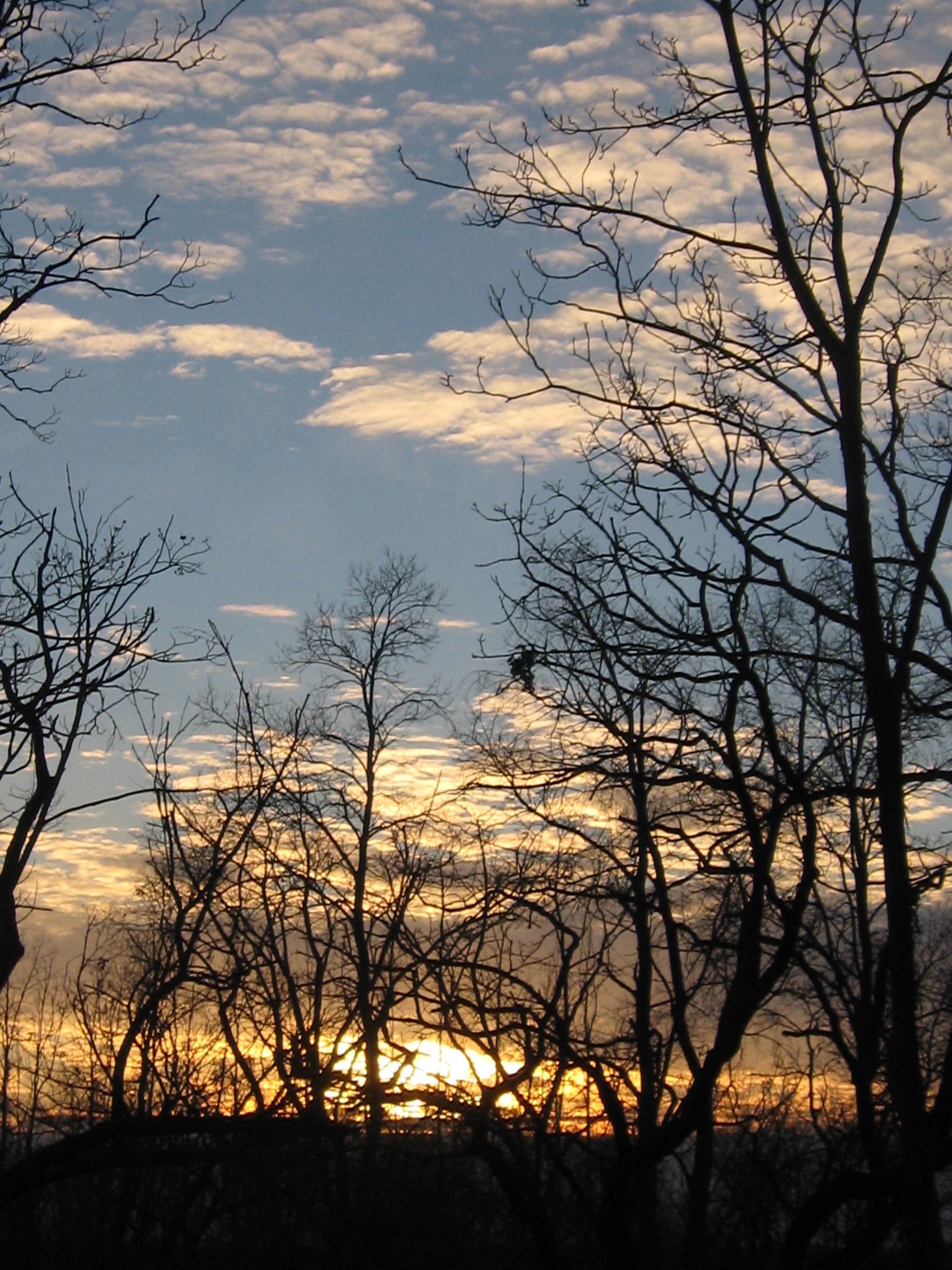
The sun set early behind a solid bank of clouds and I took these pictures on the high ground at the South end of the trail that we recently cut and burned.
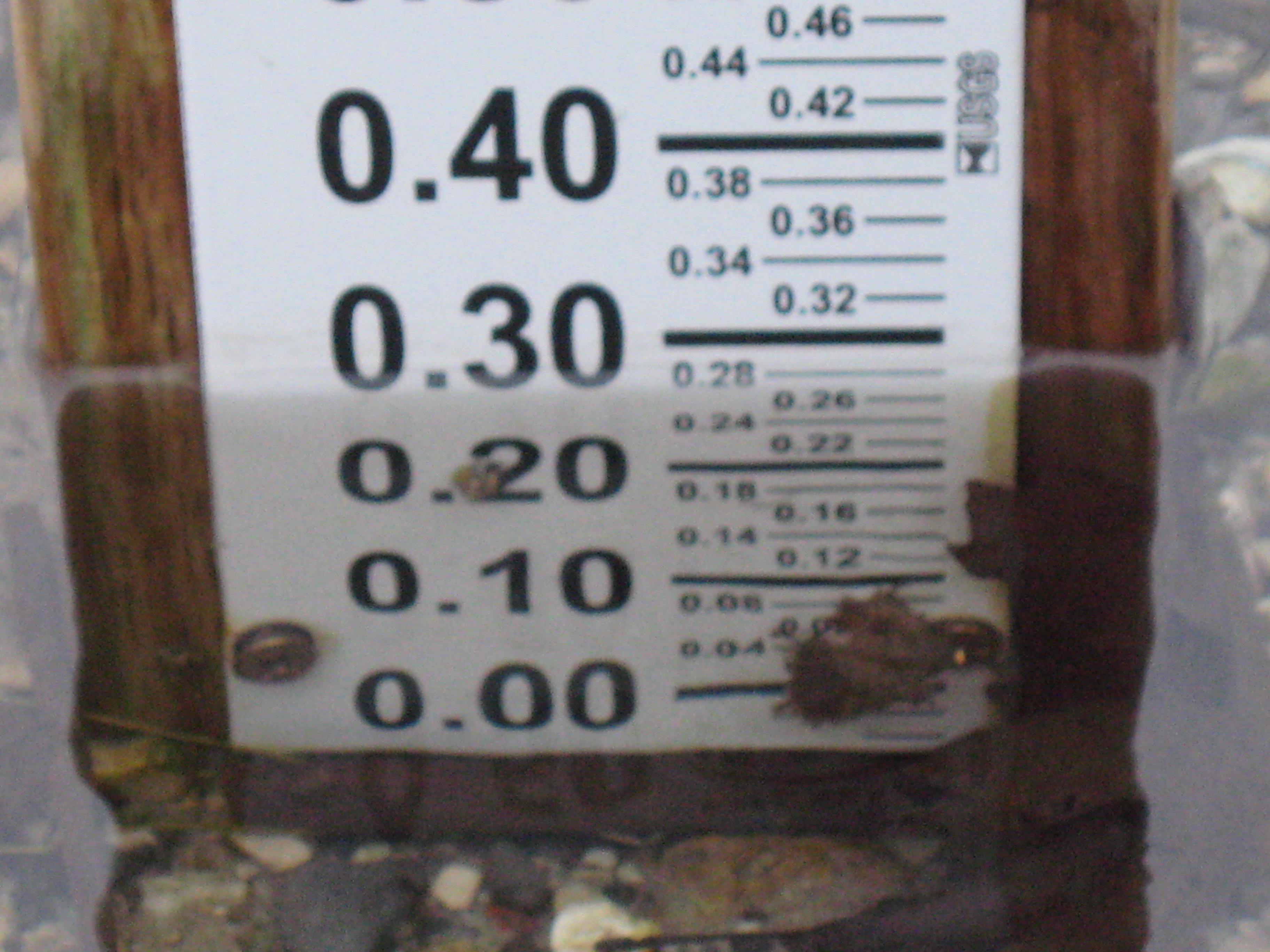
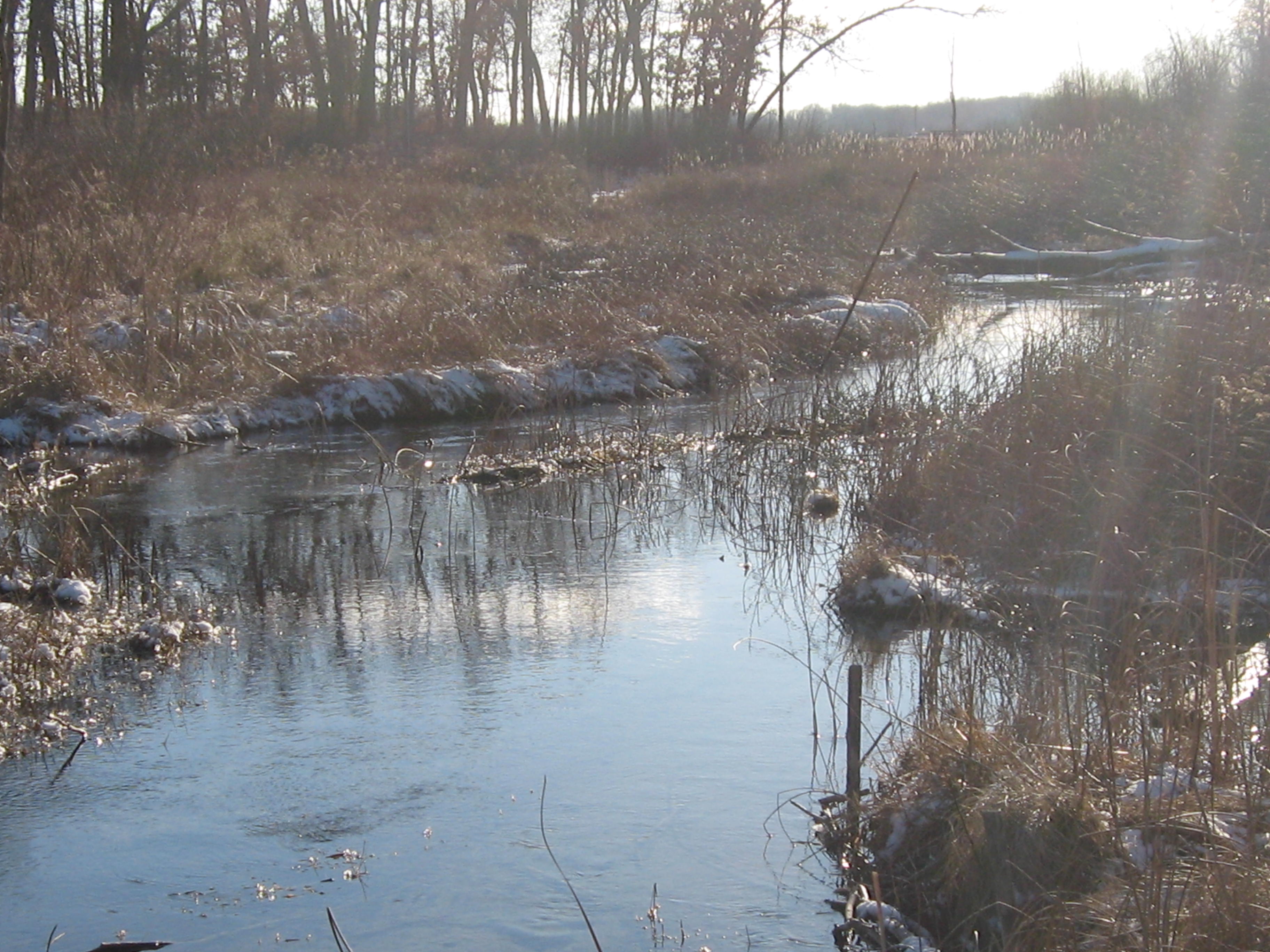
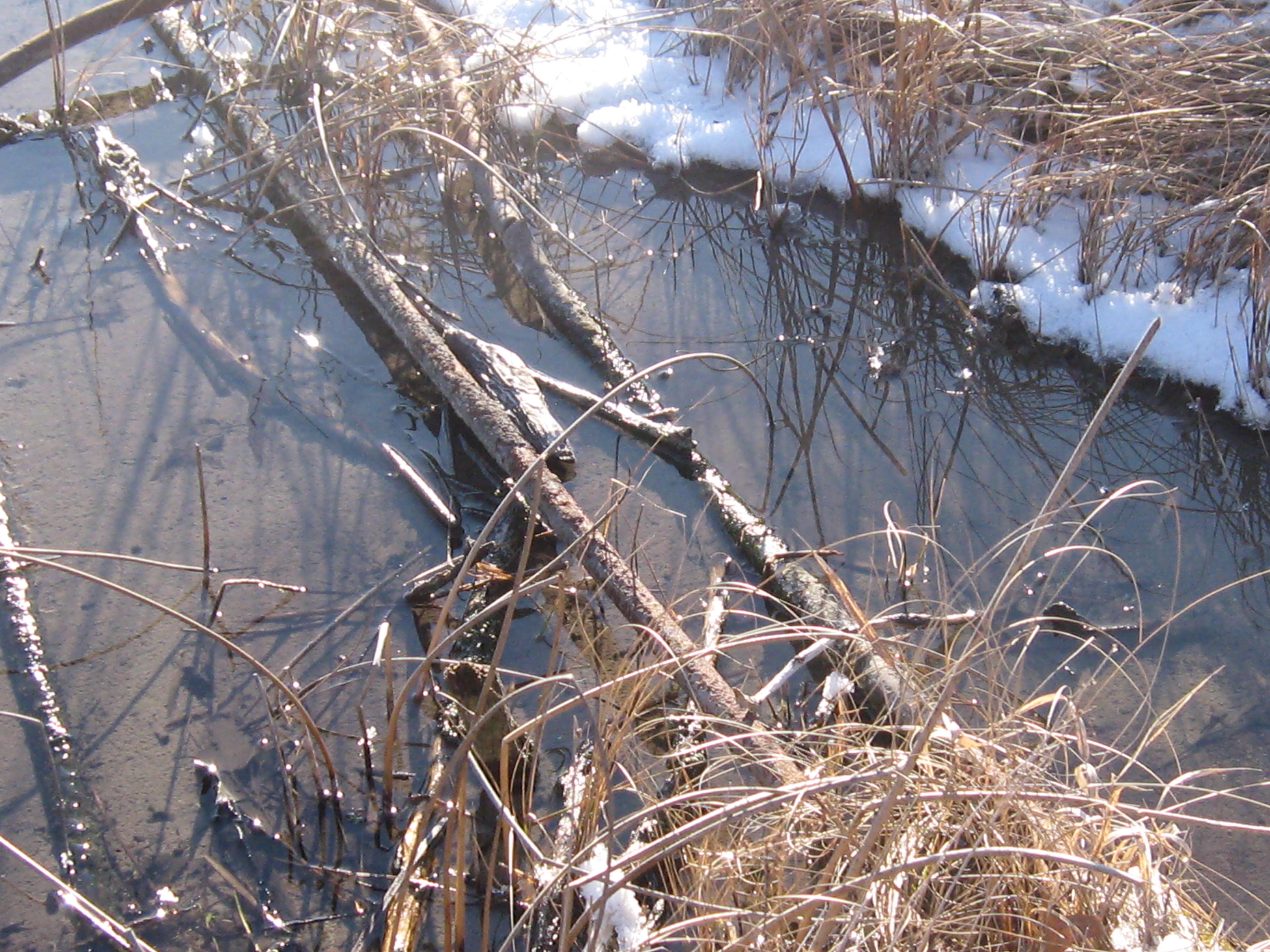
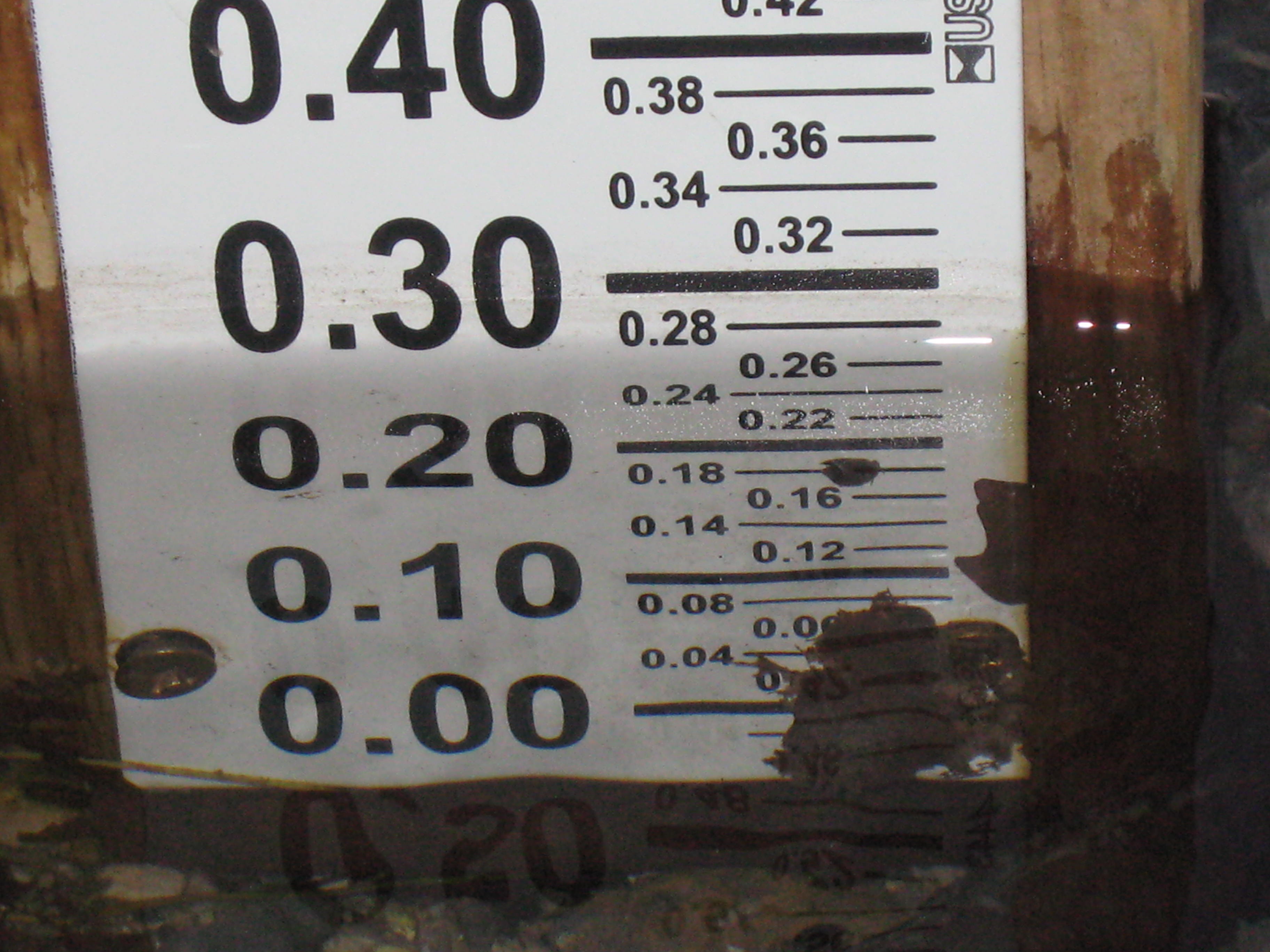
The water level is holding steady but it looks like there is some dirt, or possibly, damage at the base of the measuring stick. We’ll have to take a closer look next time.


















































 Scuppernong Springs Nature Trail