What is truth? Mark Passio says it is: “That which is; that which has actually undergone the actuality of occurring.” To know and understand the truth and communicate it with others is one definition of The Great Work. I have benefited tremendously in my personal quest to know the truth from studying the work of Mark Passio, at What On Earth Is Happening, and Richard Grove, at Tragedy and Hope and the Peace Revolution Podcast. Mark introduced me to the principles of Natural Law and explained the true difference between right and wrong. Richard reintroduced me to philosophy, the love of wisdom, and showed me how to apply critical thinking in my daily life. So I was very excited to consume the fruits of their collaboration via this wide ranging discussion, where they intersect their respective life’s work and boil it down to the essence: The Great Work. Hear them out, you won’t be disappointed.
Meanwhile, last Saturday, back at The Springs, I continued to pursue my modest version of The Great Work pulling and slashing weeds on the Sand Prairie. It was a gorgeous, sunny day, and I think my immune system is getting the upper hand on borrelia burgdorferi.
Melanie and Tara arrived just as I was starting to pull spotted knapweed.
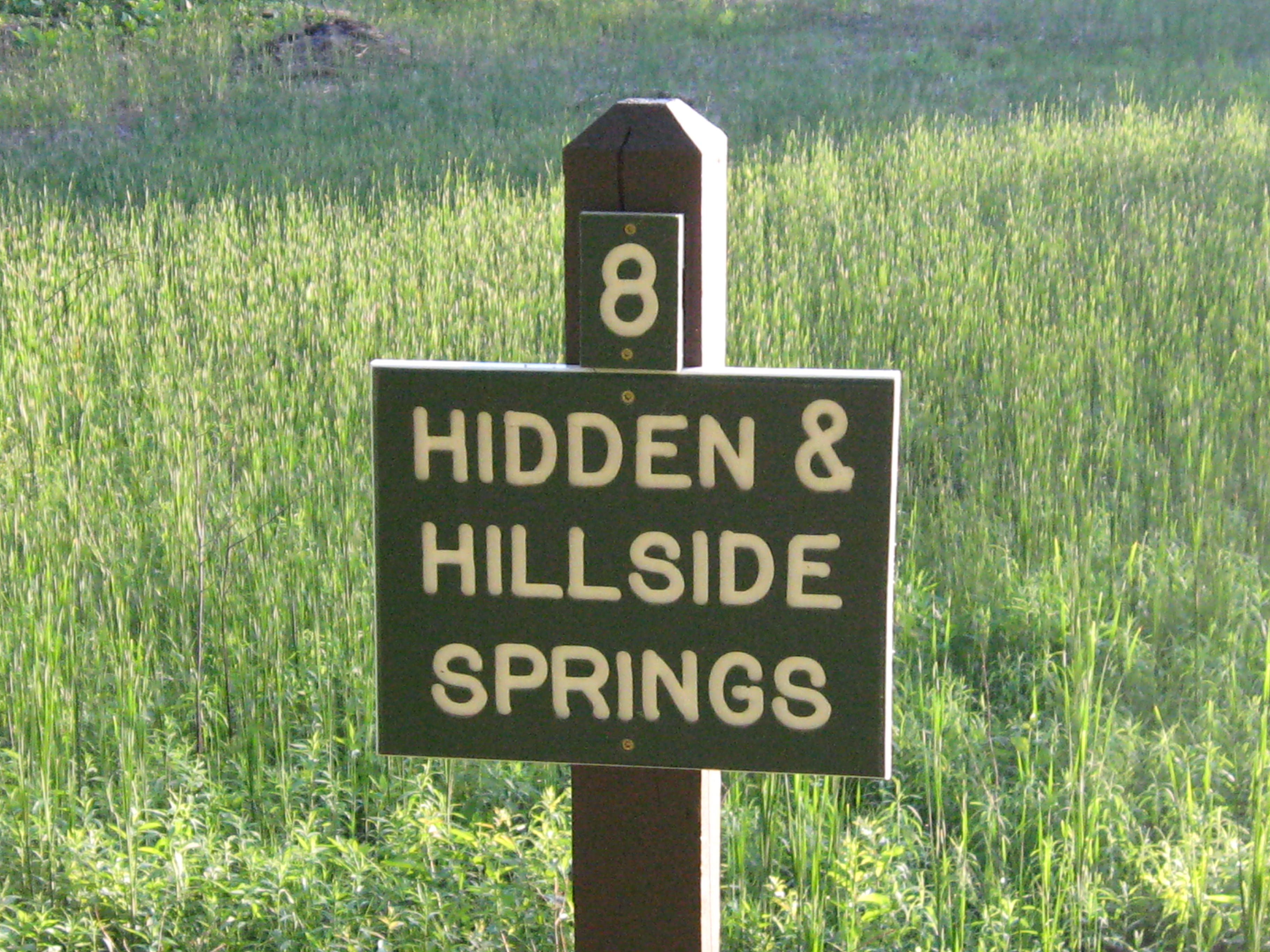
They were joined shortly thereafter by Jim, who was carrying a new sign post for the Indian Spring. I was so busy the rest of the day, I never got a chance to checkout the final touches they made to the new set of trail signs.
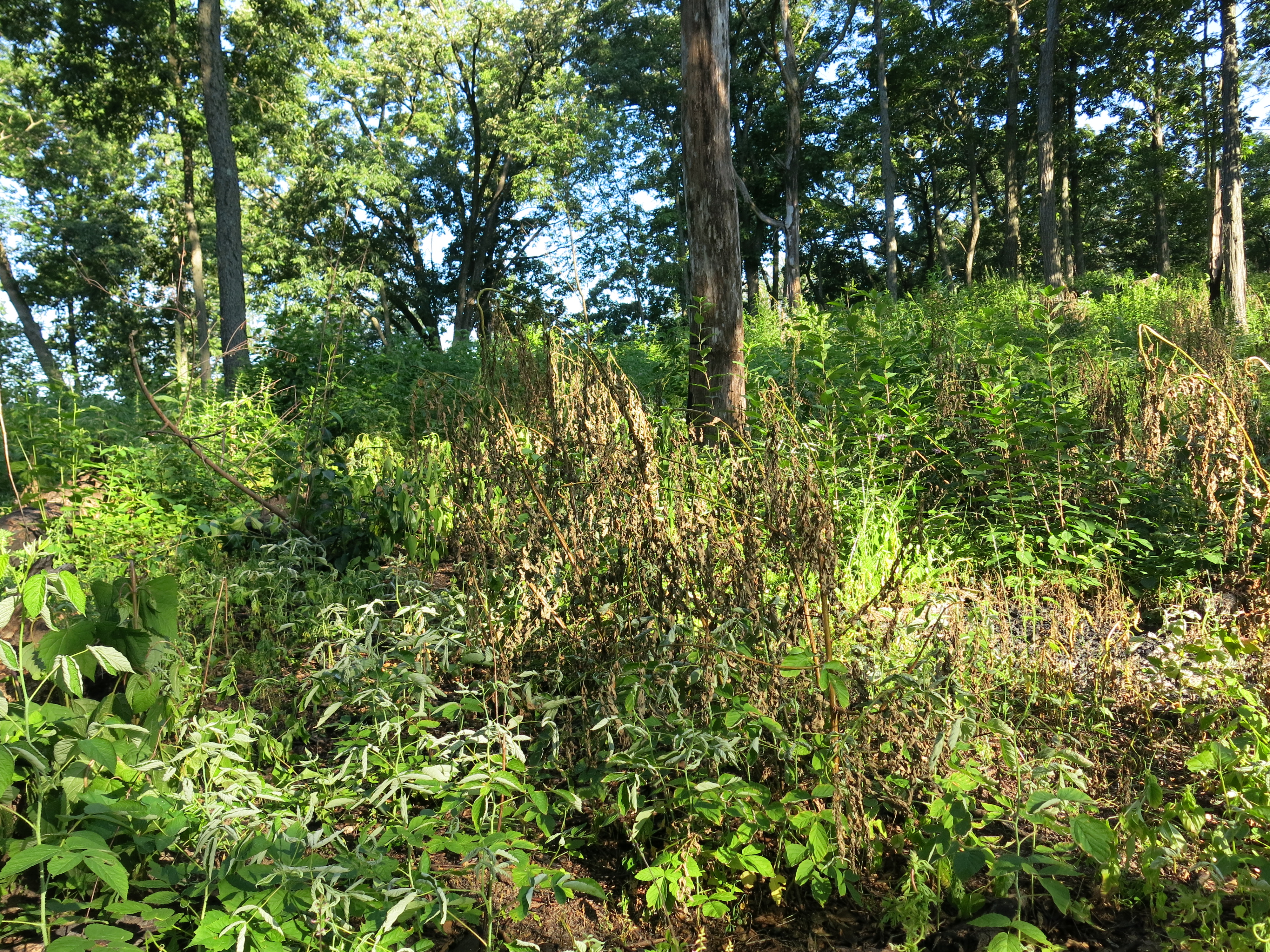
I pulled spotted knapweed for a couple hours and moved on to the purple nightshade that is overrunning the hillside on the south end of the loop trail. The DNR 2-track access road that merges with the trail there was getting pretty overgrown, so I “mowed” it with the brush cutter and then spent the afternoon cutting weeds on the west edge of the sand prairie.
I’m trying to keep a huge batch of weed seeds from maturing and being blown up onto the sand prairie.
I’m still thinking about the fate of the Scuppernong River where it crosses Hwy 106, a bit north and west of Palmyra, and I went there to get a water sample for Doctor’s Data Inc. to perform a heavy metals analysis on. I already have the results from the Scuppernong Spring and there are no detectable traces of any heavy metals at the source of the Scuppernong River.
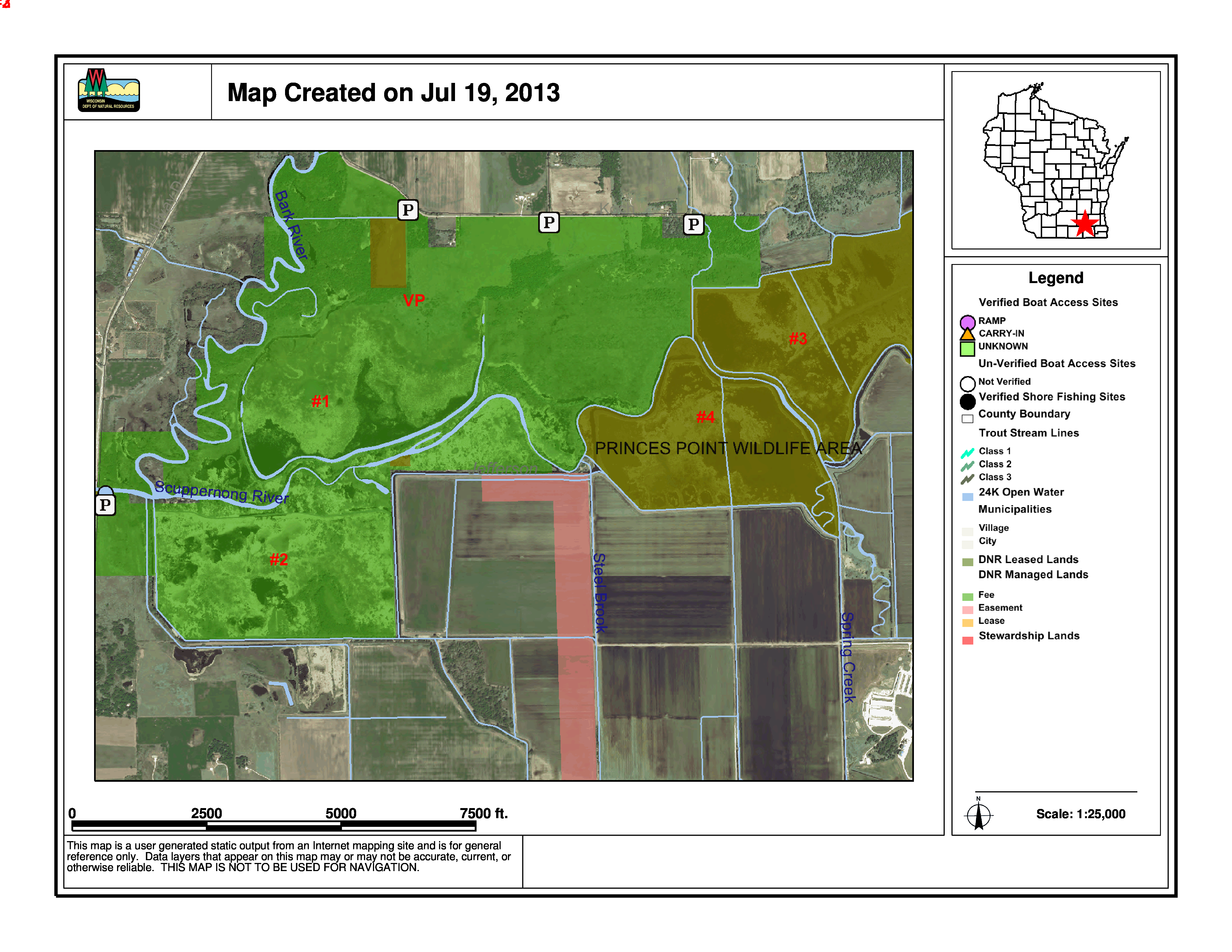
I parked at the boat launch at the Prince’s Point Wildlife Area, put my chest waders on, and walked upstream crossing the first two drainage ditches from Steel Brook, and continuing past the confluence of the Bark River, which was very hard to identify from the south bank of the Scuppernong.
I’m riding a lymes roller coaster physically, mentally and emotionally frequently checking in with myself; how do I feel? The doxycycline antibiotic helped with the more acute symptoms and now I’m working on next steps with Dr. Norm Schwartz and we’re seeking consultation from Dr. Robert Waters as well (see this interesting story about Dr. Waters for more on lymes and the insurance industry). There is nothing like a day at The Springs to help me forget about it.
I was reminded yesterday of the wonderful opportunity we all have to nurture the land and, more specifically, how lucky I am to be realizing my vision for the landscape at the Scuppernong Springs Nature Preserve and Trail. This article from Wisconsin Trails includes a wonderful quote from John Muir that has inspired me ever since I first read it on a sign at the Hartland Marsh Ice Age Wetland trail head.
A year before his death, John published “The Story of My Boyhood and Youth,” in which he wrote extensively of his time at the farm and his adventures there:
“Our beautiful lake, named Fountain Lake by father, but Muir’s Lake by the neighbors, is one of the many small glacier lakes that adorn the Wisconsin landscapes. It is fed by twenty or thirty meadow springs about half a mile long, half as wide, and surrounded by low finely-modeled hills dotted with oak and hickory, and meadows full of grasses and sedges and many beautiful orchids and ferns. First there is a zone of green, shining rushes, and just beyond the rushes a zone of white and orange water-lilies fifty or sixty feet wide forming a magnificent border. On bright days, when the lake was rippled by a breeze, the lilies and sun-spangles danced together in radiant beauty, and it became difficult to discriminate between them.”
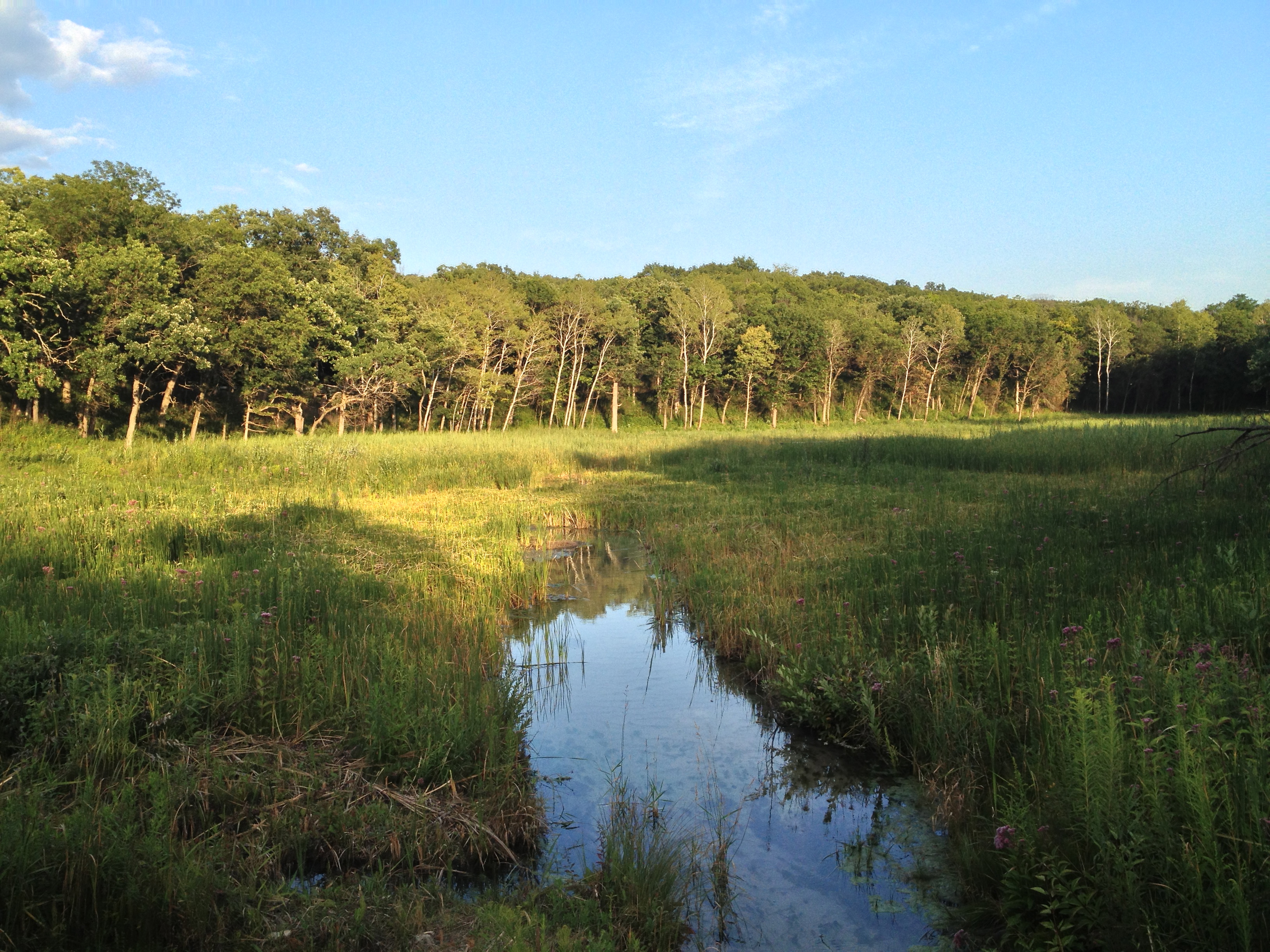
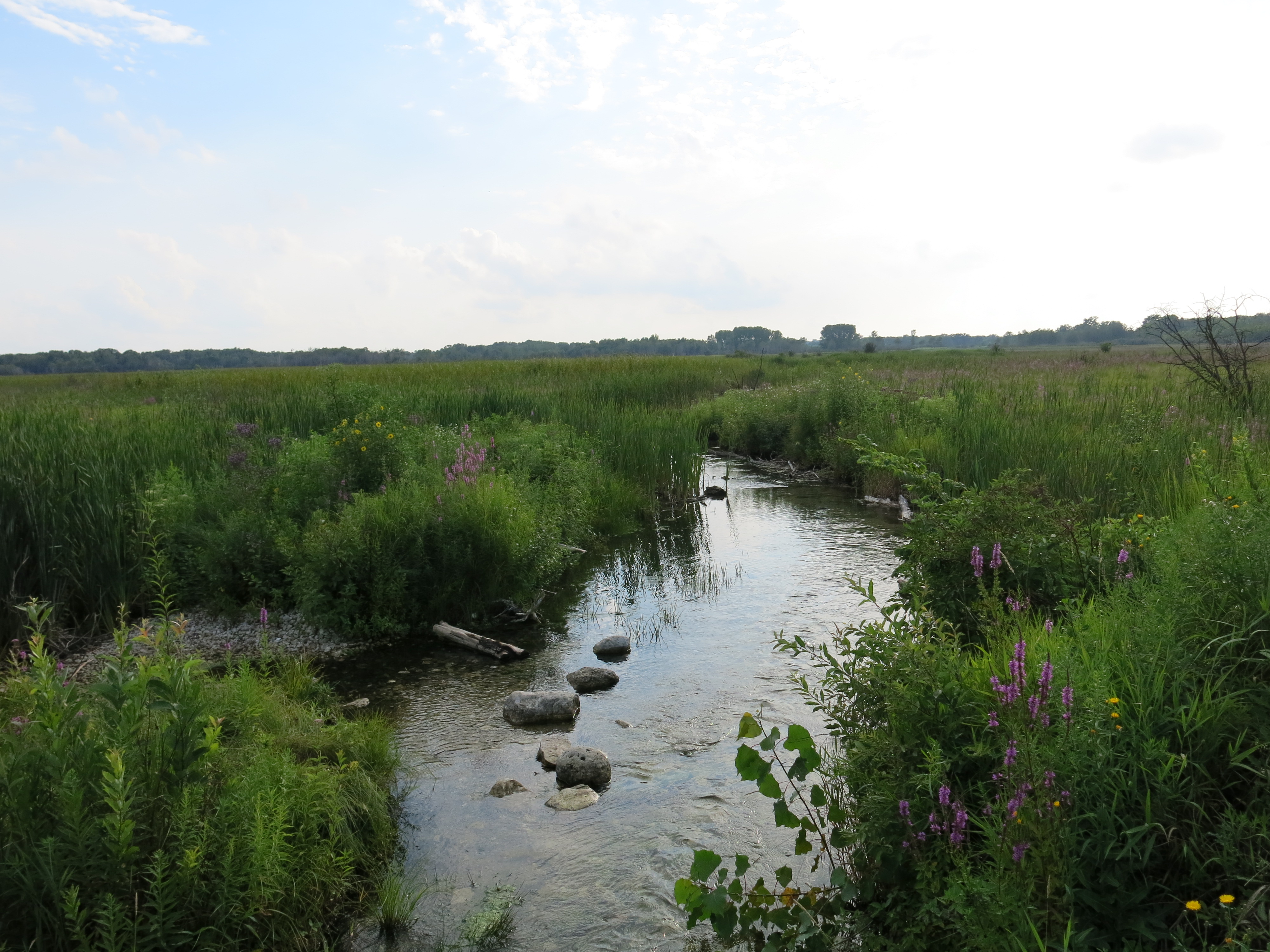
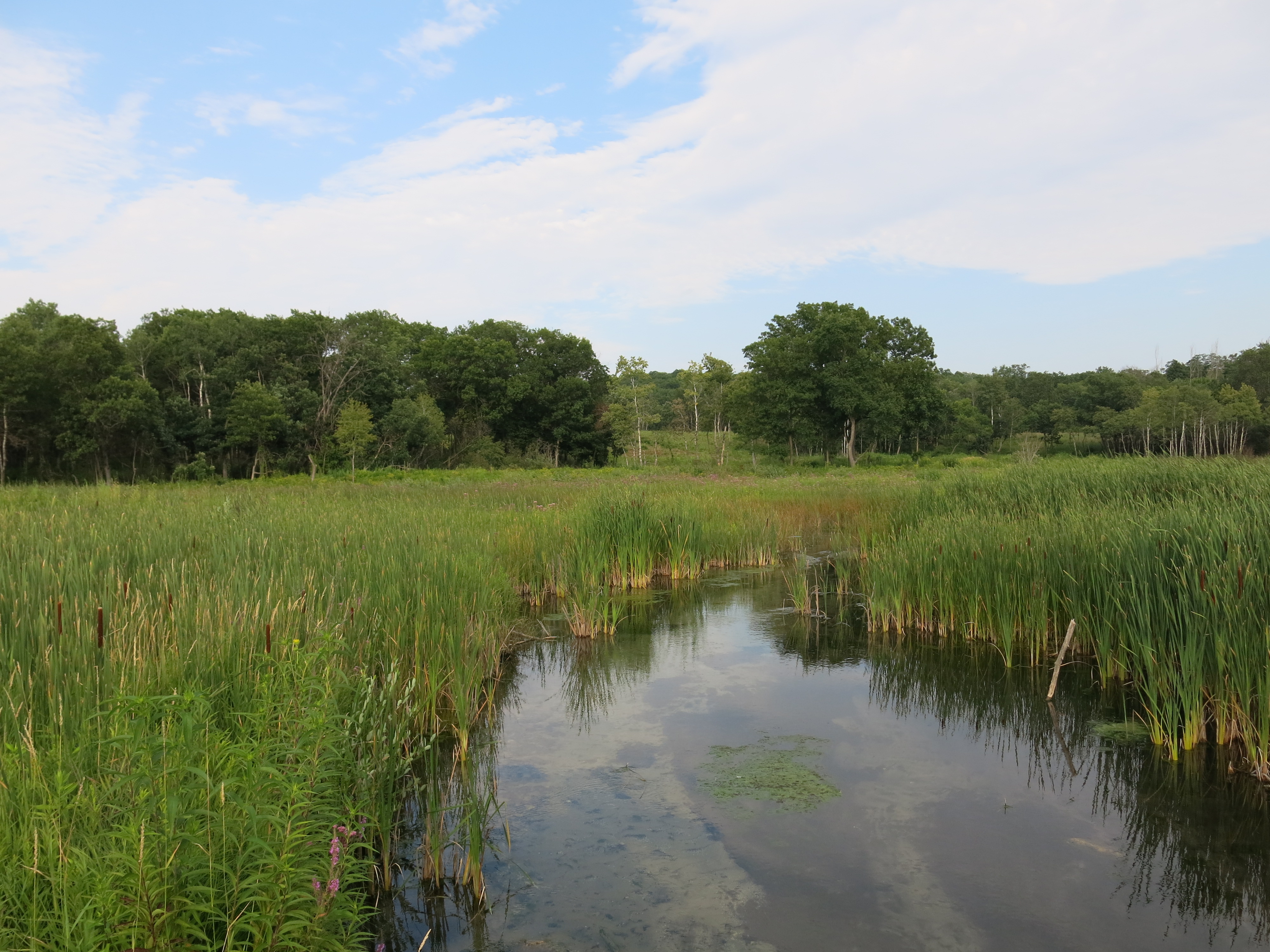
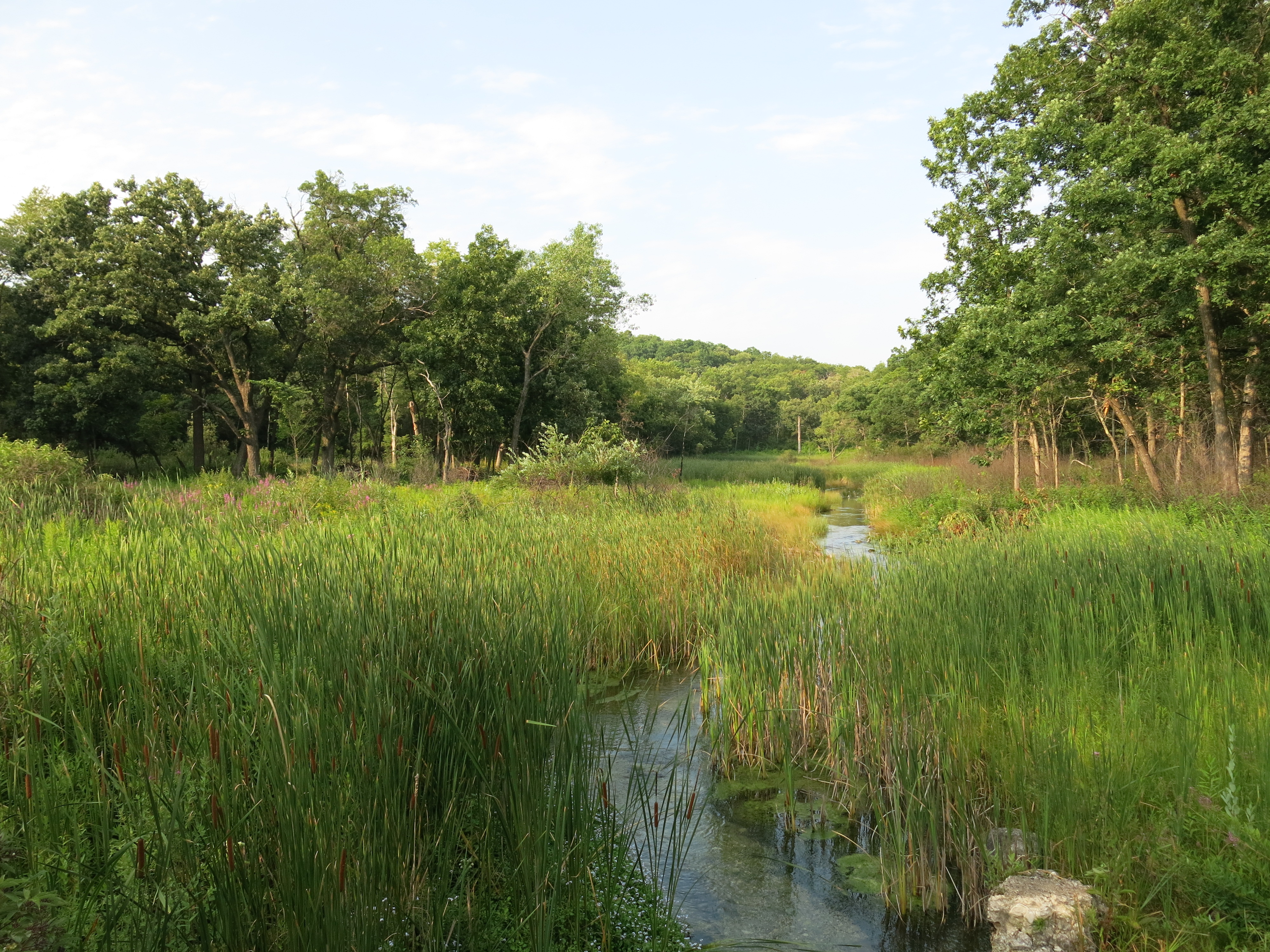
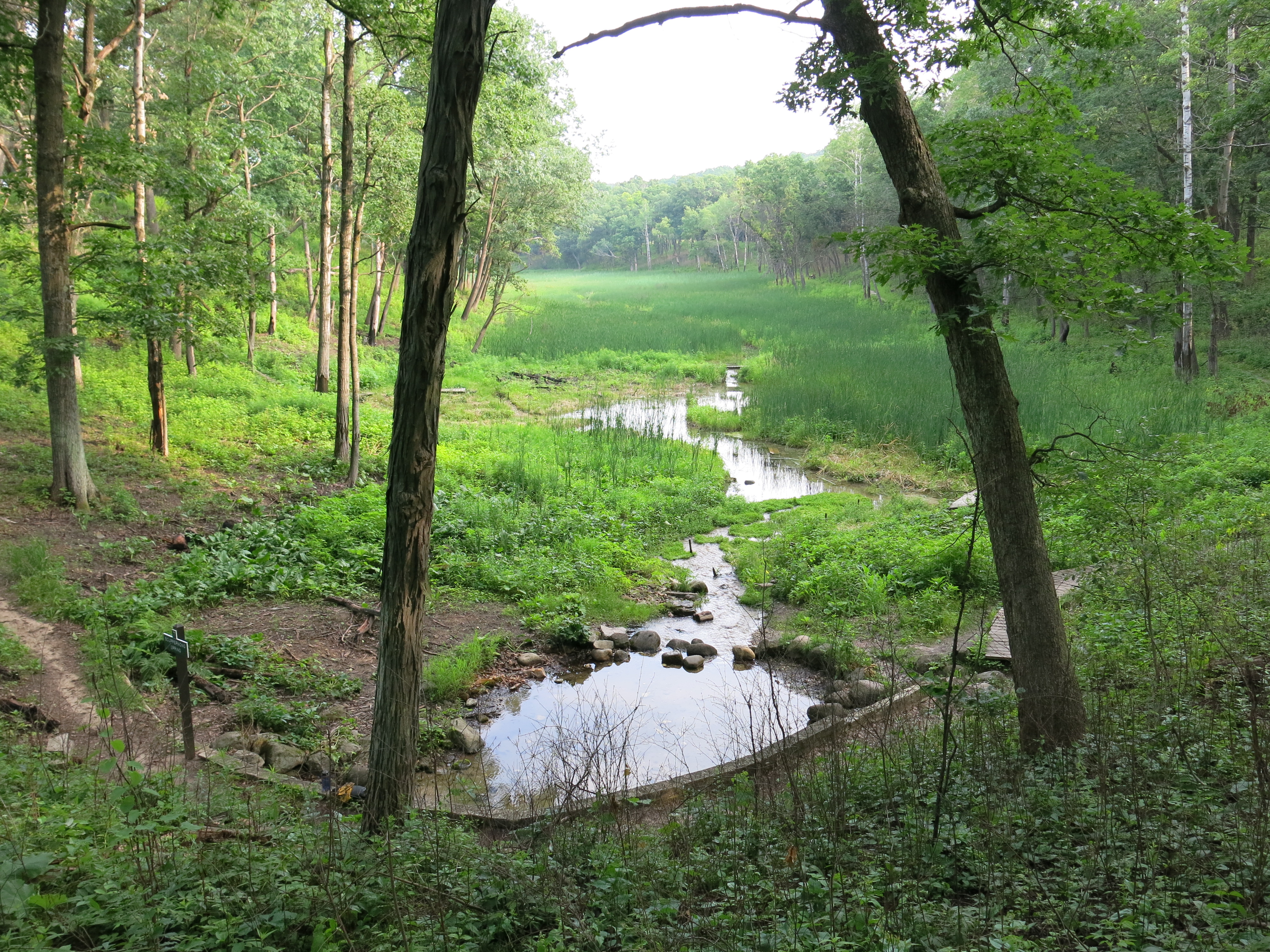
The valley along the Scuppernong River headwaters is transitioning from a brush encircled, phragmities and cattail filled marsh, to an open, wet meadow, alive with grasses, rushes, sedges and flowers of all kinds. Thanks to Lindsay Knudsvig for the many volunteer hours he contributed last year to making this happen.
I was at it again yesterday pulling spotted knapweed on the sand prairie and purple nightshade on the south end of the loop trail and using my hedge cutter to lop off the flowering tops of the cattails and phragmites. In most cases the seed heads were just above the height of the flowers emerging from below so I was able to leave the later undisturbed. Hopefully, I have my phenology right, and the phragmites and catails will not set seed again before the winter.
The Sand Prairie was lovely as I pulled spotted knapweed (pics and video courtesy of my iphone since I forgot the camera).
I started with the hedge cutter at the Scuppernong Spring, at the south end of the valley, and worked my way north on both sides of the river up to the spur trail that leads to the Hidden Spring, and then focused on the east side of the valley. I covered a lot more ground than I thought possible and that is really encouraging.
Last Saturday’s effort on the north end.
And yesterday’s work on the south end.
Its been a bumper year for mosquitoes at The Springs, in contrast to here in Milwaukee, where I don’t think I’ve seen more than a couple mosquitoes all season. It was cool enough to wear a pumori and I tucked the bug net inside, keeping hands pocketed as I watched another day ending.
Its finally dawned on me; Go Organic! Stop using poison on the land if you don’t want to poison the land! It’s obvious to me now after reading Atina Diffley’s award winning memoir Turn Here Sweet Corn. The organic approach is the embodiment of the Hippocratic Oath; do no harm. Atina’s love story with the land opened my eyes to the potential of applying organic farming techniques to our work at the Scuppernong Springs Nature Preserve. Atina and her husband, Martin Diffley, (Organic Farming Works LLC) are pioneers in the organic farming movement in Minnesota, their efforts culminating in a “Kale versus Koch, Soil versus Oil” pipeline smackdown where they stood up to the Minnesota Pipe Line Company, which is operated by the Koch Pipeline Company, a subsidiary of Koch Industries, and prevented a pipeline corridor from being routed right through their Gardens of Eagan Organic Farm. They saved their land AND Atina contributed to the preservation of other organic farms via the creation of the Organic Appendix to the Agricultural Impact Mitigation Plan that all pipeline and transmission line companies must comply with if they succeed in routing their lines across organic farmland.
Atina explains that it’s all about relationships: people to the land, plants to the soil and people meeting each others needs in community. I’m inspired to only employ non-toxic ways to nurture The Springs back to health a la organic farming techniques; I want the Scuppernong Springs Nature Trail to be “Certified Organic”. Atina and Martin helped me realize the importance of building and protecting the soil and, after reviewing the research on the residual effects of Milestone and Transline and their potential to leech into groundwater, I concluded that I could no longer use them in any context at The Springs. Jason Dare began turning me in this direction and now I’m fully committed. The only exception to the ban on poison that I will make is to use Tahoe/Triclopyr on cut buckthorn stumps (painting, not spraying), and hopefully, we’ll find a natural alternative to that as well.
I claimed to want to garden the sand prairie. What was I thinking? Would you use poison in your garden? In the past two years I had acquired no less than 7 different poisons: Aquaneat/glyphosate, Habitat/imazapyr, Bullzeye/glyphosate, Milestone/aminopryalid, Transline/clopyralid, Tordon/picloram and Tahoe/triclopyr, all of which I have returned to the DNR except the Tahoe stump killer. Martin Diffley summed it up pretty well: “If we don’t change direction, we’re going to end up where we’ve been going.”, and my approach was slowly poisoning The Springs. One story from Turn Here Sweet Corn that really impressed me was how they handled a 9 acre field of quack grass. Despite being pressed by demand for their produce to get this land into production, Martin recommended they wait for just the right combination of dry and hot weather. When it finally arrived, they used a 930 Case tractor fitted with a Vibra Shank field digger to “rake” the weeds, exposing the roots to the blazing sun, repeating the process over 6 weeks until the quack quit. That got me thinking about the phragmites and cattails in the valley along the Scuppernong River headwaters; maybe we could do the same thing there! Like Einstein said, “We can’t solve problems by using the same kind of thinking we used when we created them.”, and now that my organic consciousness has been awakened, I’m seeing new, non-toxic, solutions.
Yesterday, Pati and I met with DNR Trail Boss Don Dane to walk the trails and review our approach to restoring the Scuppernong Springs Nature Preserve, and we we joined by John and Sue Hrobar. I’m prone to excited bursts of non-stop chatter and, true to form, I began by telling Don that I wanted to go organic. He was totally on board with this and promised to help us achieve that goal. The first area we reviewed was the valley along the headwaters of the Scuppernong River that is dominated by phragmites and cattails. I told him Martin’s story and we talked about mowing and raking and Don suggested that, in the short term, I get a hedge cutter and simply cut the seed heads off the phragmites and cattails at a height that will leave the myriad of other plants that have emerged in the “understory” since the burn undisturbed. This will drain the energy from the phragmites and cattails while allowing the native plants to compete and, combined with fire, we hope this will be an effective strategy.
One of my big concerns is all of the buckthorn seedlings and resprouts that have emerged since we cleared the mature buckthorn. I explained this to Jason Dare and he suggested I rely on fire to control them. I talked to Don about this and he is committed to burning the scuppernong every 2-3 years. That was the assurance I needed! In the meantime, Don suggested brush cutting areas where the resprouts are thick to better enable fire to move through. We talked about the north end of the trail, buckthorn alley, and agreed that I should focus on clearing the buckthorn there to help facilitate getting a hot fire through this part of the Nature Preserve; the DNR has never been able to burn this area.
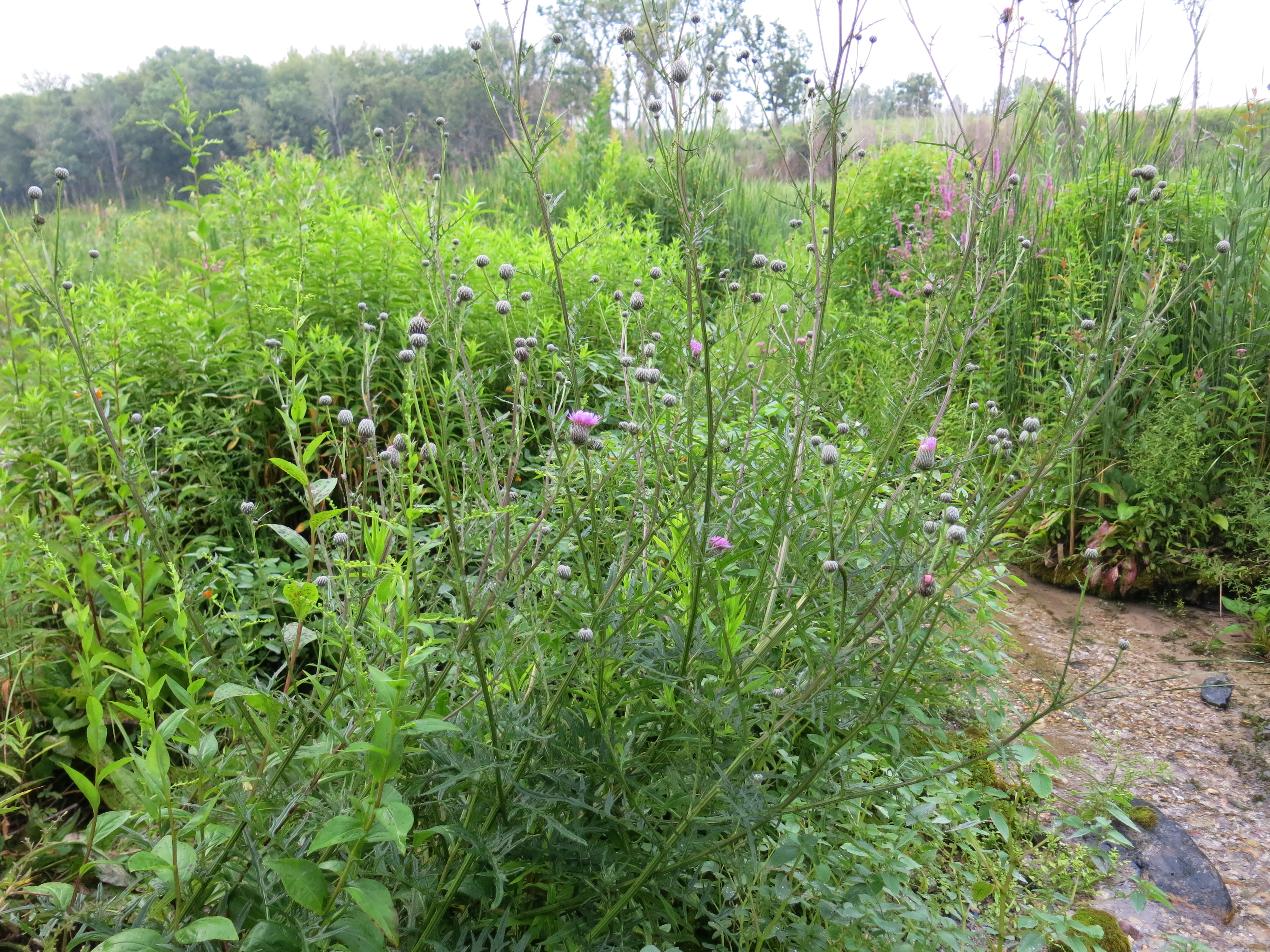
Here is a native swamp thistle Don pointed out by the hatching house springs.
John, Sue and Don at the gaging station bridge. I’m hoping that more volunteers will step forward if they know we going organic.
Pati and I spent the afternoon pulling spotted knapweed on the sand prairie, which Don said they also refer to as a cliff messenger prairie. The purple lovegrass is thriving!
Here is a view of the sand prairie.
I felt totally calm and at peace with my hands in the sandy soil pulling spotted knapweed all afternoon. The rough blazing star and golden rod are set to flower and I’m really glad I took the time to clear the prairie with the brush cutter rather than simply mowing it. Here are a few parting shots from the marl pit and gaging station bridges.
Summer has arrived buzzing with life and heat. Whew, it was hot yesterday as I pulled spotted knapweed at the sand prairie (see white shaded area in the map below). At least there was some breeze and beautiful, billowing, clouds to entertain me and it seemed like a better option than piling brush amongst the mosquitoes and poison ivy in the woods. This is a perfect time to get after knapweed, it’s the nail with its pink head sticking up the highest. The art is to get a diversity of native plants to return and fill the voids left after we pull weeds; this is where knowledgeable volunteers could really make a contribution. I’m envisioning the sand prairie in all its natural glory!
I started the day with a little walk around and saw that the Transline I sprayed on the young black locust trees at the south end of the loop trail was very effective.
There are three projects that would really improve the nature trail: build a bridge over the ditch where the cut-off trail joins the main loop trail at the marl pit factory, rebuild the observation deck at the Indian Spring, and fix the trail junction where the spur to the Indian Spring joins the mail loop trail. Check out this video to see what I mean.
I started the day spraying Milestone on a variety of weeds and buckthorn seedlings on the south end of the loop trail. Then I headed to the sand prairie to pull spotted knapweed.
There is an unofficial, well established, trail that leads down the sand prairie from sign post #6 towards the channel that carries the outflow of the “Indian” Springs. At the bottom of the hill the trail was overgrown with wild raspberry, nettle and other plants, making it nearly impassable, so I brush cut this to complete a little loop trail over to the Indian Spring.
I returned to the Scuppernong Spring to cool off, get out of the sun and meditate and found a team of engineers hard at work creating a dam to hold back the flow. They succeeded in raising the water level 3-4″ and I couldn’t resist taking a dip! One of those righteous dudes left an excellent “Alaska Denali Park” cap behind and can claim it by contacting me.
“Rain drops keep fallin’ on my head…” I’ve been feeling a bit like “the guy whose feet are too big for his bed”. Per B.J. Thomas’ example, “… I just did me some talkin’ to the sun” yesterday, pulling weeds all day on the sand prairie, site of the Potawatomi, Ho-Chunk and Sauk Native American campgrounds, and that snapped me out of it. I got that “peaceful, easy feeling” that comes when you know you’re in the right place, at the right time, doing the right thing.
I’m investigating whether or not I might have gotten infected with borrelia burgdorferi (lymes) and taking doxycycline, as a precaution, while I figure out what to do next. I feel pretty good now and I’ve been working at the Hartland Marsh the last two weeks, mowing, brush cutting and meeting with the village administrator, Dave Cox, to help initiate a prescribed burn program. It’s been a few years now since I was focused on the marsh and, with all the rain we’ve been having, the buckthorn and other invasive plants are quickly turning it back into a jungle. Fire inspires hope that my efforts at the marsh will not go to waste. If you haven’t visited the Hartland Marsh yet, put it on your list; it’s uniquely beautiful.
Yesterday, I spent a rejuvenating day at The Springs and I’m going to jump ahead to the highlight of day when I walked down to the old barn site and saw that the DNR Trout Stream Therapists, like elves from middle-earth, had worked some magic to continue healing the river. Well, maybe it was just a lot of planning, deep river knowledge and hard work that produced the excellent results you can see below. This area corresponds to site #3 on the map in the post linked above and it looks like they are queued up to complete site #2 in the near future. Thanks to Ben, “Gos” and their crew for their continued efforts to nurse the river back to health!
I started the day at the Scuppernong Spring getting some water.
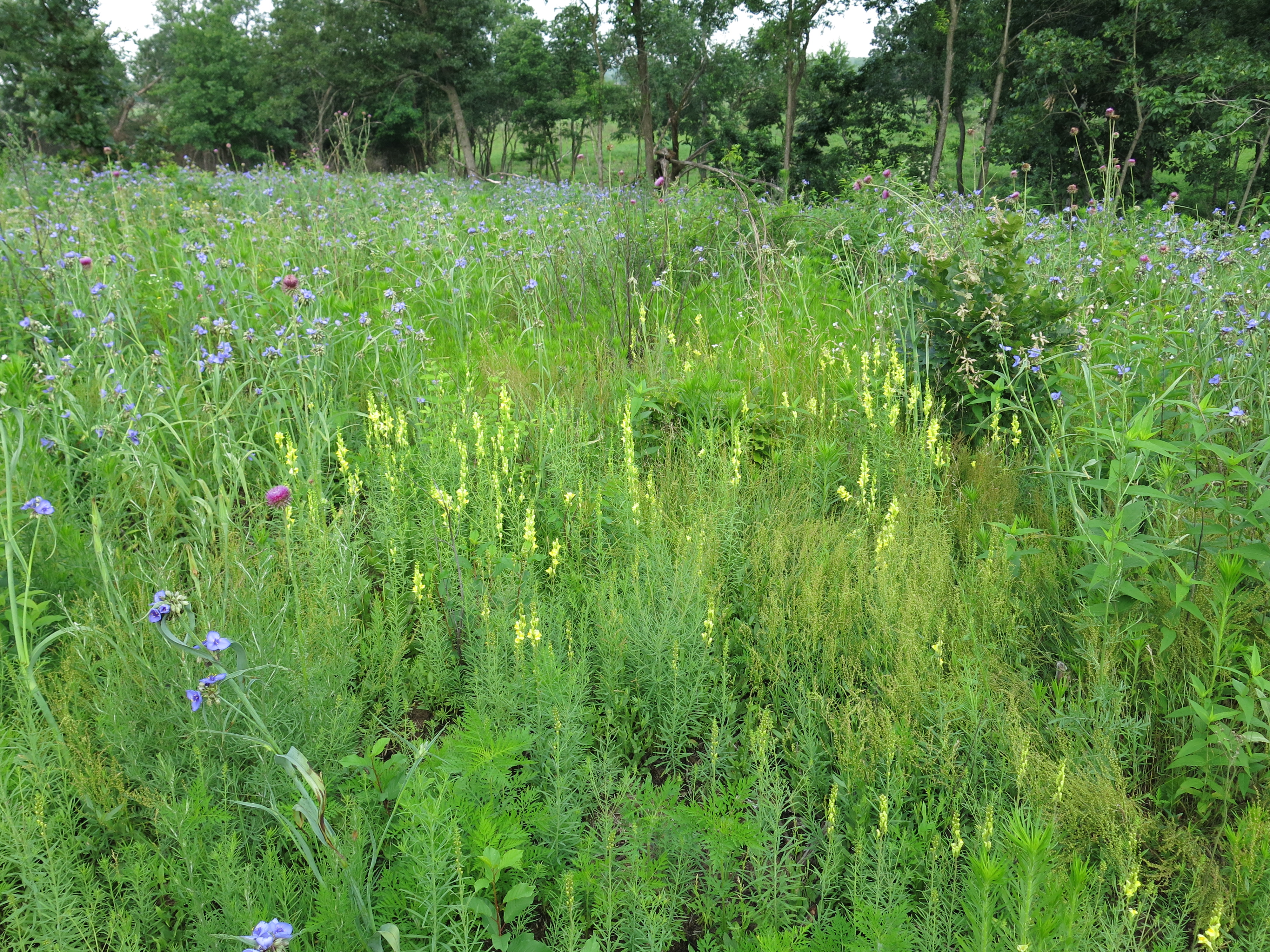
The sand prairie is lush with spiderwort and other native flowers, as well as lots of weeds.
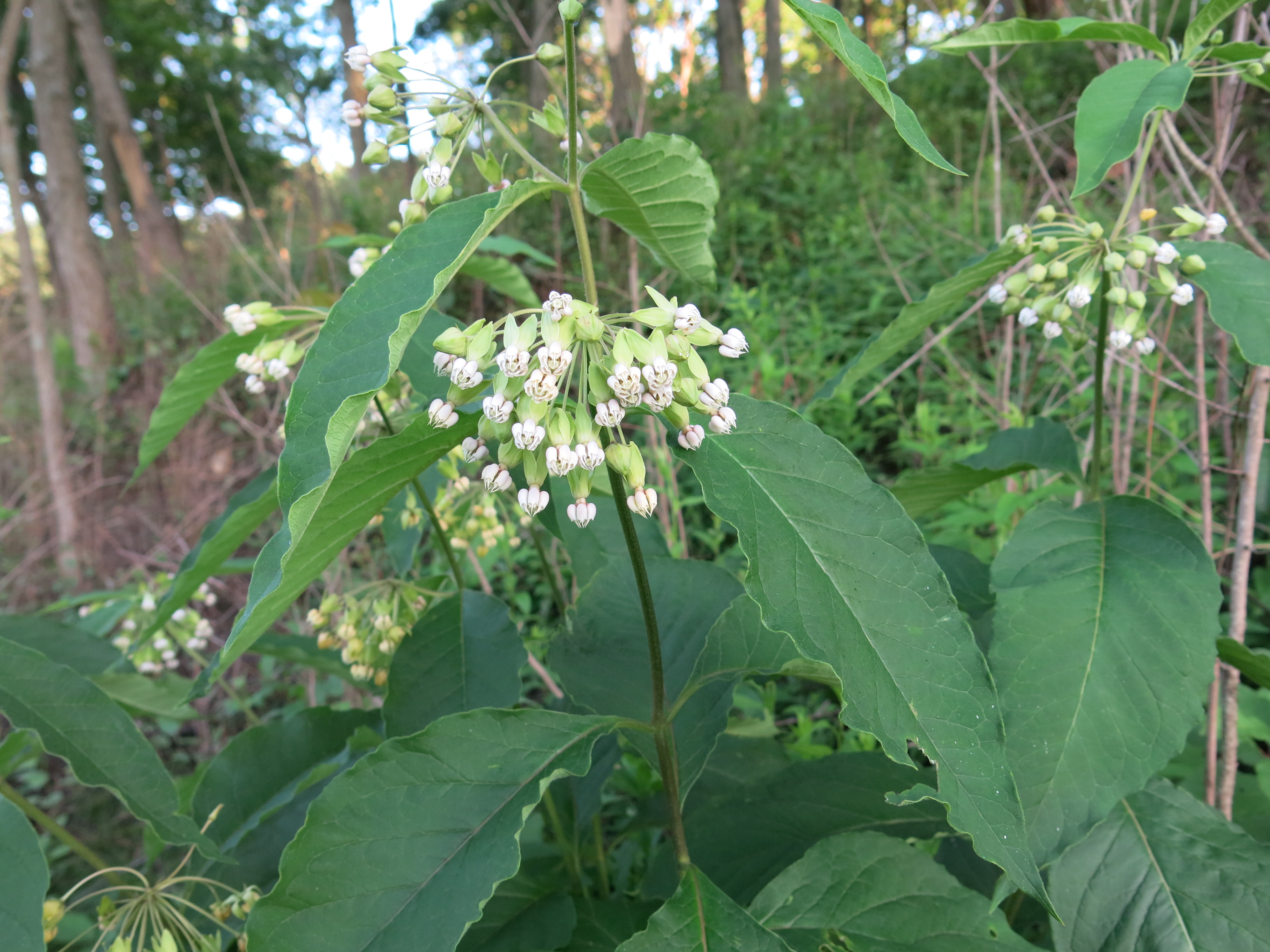
Common Milkweed
Spiderwort
Butter-and-eggs
The Scuppernong Prairie
John Hrobar alerted me that hoary alyssum was spreading like crazy and I decided to spend most of the day pulling this weed, since it was in peak flower, rather than continue piling brush in the woods, as I had planned. So, after spraying Transline on the short, black locust trees that have sprouted on the hillside just west of the scuppernong spring in the morning, I spent the rest of the day pulling hoary alyssum and spotted knapweed. All the rain we’ve been having made the weeds easy to pull and they came up roots-and-all, which was quite edifying. White Campion is another weed that is establishing itself on the sand prairie and I’m trying to figure out what to do with it; maybe nothing this year.
Hoary Alyssum
I returned to the Scuppernong Springs in the late afternoon to reminisce about the wonderful visit I just had there with my Mom, Dad and brother Joe.
Then I wandered down the left bank of the river visiting the hillside and hidden springs.
I’m not sure what this flower is… looks a bit like Indian Hemp.
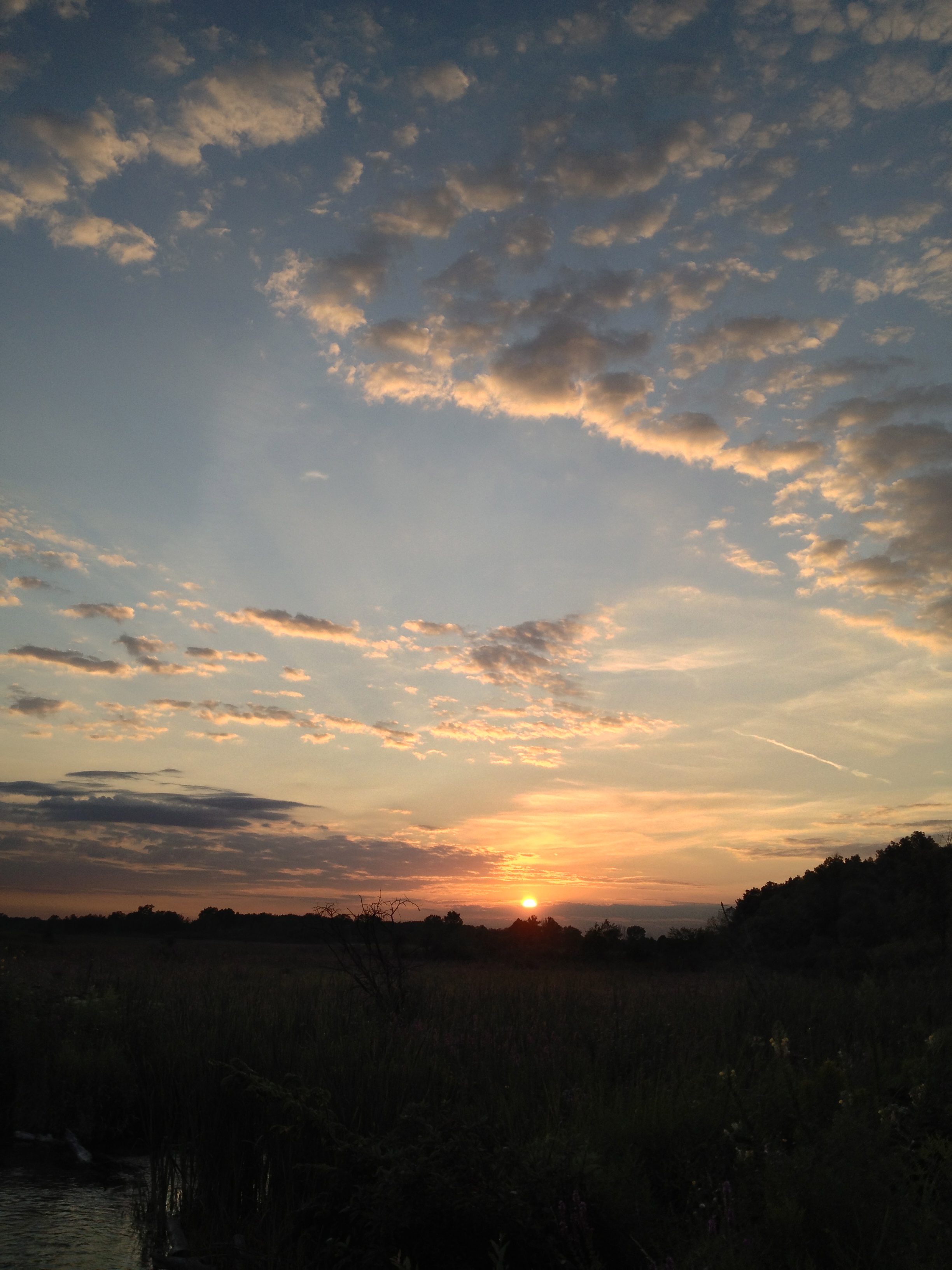
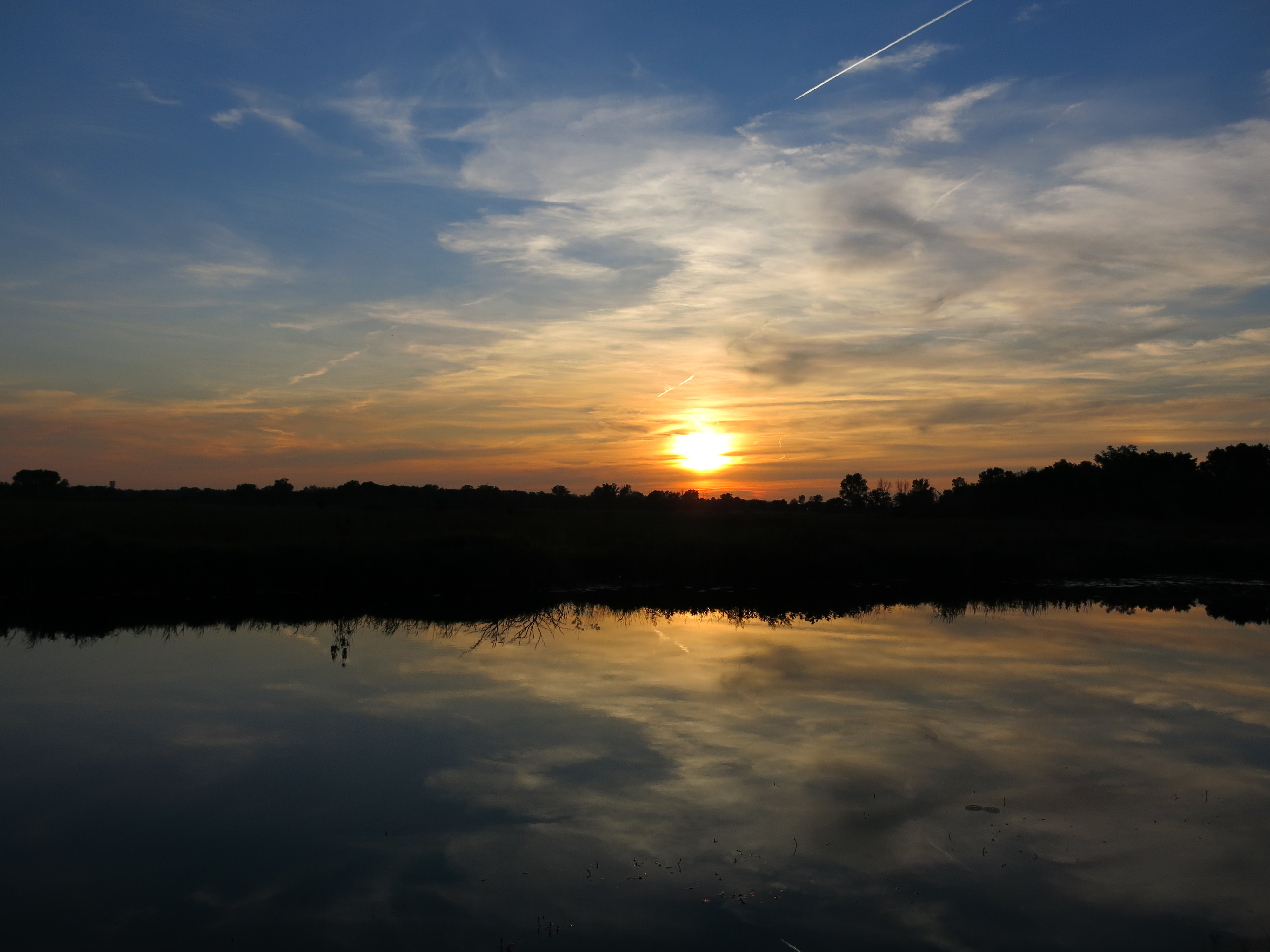
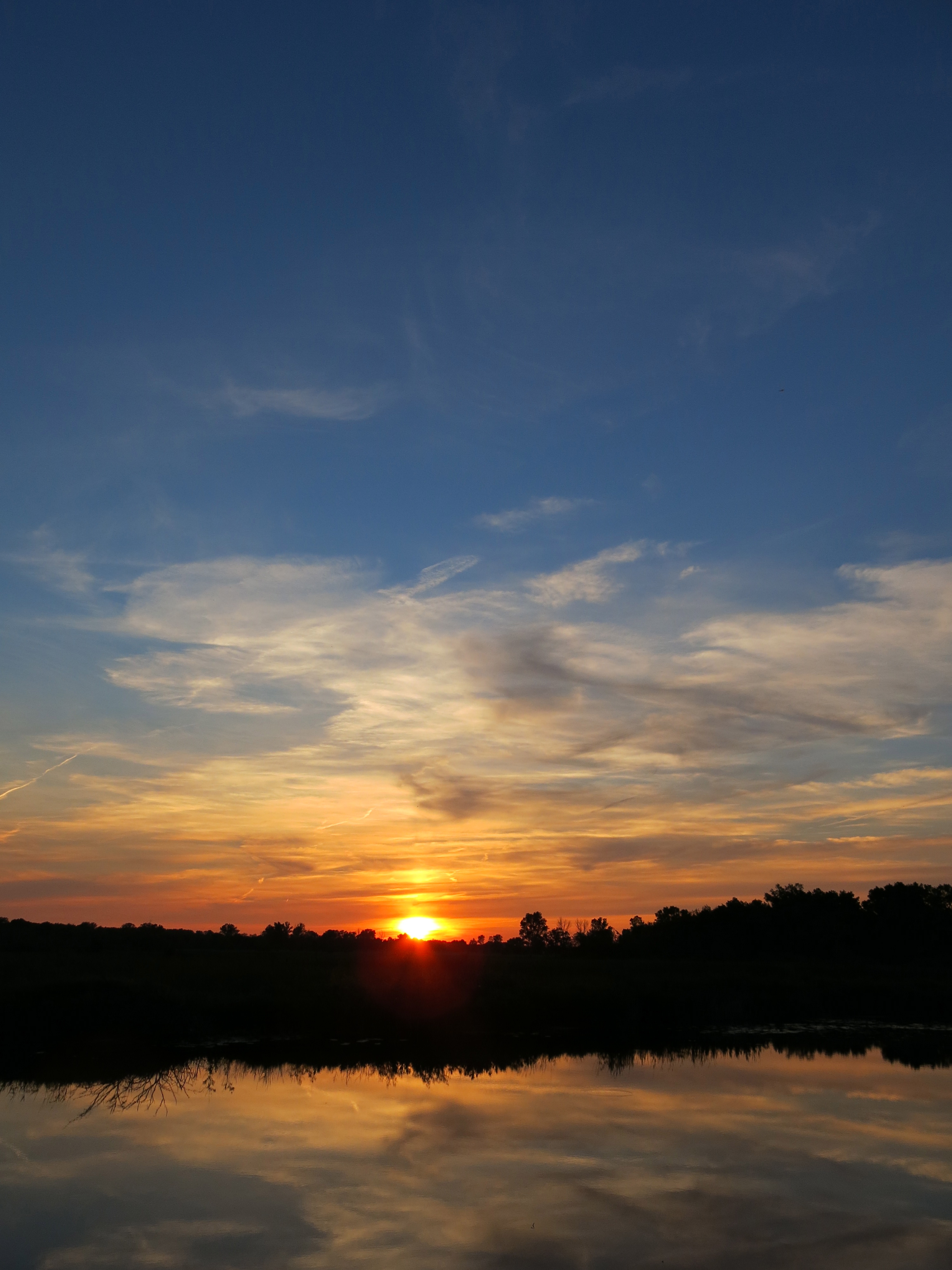
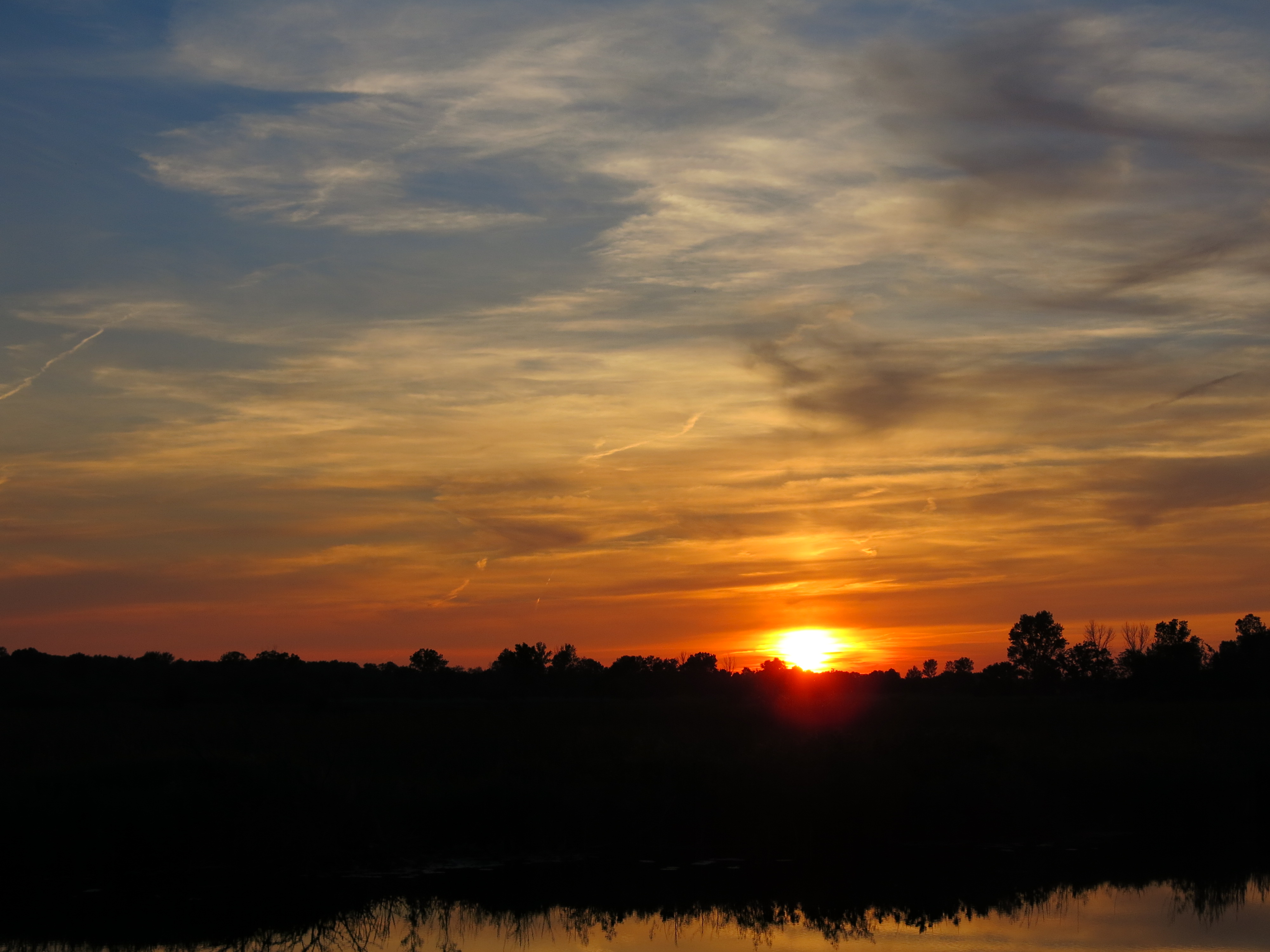
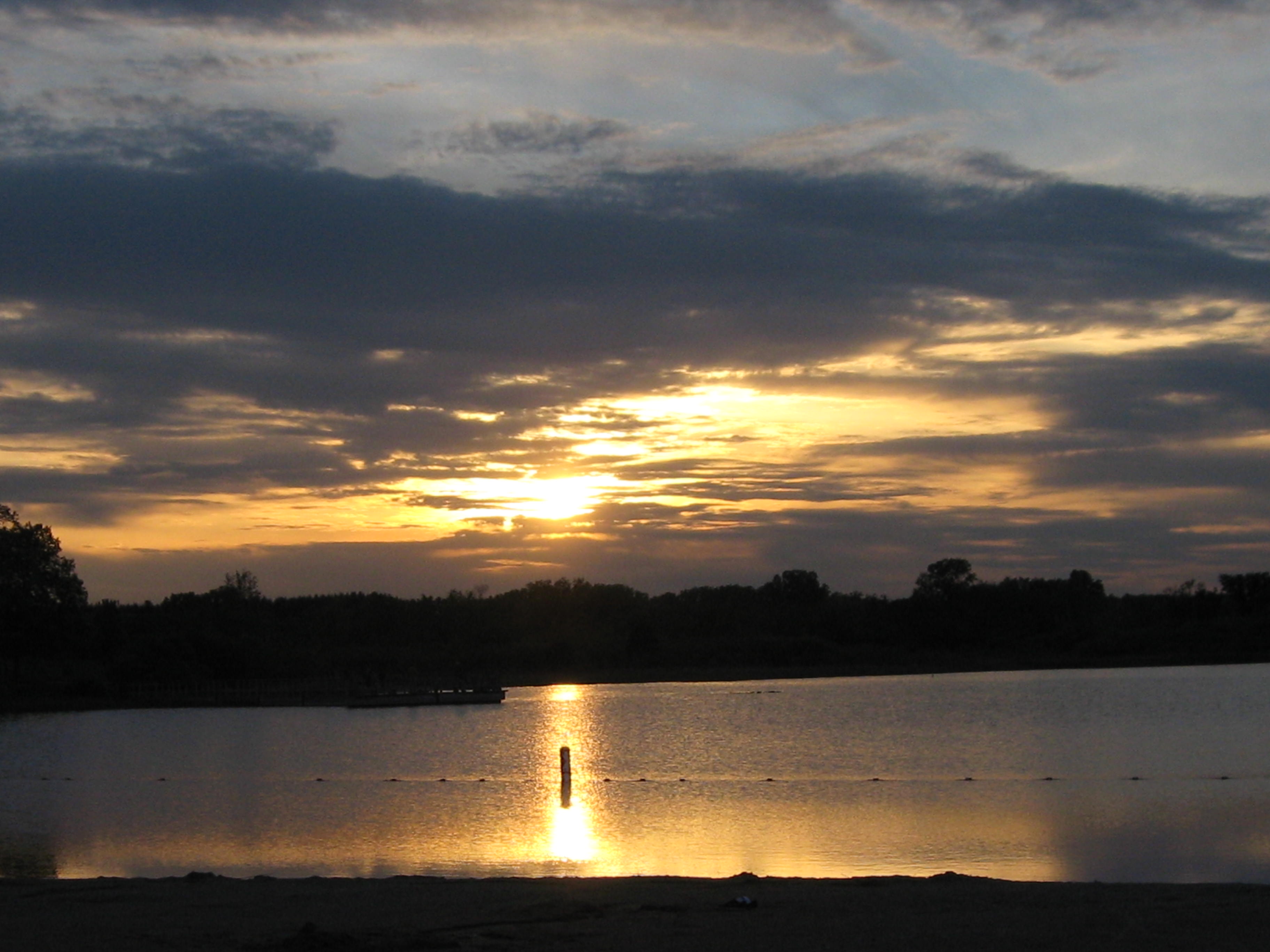
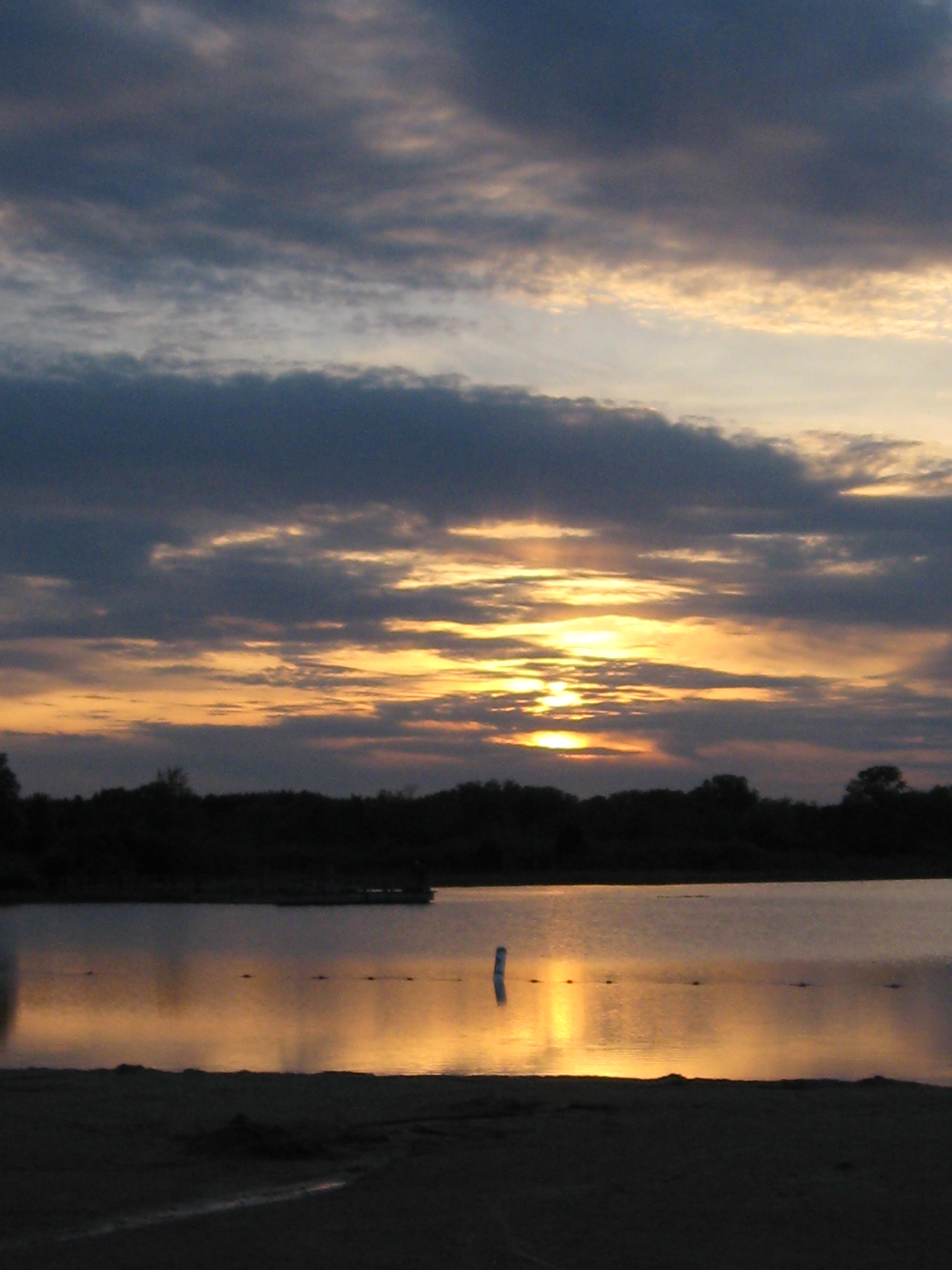
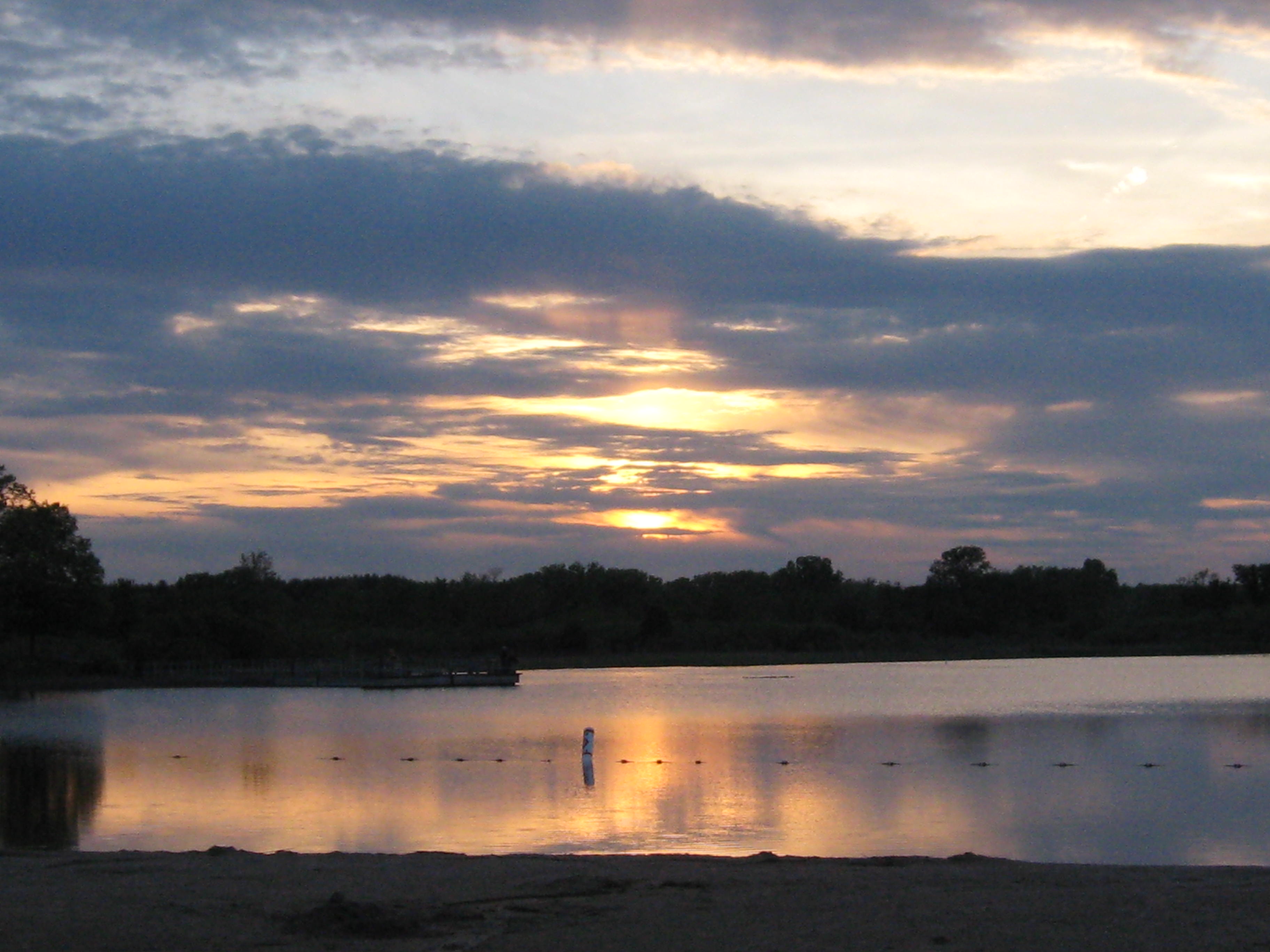
You have to walk a ways down south along the marl pit canal to get a good angle on the sun as it sets farther and farther north on the horizon. The rate of change in the amount of daylight increases as we approach the summer solstice and it is dramatically evident in the big sky country at The Springs. The trees, grasses, flowers and weeds, have responded luxuriantly to the sun and rain and the land is vibrant with myriad shades of lush greens. The Burn back on May 6th was definitely the highlight; a dramatically pivotal punctuation to Spring, 2013.
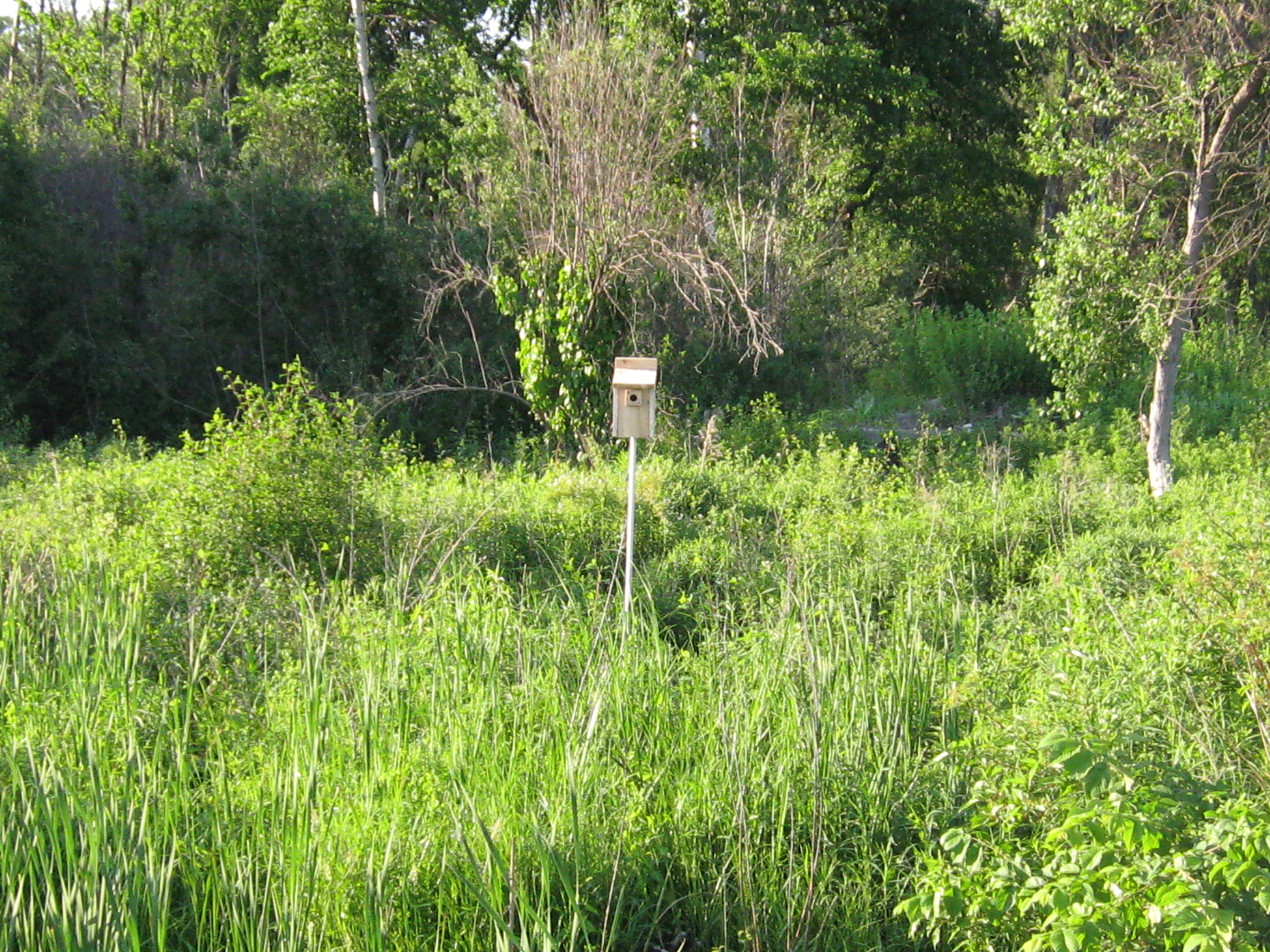
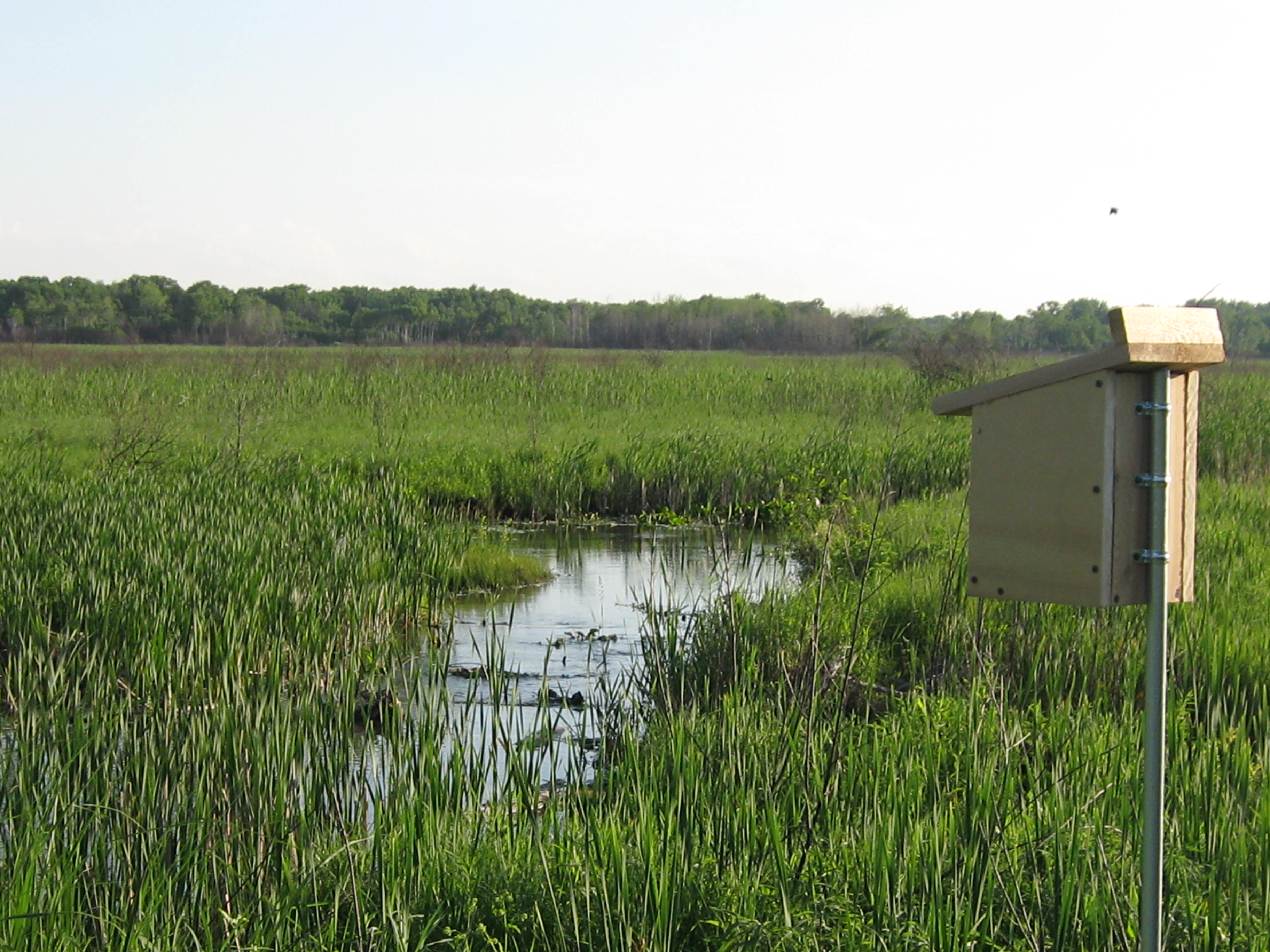
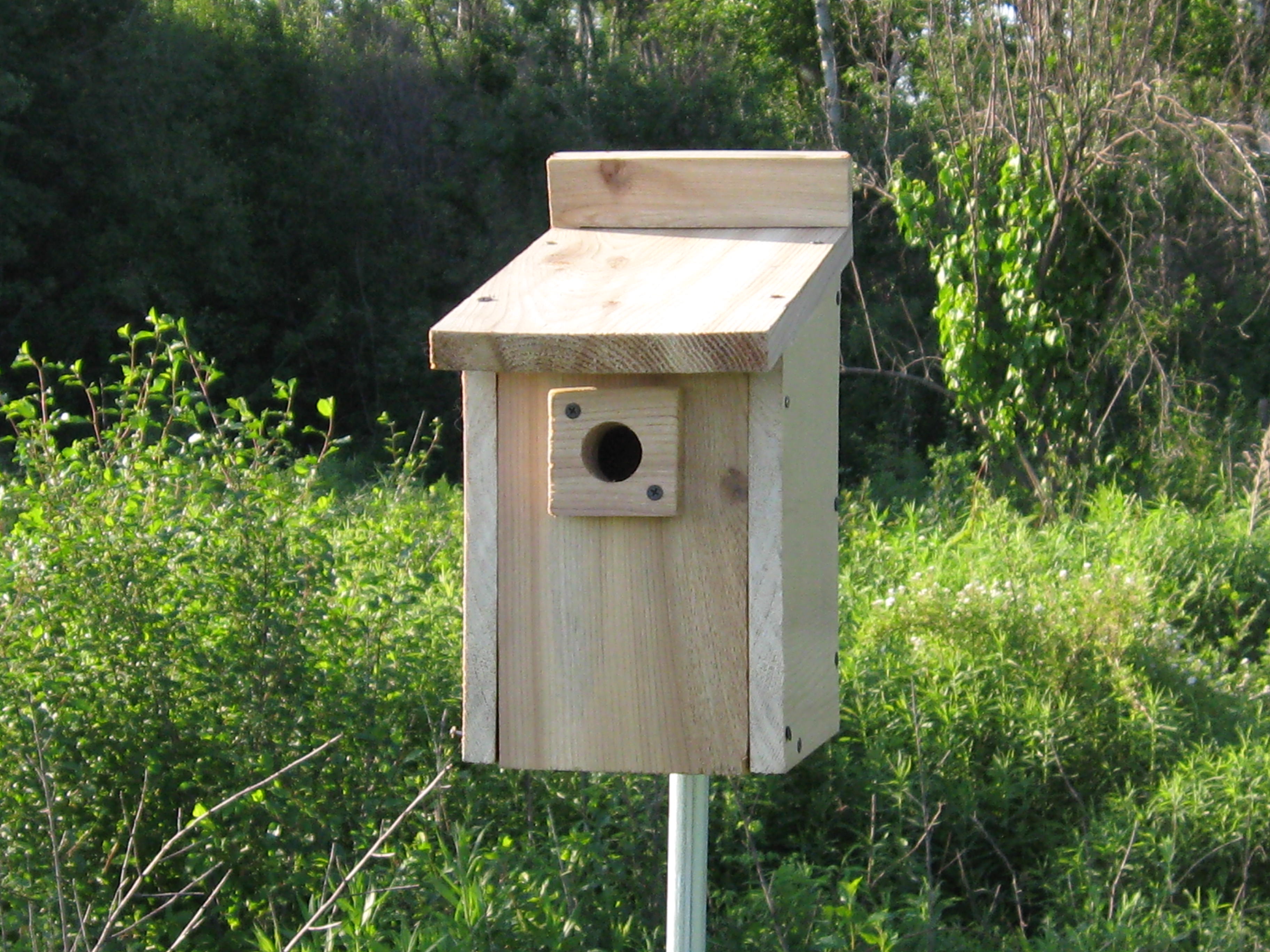
The Scuppernong Springs are a “world class site”, per former DNR Naturalist Ron Kurowski, and getting more and more well deserved love and attention these days. Spring Lover, Jon Bradley recently erected this beautiful, custom built, tree swallow house near the marl pit bridge.
Thanks Jon! It should be occupied in no time.
Amanda, Melanie and their crew of volunteers continued to install the new interpretive signs that Don Dane made. They look pretty darn good!
I was out at The Springs yesterday and sprayed some spotted knapweed on the Sauk Campground and some garlic mustard, creeping charlie and burdock between the old hotel and barn sites. “What is a weed? A Plant whose virtues have not yet been discovered.” — Ralph Waldo Emerson (more good weed quotes here). Rich Csavoy taught me another weed, white cockle, which is in full bloom on the Sauk Campground. Reed Canarygrass is already going to seed amongst the many springs in the river valley. Isn’t it ironic that Cannabis Sativa, one of the most versatile plants on earth, goes by the nickname “weed”?
It was a beautiful afternoon with a refreshing north breeze, deep blue skies and cauliflower clouds sailing by. I cut a curtain of buckthorn and prickly ash between the cut-off trail and the river on a little peninsula where Carl Baumann took some serious cuts last winter. Here is how it looked when I got there.
Five hours later…
A view from the gaging station bridge.
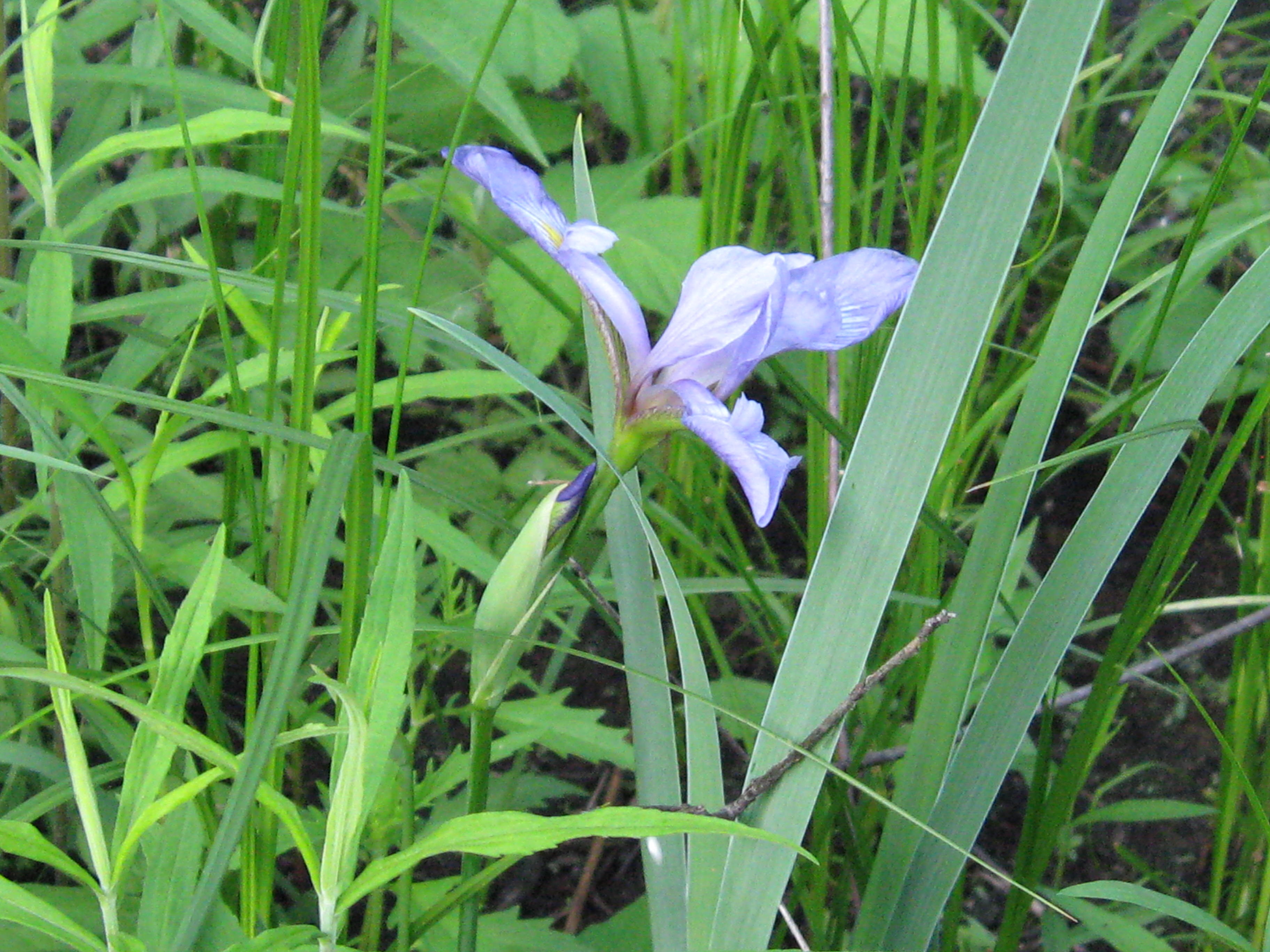
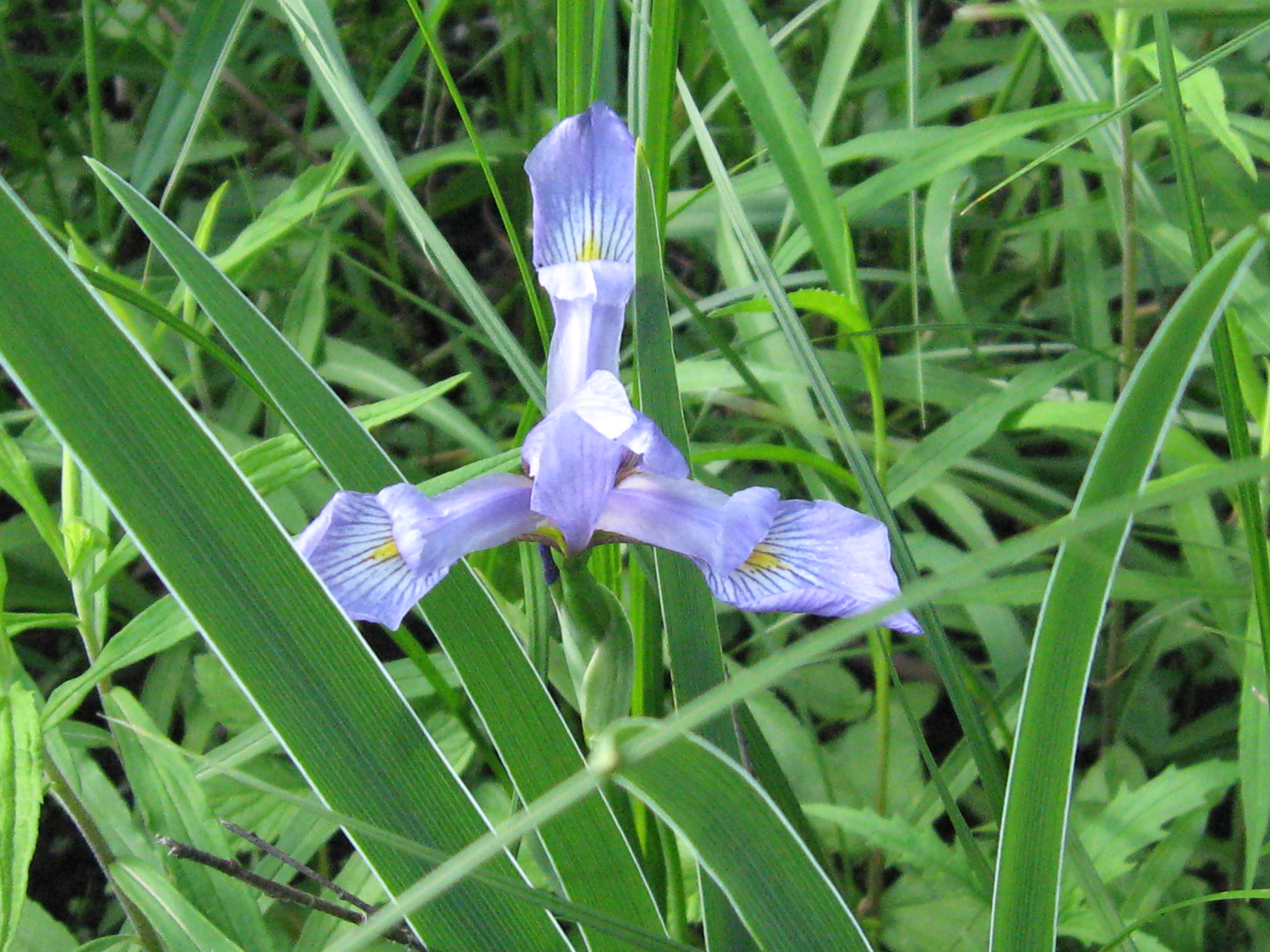
I saved a couple of wild plum trees amongst the buckthorn and found a patch of blue flag irises.
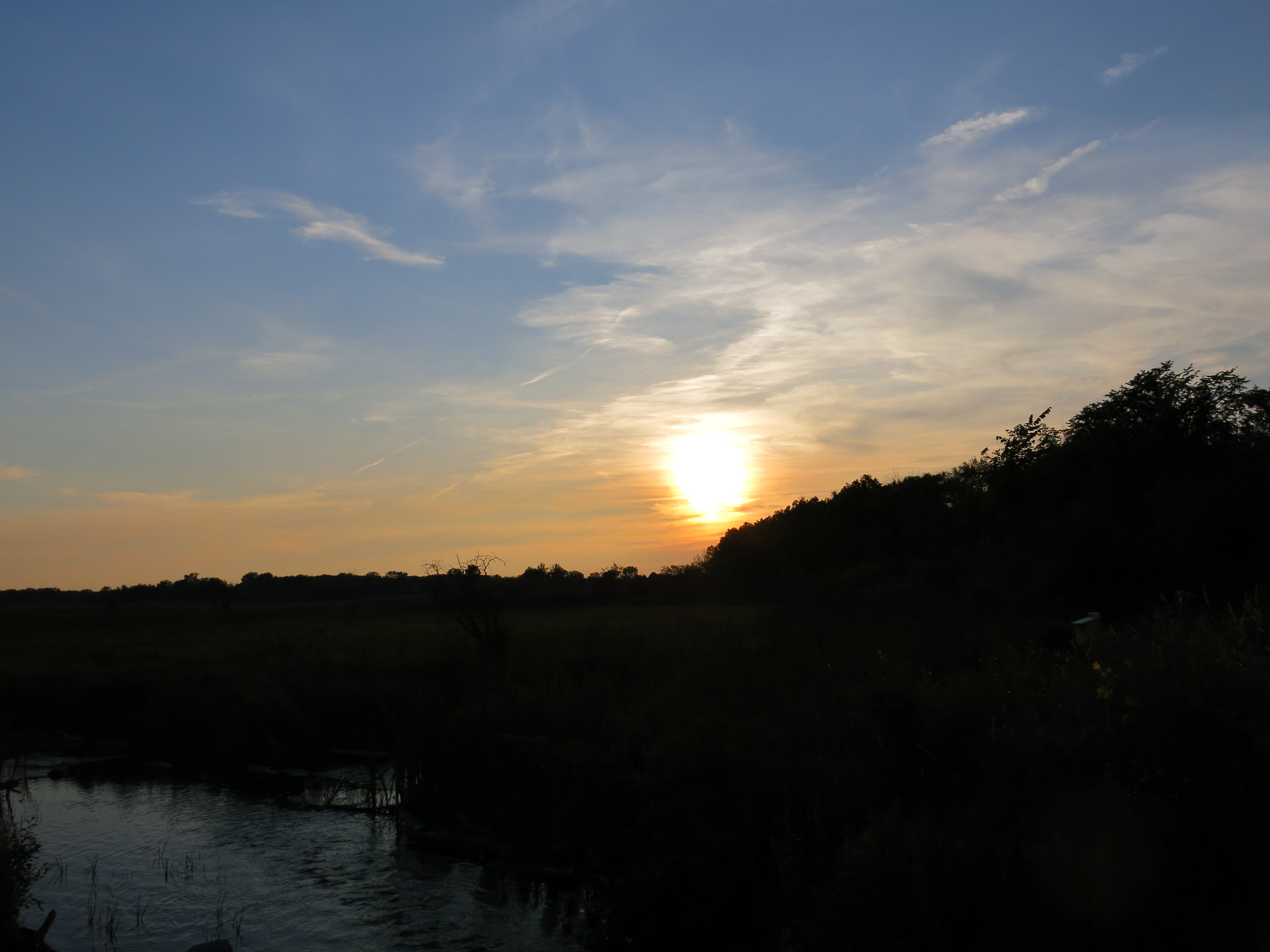
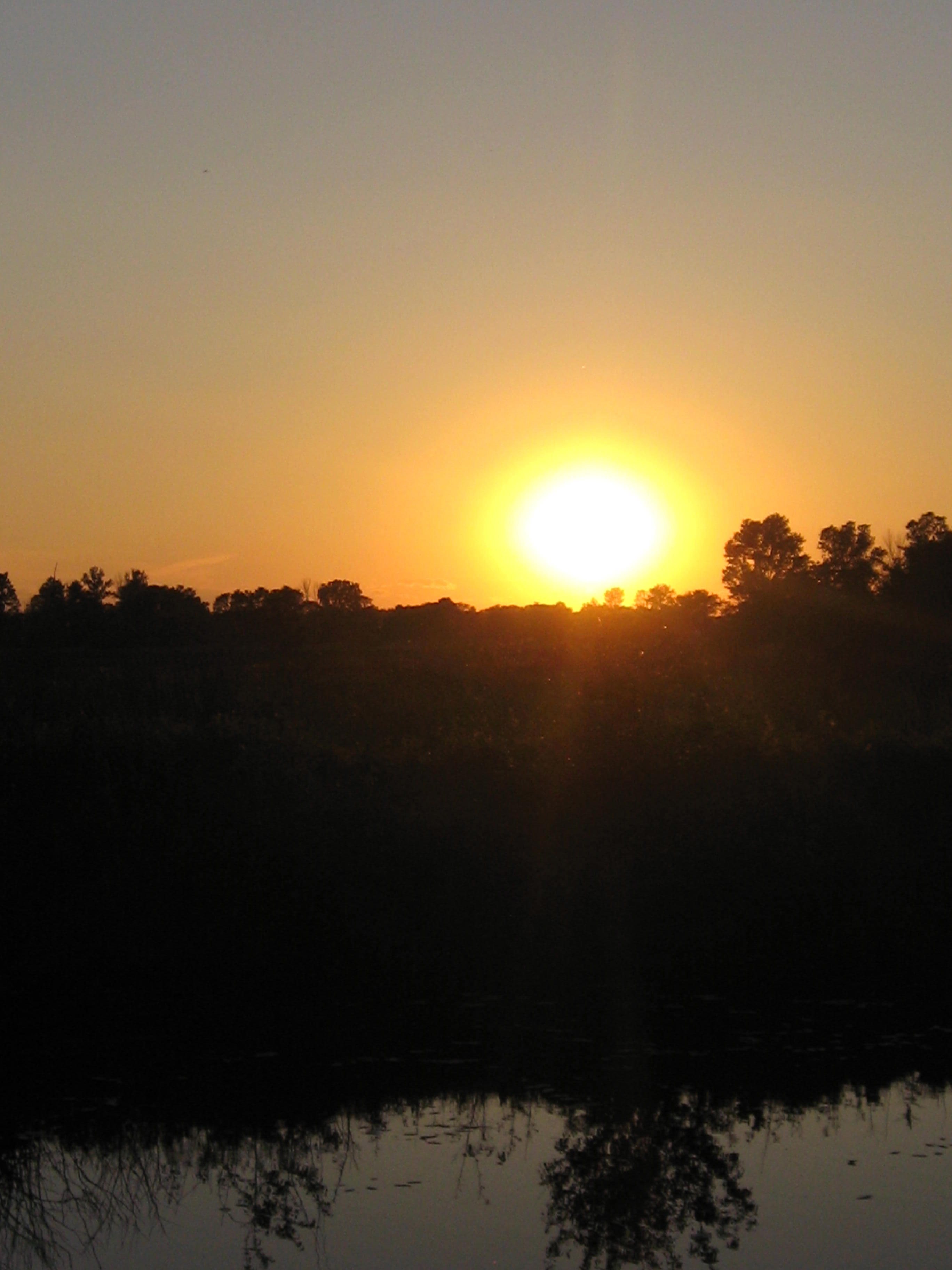
I did some serious relaxing at the marl pit bridge in the evening and wandered down the canal a bit to get these shots of the sunset.
It was around this time last year that we met Don Dane and Tim Peters at The Springs and expanded the scope of our restoration effort to include opening up all of the springs that feed the Scuppernong River, and clearing the river itself. Like Neo in The Matrix, who followed the white rabbit to discover the truth, we are also on a journey of exploration and learning to discover “the truth” of what the Scuppernong Springs area was like before the invasion of the white settlers. Terence McKenna coined the term Archaic Revival and it strikes a chord with me.
I had the pleasure of spending Friday, May 24, at The Springs. The northeast winds that arrived the day before continued to blow and the sky was impeccably blue. DNR naturalist/guide Melanie Kapinos and long-time Ice Age Trail Alliance member Barbra Converse, who gives tour of The Springs, stopped out to chat.
Barb asked ‘why do you do it?’ and I really appreciated the opportunity to explain myself. It will take a long time to “revive” this area after many, many years of neglect. As I walk the land and observe the recovery from the burn, I see tons of weeds amongst the good native flowers and grasses. Much of the green you see in the post-burn pictures I have been posting is from buckthorn seedlings, thistle and burdock patches, phragmites, cattails, garlic mustard, spotted knapweed and other invasive plants. The journey back to health for the Scuppernong Springs Nature Preserve and the Scuppernong River Habitat Area will be long and I take every step with joyful anticipation.
I continued girdling Aspen on the slope behind the Hidden Spring. The fresh air made every breath a pleasure!
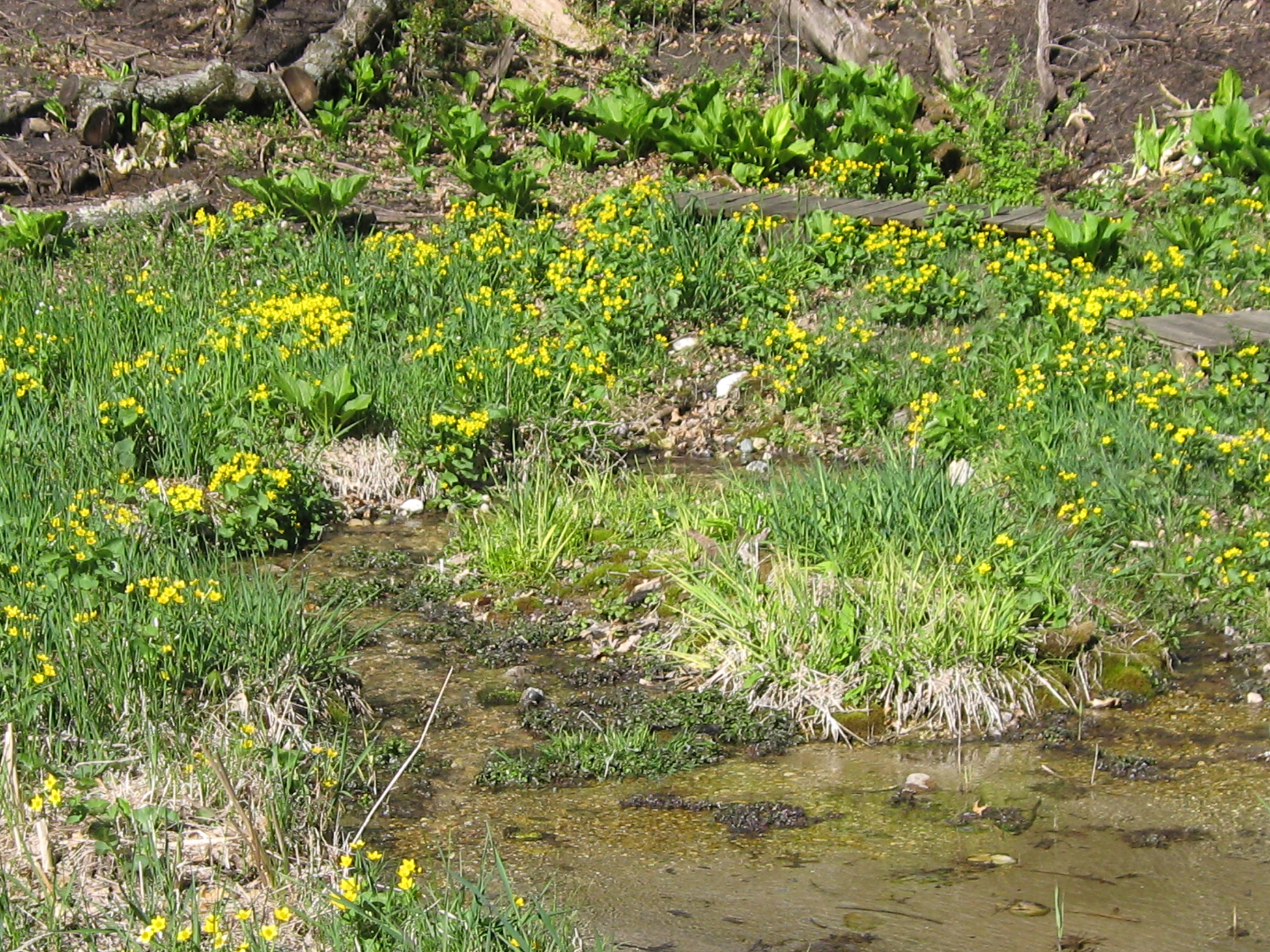
I spent the afternoon pulling watercress, phragmites and cattails from the Hatching House Springs and the Hillside Springs. These springs have nice, stony bottoms and look like great trout spawning habitats. I harvested a healthy dose of watercress at the Scuppernong Spring, which has the sweetest cress of them all.
Pati joined me for the rest of the day and we reveled in the beauty.
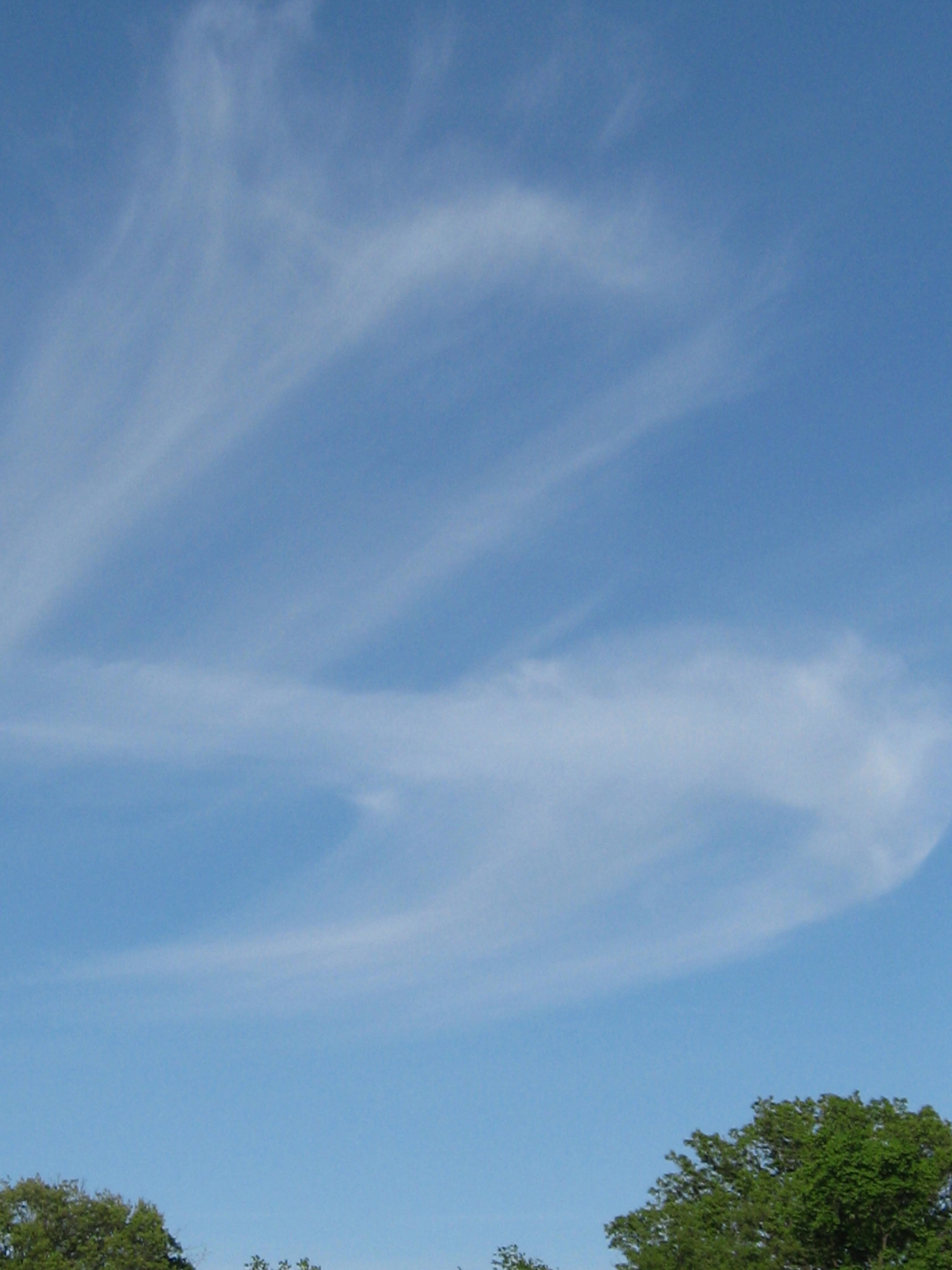
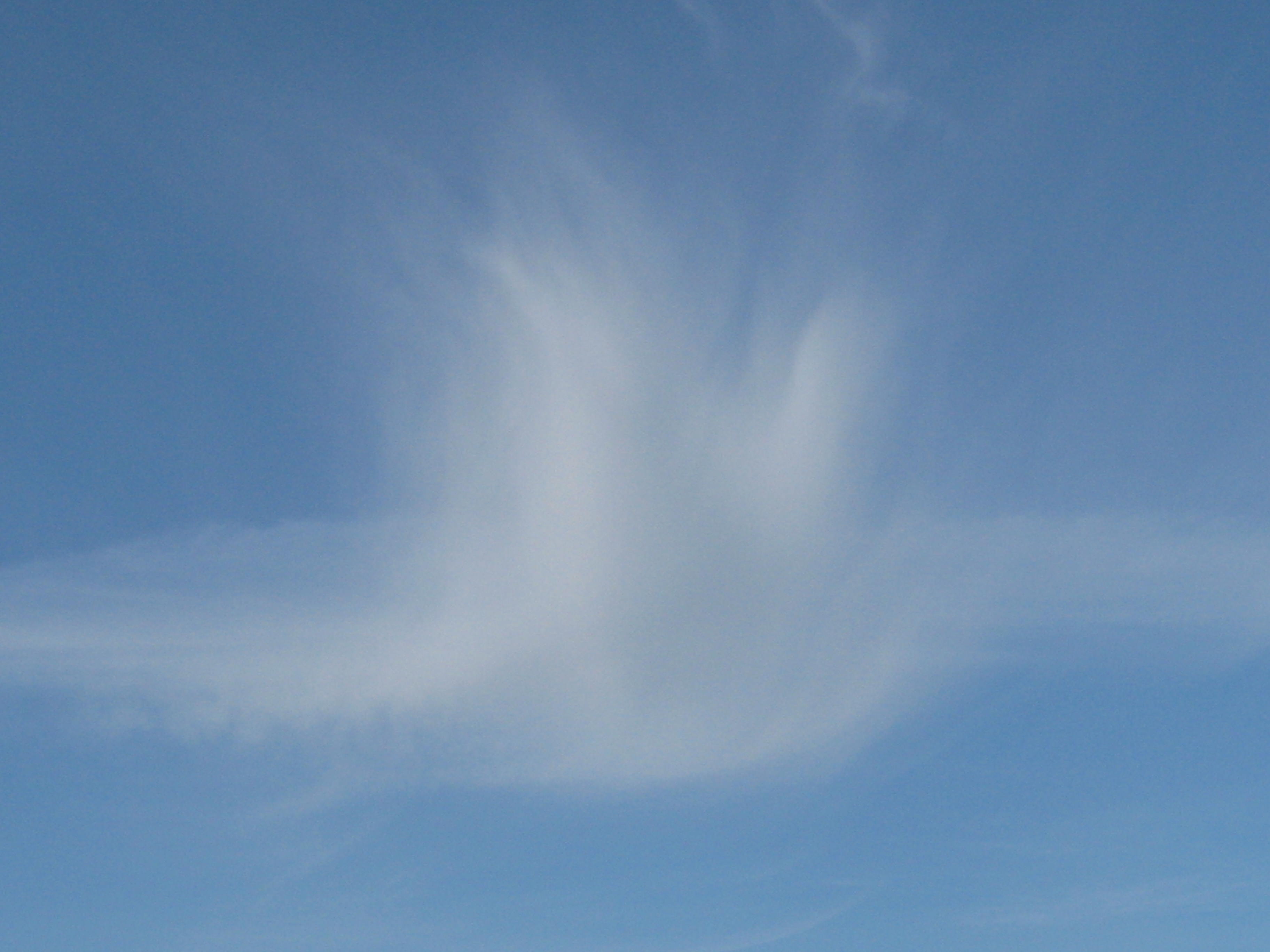
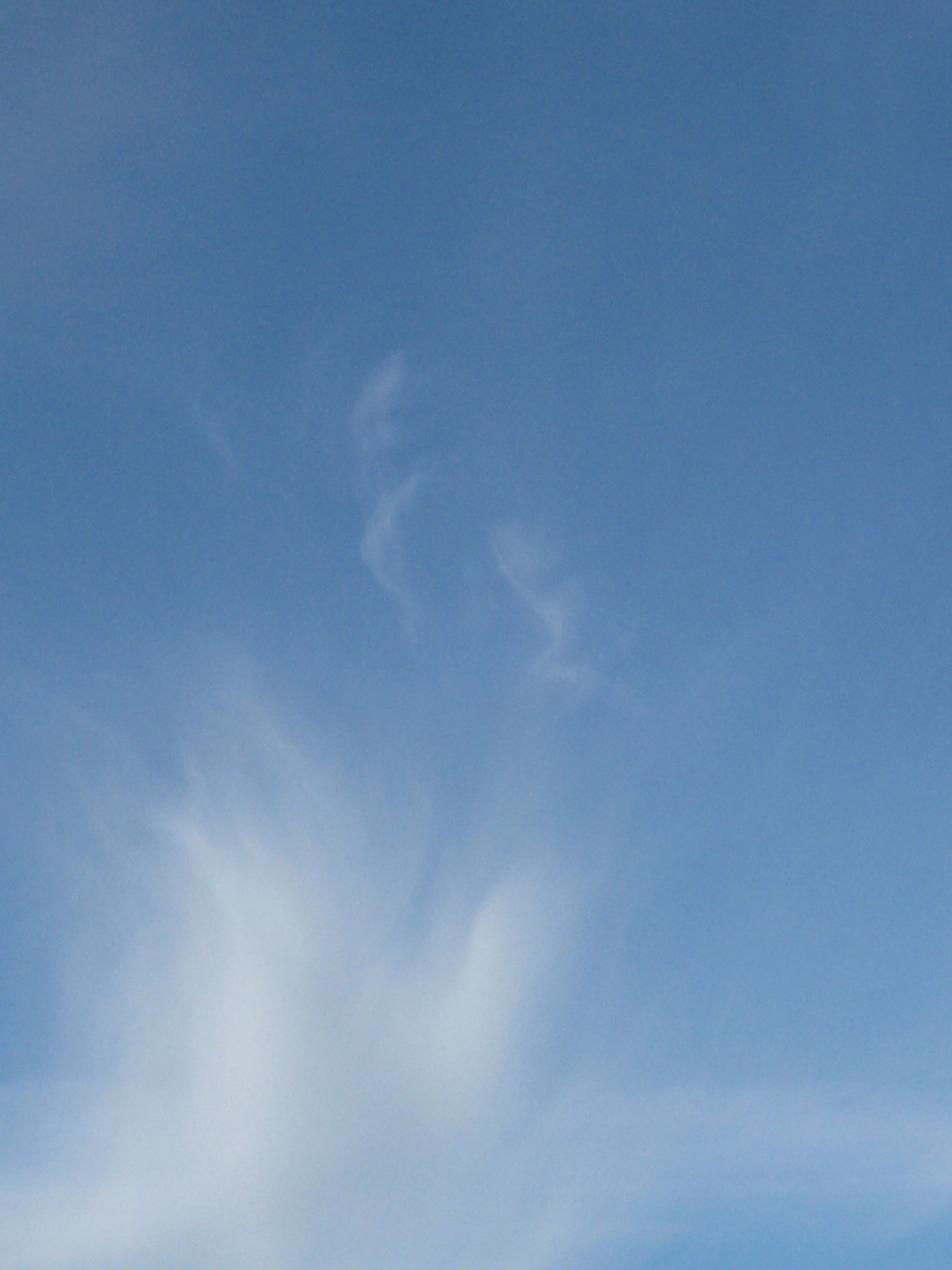
If you love clouds, check out this site! I tried to capture the wisps floating by.
How can I describe what a great time I had at The Springs yesterday? The temperature and humidity were as pleasant as a Pacific Island. The air was fresh and breezing and the sunlight clarified everything. My thoughts were occupied by the current time; the present moment. Time is a spiritual current-cy. How do we spend it? What do we pay attention to? ‘As you sow, so shall you reap’ and ‘what goes around, comes around’ aren’t just cliches; they are examples of Natural Law, specifically, the Law of Attraction, which is immutably in-force everywhere at all times. So when I say I had a “great time” at The Springs yesterday, I mean it was joyful to invest my spiritual currency paying attention to nature and working to help create the beautiful world that I want to see.
The morning light was flush on the Hillside Springs.
There are lush patches of fresh watercress just below the Scuppernong Spring and I harvested a bagful to include in my green juice recipe.
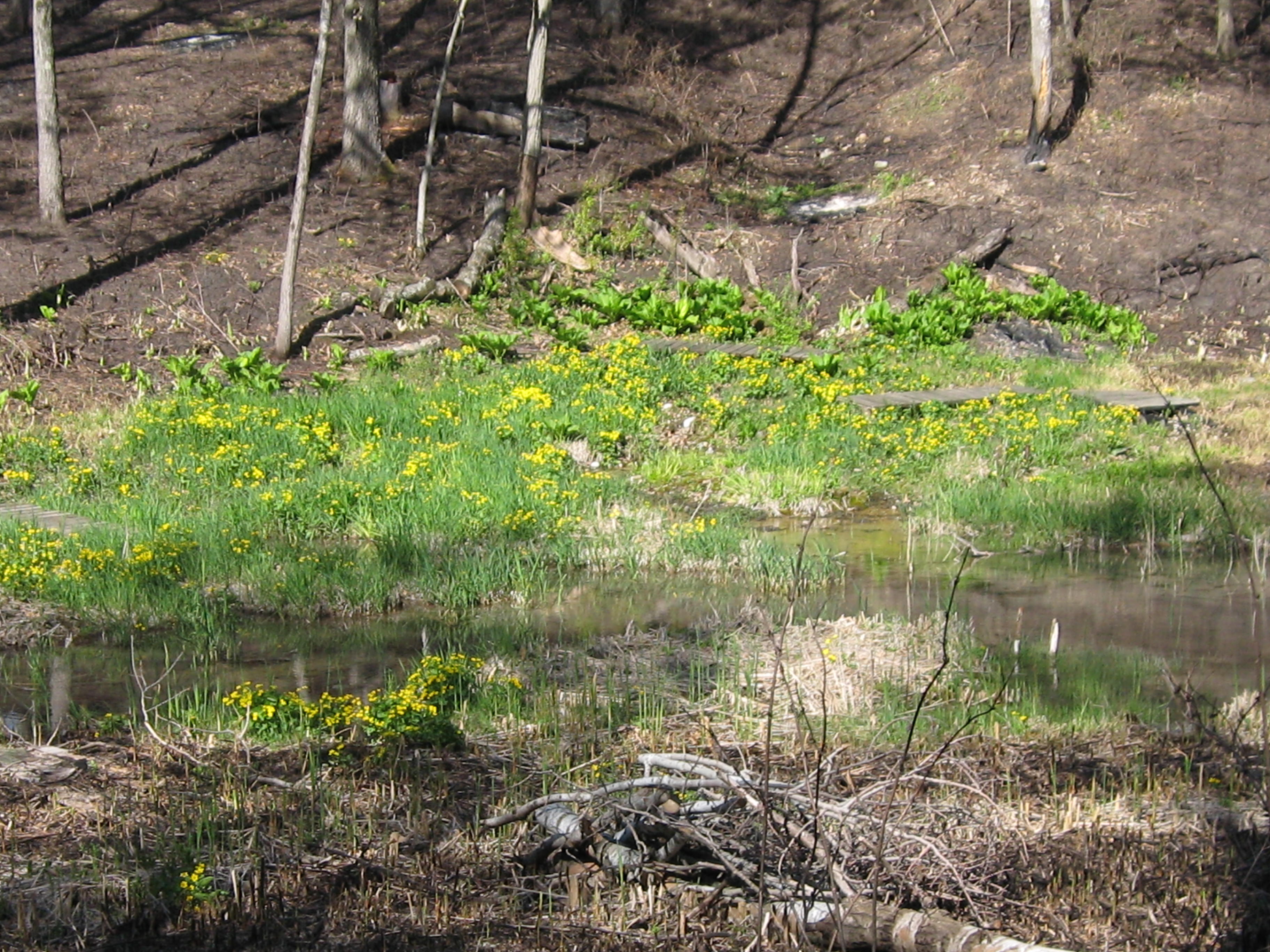
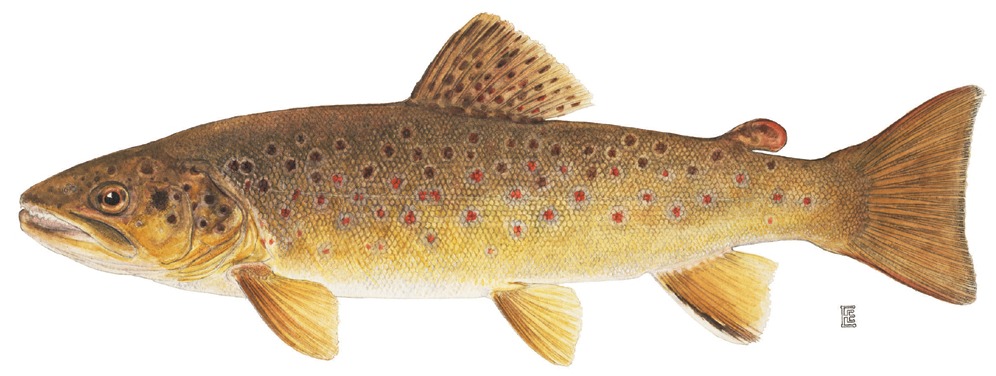
As I was rinsing the watercress at the point where the Scuppernong Spring spills out of its pool and starts to flow as a river, a brown trout emerged from beneath a rock rim and swam about in the pool. I don’t know for sure what is going on with the trout; are they visitors, or a local reproducing population?
Thousands of garlic mustard seedlings have emerged at the south end of the loop trail literally carpeting the ground. I carefully sprayed them with glyphosate trying to avoid the many good plants that are also emerging.
I conscientiously sprayed the spotted knapweed that dominates the sand prairie of the Indian Campground with clopyralid; carefully avoiding the many, many, diverse plants that are also coming up. This sand prairie is going to come alive with color in a couple weeks.
There were more aspen to girdle along the river valley. If we don’t do this, the clonal colonies will spread into and dominate the valley floor.
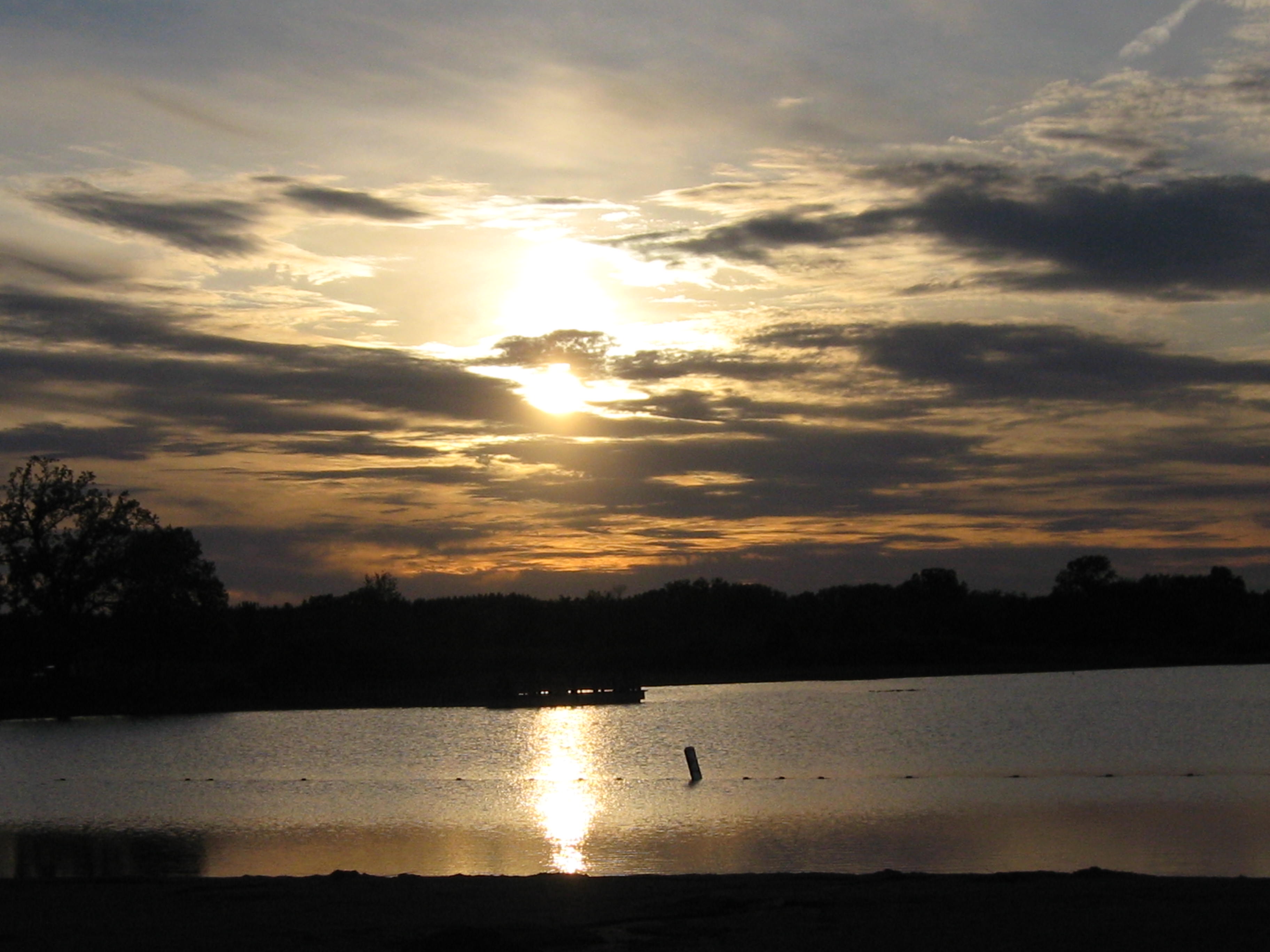
I piled brush in the afternoon by the old hotel site. You can see the foundation stones in many places now. I forgot to take some pictures, but if you’ve seen one brush pile… I was covered with soot when I finished and took a cool dip in the river by the marl pit bridge to wash off. Clouds moved in and I marveled at their beauty while doing some yoga asanas.
With the video below I attempted to capture one of those ‘you had to be there’ moments.








































 Scuppernong Springs Nature Trail
