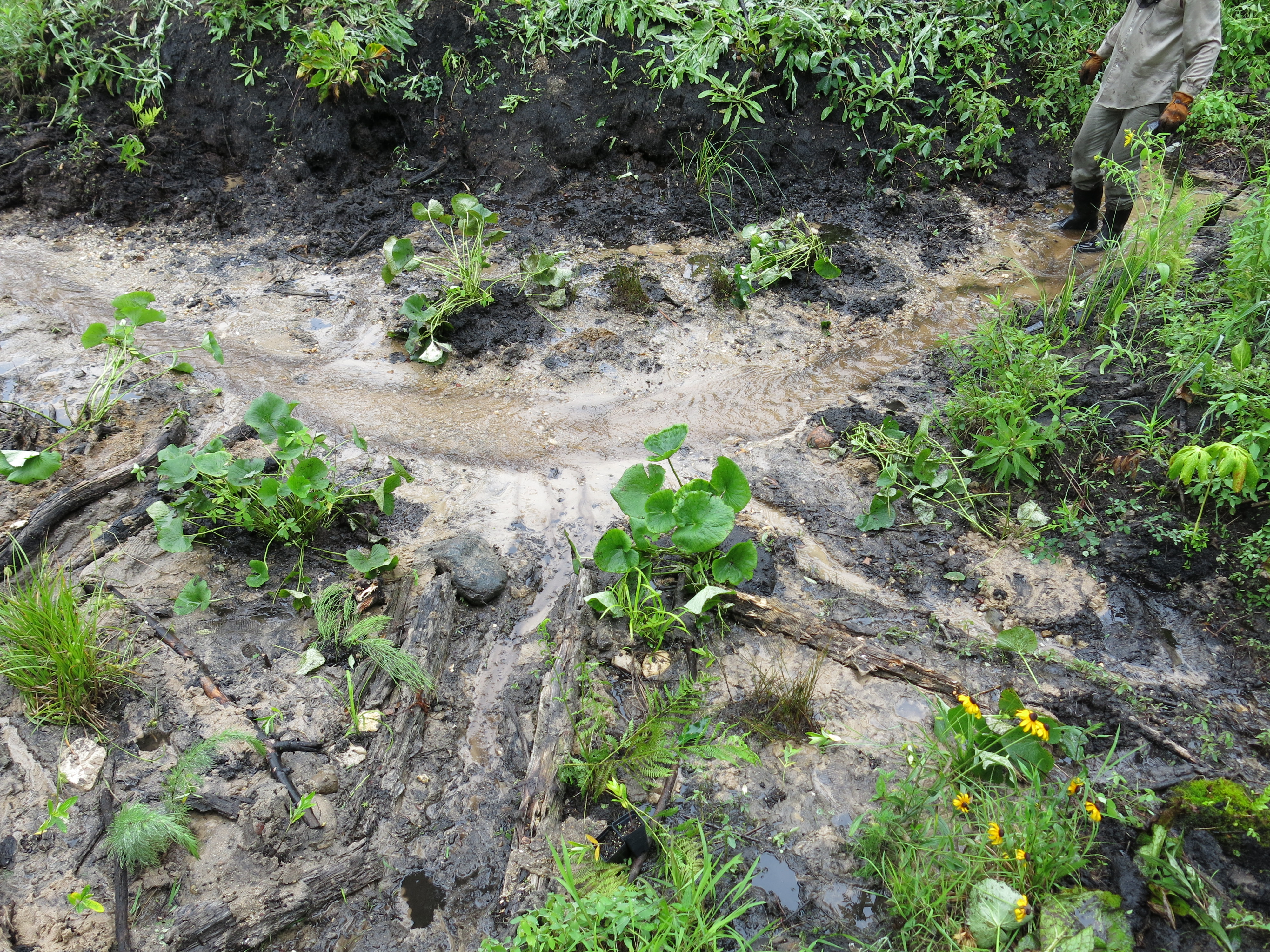
Ben Johnson and I shared one of those special days yesterday at The Springs, that make it all worthwhile. We ignored the intermittent rain and incessant mosquito attacks to plant a garden at the Indian Springs. Watercress and quack grass are out: native sedges, grasses, ferns and flowers are in. When these plants take hold this will be an even more magical place than it already is.
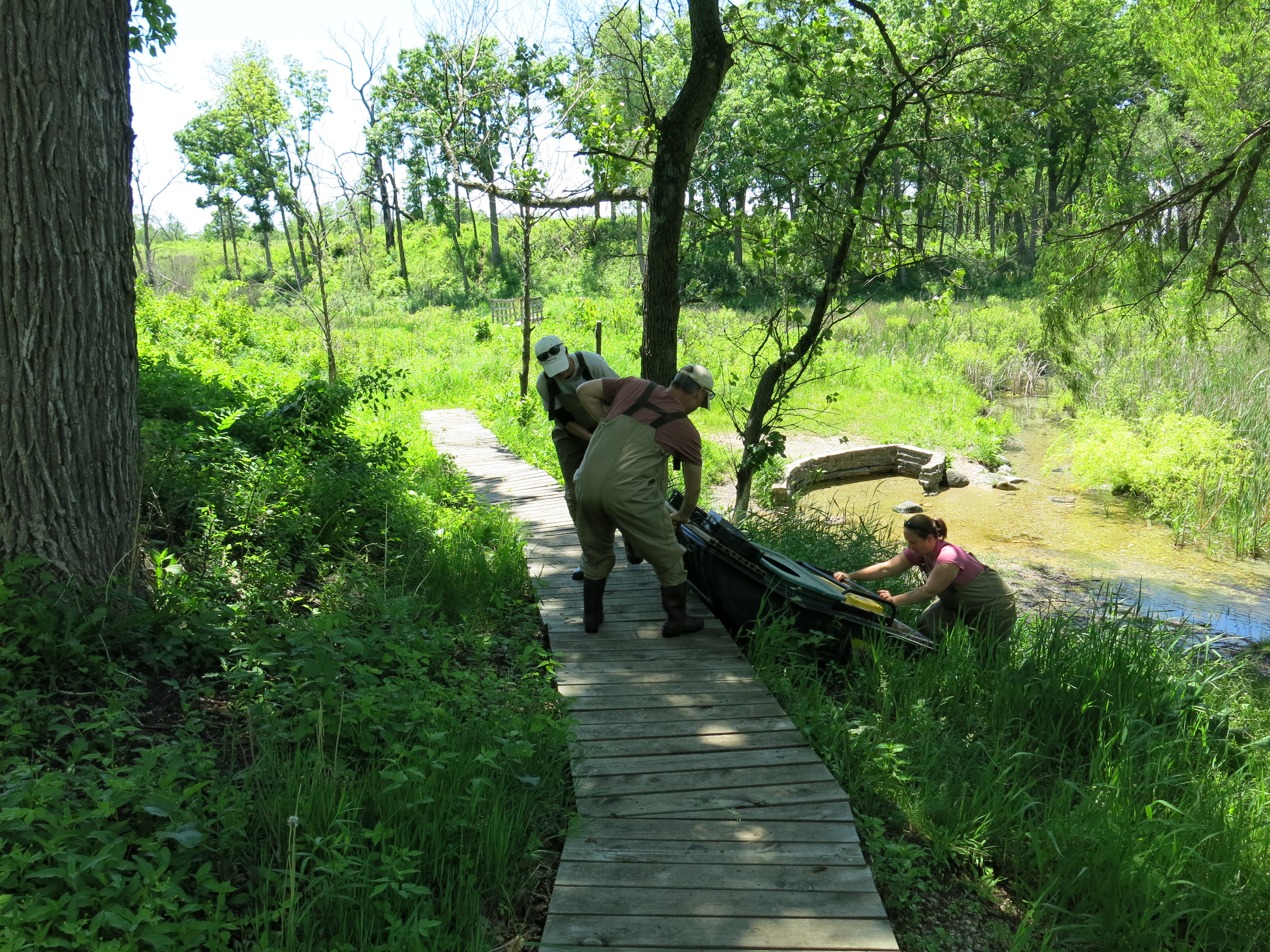
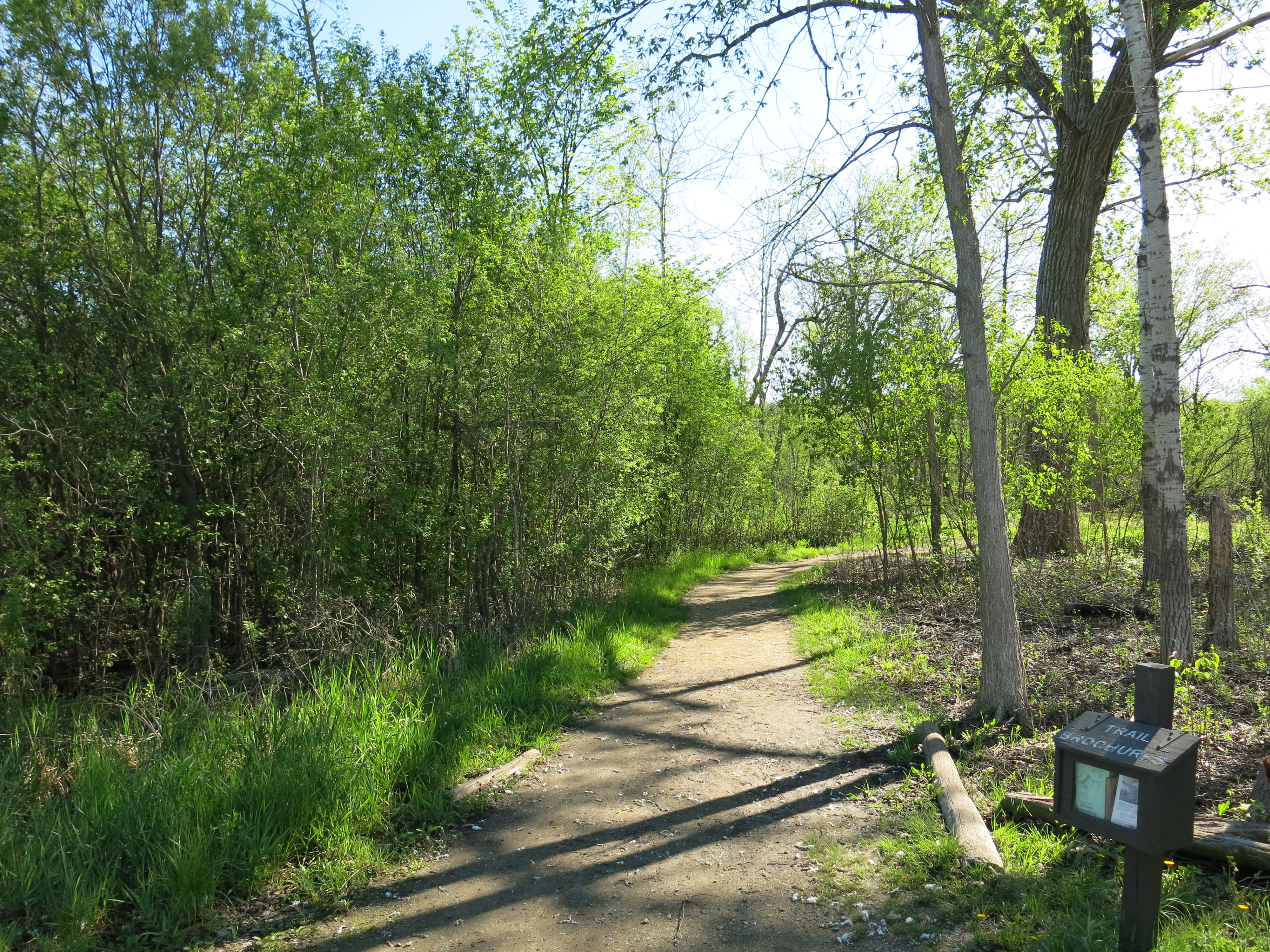
We started the day with empty wheel barrows, just down the trail from the main parking lot on Hwy ZZ, in the buckthorn alley. The emergence, or should I say, explosion, of a wide variety of native plants along this trail makes referring to it as an “alley” a misnomer. I’ll have to come up with a new name. So we arrived at the Indian Springs with our diverse loads of plants…
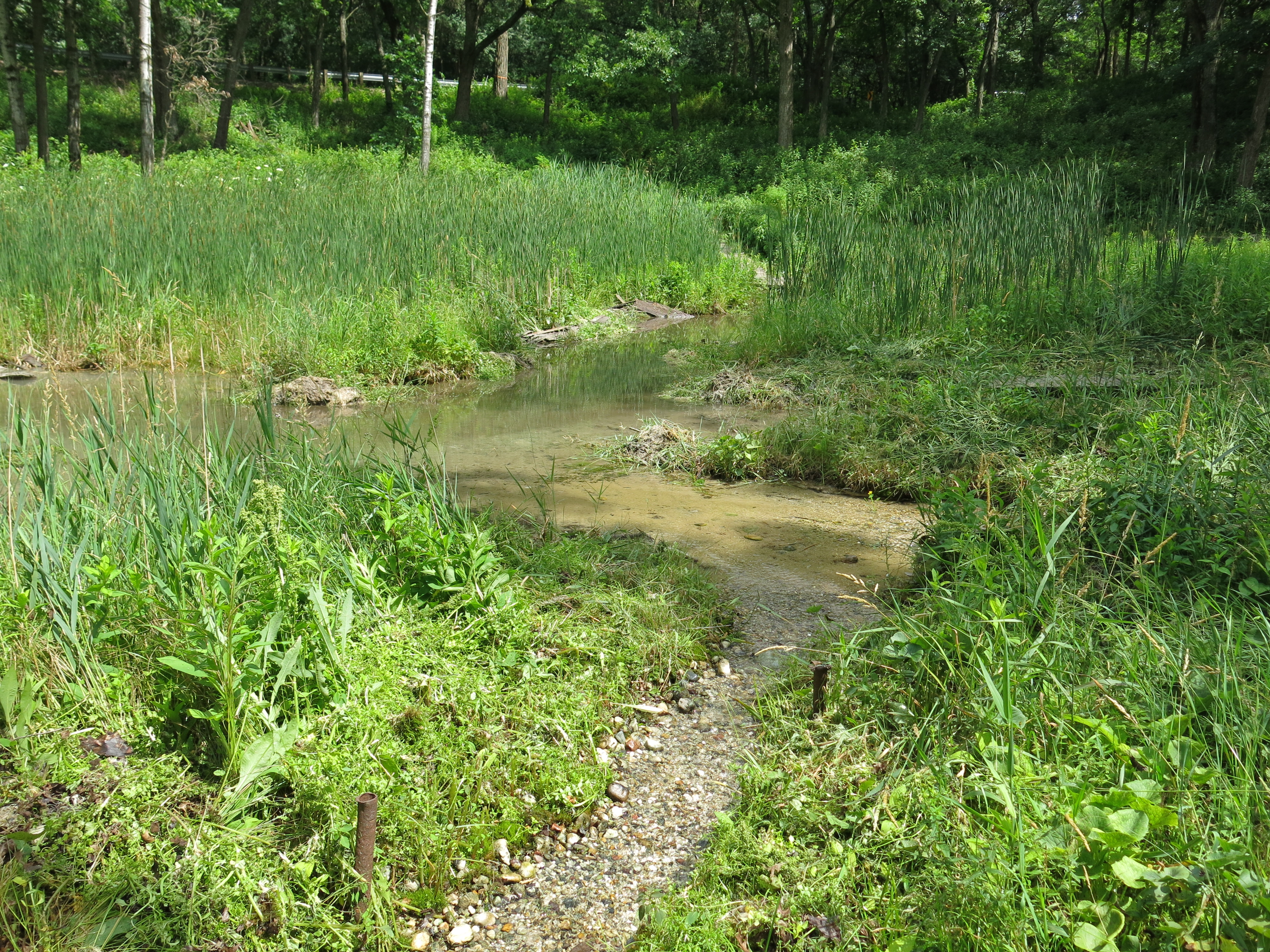
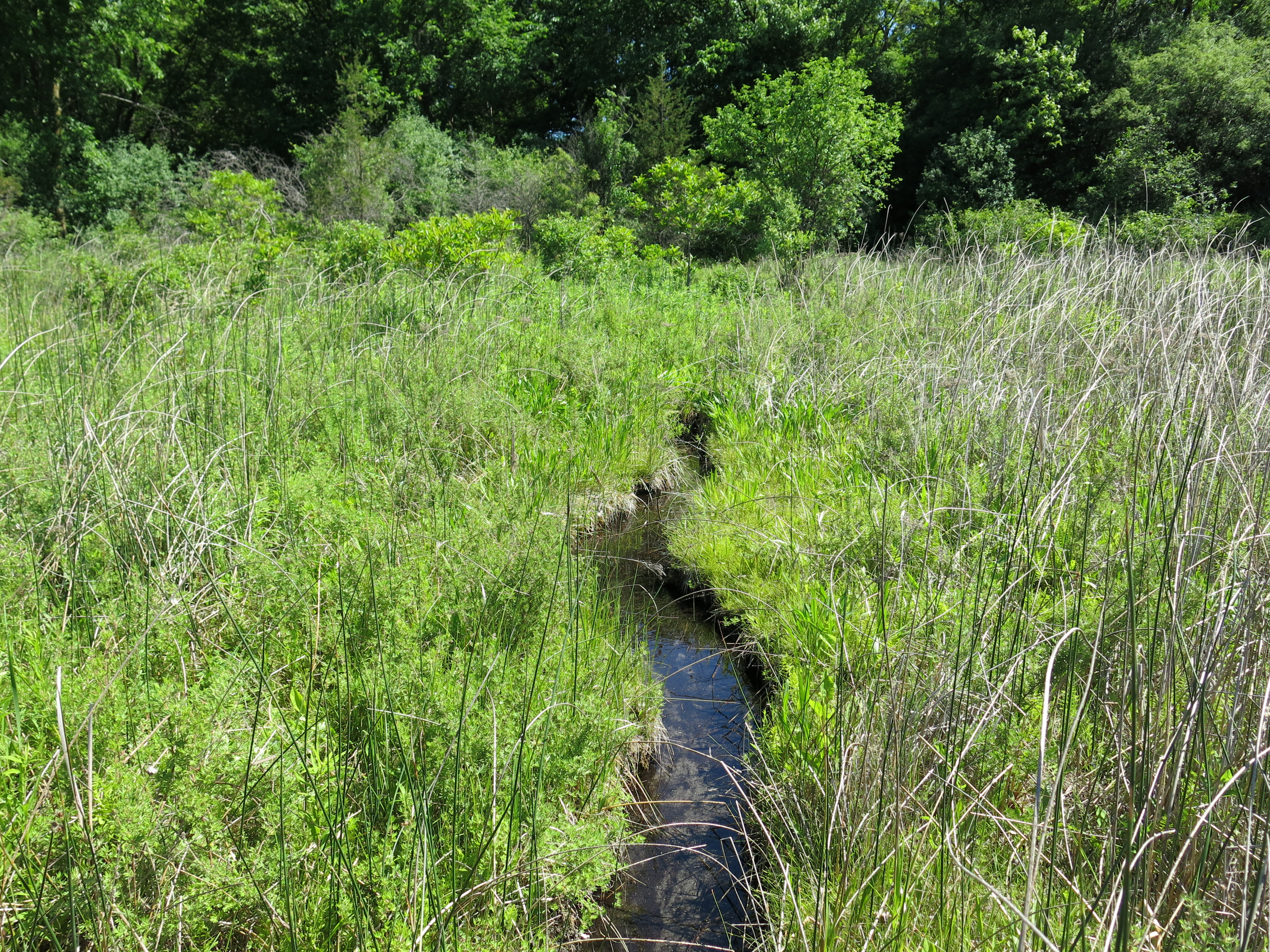
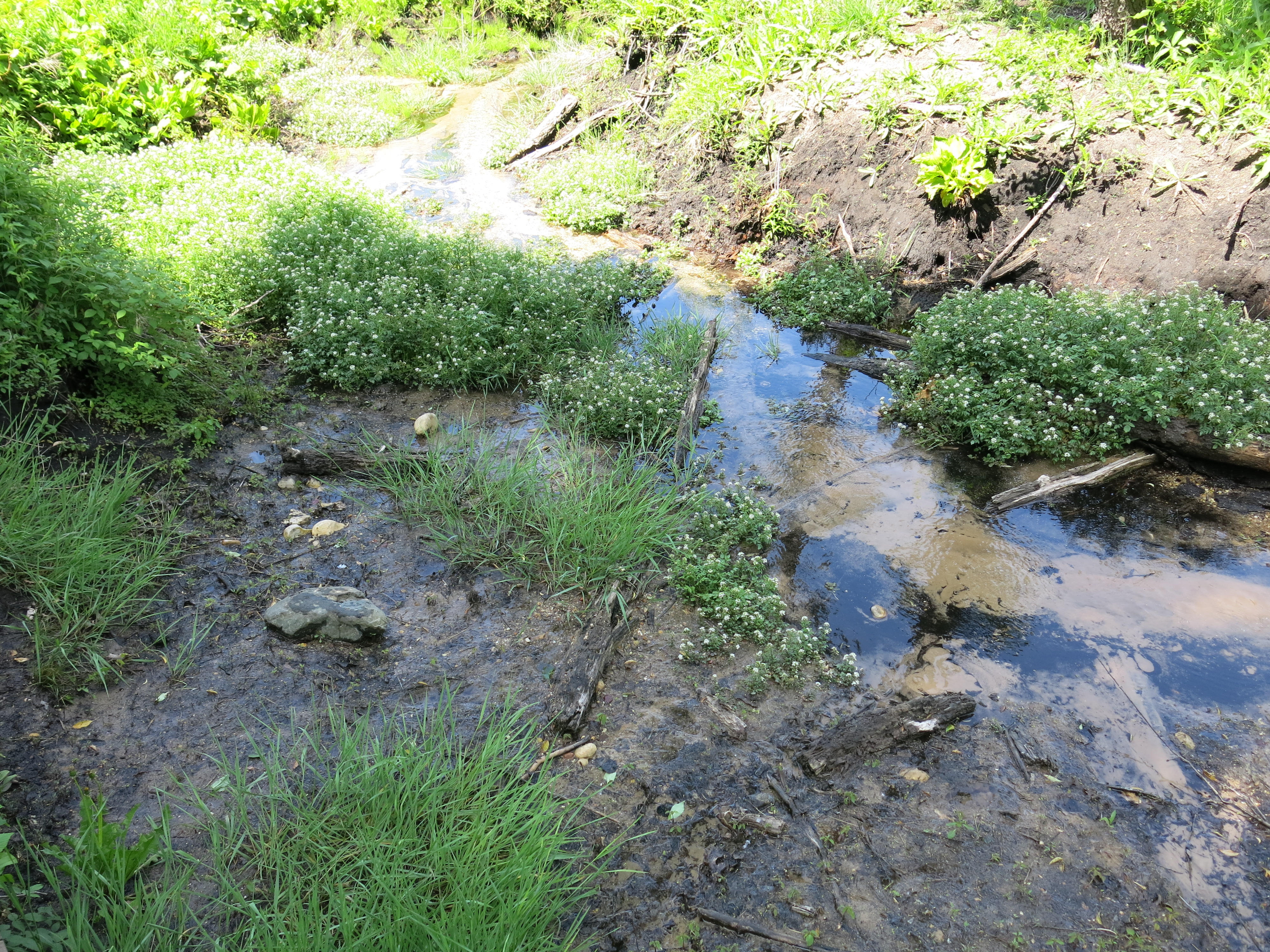
… and surveyed the void left by the recent removal of watercress and quack grass.
The profile of stream bed has changed significantly since I removed the mud dam in the narrows of the picture above, and we furthered that process along by cleaning the debris from the literally dozens of springs that emerge here. I don’t have scientific data to back this claim up, but it appeared that the volume of water flowing from each spring increased significantly as the obstructions were removed.
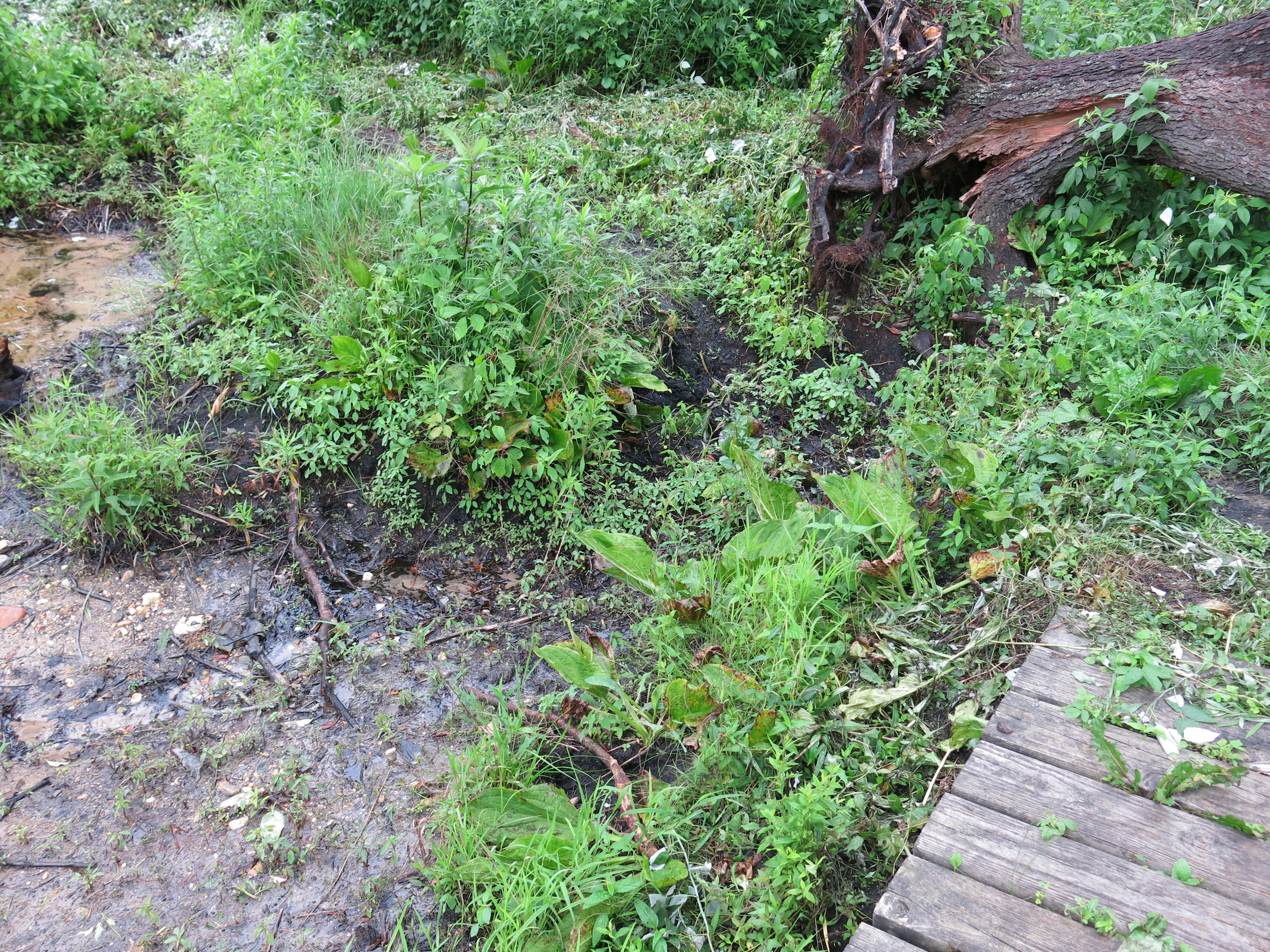
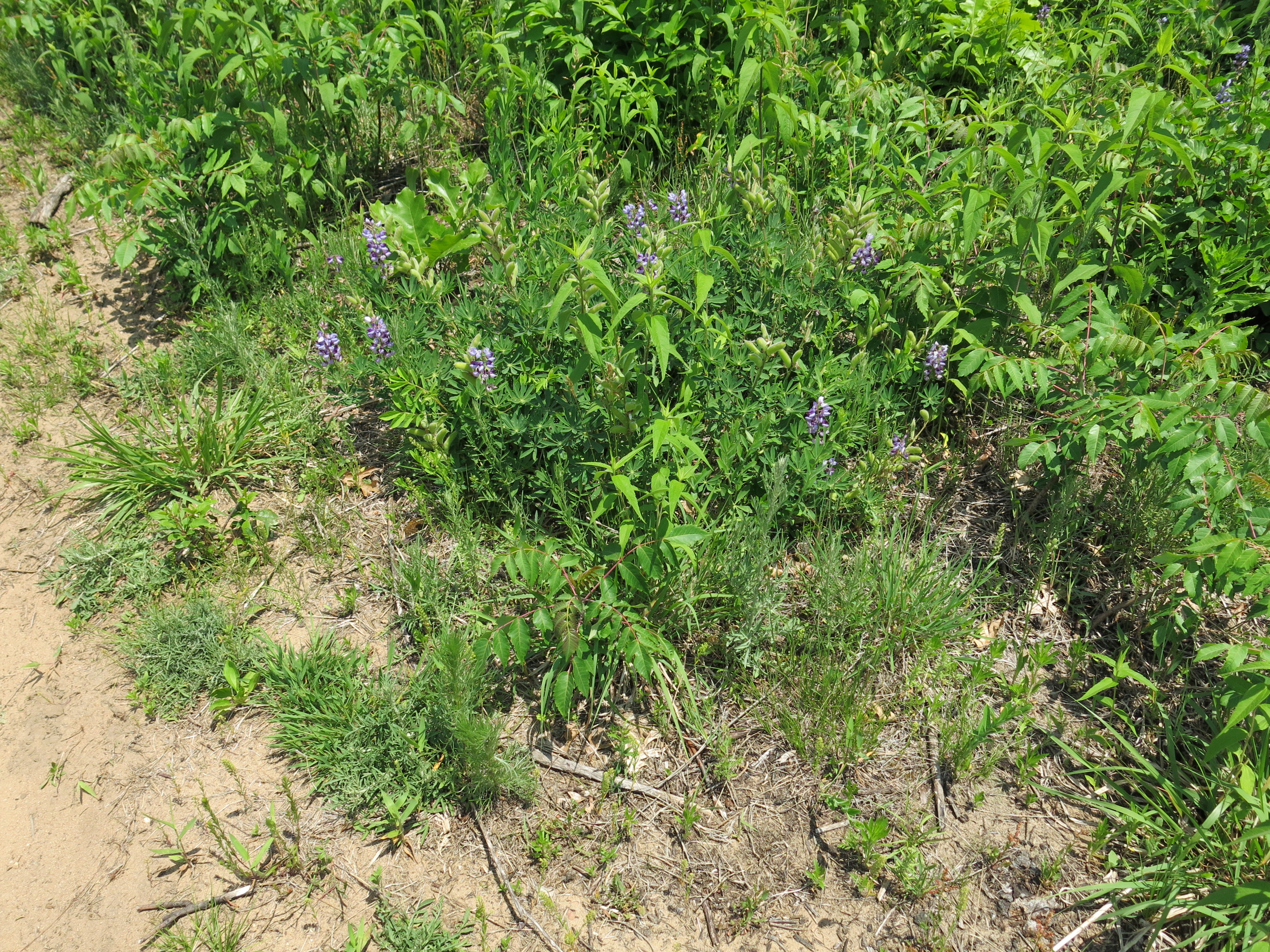
Although I try to live in the present moment, I can’t help but look forward to next spring, when the transplants have settled in and we should have the deck repaired. We spent the later part of the afternoon cutting and poisoning sumac and pulling spotted knapweed amongst the lupine patches on the west side of the sand prairie. Thanks for your help Ben!
Pati and I are going on a short vacation (back around July 15th), so I got some licks in at The Springs this past Tuesday, cleaning up the areas around the hillside springs. I mowed the spur trails that lead to the hillside and hidden springs, as well as the trail that leads to the emerald springs and the unnamed springs just to the north.
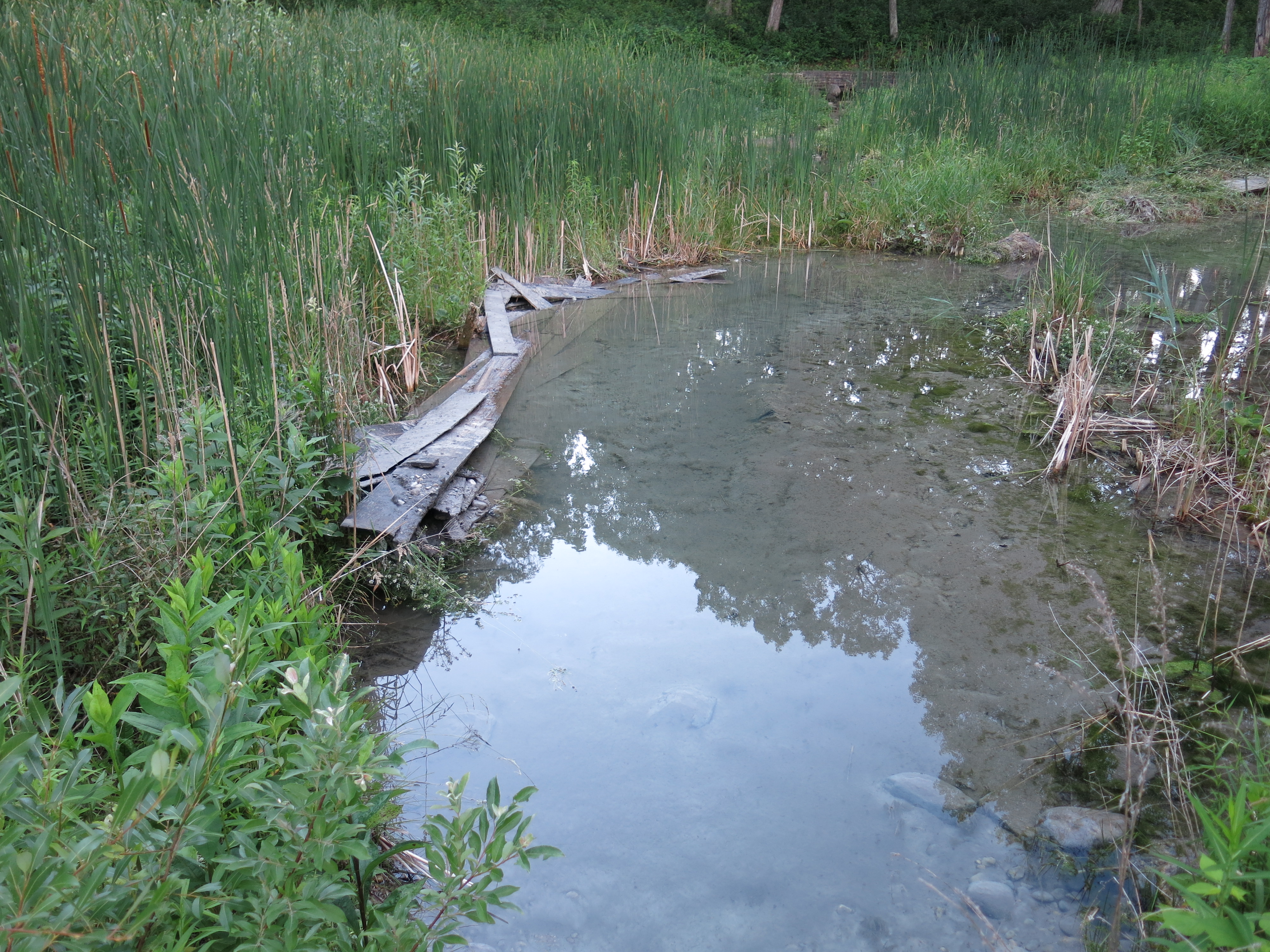
In what will become a semi-annual event, I pulled loads of watercress from the headwaters at the Scuppernong Spring down to the first bridge downstream. When my fingers encountered the planking they installed way back in the days when this stretch of the river was a trout factory, I couldn’t help but pull this garbage out. I found huge 6×8″ beams spanning the river bed from bank to bank onto which the planks had been nailed. These unnatural impediments to the stream flow must be removed.
Before…
… and after.
After removing the planks shown below, the height of the river noticeably declined. The channel is now much deeper and more distinct. When I showed the area to Ben on Wednesday there were two ducks, normally very skittish when humans are near, who refused to leave. I think they liked the change.
Along with the aforementioned beams embedded in the river bottom, there are still more planks and pipes left over from the old days that we plan to remove in the coming weeks. This will go a long way toward facilitating the river’s return to a natural steam bed in this area.
Again, the late afternoon was spent digging and pulling spotted knapweed along the main trail on the sand prairie.
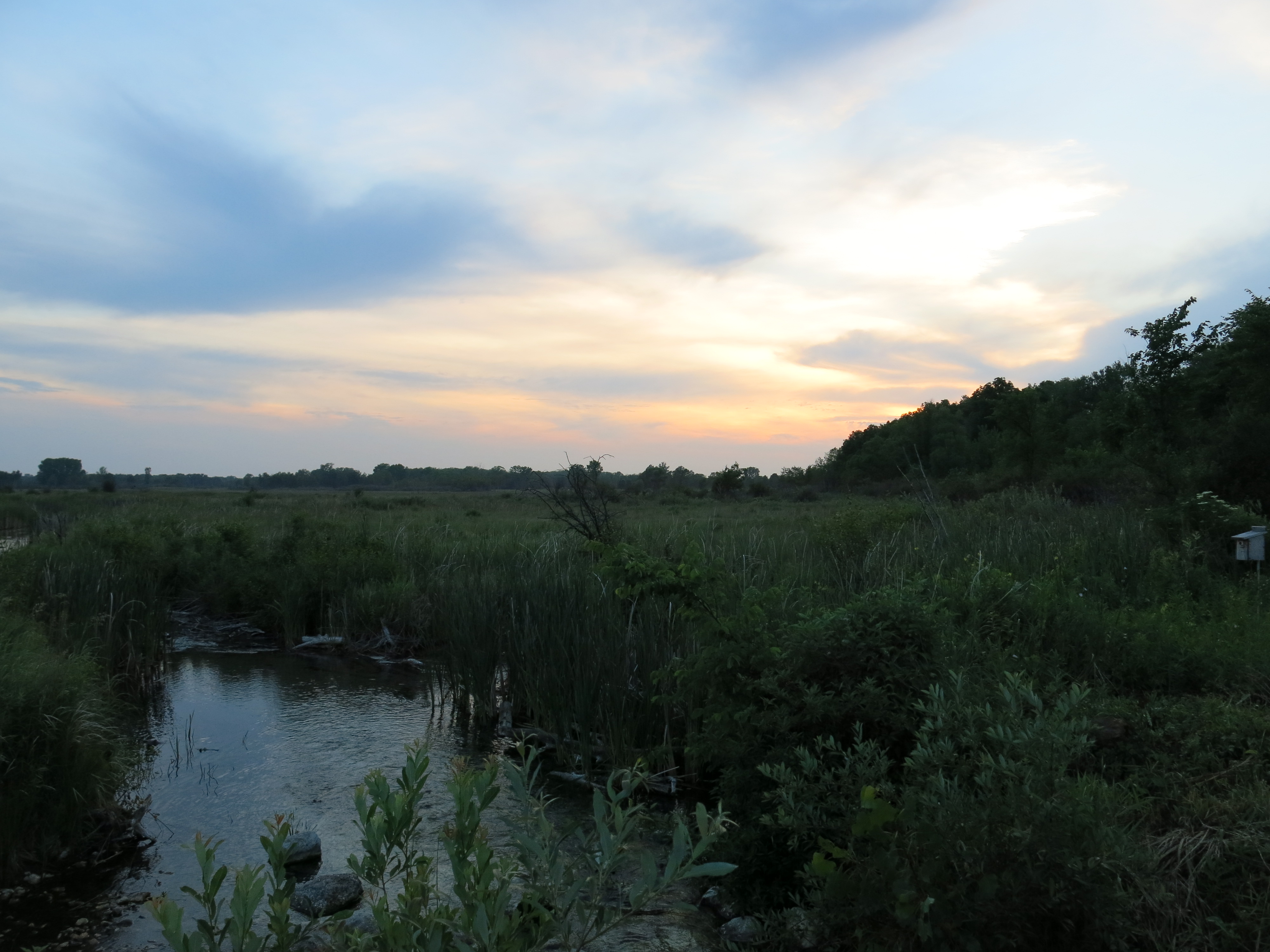
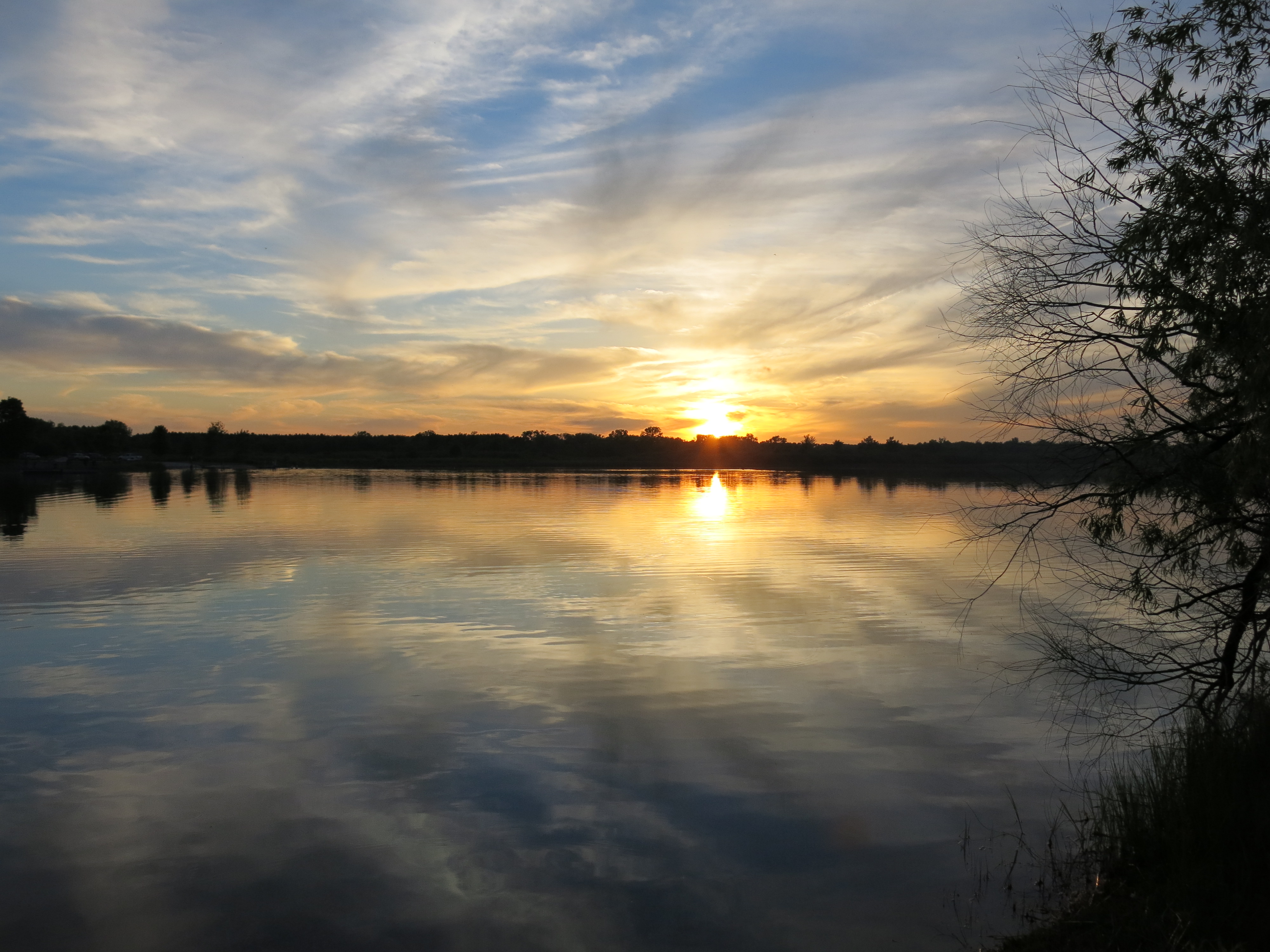
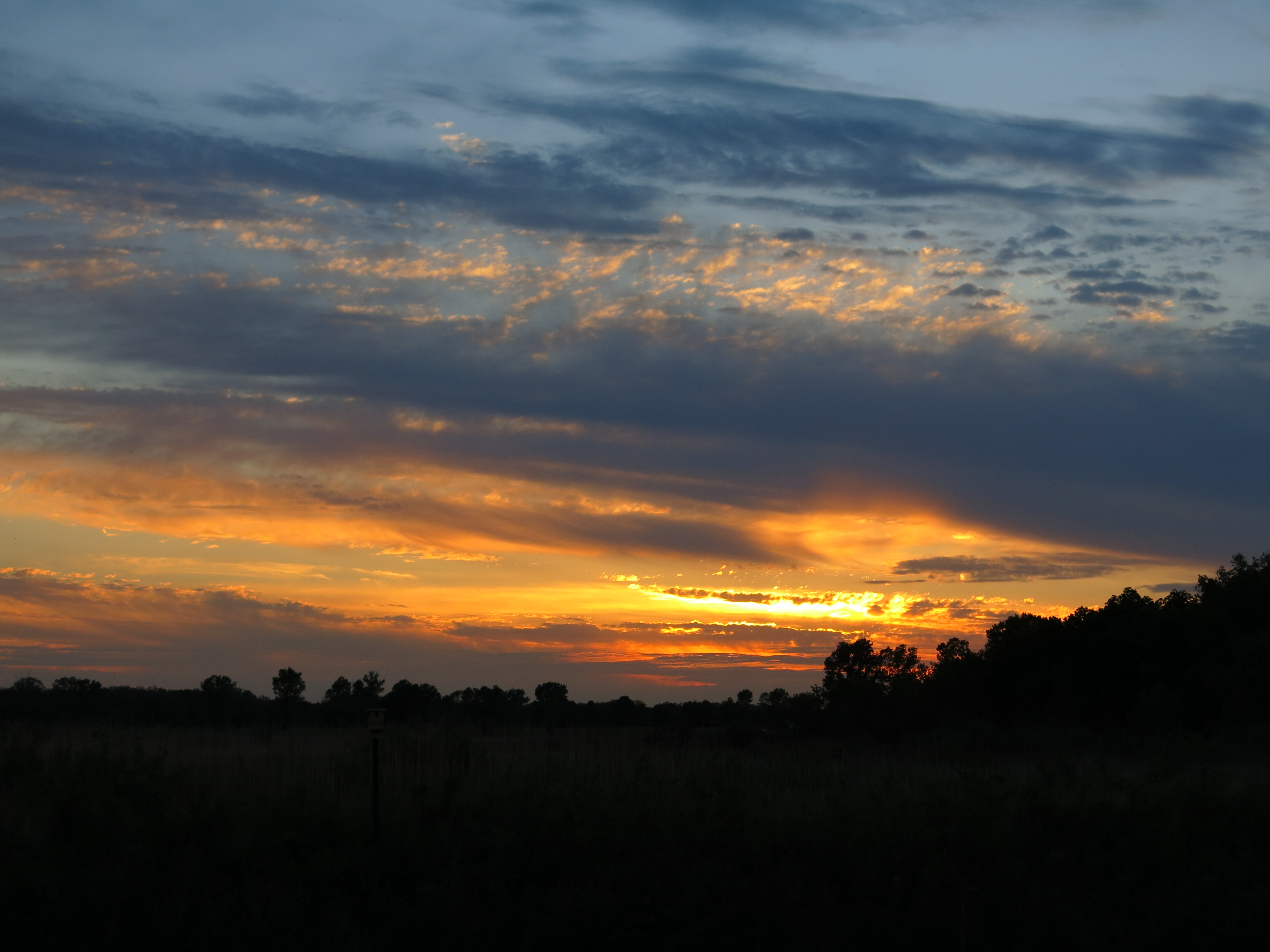
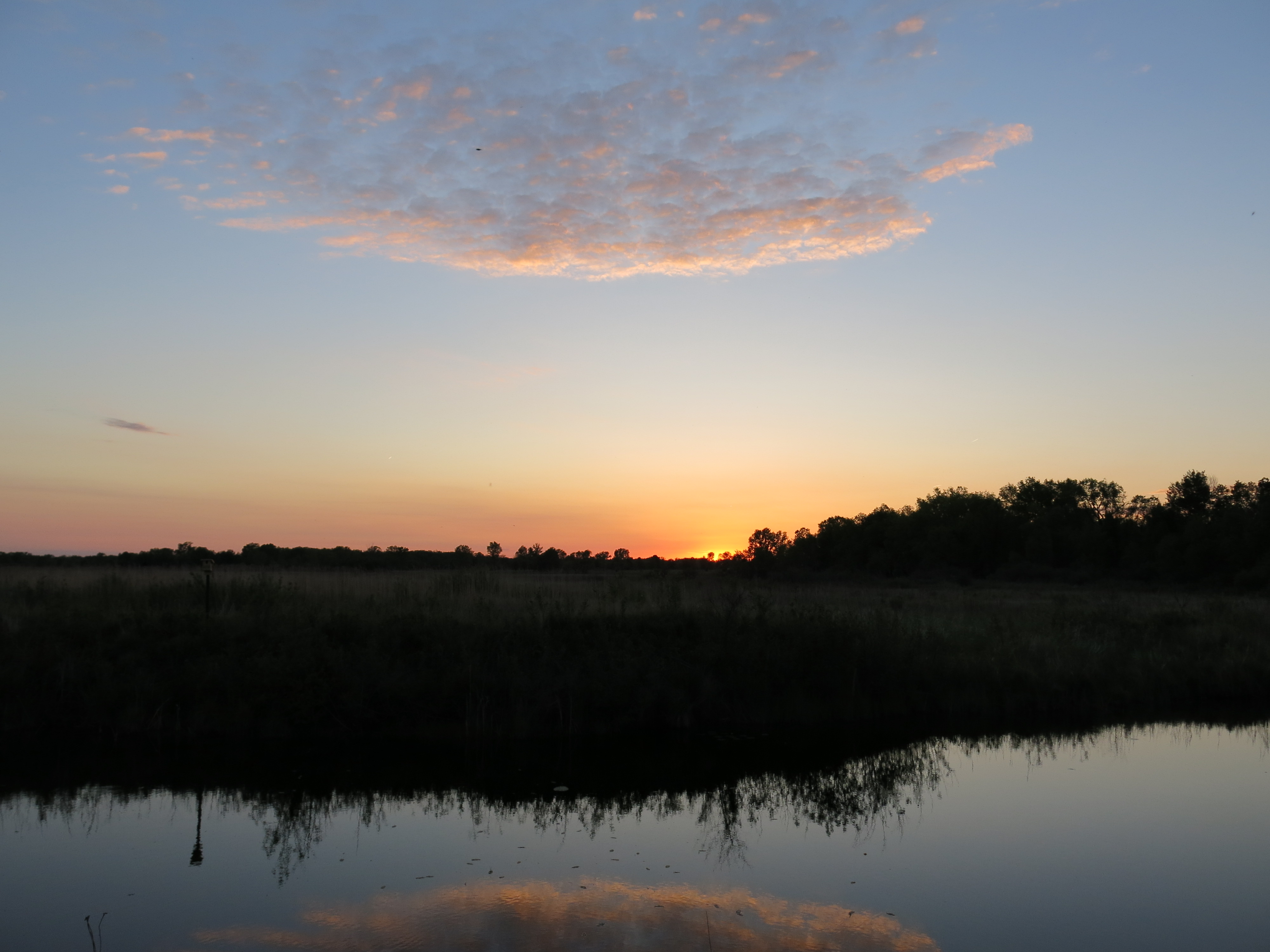
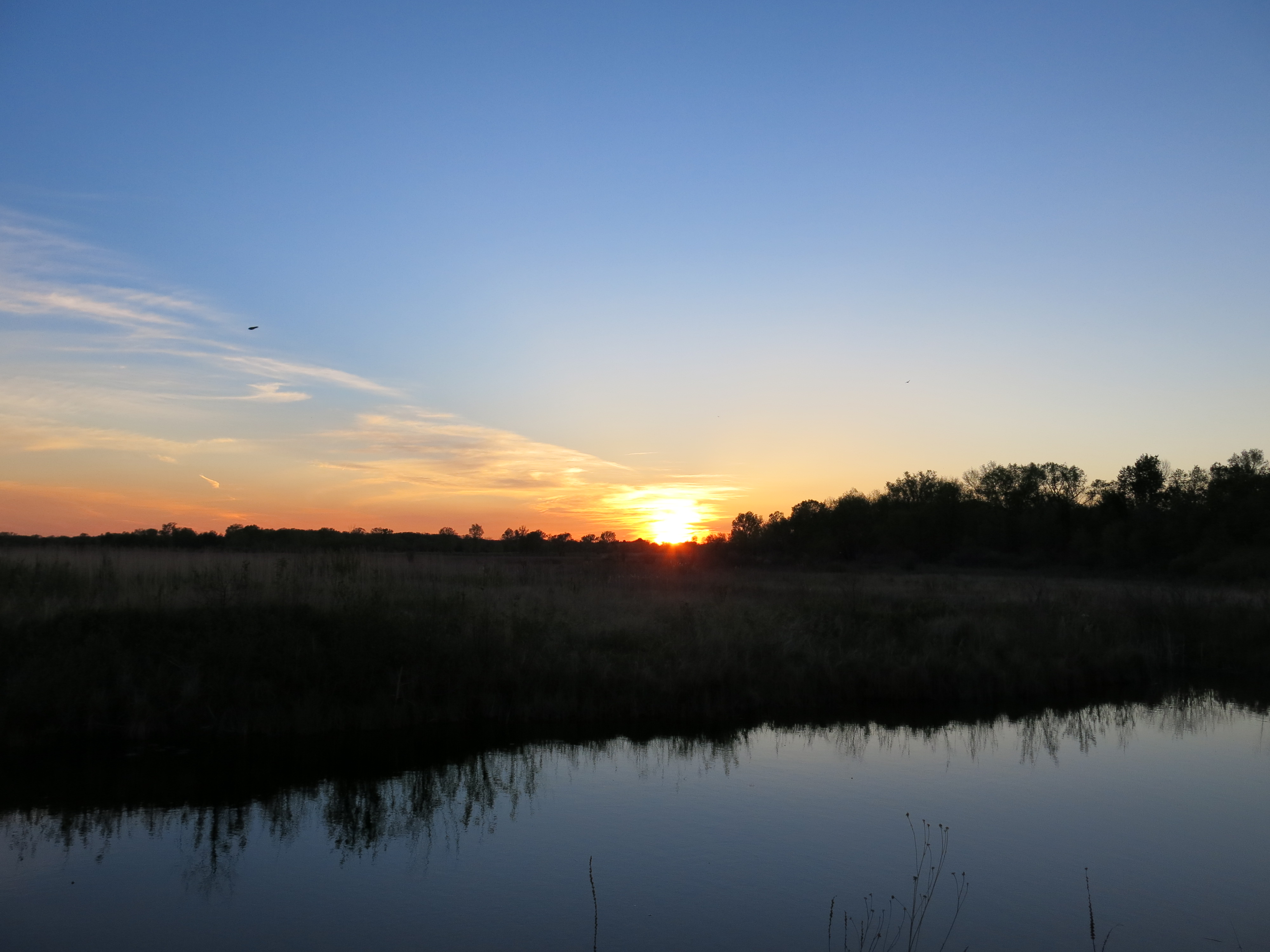
I thought it was going to be a classic Scuppernong Sunset as I bathed in the river, but this bank of clouds came up fast from the northwest. I can’t remember a spring and summer where we have gotten so much rain so consistently.
Back in the days when I used to stand on street corners passing out dvds and flyers in an attempt to get people to re-examine what really happened on 9/11, I would often hear, “Get a life”, mumbled or shouted at me. “I have a life”, I thought, in which the truth matters and starting wars based on tissues of lies is deadly serious. Nevertheless, the insults stung and dumbfounded me. Why don’t they care? Why are they choosing to remain ignorant? Is ignorance really strength?
Although no one that passes by as I cut and burn garlic mustard, or pull and dig weeds on the sand prairie, says “get a life”, I wonder sometimes if it is the best use of my time. Maybe I should be trying to make some money? And, isn’t the definition of what is, or is not, a weed, a bit arbitrary?
“What is a weed? A plant whose virtues have not yet been discovered.”
I hope you don’t mind me baring my soul like this. I’m volunteering my time — spending my spiritual currency — working at The Springs, and trying, one weed at a time, to make the world a more beautiful place.
Since meeting Jason Dare on the trail last summer, I’ve adopted the approach of following the phenology of the weeds and timing my efforts accordingly; it feels like playing Whac-A-Mole. There are so many weeds out there, and so little time, and I’m just one Buckthorn Man!
Paradoxically, I really enjoyed working on the daunting task of eradicating the invasive, non-native plants, infesting The Springs this past week. I can see the progress being made and I got help from Andy Buchta and Ben Johnson, which was great.
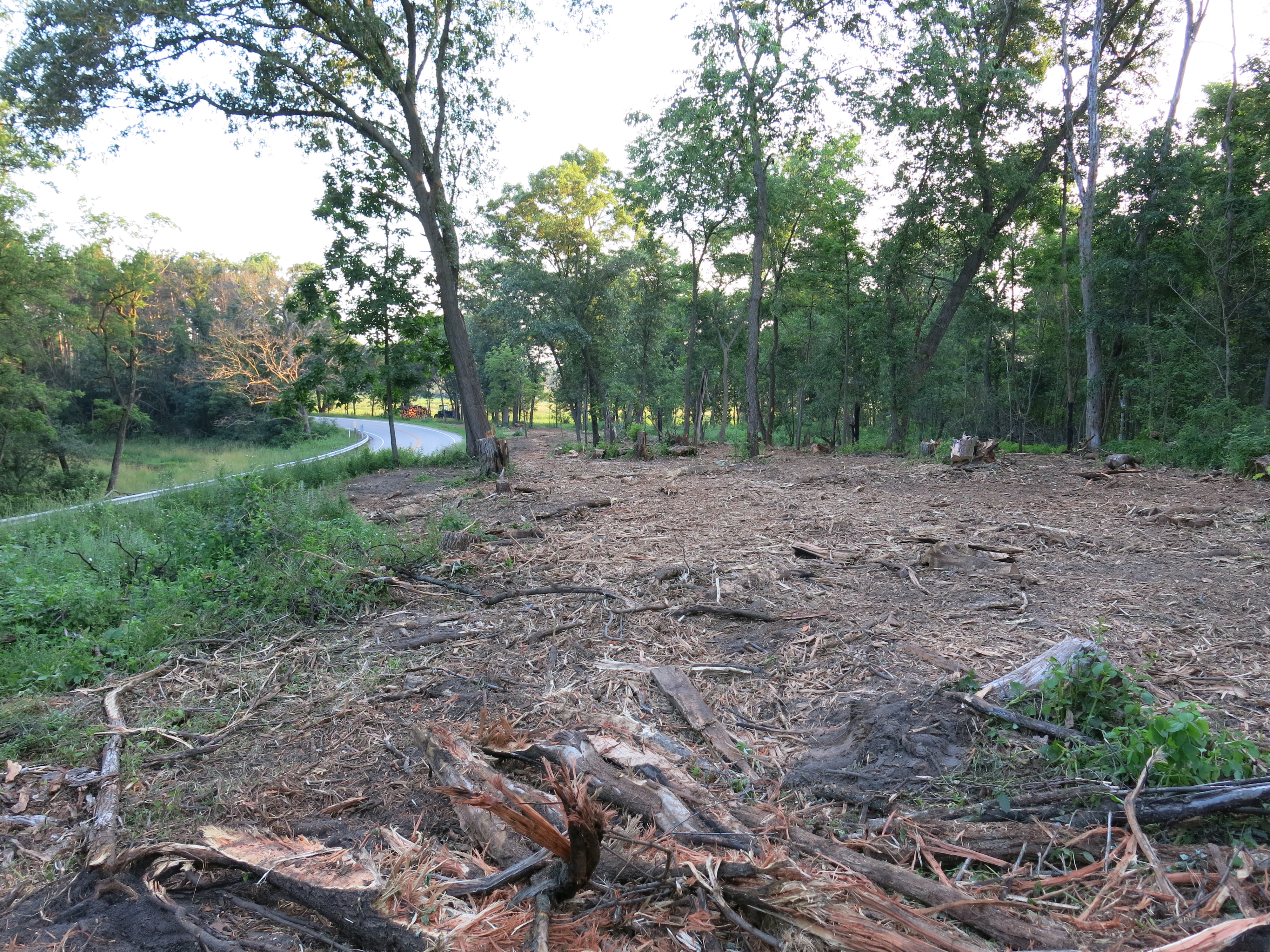
On Tuesday, June 24, I pulled into the DNR 2-track on the south end of the property, and found someone hard at work grinding up the slash from the black locust trees that were recently harvested there. They did the same on the north end of the property last week. Thanks to Paul Sandgren, the Superintendent of the Kettle Moraine State Forest — Southern Unit, for making it happen; this is a huge improvement to the Scuppernong Springs Nature Preserve.
I re-girdled some of the aspen trees just west of the Indian Springs and, hopefully, that clone will shrivel and die. Then I pulled the flowering seed heads from smooth hawkweed and annual hawksbeard. Unfortunately, the sand prairie is threaded with poison ivy, and I got another dose of it on my ankles and legs.
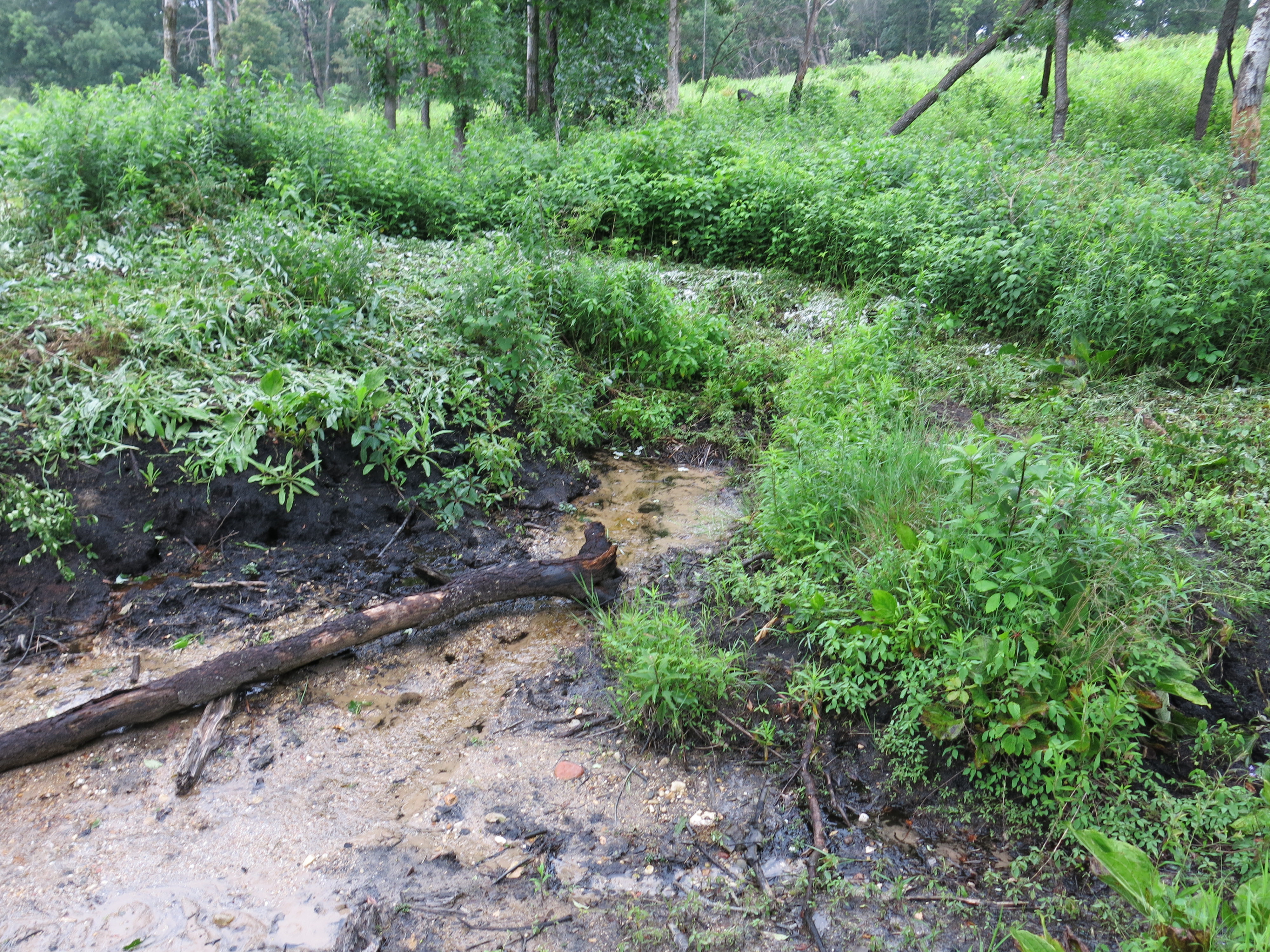
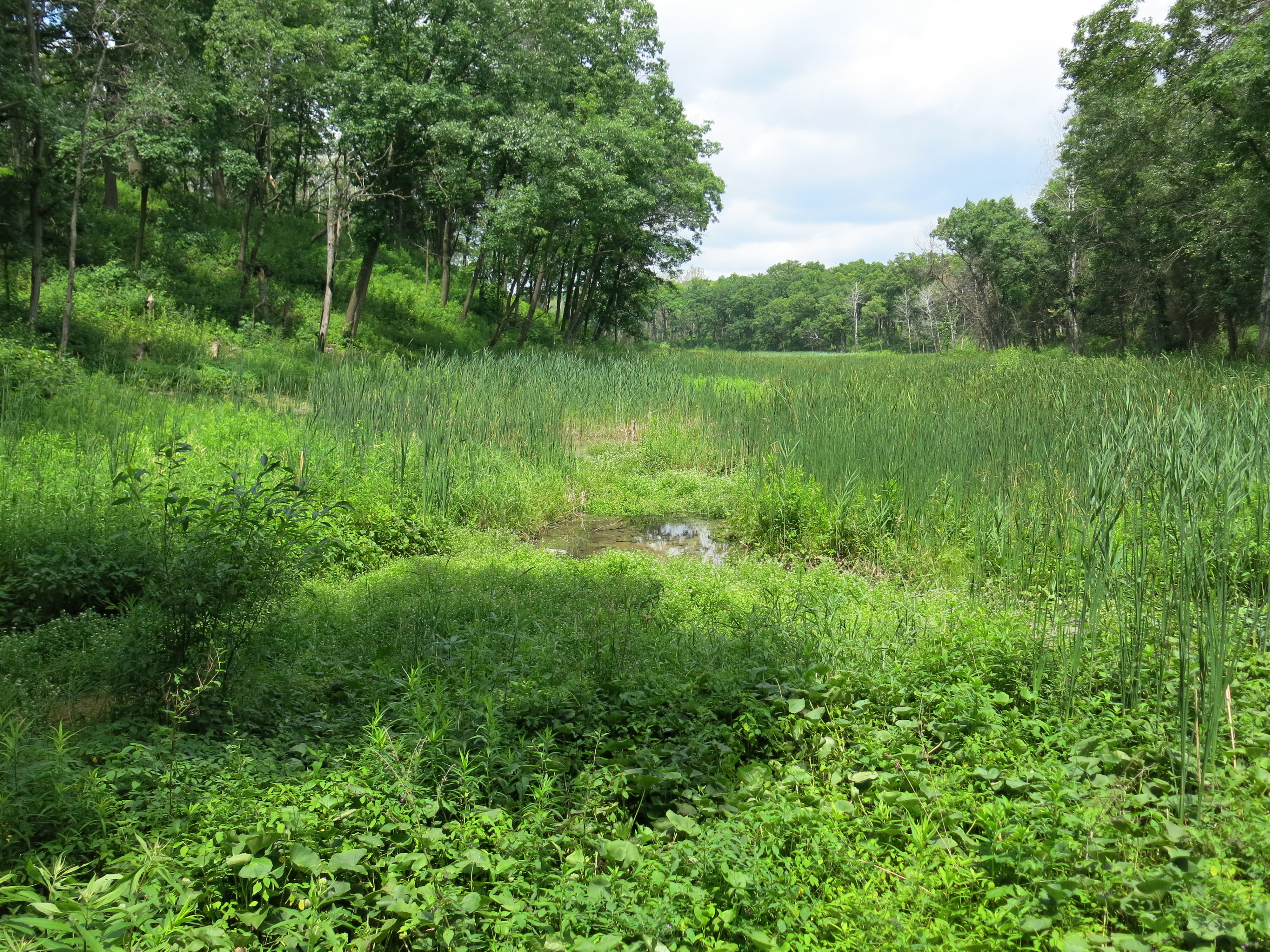
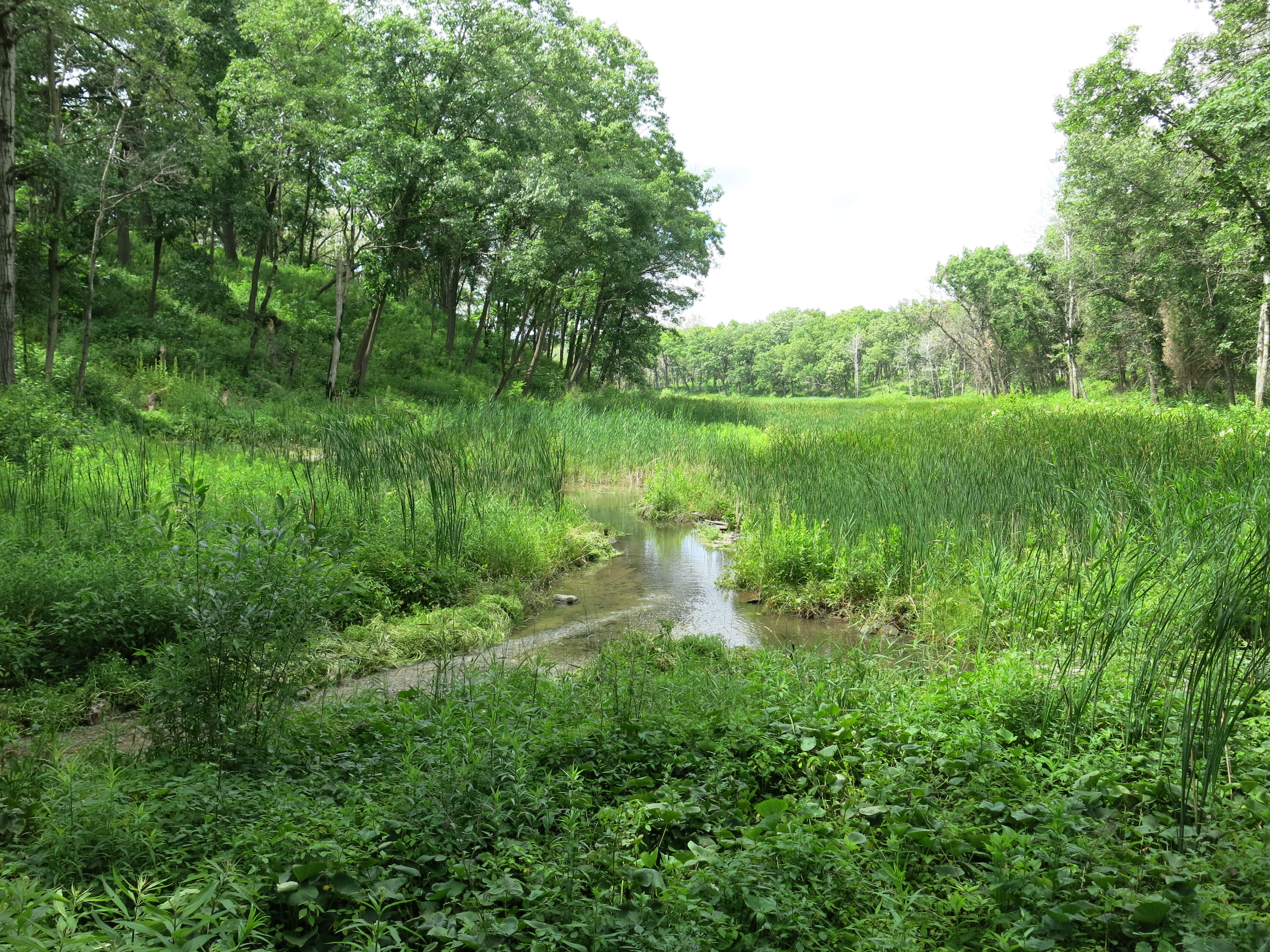
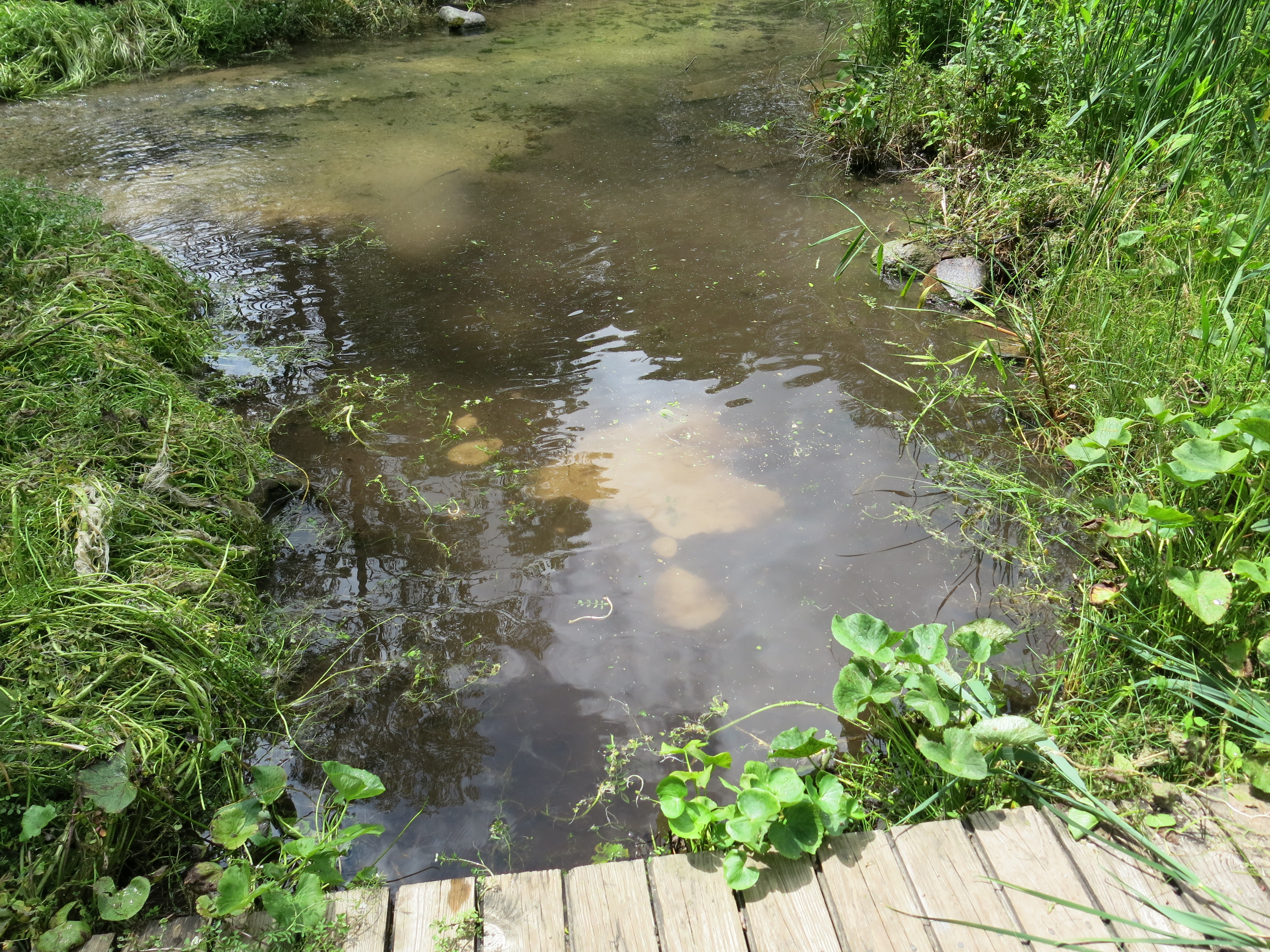
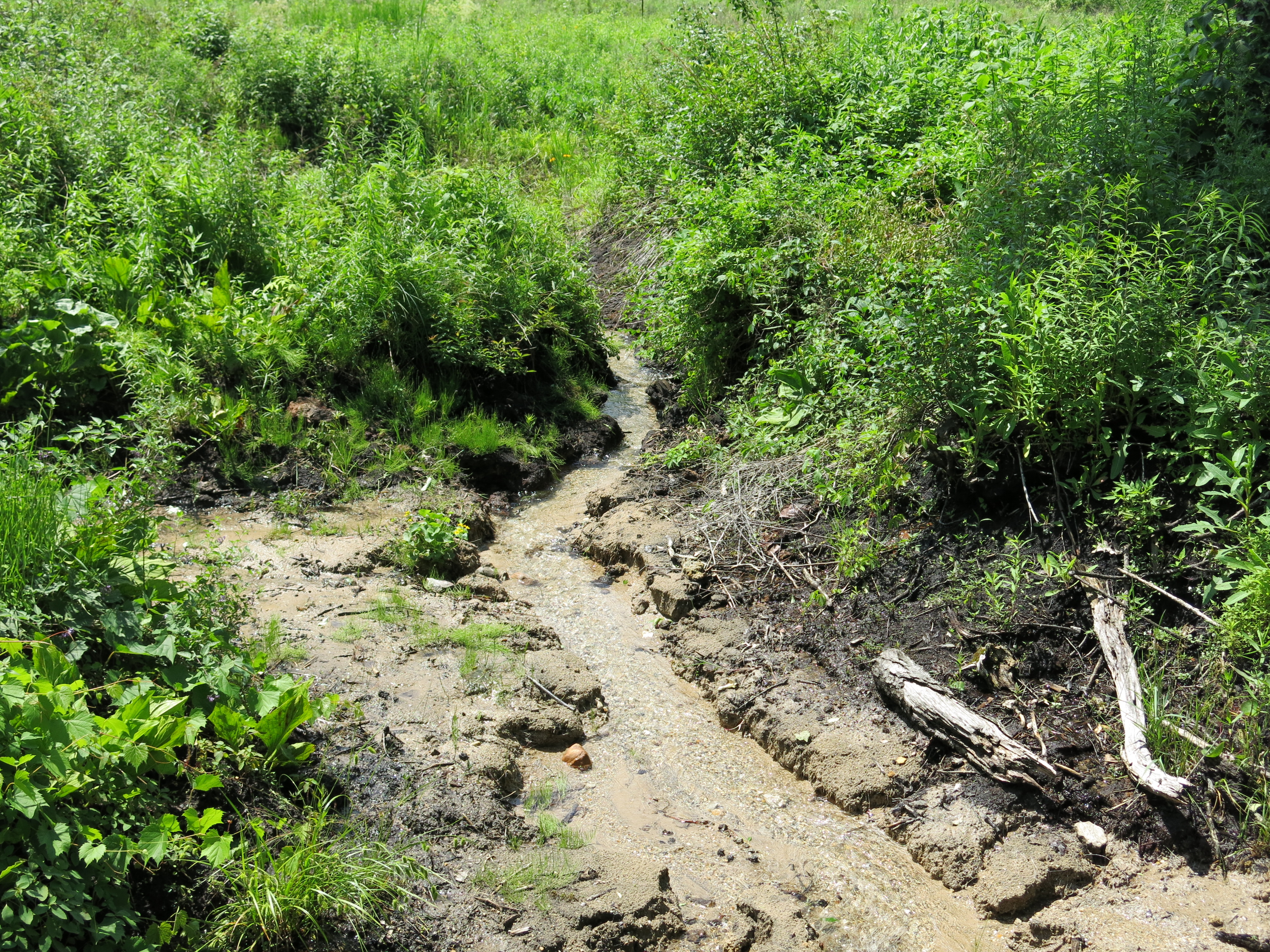
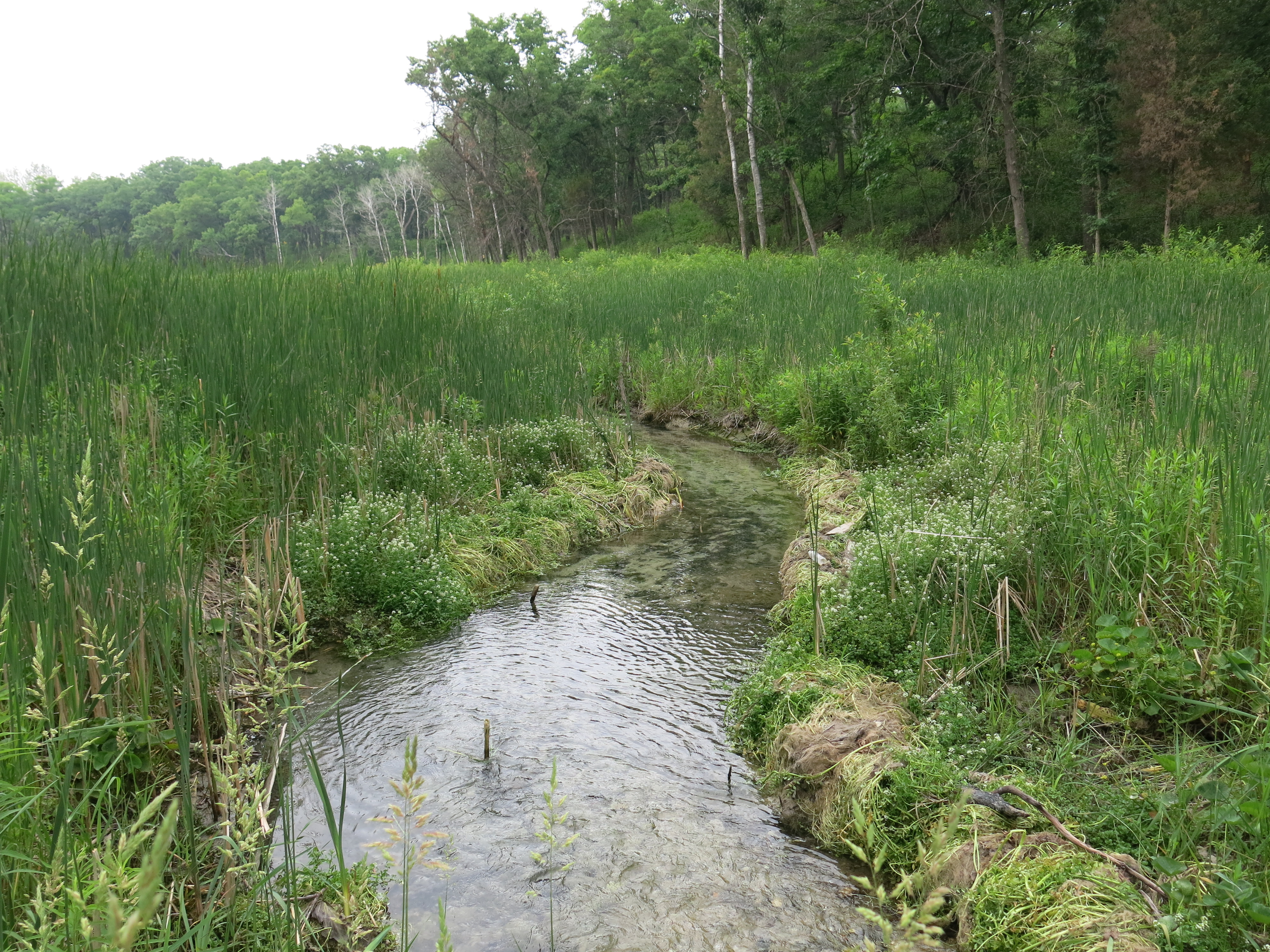
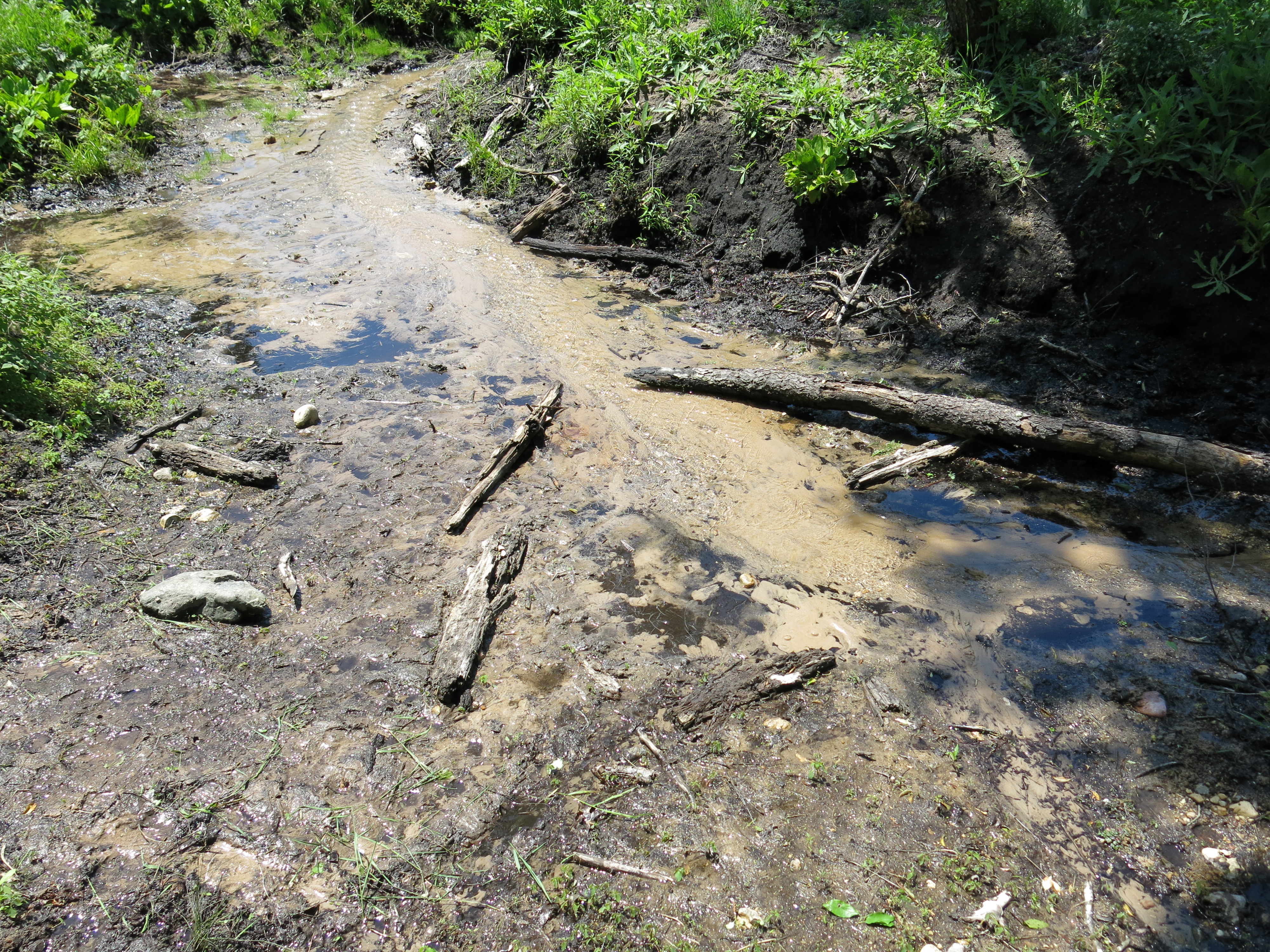
I mentioned last week that I did a little engineering at the Indian Springs, removing a dense mass of peat/clay that was blocking the channel and creating a little dam. Here is how it looks now.
When the stream bed settles down into its new profile, we’ll transplant some native plants to replace the quack grass and watercress that previously flourished here.
The late afternoon was spent pulling and digging spotted knapweed. I contacted the Weedbusters and got in the queue for batches of root and flower weevils, which should be available by early August. The Kettle Moraine Natural History Association is going to cover the costs!
I’ve been watching the area around the deck at the Emerald Springs for signs of life; it’s been a dead zone since I sprayed imazapyr there last year. It looks like some brave grasses and sedges are finally starting to return. I’m really glad I stopped spraying herbicide at The Springs.
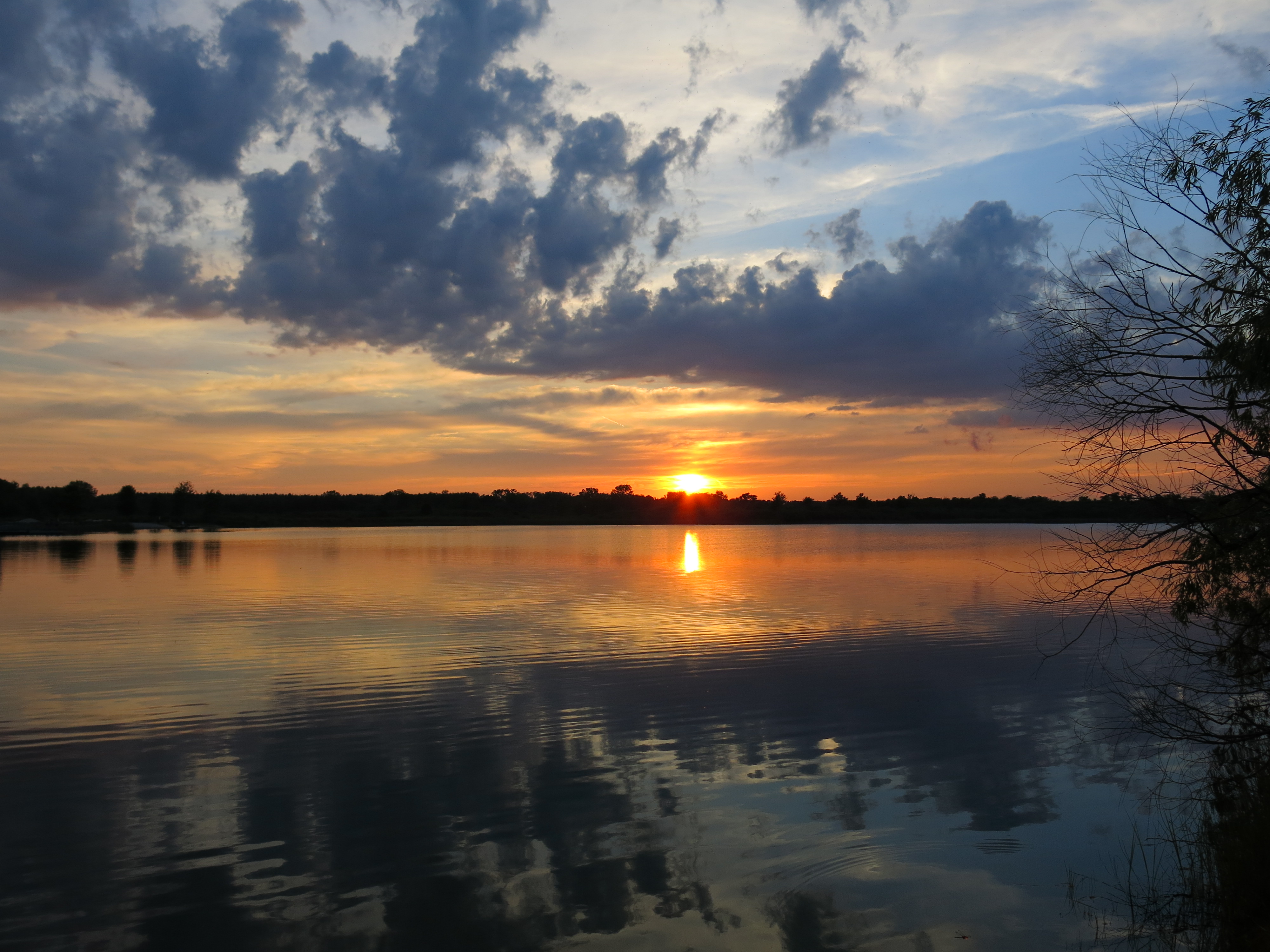
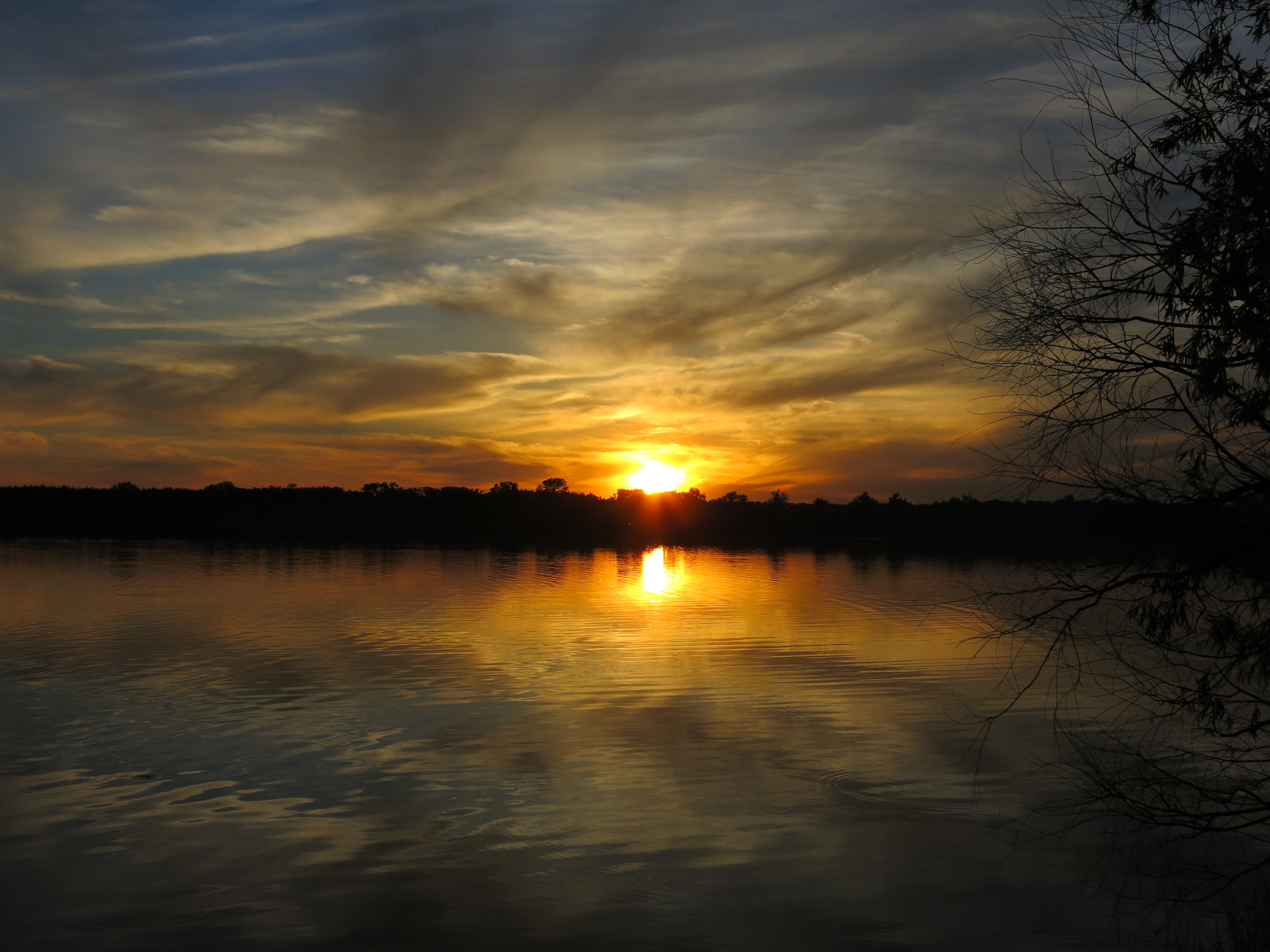
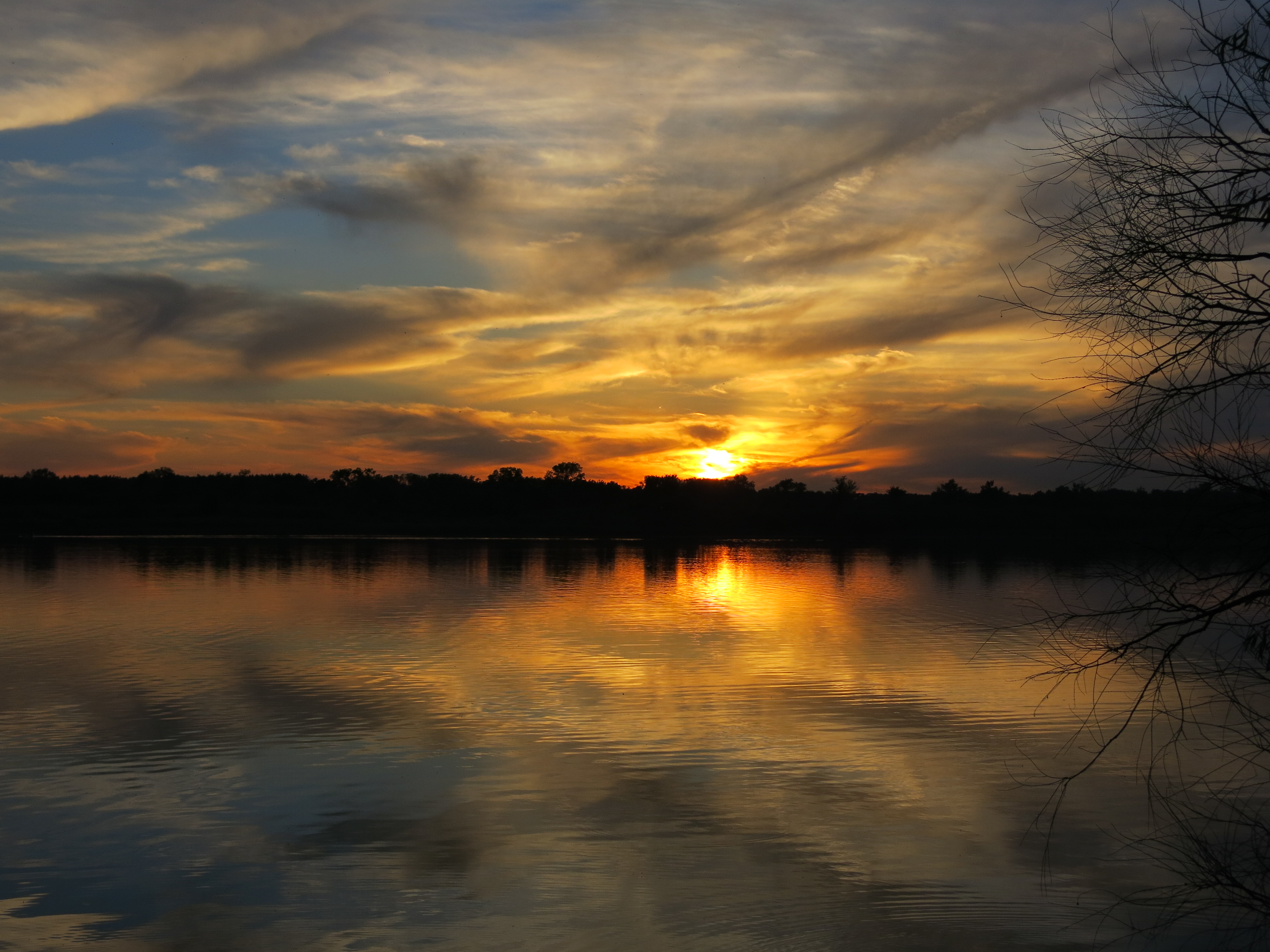
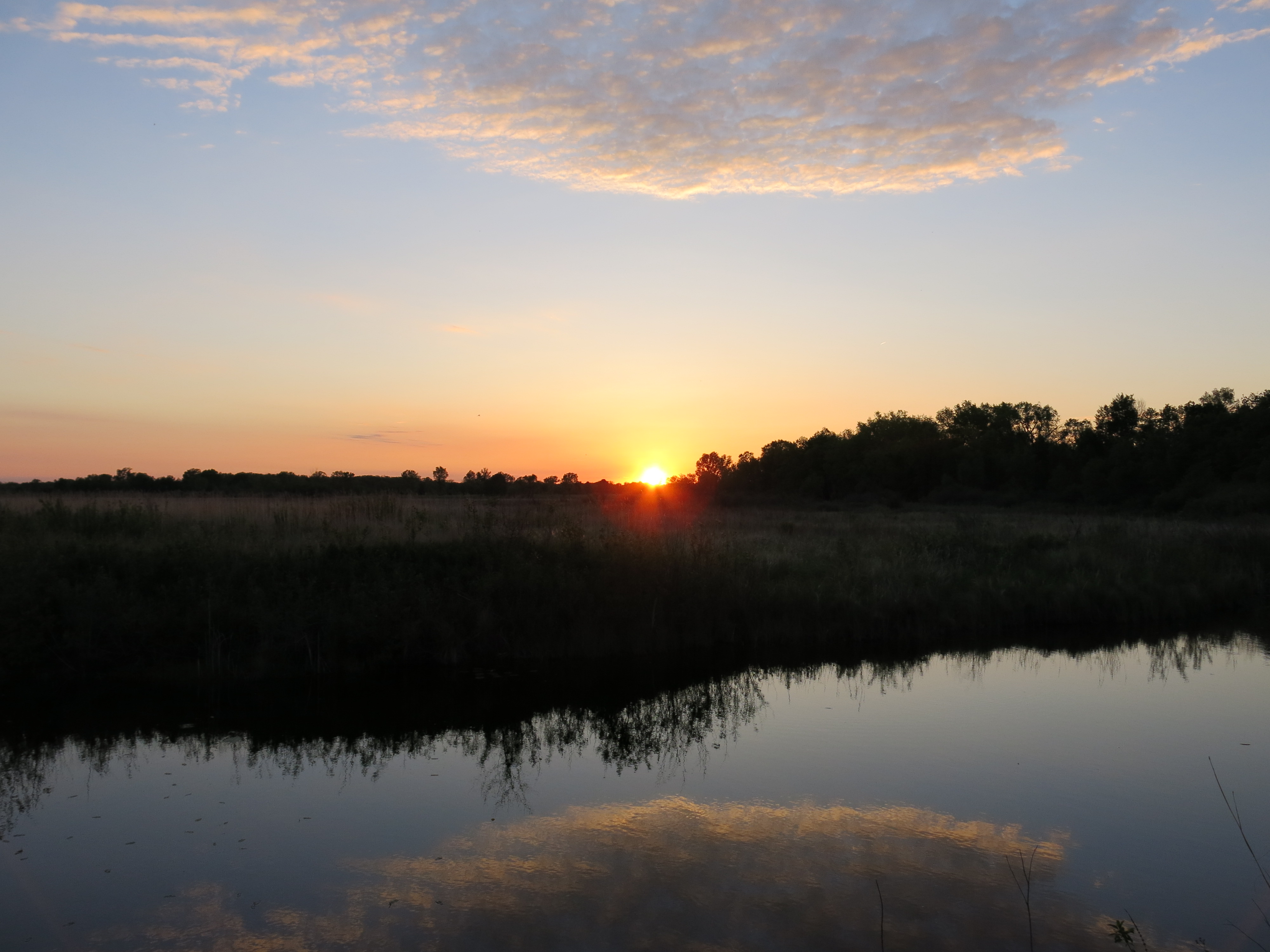
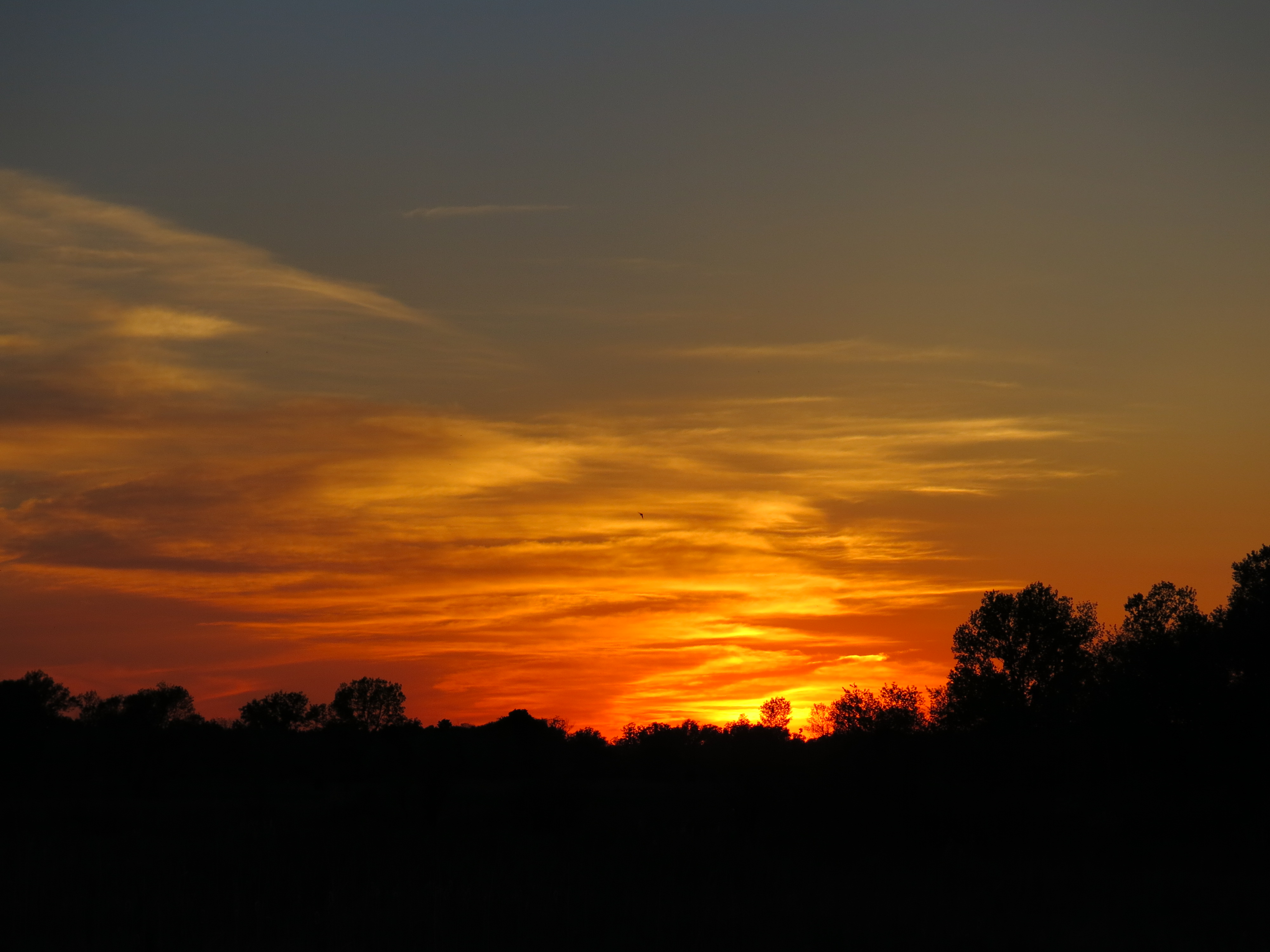
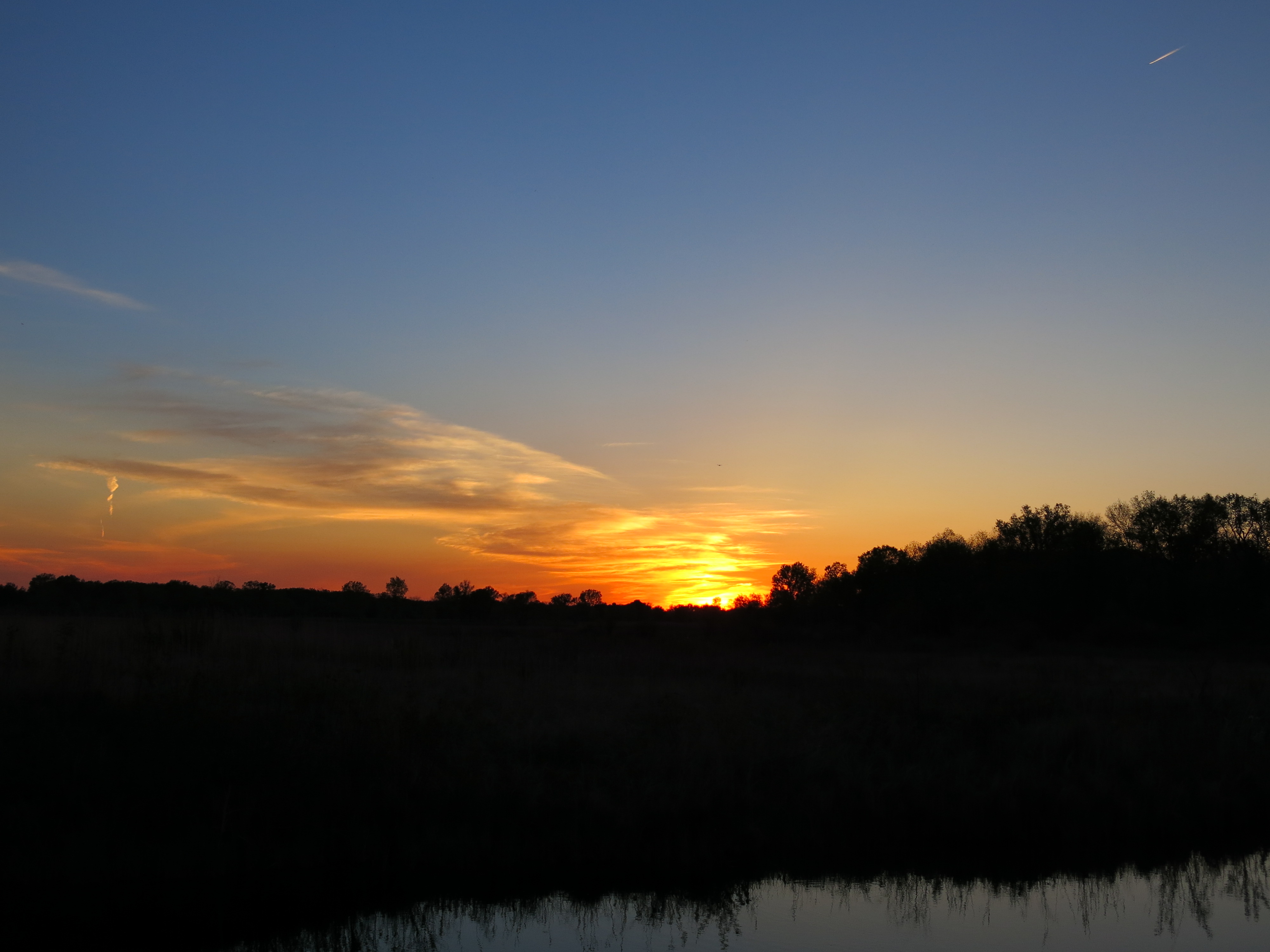
I missed the summer solstice sunset, but this is pretty close.
On Thursday, June 26, I was back at it and, while I worked on the south end of the property, Andy Buchta was piling buckthorn near the main parking lot on Hwy ZZ. Thanks Andy!
I girdled a clone of little aspen that was spreading down the hillside in the vicinity of the Hidden Springs. The mature aspen trees in this clonal colony were girdled last year, and its important to close the deal and get the little ones too. The rest of the day was a repeat of Tuesday, only this time Ben Johnson joined me to pull and dig spotted knapweed. We got a ton of it.
The highlight of the day was harvesting lupine seeds from the west facing slope of the sand prairie and sowing them along the trail above. It will be sweet indeed if we can spread lupine across the sand prairie.
It’s been a week of dodging rain and catching rays at The Springs; mostly the former. It’s really wet out there and it’s going to be like a steam bath when the summer heat finally arrives.
On Wednesday, June 18, I waited in my truck for the rain to stop and got in some uninhibited practice on my recorder. I still sound really bad, but I’m learning my way around the instrument and it’s fun to make sounds. When the rain finally stopped I mowed the DNR 2-track access road on the south end of the Scuppernong Springs Nature Preserve with my brush cutter; not the most efficient tool, but dragging a mower out there is a lot of work too.
I followed up on my efforts last week at the Indian Springs by transplanting a few of the sedges that are growing downstream into the area where I pulled quack grass and watercress, just to see what it would take. If you have not visited the Indian Springs in a while, you will be surprised by the new look. There was a shelf of peat/mud/clay around 20 yards downstream from the deck at the main springs that created a little waterfall about a foot high, and I removed this material. So now the outflow stream has found it’s natural bed in stone and sand and the water table has fallen to this new level in the upper area where the main springs emerge. Now we can proceed with the transplants, and hopefully, sometime this summer, replace the deck.
On Thursday, June 19, we had a date with the DNR Fisheries team to observe them performing an elevation study at the hotel springs bridge, but the weather was dicey and they decided to reschedule. I’m hoping they will also study the elevation at the two little foot bridges that are upstream of the emerald spring, as they seem to have the same profile, i.e. a place were an embankment formerly dammed the river and where marl and sand have collected in the riverbed upstream (symptoms of the river not making a natural headcut.) These are locations where humans intervened with the natural lay of the land that we need to put right.
Pati is back from her adventure in South Africa and we had another mission that day to do our monthly river monitoring on the Scuppernong River, where it crosses Hwy Z, just west of forest headquarters. Pati spent 9 years as a research assistant at the Medical College of Wisconsin and she really enjoyed doing a little science in the river!
On the way home, the sun was shining and we stopped at The Springs to take a walk and there we ran into a team from the USGS recalibrating the measuring devices at the gaging station. I forgot to get their names but they were very friendly and thoroughly explained what they were doing.
The consistency of the measurements are vulnerable to any changes in the river’s profile; moving rocks around, or even a bloom of underwater foliage a few feet downstream, can throw off the calibration.
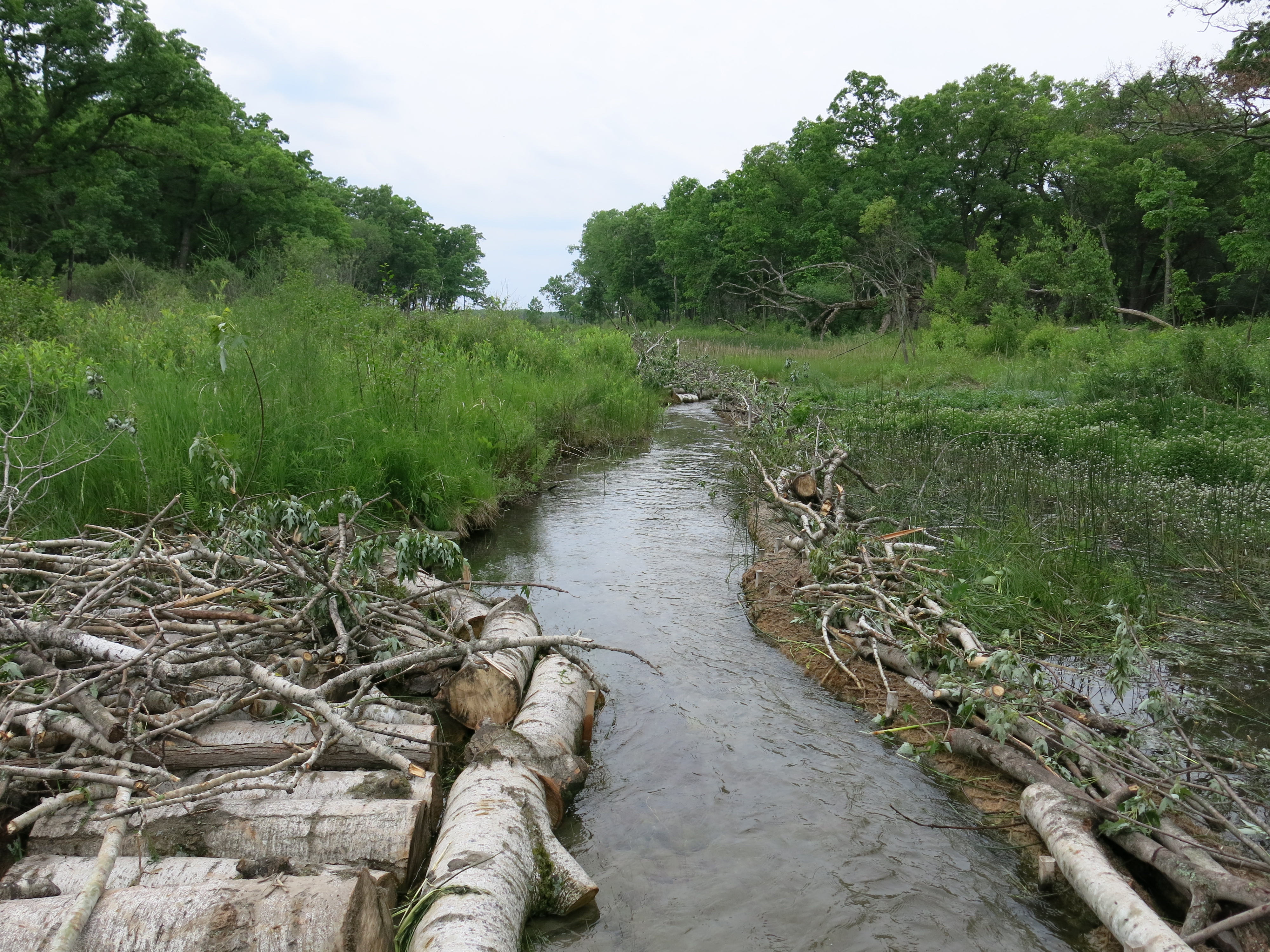
Friday, June 20, I was back at The Springs with watercress on my mind. It was three years ago that Lindsay and I attempted to clear out the watercress that was damming the river and it has come back vigorously since then forming new dams. We started naively thinking we could actually get rid of the watercress, so we pulled out as much as we could, from bank to bank, and heaved it up and out of the river forming huge piles. This released the river’s flow to the pull of gravity and significantly lowered the water table in the whole upper valley (from the Scuppernong Springs down to the old barn site.)
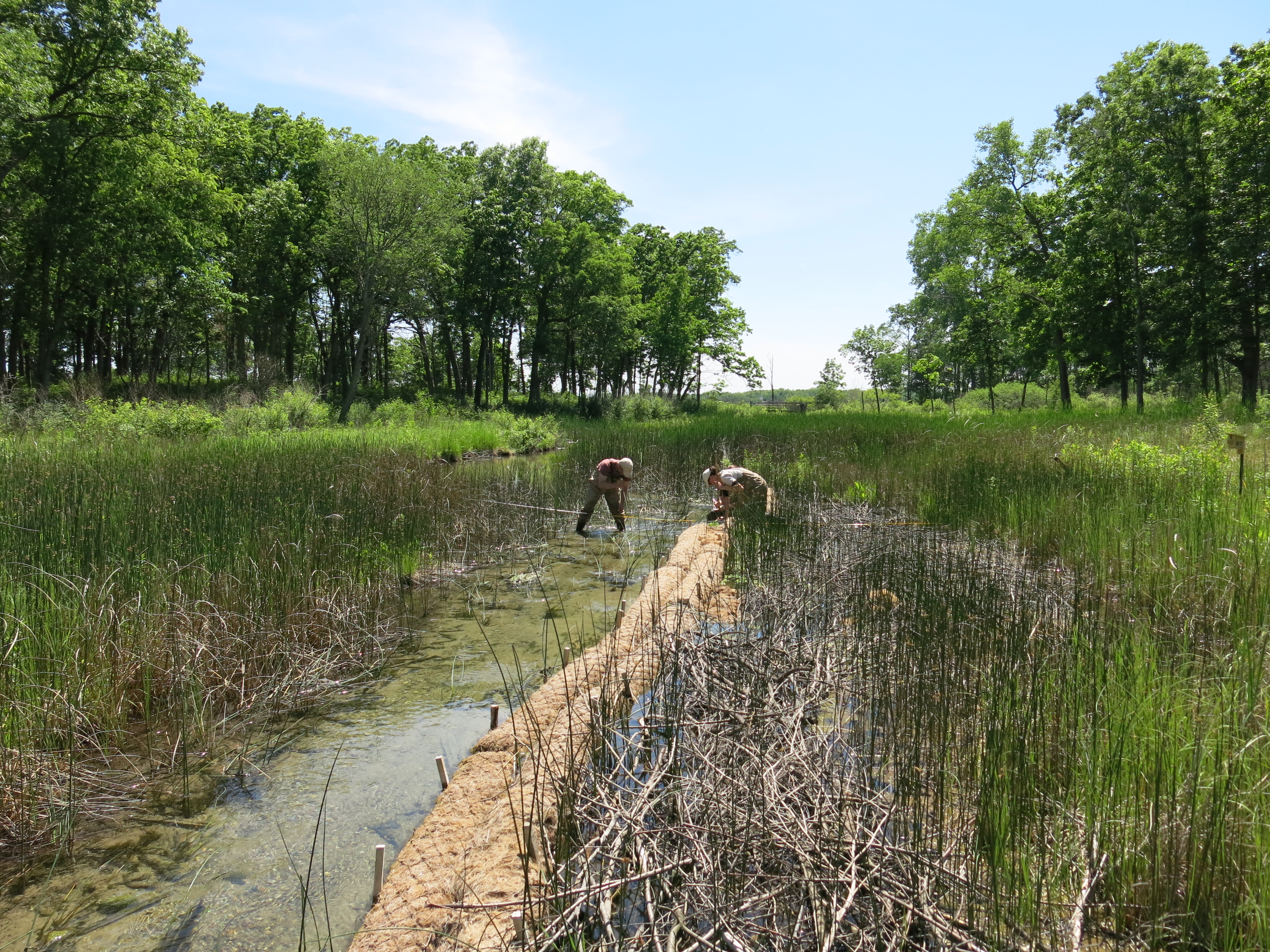
This time around, I decided to try something new. After learning more about how the DNR Fisheries team used bio-logs to shape the river’s course, I thought of using the watercress to form natural bio-logs. When I put my hands down in the riverbed and began to pull up the thick carpet of watercress roots, I realized I could just roll it over and pin it behind the stakes that were still in place from the effort the DNR made years ago to install bio-logs and stick bundles.
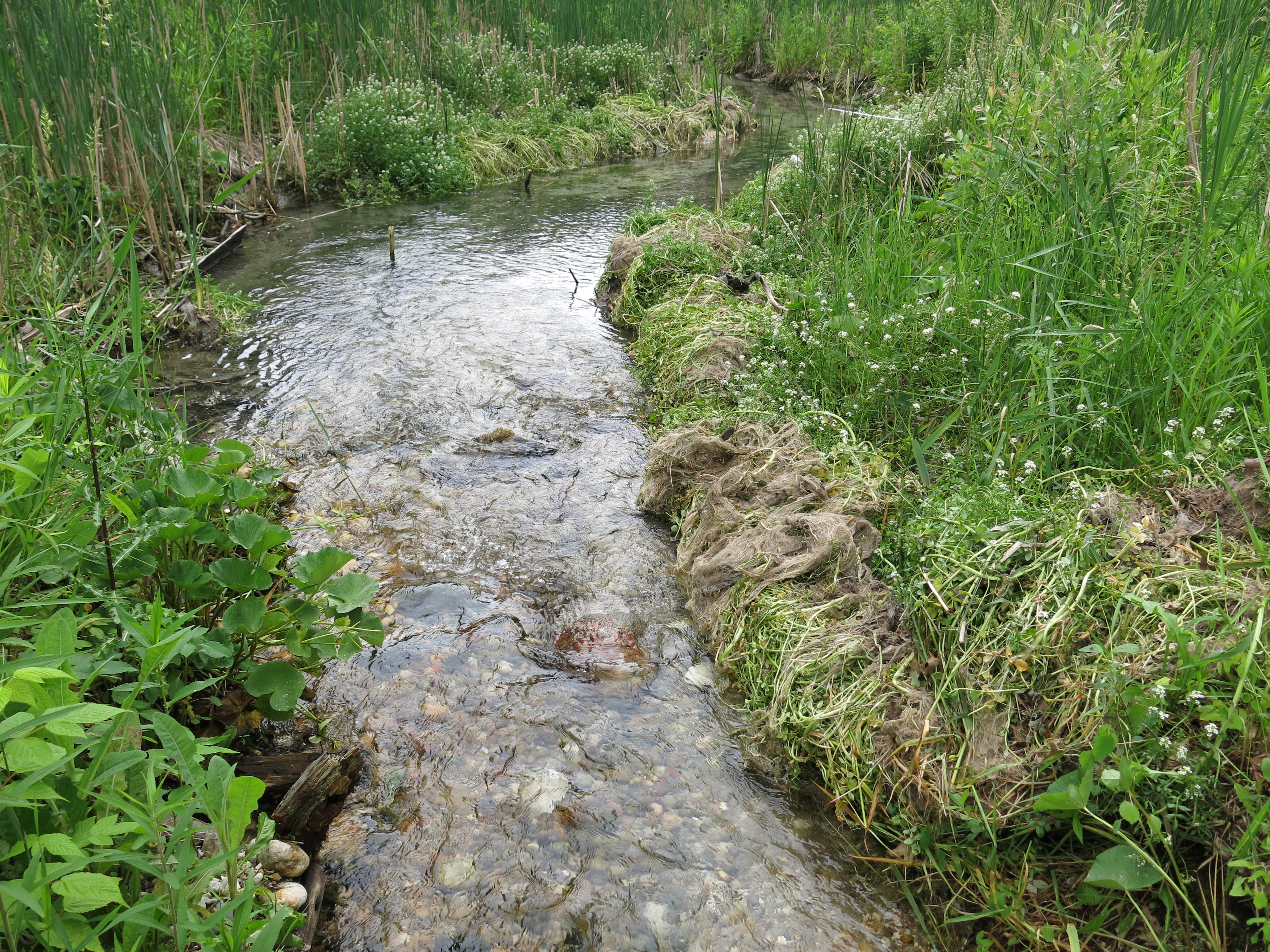
This approach addresses the fact that brook trout need bugs and cover. Leaving the watercress on the perimeter of the river, creates a natural shelf the fish can hide under, and, in a few weeks, new growth from the watercress will again cover the river providing shade and a source of bugs. The difference is that now the watercress root system will not be clogging the main channel of the river. Of course, it will grow back into the channel and again have to be rolled out, but each time a layer of marl and mud will come with it deepening the main channel. Well, enough talk, here is what it looks like now. As far as the long-term results, we’ll have to see.
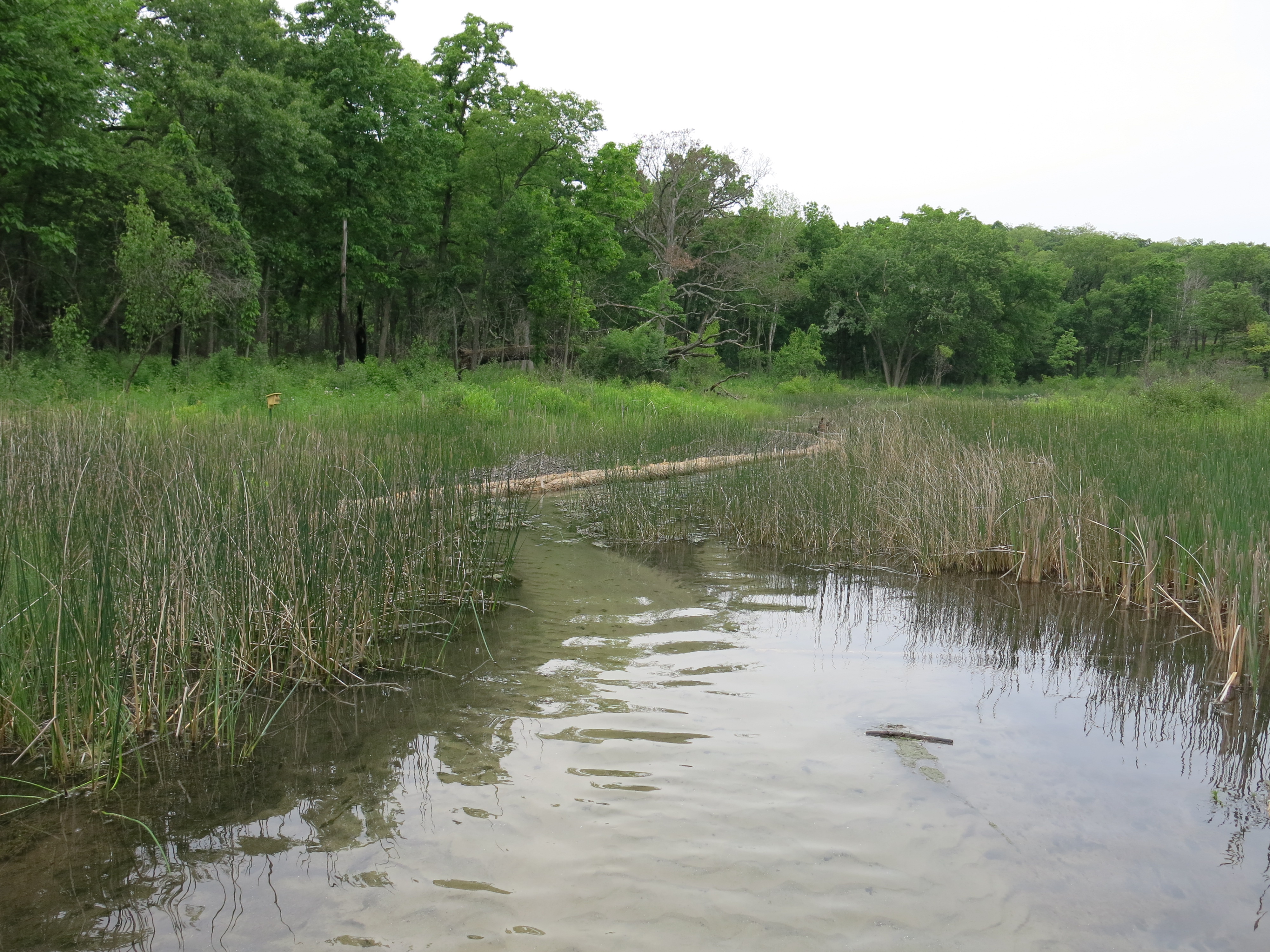
Looking downstream from the first footbridge below the Scuppernong Spring.
Just as we saw back in 2012, the water level fell by 2-3 inches after the watercress dams were removed
.
I think keeping an open channel will also compliment the DNR’s efforts to adjust the elevation of the river and produce a headcut. My good friend John Hrobar, who spent his career working with water and studying it’s movement and behavior in complex ecosystems, totally disagrees with this approach and we have had many intense discussions about it. I invite John to explain his position and rational either in a comment to this post or in a separate post.
In fact, later that afternoon, I ran into John and Sue Hrobar on the sand prairie as I was pulling spotted knapweed. They pointed out a few new plants they had not seen before:
Last year, John pointed out that I was cutting all the purple prairie clover in my zeal to cut flowering spotted knapweed. I was happy to show that I learned my lesson, and now we are poised for an explosion of purple.
The sun came out in its solstice fullness and it turned into a hot summer day for a couple hours.
On Saturday, June 21, I joined Jared Urban and the State Natural Areas volunteers at the Bluff Creek SNA to girdle aspen. We worked on the area marked in red below on an aspen clone that they started working on last month. We focused on the little aspen that were spreading out into the prairie.
Zach Kastern showing Jack and Brandon where to go…
… and how to do it.
Jack, Zach, Brandon, Jerry, Jared and Ginny.
I left shortly after noon to girdle aspen back at The Springs but Zach, Jared and Ginny stayed to finish the job and pull some sweet clover and parsnip while they were at it. It was an excellent learning experience for me and I realized that I needed to follow up on the aspen girdling I did last year to make sure the clonal colonies were completely killed.
I love to landscape the landscape at the Scuppernong Springs. This distinguished tract of land deserves our love and attention for the sake of its beauty. So please, come out and help me dig a little spotted knapweed from the sand prairie!
Here is a great image from Landscape Photographer Byron S. Becker: “The photograph was taken in the spring of 2008 along Suppernong River near sundown. The camera was a 4×5 with a 90mm lens, using TriX 320 film and the exposure was 2 minutes; the developer was Pyronal.”
Below is an example of Kristen Westlake’s Fine Art Photography. You can see more of her images of The Springs, and all of her other outstanding work, here.
I had a wonderful week of beautiful weather for landscape gardening at The Springs! Last Monday, June 9th, I tried something new, per the advice of Jared Urban, and burned the first-year garlic mustard off the cut-off trail with my blow torch. Below is where the cut-off trail joins the main trail at signpost #13.
And after…
I got the worst patches and now the trail is officially “burned in” as Don Dane would say. I spent the afternoon digging spotted knapweed from the sand prairie and was glad to have Ben Johnson’s help with this seemingly Sisyphean task. We focused on cleaning up the lupine patches.
On Friday, June 13, I was joined by Dan Carter, Senior Biologist with The Southeastern Wisconsin Regional Planning Commission (SEWRPC). Dan was continuing SEWRPC’s ongoing effort to document the vegetation at The Springs and invited me to come along.
SEWRPC has divided The Springs into 4 areas for their vegetation surveys:
1) The dry prairie at the springs (aka, the Indian Campground)
2) The dry woods
3) The springs, immediately adjacent wetlands, and upper reaches of the creek
4) The fen and sedge meadow in the vast open area immediately to the west (includes trench where marl was mined).
The first three areas listed above are located in the blue circle on the right below and the fourth is in the larger blue circle to the left. Click the links above to view SEWRPC’s preliminary vegetation surveys.
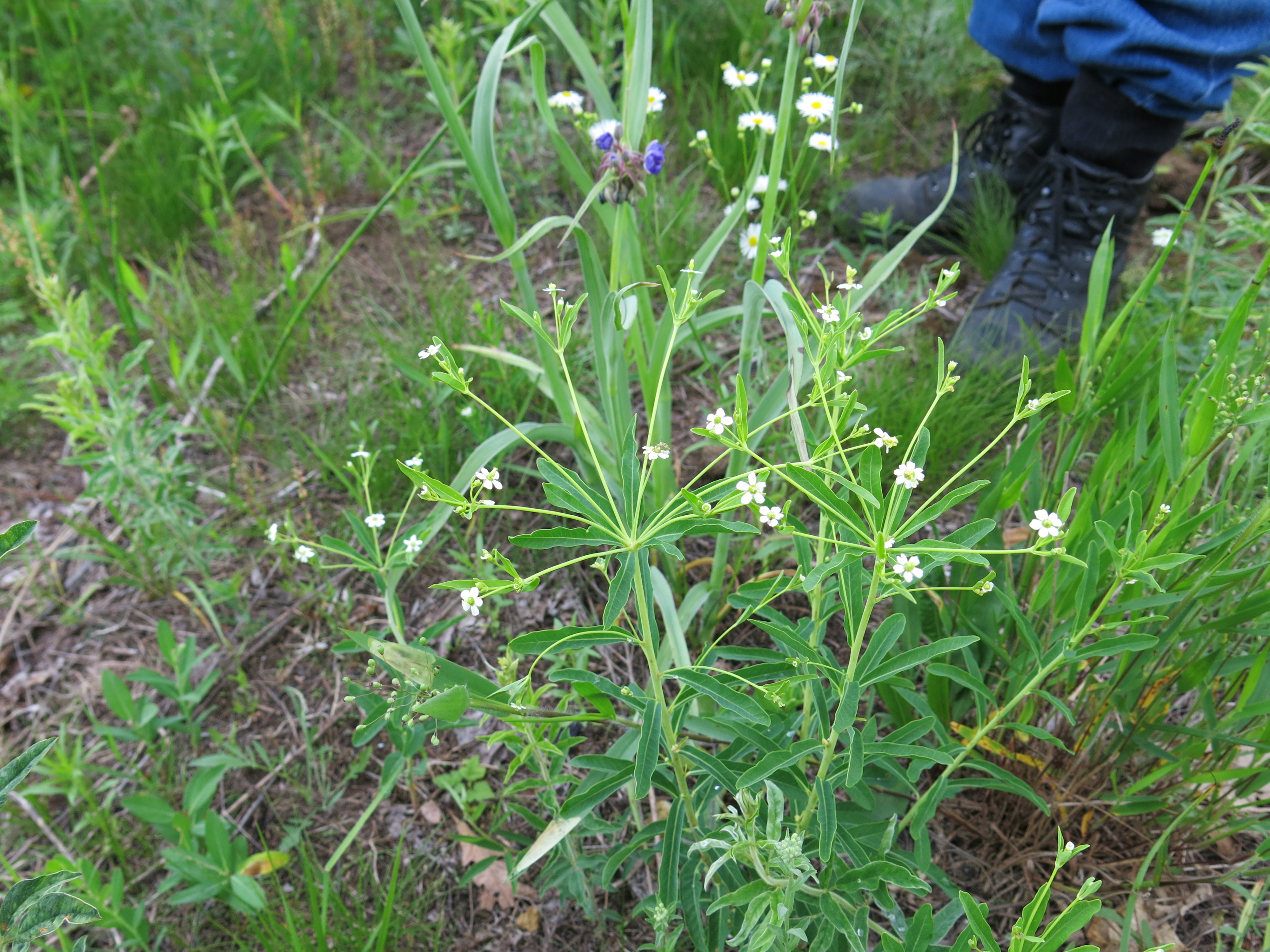
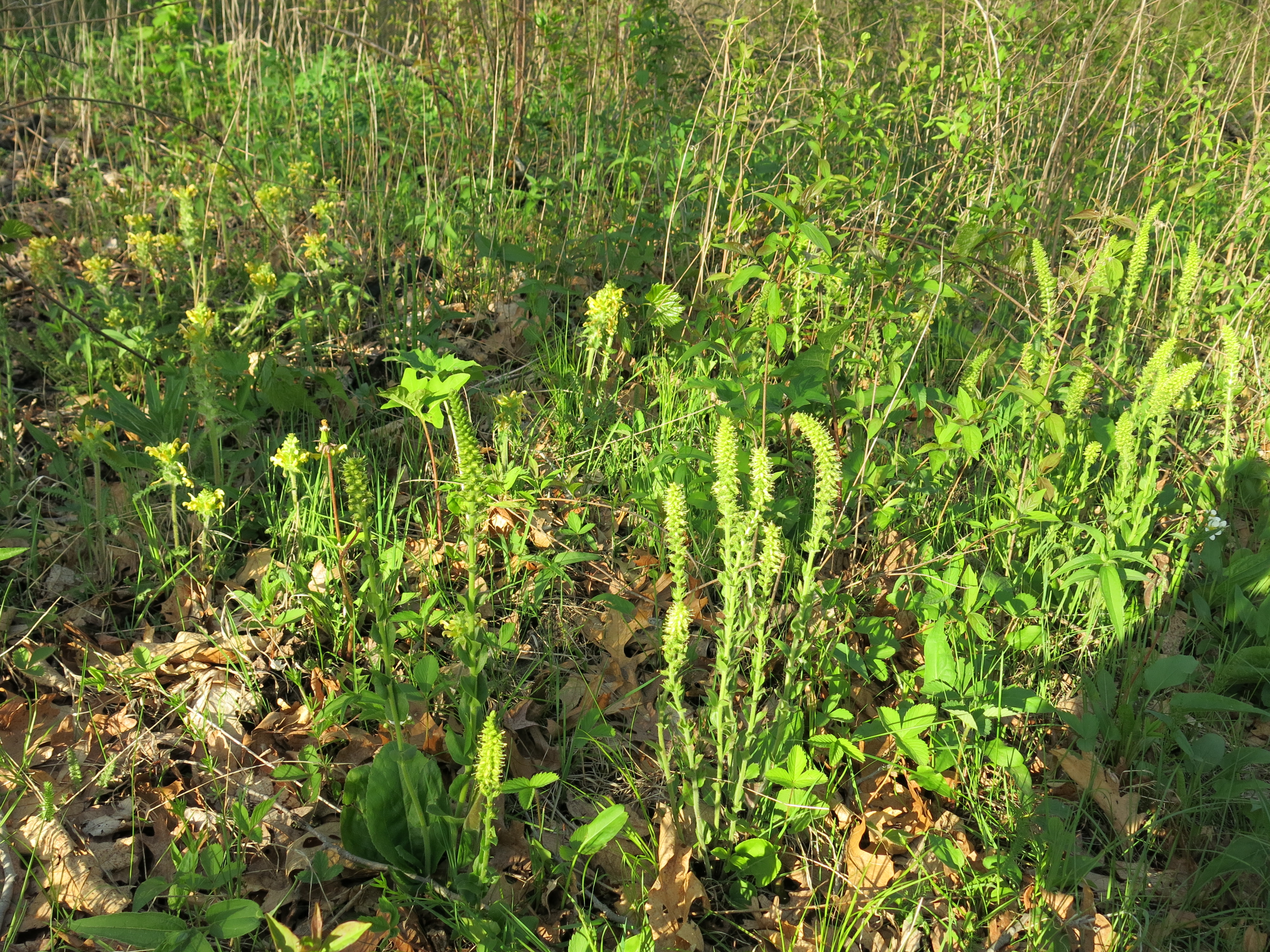
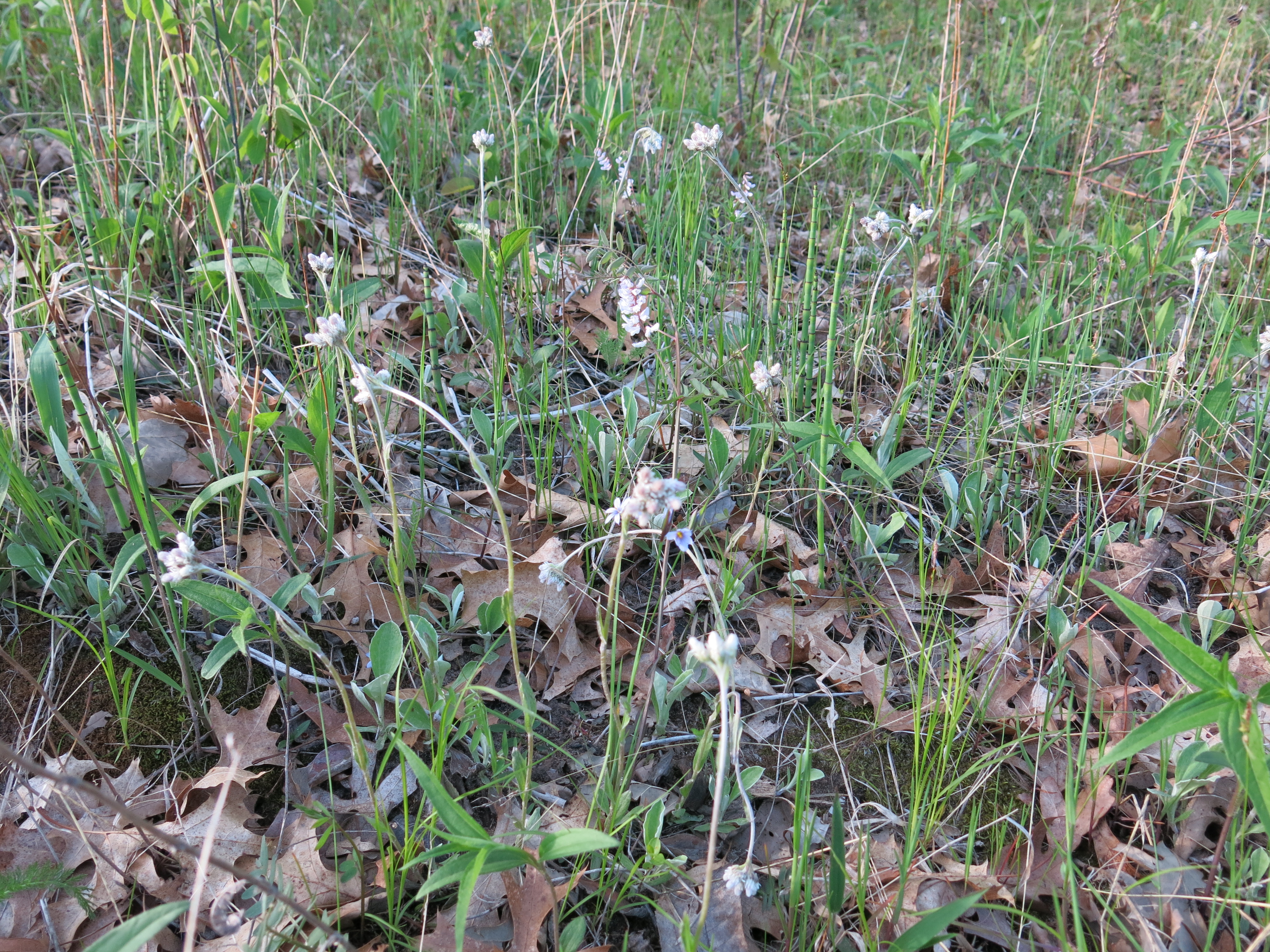
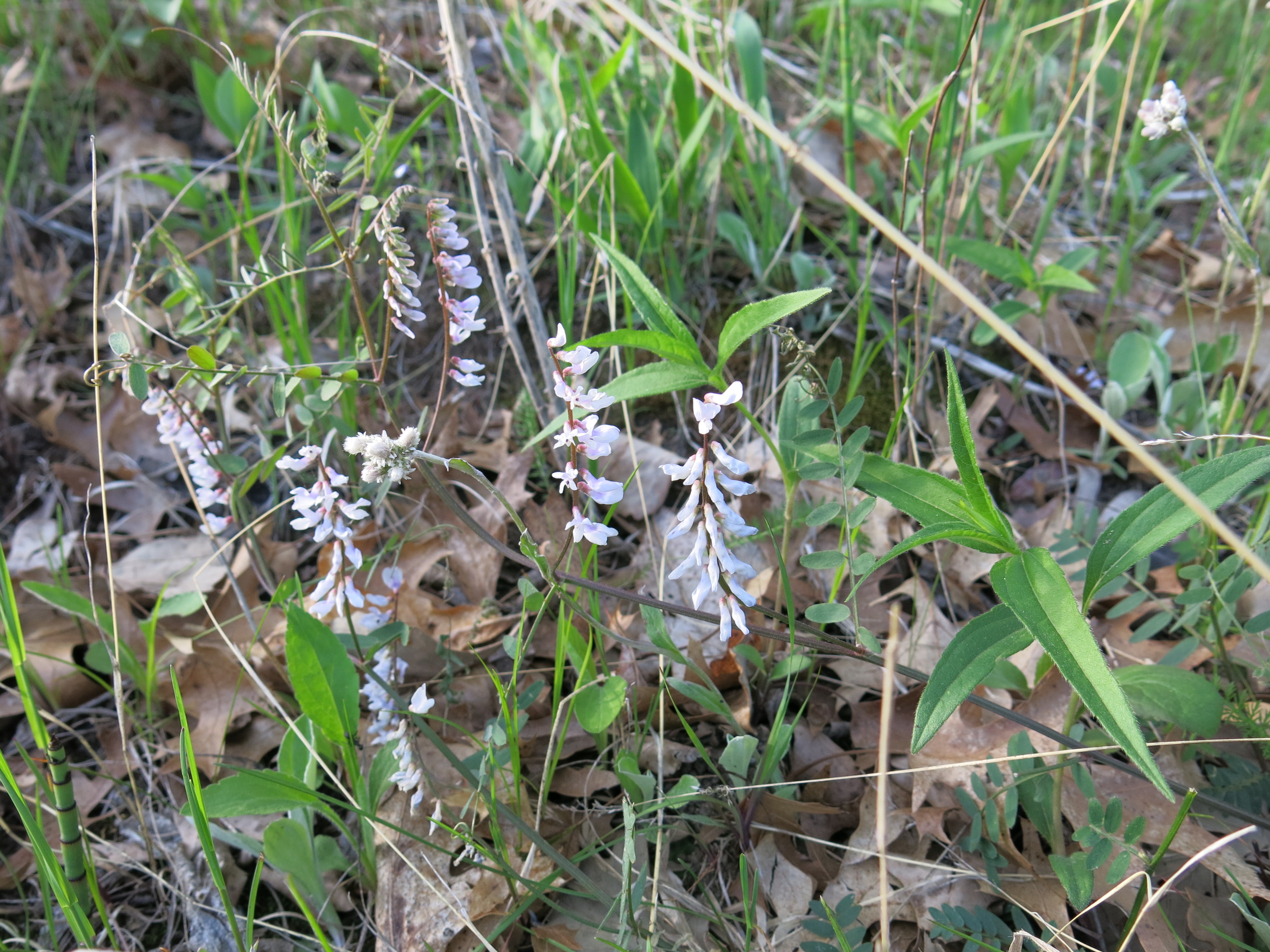
As we walked through Buckthorn Alley on our way to the hotel spring, Dan and I stopped frequently to make notes and take pictures. Dan recently completed his PhD in Biology at Kansas State University and he has a wealth of knowledge, understanding and wisdom. Here are just a few of plants he identified.
We visited the Ottawa Lake Fen State Natural Area and Dan showed me two new springs that I had never seen before. They emerge from the east side of the wetlands and you can find them by walking across the fen from campsite #334 towards the north until you come across their outflow channels.
Of course, there were lots of interesting plants here too.
Thanks Dan, for showing me around the place I love!
I spent the afternoon pulling and digging spotted knapweed on the sand prairie. There is a bumper crop of this noxious invader!
A soothing sunset at Ottawa Lake.
A “Honey” moon at the Lapham Peak Tower.
I had the pleasure of spending yesterday, June 14, at my favorite spot again.
The Indian Spring is being quickly overrun by quack grass and water cress so I spent the morning pulling these invasive plants. Before…
… and after.
Then I moved up the hill to the sand prairie and continued pulling and digging spotted knapweed. It’s going to take years to get rid of this stuff unless I get a whole lot of help.
Speaking of which, my good friend Carl Baumann, who has been harvesting black locust on the south end of the trail, split all of the logs in my woodpile setting the stage for some cozy fires at My Shangri-La. Thanks Carl!
And Andy Buchta noticed the freshly cut buckthorn by the main entrance on Hwy ZZ and he has commenced to piling. Thanks Andy!
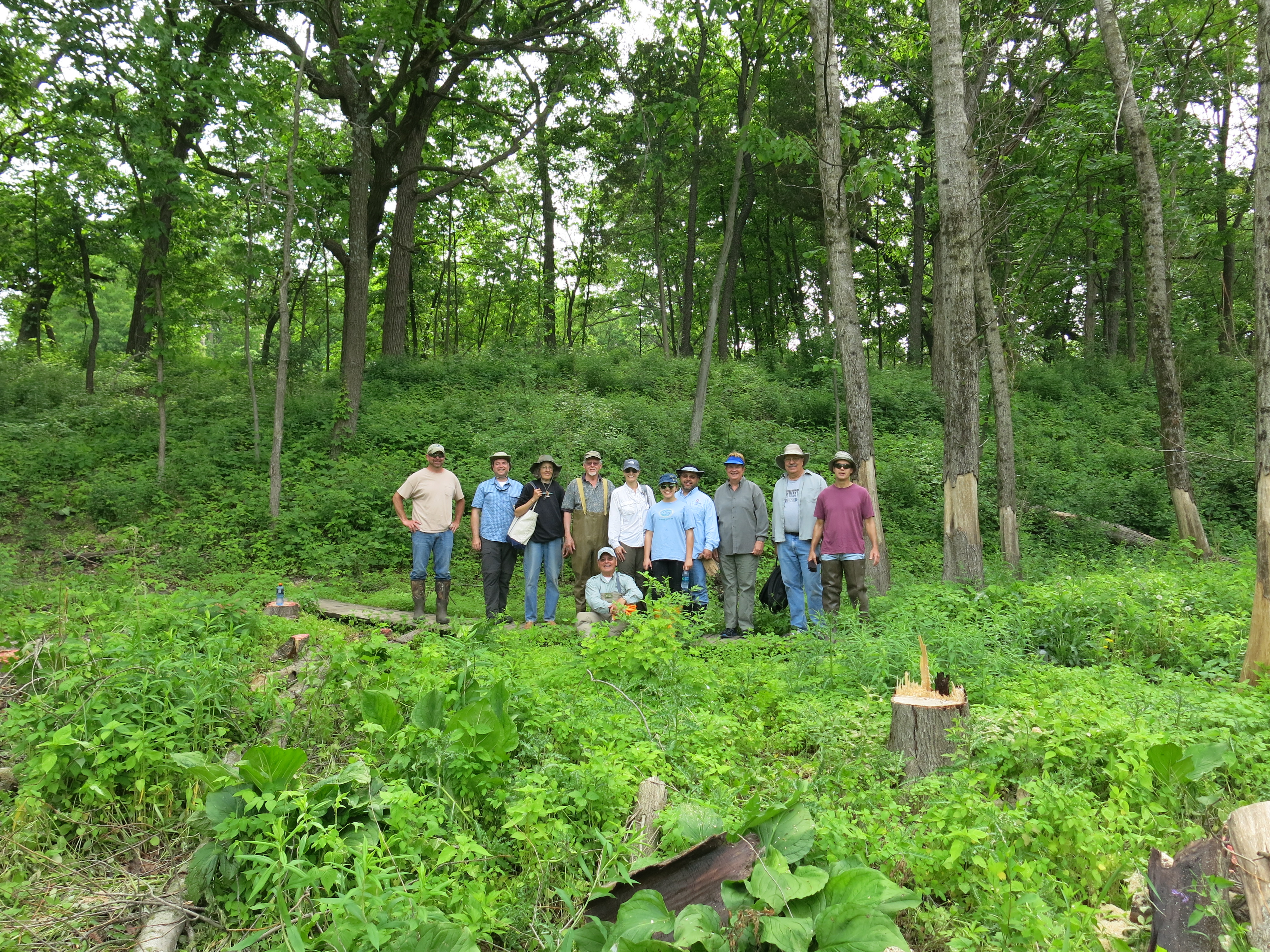
Ben set the table last December with 2 workdays on the river where the DNR fisheries team, along with help from Southeast Wisconsin Trout Unlimited, installed dozens of coconut hull biologs to re-establish the river’s natural meander. Then Mike, a trout unlimited volunteer from Wilmette, IL, and Ben coordinated to bring a group of volunteers from Trinity United Methodist Church up to help us fill in the wet areas behind the biologs. I can say unequivocally that this was the hardest working team of volunteers I have ever had the pleasure to work with. They were filled with the spirit for sure!
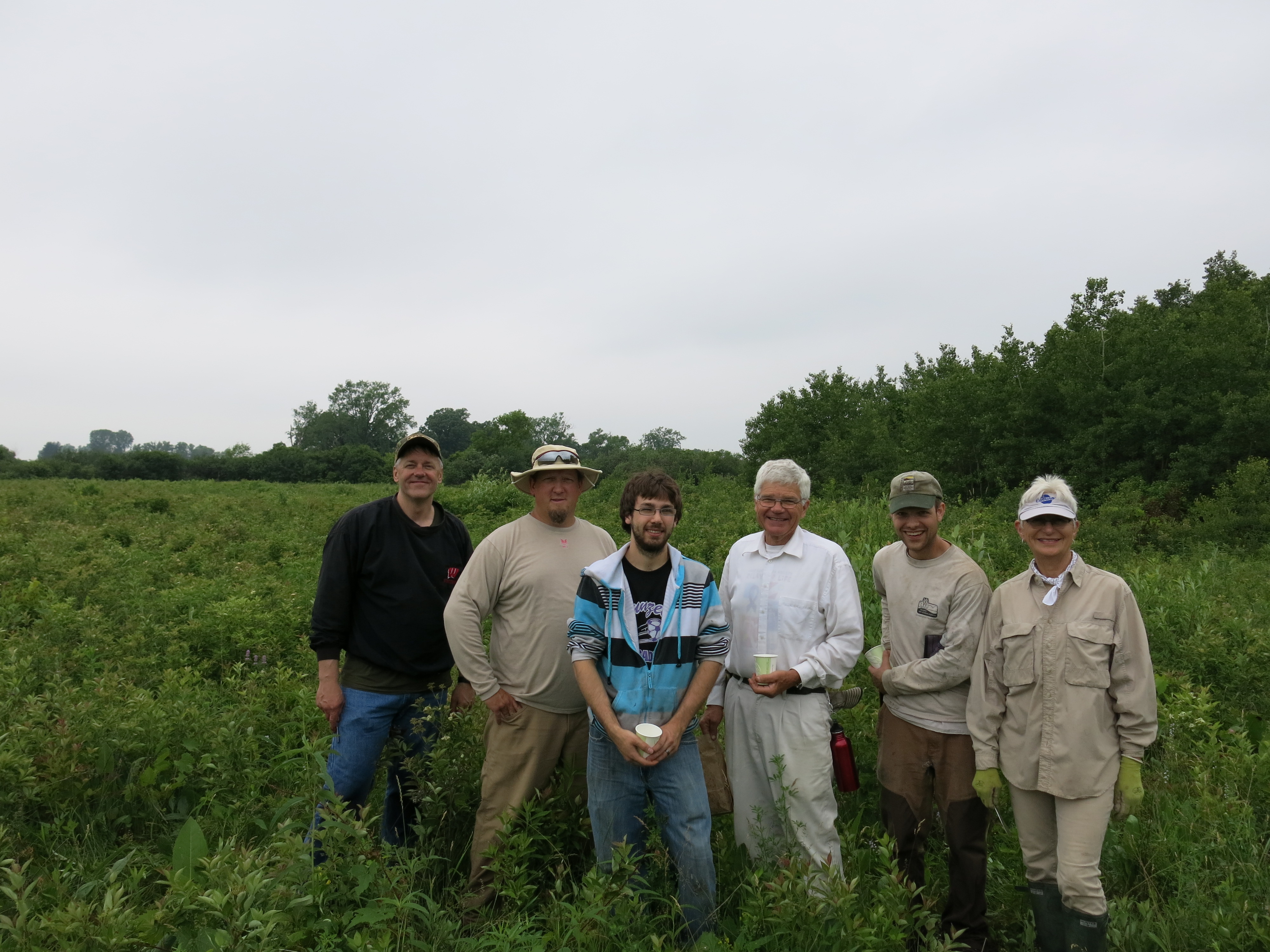
Above that is Ben Heussner, Pastor Brian Smith, Donna McCluskey, Bob Meyers, Sarah Jacobs, Ella and Elliot Torres, Carol Meynen, Tom Board, Ward Reeves and Mike Jacobs seated in front.
Ben Heussner met Ben Johnson, Dick Jenks and myself to scope out the situation and plan the day’s work.
He is a very busy dude, and shortly after he introduced us to the group from Trinity United Methodist, we were on our own. It didn’t take long to establish a system to deliver the aspen I had cut to the locations on the river where it was needed.
Our first site was the major westbound bend in the river, where we constructed a V-shaped wedge to define a single stream channel.
We were literally on a roll and the team from Trinity was not shy about getting wet and dirty, which ironically, I found very refreshing.
Thank you, thank you! Look what you accomplished. The views below begin at the first site we worked and proceed downstream.
We hope to work with volunteers from Trinity United Methodist again. What a great group!
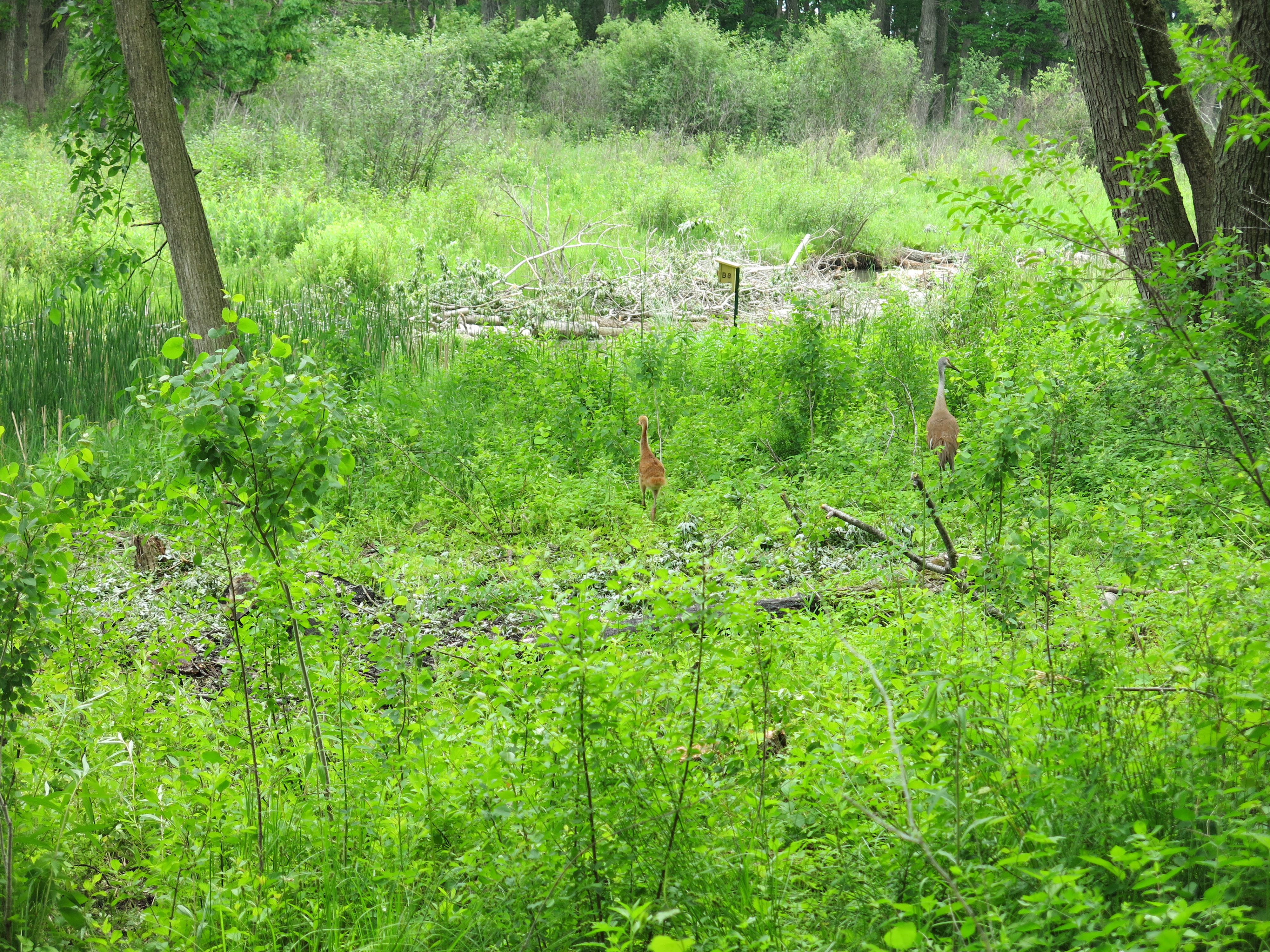
On our way to take a walk up the river and inspect our work, Ben Johnson and I ran into this sand hill crane and chick, who were also checking it out.
This is the point downstream of the recent activity where sand and marl is collecting after being flushed down the river.
We continued to walk upstream and review the day’s work.
The meadow on the south side (right side in the video above) is especially lush with native plants and flowers.
Ben and I agreed that the velocity of the river had definitely increased as a result of the work. Confirmation bias?
We’re not done yet! Ben Heussner will be back in the next couple weeks to do an elevation survey of the area around the hotel springs bridge. He is confident that, with a little excavation of the river bottom here, we can get a headcut traveling. This will flush out the marl and sand that collected in the riverbed upstream, while it was under it was under THE PONDS OF THE SCUPPERNONG. The result will be significantly improved trout habitat and restoration of the headwaters to its natural condition. I can’t wait!
The Scuppernong Springs are “a world class site” according to Ron Kurowski, the godfather of the Scuppernong River Habitat Area restoration project. I’m humbled to be a servant of Mother Nature helping take care of this beautiful place that attracts me so; it gives me the opportunity to manifest my vision for the world:
The attractive force of The Springs has been drawing a lot of attention lately.
I hope to post the work of landscape photographers Byron S. Becker and Kristen WestLake, who draw inspiration from The Springs.
The dynamic DNR duo, Melanie Kapinos and Amanda Prange, organized a volunteer workday pulling garlic mustard at The Springs and we were happy to have Wendy and Rene help us.
Like a martial arts expert, Ben Johnson turned the pull of The Springs into the capstone project for the masters degree in environmental studies (emphasis on environmental management and planning) he is working on through the University of Illinois Springfield. This is a 240 hour commitment and we thank Anne Korman, Assistant Superintendent of the Kettle Moraine Forest — Southern Unit, for expediting this DNR internship.
Just last week DNR conservation biologists Nate Fayram, Jared Urban and Sharon Fandel visited The Springs and they provided great feedback and ideas about how we can do the right thing here together. Jared was inspired by the visit and shared this excellent document, Biotic Inventory and Analysis of the Kettle Moraine State Forest, which is also available at forest headquarters.
I had a heart-warming encounter a few days ago at The Springs, specifically, at the hotel springs,
where I met a group of people who were conducting a meaningful, and possibly religious, baptismal ceremony. I was drawn by their energy, and surprised later, when they stopped on their way out to give me a beautiful, rose crystal, straight from the Black Hills, for my heart. Not my head; my heart. I get it!
DNR fisheries biologist Ben Heussner, organized a workday tomorrow to fill in with brush the wet areas on the outside of the coconut rolls they placed into the river late last fall.
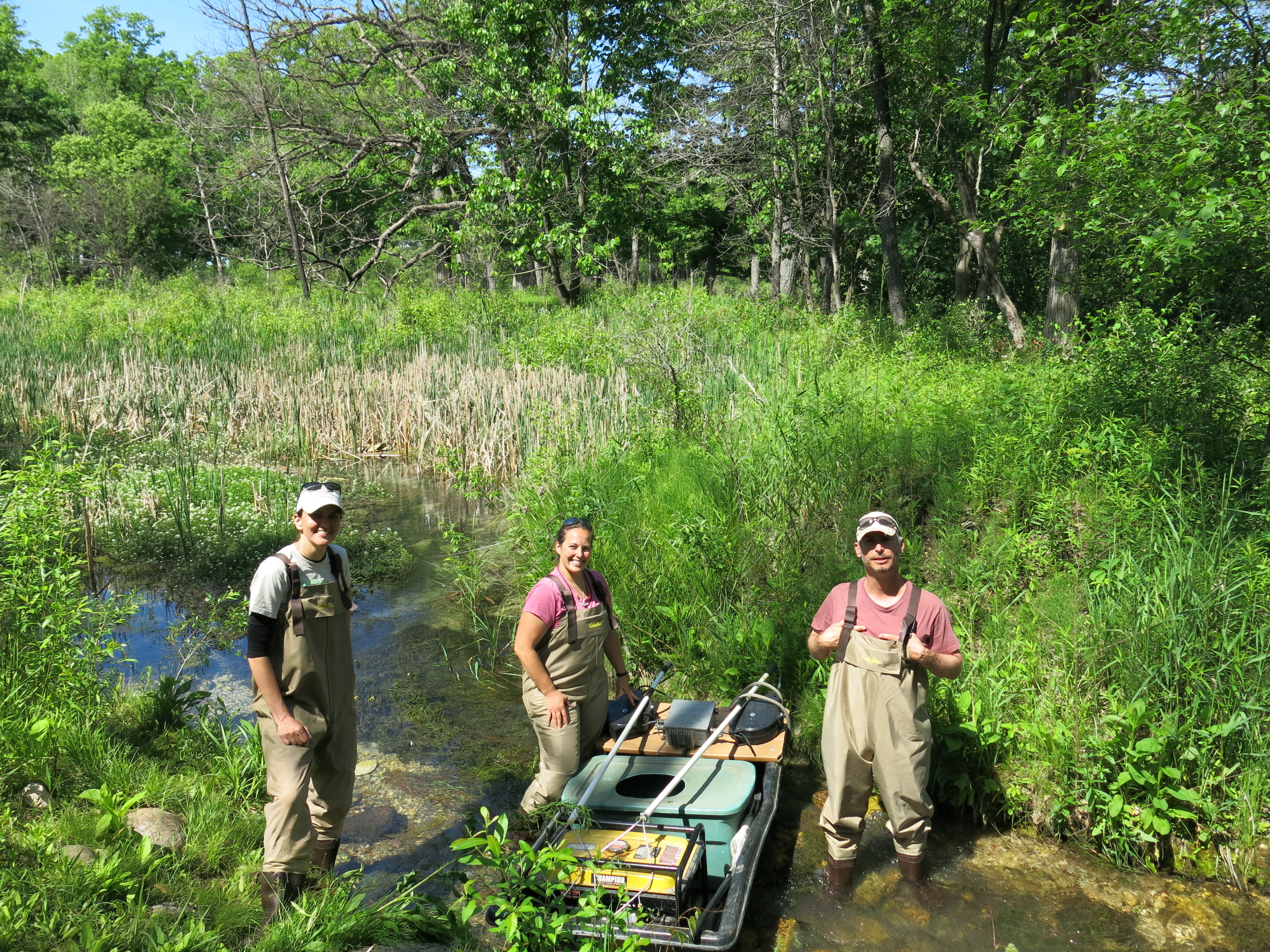
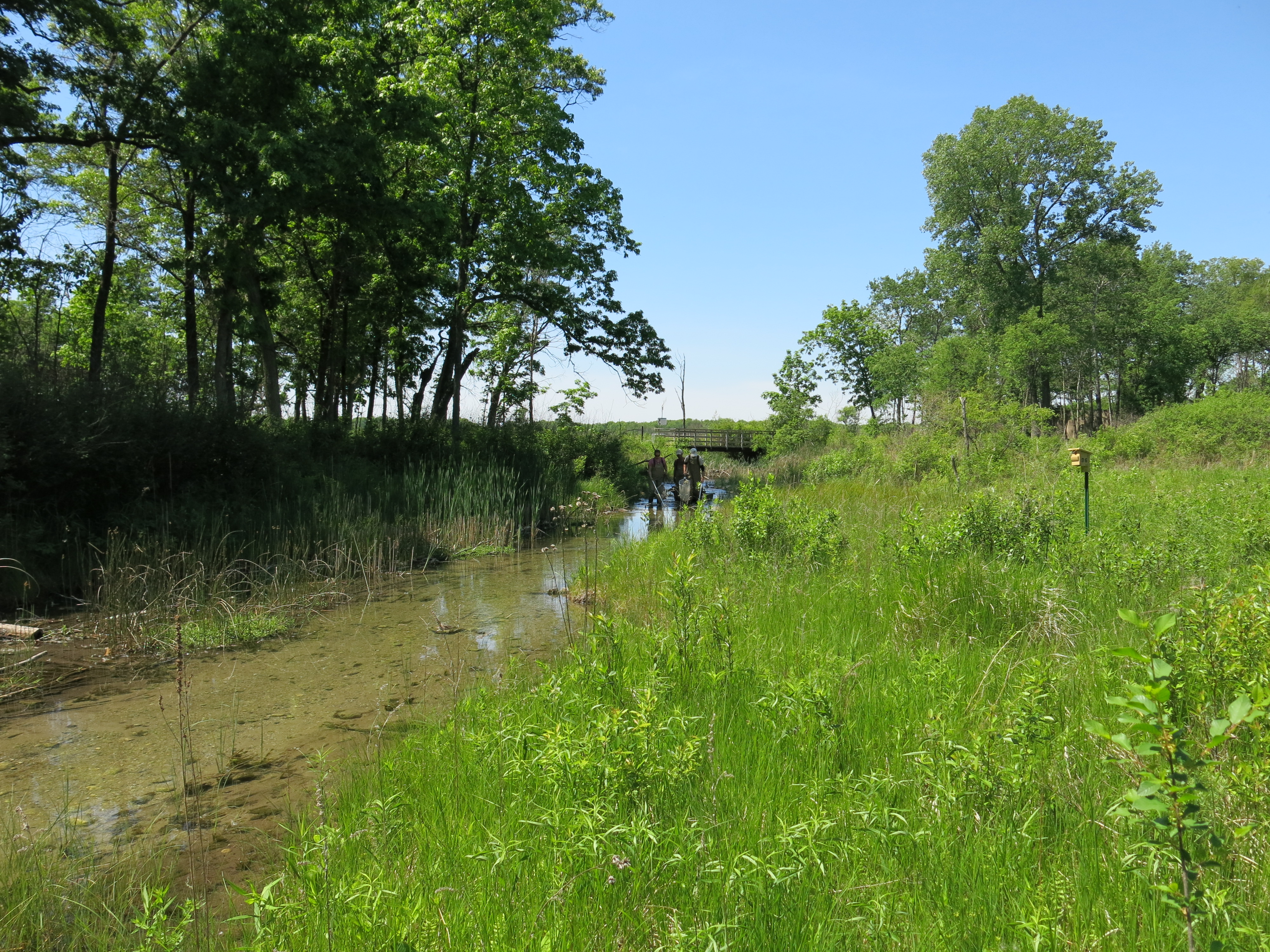
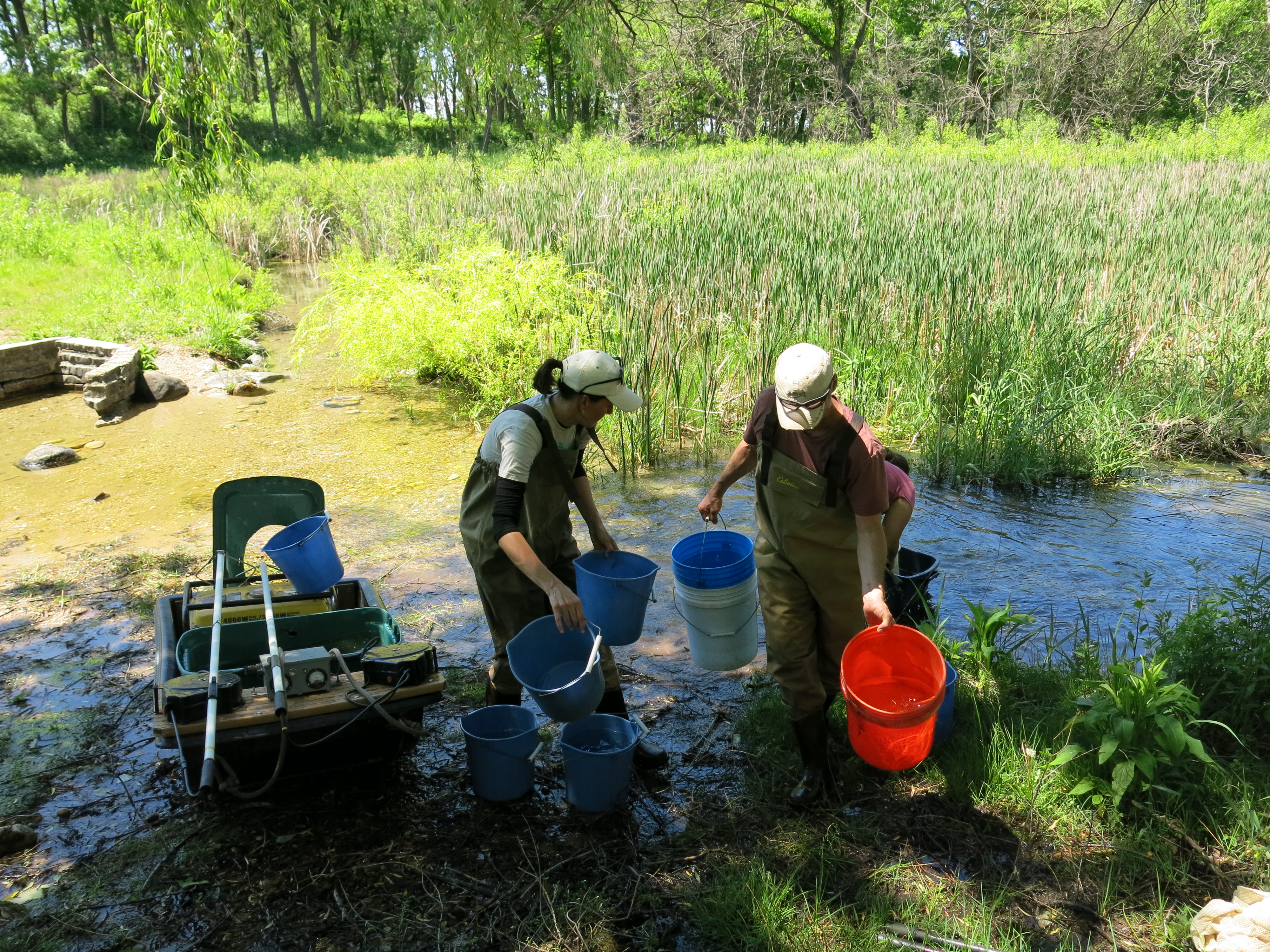
And yesterday I ran into DNR Water Resource Management Specialists Rachel Sabre, Craig Helker and April Marcangeli, who were doing their annual fish count on the Scuppernong River.
Yes indeed, The Springs are attractive!
I started yesterday near the old hotel site taking down some of the aspen we girdled last year so that we can use the wood as fill along the riverbanks tomorrow.
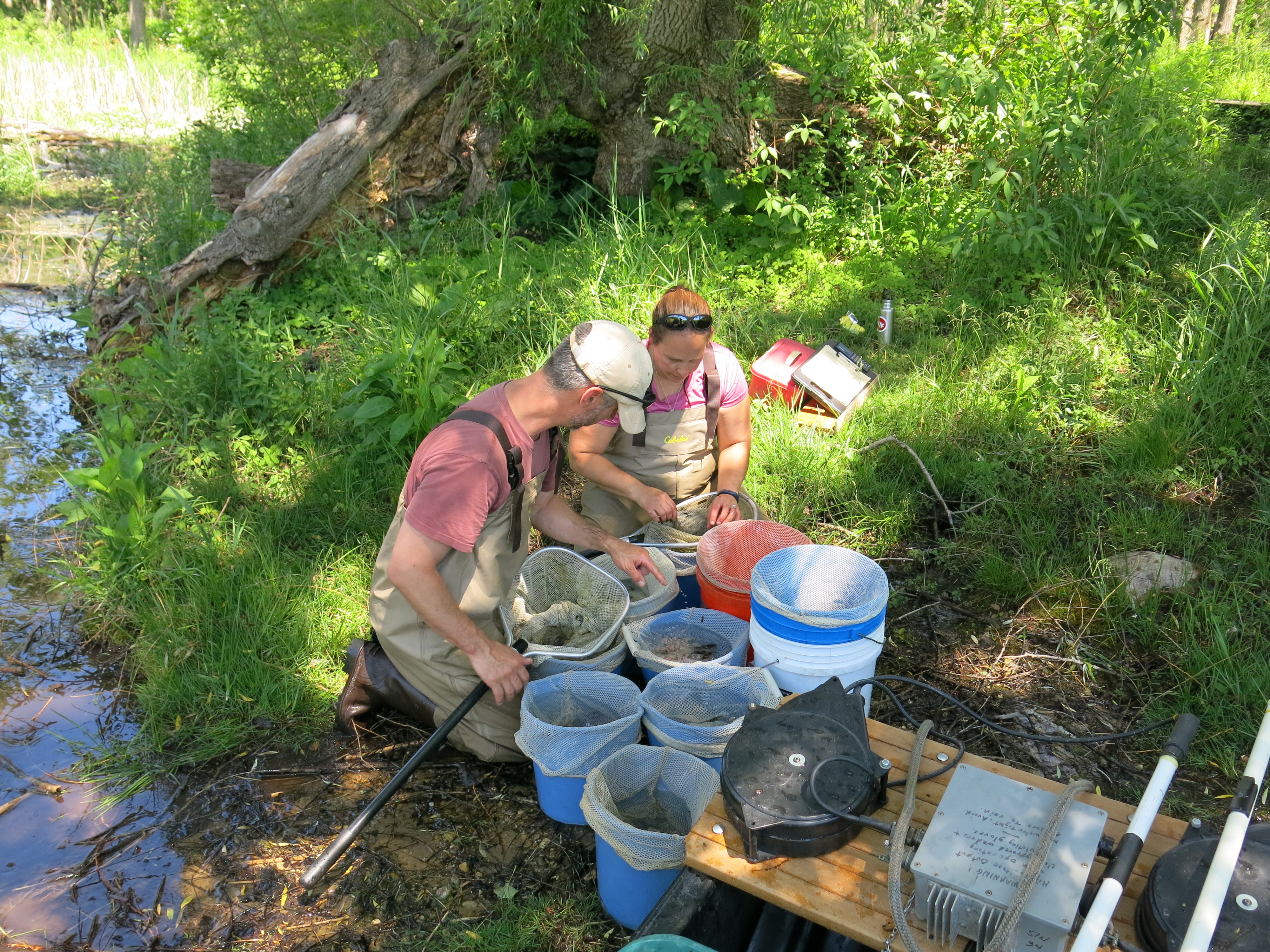
After a couple tankfuls of gas in the chainsaw, I was ready to move to the north side of the river when I saw Craig, Rachel and April with their fish shocking sled in the river. I helped them last year and learned how they use electric shocks to temporarily paralyze the fish so they can catch and count them. A coincidence, or was it the law of attraction? I took a break from the chainsaw and followed them upstream.
Don’t miss the shocking interview with the DNR team at the end of this video!
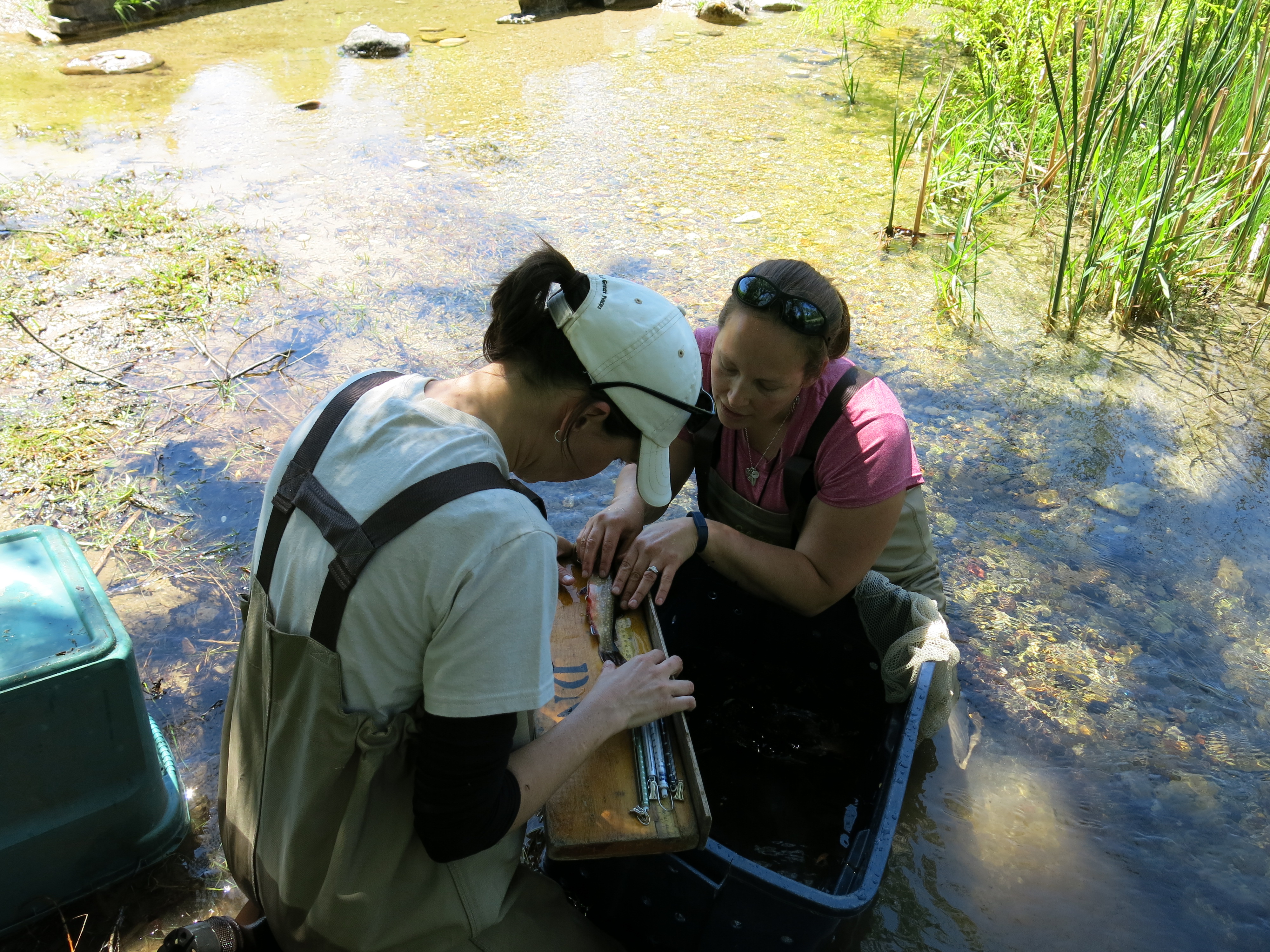
I was a mosquito on a buckthorn leaf watching them sort, count, measure and weigh the fish.
I really appreciated them welcoming me into their workspace and giving me an interview after barely catching their breaths!
I commenced to taking down some huge aspen on the north side of the river and, an hour or so later, there they were again,
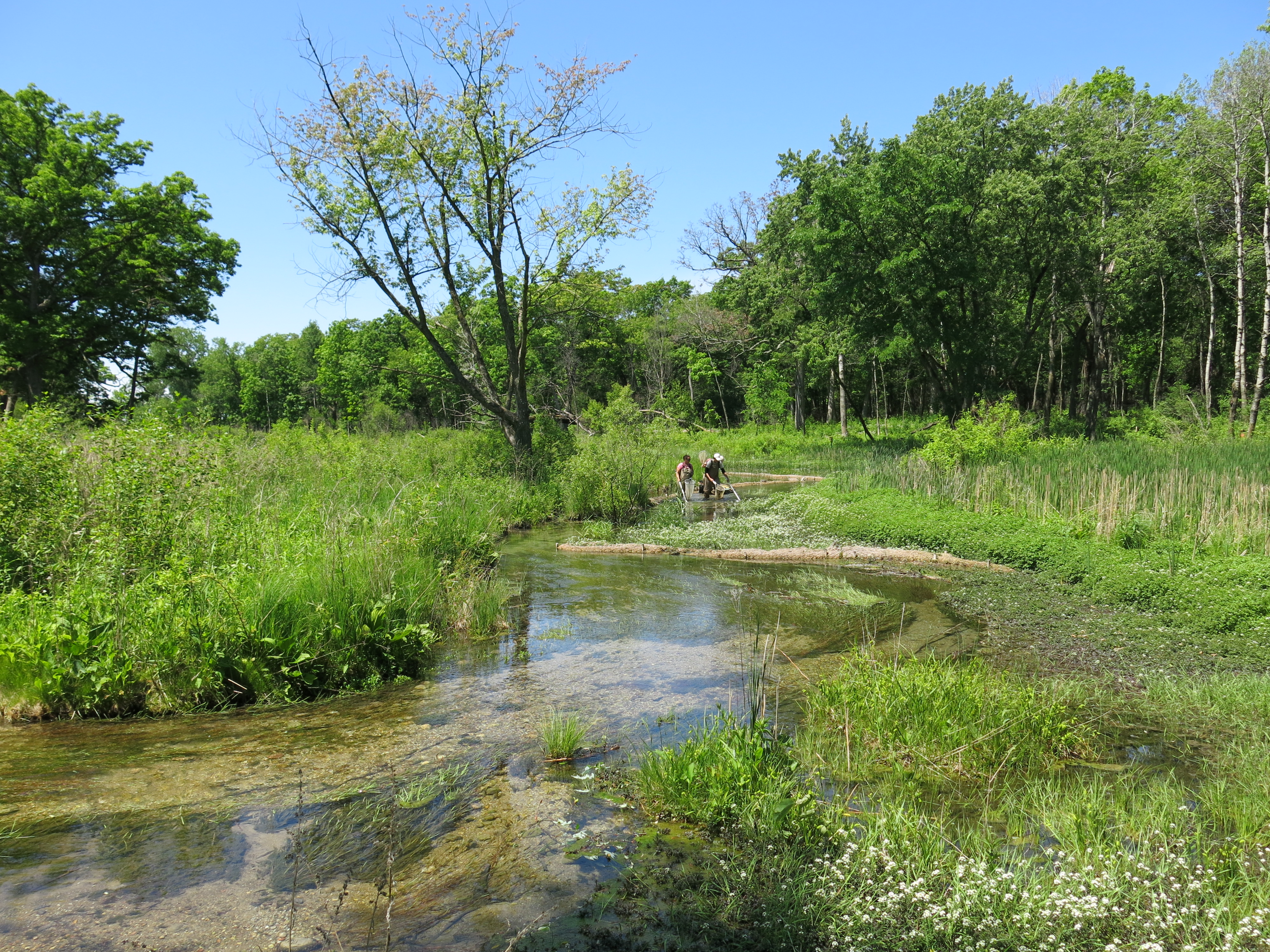
taking their annual habitat survey. I’ll let Craig and Rachel describe it.
I ended the workday cutting garlic mustard flowers with the brush cutter. It looks like its run is just about over at The Springs this year. I think we put a hurt on it.
Then it was off to the baths at the marl pit bridge and a sun setting headstand.
“This is one of the nicest oak savannahs in the kettles!”, that’s what Jared Urban, with the State Natural Areas Program (SNA), said as we toured The Springs and the Ottawa Lake Fen SNA last Thursday. After 3+ years of steady effort to rehabilitate The Springs, you can imagine how delightful it was to share the results with DNR Conservation Biologists Nate Fayram, Sharon Fandel and Jared Urban.
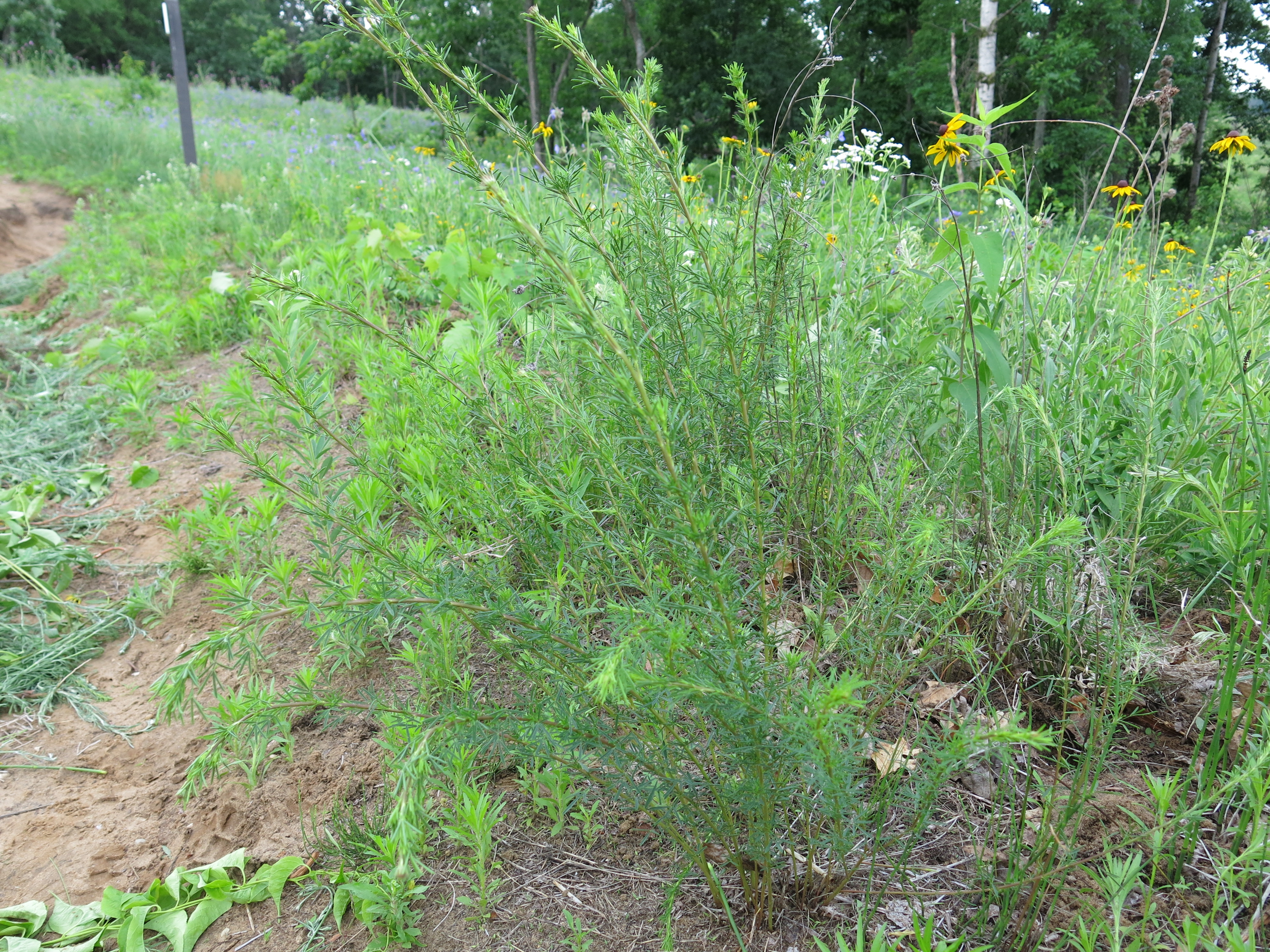
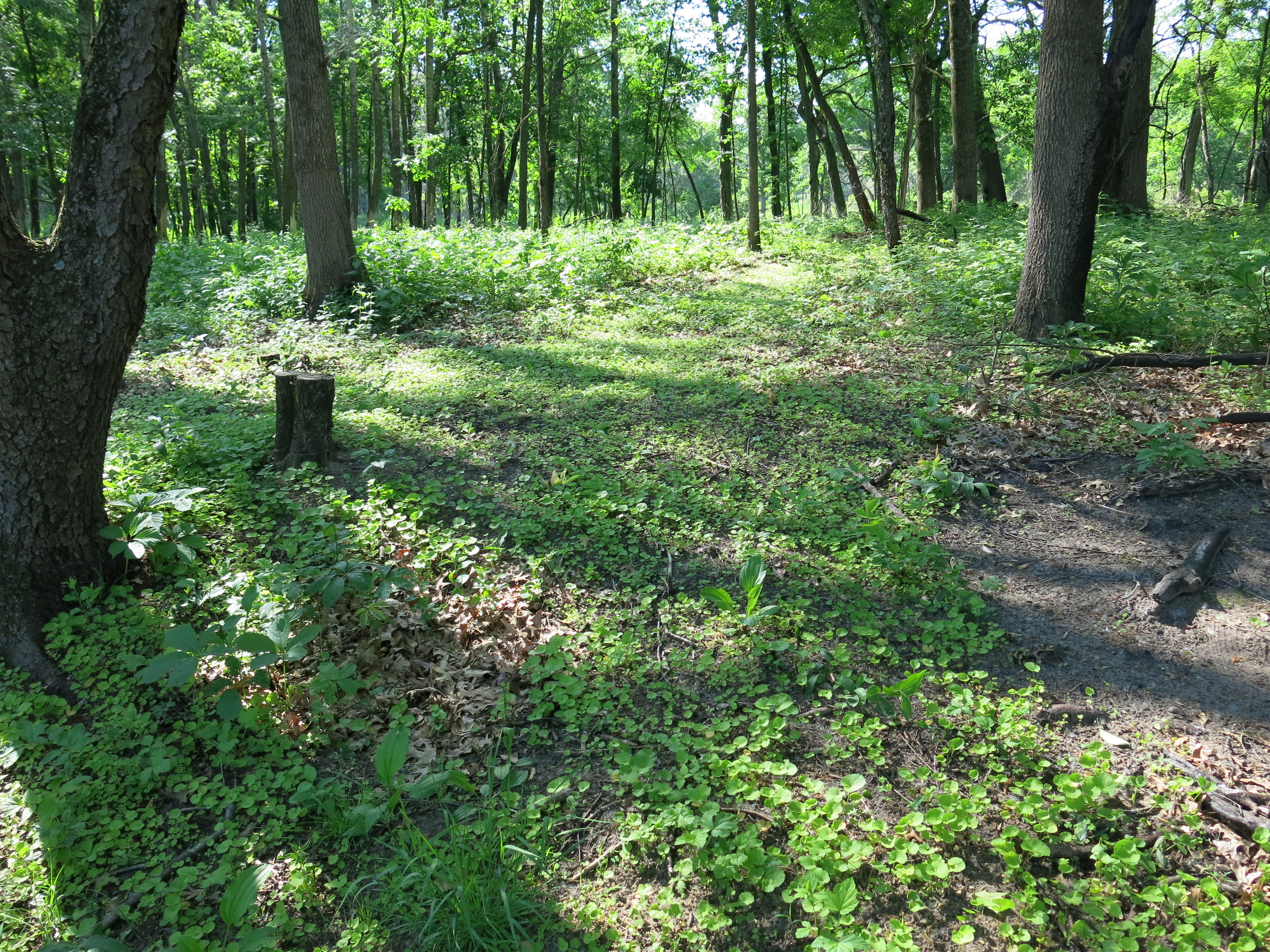
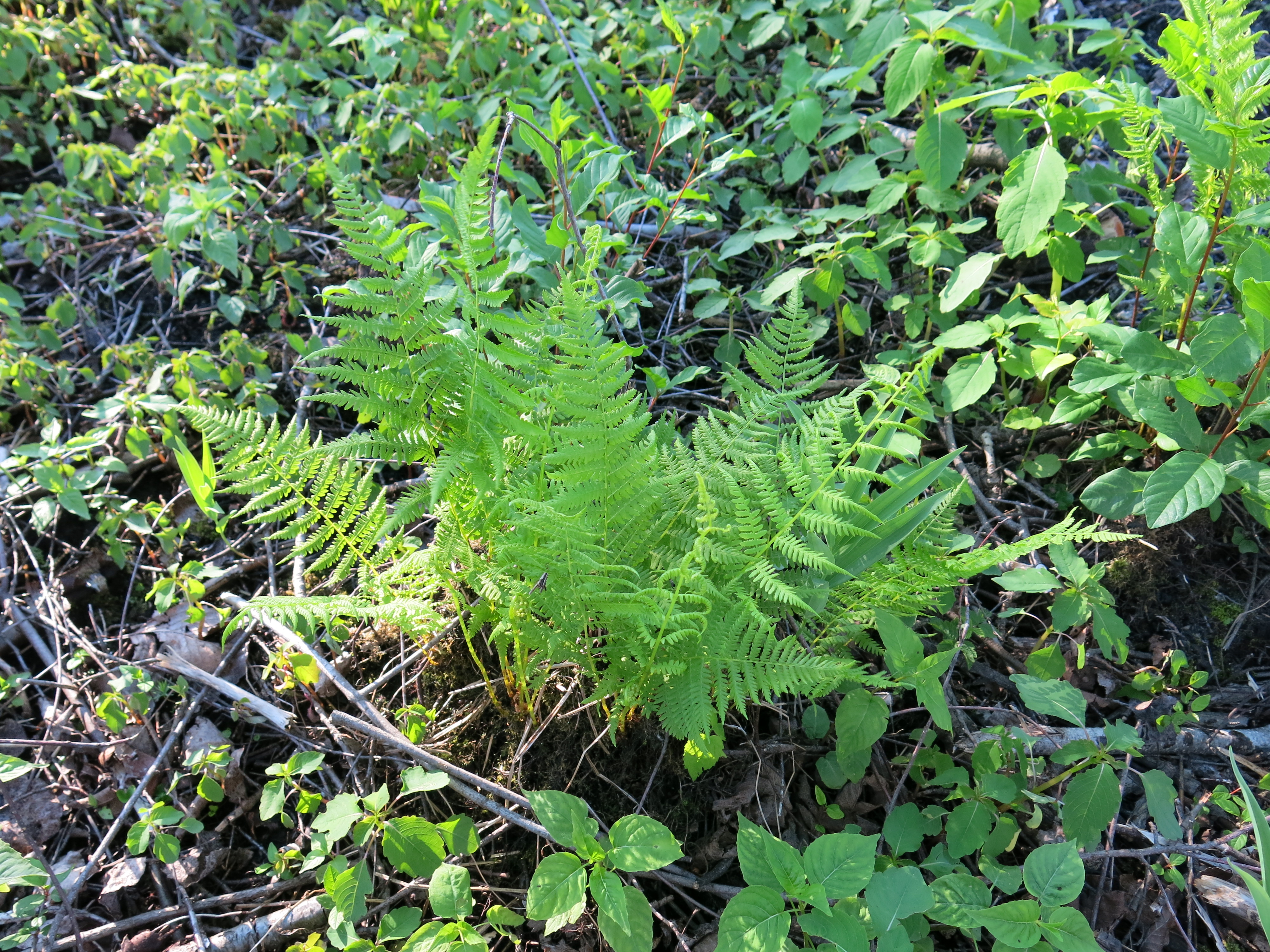
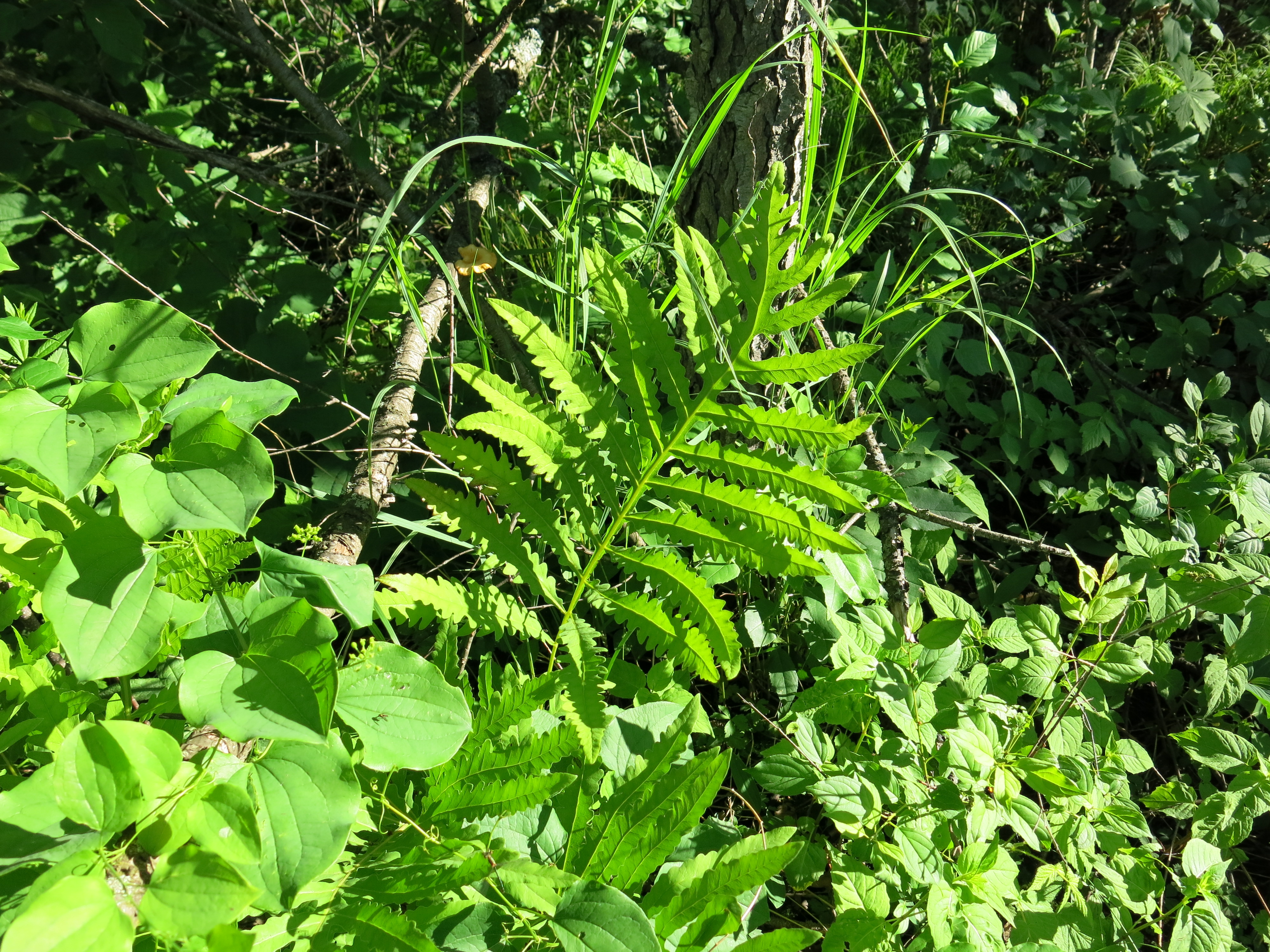
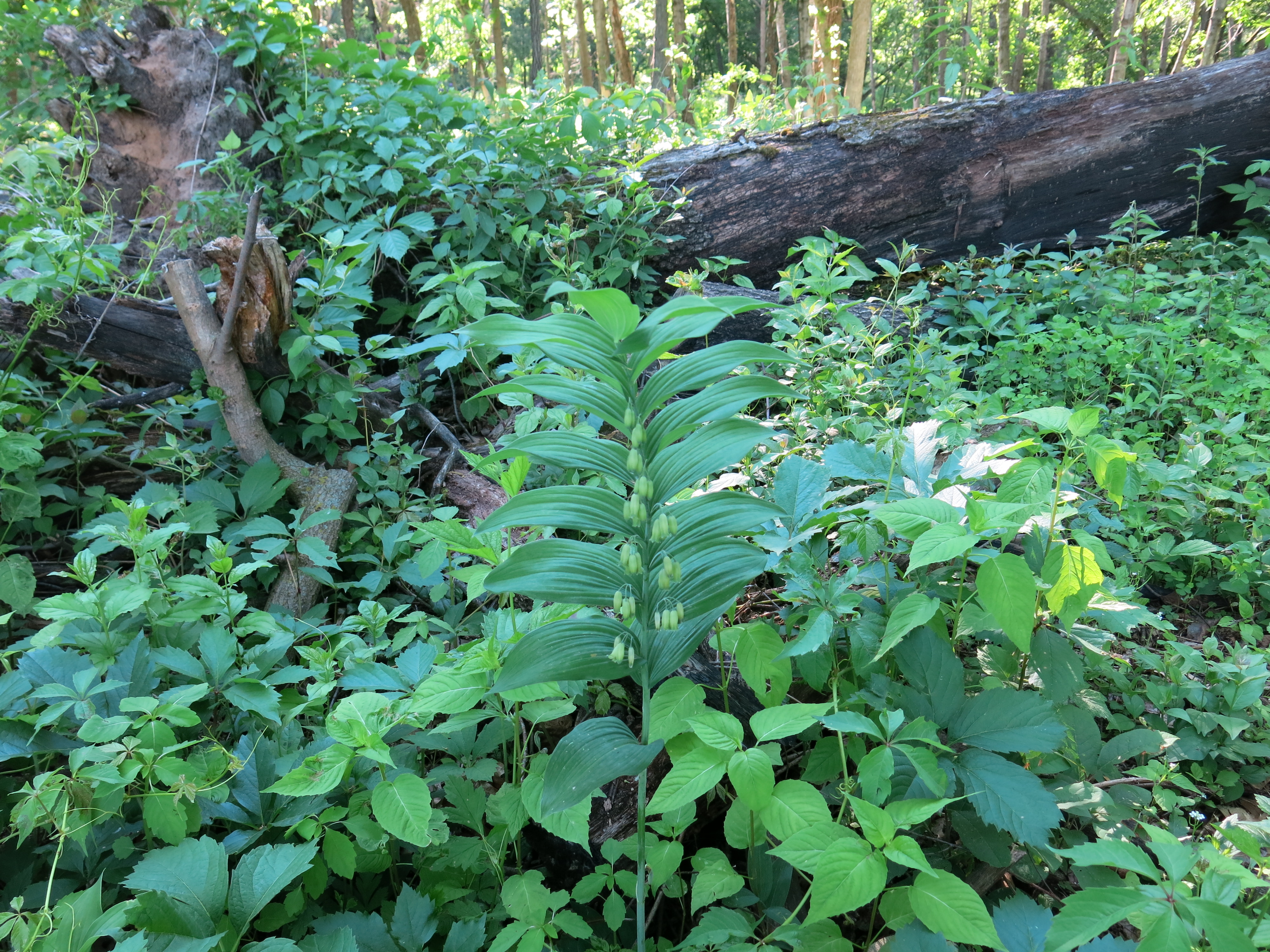
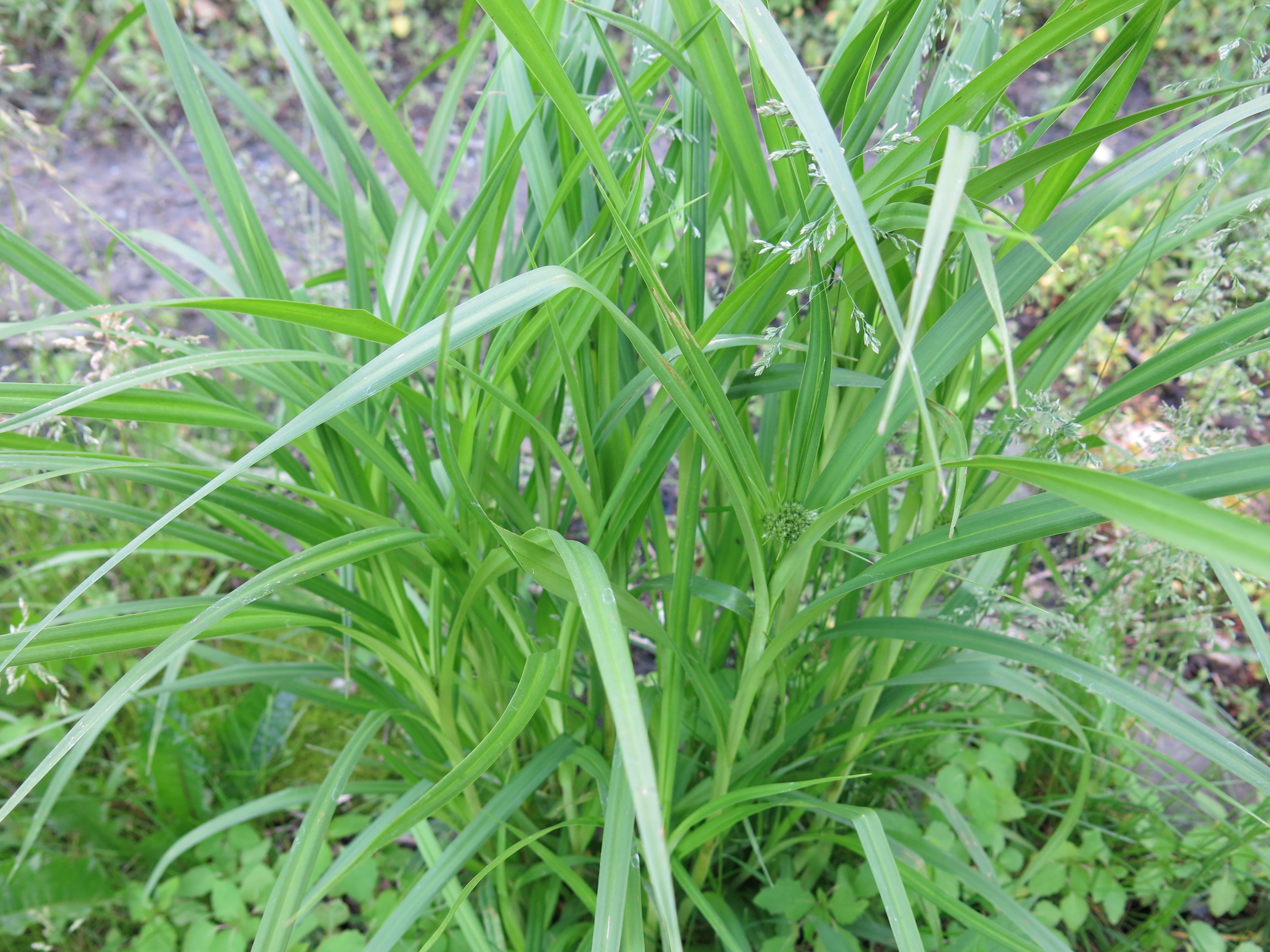
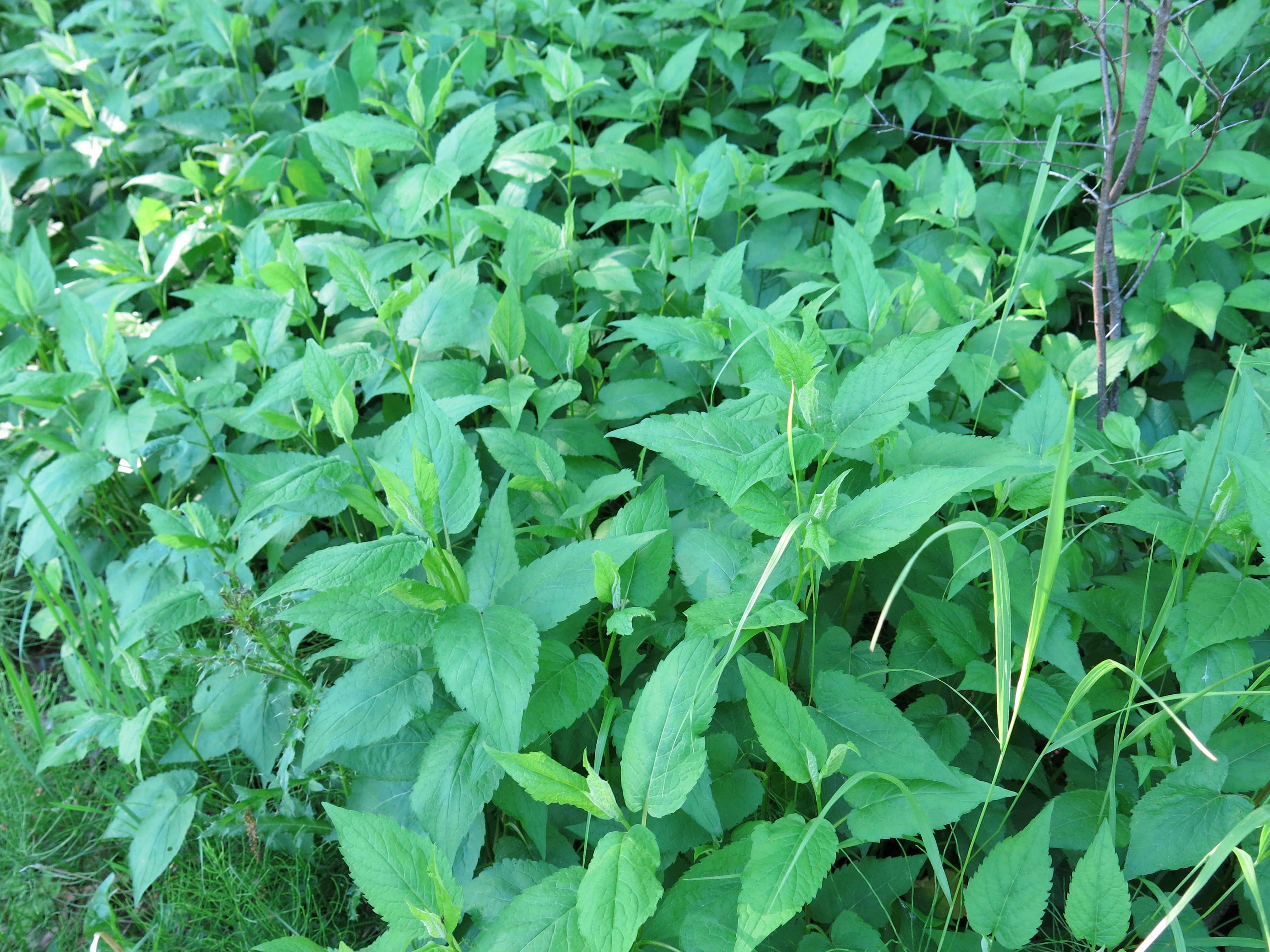
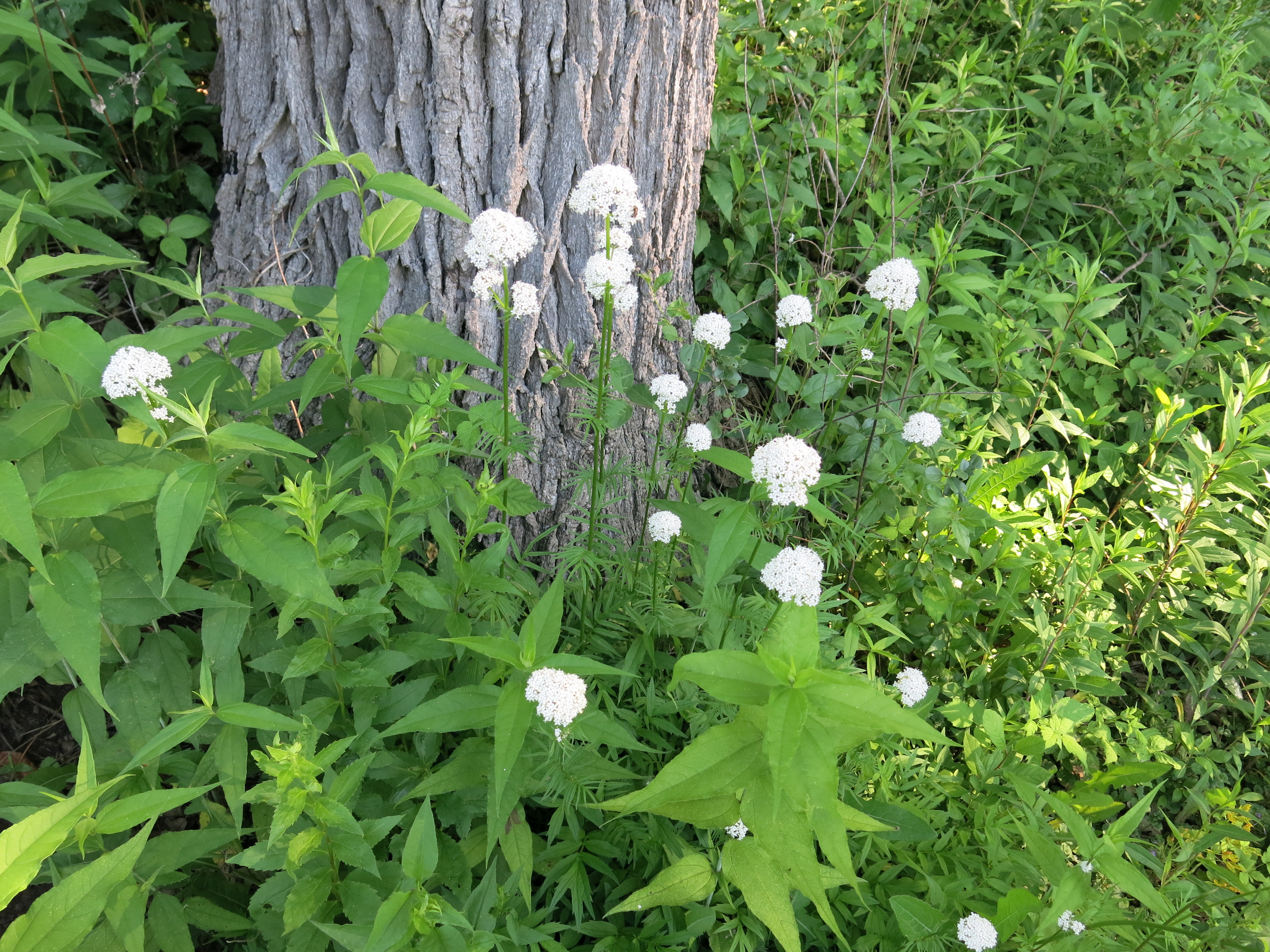
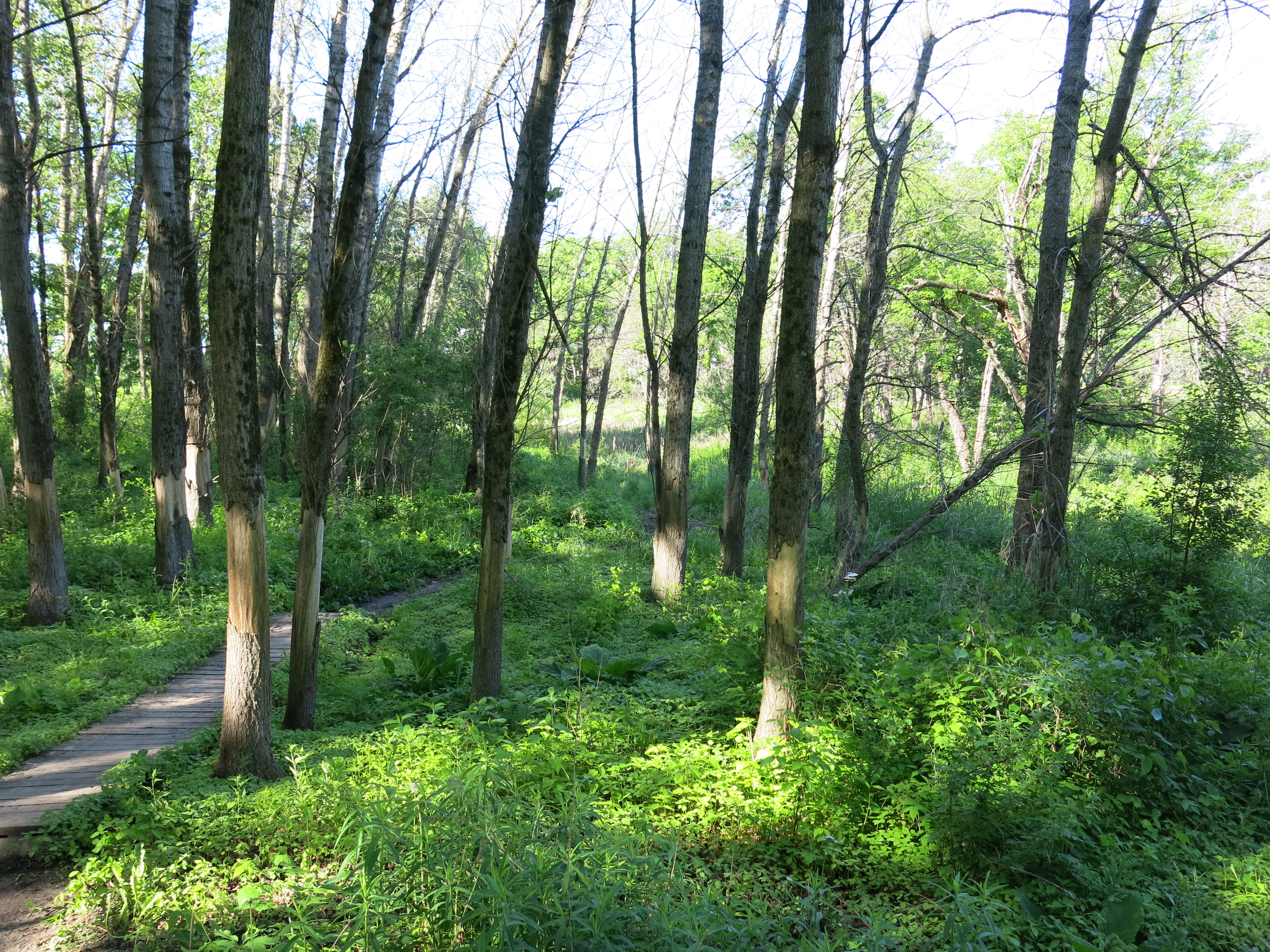
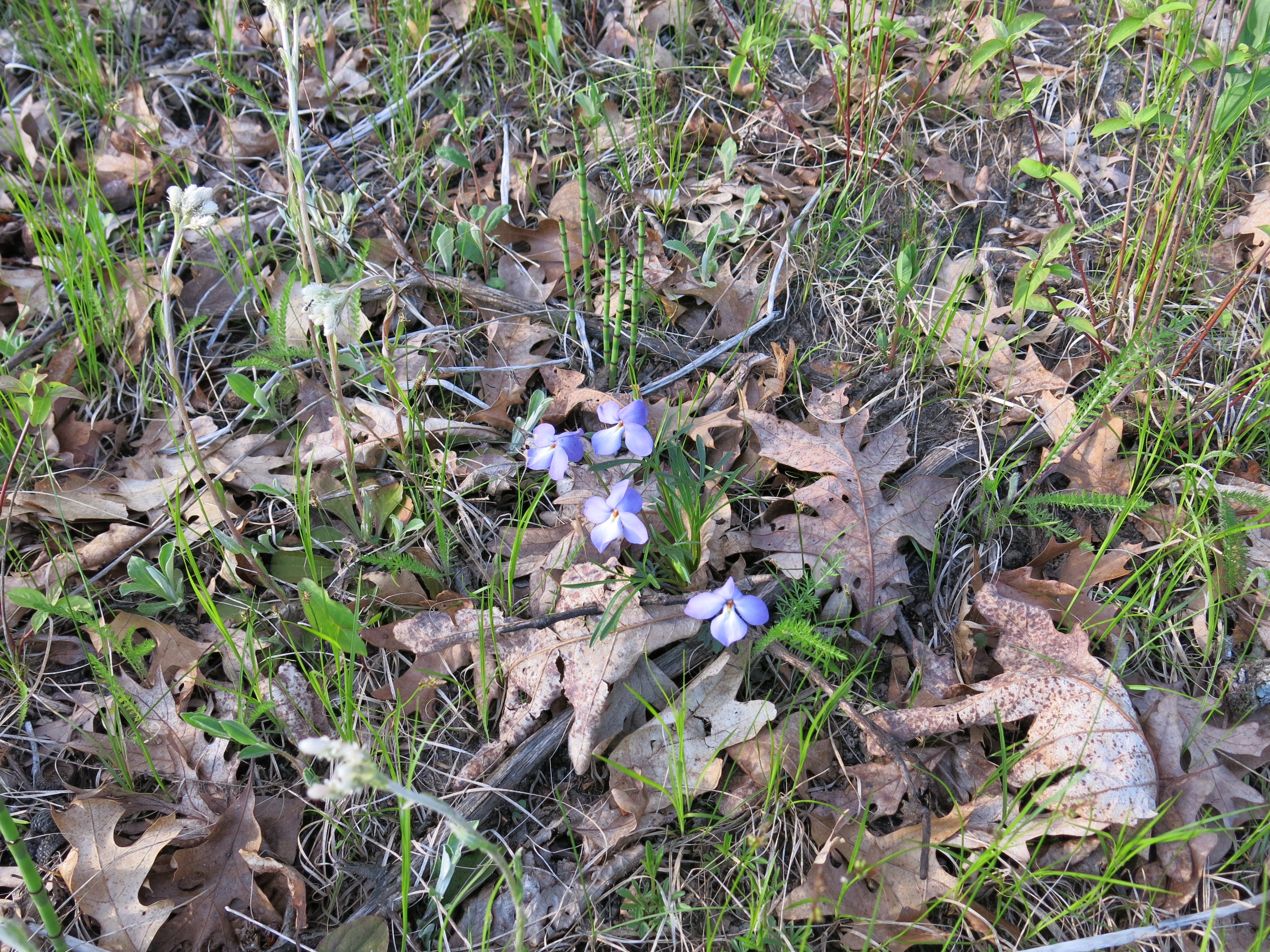
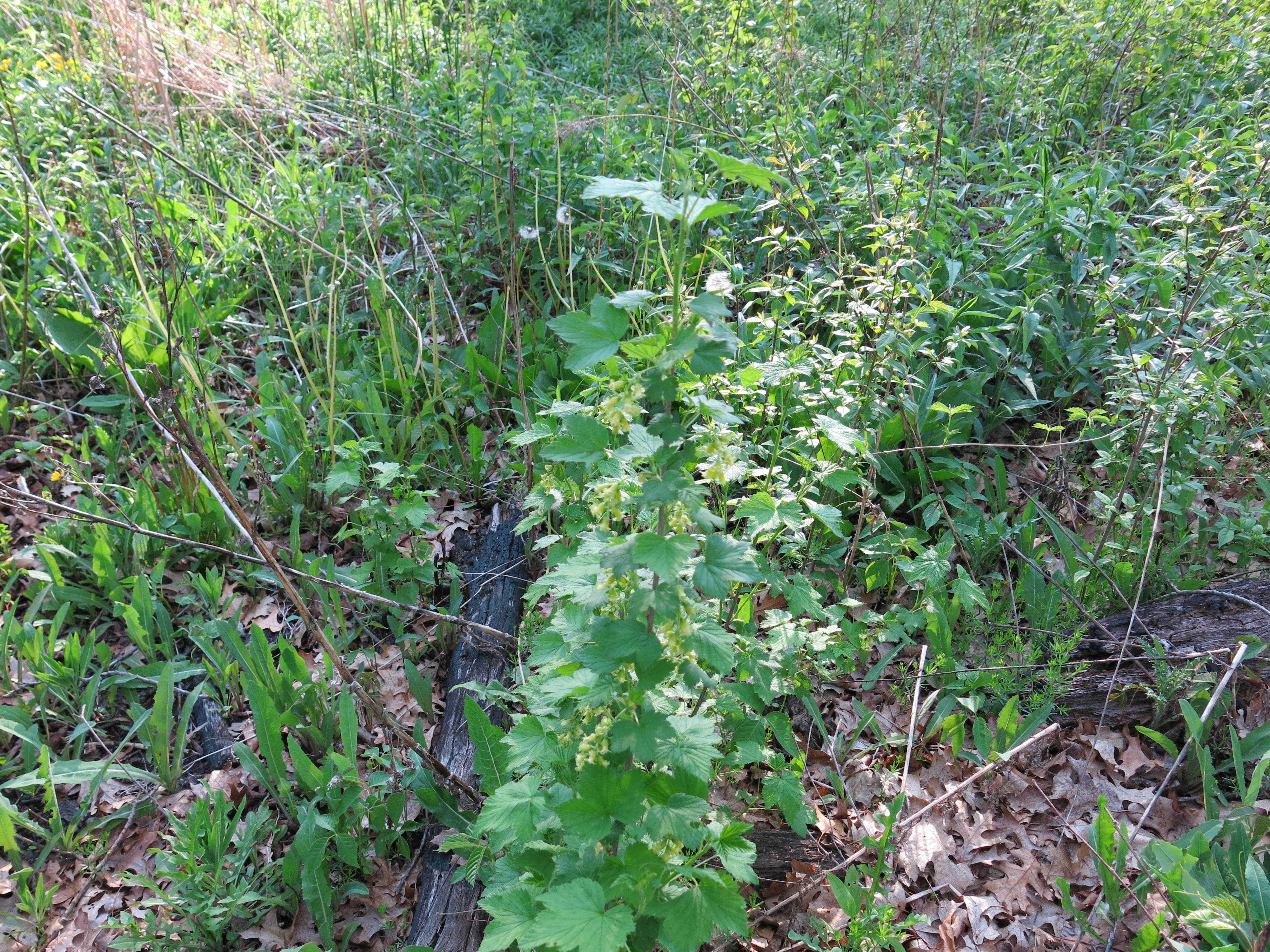
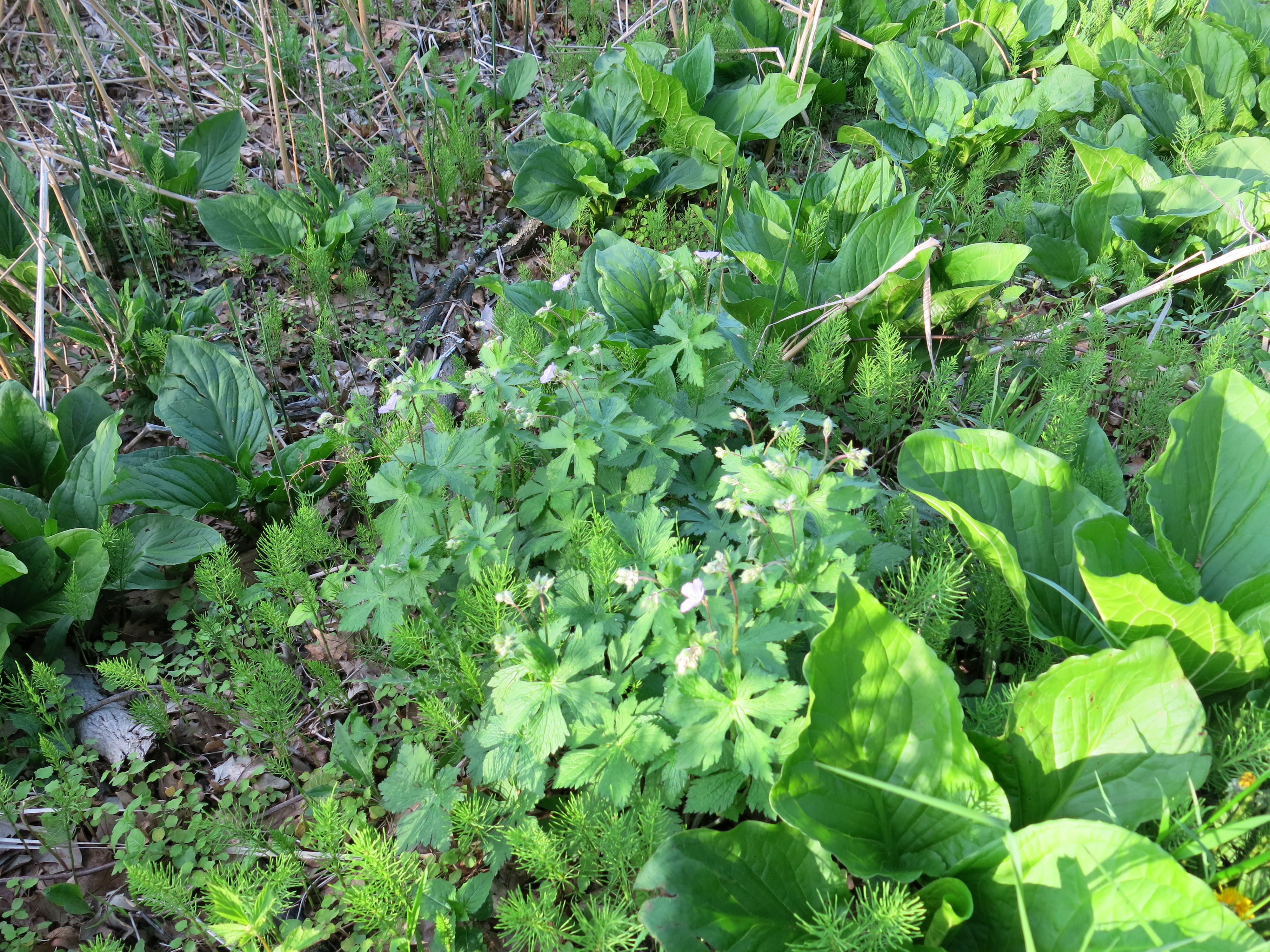
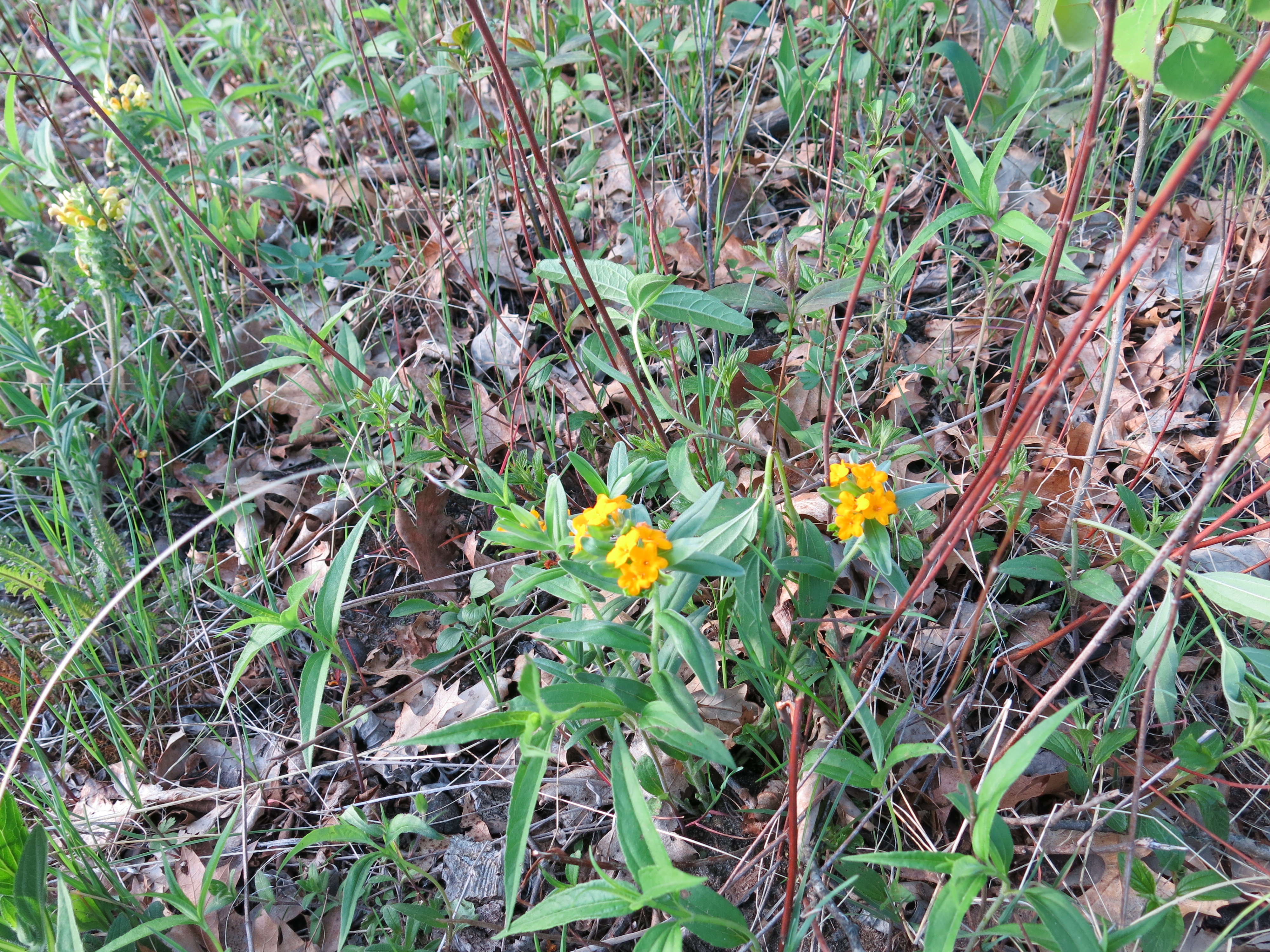
We marveled at all of the high quality native plants that have emerged in the Buckthorn Alley since we opened it up last winter. We could have spent hours identifying plants just on this stretch of the trail alone. I made some notes and, in an effort to solidify my learning experience, I want to share a few of the plants we found and encourage you to look for them the next time you walk the Scuppernong Springs Nature Trail.
We’ve barely scratched the surface of “biotic inventory” at The Springs. It was a pleasure to experience the enthusiasm Nate, Jared and Sharon bring to their jobs as DNR Conservation Biologists, especially when Nate discovered the Yellow Lady’s Slipper. We were at the Ottawa Lake Fen and happened to run into Don Dane and Mike, who were doing a little maintenance on the trail that leads to the back country sites #334 and #335 and Don’s eyes lit up when Nate showed him the pictures. “Don’t tell anybody where they are!”, he cautioned.
One of the things we were discussing was the need to create a burn unit that includes the Ottawa Lake Fen SNA and Don explained that he had in fact been using a forestry mower this past winter to put in a fire break on the west side of the lake extending north to the dog trial grounds. The terrain is really rough and bisected with old drainage ditches from the days when they tried to mud farm the area. I think the SNA team is inspired to create a burn unit in this area. In the meantime, I’ll continue to cut buckthorn along the east shore of Ottawa Lake all the way up to and around the fen.
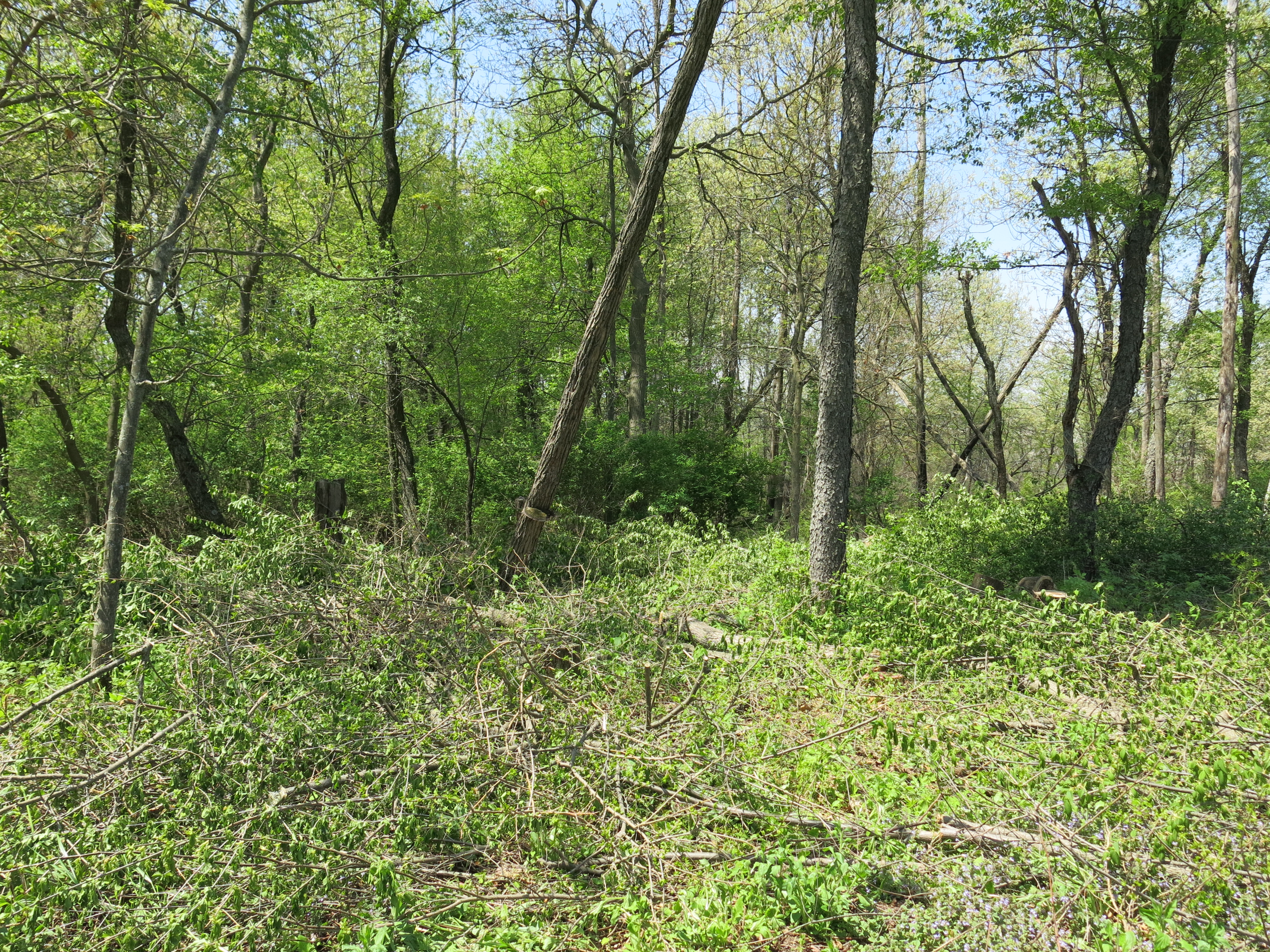
Yesterday, I continued cutting the buckthorn just east of the parking lot on Hwy ZZ to connect with an opening in the brush we created last winter. I think one more day will do it!
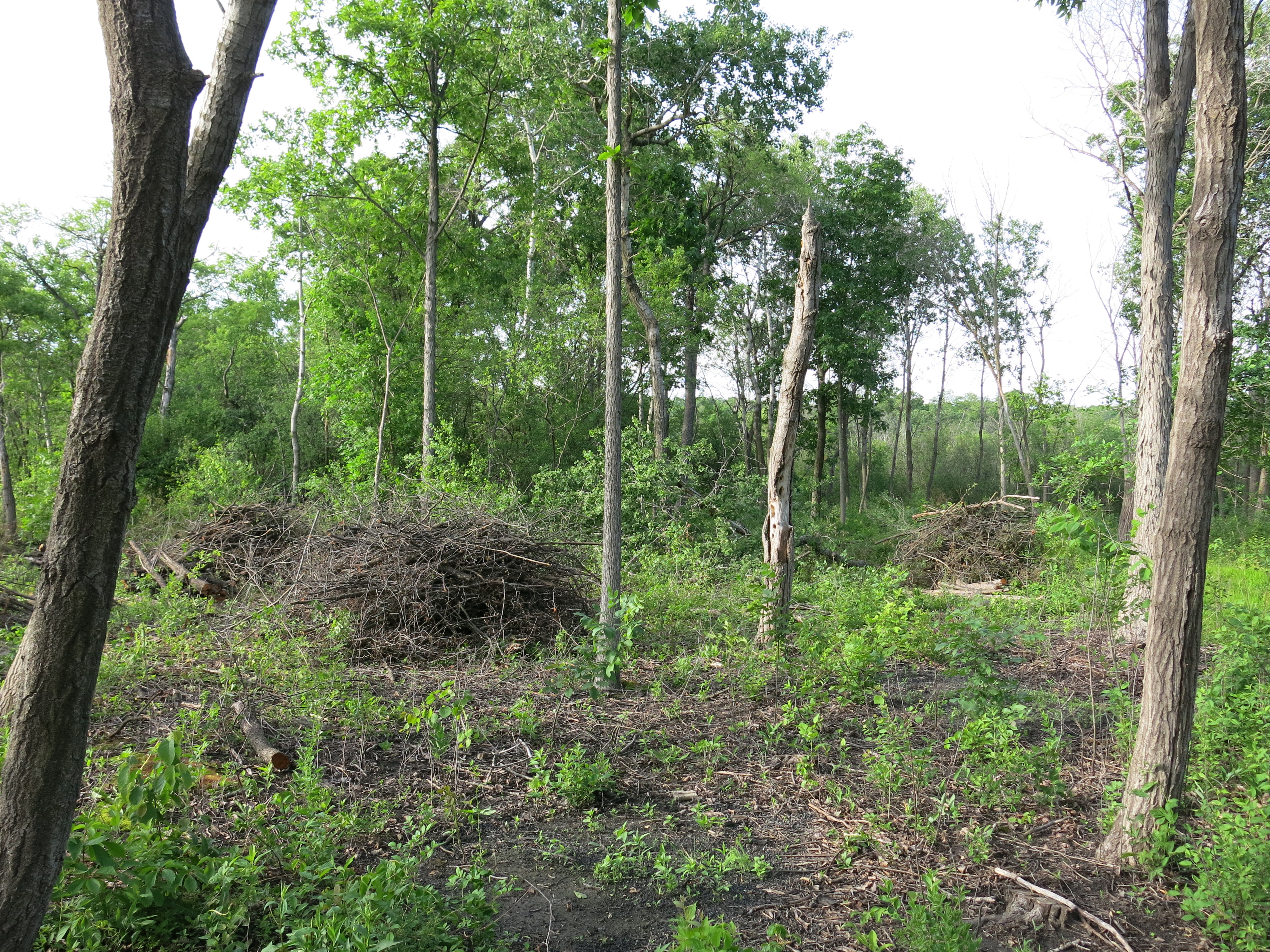
And after 5 tanks of gas in the chainsaw…
Ben Johnson took the afternoon off from his day job and pulled white clover near the old hotel site. I joined him when I finished cutting and then we headed up to the sand prairie to pull garlic mustard, which is rapidly going to seed.
It was a beautiful day and Ben and I took a walk around the trails scoping out where we could get material to fill in behind the bio-logs that the fisheries team installed last winter. We considered hauling the buckthorn that I’ve been cutting by the parking lot but then realized that the aspen we girdled along the river would make the perfect fill. We are meeting Fisheries Biologist Ben Heussner and a group of volunteers at The Springs this Saturday to work on that project. I’ll be out there tomorrow cutting down the dead aspen and getting it ready.
Thanks for tuning into my posts. I hope you will bear with me — I’m trying to absorb some shocking revelations.
Its been 20 years since the events we all know as the Rwandan Genocide occurred and I’d never doubted or questioned the story that the Hutus massacred the Tutsis. So I was stunned to learn that the truth is the exact opposite. Here is James Corbett‘s introduction to his interview with Christopher Black.
Christopher Black is a Toronto-based international criminal lawyer who has spent the last 14 years successfully defending former Rwandan Gendarmerie General Augustin Ndindiliyimana at the International Criminal Tribunal for Rwanda. In that 14 years, Black has uncovered copious evidence about what really happened in the so-called “100 Days” of 1994 and the four year civil war that led up to it. Today on the program, Black shares that information with us and deconstructs the lies that continue to be propagated about the Rwandan genocide.
Keith Harmon Snow has extensive experience in Africa as a journalist, photographer and genocide investigator who attended the International Criminal Tribunal on Rwanda. He joins us today to discuss the 20th anniversary of the “100 days” and how the true story of the genocide (and who was really behind it) has been completely inverted by politicians, the press, Hollywood and everyone else with a vested interest in what happened there.
How could I have been so wrong about something that I thought I knew and firmly believed? It’s humbling, and disconcerting, to say the least.
“He who controls the past controls the future. He who controls the present controls the past.” — George Orwell
The Buckthorn Man is attempting to control the present at The Springs — one buckthorn at a time. The last few times out I’ve been splitting the day between cutting buckthorn near the trailhead parking lot in the morning and cutting garlic mustard in the afternoons. The weather was spectacular and the mosquitoes haven’t arrived yet. It was blissful!
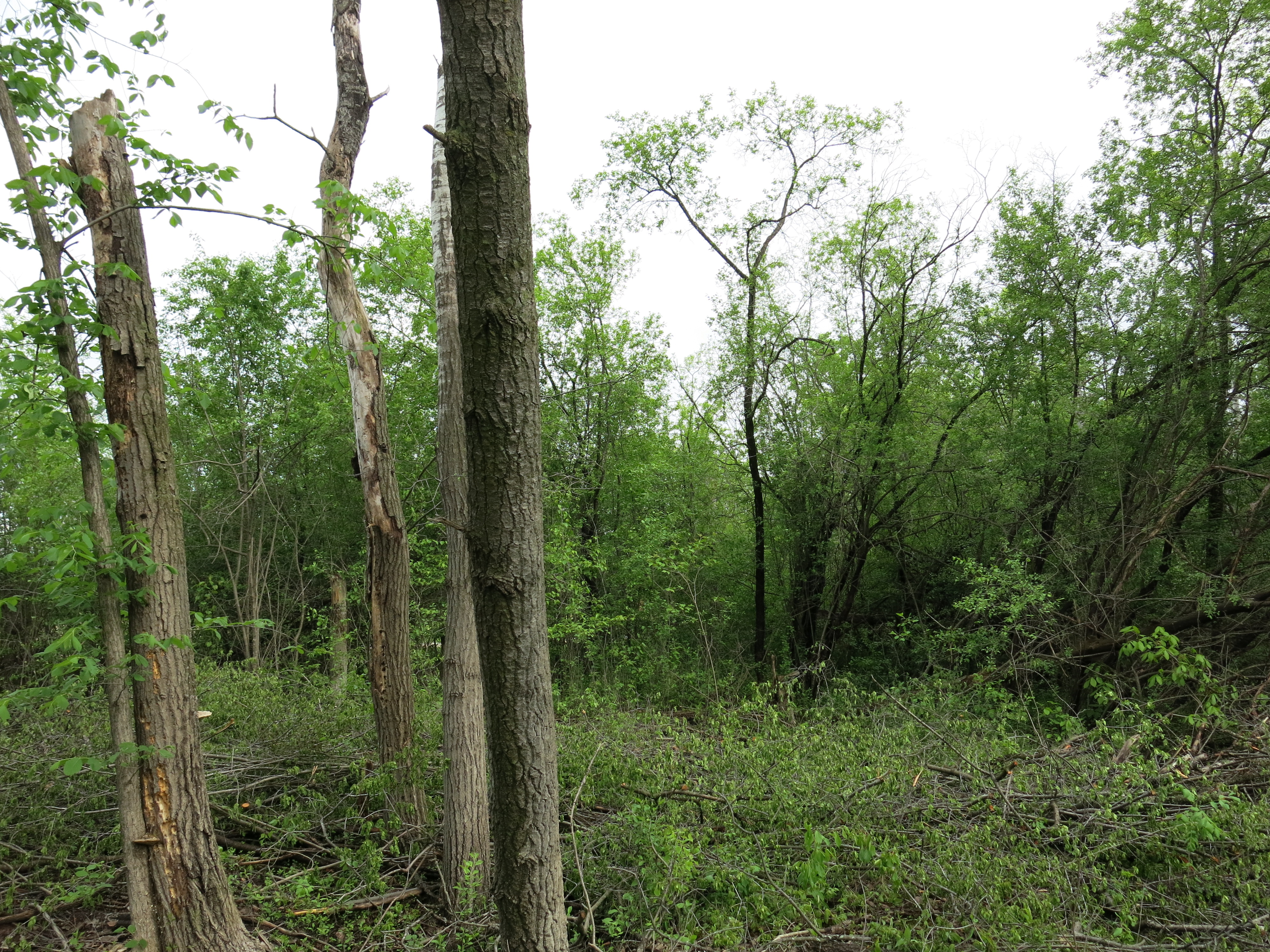
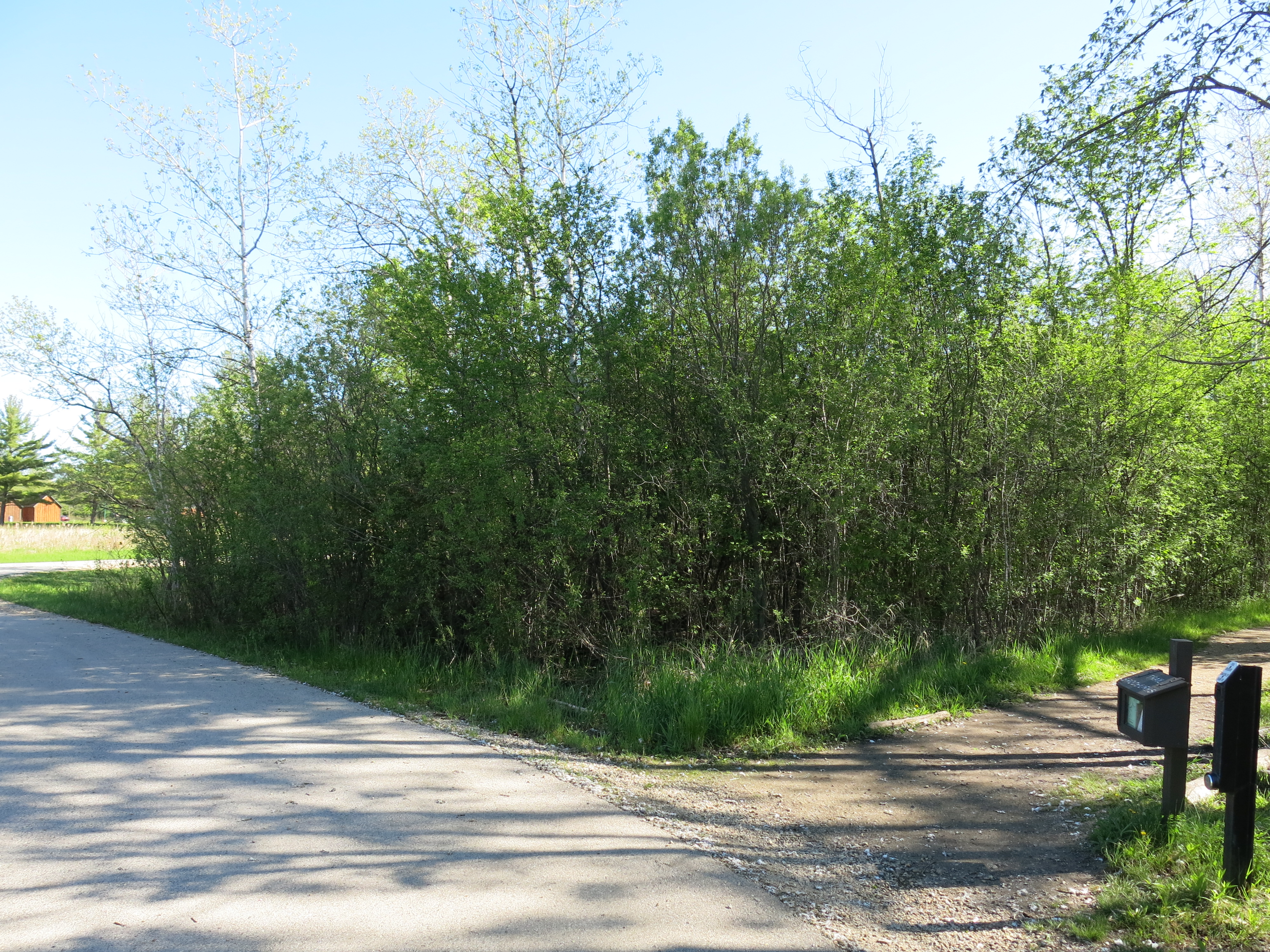
This was the scene Sunday morning, May 25th, on the edge of a patch of buckthorn between the trail and Hwy ZZ, just east of the parking lot.
It was slow going but I made some progress.
Then I headed over to the area north of the hotel and cut garlic mustard. The jury is out as to whether or not this approach will work. I’m on my third lap around cutting the areas of major garlic mustard infestation that adjoin the trail. The north and south perimeters of the Scuppernong Springs Nature Preserve are thick with garlic mustard and I plan to work on these areas in the coming years.
Late afternoon at the marl pit bridge.
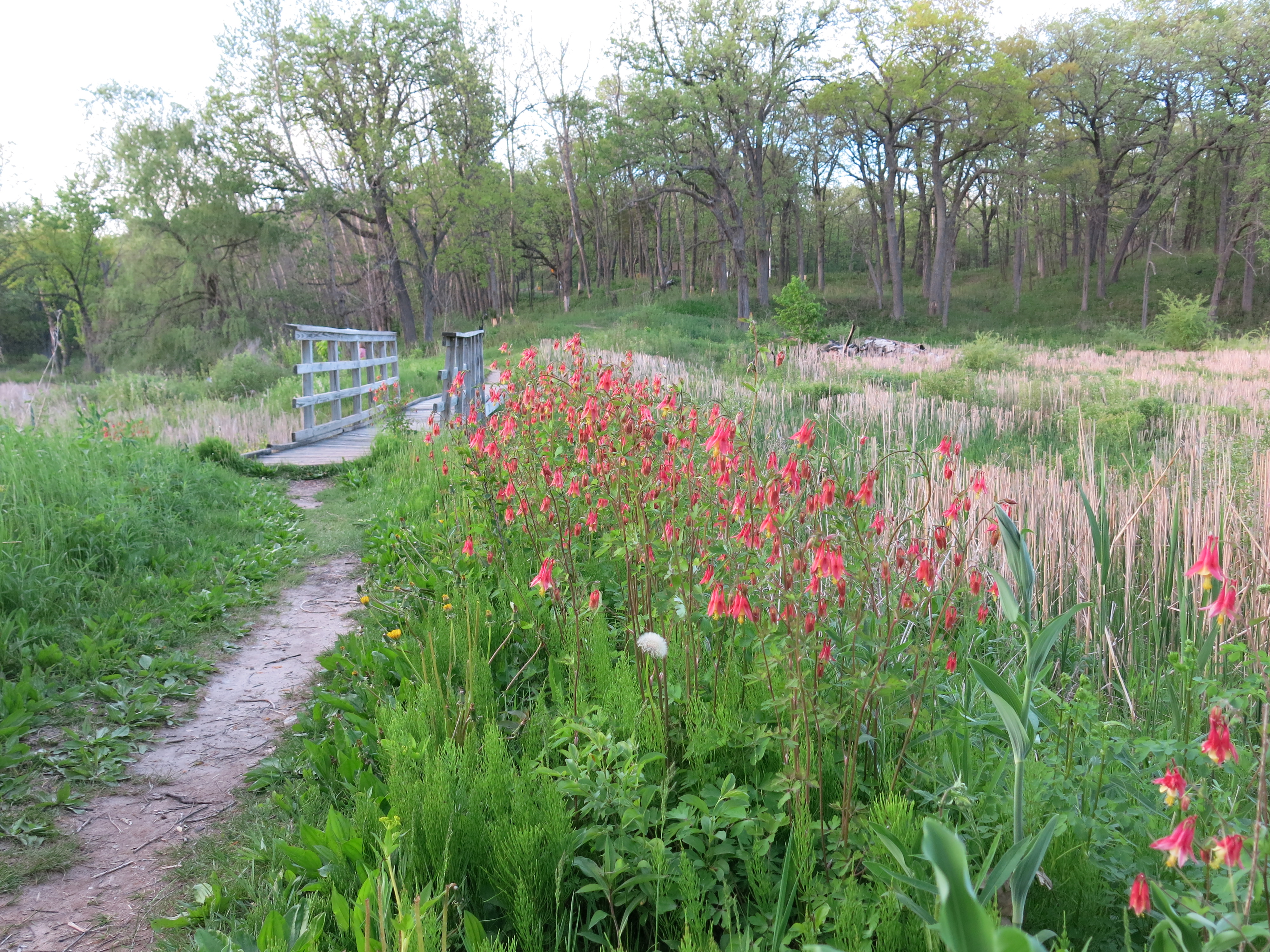
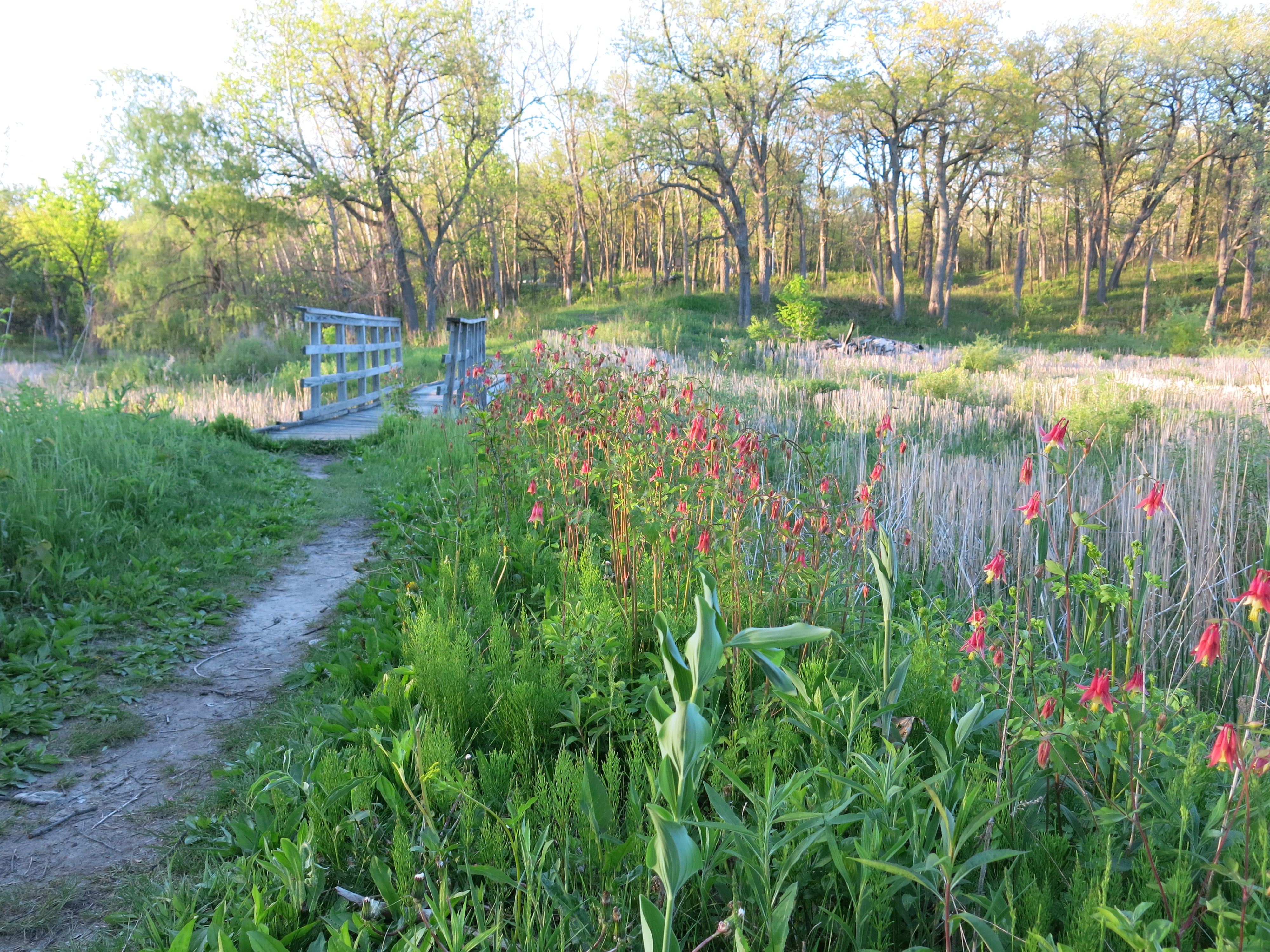
I love this patch of columbine near the hotel bridge.
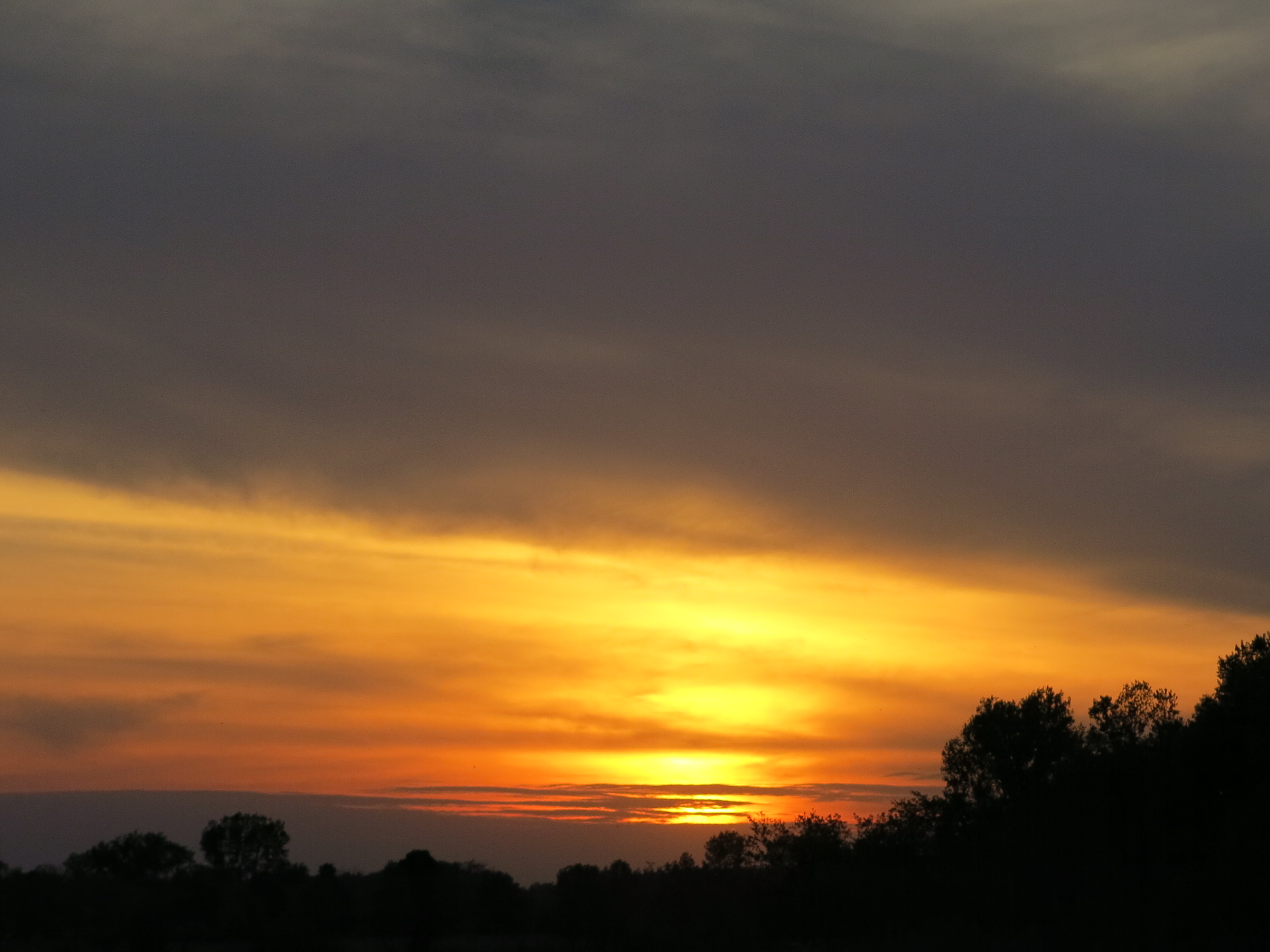
Sunset out on the marl pit.
It threatened rain Wednesday morning but it turned into a beautiful, warm, sunny day. I took up right where I left off on Sunday, working on the strip of buckthorn between the trail and Hwy ZZ. There are going to be amazing sunsets over Ottawa Lake that will now be visible from the trail.
I think there is just one more day of work to finish this thicket of buckthorn!
The next series of shots were taken while walking west to east on the cut-off trail. I’ll never forget how my good friend Lindsay Knudsvig ripped a path through the buckthorn back in the fall of 2012. This trail is sweet as can be so check it out if you haven’t done so yet.
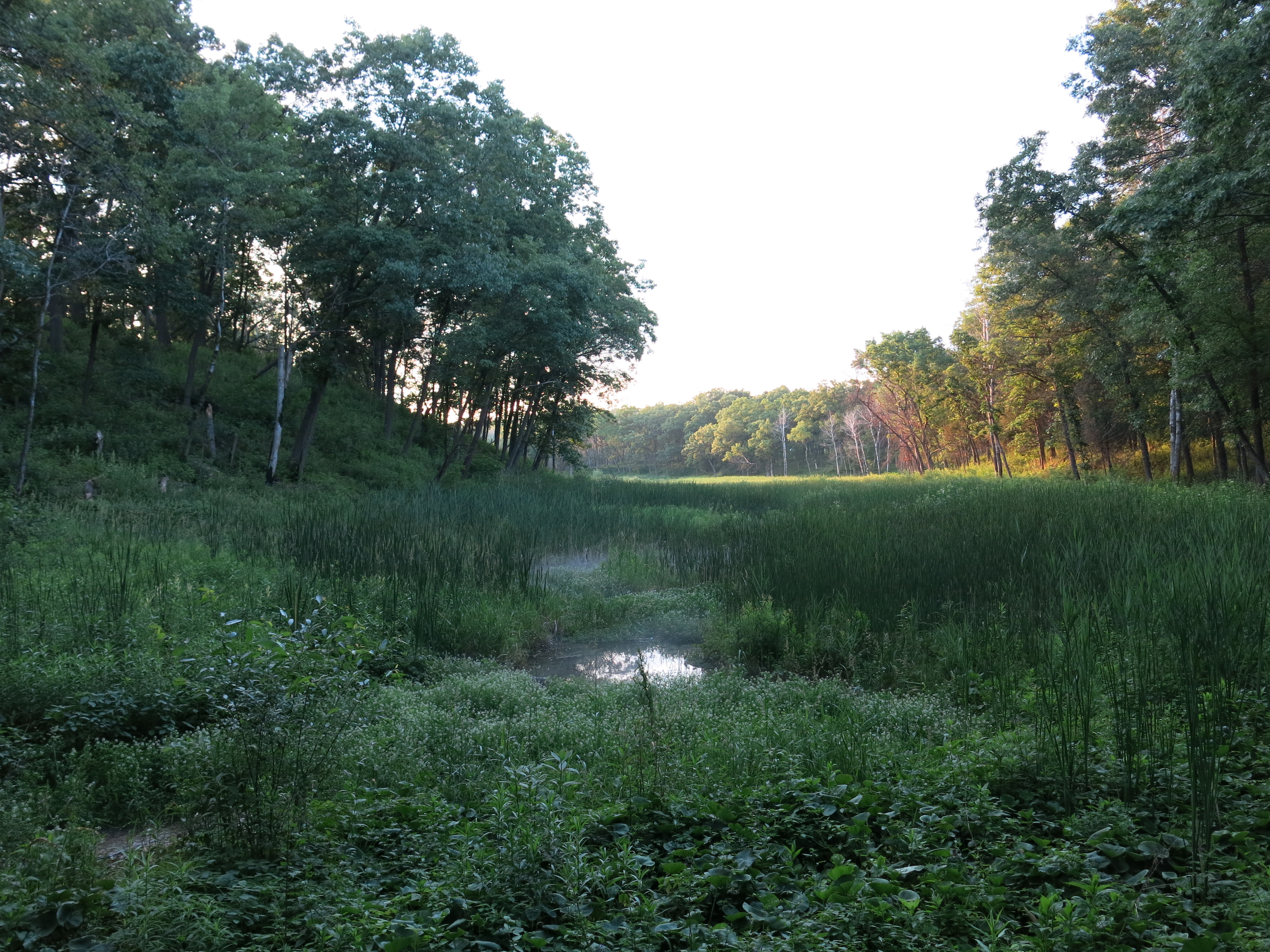
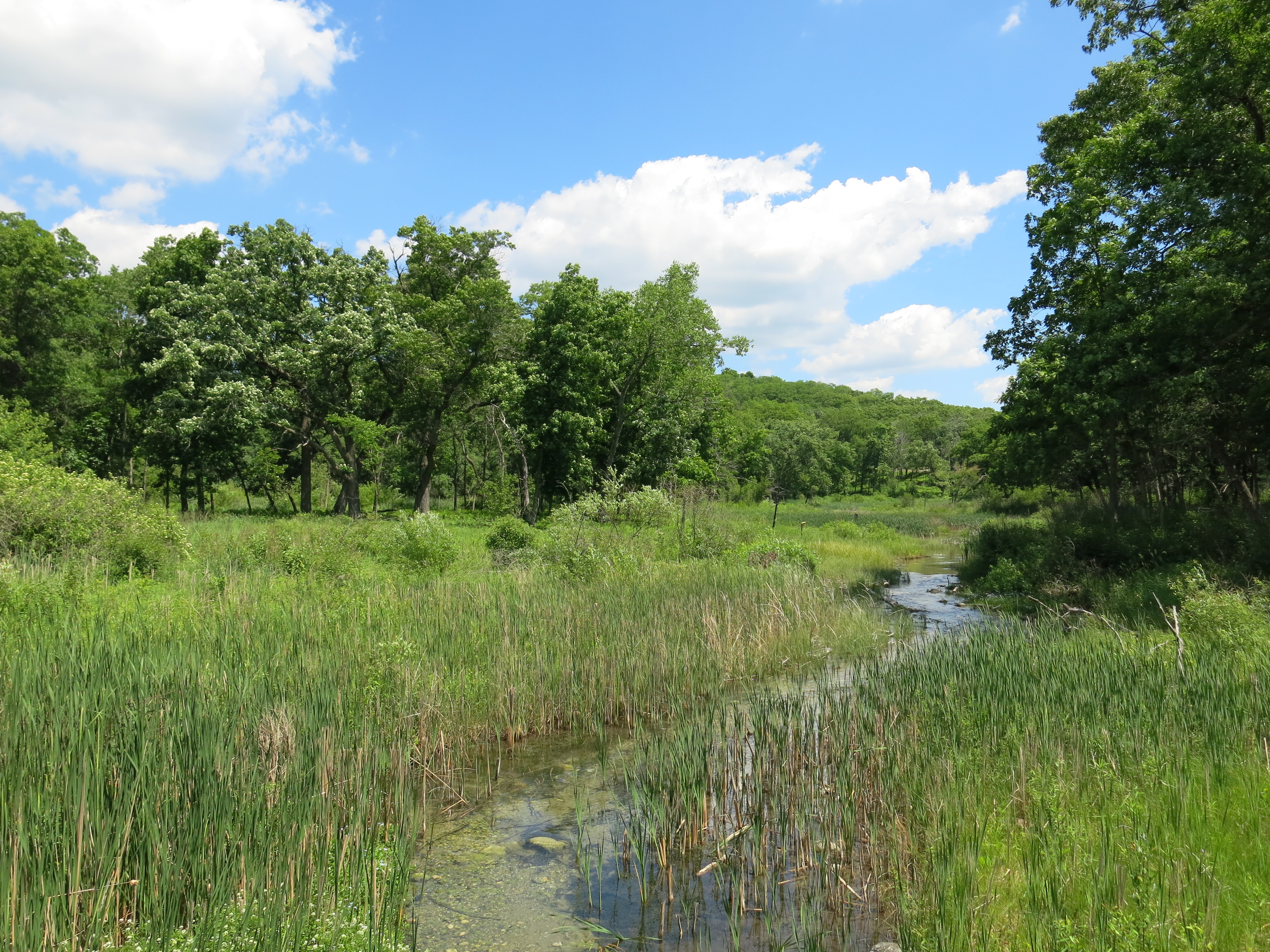
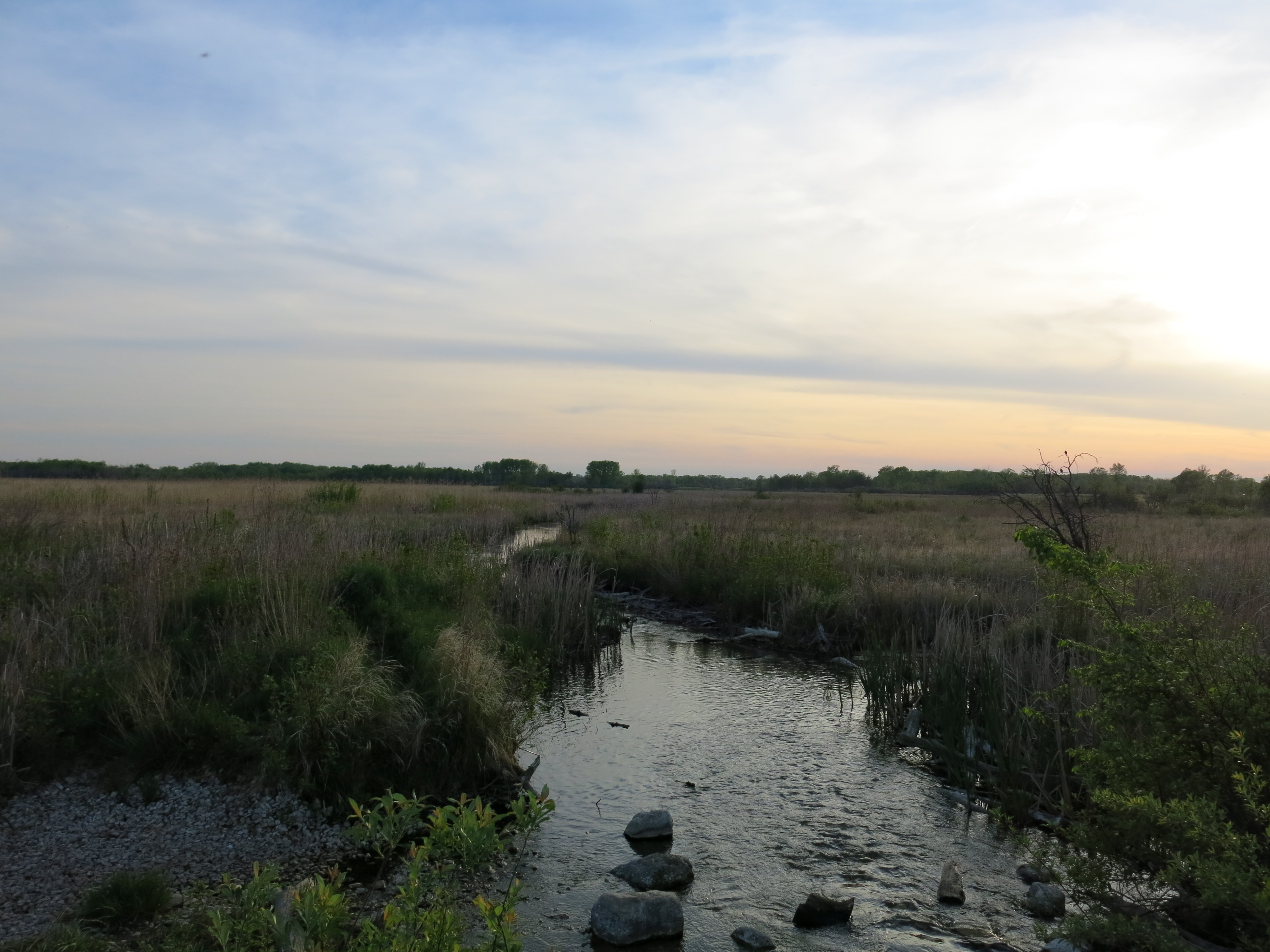
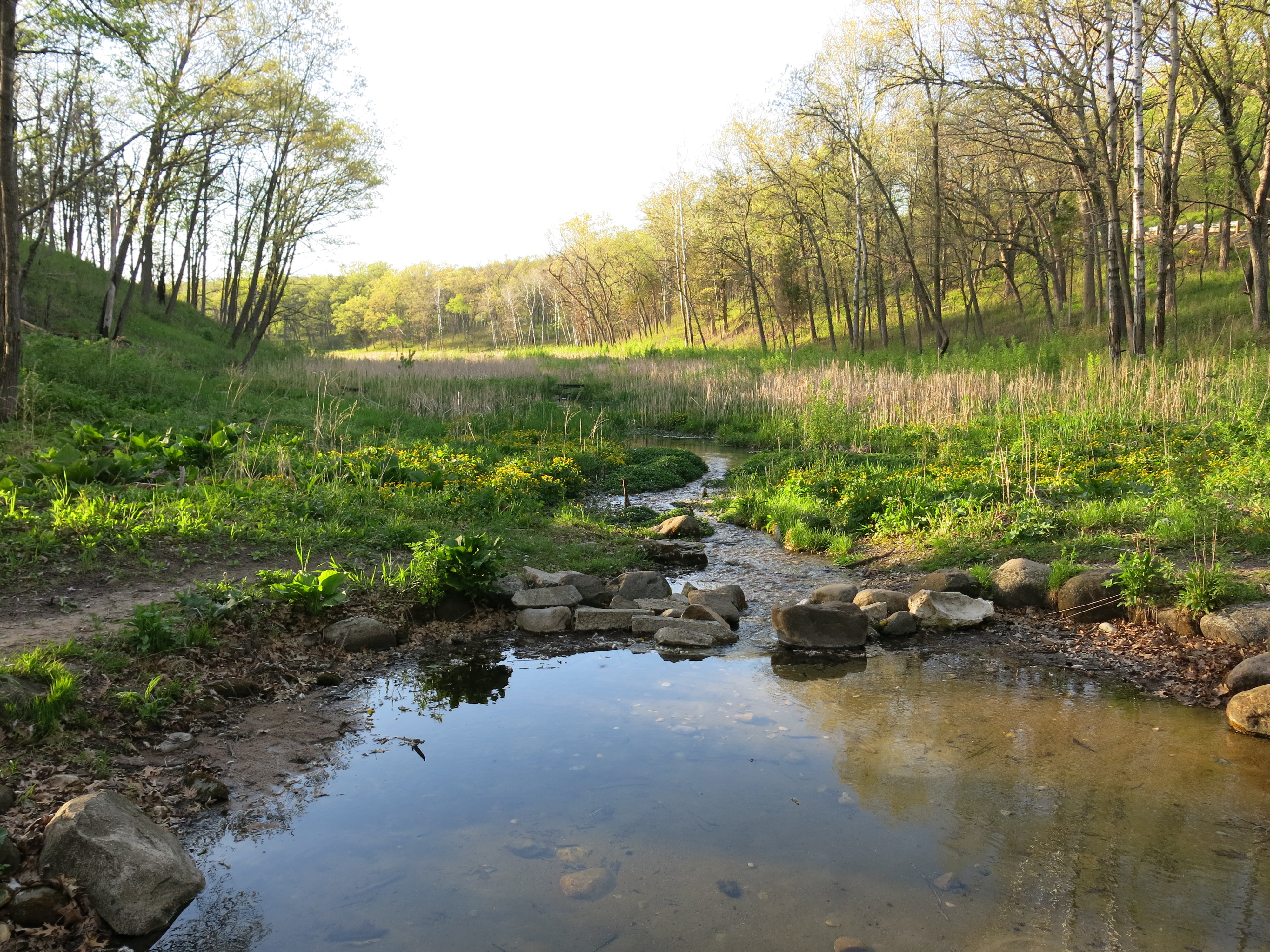
The valley of the Scuppernong River headwaters.
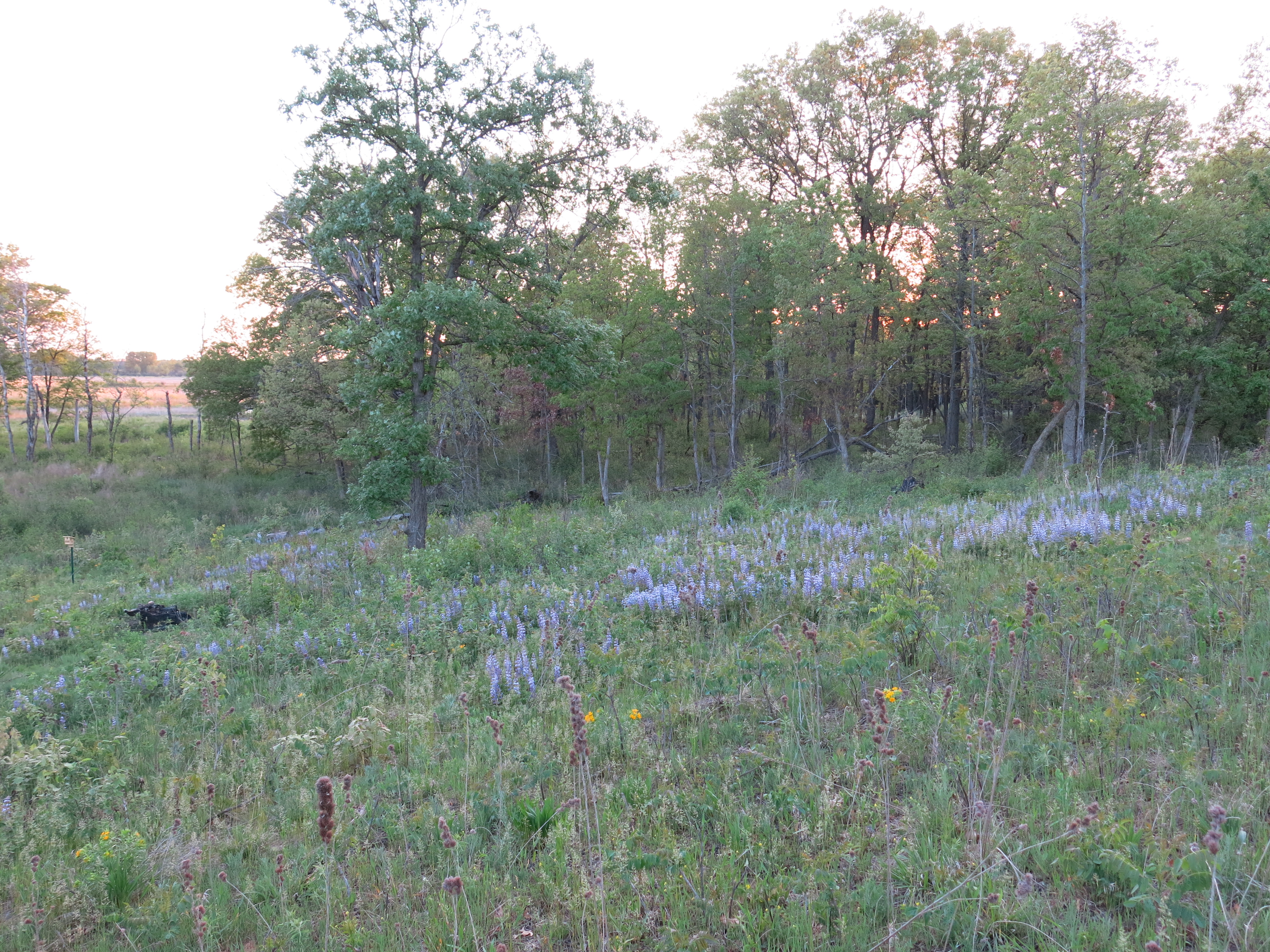
The lupine on the west slope of the sand prairie are peeking!
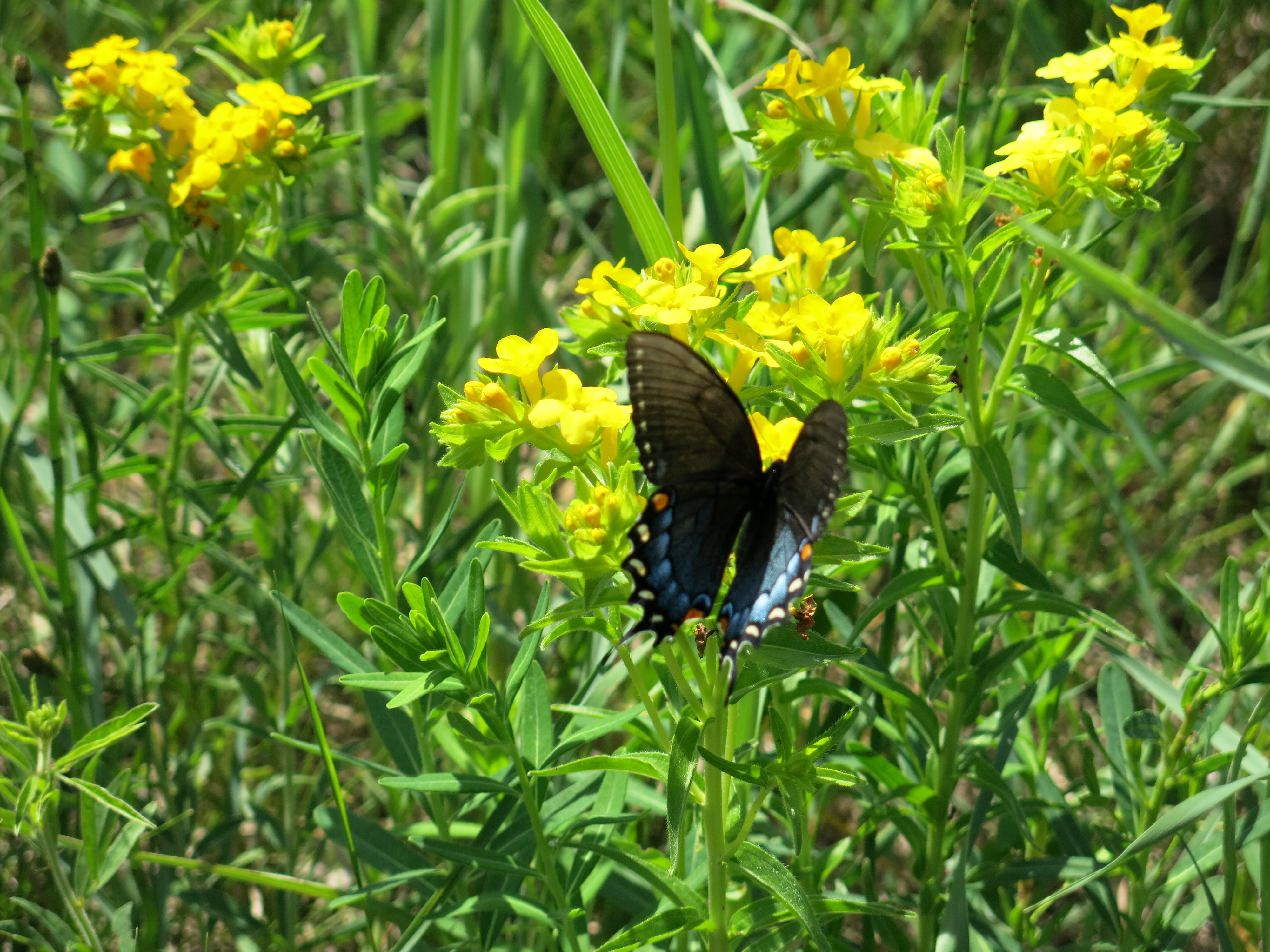
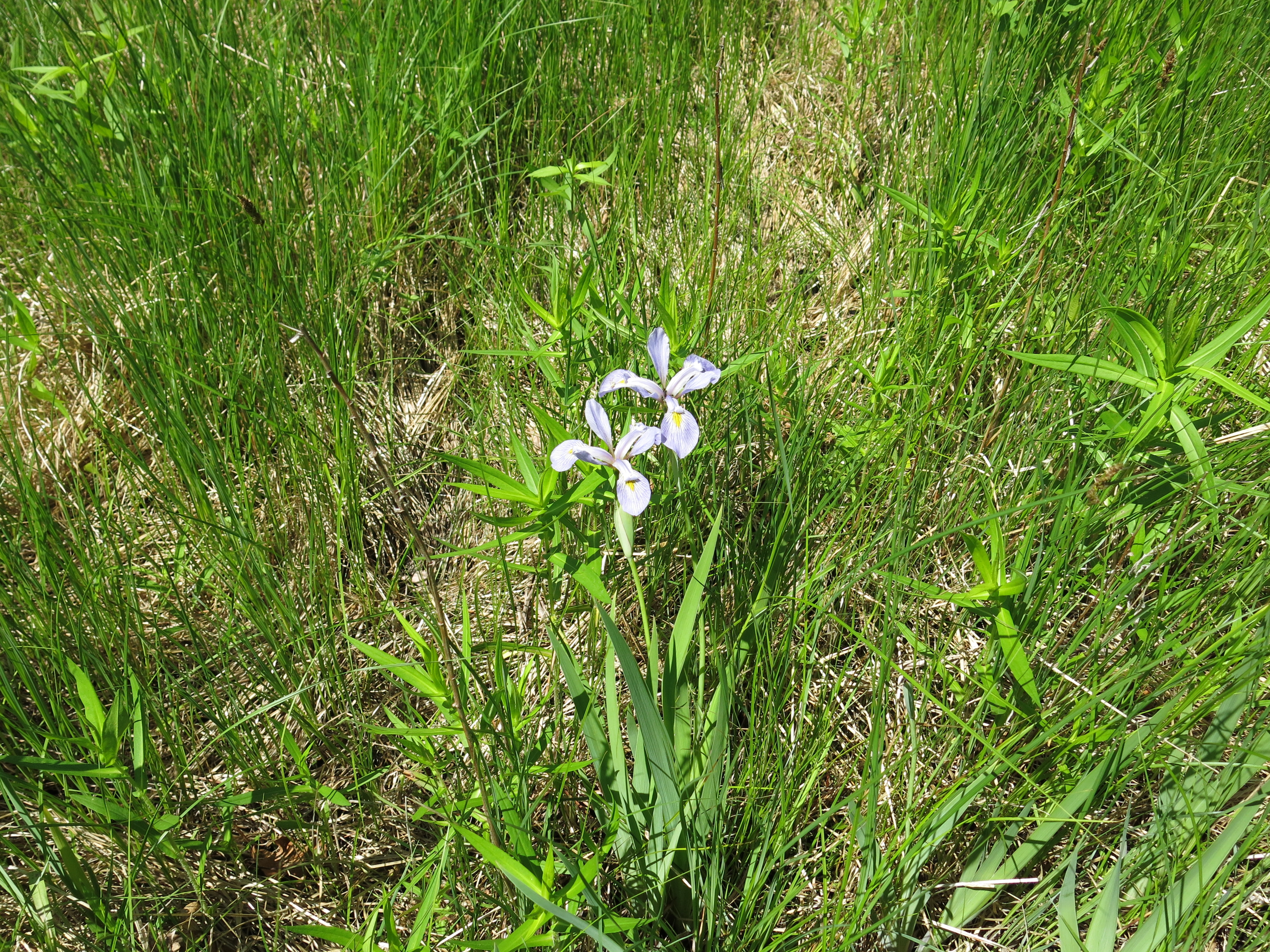
If your heart is burdened come, to the Scuppernong Springs Nature Trail and feel the healing flower power. The soothing outbursts of form, color and texture will soften the rough edges in your mind and bring you peace and calm.
Resurgent lymes symptoms knocked me off my horse after the Whitewater Oak Opening burn and I was temporarily blinded to the beauty of life. Yesterday was the first time in two weeks that I felt “normal”. The antibiotics are helping my body heal but it’s flower power that is healing my mind.
Columbine at the Hotel Springs bridge.
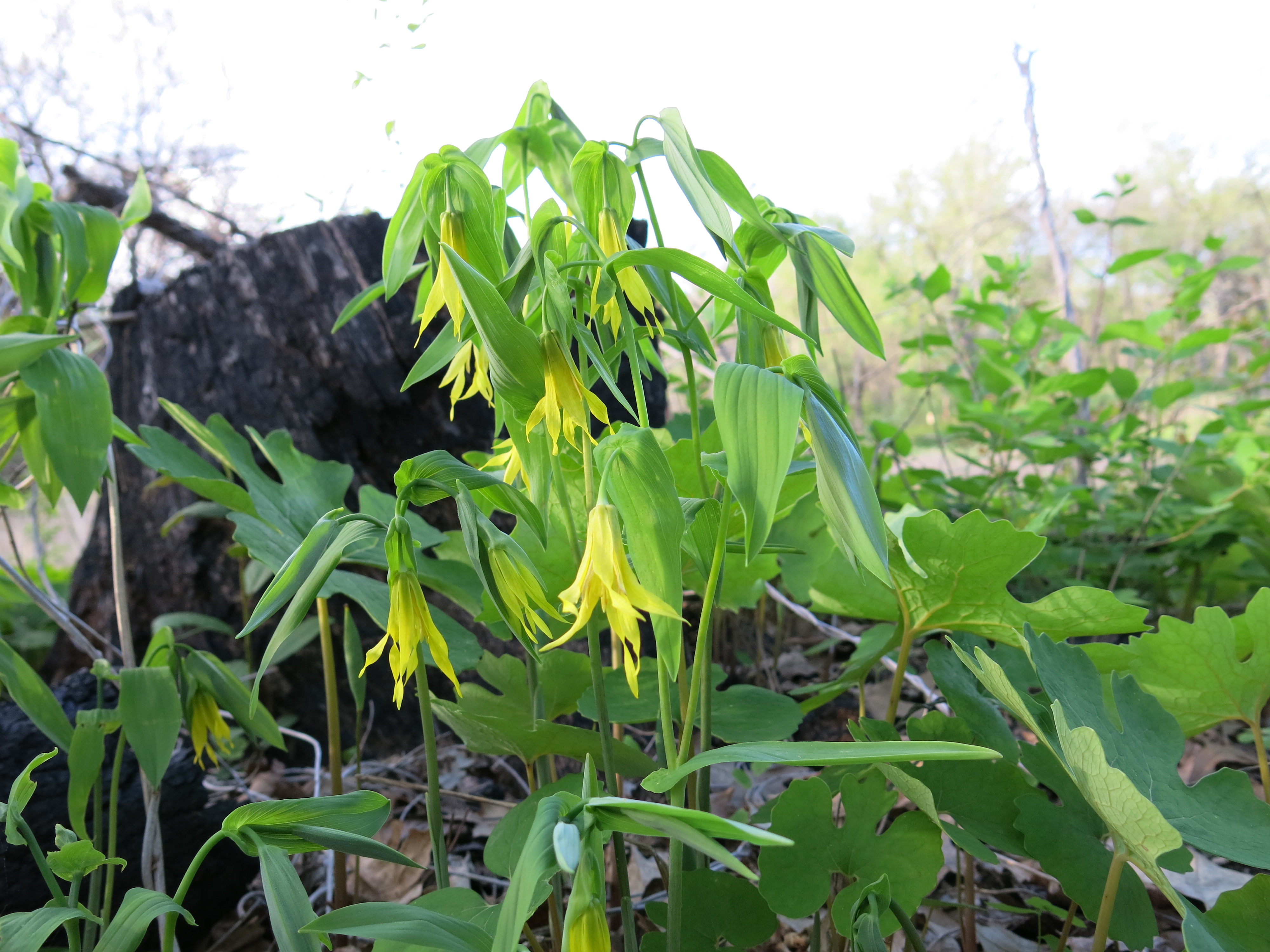
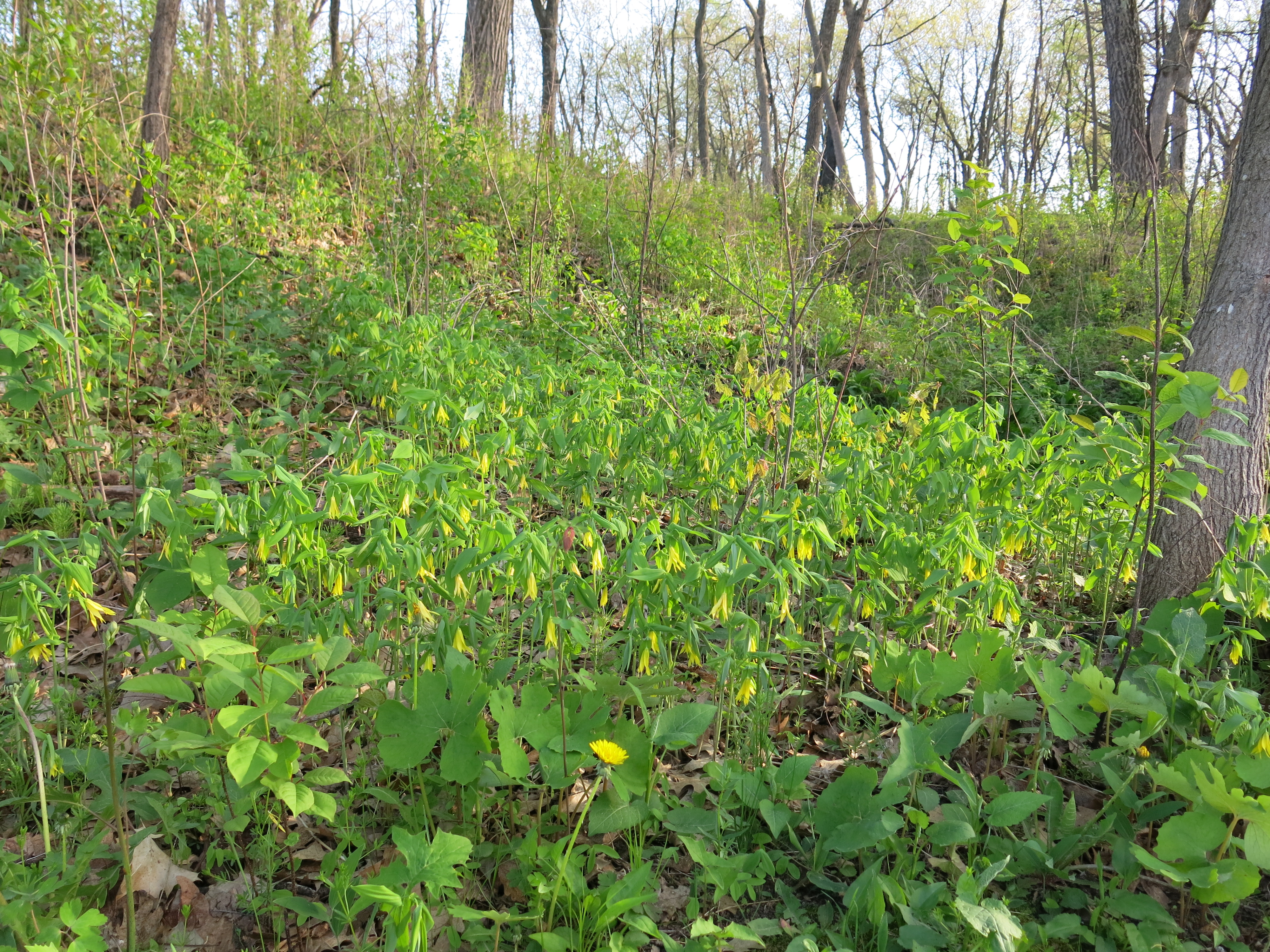
Large-flowered Bellwort just around the corner.
Kitten Tails and Pussy Toes near the Emerald Springs spur boardwalk.
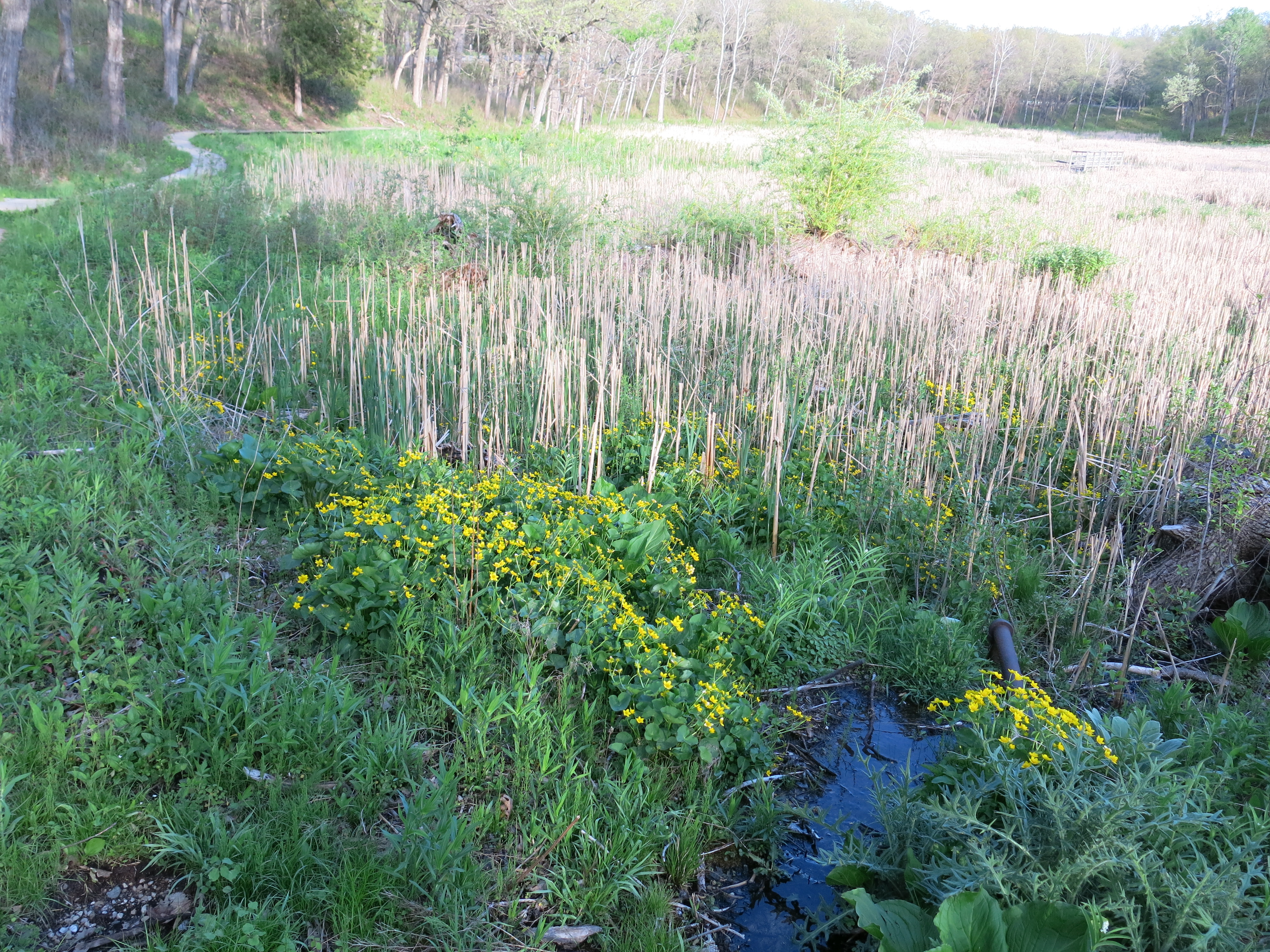
Wood Betony and Marsh Marigolds.
This is a perfect time to see a huge variety of woodland flowers at The Springs!
Sleeping seemed like the best option for a while there, but I willed myself back into action last Monday. Siddhartha taught me to listen to the river and Jayne Jenks, with the Waukesha County Parks and Land Use, taught me how to test the water’s quality. I’m now part of the Water Action Volunteers — Citizen Stream Monitoring team and happy with my site on the Scuppernong River, where it crosses Hwy Z, just downstream of its confluence with the South Branch.
I stopped at The Springs on my way there to re-girdle some of the aspen near the hotel site.
Carl Baumann was there removing a huge, dead, black locust that had broken off and was leaning into a cherry tree and hanging over the south end of the trail. Thanks Carl! Our friend Marty came back with his skid steer loader and smoothed out the tracks he laid in the mud this past spring.
Wednesday was my first real day back at work and I was pretty light-headed and emotionally unstable by the end of the day. I started with the chainsaw on the south end of the trail, where I want to extend the sand prairie and continue opening up the “big sky” views out towards the Scuppernong River Habitat Area.
I’ve been focusing on garlic mustard lately, but I need to cut buckthorn to preserve my sanity…
… and balance!
I spent the afternoon whacking garlic mustard on the south end of the loop trail.
When I woke up yesterday, I was raring to go — back to my old self! I started with the buckthorn near the parking lot on Hwy ZZ.
You’ll be able to see the sun setting over Ottawa Lake as you return to the parking lot when I get the rest of this mess cut.
I spent the late afternoon cutting garlic mustard north of the hotel site.
The views of the north side of the river are outstanding.
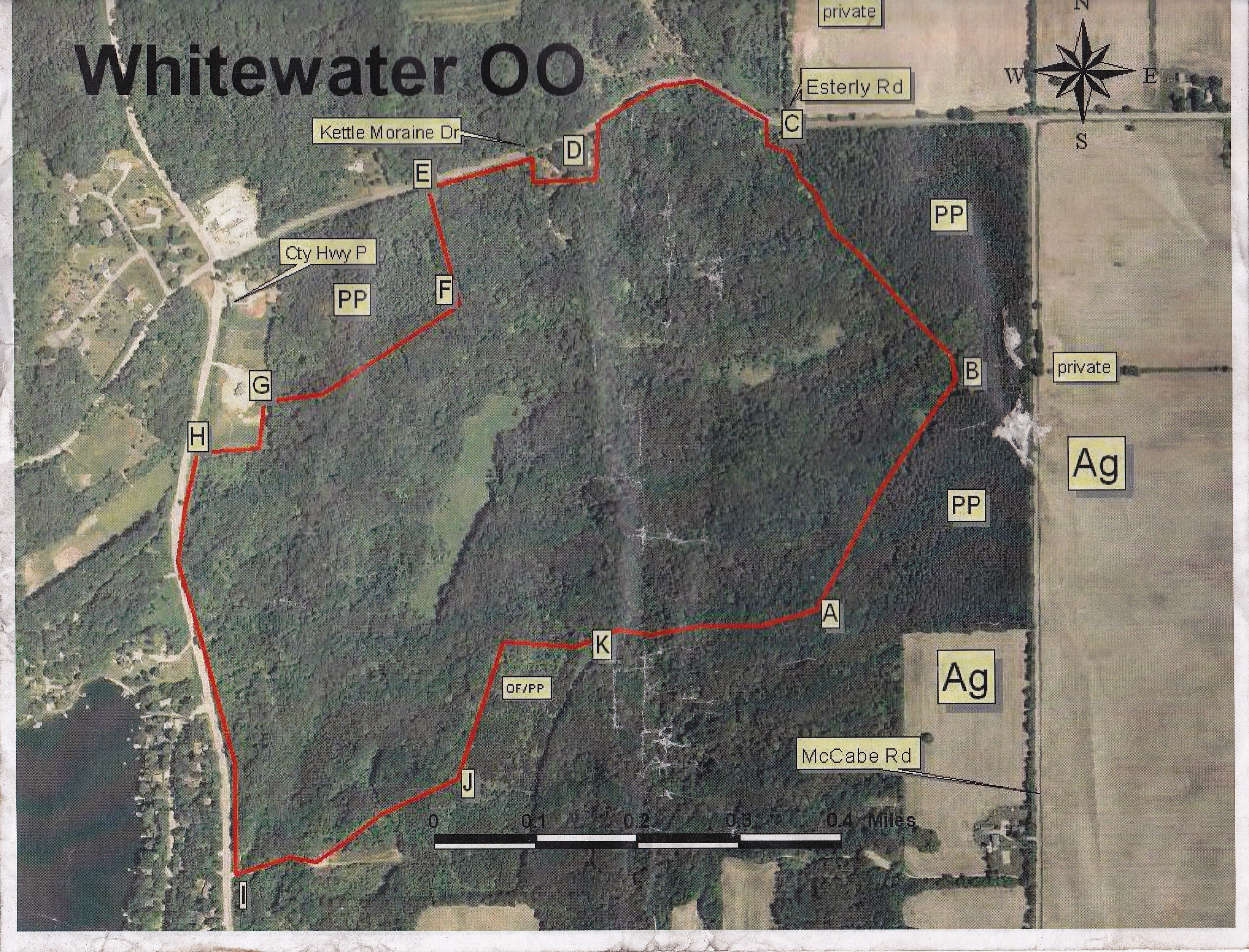
It’s been another busy burn season in the Kettle Moraine State Forest — Southern Unit. The biggest burn unit was 1,110 acres in the Scuppernong River Habitat Area stretching north from Hwy 59 and west of Hwy N, just a bit west of Eagle.
Zach Kastern turned me on to this area last September.
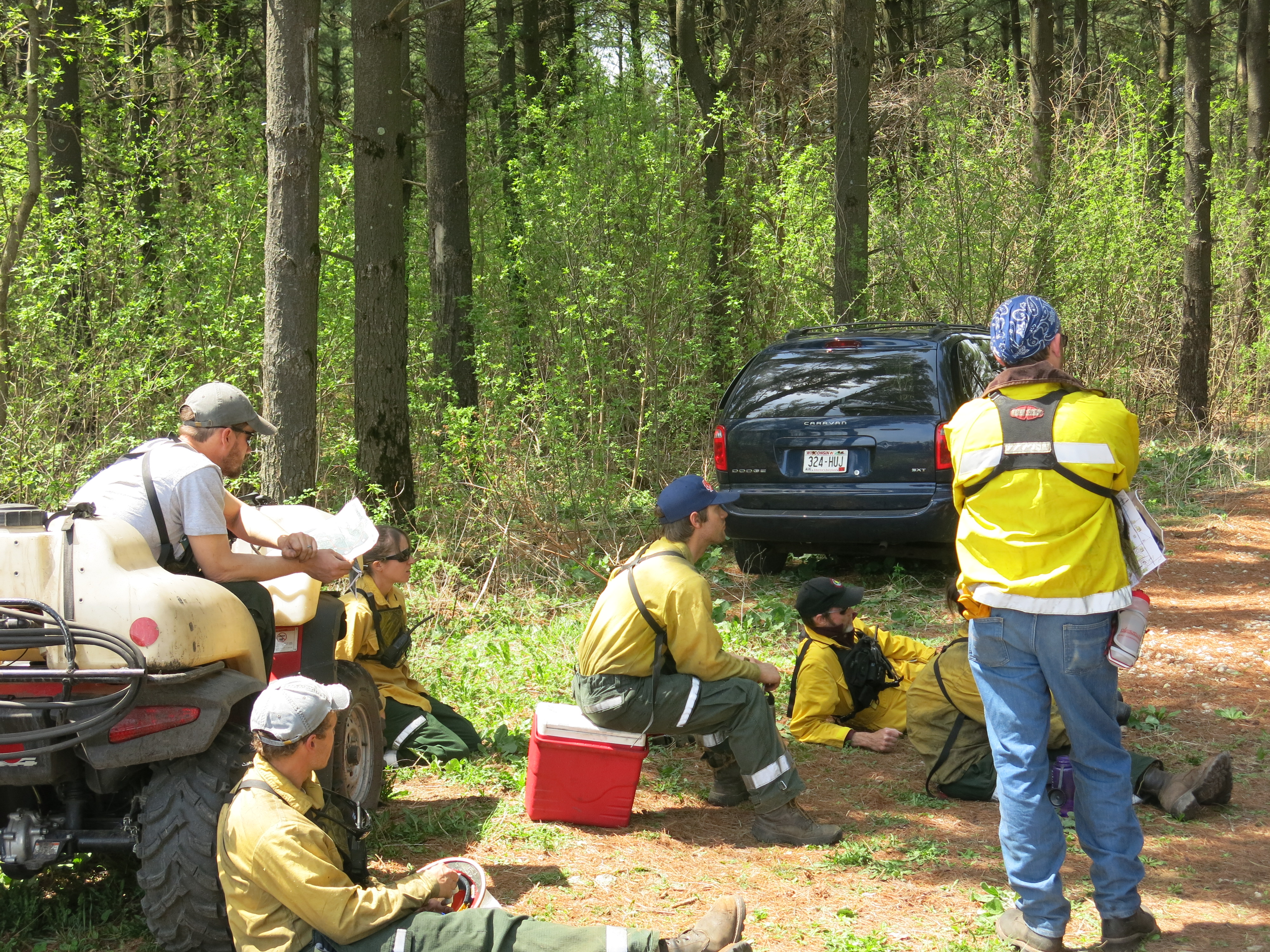
As the team gathered from working on the firebreaks, you could sense that this might be the last burn of the year and they were determined to make it a good one. Nate Fayram was the burn boss.
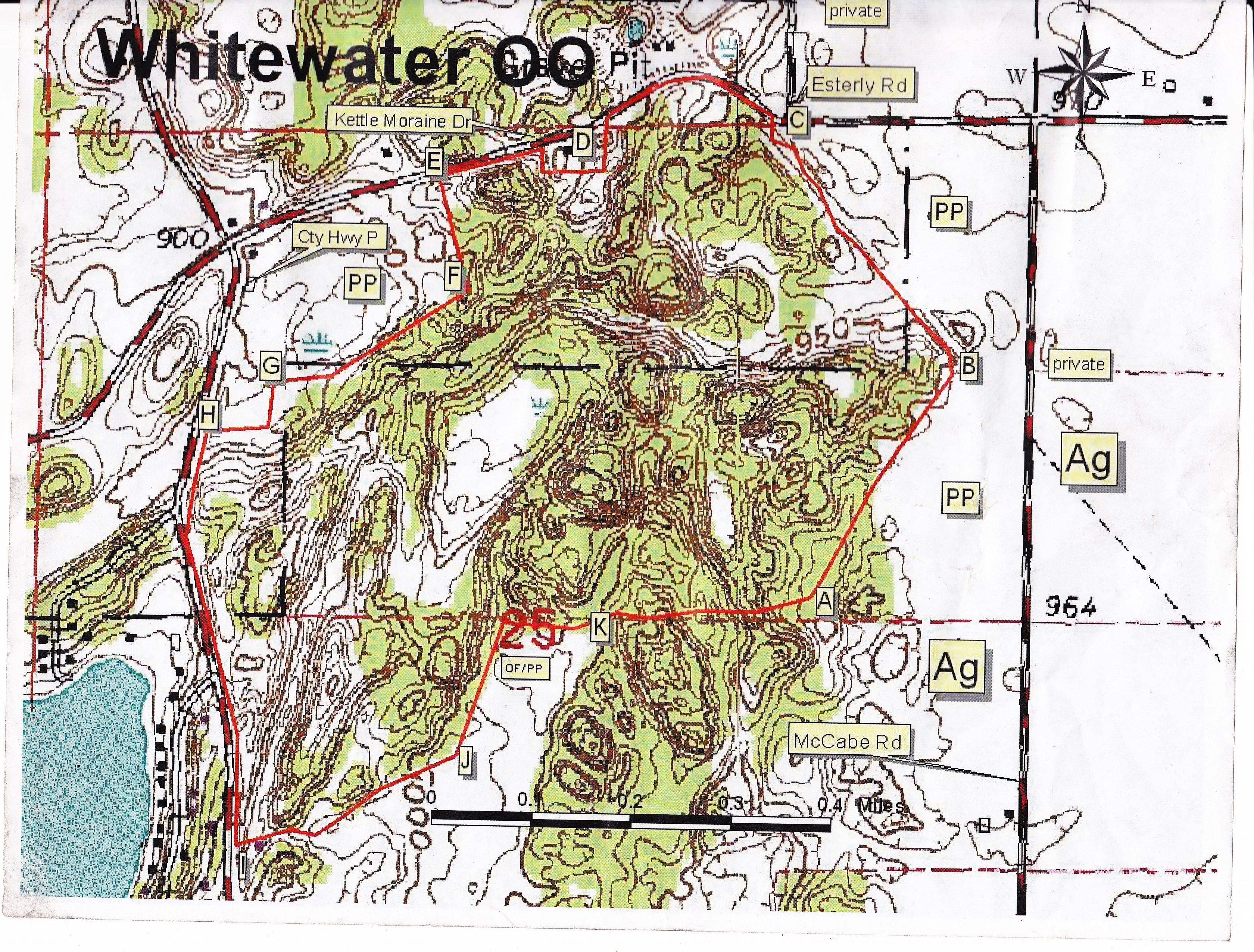
Here is the burn unit.
The terrain is classic Kettle Moraine!
Nate thoroughly reviewed all aspects of the burn plan with the team, which consisted of DNR veterans: Jessica Renley, Kevin Doyle, Adam Stone, Jared Urban, Alex Wenthe, Bridget Rathman and volunteers: Gary Birch, Ben Johnson and myself.
Defending private property within the burn unit was the highest priority.
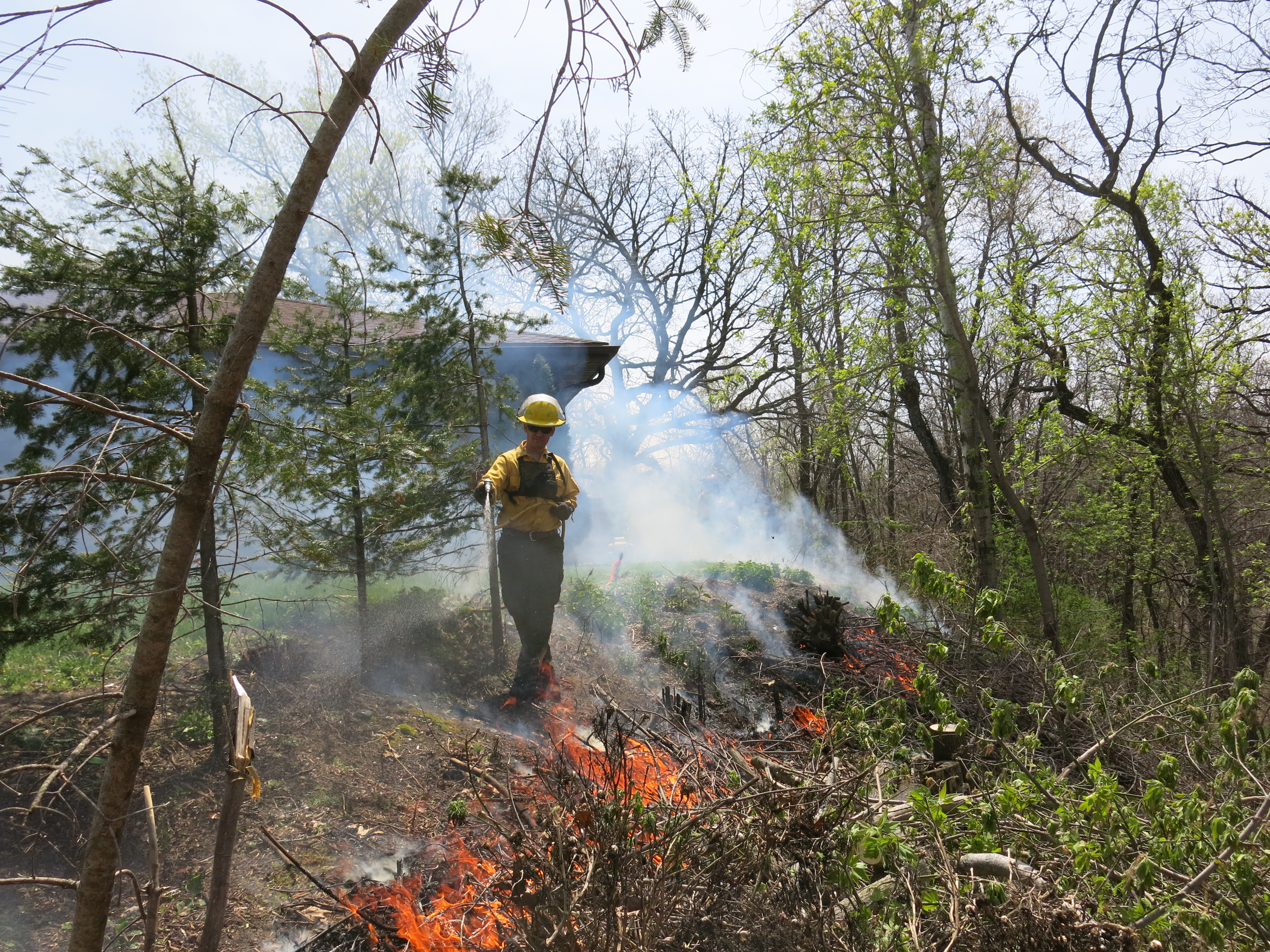
I worked the drip torch all day and there is definitely an art to efficiently delivering the flaming drops of diesel and gas.
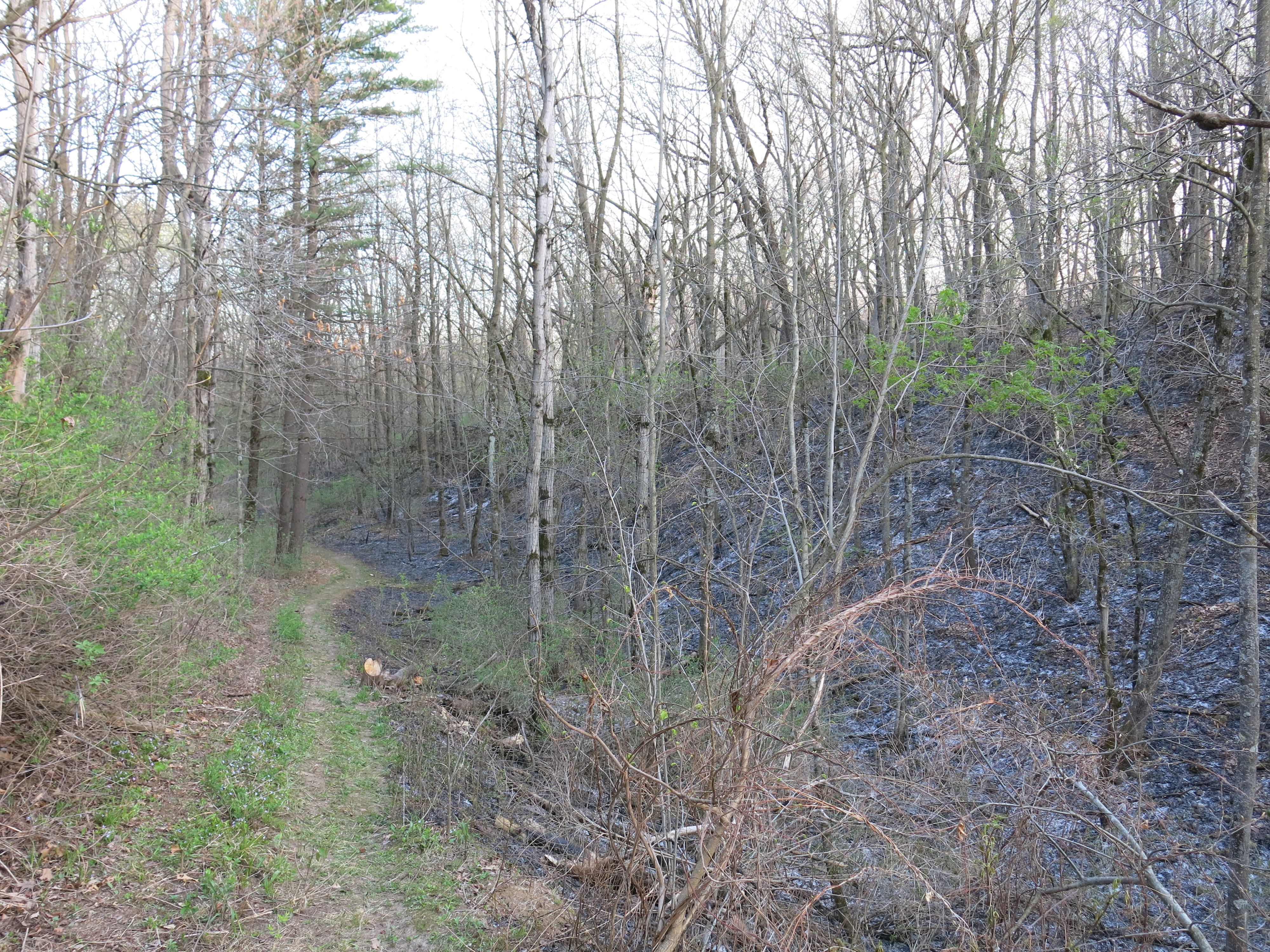
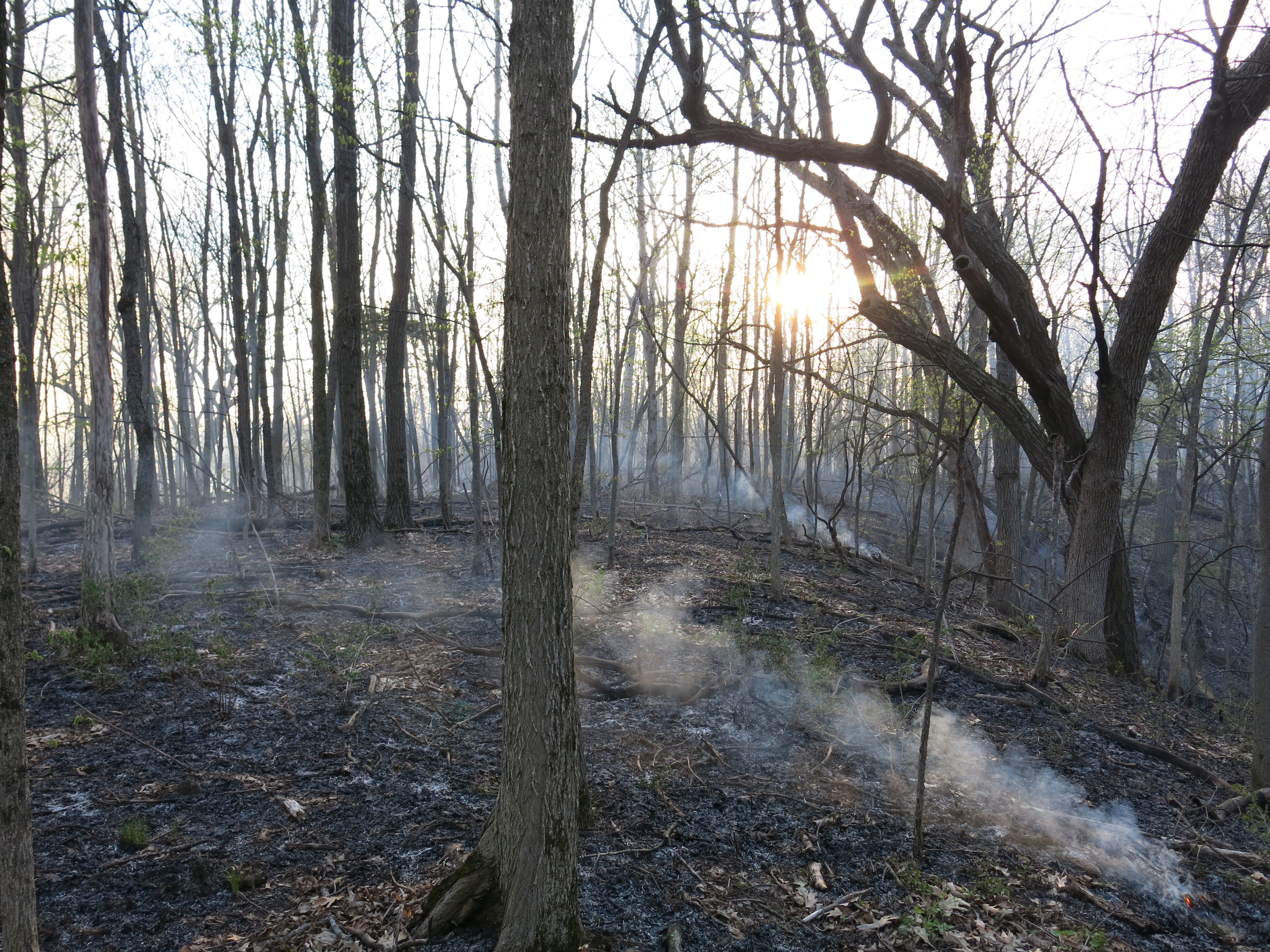
We got a nice little head fire running up the hill in this area somewhere between points E and G.
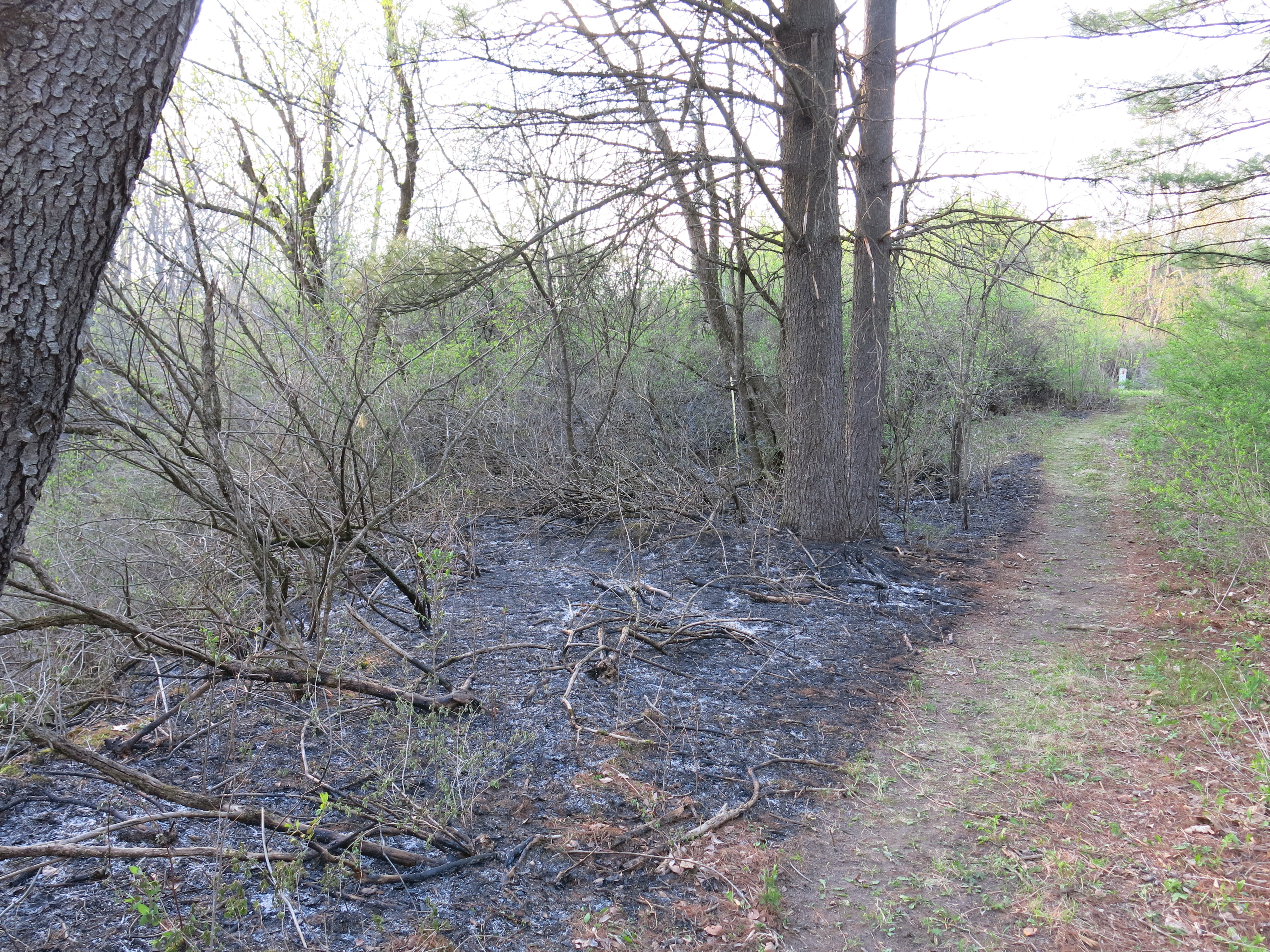
Black zone along Highway P.
We tied in the lines near point K at around 5:05pm and then proceeded to burn out the interior. The fire didn’t always carry over the moraines or deep into the kettles so we had to crisscross the interior with our drip torches to complete the burn. I was really pooped from going up and down the steep moraines and it was sweet to be released after my drip torch was emptied for the last time.
I parked my truck where Easterly Rd meets Kettle Moraine Drive at point C and took a walk into the burn unit.
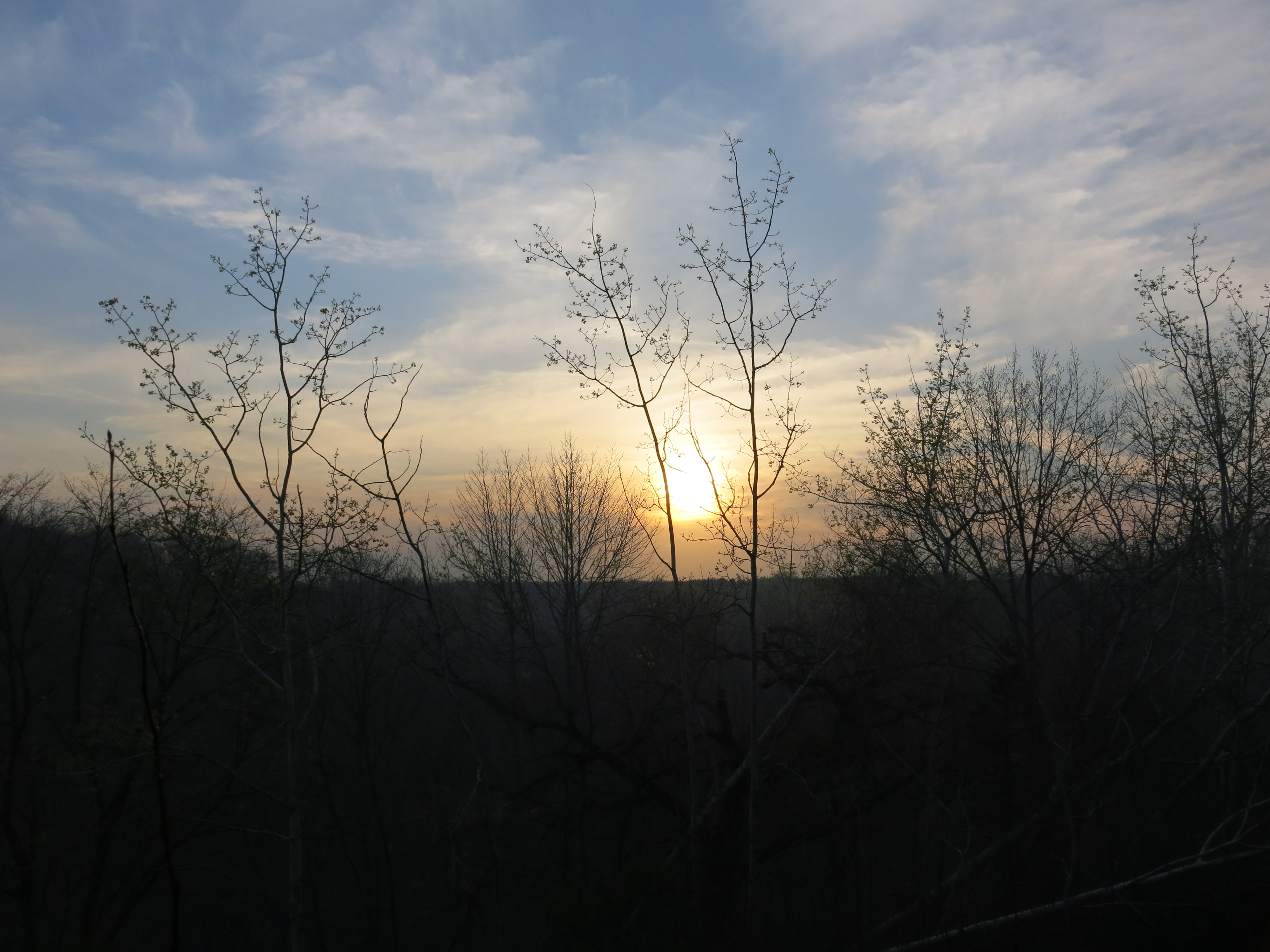
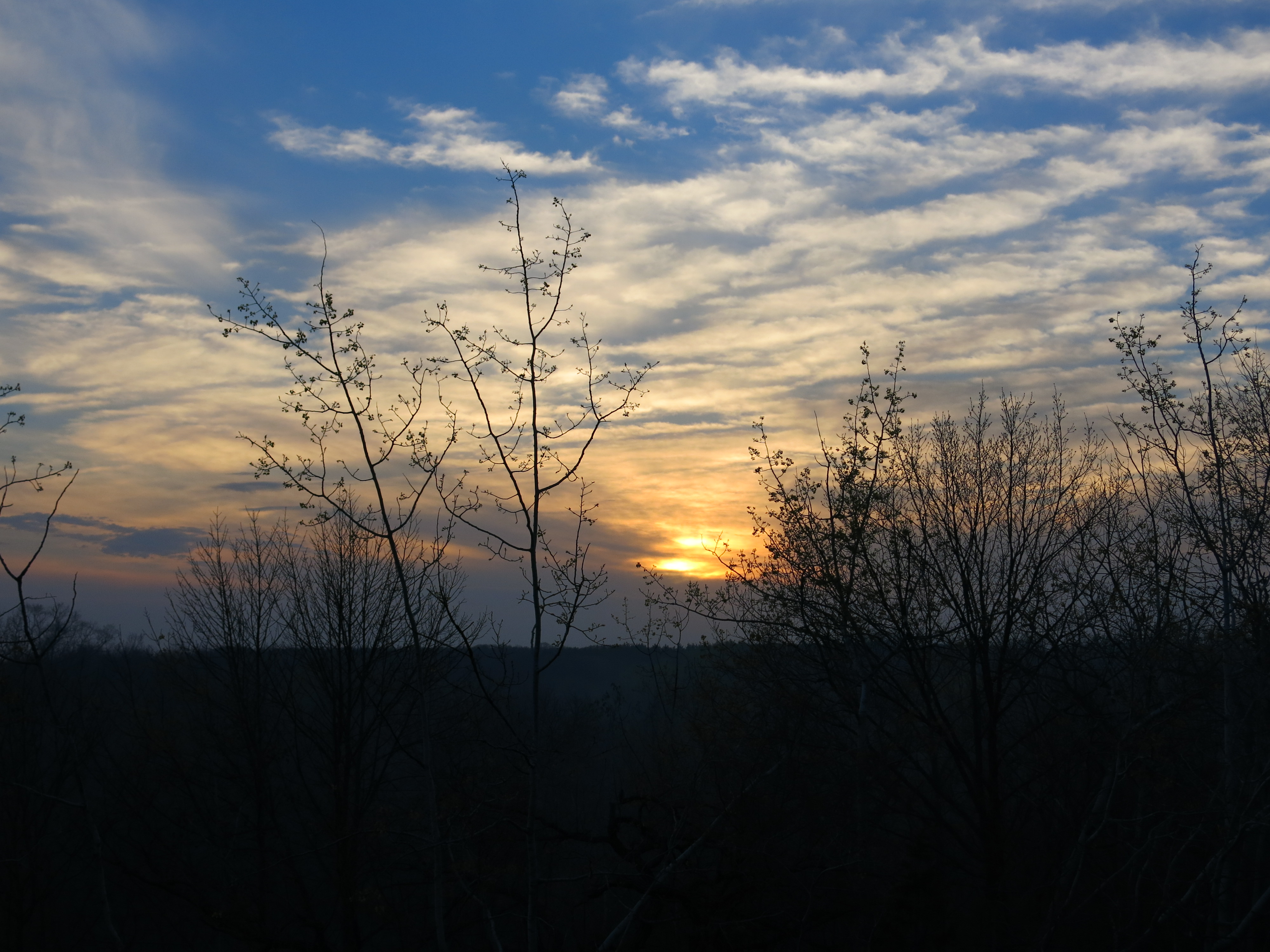
I got up on a high ridge overlooking one of the hillside prairies and I could hear their chainsaws whining as they took down burning snags; they were still hard at work!
Jared Urban would monitor the burn unit all night and Nate planned to return in the morning to complete the mop up. We are lucky to have such a hard working and dedicated DNR team taking care of our State Natural Areas!






















































































 Scuppernong Springs Nature Trail